
Lesson 6 Structure and Signaling The Nervous System





![“FLIGHT OR FIGHT RESPONSE” Sympathetic component prepares body for stress [neurotransmitter used=norepinephrine] • Diverts](https://slidetodoc.com/presentation_image_h2/1b1d7627b53b2e1977c46e90699cad46/image-24.jpg "“FLIGHT OR FIGHT RESPONSE” Sympathetic component prepares body for stress [neurotransmitter used=norepinephrine] • Diverts")


- Slides: 28
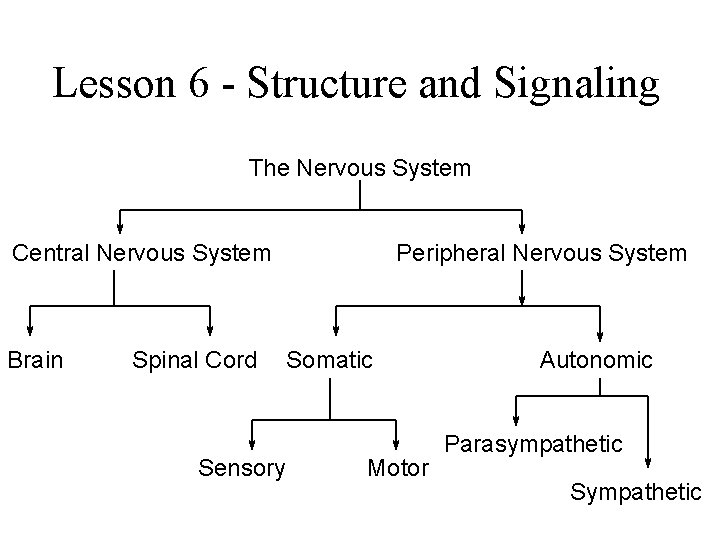
Lesson 6 - Structure and Signaling The Nervous System Central Nervous System Brain Spinal Cord Sensory Peripheral Nervous System Somatic Motor Autonomic Parasympathetic Sympathetic
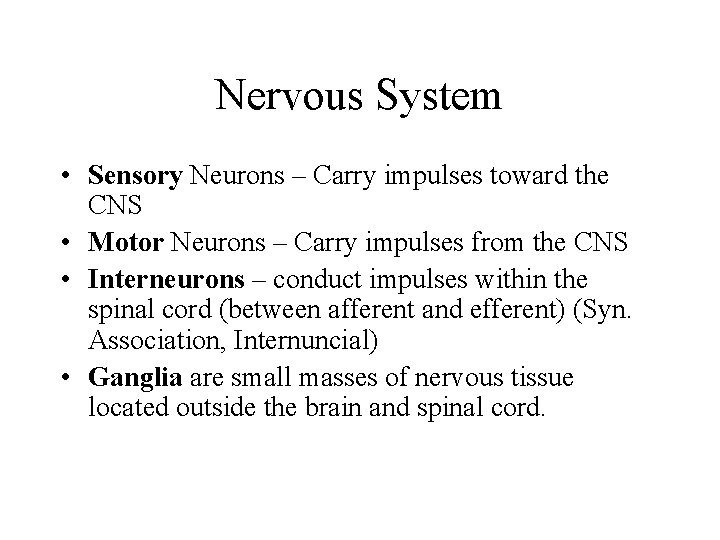
Nervous System • Sensory Neurons – Carry impulses toward the CNS • Motor Neurons – Carry impulses from the CNS • Interneurons – conduct impulses within the spinal cord (between afferent and efferent) (Syn. Association, Internuncial) • Ganglia are small masses of nervous tissue located outside the brain and spinal cord.
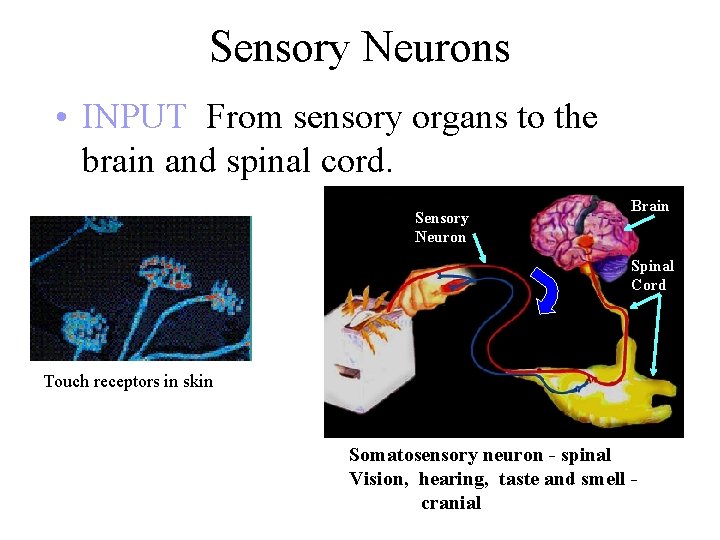
Sensory Neurons • INPUT From sensory organs to the brain and spinal cord. Sensory Neuron Brain Spinal Cord Touch receptors in skin Somatosensory neuron - spinal Vision, hearing, taste and smell cranial
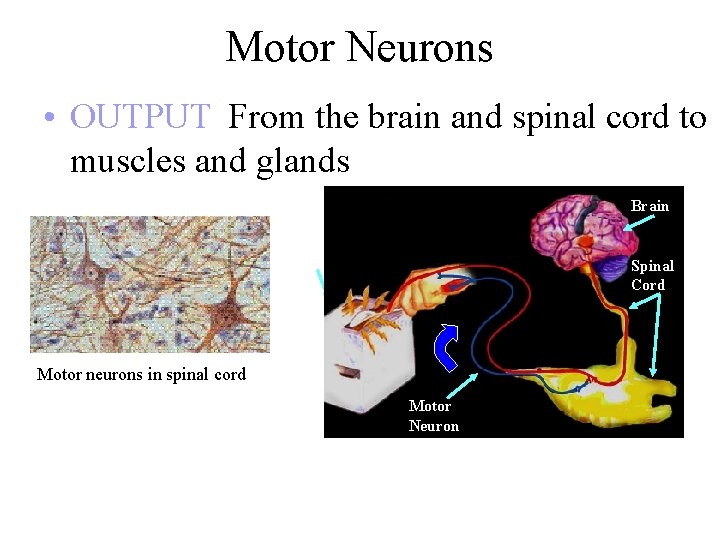
Motor Neurons • OUTPUT From the brain and spinal cord to muscles and glands Brain Spinal Cord Motor neurons in spinal cord Motor Neuron
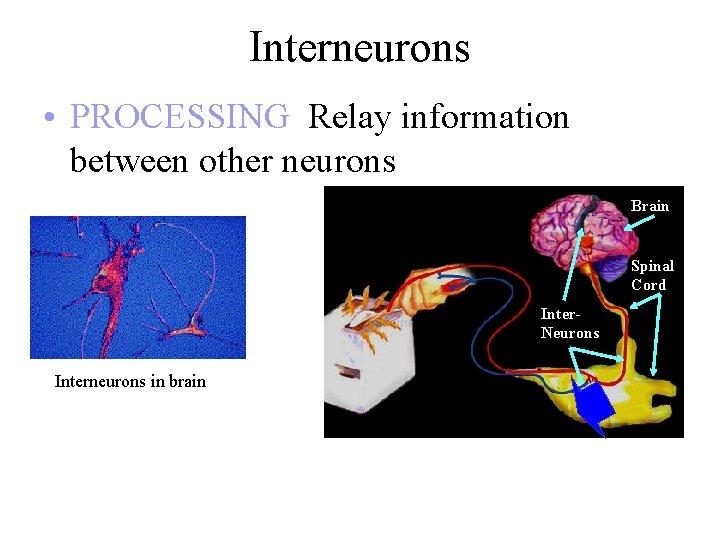
Interneurons • PROCESSING Relay information between other neurons Brain Spinal Cord Inter. Neurons Interneurons in brain
Divisions of the PNS • Somatic Nervous System (SNS) – Sensory neurons that convey information from sensory receptors in the head, body wall and limbs to the CNS – Motor neurons from the CNS that conduct impulses to the skeletal (voluntary) muscles only.
Divisions of the PNS • Autonomic Nervous System (ANS) – Sensory neurons convey information from receptors in the internal organs, to the CNS. – Motor neurons then convey information from the CNS to smooth muscle, cardiac muscle, glands, etc. – Motor functions in the ANS are not normally under conscious control; they are involuntary.
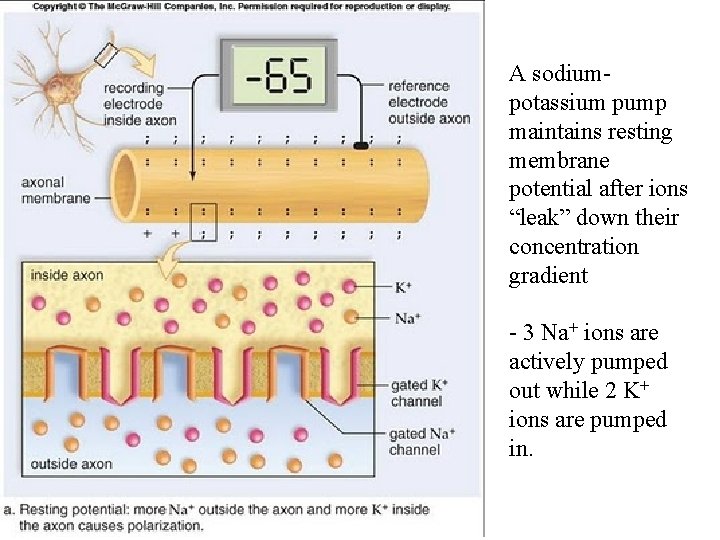
Neuron Resting Potential • Uneven concentrations of Na+ (outside) and K+ (inside) on either side of neuron membrane results in the inside of the neuron being 70 m. V less positive than the outside • Text, pg. 419
A sodiumpotassium pump maintains resting membrane potential after ions “leak” down their concentration gradient - 3 Na+ ions are actively pumped out while 2 K+ ions are pumped in.
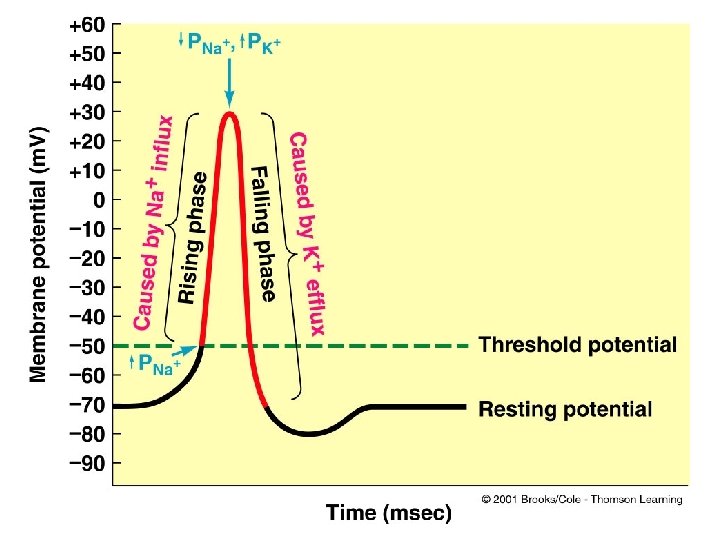
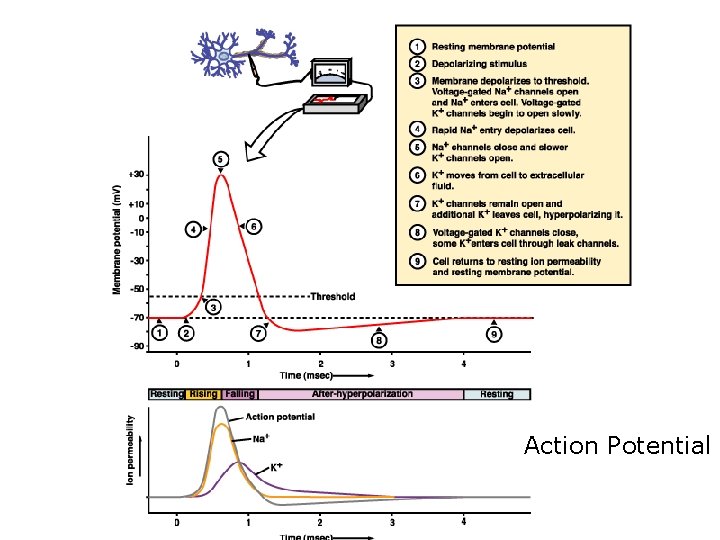
ACTION POTENTIAL • Nerve signals are transmitted by action potentials that are abrupt, pulse-like changes in the membrane potential that last a few ten thousandths of a second. • Action potentials can be divided into three phases: the resting or polarized state, depolarization, and repolarization • The amplitude of an action potential is nearly constant and is not related to the size of the stimulus, so action potentials are allor-nothing events.
Action Potential
Webquest! • See action potentials at work!
Now we know about action potentials… But how does a message travel from one neuron to the next? ? ?
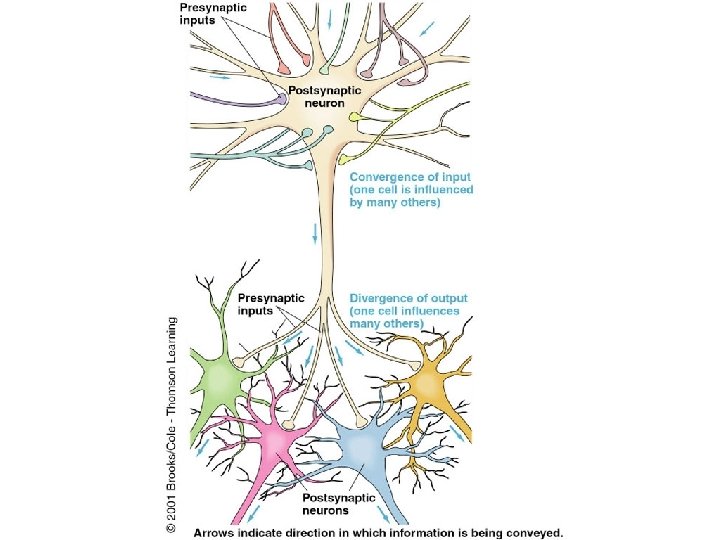
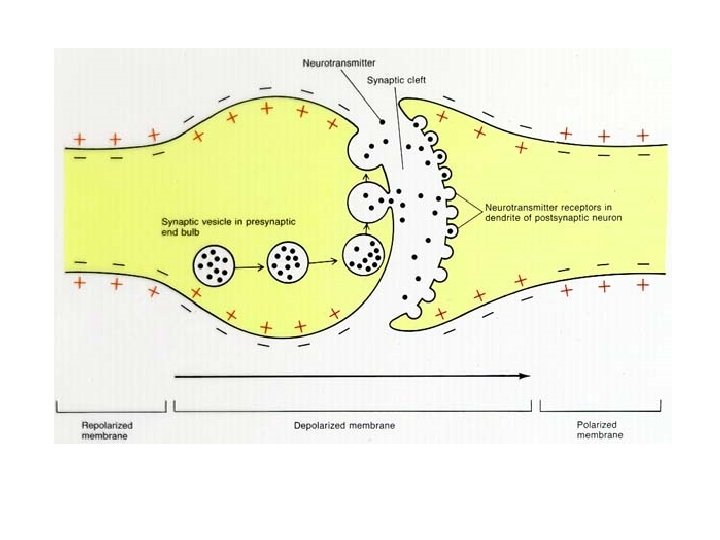
Terminology • Synapse – Region at which neurons come nearly together to communicate. (neuron or effector organ) • Synaptic Cleft – Gap between neurons (at a synapse) – Impulses can not propagate across a cleft • Synaptic Vesicle – Packets of neurotransmitter in presynaptic neuron • Presynaptic Neuron – Neuron sending a signal (before the synapse) • Postsynaptic Neuron – Neuron receiving a signal (after the synapse)
Neurotransmitters 5 general criteria: 1) synthesized and released by neurons 2) released at the nerve terminal in a 'chemically identifiable' form 3) the chemical should reproduce the activity of the presynaptic neuron 4) can be blocked by competitive antagonist based on concentration 5) active mechanisms to stop the function of the neurotransmitter Classical transmitters are small molecules (often amino acid based) Non-classical transmitters can be peptides or even gasses
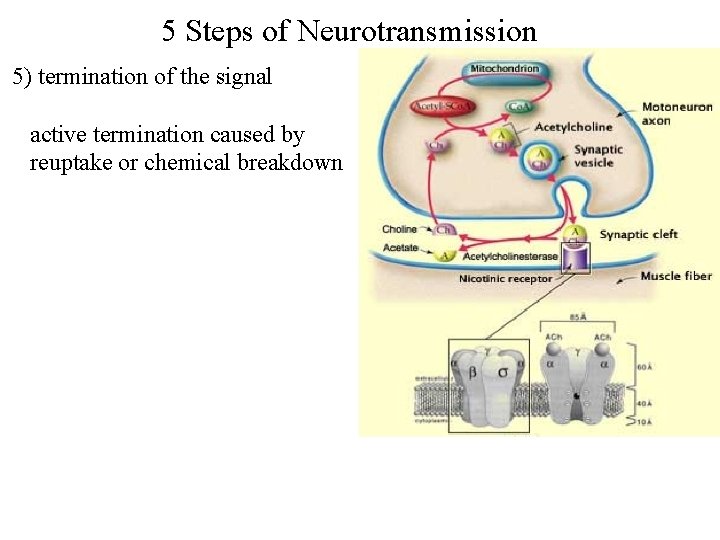
5 Steps of Neurotransmission 1) synthesis of the neurotransmitter precursors and enzymes should be in the correct place 2) storage of neurotransmitter OR precursor often stored in presynaptic vesicles
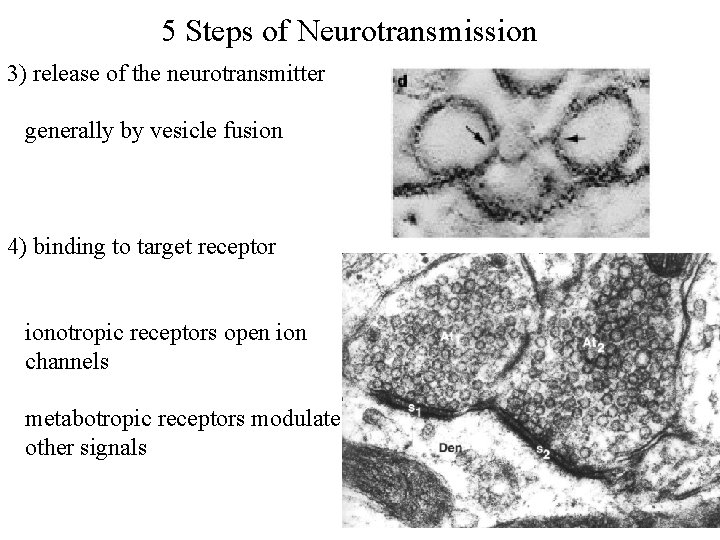
5 Steps of Neurotransmission 3) release of the neurotransmitter generally by vesicle fusion 4) binding to target receptor ionotropic receptors open ion channels metabotropic receptors modulate other signals
5 Steps of Neurotransmission 5) termination of the signal active termination caused by reuptake or chemical breakdown
Types of Neurotransmitters Acetylcholine + muscles, learning, memory Serotonin (a derivative of tryptophan) Norepinephrine (aka noradrenaline) Dopamine Endorphins + sleep, relaxation, self esteem, too little = depression, perception + stress and fight/flight response, sympathetic NS: +BP & heart rate + prolactin (milk production), involved in pleasure, movement (-) pain, involved in pleasure GABA (gamma aminobutyric acid) Glutamate (-) anxiety, too little in parts of brain can lead to epilepsy Most common NT, memory, toxic
“FLIGHT OR FIGHT RESPONSE” Sympathetic component prepares body for stress [neurotransmitter used=norepinephrine] • Diverts blood from internal organs to skeletal muscles, heart & brain Parasympathetic brings things back to normal [neurotransmitter used=acetylcholine] • Work in conjunction/opposition to each other –Ex. “on” / “off” switches
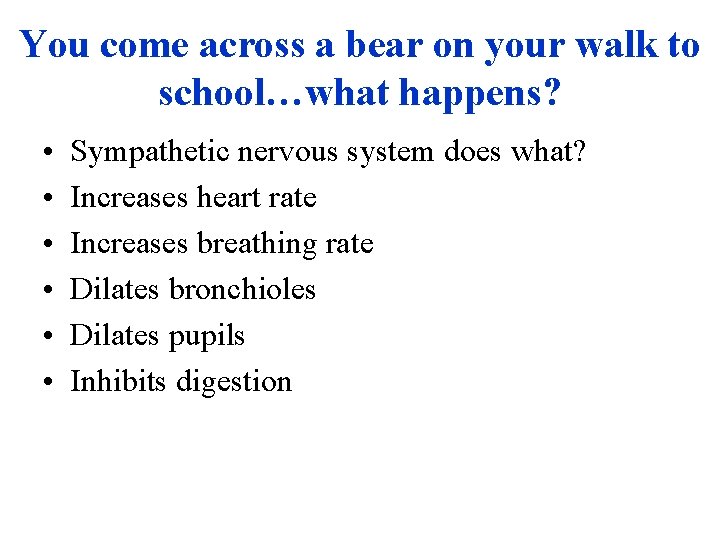
You come across a bear on your walk to school…what happens? • • • Sympathetic nervous system does what? Increases heart rate Increases breathing rate Dilates bronchioles Dilates pupils Inhibits digestion
How do drugs influence the nervous system? http: //outreach. mcb. harvard. edu/animations/sy napse. swf
Power. Point adapted from Ms. Sklepowicz http: //sklepowicz. wikispaces. com/SBI 4 U+Homeostasis