
Lesson 6 Nutrition 101 Teen Nutrition Student Question
- Slides: 39
Lesson 6: Nutrition 101 Teen Nutrition
Student Question What personal decisions have you made that affect your food choices?
Facts about Teen Nutrition: Would you agree or disagree? • Teen nutrition affects athletics, academics and attitudes • Most teens are overfed, but undernourished • Teens grow a lot, so they need to eat a lot of the right kind of food • Teens frequent fast food places, where high fat and nutrient depleted foods are the norm
Facts about Teen Nutrition: Would you agree or disagree? • Teens eat more of their meals away from home • Males tend to be more into bulk, Females are into being thin • Teens crave fats • Teens like junk food
Micronutrients Vitamins and minerals They are the non-energy yielding compounds that function as helpers in cell metabolism and building body structures.
Definitions: Metabolism All the body chemical processes that take place in your body in order to build it up (growth, tissues, muscles, and cells) and break it down in order to provide energy for your body to use. Vitamins Organic molecules found in food that are vital to your health and life. Involved in metabolism and preventing disease Minerals The non-energy yielding compounds that function as helpers in cell metabolism and building body structures.
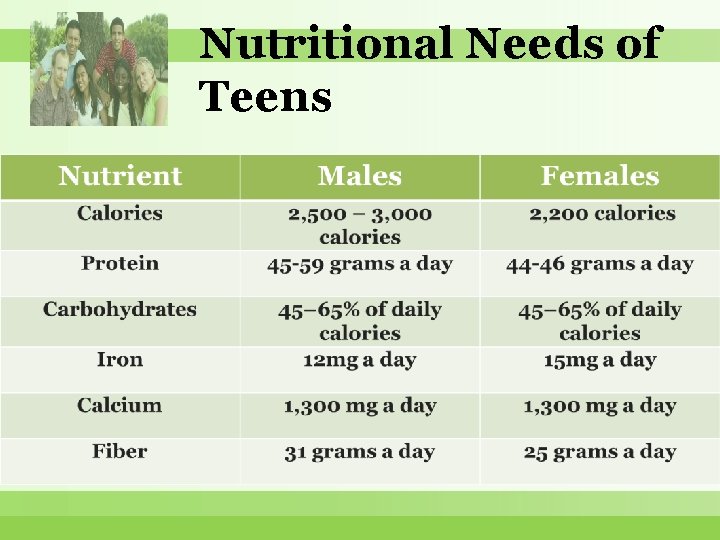
Nutritional Needs of Teens
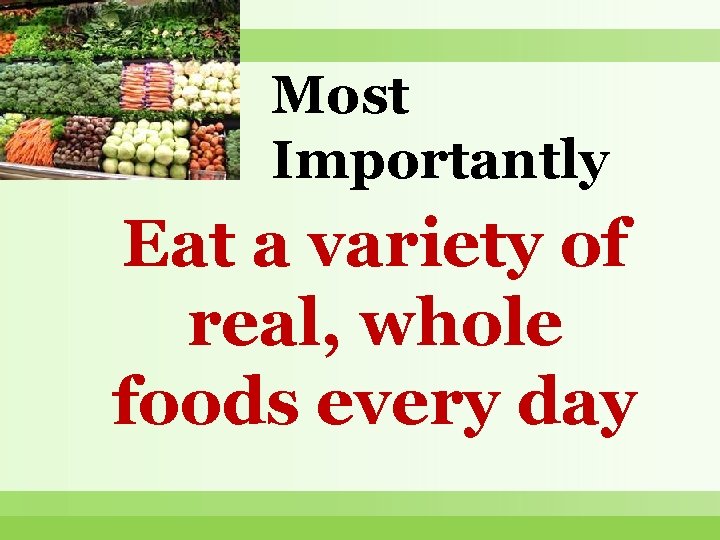
Most Importantly Eat a variety of real, whole foods every day
Nutritional Goals Eat more iron Eat more protein Eat more zinc Eat more calcium
Other Important Nutrients • Vitamins and Minerals • Better choice fats
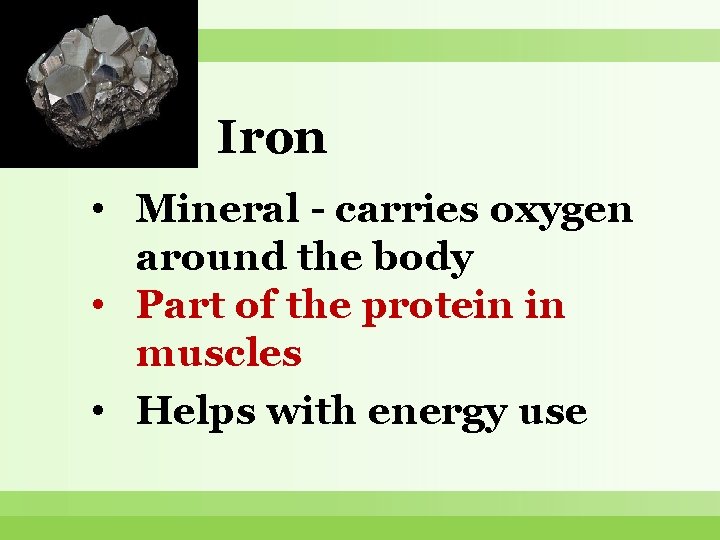
Iron • Mineral - carries oxygen around the body • Part of the protein in muscles • Helps with energy use
Iron Deficiency Symptoms • Fatigue • Reduced physical fitness • Weakness • Impaired ability to learn • Inability to pay attention • Reduced resistance to infection • Itching skin • Dry hair • Pale nails • Inability to regulate body temperature
Iron Deficiency Symptoms • Fatigue • Reduced physical fitness • Weakness • Impaired ability to learn • Inability to pay attention • Reduced resistance to infection • Itching skin • Dry hair • Pale nails • Inability to regulate body temperature
Best Sources of Iron • Canned clams • Beans and soybeans • Tofu • Beef Liver • Baked potato with skins • Shrimp • Sea vegetables: *very high in iron • Pumpkin seeds • Blackstrap molasses • Red meat
Student Question Why do you feel it’s important to consume iron rich foods?
Zinc • Mineral contained in virtually all cells • Highest concentration in bones, the prostate gland the eyes
Zinc Functions • • Metabolism Enzymes Hormone insulin Supports immune system • Transporting Vitamin A • Growth and development • Blood clotting • Thyroid function • Influences learning • Taste perception • Wound healing • Making of sperm • Fetal development
Zinc Deficiency Symptoms • Stunted growth • Decreased • Weak sense of synthesis of smell testosterone • Poor sensitivity • Hair loss to the taste of • Rough, dry skin salt • Delayed onset of puberty
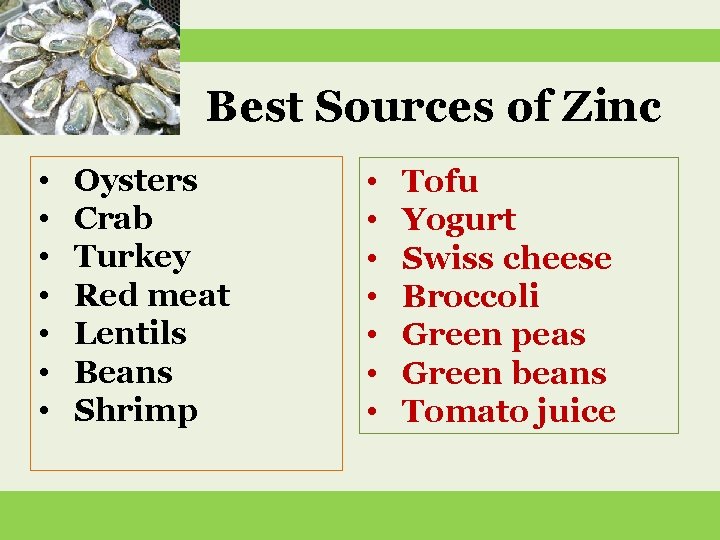
Best Sources of Zinc • • Oysters Crab Turkey Red meat Lentils Beans Shrimp • • Tofu Yogurt Swiss cheese Broccoli Green peas Green beans Tomato juice
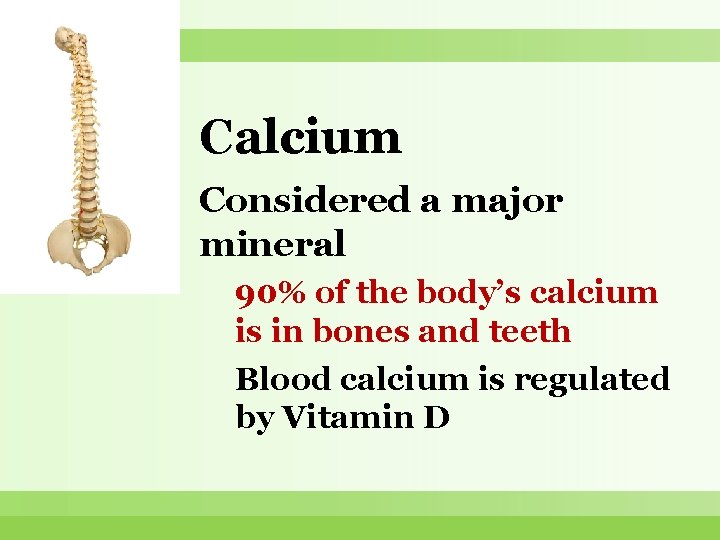
Calcium Considered a major mineral 90% of the body’s calcium is in bones and teeth Blood calcium is regulated by Vitamin D
Calcium Functions • Builds bones • Involved in muscle contraction • Supports nerve functioning • Part of blood clotting function • Helps regulate blood pressure • Involved in immune system
Food Fact: Estimates show that rd about 2/3 of the population has difficulty digesting milk
Food Fact: Nutritional anthropologists suggest that until 10, 000 years ago, human adults were lactose intolerant
Calcium Deficiency Results in: • Stunted growth • Bone Loss (Osteoporosis) in adults
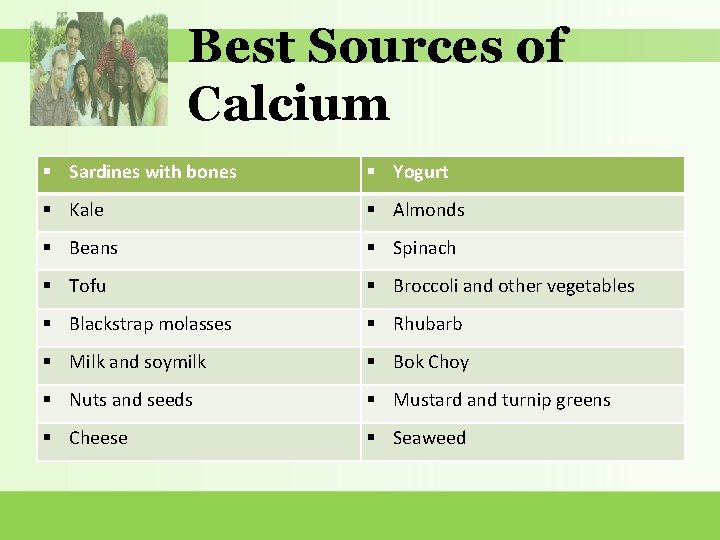
Best Sources of Calcium Sardines with bones Yogurt Kale Almonds Beans Spinach Tofu Broccoli and other vegetables Blackstrap molasses Rhubarb Milk and soymilk Bok Choy Nuts and seeds Mustard and turnip greens Cheese Seaweed • Stunted growth • Bone Loss (Osteoporosis) in adults
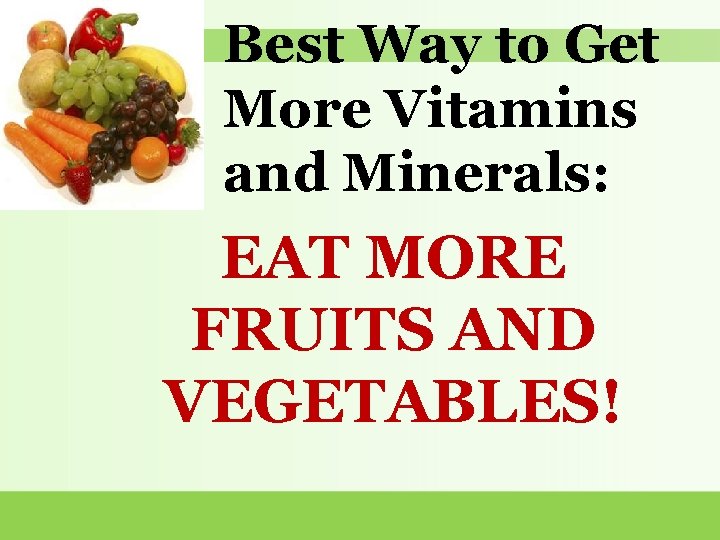
Best Way to Get More Vitamins and Minerals: EAT MORE FRUITS AND VEGETABLES!
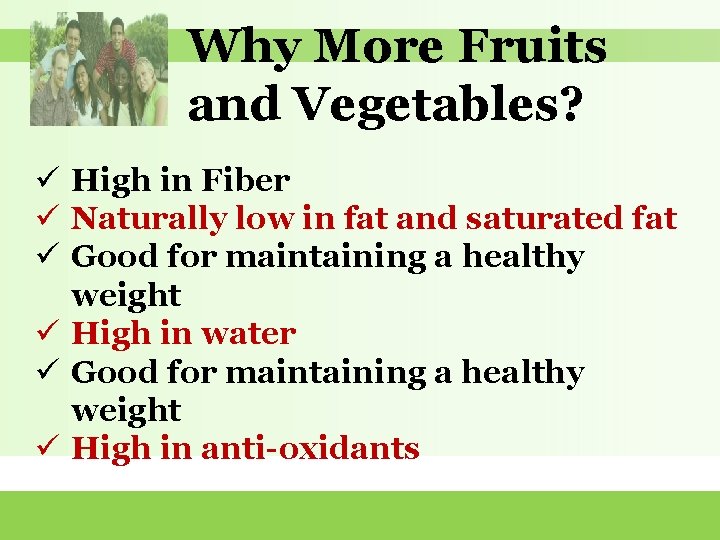
Why More Fruits and Vegetables? ü High in Fiber ü Naturally low in fat and saturated fat ü Good for maintaining a healthy weight ü High in water ü Good for maintaining a healthy weight ü High in anti-oxidants
Student Question What are Anti-Oxidants?
Anti-Oxidants Against Oxidants are “free radicals” Products of cell metabolism
Oxidants Caused By: Cigarette smoke Sunlight Pesticides Damage healthy cells through oxidation
What is the Role of Anti-Oxidants? Free radicals destroy antioxidants instead of cells
Anti-Oxidant Vitamins and Minerals Vitamin A, C & E Mostly found in fruits and vegetables
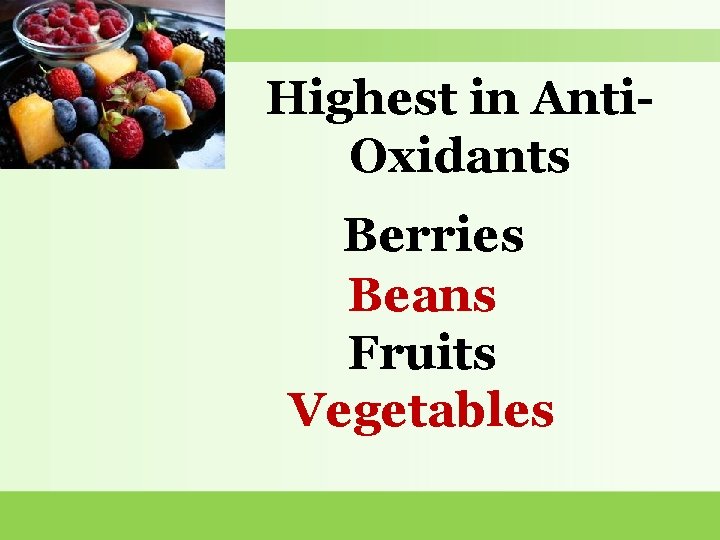
Highest in Anti. Oxidants Berries Beans Fruits Vegetables
The Energy “B” Vitamins • B 1 – Thiamin • B 6 – Pyridoxine • B 2 – Riboflavin • Folate or Folic Acid • B 3 – Niacin • B 12 – Cobalamin • Biotin • Pantothenic Acid
The “B” Vitamins • Convert Food to Energy • Involved in skin, muscle and nervous system function • Improve circulation • Help reduce cholesterol levels • Vitamin B 12 – Produces brain chemicals that affect mood
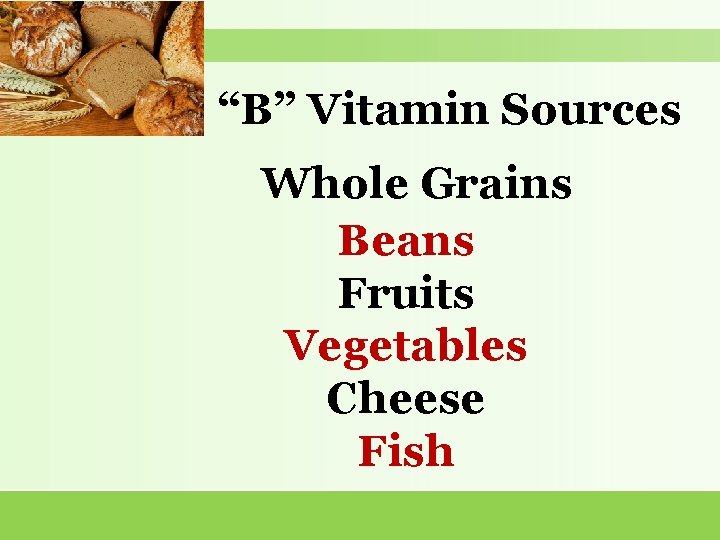
“B” Vitamin Sources Whole Grains Beans Fruits Vegetables Cheese Fish
Food Fact: Low levels of B Vitamins have been linked to depression.
Food Synergy Many components working together that provide nutrition Eating whole fruits and vegetables are key! Components that help with digestion and absorption of foods include the skins, seeds, and other parts of the fruit or vegetable Extracting a nutrient out (as in supplements) is not very nutritious
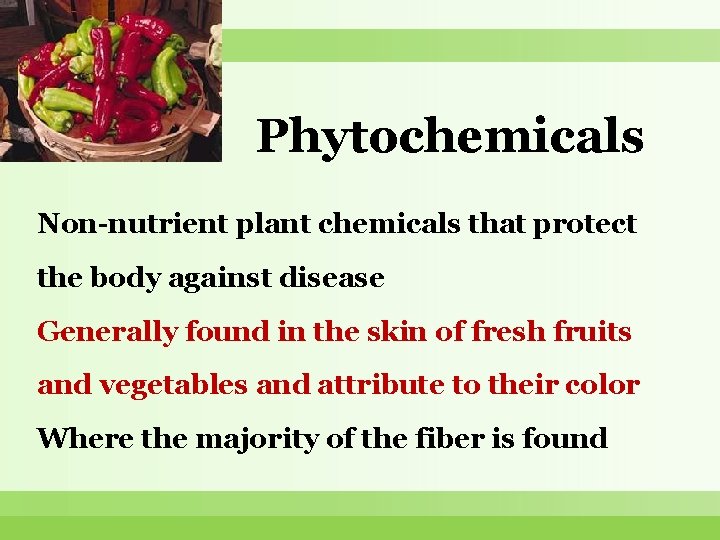
Phytochemicals Non-nutrient plant chemicals that protect the body against disease Generally found in the skin of fresh fruits and vegetables and attribute to their color Where the majority of the fiber is found