
Lesson 6 Avicenna and the Story of Inertia




- Slides: 17
Lesson 6 - Avicenna and the Story of Inertia Physics - KS 3 Forces and Motion Mrs Wolstenholme 1
Avicenna Ibn Sina Polymath medicine, psychology, pharmacology, geology, physics, astronomy, chemistry, philosophy, poetry, theology. 2
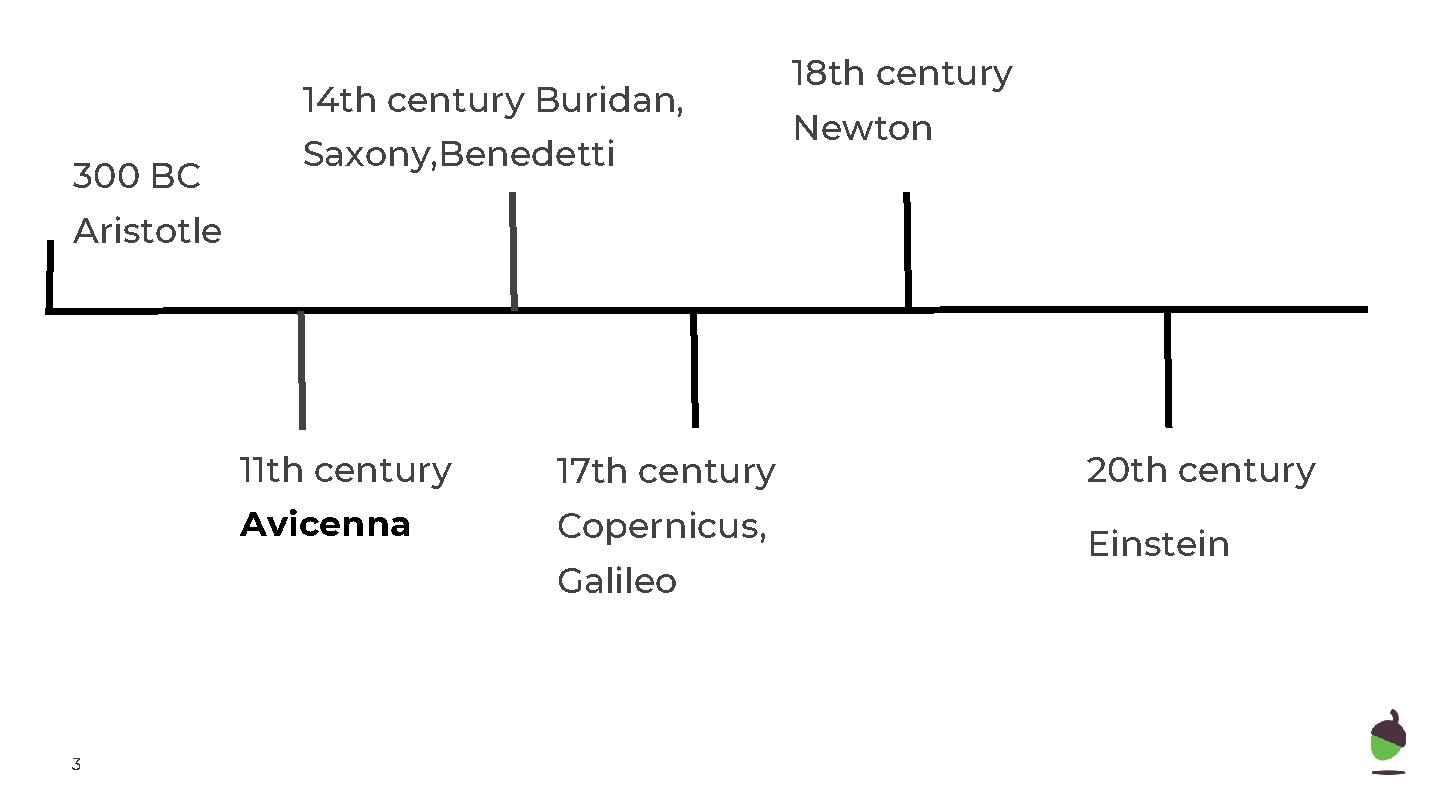
14 th century Buridan, 300 BC Saxony, Benedetti 18 th century Newton Aristotle 11 th century 17 th century Avicenna Copernicus, Galileo 3 20 th century Einstein
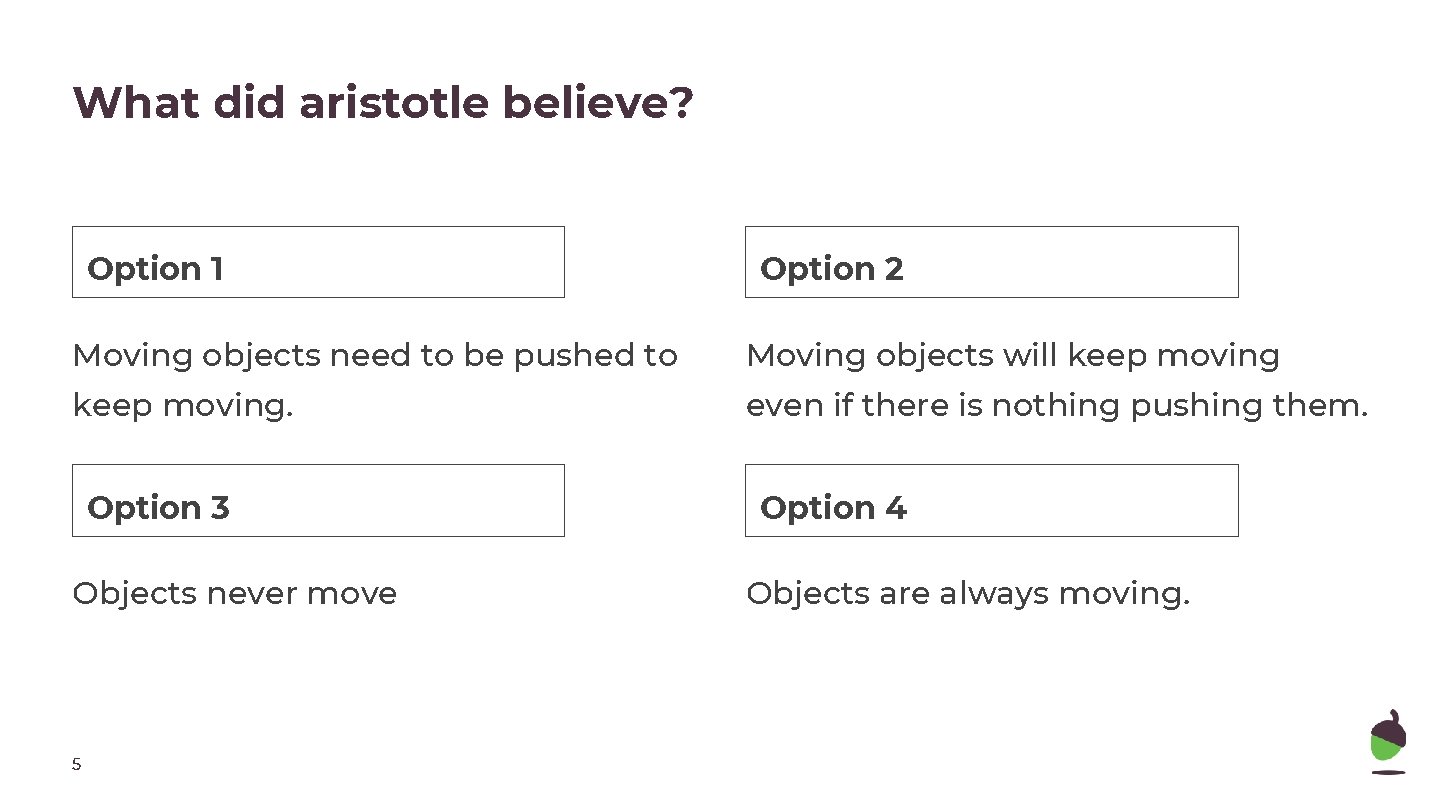
Aristotle Moving objects will only keep moving if there is something pushing them 4
What did aristotle believe? Option 1 Option 2 Moving objects need to be pushed to Moving objects will keep moving. even if there is nothing pushing them. Option 3 Objects never move 5 Option 4 Objects are always moving.
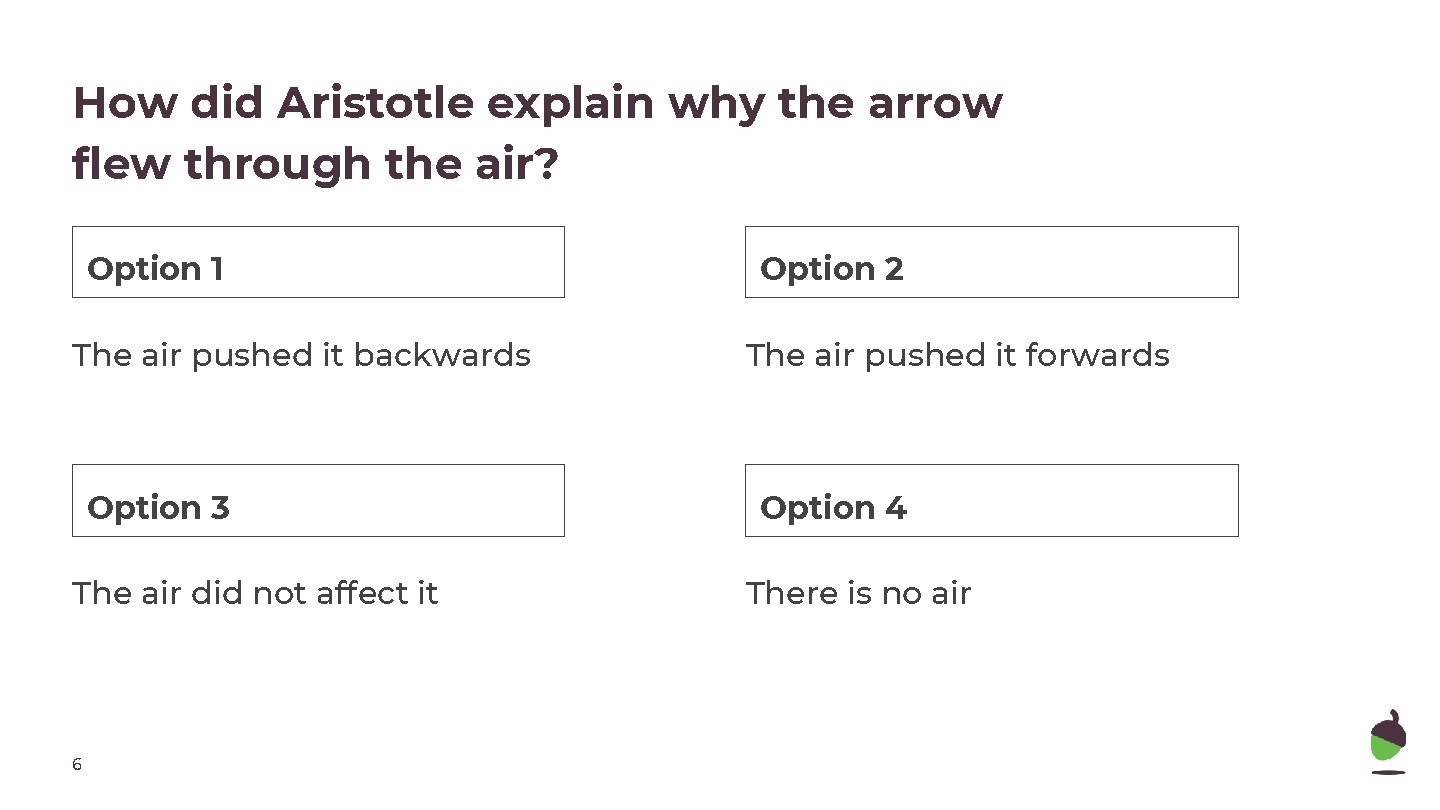
How did Aristotle explain why the arrow flew through the air? Option 1 The air pushed it backwards Option 3 The air did not affect it 6 Option 2 The air pushed it forwards Option 4 There is no air
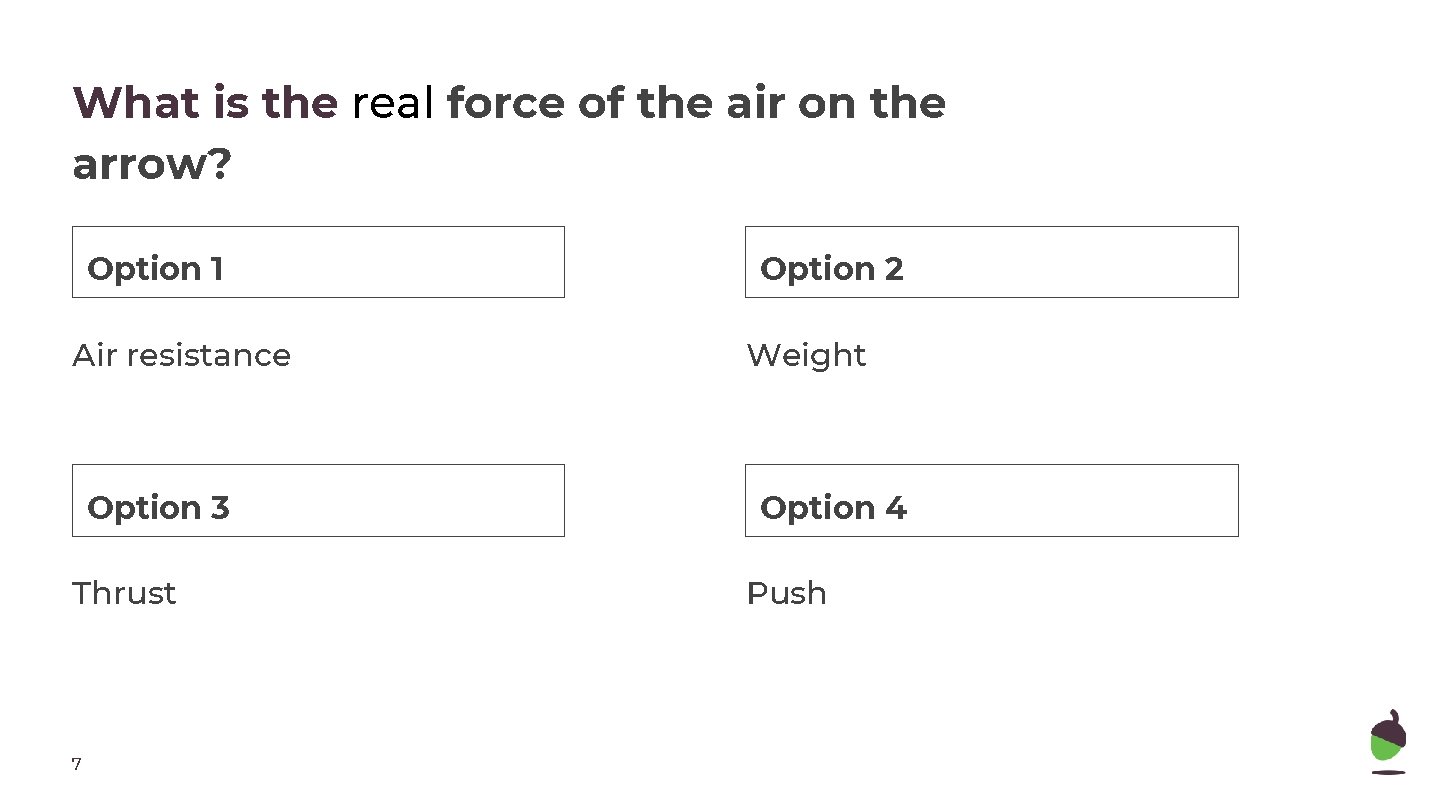
What is the real force of the air on the arrow? Option 1 Air resistance Option 3 Thrust 7 Option 2 Weight Option 4 Push
Which direction does the air resistance on the arrow act? Option 1 Upwards Option 3 Forwards 8 Option 2 Downwards Option 4 Backwards
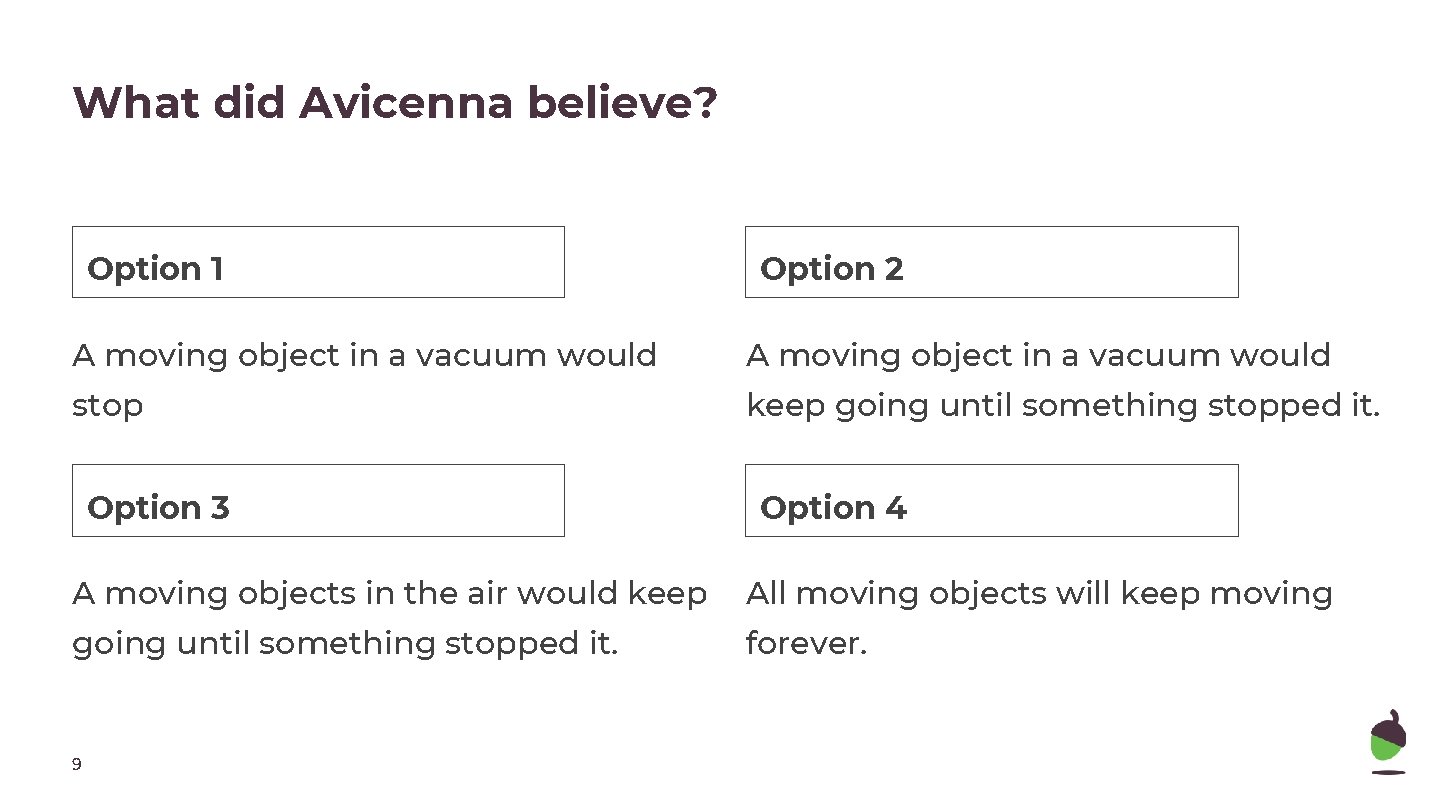
What did Avicenna believe? Option 1 Option 2 A moving object in a vacuum would stop keep going until something stopped it. Option 3 Option 4 A moving objects in the air would keep All moving objects will keep moving going until something stopped it. forever. 9
What is a vacuum? Option 1 A place with no air Option 3 Something used to clean 10 Option 2 A place with no light Option 4 A place with no land
14 th century Buridan, Saxony, Benedetti Impetus 1. If we fired an arrow on earth, what causes it to fall to the ground? 2. If there was no gravity, but there WAS air, would it keep moving? Explain your answer 3. If we fired it in a vacuum, but there WAS gravity, what would happen? 4. What would happen if we fired it where there was no gravity and no air? 11
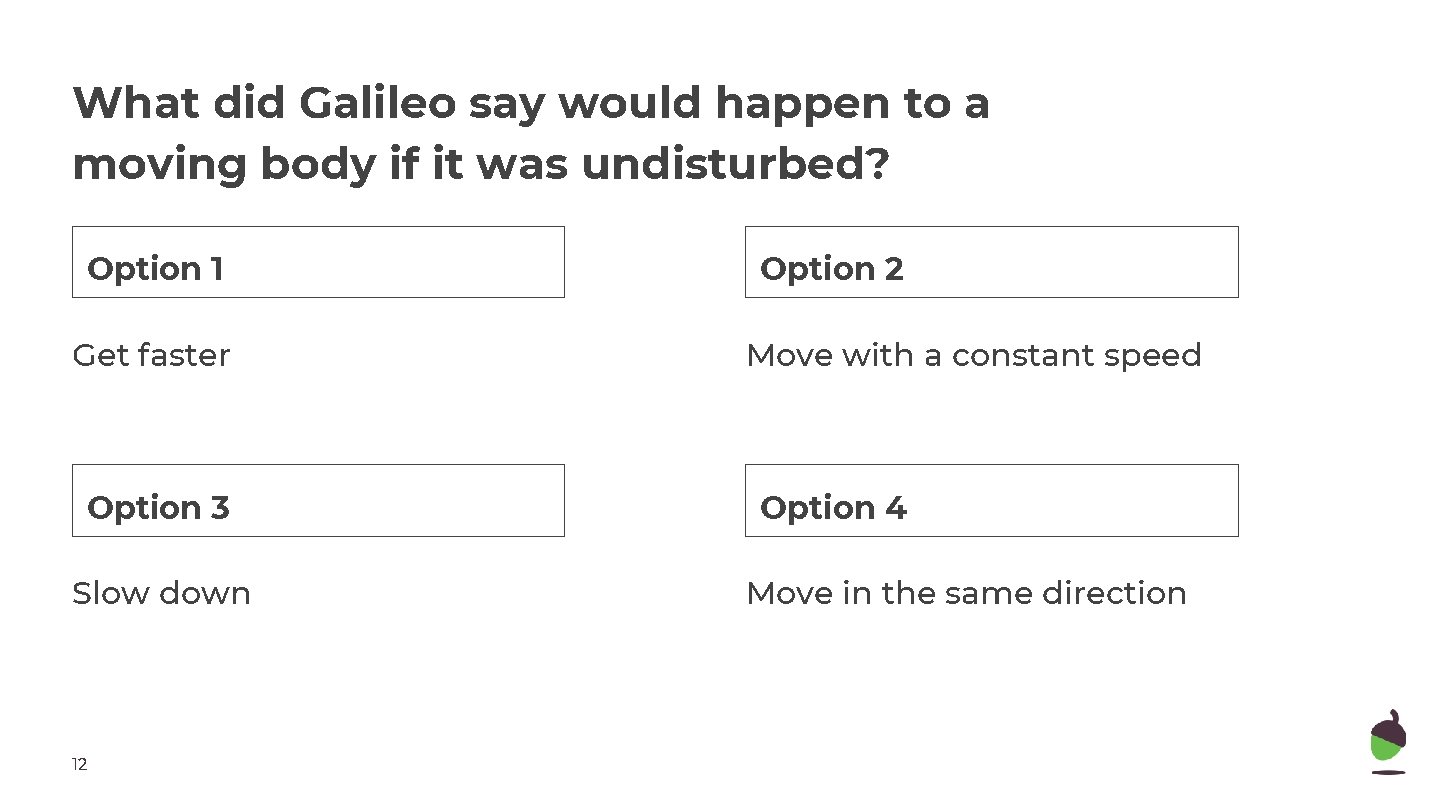
What did Galileo say would happen to a moving body if it was undisturbed? Option 1 Get faster Option 3 Slow down 12 Option 2 Move with a constant speed Option 4 Move in the same direction
What do we now call an ‘undisturbed’ object ? Option 1 Balanced Option 3 Unbalanced 13 Option 2 Moving Option 4 Fred
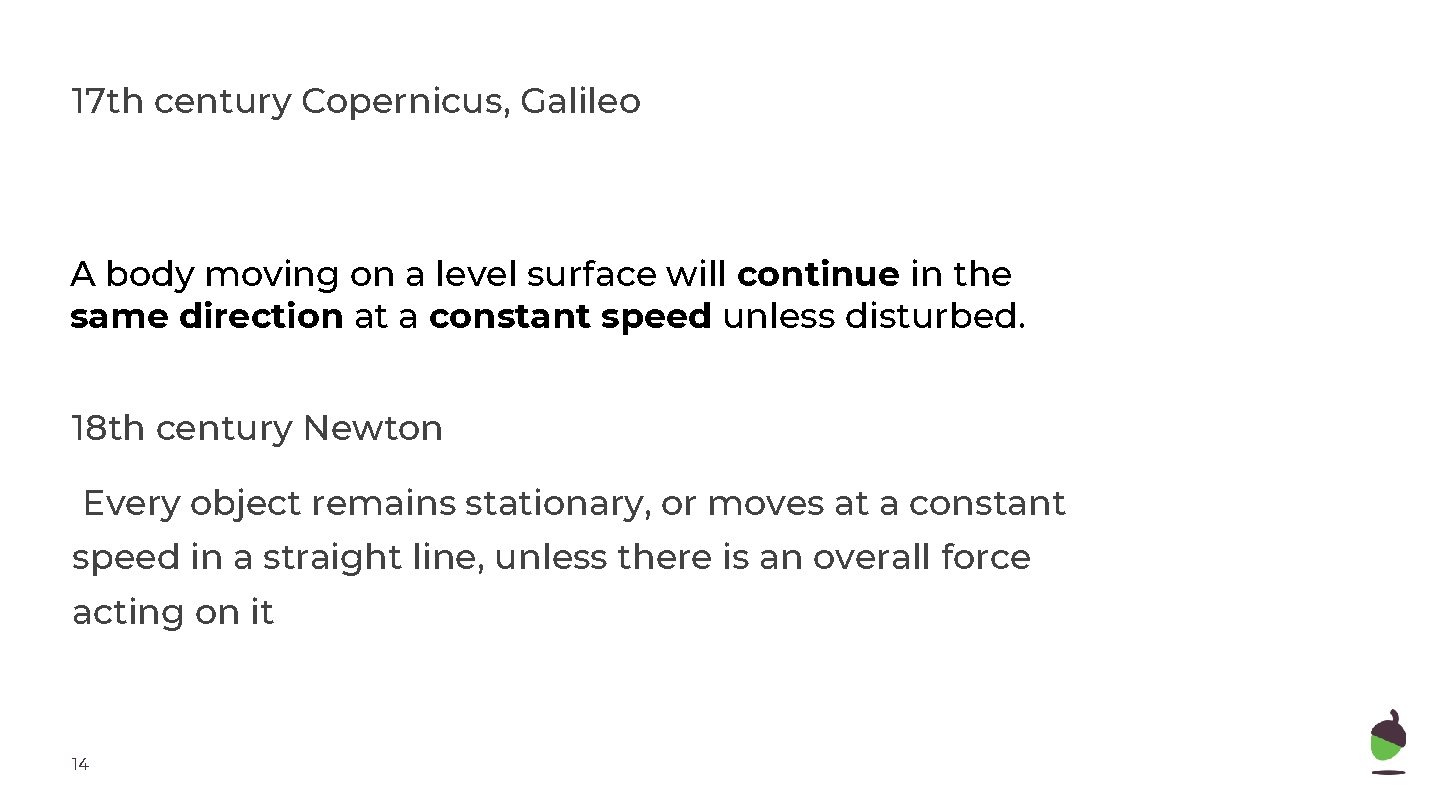
17 th century Copernicus, Galileo A body moving on a level surface will continue in the same direction at a constant speed unless disturbed. 18 th century Newton Every object remains stationary, or moves at a constant speed in a straight line, unless there is an overall force acting on it 14
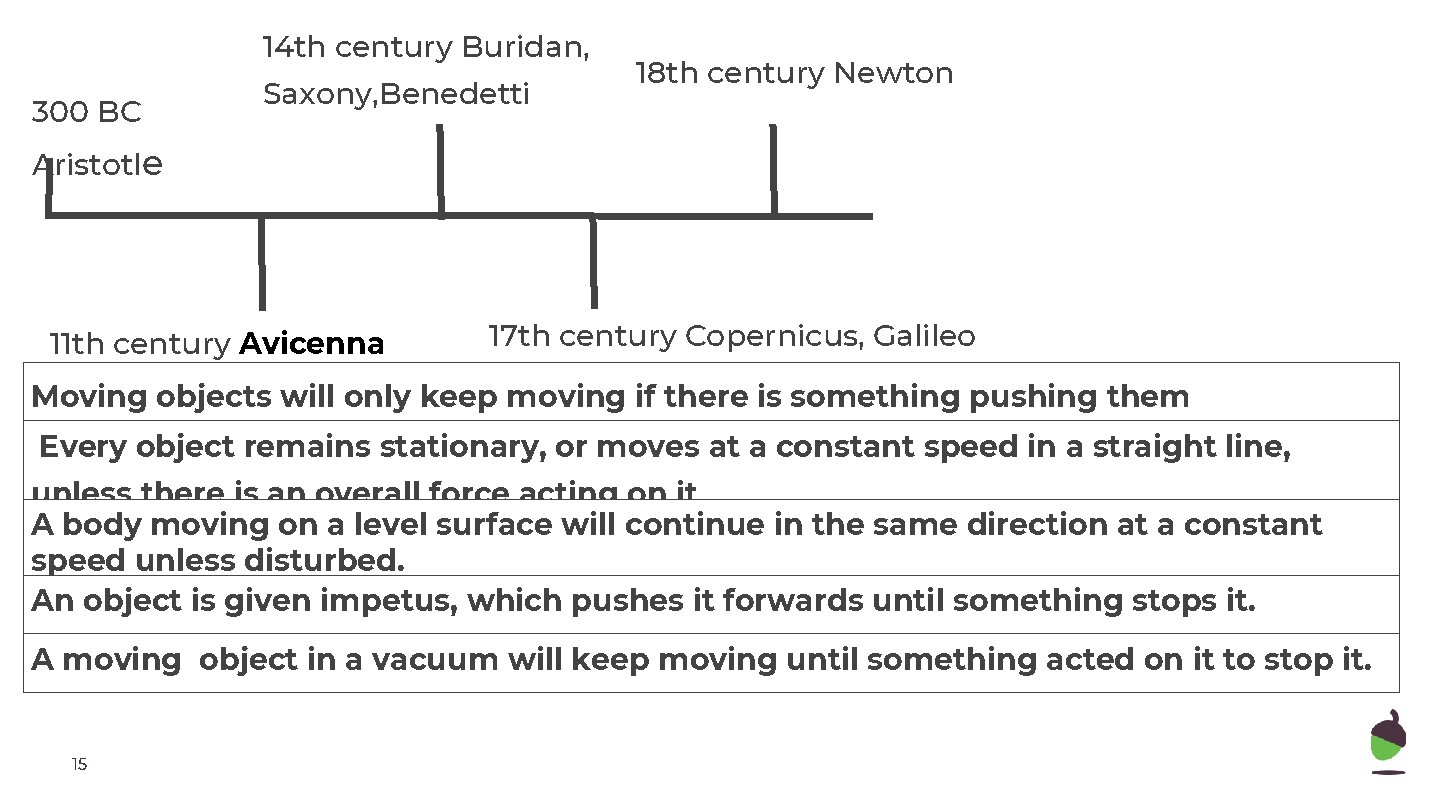
14 th century Buridan, 300 BC Saxony, Benedetti 18 th century Newton Aristotle 11 th century Avicenna 17 th century Copernicus, Galileo Moving objects will only keep moving if there is something pushing them Every object remains stationary, or moves at a constant speed in a straight line, unless there is an overall force acting on it A body moving on a level surface will continue in the same direction at a constant speed unless disturbed. An object is given impetus, which pushes it forwards until something stops it. A moving object in a vacuum will keep moving until something acted on it to stop it. 15
Comparing ideas 1. What do we call a testable idea in science? 2. What makes scientists change their ideas about why things happen? 3. Compare Newton’s explanation of motion with: a. Avicenna’s b. Galileo's 4. Who was the first person to think that objects will keep moving unless something acts upon it? 16
Scaffold - A comparison must have a similarity and a difference. Both cars and motorbikes have an engine, however. . . cars have four wheels, and motorbikes have two. a. Both Avicenna and Newton thought. . . however…. b. Both Galileo and Newton thought. . . however… 17