
Lesson 6 3 Thermal Energy on the Move
- Slides: 16
Lesson 6. 3 Thermal Energy on the Move
Vocabulary heat thermal insulator temperature convection conduction radiation thermal conductor
Essential Questions 1 What is heat? 2 How is thermal energy transferred?
Explore Activity Beyond the Sea • • • The ocean isn’t the same throughout. The temperature can vary from one part to another. Observe the demonstration. Record or draw what you observed. Hypothesize the reason for what you observed. Predict if you could make the movement faster or slower.
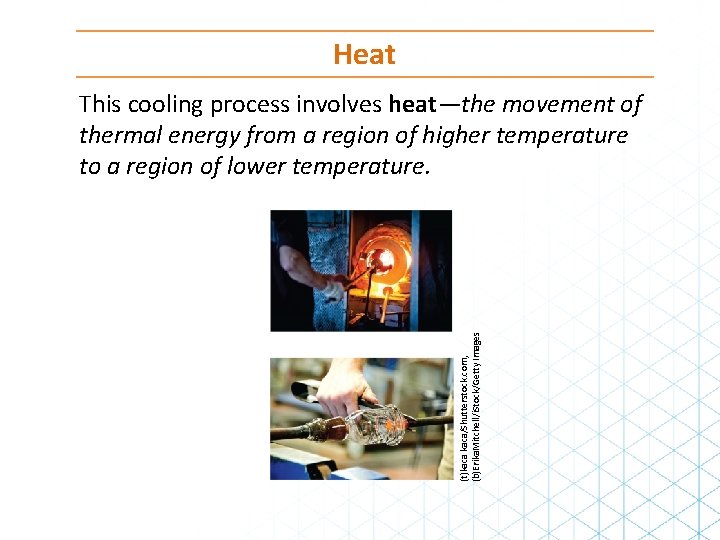
Heat (t)kaca/Shutterstock. com, (b)Erika. Mitchell/i. Stock/Getty Images This cooling process involves heat—the movement of thermal energy from a region of higher temperature to a region of lower temperature.
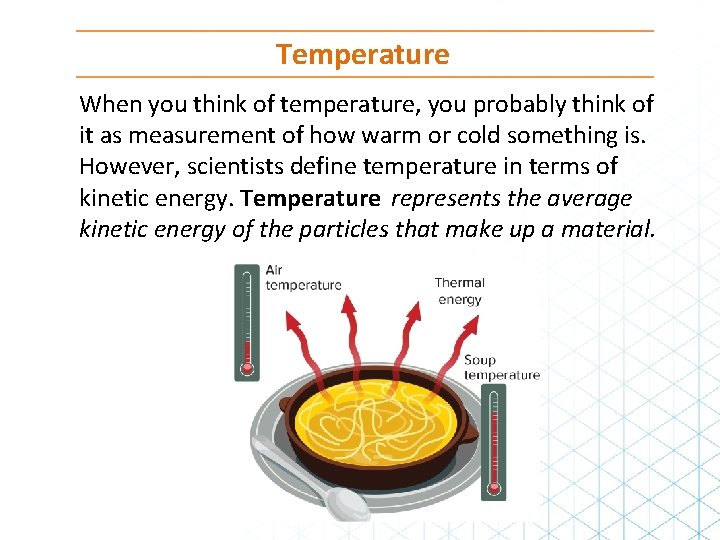
Temperature When you think of temperature, you probably think of it as measurement of how warm or cold something is. However, scientists define temperature in terms of kinetic energy. Temperature represents the average kinetic energy of the particles that make up a material.
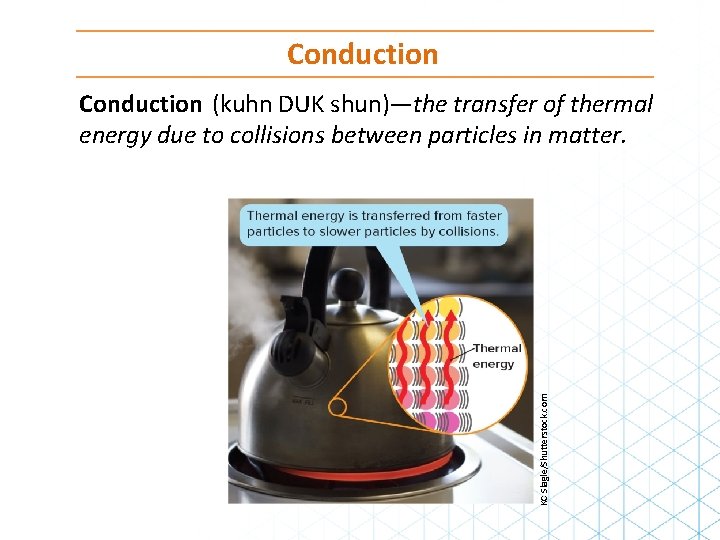
Conduction KC Slagle/Shutterstock. com Conduction (kuhn DUK shun)—the transfer of thermal energy due to collisions between particles in matter.
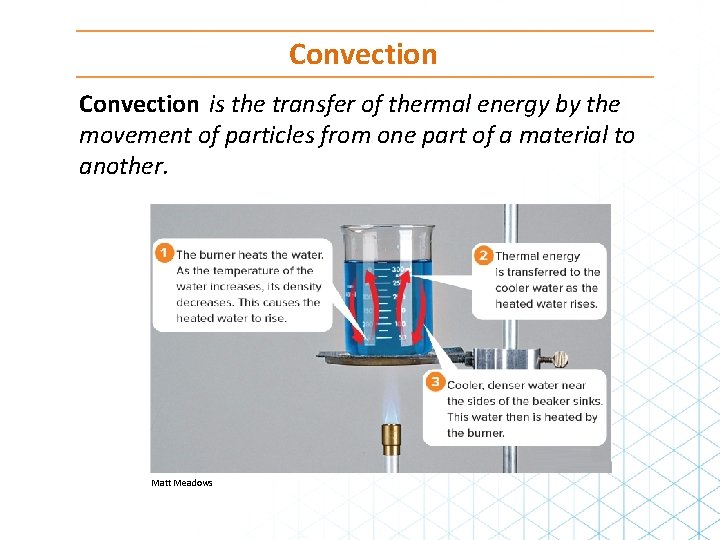
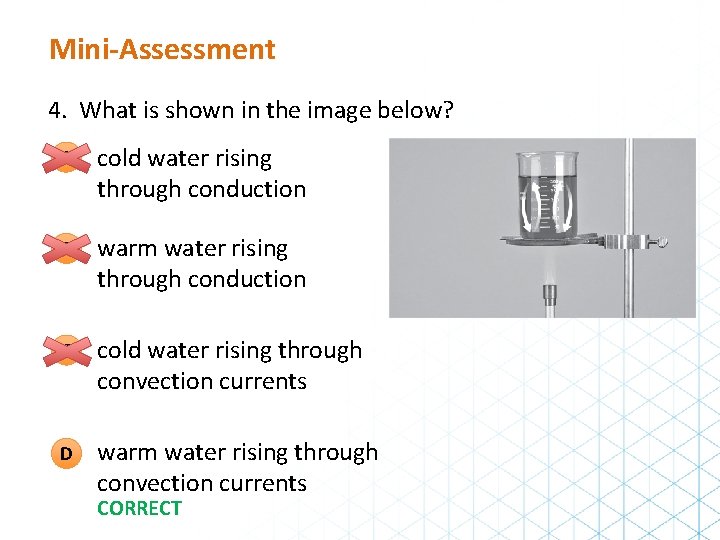
Convection is the transfer of thermal energy by the movement of particles from one part of a material to another. Matt Meadows
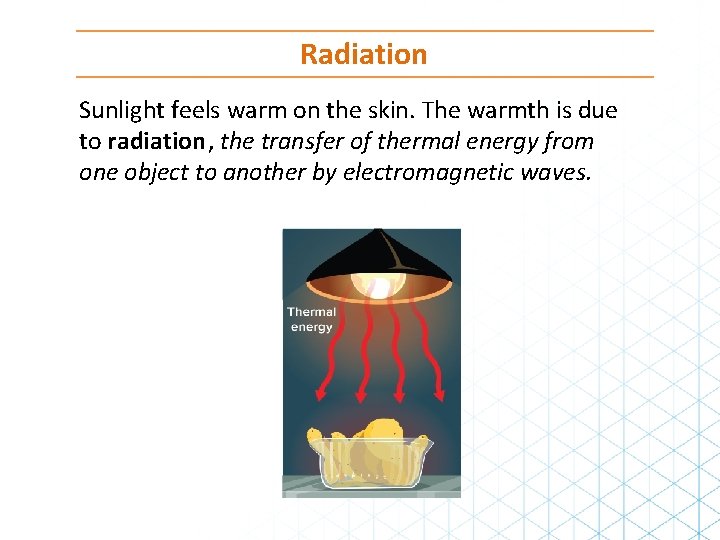
Radiation Sunlight feels warm on the skin. The warmth is due to radiation, the transfer of thermal energy from one object to another by electromagnetic waves.
Thermal Equilibrium Conduction, convection, and radiation are ways that thermal energy transfers occur. Eventually, the transfers end. Think back to the bowl of soup. As the soup cools and the air warms, the difference in the temperatures decreases. When they reach the same temperature, the transfers end. Two objects in contact with each other at the same temperature at thermal equilibrium.
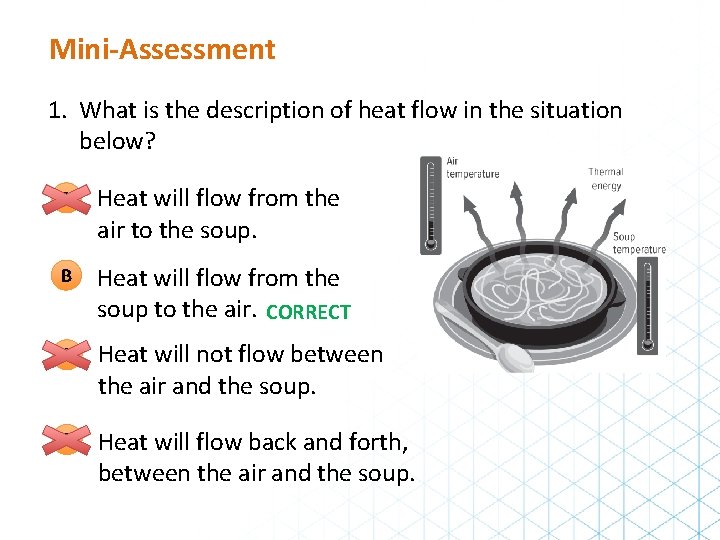
Mini-Assessment 1. What is the description of heat flow in the situation below? A Heat will flow from the air to the soup. B Heat will flow from the soup to the air. CORRECT C Heat will not flow between the air and the soup. D Heat will flow back and forth, between the air and the soup.
Mini-Assessment 2. Why is radiation a unique form of thermal energy transfer? A Kinetic energy also transfers. B Matter is not required. C Phase change may occur. D Thermal expansion can result. CORRECT
Mini-Assessment 3. Which type of heat transfer causes your face to feel warm when you sit in the sun? A conduction C insulation B convection D radiation CORRECT
Mini-Assessment 4. What is shown in the image below? A cold water rising through conduction B warm water rising through conduction C cold water rising through convection currents D warm water rising through convection currents CORRECT
Mini-Assessment 5. Which decreases thermal energy of a can of soup you just took out of your pantry? A letting the can sit on the counter for an hour B opening the lid of the can of soup with a can opener C placing the can of soup under a bright light D putting the can of soup in the refrigerator CORRECT
Review Video: https: //www. youtube. com/w atch? v=Eizsm 5 V 8 c_c https: //www. youtube. com/watch? v=Mm MX 83 diwl 0 https: //www. youtube. com/watch? v=0 m UU 69 Par. FM https: //www. youtube. com/watch? v=1 LM jscj 17 pc