
Lesson 5 Wetlands SD 1 ENVIRONMENTAL UNIT REVIEW
- Slides: 22
Lesson 5: Wetlands SD 1 ENVIRONMENTAL UNIT
REVIEW: Wetlands Wetland areas include freshwater marshes, reed beds and wet areas. Natural wetlands are lands that, due to geological or ecological factors, have a natural supply of water whether from flooding rivers or connections with groundwater.
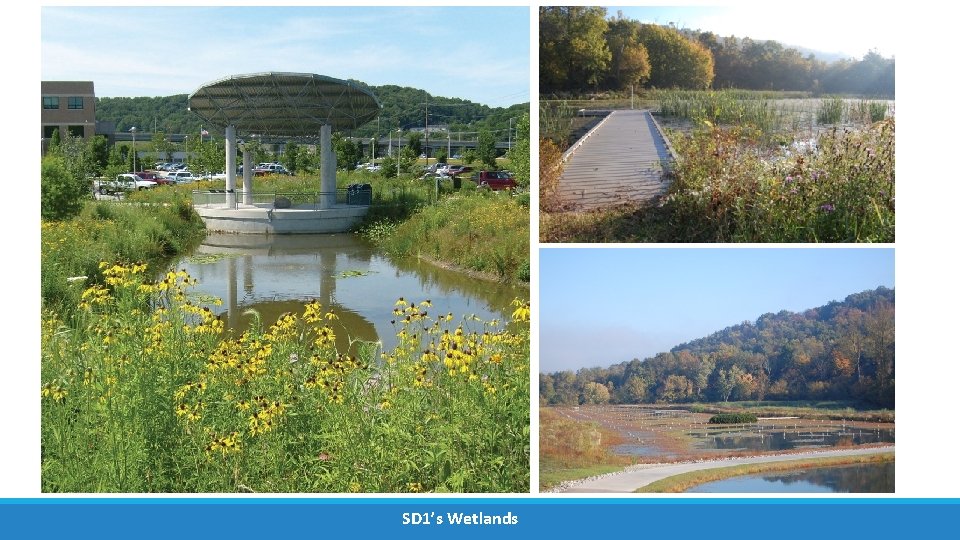
SD 1’s Wetlands
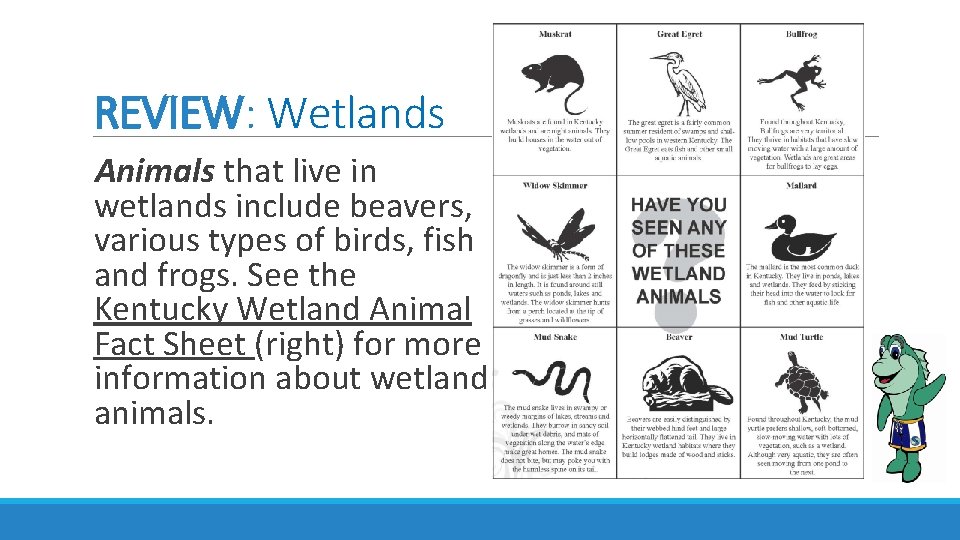
REVIEW: Wetlands Animals that live in wetlands include beavers, various types of birds, fish and frogs. See the Kentucky Wetland Animal Fact Sheet (right) for more information about wetland animals.
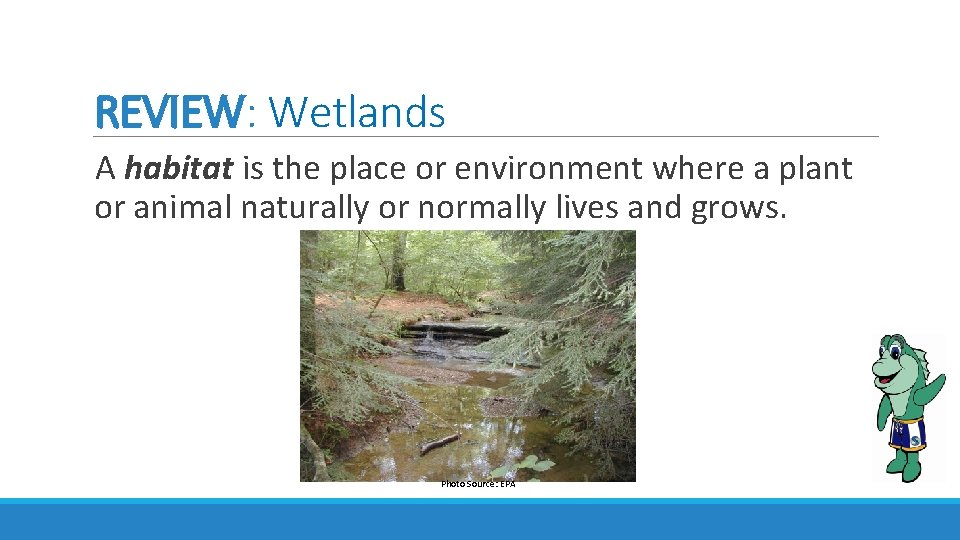
REVIEW: Wetlands A habitat is the place or environment where a plant or animal naturally or normally lives and grows. Photo Source: EPA
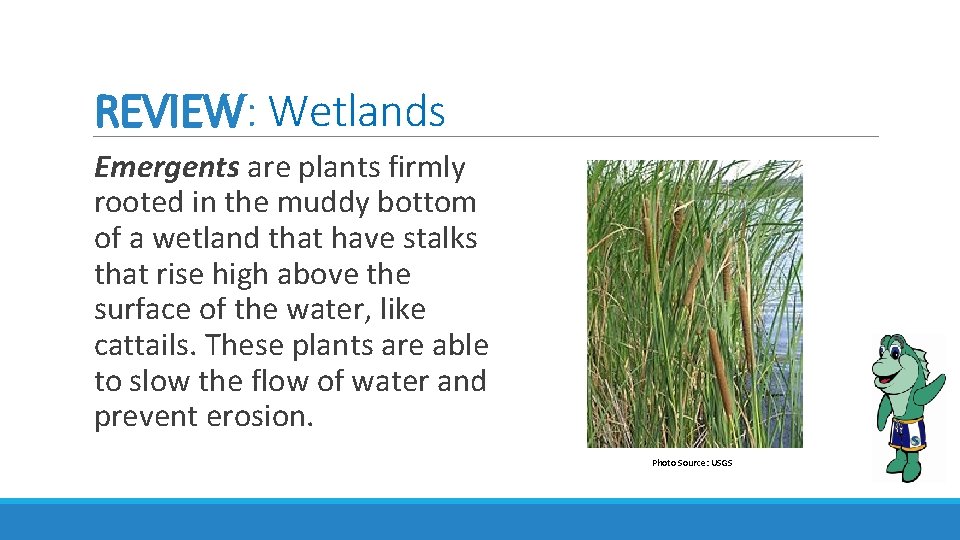
REVIEW: Wetlands Emergents are plants firmly rooted in the muddy bottom of a wetland that have stalks that rise high above the surface of the water, like cattails. These plants are able to slow the flow of water and prevent erosion. Photo Source: USGS
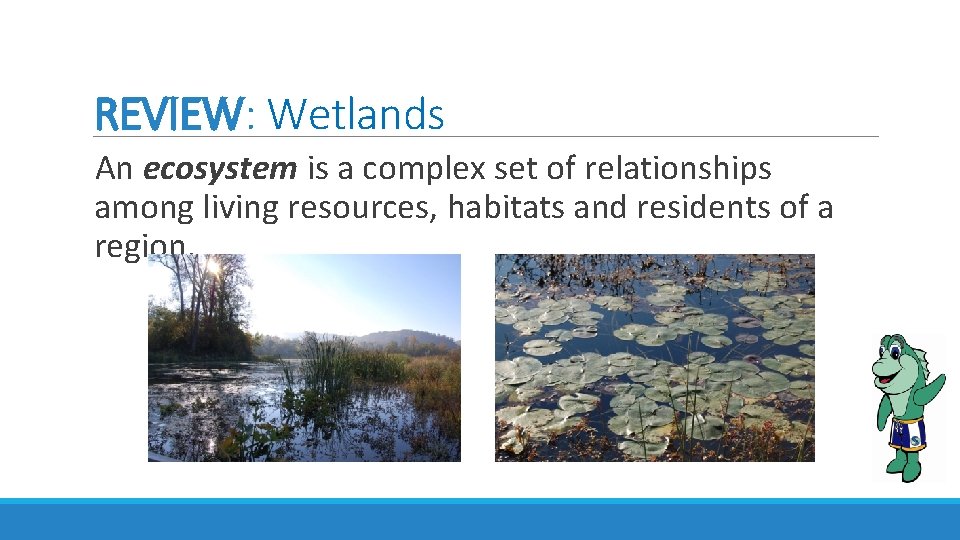
REVIEW: Wetlands An ecosystem is a complex set of relationships among living resources, habitats and residents of a region.
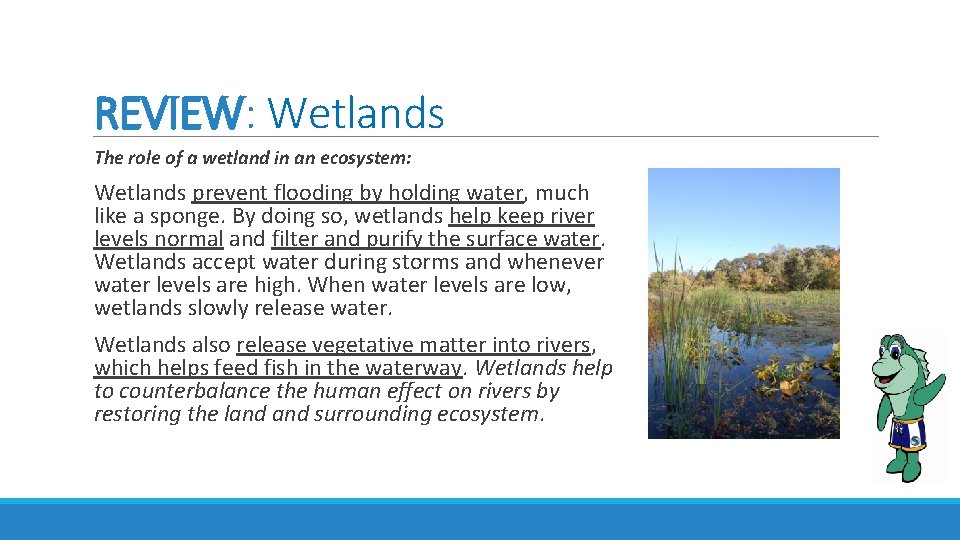
REVIEW: Wetlands The role of a wetland in an ecosystem: Wetlands prevent flooding by holding water, much like a sponge. By doing so, wetlands help keep river levels normal and filter and purify the surface water. Wetlands accept water during storms and whenever water levels are high. When water levels are low, wetlands slowly release water. Wetlands also release vegetative matter into rivers, which helps feed fish in the waterway. Wetlands help to counterbalance the human effect on rivers by restoring the land surrounding ecosystem.
REVIEW: Wetlands The role of a wetland in an ecosystem (continued): Many animals that live in other habitats use wetlands for migration or reproduction. For example, herons nest in large old trees but need shallow areas in order to wade for fish and aquatic life. Amphibians often explore in upland areas but return to the water to mate and reproduce. Unlike most other habitats, wetlands directly improve other ecosystems. Because of their many cleansing benefits, wetlands have been compared to kidneys. The analogy is a good one because wetlands and kidneys both help control water flow and cleanse the system.
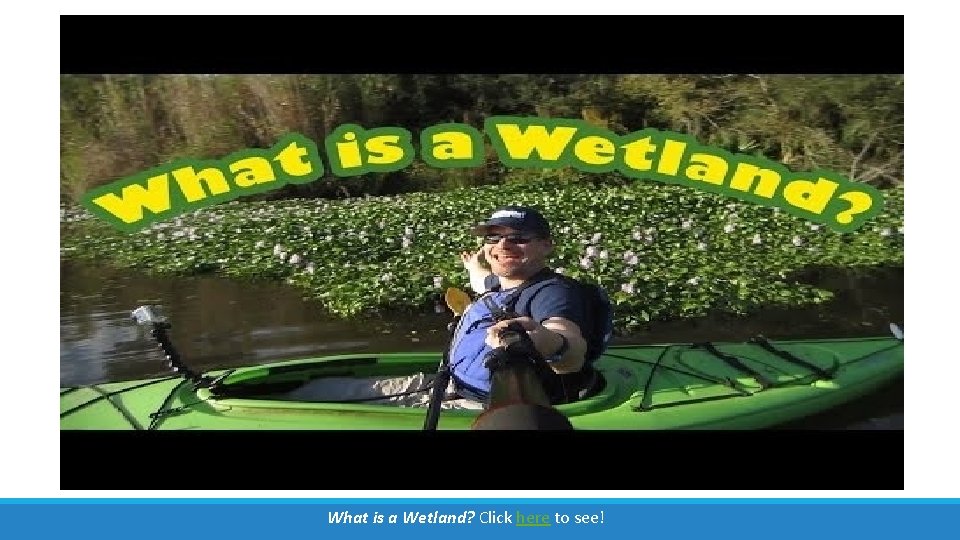
What is a Wetland? Click here to see!
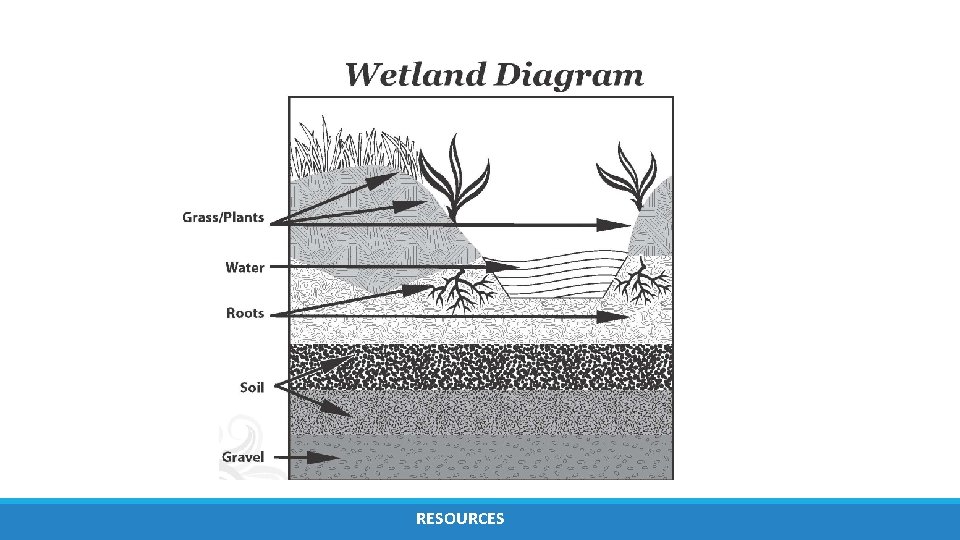
REVIEW: Wetlands The role of a wetland for water purification: Wetlands also clean the water by filtering out sediment (dirt), breaking down vegetative matter and changing chemicals into a usable form. There are many different layers in a wetland that help filter the water as it passes through. The ability of wetlands to recycle nutrients makes them critical in the overall functioning of the earth. No other ecosystem is as productive or as unique in the process of recycling nutrients. In some places, artificial wetlands have been developed solely to help purify water.
RESOURCES
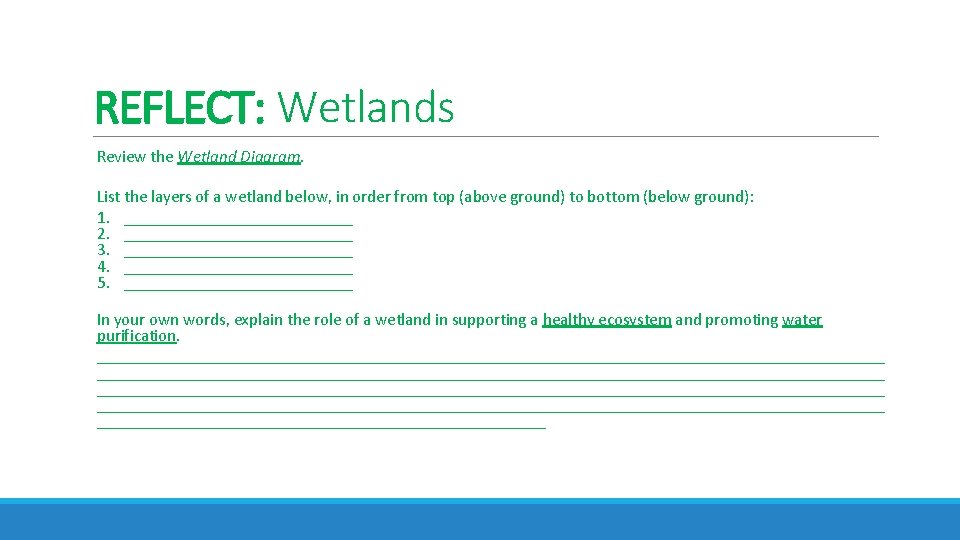
REFLECT: Wetlands Review the Wetland Diagram. List the layers of a wetland below, in order from top (above ground) to bottom (below ground): 1. ______________ 2. ______________ 3. ______________ 4. ______________ 5. ______________ In your own words, explain the role of a wetland in supporting a healthy ecosystem and promoting water purification. _____________________________________________________________________________________________ ___________________________
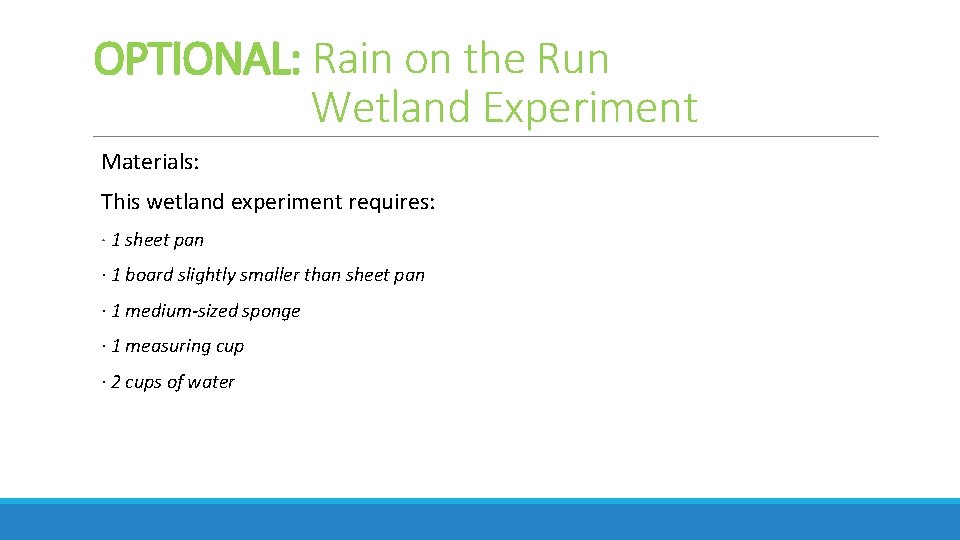
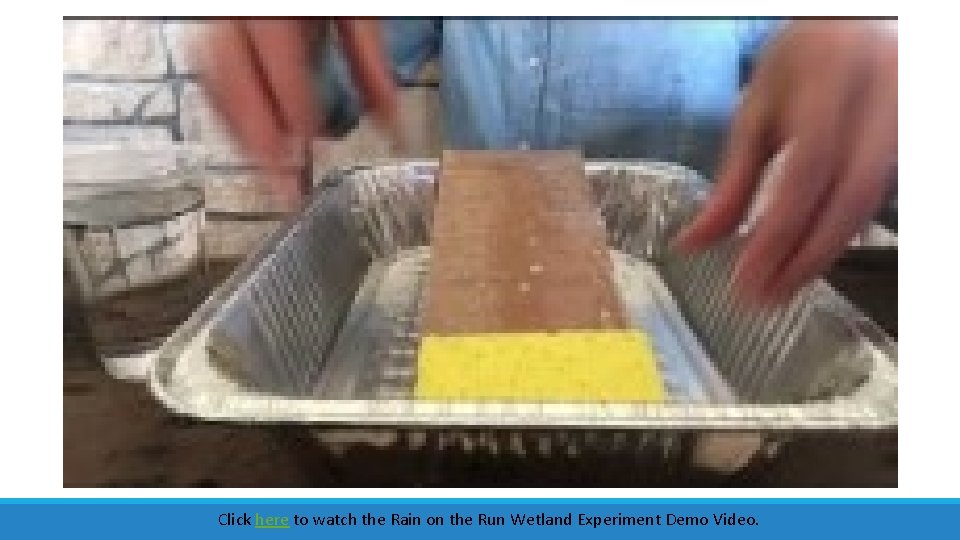
OPTIONAL: Rain on the Run Wetland Experiment Materials: This wetland experiment requires: · 1 sheet pan · 1 board slightly smaller than sheet pan · 1 medium‐sized sponge · 1 measuring cup · 2 cups of water
Click here to watch the Rain on the Run Wetland Experiment Demo Video.
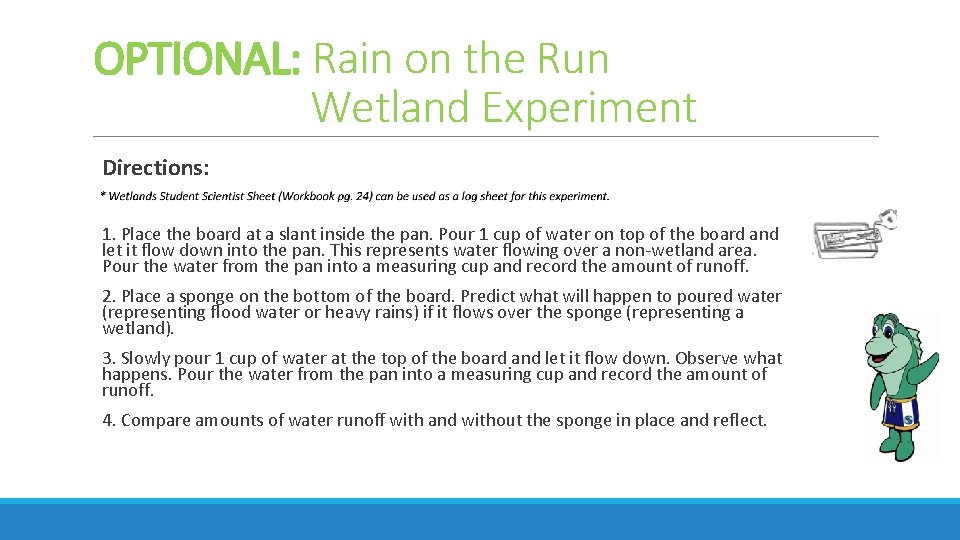
OPTIONAL: Rain on the Run Wetland Experiment Directions: 1. Place the board at a slant inside the pan. Pour 1 cup of water on top of the board and let it flow down into the pan. This represents water flowing over a non‐wetland area. Pour the water from the pan into a measuring cup and record the amount of runoff. 2. Place a sponge on the bottom of the board. Predict what will happen to poured water (representing flood water or heavy rains) if it flows over the sponge (representing a wetland). 3. Slowly pour 1 cup of water at the top of the board and let it flow down. Observe what happens. Pour the water from the pan into a measuring cup and record the amount of runoff. 4. Compare amounts of water runoff with and without the sponge in place and reflect.
OPTIONAL: Rain on the Run Wetland Experiment Reflect: • What did you see? • How do wetlands prevent flooding? • What parts of a wetland act like a sponge and hold water? Did you know, if you dig into the earth you will eventually hit water! Throughout history this is the way people would get their water, by digging wells. The earth’s water table is the upper limit of the portion of the ground wholly saturated with water.
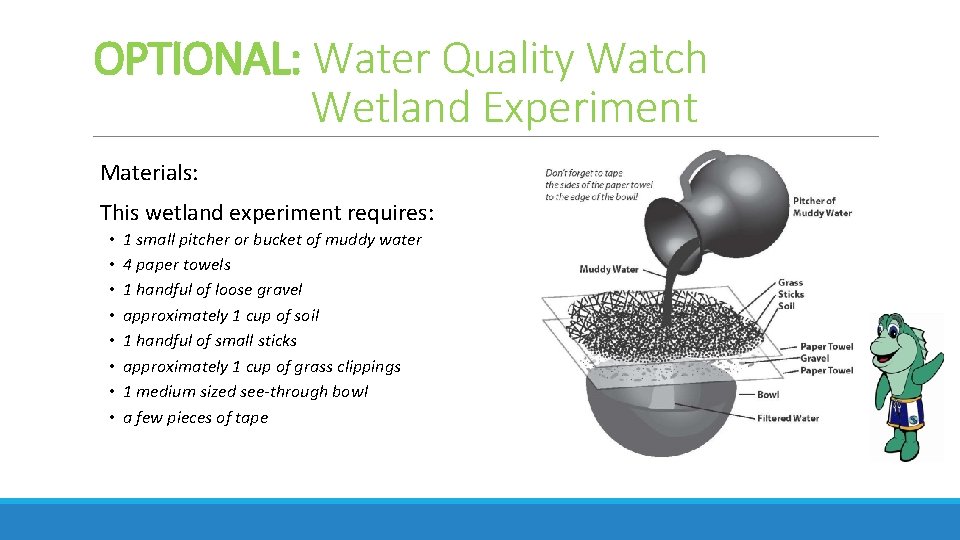
OPTIONAL: Water Quality Watch Wetland Experiment Materials: This wetland experiment requires: • • 1 small pitcher or bucket of muddy water 4 paper towels 1 handful of loose gravel approximately 1 cup of soil 1 handful of small sticks approximately 1 cup of grass clippings 1 medium sized see‐through bowl a few pieces of tape
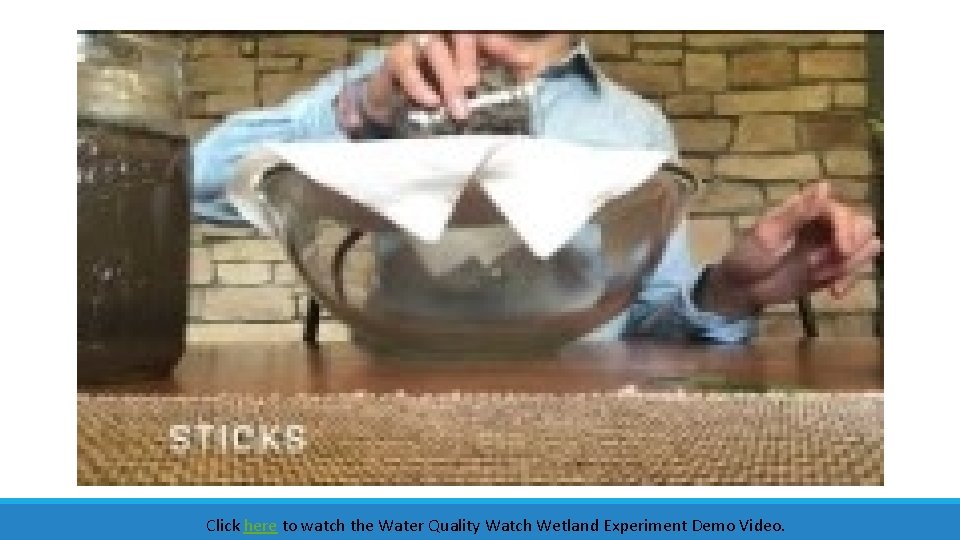
Click here to watch the Water Quality Watch Wetland Experiment Demo Video.
OPTIONAL: Water Quality Watch Wetland Experiment Directions: 1. Tape a layer of 2 paper towels over the opening of the empty, see‐through bowl. 2. Place a small layer of gravel on top of the paper towels. 3. Cover the gravel with another set of 2 paper towels, taping the towels onto the bowl. 4. On top of the paper towels, place a layer of soil, then a layer of sticks (representing roots), and finally a layer of grass clippings on top. 5. Observe the muddy water in the pitcher or bucket. Slowly pour the muddy water onto the top of the grass that is sitting on top of the layers. The muddy water represents runoff. Runoff carries pollution from the ground (oil, dirt, etc. ), making the water look dirty. 6. Observe the flow of water through the layers and into the bowl.
OPTIONAL: Water Quality Watch Wetland Experiment Reflect: • What did you see? • Why does the water in the bottom bowl look clearer than the muddy water poured over it? • How does a wetland filter and absorb water? • How does a wetland improve water quality?
§ Pick up after pets. Be the Solution to Storm Water Pollution. § Don’t litter. § Wash cars on the grass or at a commercial car wash. § Never dump anything down storm drains. § Check cars for leaks. § Plant grass and gardens in bare spots. § Keep grass and leaves out of storm drains. Start a Storm Drain Marking Team! Click Here to Learn More!