
Lesson 5 Turn Your Radio On What television


- Slides: 21
Lesson 5: Turn Your Radio On What television programs and movies have you watched? What songs have you listened to recently? Imagine that you lived in a time before television, Ipods and computers. How would your life be different? What would be a likely substitute for entertainment? What would be a substitute for receiving news and information?
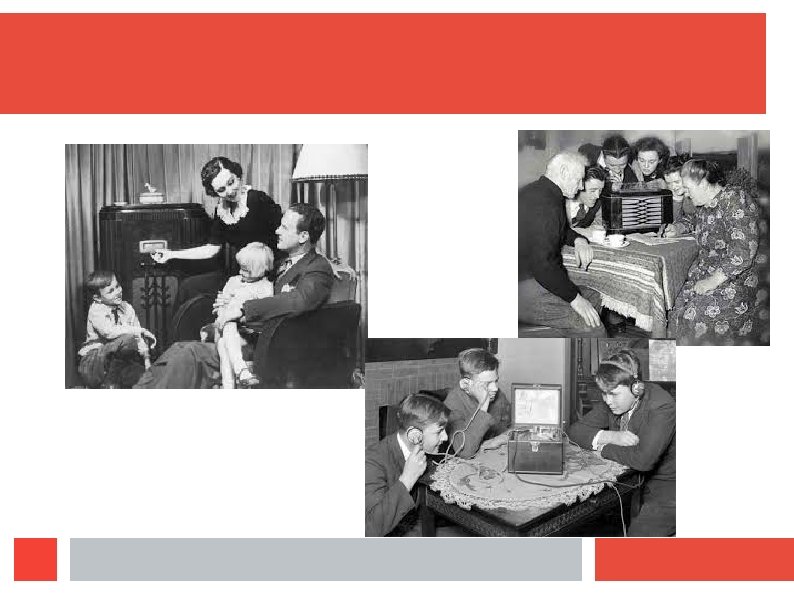
Lesson 5: Turn Your Radio On The radio was invented in the late 1800 s, and radio broadcasting began on a large scale in the 1920 s. The broadcast of the 1920 presidential election results is generally considered the beginning of professional broadcasting. The golden age of broadcasting began around 1925 and, in 1926, the National Broadcasting Company (NBC) made plans for radios to be in 26 million American homes. Families gathered in the evening to listen to music, comedies and dramas. The radio not only supplied the major source of entertainment, but also connected people with the world through newscasts.
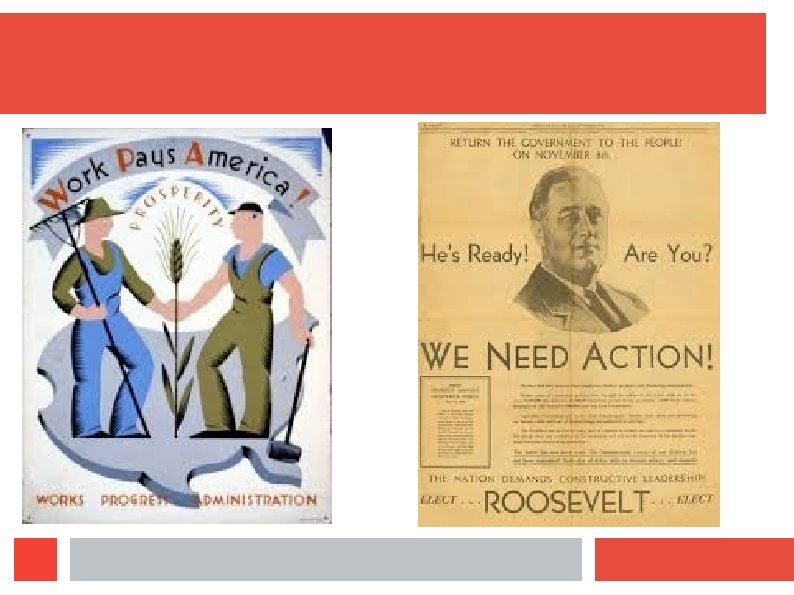
Lesson 5: Turn Your Radio On Roosevelt promised a “New Deal” to the American people. The goal of the New Deal was to restore confidence in the U. S. economy. In his inaugural address, his words of hope and assurance rang out to the nation: “Let me assert my firm belief that the only thing we have to fear is fear itself. . . this Nation asks for action, and action now. We must act and act quickly. ” During his first hundred days, FDR made changes in federal government spending and rushed an unprecedented number of measures through Congress, including an aggressive fiscal expansion focusing on three areas: relief, recovery and reform.
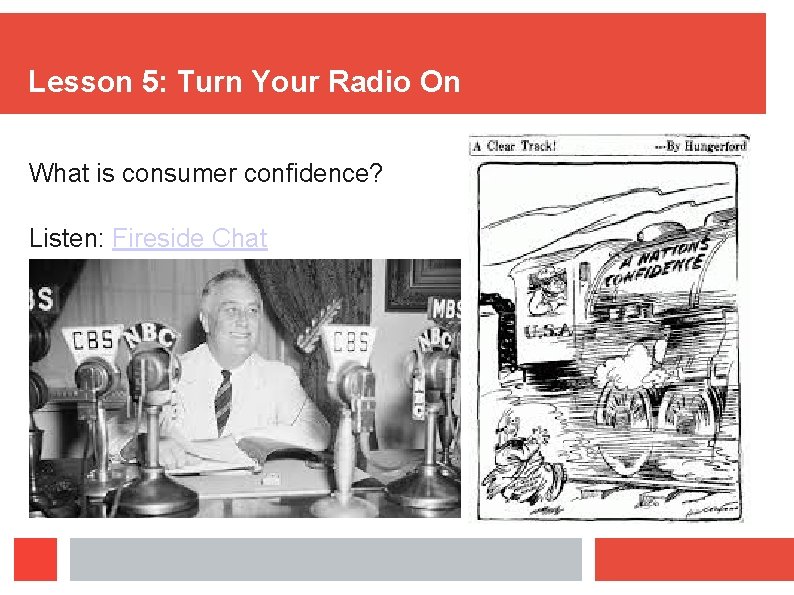
Lesson 5: Turn Your Radio On FDR’s greatest challenge was to restore confidence in the economy, and the technology to deliver his message was available—the radio was his tool to restore confidence and hope by direct communication with the American people. FDR began a series of evening radio talks immediately after his inauguration. In these “fireside chats, ” he appealed to the people with words of encouragement and explanation. Referring to listeners as “my friends, ” he explained his strategies and New Deal programs and attempted to make the average citizen part of his team. He became “the man of the hour. ”
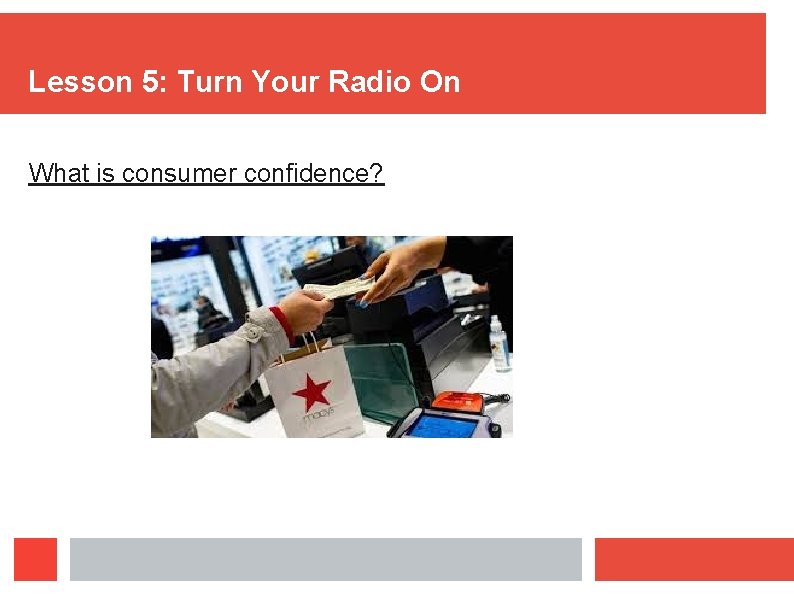
Lesson 5: Turn Your Radio On What is consumer confidence?
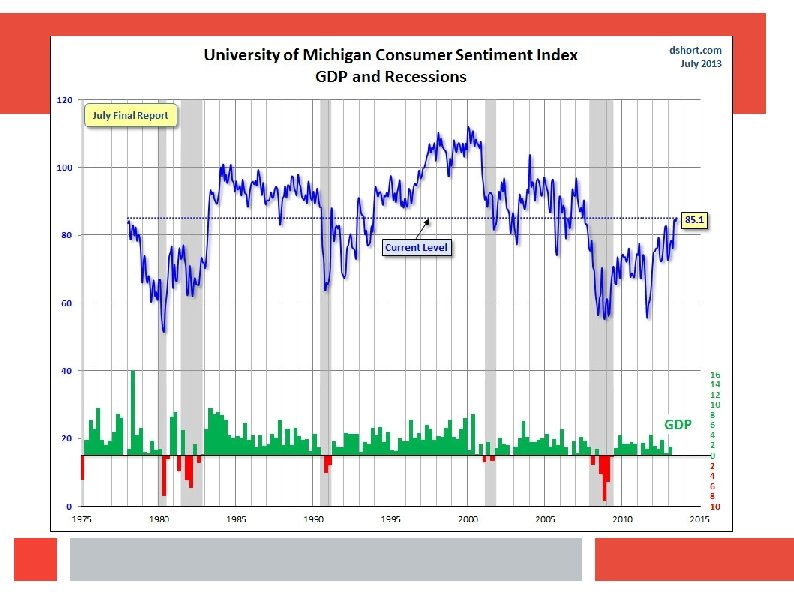
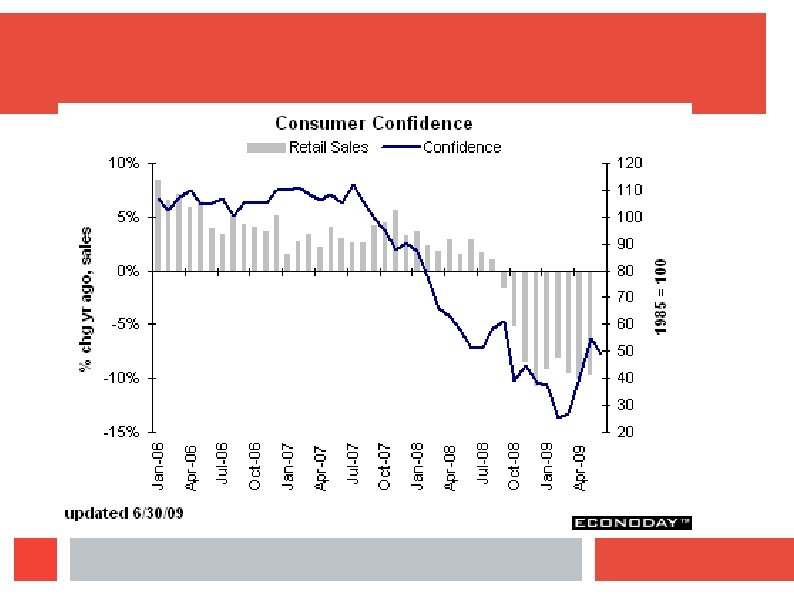
Lesson 5: Turn Your Radio On What is consumer confidence? Consumer confidence is related to how consumers feel about the economy and is an indication of their spending and saving decisions. • If people feel the economy is weak and their jobs are not secure, they are likely to spend less now in order to have savings for a future layoff or job loss. • The Conference Board, an independent economic research firm, issues a monthly survey that is based on a representative sample of 5, 000 U. S. households. This Consumer Confidence Index (CCI) gives a measure of consumer optimism about current economic conditions through consumers’ spending behavior. Another well-established index that measures consumer confidence is the University of Michigan’s Consumer Sentiment Index.
Lesson 5: Turn Your Radio On What is consumer confidence? In considering consumer confidence, economists are seeking to understand to project how people’s attitudes about the health of the economy will influence their spending, saving and borrowing behaviors.
Lesson 5: Turn Your Radio On What is consumer confidence? Listen: Fireside Chat
Lesson 5: Turn Your Radio On Criticism From Left and Right -Tremendously popular first two year, opposition to his policies had begun to grow. -Economy only slightly improved, 10 million remained unemployed, nation's income was about half it had been in 1929. -The right thought government regulated business too tightly (Southern Democrats), and federal government's power expanded at the expense of states' rights. -Business leaders were alarmed at the growing deficit. The left thought FDR didn't go far enough. They wanted more government economic intervention and to shift the wealth from the rich to middle-income and poor Americans.
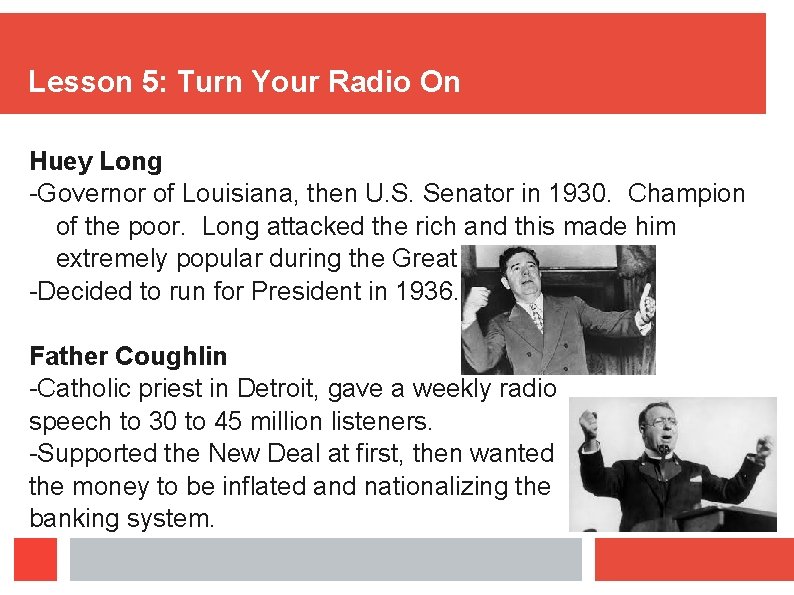
Lesson 5: Turn Your Radio On Huey Long -Governor of Louisiana, then U. S. Senator in 1930. Champion of the poor. Long attacked the rich and this made him extremely popular during the Great Depression. -Decided to run for President in 1936. Father Coughlin -Catholic priest in Detroit, gave a weekly radio speech to 30 to 45 million listeners. -Supported the New Deal at first, then wanted the money to be inflated and nationalizing the banking system.
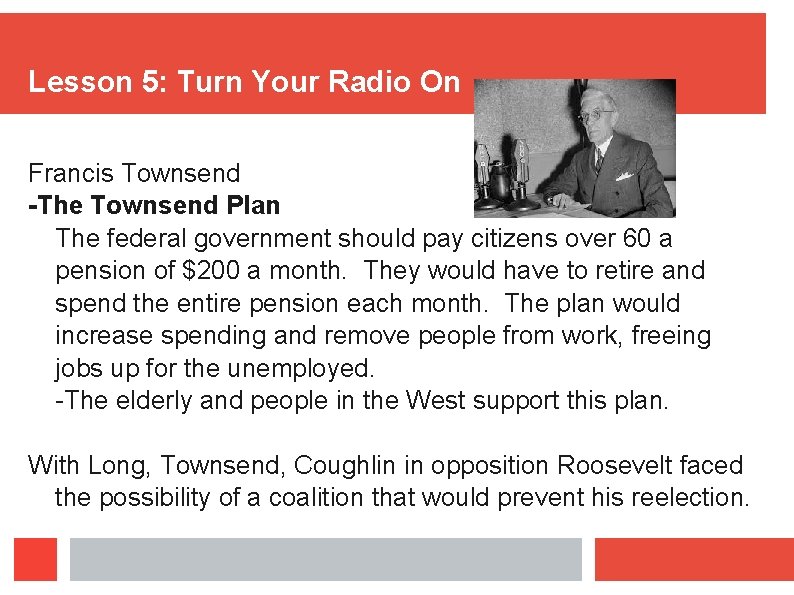
Lesson 5: Turn Your Radio On Francis Townsend -The Townsend Plan The federal government should pay citizens over 60 a pension of $200 a month. They would have to retire and spend the entire pension each month. The plan would increase spending and remove people from work, freeing jobs up for the unemployed. -The elderly and people in the West support this plan. With Long, Townsend, Coughlin in opposition Roosevelt faced the possibility of a coalition that would prevent his reelection.
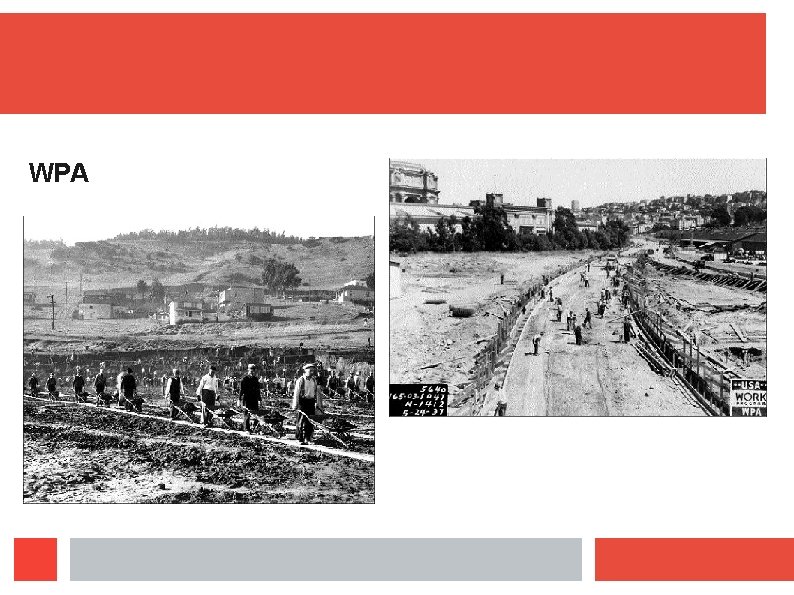
Lesson 5: Turn Your Radio On There were concerns over his New Deal, FDR pushed on. -He launched a new series of programs, aka the Second New Deal. -Works Progress Administration -Artists, musicians, writers -$11 billion is spent -8. 5 million workers build 650, 000 miles of roads -125, 000 public buildings -8, 000 parks, 853 airports, and built or improved more than 124, 000 bridges -Social Security -Provide security for unemployed and older Americans -Collect at age 65. Used payroll taxes, which left out farmers.
WPA
Lesson 5: Turn Your Radio On Fireside Chats helped keep the nation involved and up-to-date. FDR addressed the following and more in his Chats: Unemployment, Banking Crisis, Federal Spending Read the handouts and put them each into a category. Consider the following questions while reading: How did FDR explain the problem, proposed solution and his plan of action to the listeners? How did FDR’s words offer encouragement and build confidence in the economy? How would you have felt if you had been a listener to this radio broadcast?
Lesson 5: Turn Your Radio On • Balanced budget means that the federal government’s expenditures on programs equal the amount of tax revenue collected. President Roosevelt often addressed the fact that the government was spending more than the revenue it was collecting. When the government is spending more than the revenue it collects, it is operating in a “deficit. ” The government borrows money to pay the deficit and this adds to the government’s debt, known as the “national debt. ” • The Great Depression was the worst in U. S. history. The economy was experiencing high unemployment, with 25 percent of the work force unemployed. Real Gross Domestic Product was declining, which means that the output of goods and services was declining. These economic problems were occurring across the United States and across all sectors of the economy—manufacturing, banking and financial services, agriculture, and so on. • Roosevelt tempered his concern about the national debt by pointing to increased national income and by pointing to the long-term benefits the economy would experience from the government’s investment in infrastructure (roads, bridges, dams) and education (schools). • Personal income refers to income received by people from all sources. It includes wages and salaries, rental income, profit, transfer payments, and interest income. • Real Gross Domestic Product (GDP) is the market value of all final goods and services produced in an economy in a given year adjusted for inflation. Real GDP and national income—which are essentially equal—were falling. • The money supply (stock) is the quantity of money available in an economy. The basic money supply in the United States consists of currency, coins and checking account deposits. The banking crisis forced banks to suspend operations, and many banks failed. This reduced the money supply and the availability of credit. • Unemployment refers to the number of people 16 years of age and older who are without jobs and are actively seeking work. • The unemployment rate is the percentage of the labor force that is willing and able to work, does not have a job and is actively seeking work.
Lesson 5: Turn Your Radio On What are some effective ways a politician today might communicate? • How did President Roosevelt’s fireside chats contribute to U. S. recovery from the Great Depression? • Why was it important to restore citizens’ confidence in the economy? • How would citizens putting their money back in banks affect the money supply? • How did technology enhance Roosevelt’s ability to communicate and improve consumer confidence? • What is the significance of a consumer confidence survey?
Lesson 5: Turn Your Radio On Your turn! I will create 4 groups. Each group is responsible for creating its own “fireside chat”. Students in each group will make a recording of their messages, which should last from two to three minutes. The recorded messages will be played to the class to simulate radio broadcasts. The fireside chat should identify an economic concept or problem that existed during the Great Depression, define or explain that problem/concept to the public, and then propose a solution in a manner that encourages citizens to support that plan and builds confidence in the economy. Be as “FDR” as possible. Group members should consider how hearing the fireside chats would have affected them as listeners. You have 20 minutes!