
Lesson 5 NATIONAL TRAFFIC INCIDENT MANAGEMENT TIM RESPONDER


- Slides: 31
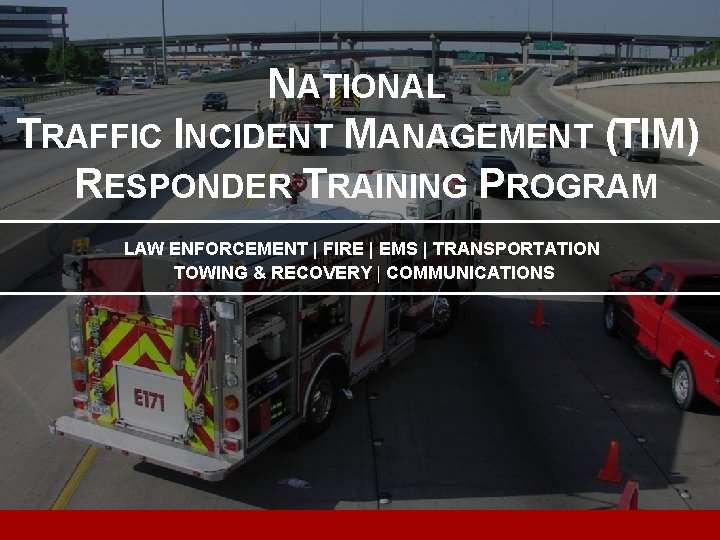
Lesson 5 NATIONAL TRAFFIC INCIDENT MANAGEMENT (TIM) RESPONDER TRAINING PROGRAM LAW ENFORCEMENT | FIRE | EMS | TRANSPORTATION TOWING & RECOVERY | COMMUNICATIONS
Lesson 5: Scene Safety 5 -1
Lesson 5 Lesson Objectives At the conclusion of this lesson, participants will be able to: 1. Describe how emergency vehicle markings can improve scene safety 2. Describe recommendations for emergencyvehicle lighting as set forth in the MUTCD 3. Describe high-visibility safety apparel requirements for incident responders 5 -2
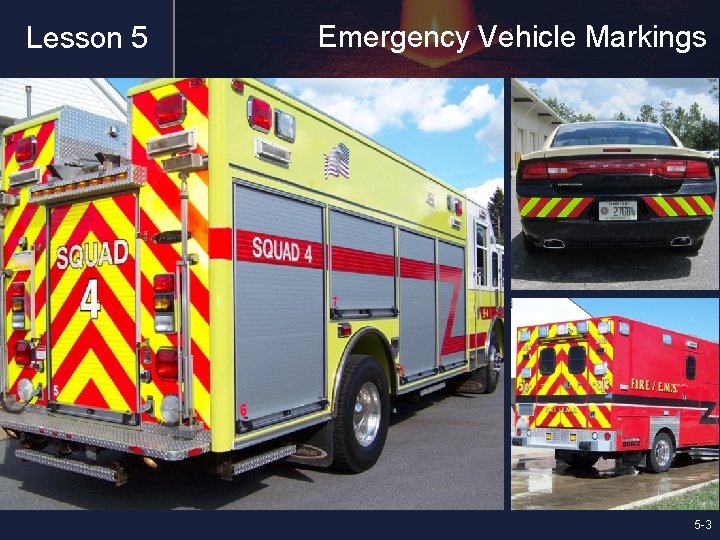
Lesson 5 Emergency Vehicle Markings 5 -3
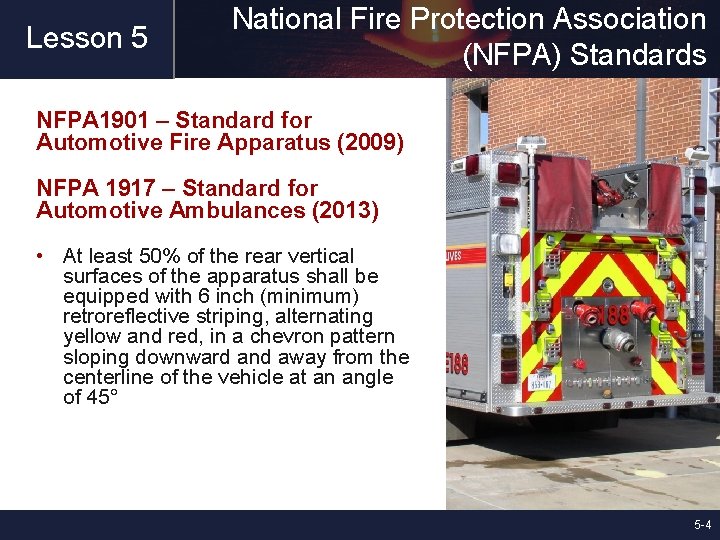
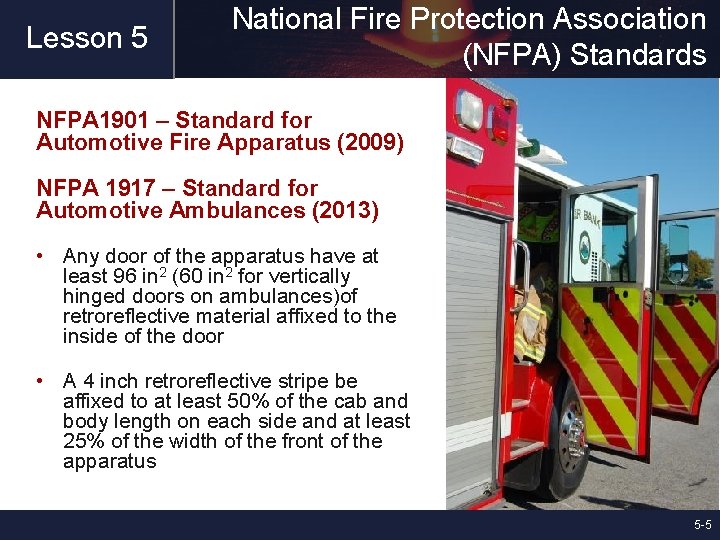
Lesson 5 National Fire Protection Association (NFPA) Standards NFPA 1901 – Standard for Automotive Fire Apparatus (2009) NFPA 1917 – Standard for Automotive Ambulances (2013) • At least 50% of the rear vertical surfaces of the apparatus shall be equipped with 6 inch (minimum) retroreflective striping, alternating yellow and red, in a chevron pattern sloping downward and away from the centerline of the vehicle at an angle of 45° 5 -4
Lesson 5 National Fire Protection Association (NFPA) Standards NFPA 1901 – Standard for Automotive Fire Apparatus (2009) NFPA 1917 – Standard for Automotive Ambulances (2013) • Any door of the apparatus have at least 96 in 2 (60 in 2 for vertically hinged doors on ambulances)of retroreflective material affixed to the inside of the door • A 4 inch retroreflective stripe be affixed to at least 50% of the cab and body length on each side and at least 25% of the width of the front of the apparatus 5 -5
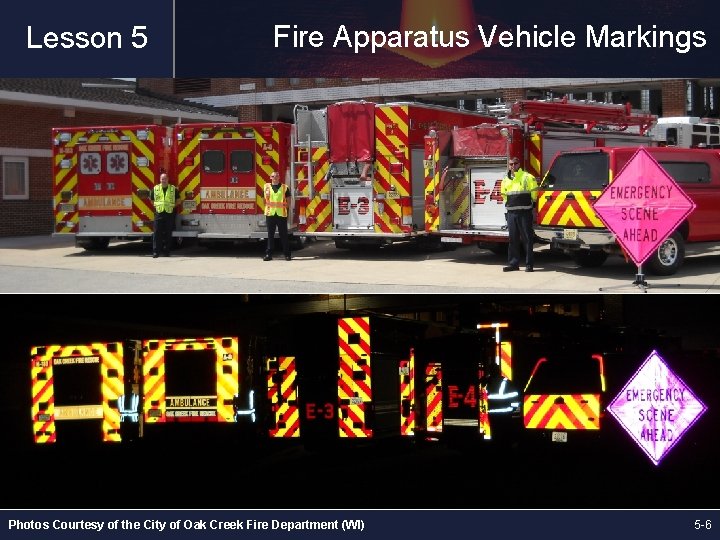
Lesson 5 Fire Apparatus Vehicle Markings Photos Courtesy of the City of Oak Creek Fire Department (WI) 5 -6
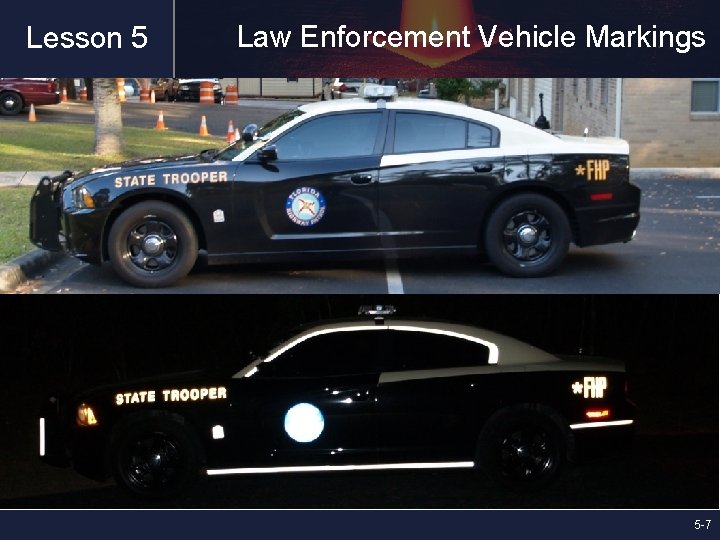
Lesson 5 Law Enforcement Vehicle Markings 5 -7
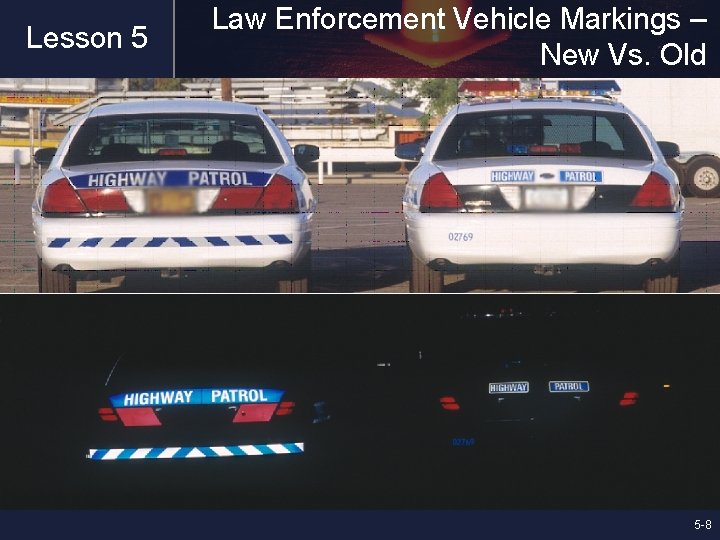
Lesson 5 Law Enforcement Vehicle Markings – New Vs. Old 5 -8
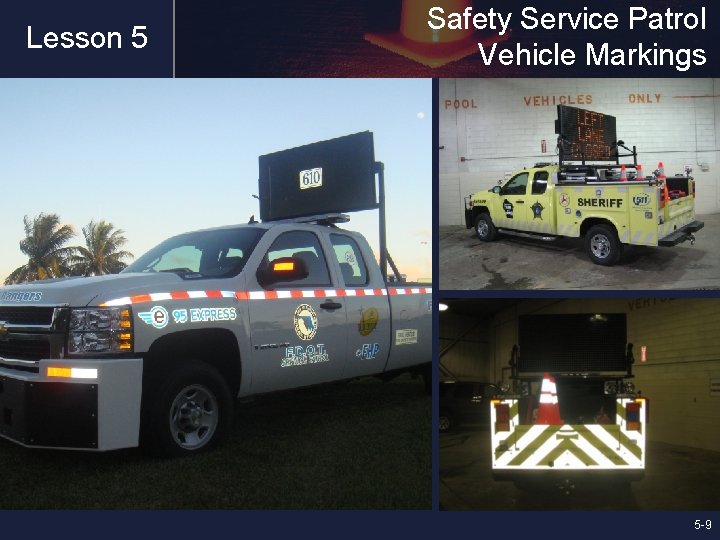
Lesson 5 Safety Service Patrol Vehicle Markings 5 -9
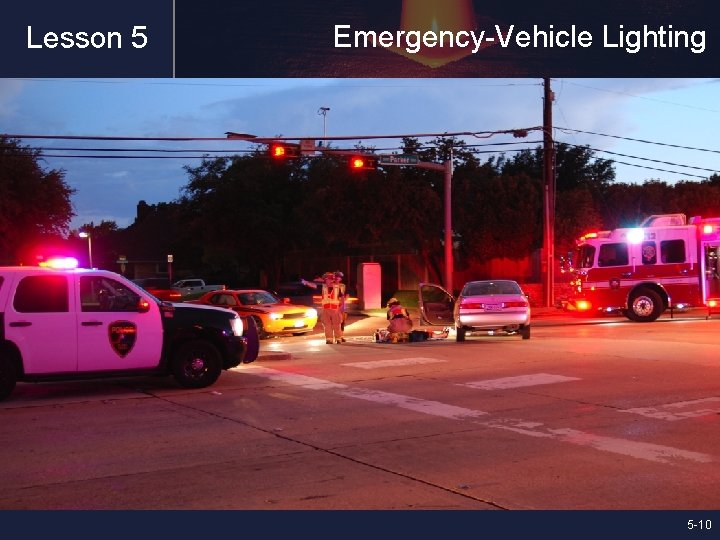
Lesson 5 Emergency-Vehicle Lighting 5 -10
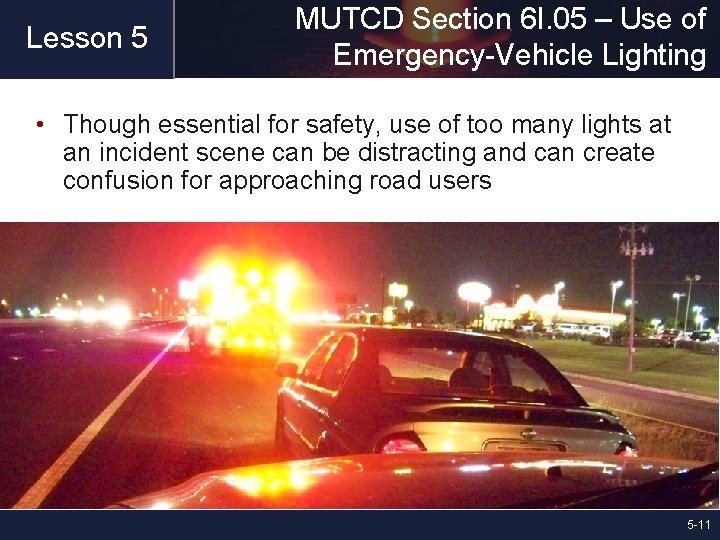
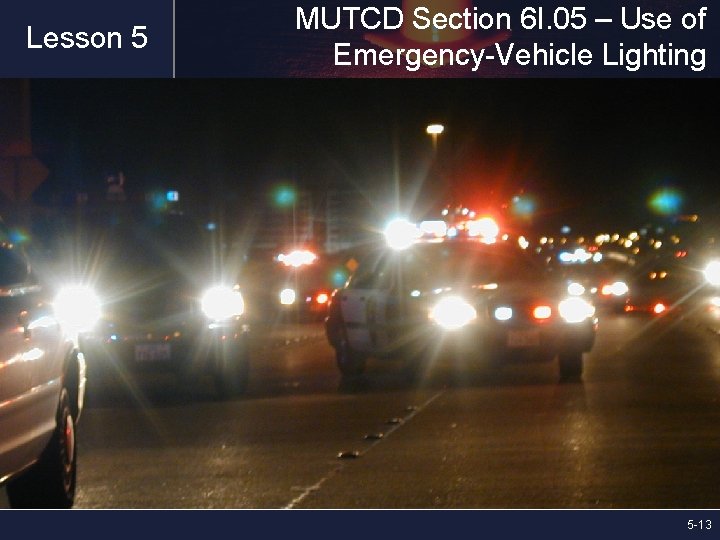
Lesson 5 MUTCD Section 6 I. 05 – Use of Emergency-Vehicle Lighting • Though essential for safety, use of too many lights at an incident scene can be distracting and can create confusion for approaching road users 5 -11
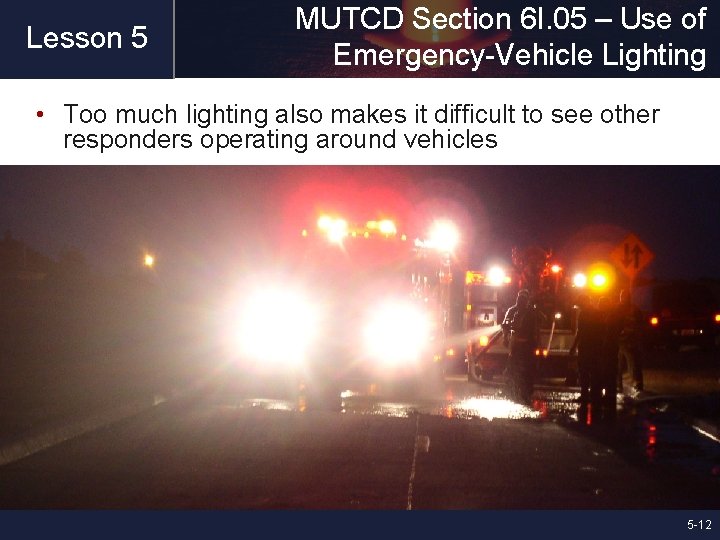
Lesson 5 MUTCD Section 6 I. 05 – Use of Emergency-Vehicle Lighting • Too much lighting also makes it difficult to see other responders operating around vehicles 5 -12
Lesson 5 MUTCD Section 6 I. 05 – Use of Emergency-Vehicle Lighting 5 -13
Lesson 5 MUTCD Section 6 I. 05 – Use of Emergency-Vehicle Lighting • Once good traffic control is established, the MUTCD recommends reducing the amount of emergency-vehicle lighting – Public safety agencies should examine their policies on the use of emergency-vehicle lighting with the intent of reducing the use of this lighting as much as possible while not endangering those at the scene 5 -14
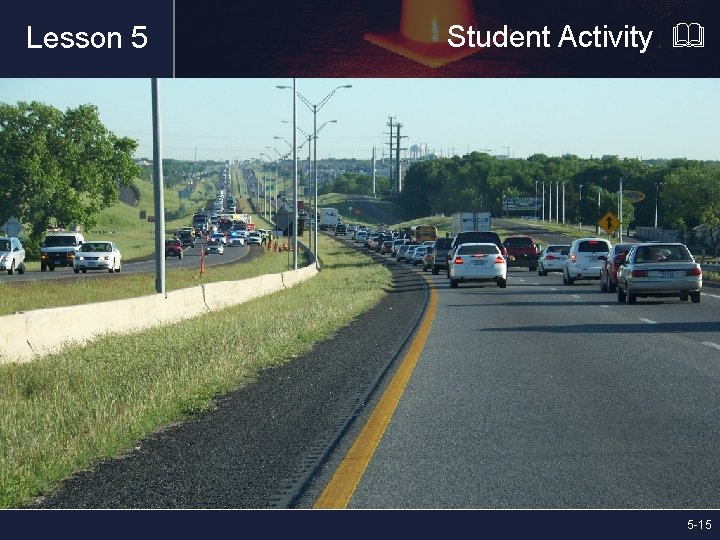
Lesson 5 Student Activity 5 -15
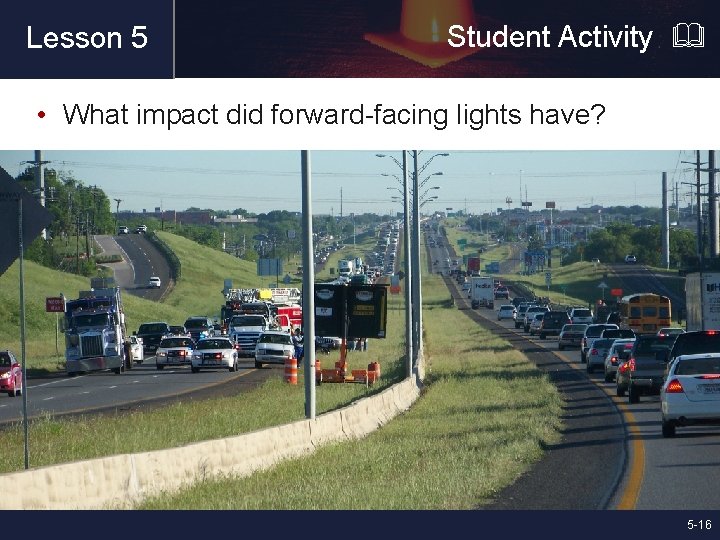
Lesson 5 Student Activity • What impact did forward-facing lights have? 5 -16
Lesson 5 Responder Visibility MUTCD Section 6 D. 03 states: All workers, including emergency responders, within the right-of-way of a roadway who are exposed either to traffic (vehicles using the highway for purposes of travel) or to work vehicles and construction equipment SHALL wear high-visibility safety apparel… 5 -17
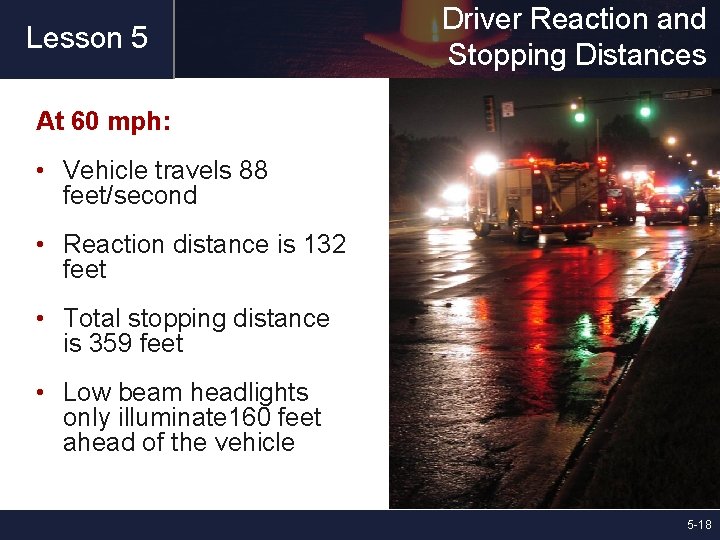
Lesson 5 Driver Reaction and Stopping Distances At 60 mph: • Vehicle travels 88 feet/second • Reaction distance is 132 feet • Total stopping distance is 359 feet • Low beam headlights only illuminate 160 feet ahead of the vehicle 5 -18
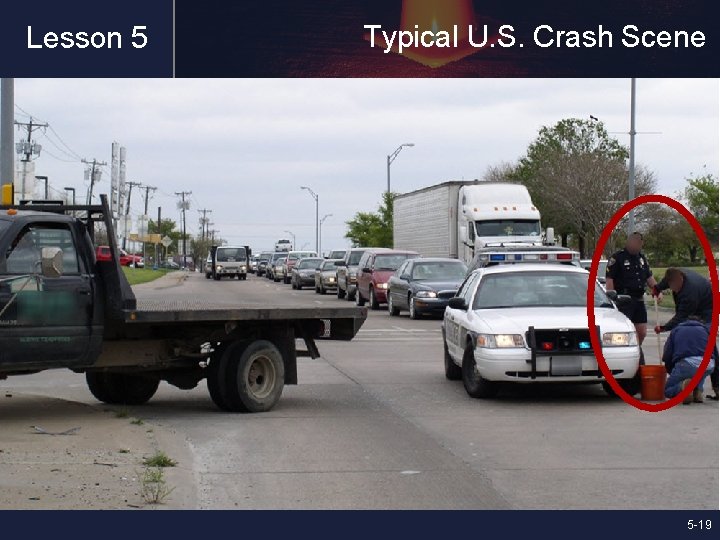
Lesson 5 Typical U. S. Crash Scene 5 -19
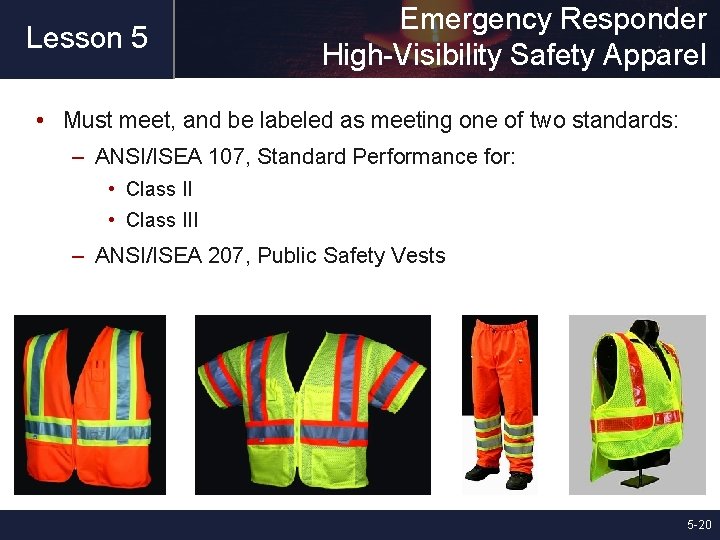
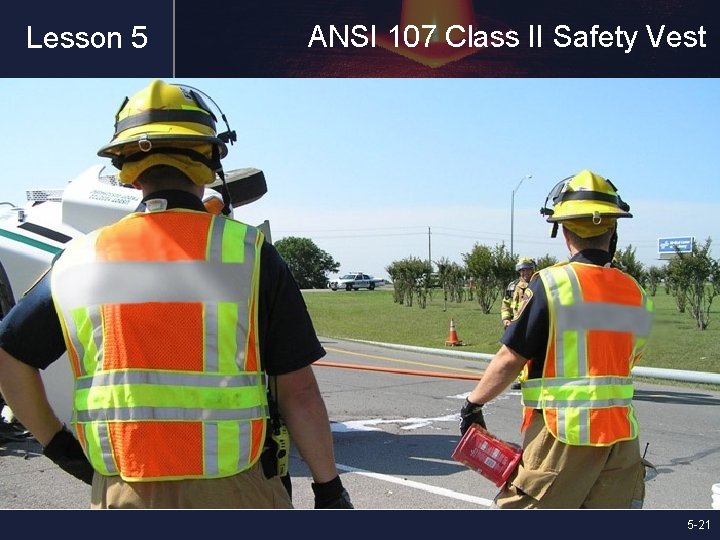
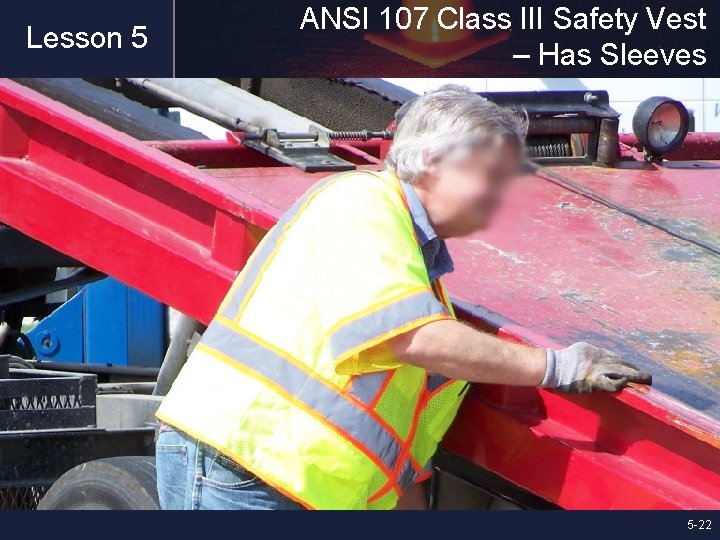
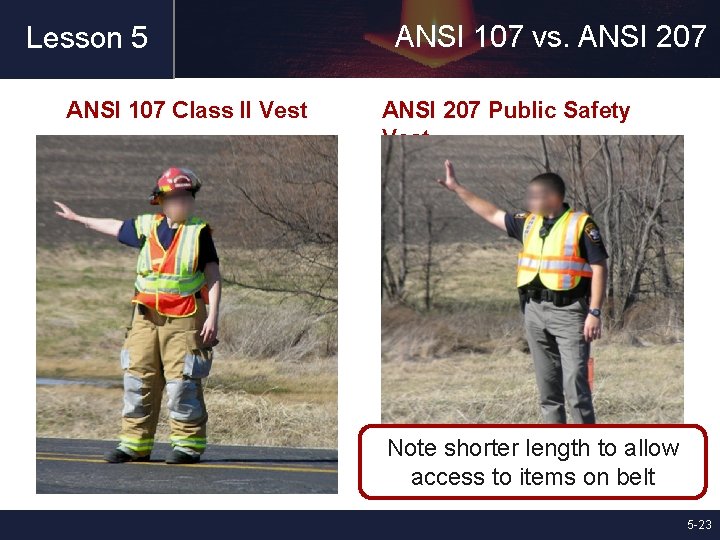
Lesson 5 Emergency Responder High-Visibility Safety Apparel • Must meet, and be labeled as meeting one of two standards: – ANSI/ISEA 107, Standard Performance for: • Class III – ANSI/ISEA 207, Public Safety Vests 5 -20
Lesson 5 ANSI 107 Class II Safety Vest 5 -21
Lesson 5 ANSI 107 Class III Safety Vest – Has Sleeves 5 -22
Lesson 5 ANSI 107 Class II Vest ANSI 107 vs. ANSI 207 Public Safety Vest Note shorter length to allow access to items on belt 5 -23
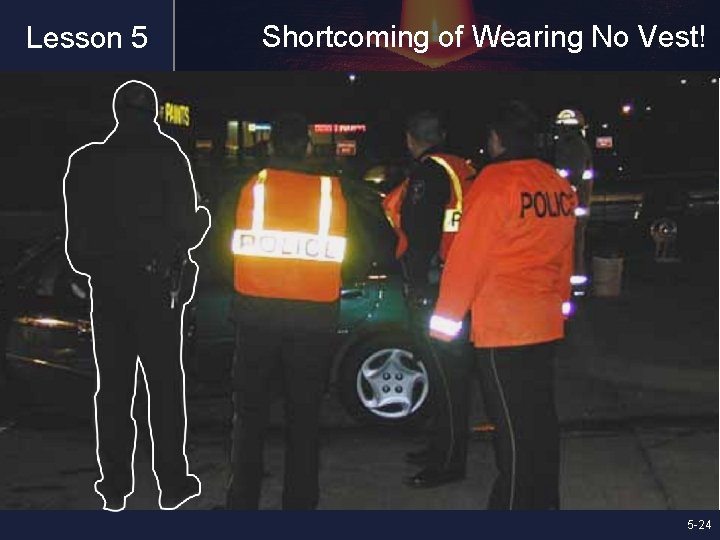
Lesson 5 Shortcoming of Wearing No Vest! 5 -24
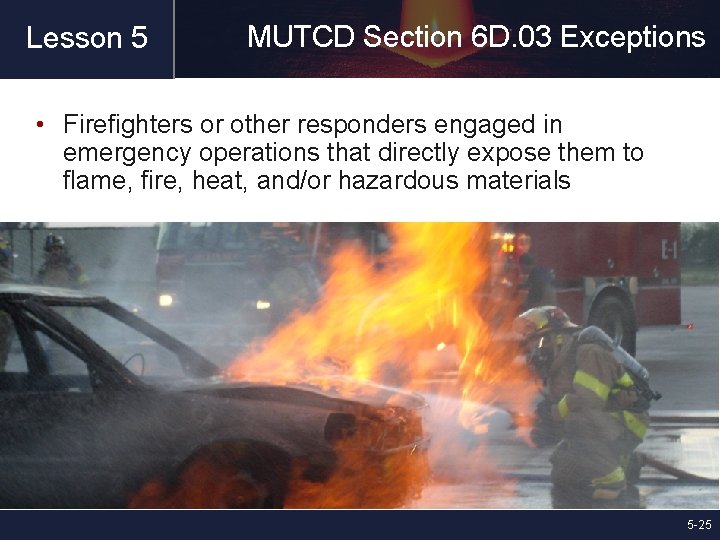
Lesson 5 MUTCD Section 6 D. 03 Exceptions • Firefighters or other responders engaged in emergency operations that directly expose them to flame, fire, heat, and/or hazardous materials 5 -25
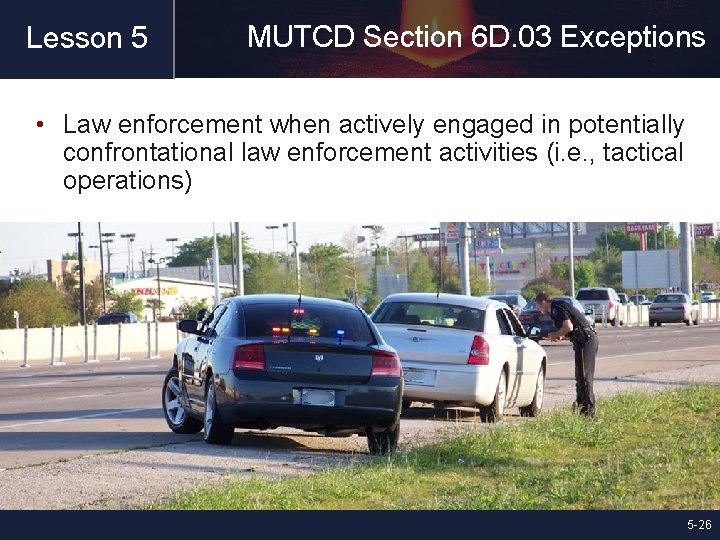
Lesson 5 MUTCD Section 6 D. 03 Exceptions • Law enforcement when actively engaged in potentially confrontational law enforcement activities (i. e. , tactical operations) 5 -26
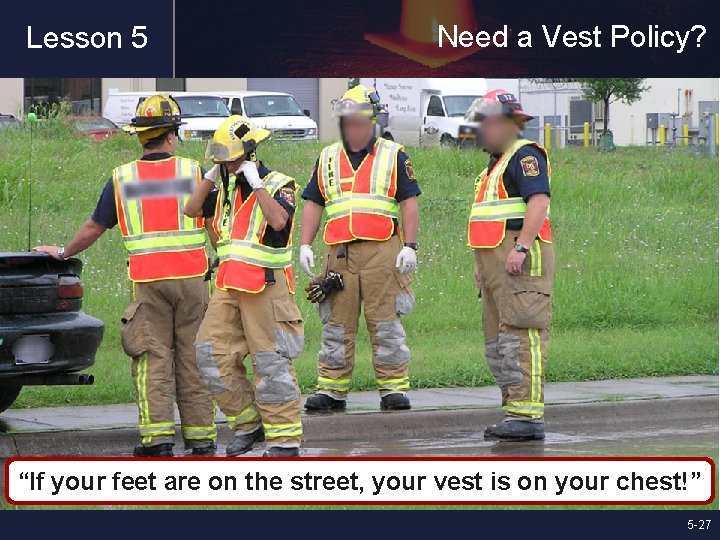
Lesson 5 Need a Vest Policy? “If your feet are on the street, your vest is on your chest!” 5 -27
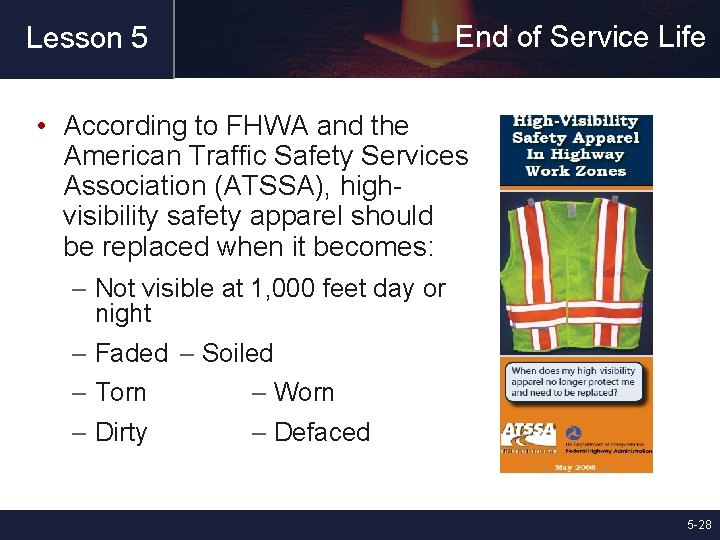
End of Service Life Lesson 5 • According to FHWA and the American Traffic Safety Services Association (ATSSA), highvisibility safety apparel should be replaced when it becomes: – Not visible at 1, 000 feet day or night – Faded – Soiled – Torn – Worn – Dirty – Defaced 5 -28
Lesson 5 TIM Timeline 5 -29
Lesson 5 Lesson Objectives Review 1. Describe how emergency vehicle markings can improve scene safety 2. Describe recommendations for emergencyvehicle lighting as set forth in the MUTCD 3. Describe high-visibility safety apparel requirements for incident responders 5 -30