
Lesson 5 Legal and Ethical Issues in Disaster
- Slides: 36
Lesson 5 Legal and Ethical Issues in Disaster © 2015 National Disaster Life Support Foundation, Inc. All rights reserved. ADLS® v. 3. 2
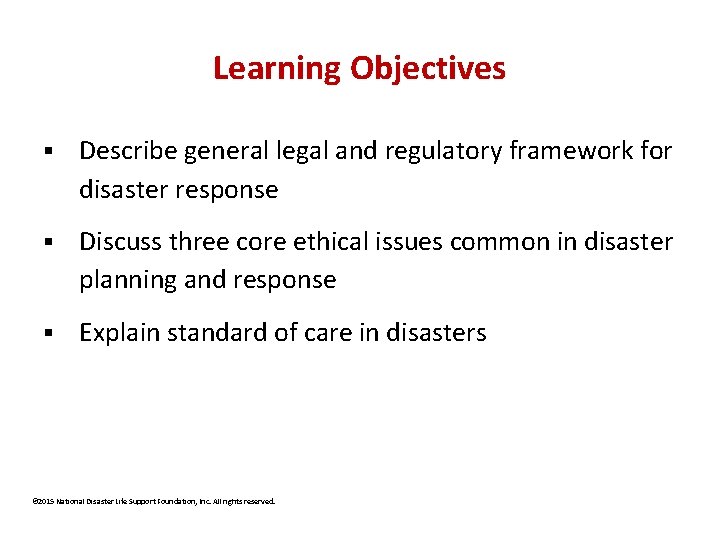
Learning Objectives § Describe general legal and regulatory framework for disaster response § Discuss three core ethical issues common in disaster planning and response § Explain standard of care in disasters © 2015 National Disaster Life Support Foundation, Inc. All rights reserved. ADLS® v. 3. 2
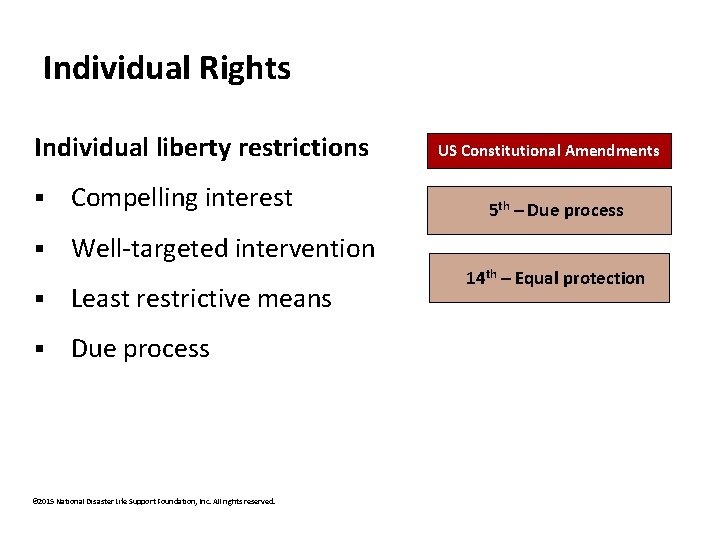
Individual Rights Individual liberty restrictions § Compelling interest § Well-targeted intervention § Least restrictive means § Due process © 2015 National Disaster Life Support Foundation, Inc. All rights reserved. US Constitutional Amendments 5 th – Due process 14 th – Equal protection ADLS® v. 3. 2
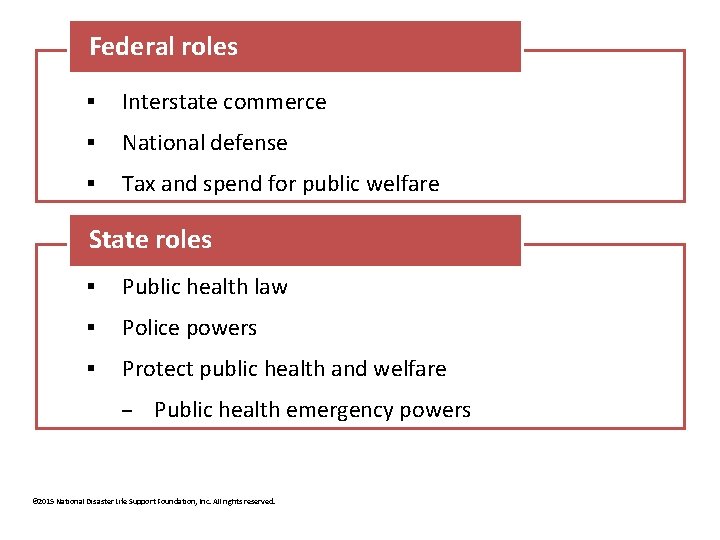
Federal roles § Interstate commerce § National defense § Tax and spend for public welfare State roles § Public health law § Police powers § Protect public health and welfare – Public health emergency powers © 2015 National Disaster Life Support Foundation, Inc. All rights reserved. ADLS® v. 3. 2
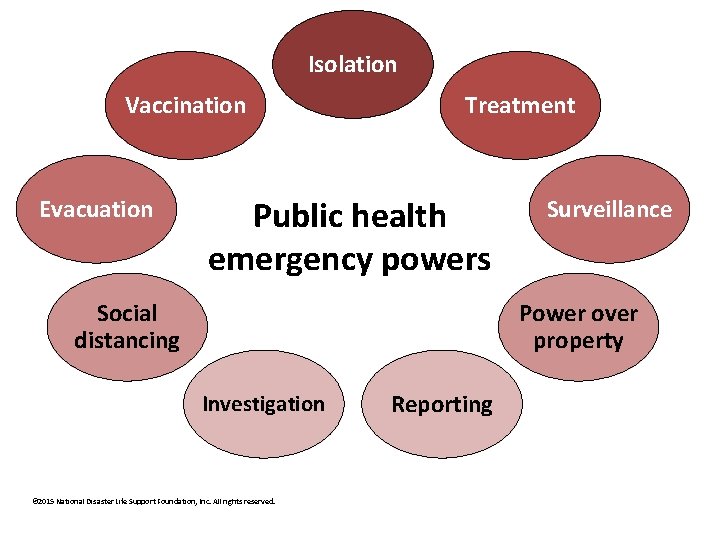
Isolation Vaccination Evacuation Treatment Public health emergency powers Social distancing Surveillance Power over property Investigation © 2015 National Disaster Life Support Foundation, Inc. All rights reserved. Reporting ADLS® v. 3. 2
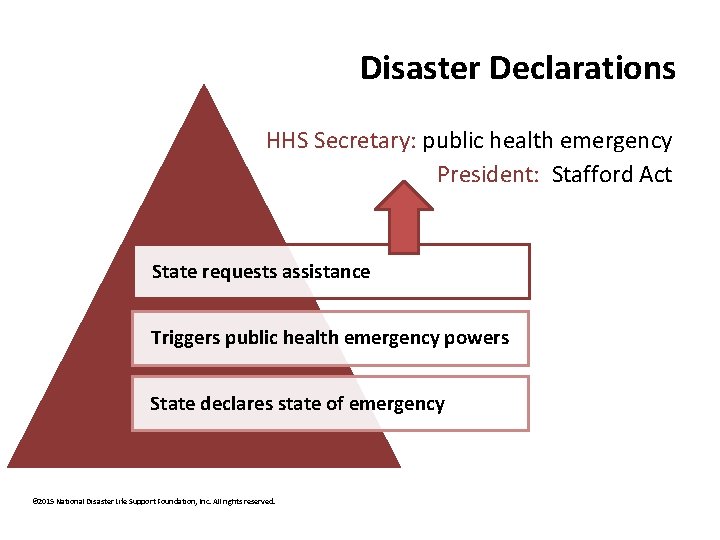
Disaster Declarations HHS Secretary: public health emergency President: Stafford Act State requests assistance Triggers public health emergency powers State declares state of emergency © 2015 National Disaster Life Support Foundation, Inc. All rights reserved. ADLS® v. 3. 2
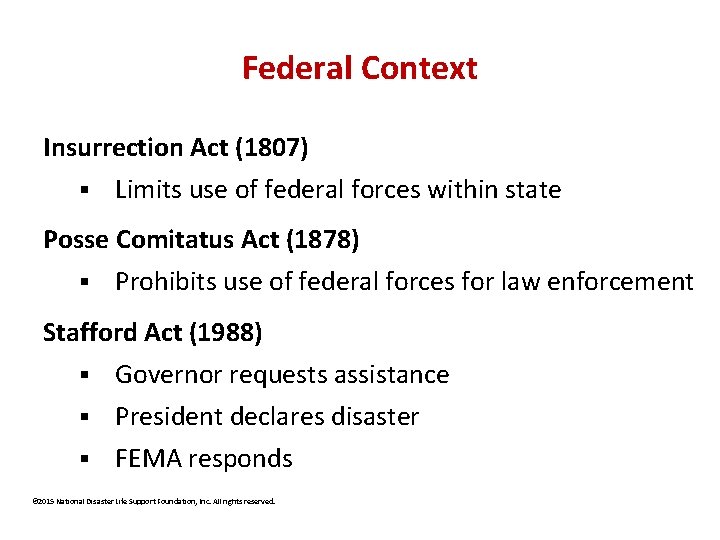
Federal Context Insurrection Act (1807) § Limits use of federal forces within state Posse Comitatus Act (1878) § Prohibits use of federal forces for law enforcement Stafford Act (1988) § Governor requests assistance President declares disaster § FEMA responds § © 2015 National Disaster Life Support Foundation, Inc. All rights reserved. ADLS® v. 3. 2
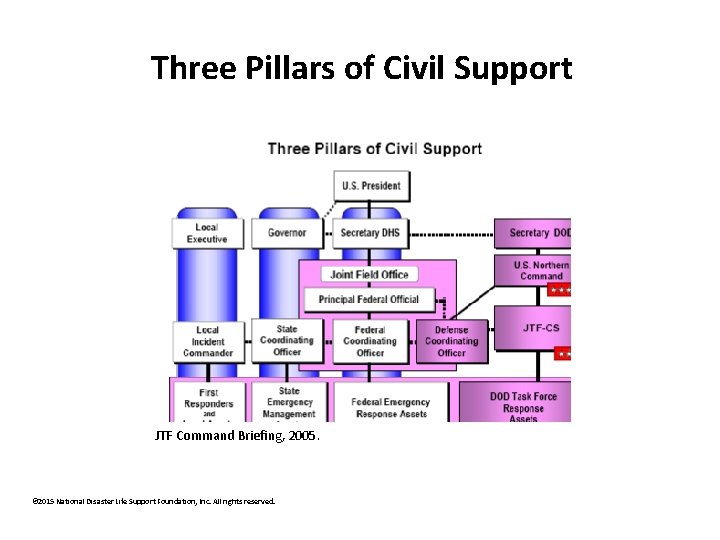
Three Pillars of Civil Support JTF Command Briefing, 2005. © 2015 National Disaster Life Support Foundation, Inc. All rights reserved. ADLS® v. 3. 2
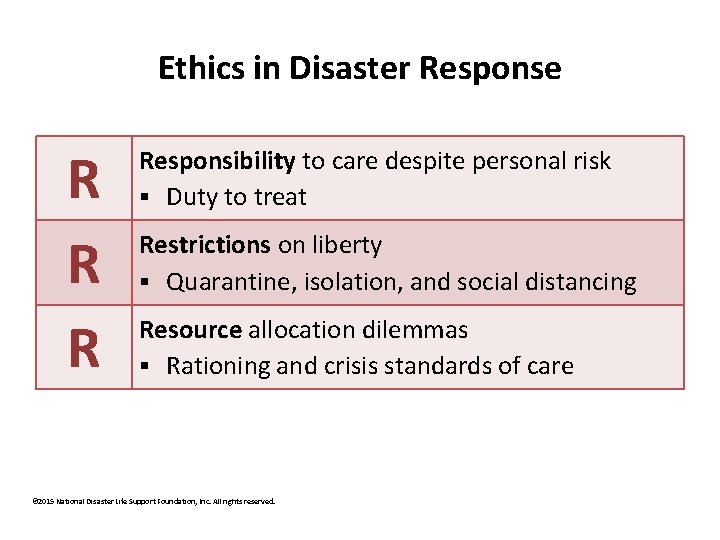
Ethics in Disaster Response R Responsibility to care despite personal risk § Duty to treat Restrictions on liberty § Quarantine, isolation, and social distancing Resource allocation dilemmas § Rationing and crisis standards of care © 2015 National Disaster Life Support Foundation, Inc. All rights reserved. ADLS® v. 3. 2
Duty to Treat § Social contract § Moral obligations of special training – Capability – Proximity – Degree of need – Absence of other sources of aid § Nondiscrimination © 2015 National Disaster Life Support Foundation, Inc. All rights reserved. ADLS® v. 3. 2
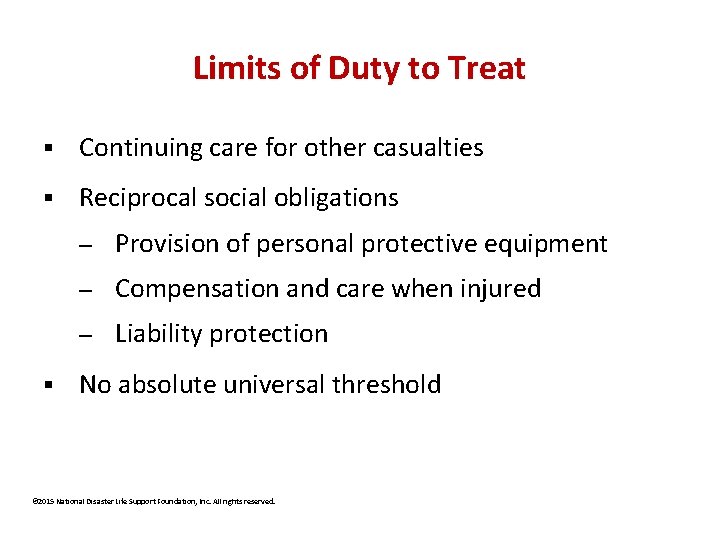
Limits of Duty to Treat § Continuing care for other casualties § Reciprocal social obligations – Provision of personal protective equipment – Compensation and care when injured – Liability protection § No absolute universal threshold © 2015 National Disaster Life Support Foundation, Inc. All rights reserved. ADLS® v. 3. 2
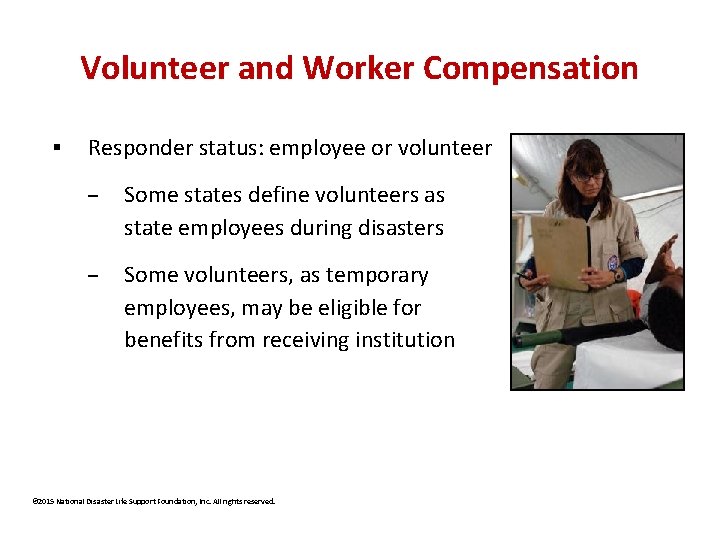
Volunteer and Worker Compensation § Responder status: employee or volunteer – Some states define volunteers as state employees during disasters – Some volunteers, as temporary employees, may be eligible for benefits from receiving institution © 2015 National Disaster Life Support Foundation, Inc. All rights reserved. ADLS® v. 3. 2
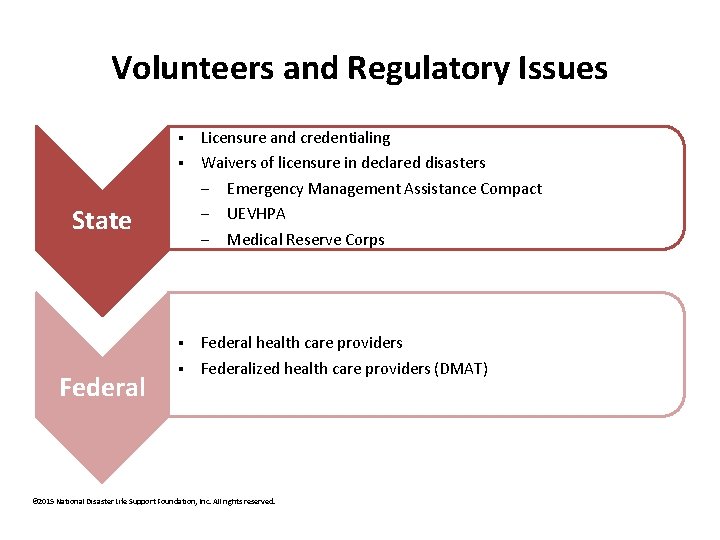
Volunteers and Regulatory Issues Licensure and credentialing § Waivers of licensure in declared disasters § – State Federal – – Emergency Management Assistance Compact UEVHPA Medical Reserve Corps § Federal health care providers § Federalized health care providers (DMAT) © 2015 National Disaster Life Support Foundation, Inc. All rights reserved. ADLS® v. 3. 2
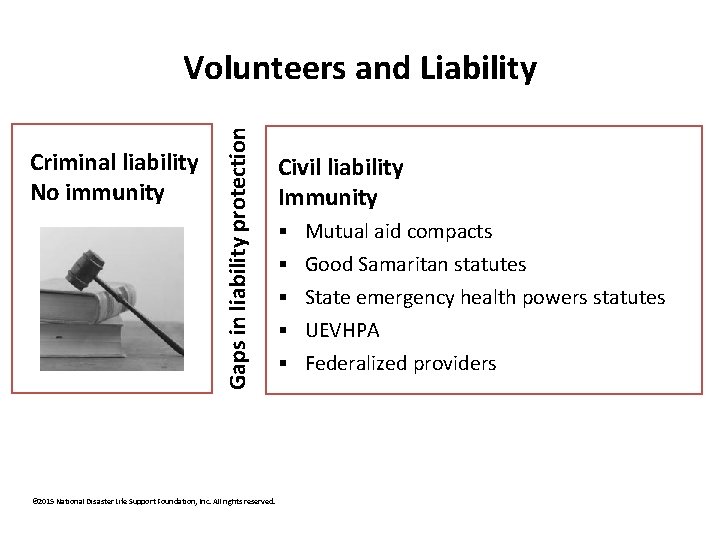
Criminal liability No immunity Gaps in liability protection Volunteers and Liability © 2015 National Disaster Life Support Foundation, Inc. All rights reserved. Civil liability Immunity § Mutual aid compacts § Good Samaritan statutes § State emergency health powers statutes § UEVHPA § Federalized providers ADLS® v. 3. 2
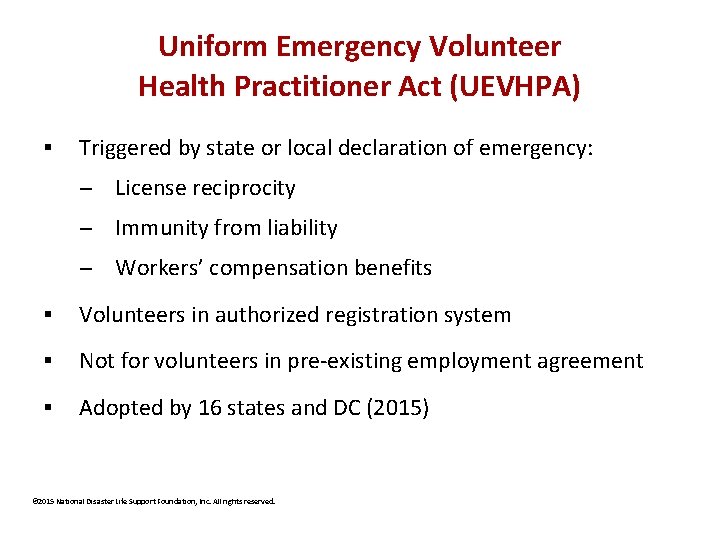
Uniform Emergency Volunteer Health Practitioner Act (UEVHPA) § Triggered by state or local declaration of emergency: – License reciprocity – Immunity from liability – Workers’ compensation benefits § Volunteers in authorized registration system § Not for volunteers in pre-existing employment agreement § Adopted by 16 states and DC (2015) © 2015 National Disaster Life Support Foundation, Inc. All rights reserved. ADLS® v. 3. 2
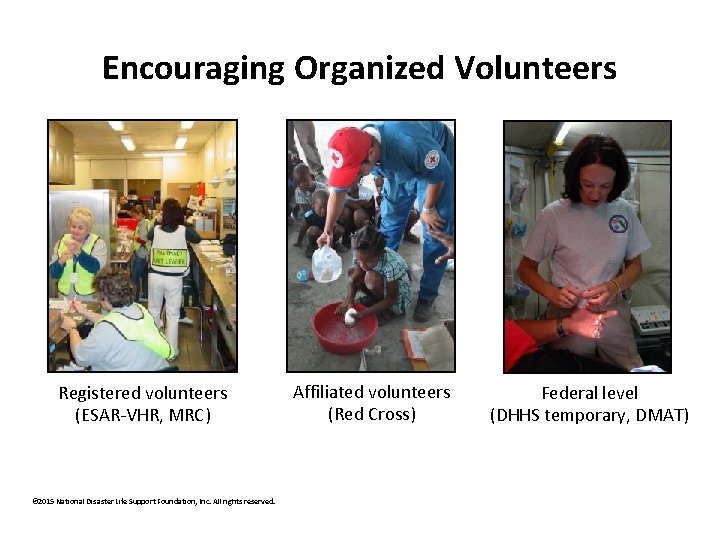
Encouraging Organized Volunteers Registered volunteers (ESAR-VHR, MRC) © 2015 National Disaster Life Support Foundation, Inc. All rights reserved. Affiliated volunteers (Red Cross) Federal level (DHHS temporary, DMAT) ADLS® v. 3. 2
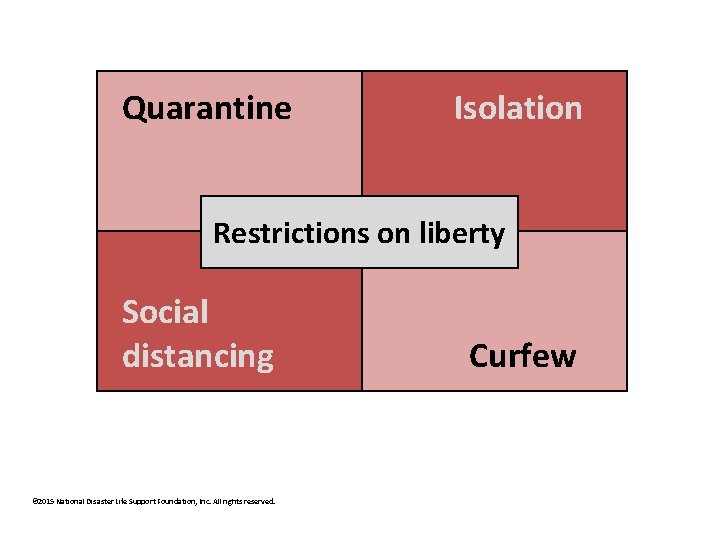
Quarantine Isolation Restrictions on liberty Social distancing © 2015 National Disaster Life Support Foundation, Inc. All rights reserved. Curfew ADLS® v. 3. 2
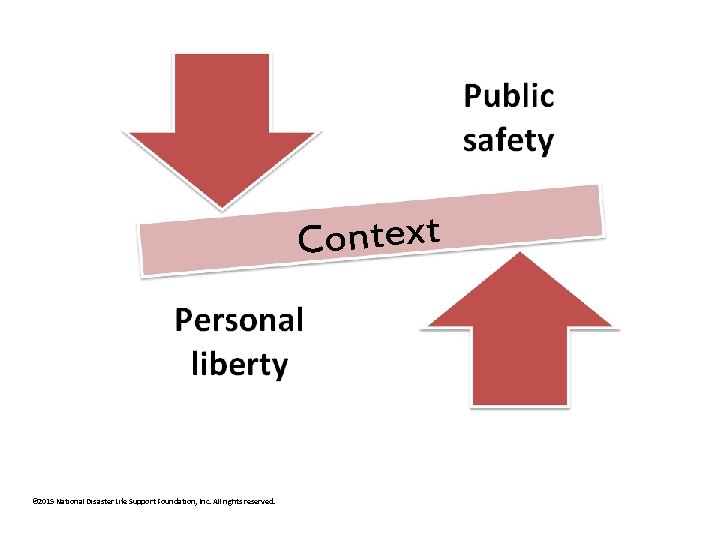
Context © 2015 National Disaster Life Support Foundation, Inc. All rights reserved. ADLS® v. 3. 2
UN Siracusa Principles Coercive public health measures must be – Legitimate – Legal – Necessary – Nondiscriminatory “Least restrictive means appropriate to the reasonable achievement of public health goals” © 2015 National Disaster Life Support Foundation, Inc. All rights reserved. ADLS® v. 3. 2
Ethical Predications J. S. Mill’s “harm principle” Power rightfully exercised over any member of a civilized community, against his will, to prevent harm to others Ethical dilemma eased if proposed restriction prevents harm to others © 2015 National Disaster Life Support Foundation, Inc. All rights reserved. ADLS® v. 3. 2
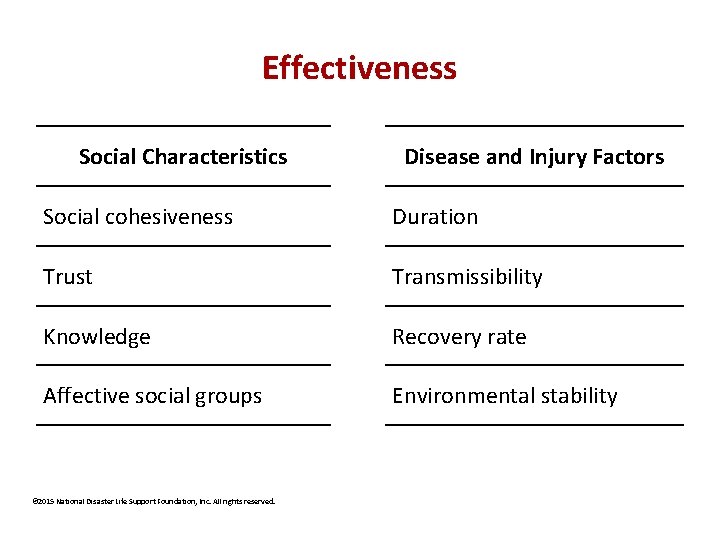
Effectiveness Social Characteristics Disease and Injury Factors Social cohesiveness Duration Trust Transmissibility Knowledge Recovery rate Affective social groups Environmental stability © 2015 National Disaster Life Support Foundation, Inc. All rights reserved. ADLS® v. 3. 2
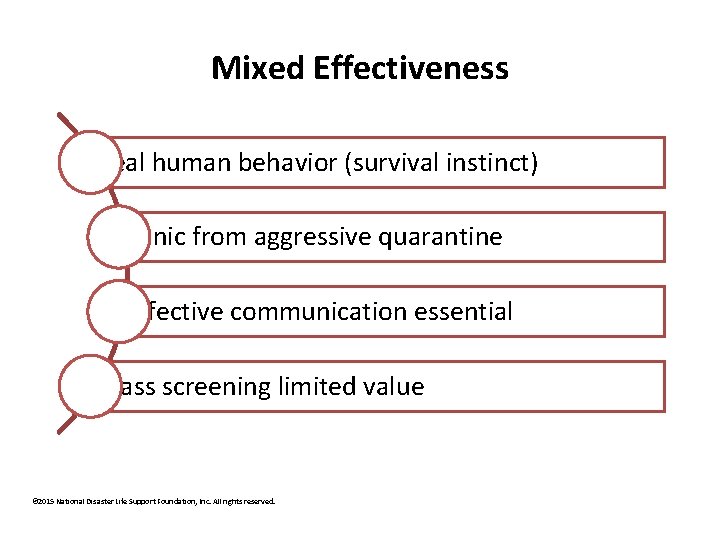
Mixed Effectiveness Real human behavior (survival instinct) Panic from aggressive quarantine Effective communication essential Mass screening limited value © 2015 National Disaster Life Support Foundation, Inc. All rights reserved. ADLS® v. 3. 2
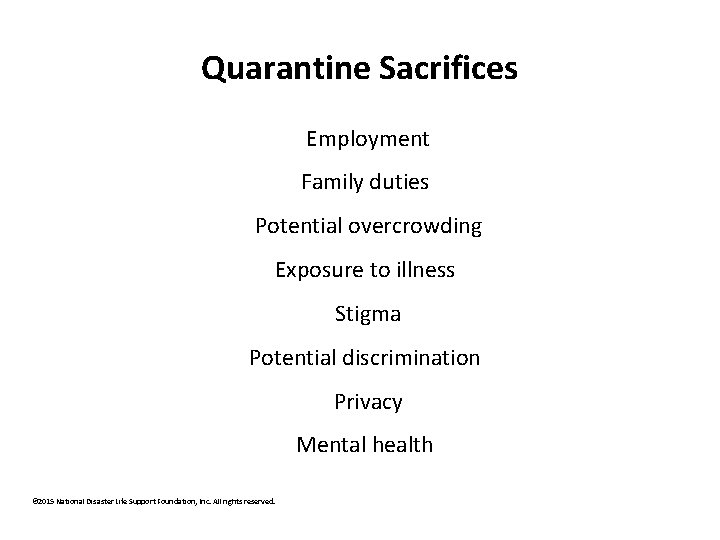
Quarantine Sacrifices Employment Family duties Potential overcrowding Exposure to illness Stigma Potential discrimination Privacy Mental health © 2015 National Disaster Life Support Foundation, Inc. All rights reserved. ADLS® v. 3. 2
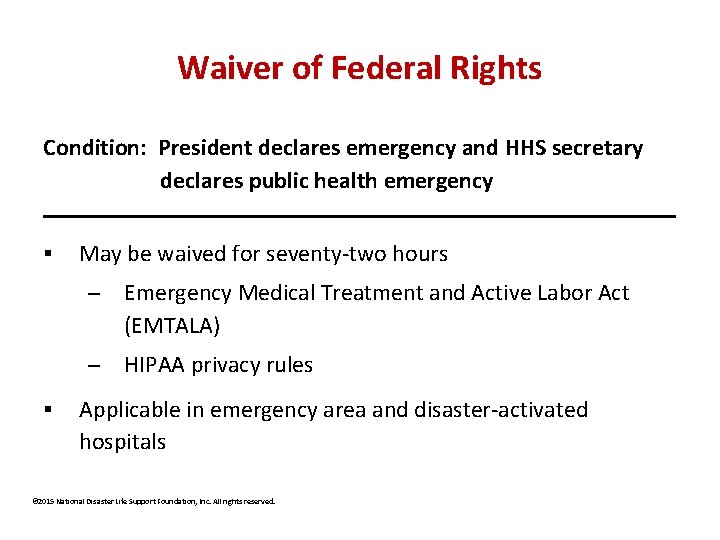
Waiver of Federal Rights Condition: President declares emergency and HHS secretary declares public health emergency § § May be waived for seventy-two hours – Emergency Medical Treatment and Active Labor Act (EMTALA) – HIPAA privacy rules Applicable in emergency area and disaster-activated hospitals © 2015 National Disaster Life Support Foundation, Inc. All rights reserved. ADLS® v. 3. 2
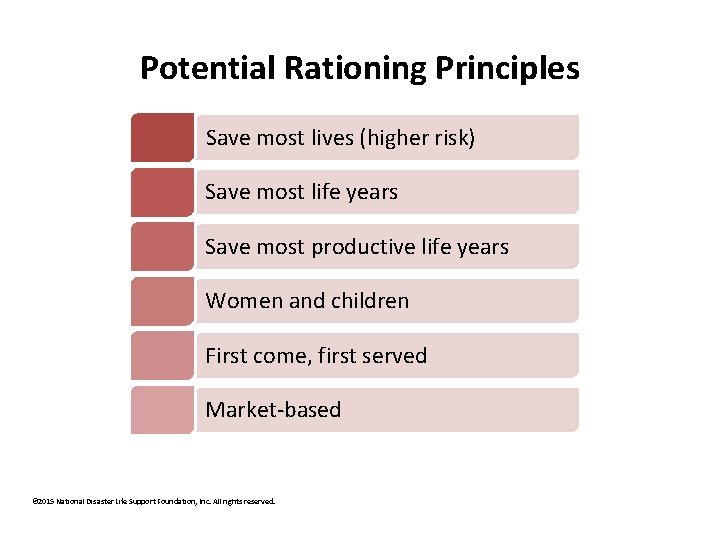
Potential Rationing Principles Save most lives (higher risk) Save most life years Save most productive life years Women and children First come, first served Market-based © 2015 National Disaster Life Support Foundation, Inc. All rights reserved. ADLS® v. 3. 2
Standard of Care § Perform to the highest reasonable standard under given circumstances – Standard of care depends on context § Disaster context is not normal routine – Not possible to attain routine standard without resources © 2015 National Disaster Life Support Foundation, Inc. All rights reserved. ADLS® v. 3. 2
Crisis Standards of Care § Substantial change in operations and level of care § Made necessary by pervasive or catastrophic disaster § Justified by specific circumstances § Formally declared by state government § Sustained period of altered operations § Enables specific powers and protections © 2015 National Disaster Life Support Foundation, Inc. All rights reserved. ADLS® v. 3. 2
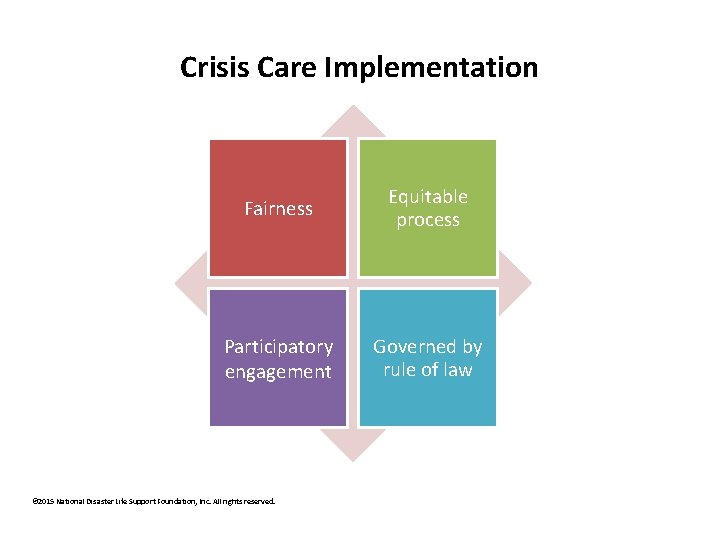
Crisis Care Implementation Fairness Equitable process Participatory engagement Governed by rule of law © 2015 National Disaster Life Support Foundation, Inc. All rights reserved. ADLS® v. 3. 2
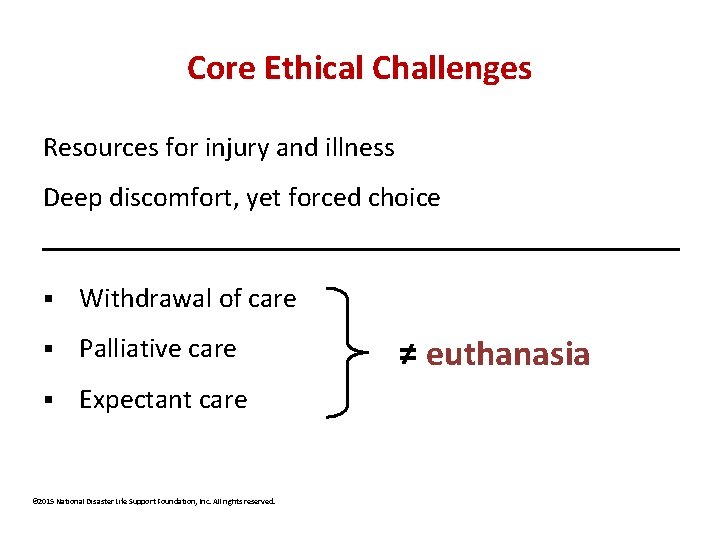
Core Ethical Challenges Resources for injury and illness Deep discomfort, yet forced choice § Withdrawal of care § Palliative care § Expectant care © 2015 National Disaster Life Support Foundation, Inc. All rights reserved. ≠ euthanasia ADLS® v. 3. 2
AMA-ANA Joint Statement § Very concerned about criminalizing patient care decisions when medical personnel and supplies are severely compromised § During disaster, health providers work together to make best decisions given available resources § Real fear of having best judgments second-guessed in disasters © 2015 National Disaster Life Support Foundation, Inc. All rights reserved. ADLS® v. 3. 2
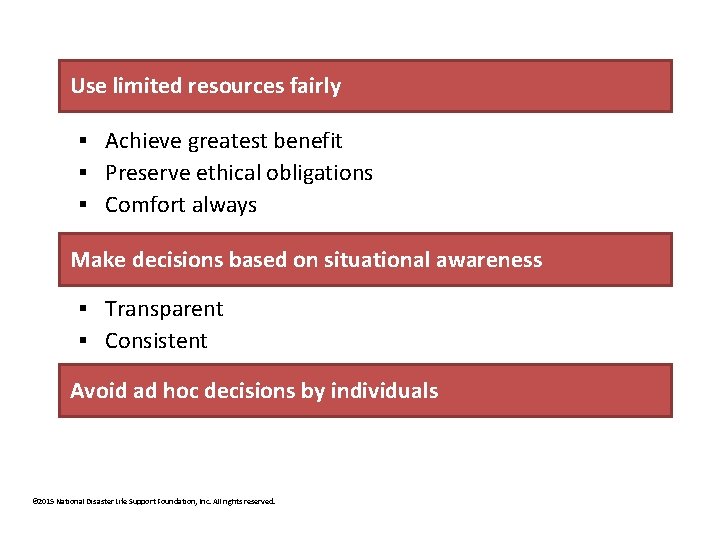
Use limited resources fairly § Achieve greatest benefit § Preserve ethical obligations § Comfort always Make decisions based on situational awareness § Transparent § Consistent Avoid ad hoc decisions by individuals © 2015 National Disaster Life Support Foundation, Inc. All rights reserved. ADLS® v. 3. 2
What is the first level of civil support in disasters? a) Defense support b) Homeland Security c) Local d) State © 2015 National Disaster Life Support Foundation, Inc. All rights reserved. ADLS® v. 3. 2
What is isolation? a) Mandatory social distancing b) Quarantine c) Separation of ill people d) Shelter in place © 2015 National Disaster Life Support Foundation, Inc. All rights reserved. ADLS® v. 3. 2
The standard of care in disasters… a) is dependent on context b) permits euthanasia c) refers to the routine standard d) requires government intervention © 2015 National Disaster Life Support Foundation, Inc. All rights reserved. ADLS® v. 3. 2
Lesson Summary § State and federal response: tiered and coordinated § Ethical framework with three Rs 1. Responsibility 2. Restrictions 3. Resources § Standard of care always depends on context © 2015 National Disaster Life Support Foundation, Inc. All rights reserved. ADLS® v. 3. 2
Questions? © 2015 National Disaster Life Support Foundation, Inc. All rights reserved. ADLS® v. 3. 2