
LESSON 5 DC MOTORS PART I 1 LEARNING
- Slides: 19
LESSON 5: DC MOTORS PART I 1
LEARNING OBJECTIVES After this presentation you will be able to: Understanding theory of operation for DC Motor. Ø Types of DC Motors and their mathematical representations. Ø 2
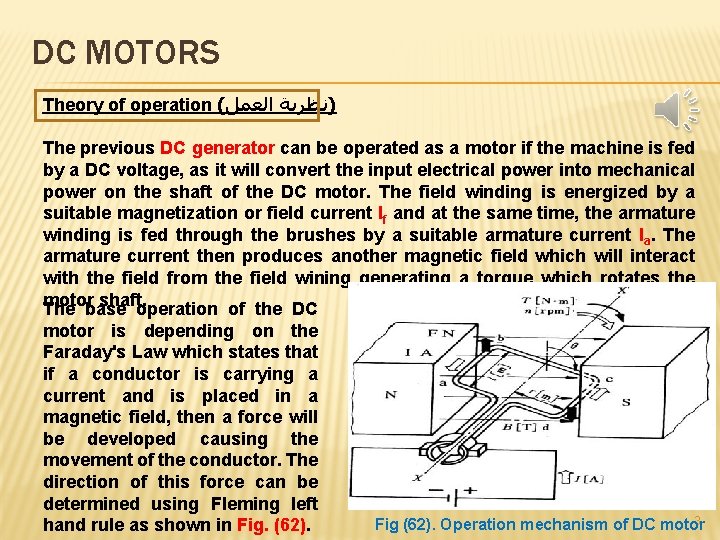
DC MOTORS Theory of operation ( )ﻧﻈﺮﻳﺔ ﺍﻟﻌﻤﻞ The previous DC generator can be operated as a motor if the machine is fed by a DC voltage, as it will convert the input electrical power into mechanical power on the shaft of the DC motor. The field winding is energized by a suitable magnetization or field current If and at the same time, the armature winding is fed through the brushes by a suitable armature current Ia. The armature current then produces another magnetic field which will interact with the field from the field wining generating a torque which rotates the motor shaft. The base operation of the DC motor is depending on the Faraday's Law which states that if a conductor is carrying a current and is placed in a magnetic field, then a force will be developed causing the movement of the conductor. The direction of this force can be determined using Fleming left 3 Fig (62). Operation mechanism of DC motor hand rule as shown in Fig. (62).
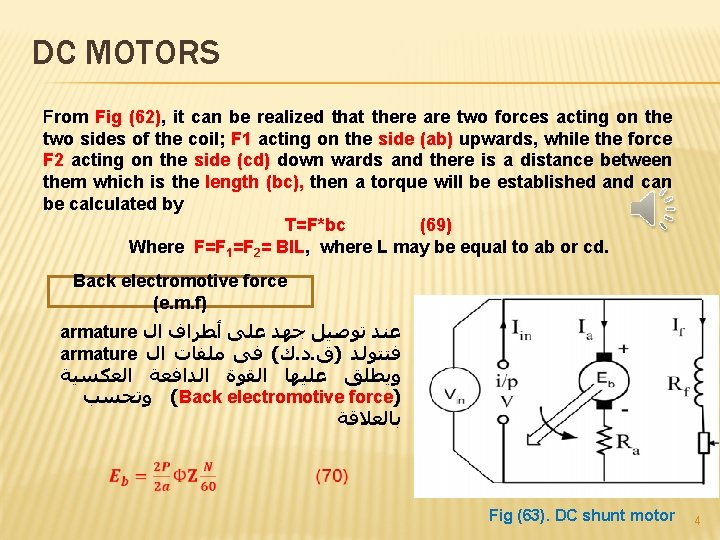
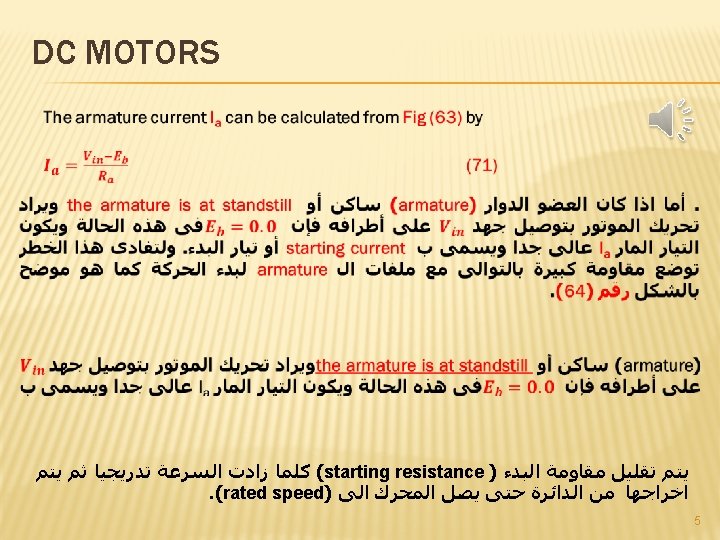
DC MOTORS From Fig (62), it can be realized that there are two forces acting on the two sides of the coil; F 1 acting on the side (ab) upwards, while the force F 2 acting on the side (cd) down wards and there is a distance between them which is the length (bc), then a torque will be established and can be calculated by T=F*bc (69) Where F=F 1=F 2= BIL, where L may be equal to ab or cd. Back electromotive force (e. m. f) armature ﻋﻨﺪ ﺗﻮﺻﻴﻞ ﺟﻬﺪ ﻋﻠﻰ ﺃﻄﺮﺍﻑ ﺍﻝ armature ﻙ( ﻓﻰ ﻣﻠﻔﺎﺕ ﺍﻝ. ﺩ. ﻓﺘﺘﻮﻟﺪ )ﻕ ﻭﻳﻄﻠﻖ ﻋﻠﻴﻬﺎ ﺍﻟﻘﻮﺓ ﺍﻟﺪﺍﻓﻌﺔ ﺍﻟﻌﻜﺴﻴﺔ ( ﻭﺗﺤﺴﺐ Back electromotive force) ﺑﺎﻟﻌﻼﻗﺔ Fig (63). DC shunt motor 4
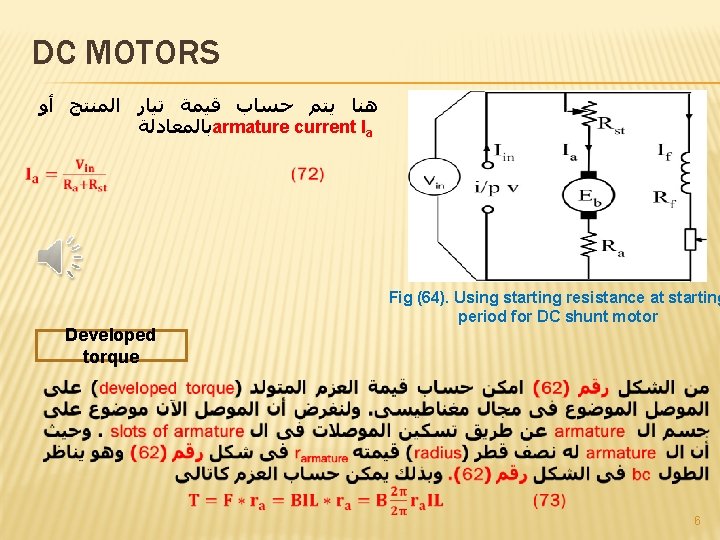
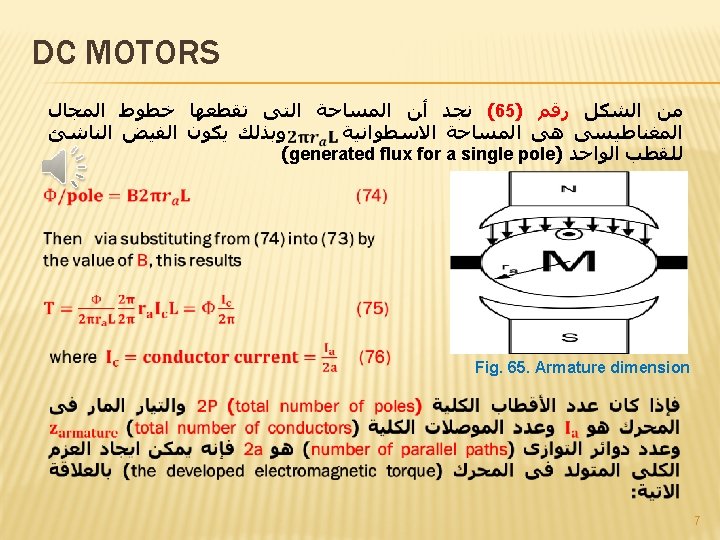
DC MOTORS ﻫﻨﺎ ﻳﺘﻢ ﺣﺴﺎﺏ ﻗﻴﻤﺔ ﺗﻴﺎﺭ ﺍﻟﻤﻨﺘﺞ ﺃﻮ ﺑﺎﻟﻤﻌﺎﺩﻟﺔ armature current Ia Developed torque Fig (64). Using starting resistance at starting period for DC shunt motor 6
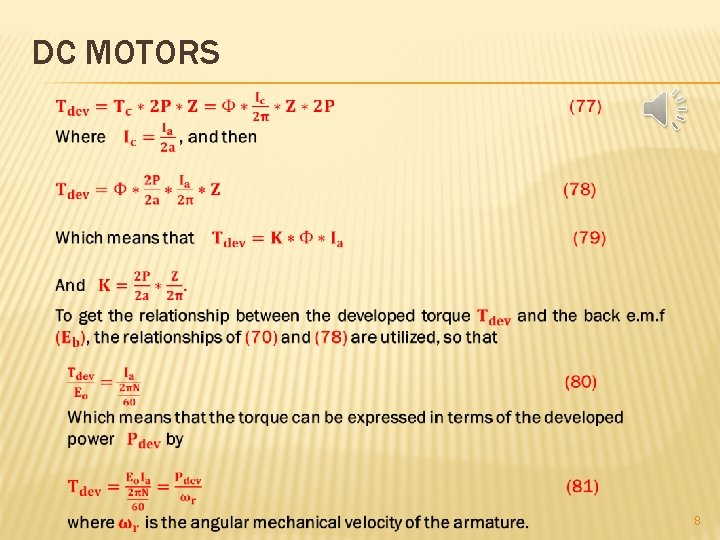
DC MOTORS 8
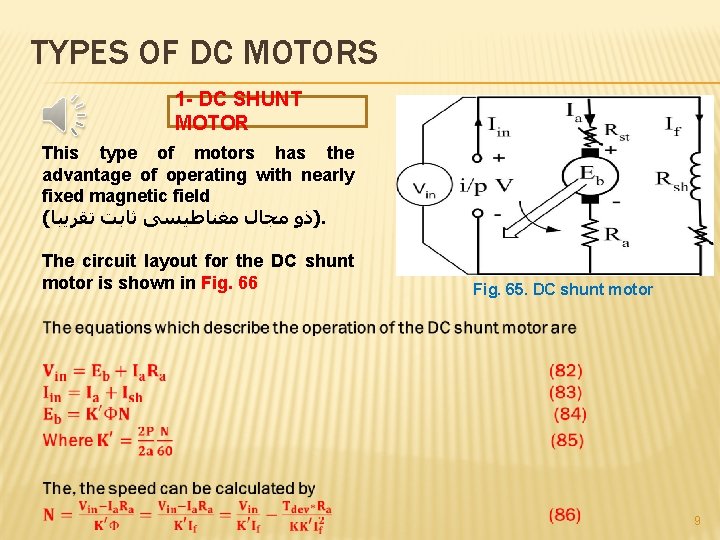
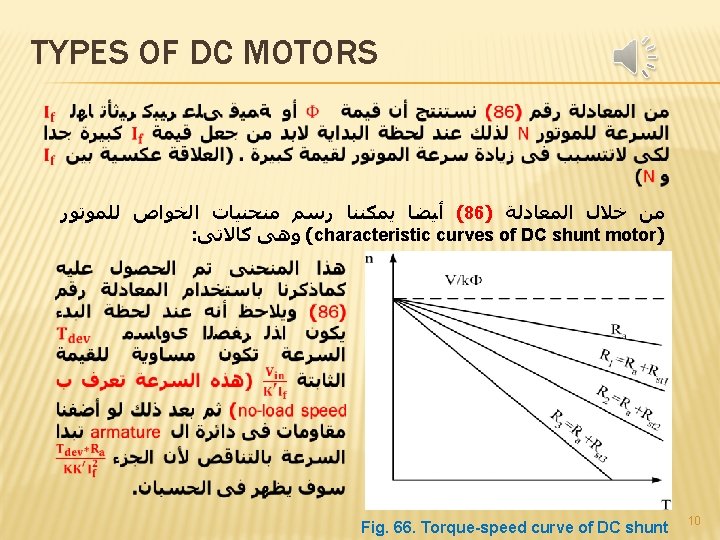
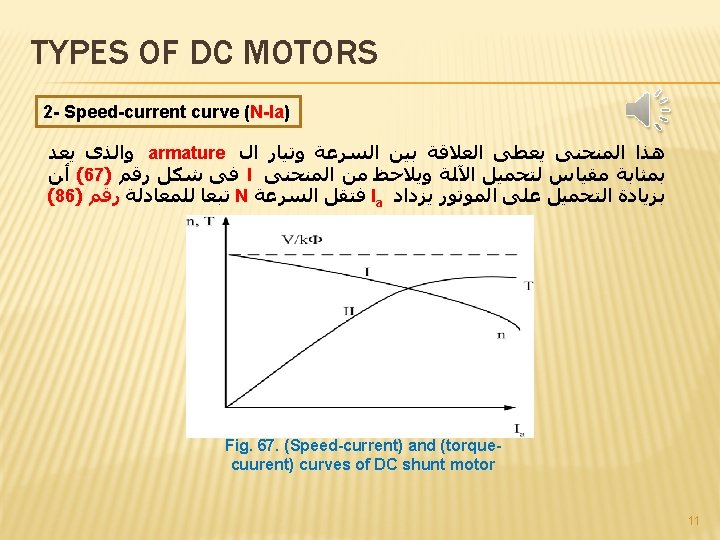
TYPES OF DC MOTORS 1 - DC SHUNT MOTOR This type of motors has the advantage of operating with nearly fixed magnetic field ( )ﺫﻭ ﻣﺠﺎﻝ ﻣﻐﻨﺎﻃﻴﺴﻰ ﺛﺎﺑﺖ ﺗﻘﺮﻳﺒﺎ. The circuit layout for the DC shunt motor is shown in Fig. 66 Fig. 65. DC shunt motor 9
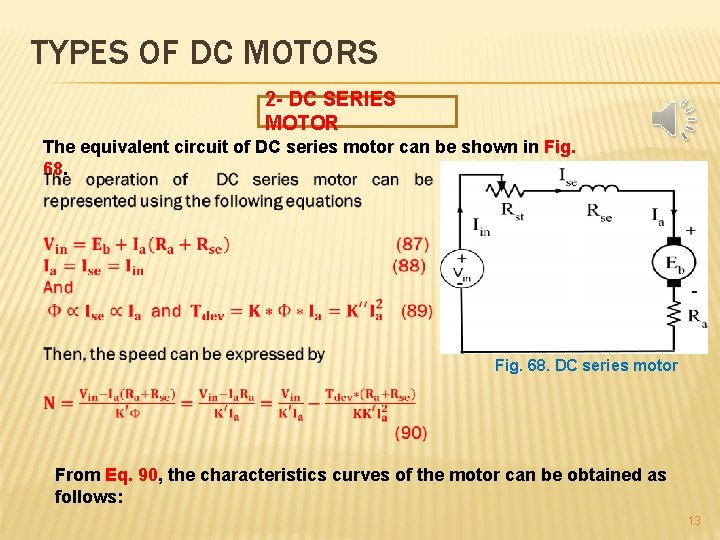
TYPES OF DC MOTORS 2 - DC SERIES MOTOR The equivalent circuit of DC series motor can be shown in Fig. 68. DC series motor From Eq. 90, the characteristics curves of the motor can be obtained as follows: 13
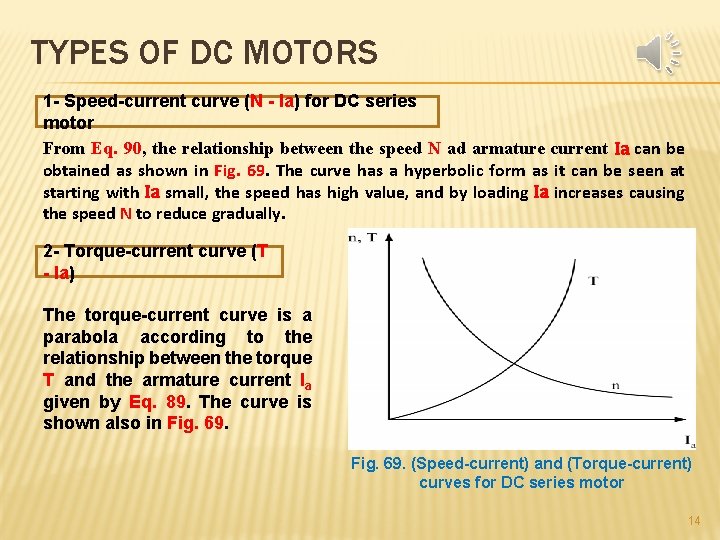
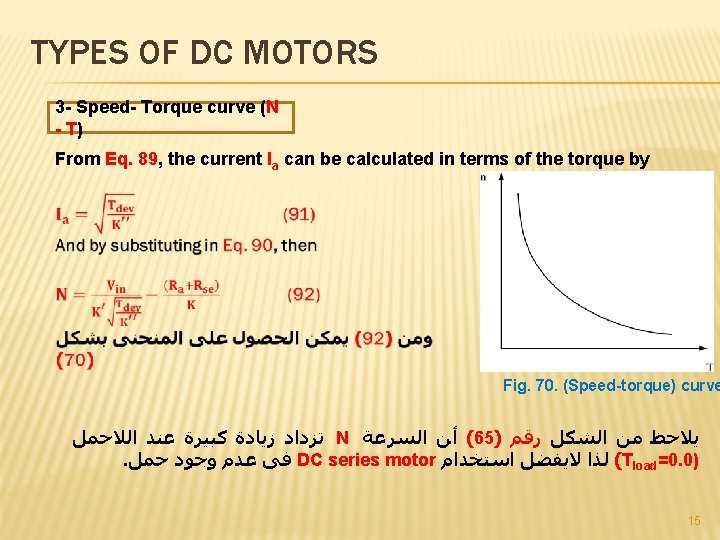
TYPES OF DC MOTORS 1 - Speed-current curve (N - Ia) for DC series motor From Eq. 90, the relationship between the speed N ad armature current Ia can be obtained as shown in Fig. 69. The curve has a hyperbolic form as it can be seen at starting with Ia small, the speed has high value, and by loading Ia increases causing the speed N to reduce gradually. 2 - Torque-current curve (T - Ia) The torque-current curve is a parabola according to the relationship between the torque T and the armature current Ia given by Eq. 89. The curve is shown also in Fig. 69. (Speed-current) and (Torque-current) curves for DC series motor 14
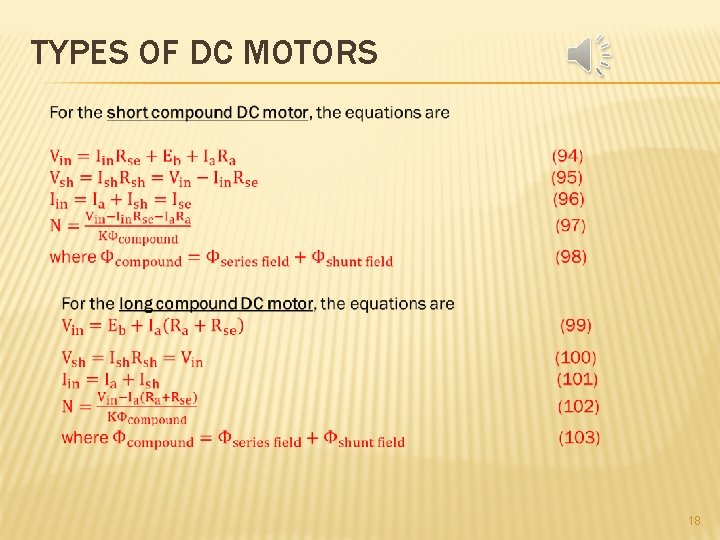
TYPES OF DC MOTORS 18