
Lesson 5 Chemistry and Physics of Fire Behavior
Lesson 5 Chemistry and Physics of Fire Behavior
Learning Objectives § Explain basic chemistry of fire § Explain differences between fire triangle and fire tetrahedron § Describe effects of oxygen on fire § Describe three methods of heat transfer § Illustrate classifications and stages of fire § Define backdraft, flashover, and products of combustion © 2004 National Fire Protection Association 2
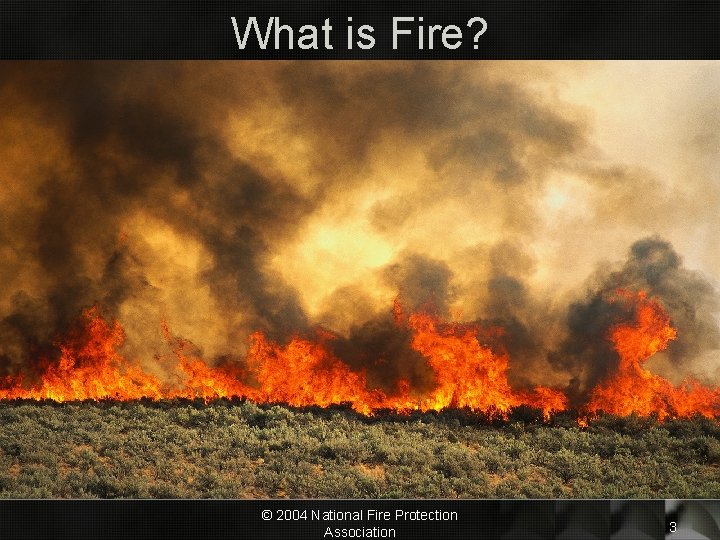
What is Fire? © 2004 National Fire Protection Association 3
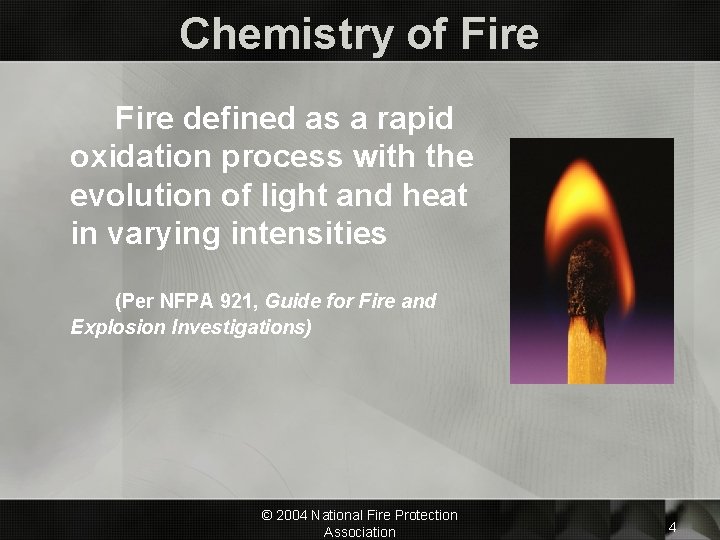
Chemistry of Fire defined as a rapid oxidation process with the evolution of light and heat in varying intensities (Per NFPA 921, Guide for Fire and Explosion Investigations) © 2004 National Fire Protection Association 4
Elements of Chemical Reactions § Self-Sustaining Reaction Provides enough energy to continue reaction § Oxidation Interaction between fuel and oxidizer § Exothermic Reaction Gives off more energy than is consumed § Smoke-Producing Process Smoke is broad term for all products of combustion © 2004 National Fire Protection Association 5
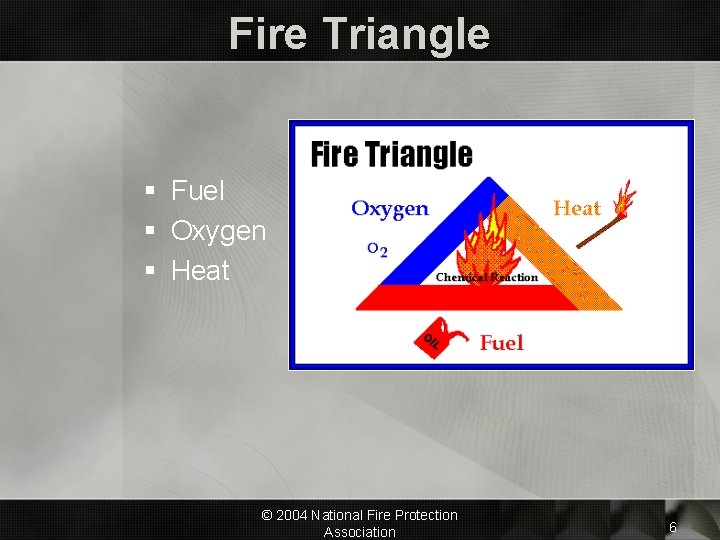
Fire Triangle § Fuel § Oxygen § Heat © 2004 National Fire Protection Association 6
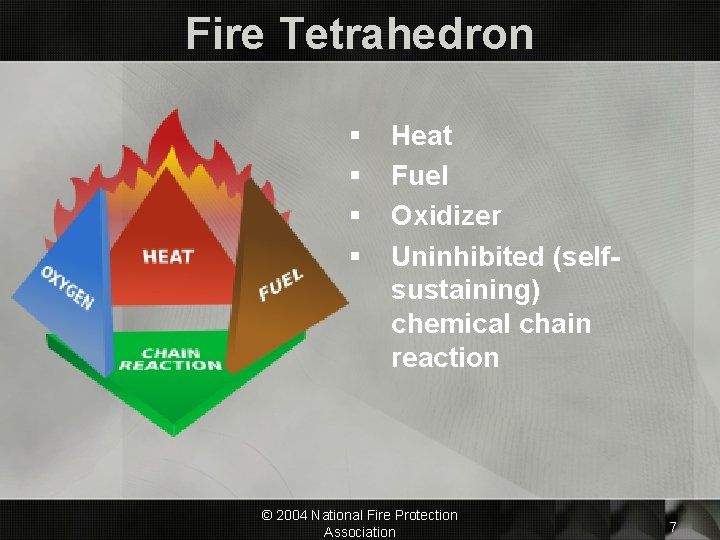
Fire Tetrahedron § § Heat Fuel Oxidizer Uninhibited (selfsustaining) chemical chain reaction © 2004 National Fire Protection Association 7
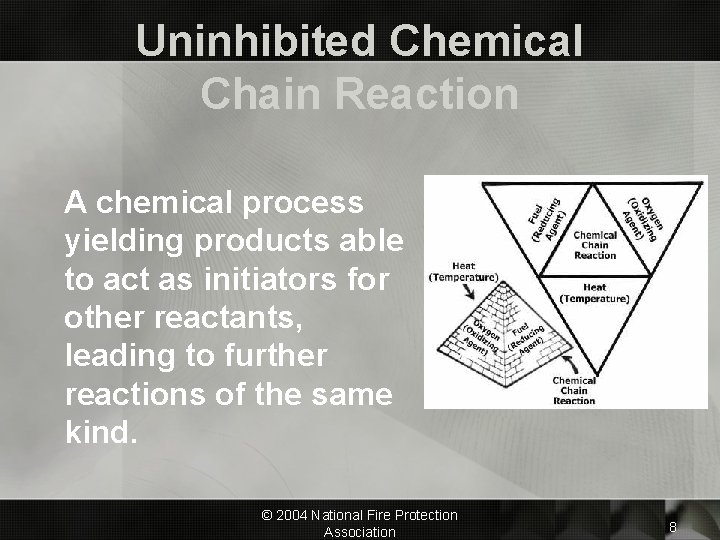
Uninhibited Chemical Chain Reaction A chemical process yielding products able to act as initiators for other reactants, leading to further reactions of the same kind. © 2004 National Fire Protection Association 8
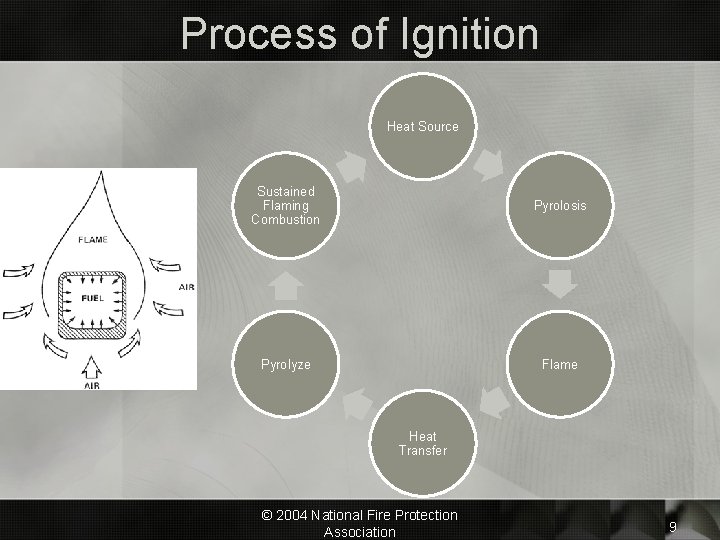
Process of Ignition Heat Source Sustained Flaming Combustion Pyrolosis Pyrolyze Flame Heat Transfer © 2004 National Fire Protection Association 9
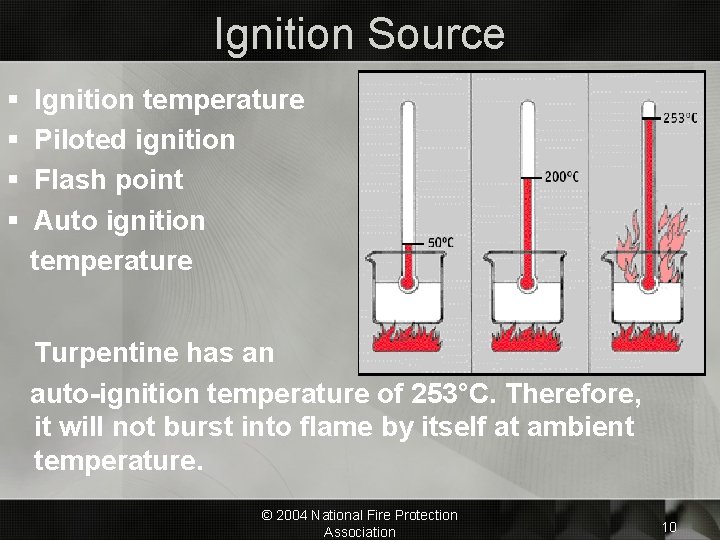
Ignition Source § § Ignition temperature Piloted ignition Flash point Auto ignition temperature Turpentine has an auto-ignition temperature of 253°C. Therefore, it will not burst into flame by itself at ambient temperature. © 2004 National Fire Protection Association 10
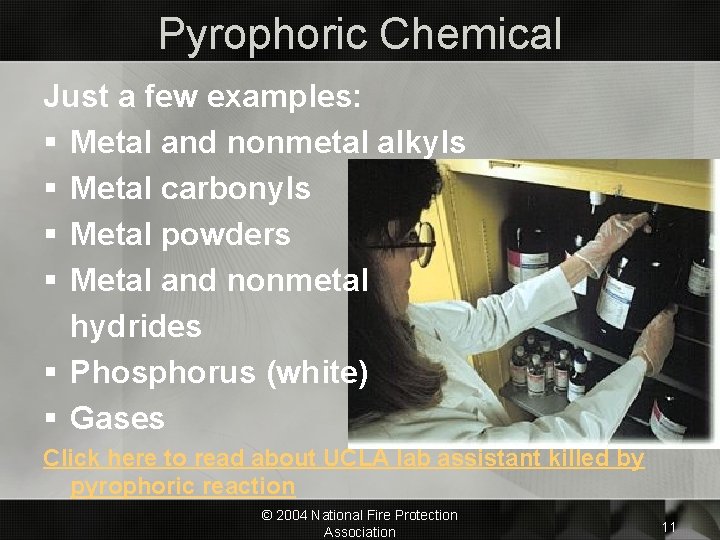
Pyrophoric Chemical Just a few examples: § Metal and nonmetal alkyls § Metal carbonyls § Metal powders § Metal and nonmetal hydrides § Phosphorus (white) § Gases Click here to read about UCLA lab assistant killed by pyrophoric reaction © 2004 National Fire Protection Association 11
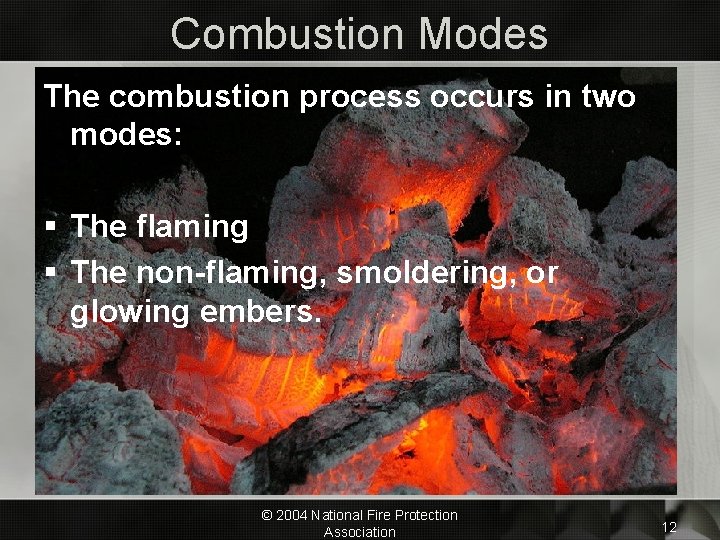
Combustion Modes The combustion process occurs in two modes: § The flaming § The non-flaming, smoldering, or glowing embers. © 2004 National Fire Protection Association 12
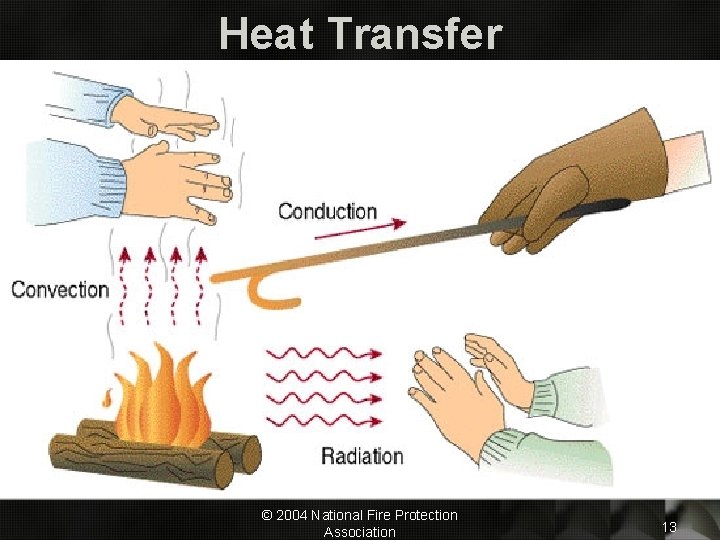
Heat Transfer § Conduction Through or within a material as result of physical contact § Convection Due to movement of a fluid § Radiation By electromagnetic waves © 2004 National Fire Protection Association 13
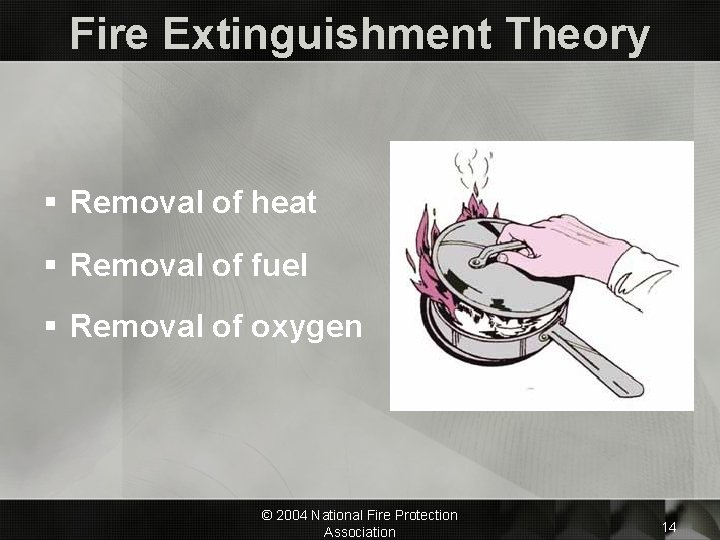
Fire Extinguishment Theory § Removal of heat § Removal of fuel § Removal of oxygen © 2004 National Fire Protection Association 14
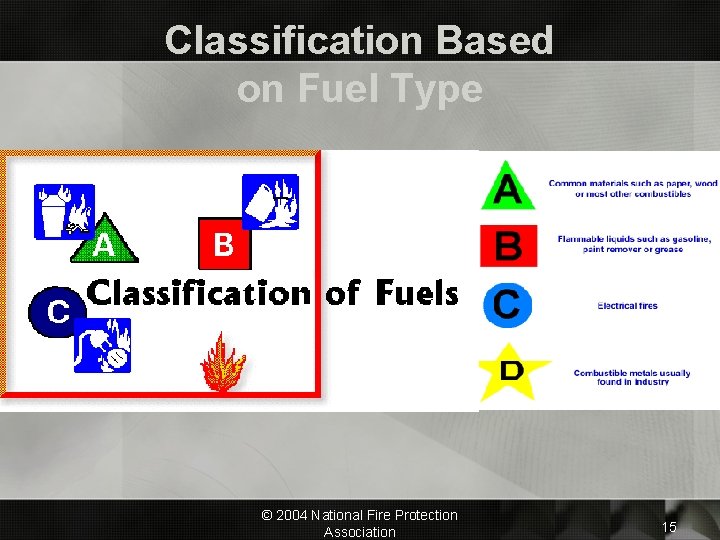
Classification Based on Fuel Type © 2004 National Fire Protection Association 15
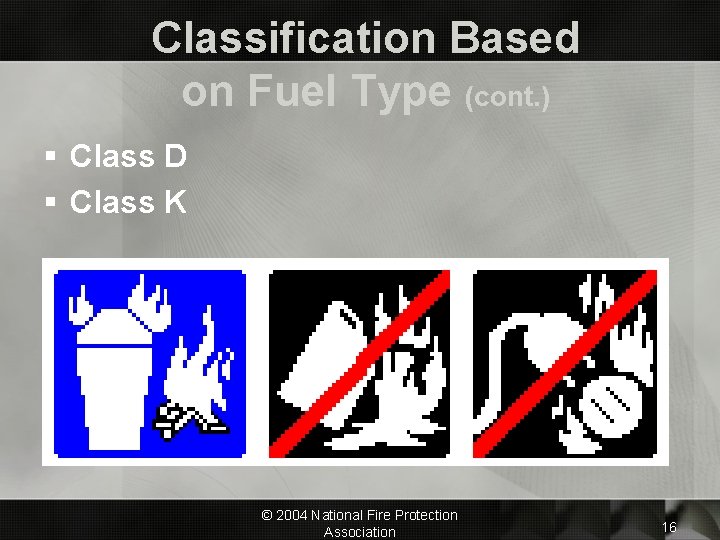
Classification Based on Fuel Type (cont. ) § Class D § Class K © 2004 National Fire Protection Association 16
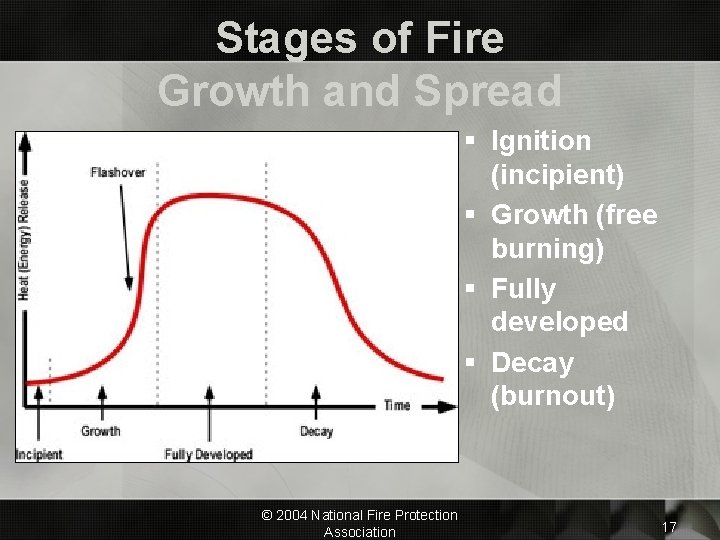
Stages of Fire Growth and Spread § Ignition (incipient) § Growth (free burning) § Fully developed § Decay (burnout) © 2004 National Fire Protection Association 17
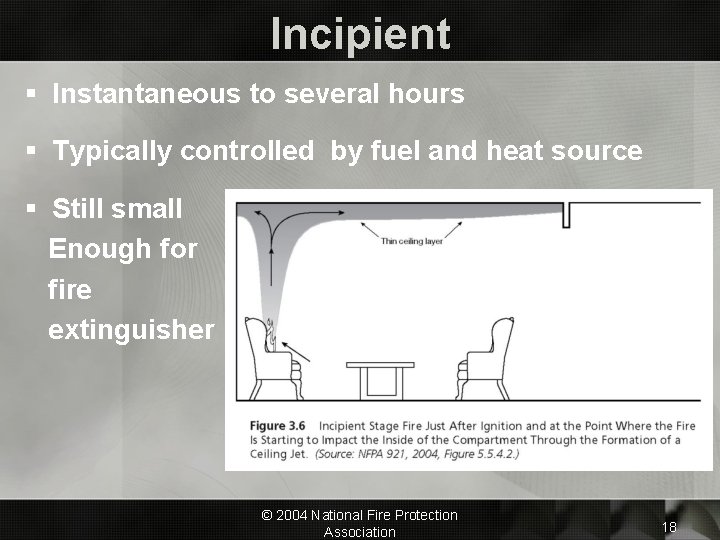
Incipient § Instantaneous to several hours § Typically controlled by fuel and heat source § Still small Enough for fire extinguisher © 2004 National Fire Protection Association 18
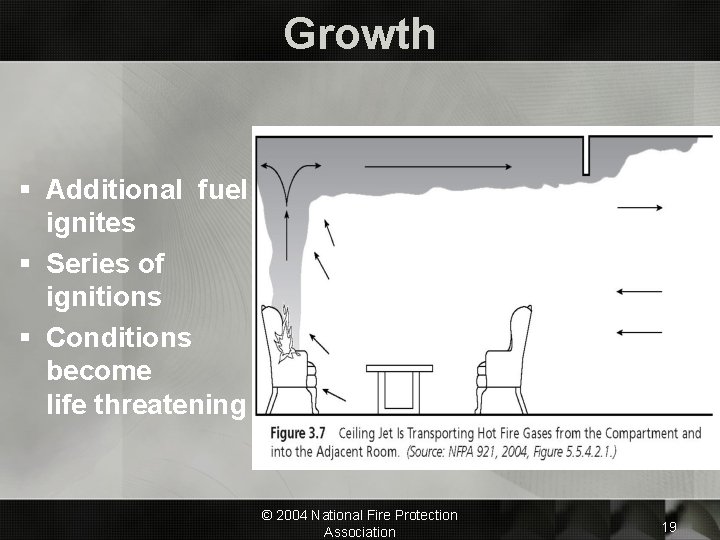
Growth § Additional fuel ignites § Series of ignitions § Conditions become life threatening © 2004 National Fire Protection Association 19
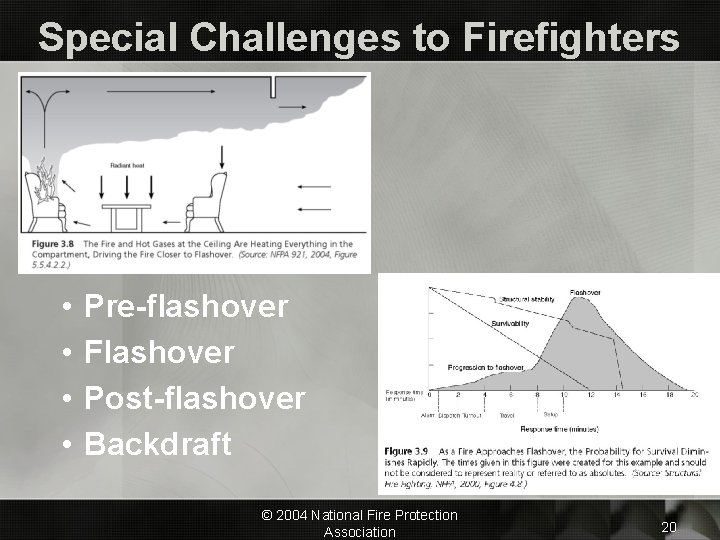
Special Challenges to Firefighters • • Pre-flashover Flashover Post-flashover Backdraft © 2004 National Fire Protection Association 20
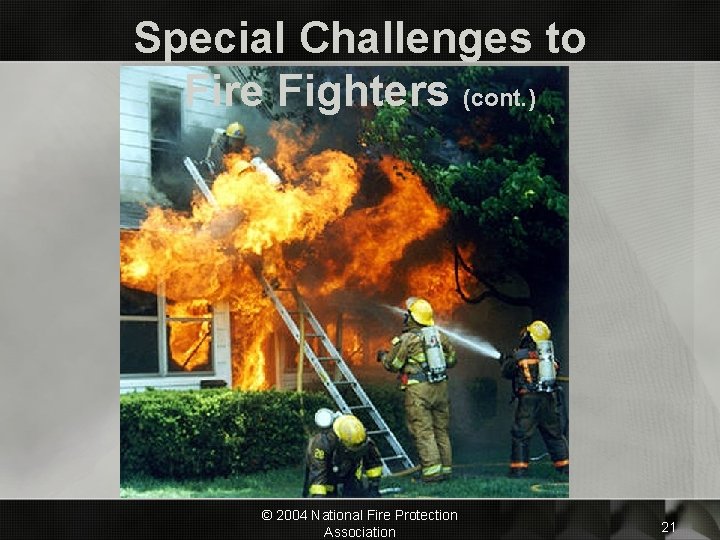
Special Challenges to Fire Fighters (cont. ) © 2004 National Fire Protection Association 21
Summary § Understanding fire behavior forms basis of studying fire protection § Provides fire physics background to explain building code provisions (which we’ll discuss in the future) § Extreme fire behavior illustrates need for proper fire protection equipment © 2004 National Fire Protection Association 22
Review Questions 1. What three things are required for a fire? 2. What two elements provide the components for the chemical reaction to occur? 3. How must the fuel and oxidizer be mixed? 4. When does piloted ignition occur? 5. What are three methods of heat transfer? 6. List the five classifications of fire based on the type of fuel burning. © 2004 National Fire Protection Association 23
Other References § Fundamentals of Fire Protection, Cote § Industrial Fire Protection Handbook, Schroll § Wikipedia § www. absoluteastronomy. com § www. firetactics. com § http: //virtualacademia. com © 2004 National Fire Protection Association 24
- Slides: 24