
Lesson 5 5 Meiosis Purpose Meiosis is a
- Slides: 12
Lesson 5. 5: Meiosis
Purpose • Meiosis is a process of cellular division that is used to make gametes (eggs and sperm) – Egg cells from the ovaries – Sperm cells from the testes
Chromosome number Diploid Haploid • All cells in your body but sex cells • Have twice the number of chromosomes as haploid cells • Only sex cells, including egg and sperm cells • Have half the number of chromosomes as normal cells.
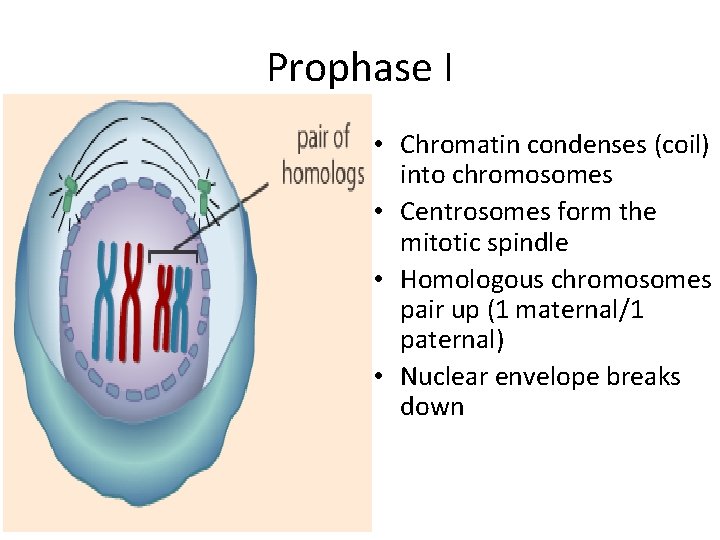
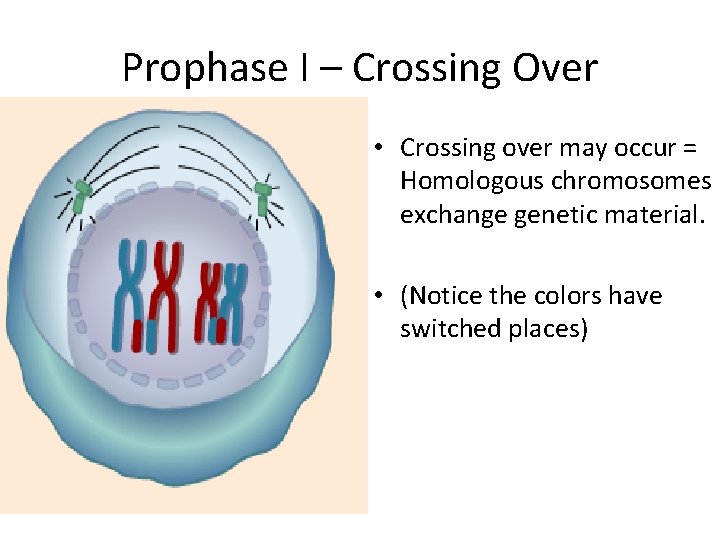
Prophase I • Chromatin condenses (coil) into chromosomes • Centrosomes form the mitotic spindle • Homologous chromosomes pair up (1 maternal/1 paternal) • Nuclear envelope breaks down
Prophase I – Crossing Over • Crossing over may occur = Homologous chromosomes exchange genetic material. • (Notice the colors have switched places)
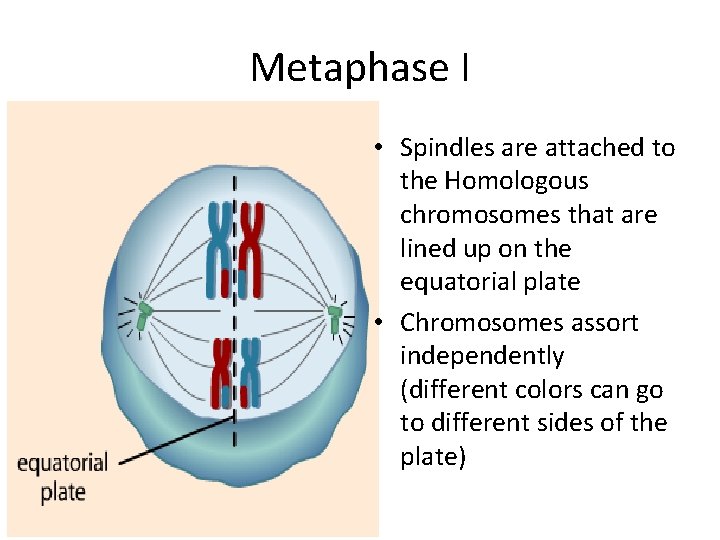
Metaphase I • Spindles are attached to the Homologous chromosomes that are lined up on the equatorial plate • Chromosomes assort independently (different colors can go to different sides of the plate)
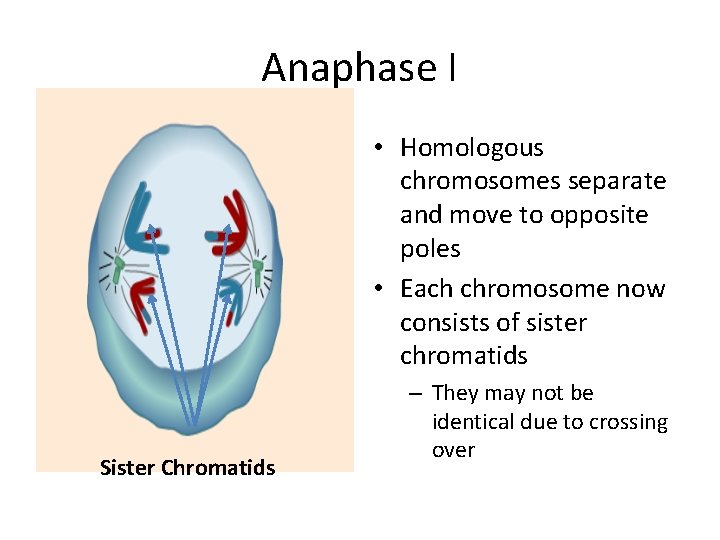
Anaphase I • Homologous chromosomes separate and move to opposite poles • Each chromosome now consists of sister chromatids Sister Chromatids – They may not be identical due to crossing over
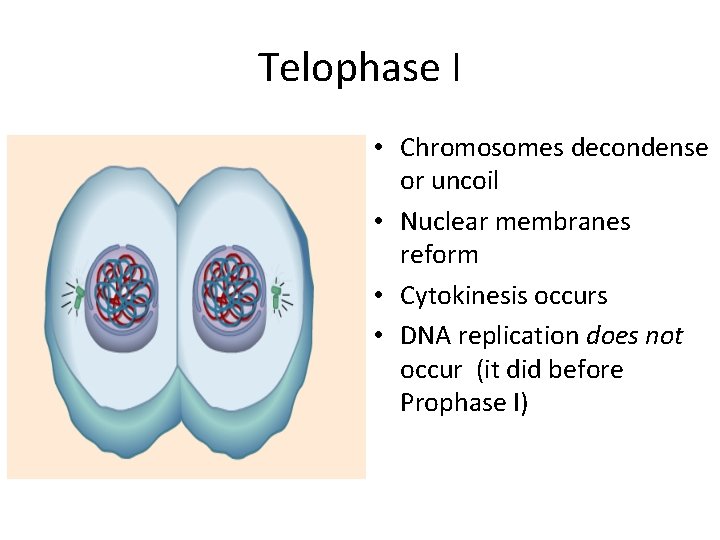
Telophase I • Chromosomes decondense or uncoil • Nuclear membranes reform • Cytokinesis occurs • DNA replication does not occur (it did before Prophase I)
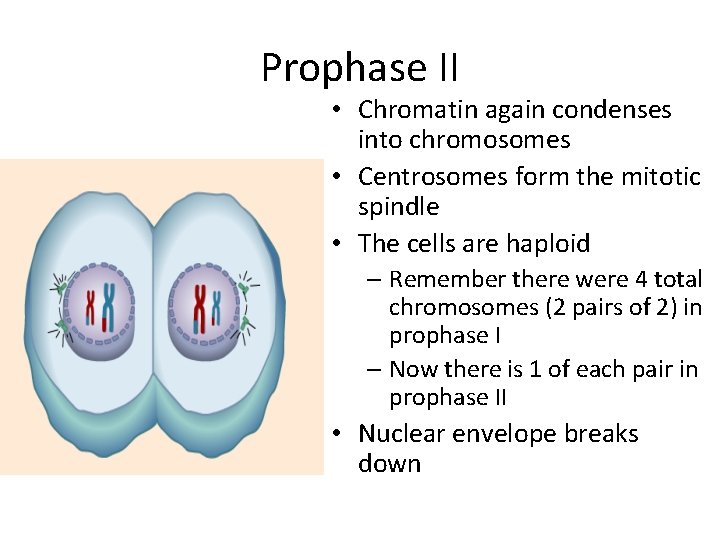
Prophase II • Chromatin again condenses into chromosomes • Centrosomes form the mitotic spindle • The cells are haploid – Remember there were 4 total chromosomes (2 pairs of 2) in prophase I – Now there is 1 of each pair in prophase II • Nuclear envelope breaks down
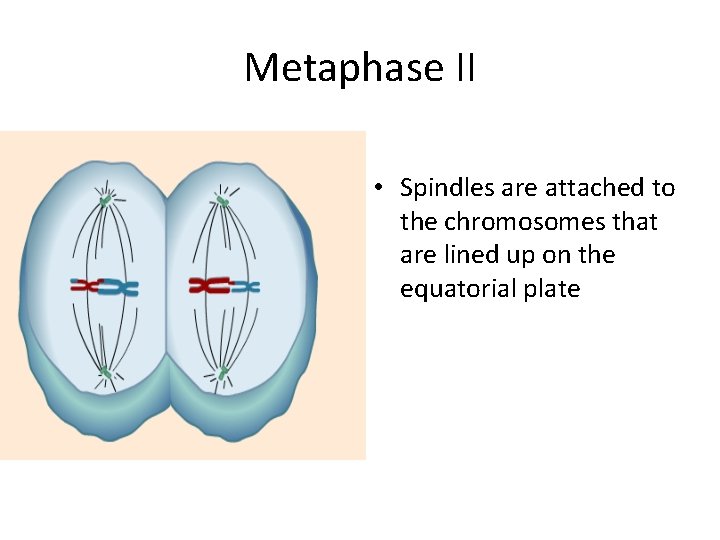
Metaphase II • Spindles are attached to the chromosomes that are lined up on the equatorial plate
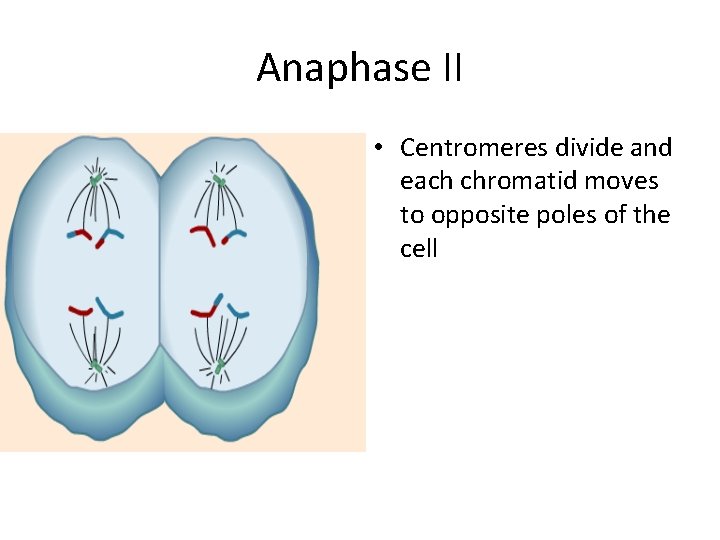
Anaphase II • Centromeres divide and each chromatid moves to opposite poles of the cell
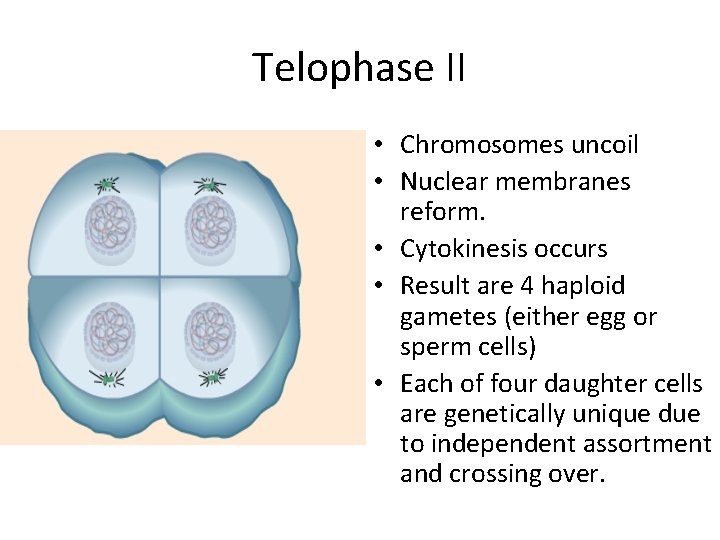
Telophase II • Chromosomes uncoil • Nuclear membranes reform. • Cytokinesis occurs • Result are 4 haploid gametes (either egg or sperm cells) • Each of four daughter cells are genetically unique due to independent assortment and crossing over.