
Lesson 5 3 Marine Storms Refer to Chapter
- Slides: 22
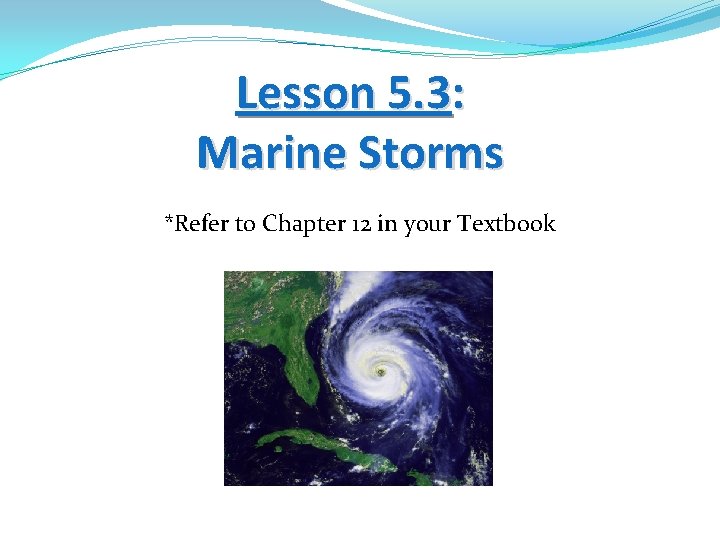
Lesson 5. 3: Marine Storms *Refer to Chapter 12 in your Textbook
Lesson 5. 3 Learning Targets: 1. Explain how monsoons and cyclones form. 2. Compare and contrast the types of cyclones. 3. Identify the wind speed of a given hurricane category. 4. Describe the impacts of hurricanes on coastal ecosystems.
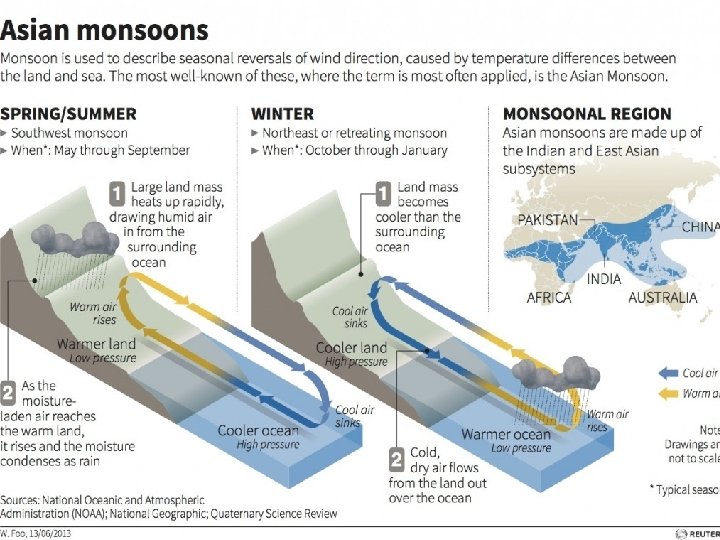
Monsoons Monsoons: are seasonal wind pattern changes caused by temperature differences between the land sea Monsoons occur when warm air over a continent rises and is replaced by cool, moist air from over the ocean Monsoons cause summers with extreme wind and rainfall and winters with very little
Cyclones are large, rotating storm systems Cyclones occurs when moist winds converge in a low pressure system Coriolis causes the winds to spiral inward Cyclones rotate clockwise in the North Hemisphere and counterclockwise in the South Hemisphere
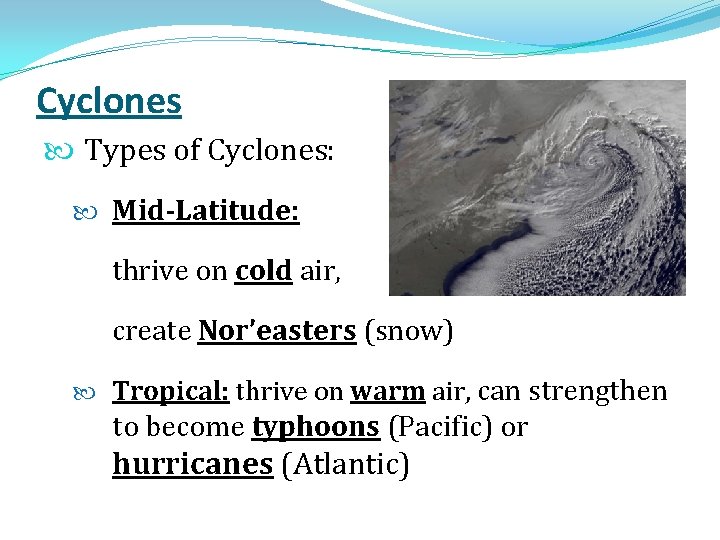
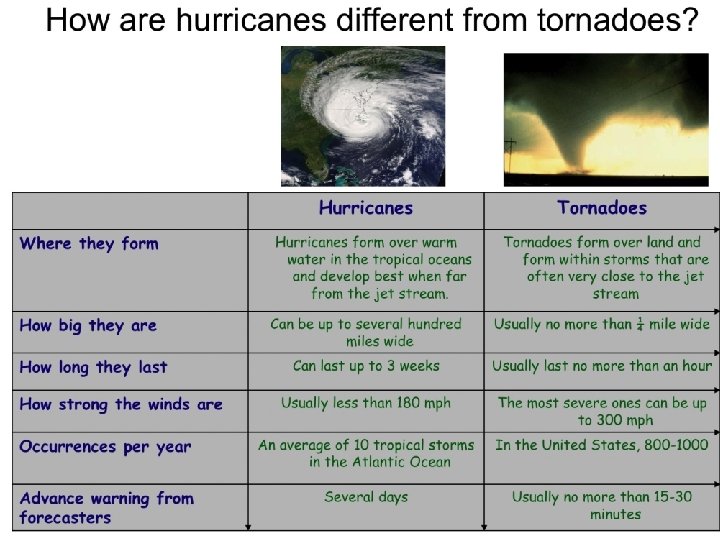
Cyclones Types of Cyclones: Mid-Latitude: thrive on cold air, create Nor’easters (snow) Tropical: thrive on warm air, can strengthen to become typhoons (Pacific) or hurricanes (Atlantic)
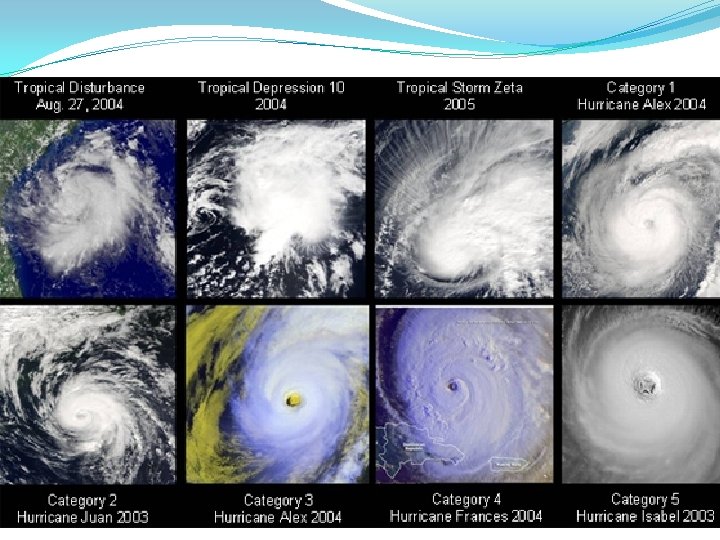
Storm Classifications Tropical depression: Cluster of organized thunderstorms Given a number, not named yet 38 mph or less Tropical Storm: More organized than tropical depression Given a name (alphabetically) 39 -73 mph
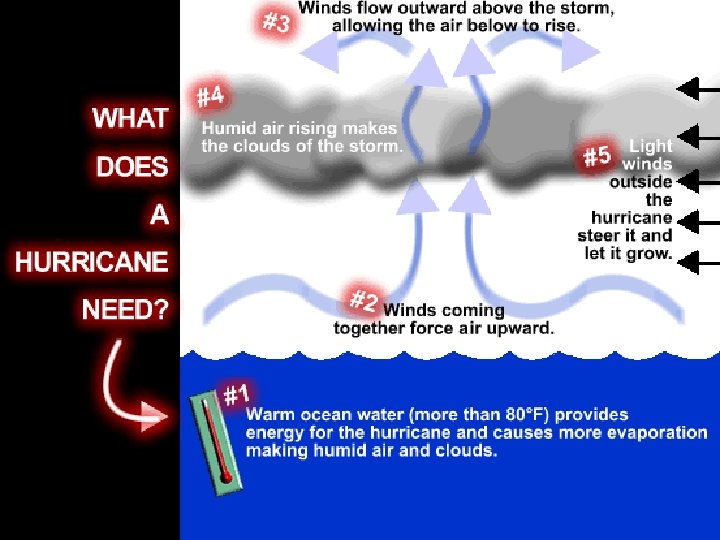
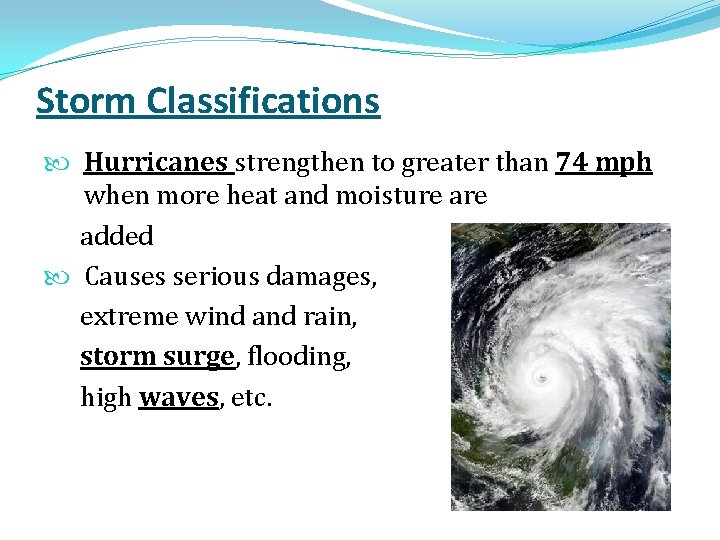
Storm Classifications Hurricanes strengthen to greater than 74 mph when more heat and moisture added Causes serious damages, extreme wind and rain, storm surge, flooding, high waves, etc.
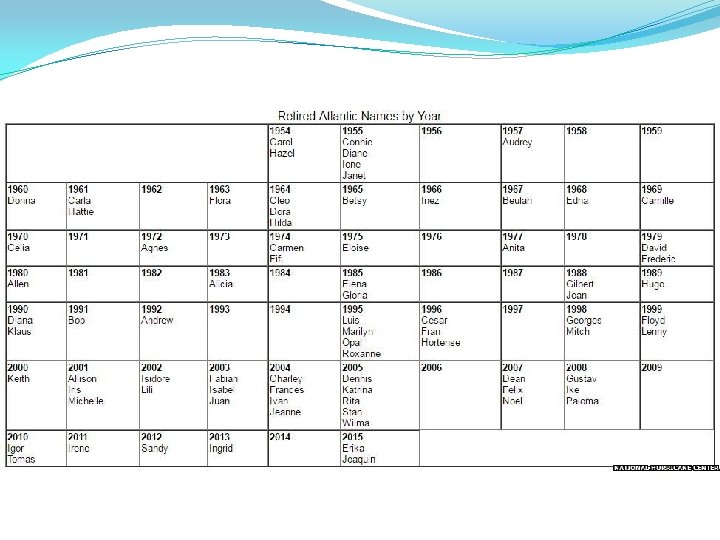
Naming a Storm A list of names from A-W (excluding Q) Alternate from male to female 6 lists, repeated in cycle every 6 years Damaging and costly storm names are retired If more than 21 storms are named, they start using the Greek alphabet.
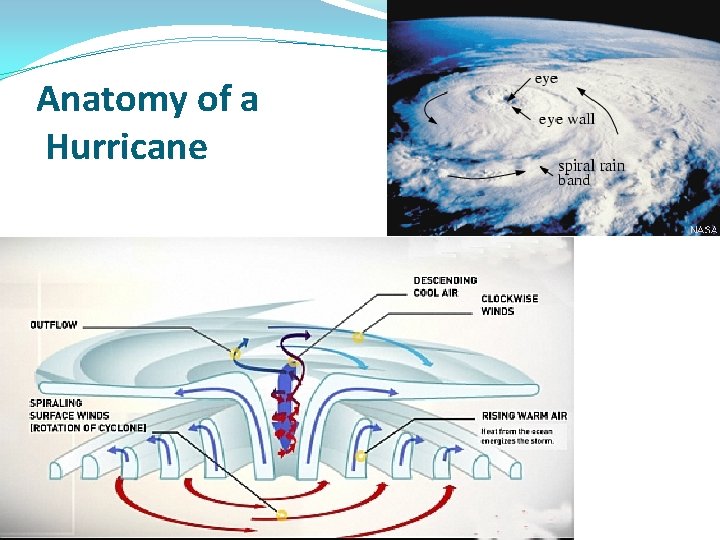
Anatomy of a Hurricane
Anatomy of a Hurricane: Eye: Clear, no clouds, warm winds are spiraling up and out, cool winds are descending, safest place to be Eye Wall: Clouds, violent storms, warm winds are spiraling at their strongest capacity Wind Bands: Clouds, stormy weather, warm winds decrease speed as you go further from the eye wall
Categories of Hurricanes Saffir- Simpson Hurricane Wind Scale: Category 1: 74 -95 mph Category 2: 96 -110 mph Category 3: 111 -129 mph Category 4: 130 -156 mph Category 5: >156 mph http: //www. nhc. noaa. gov/aboutsshws. php
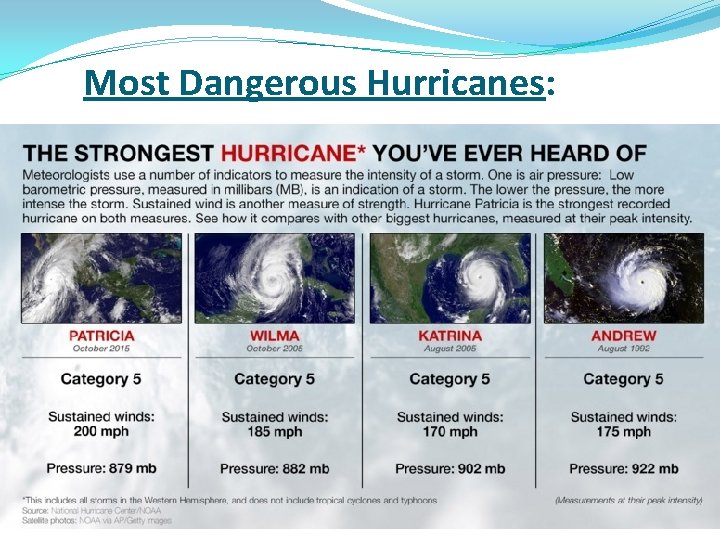
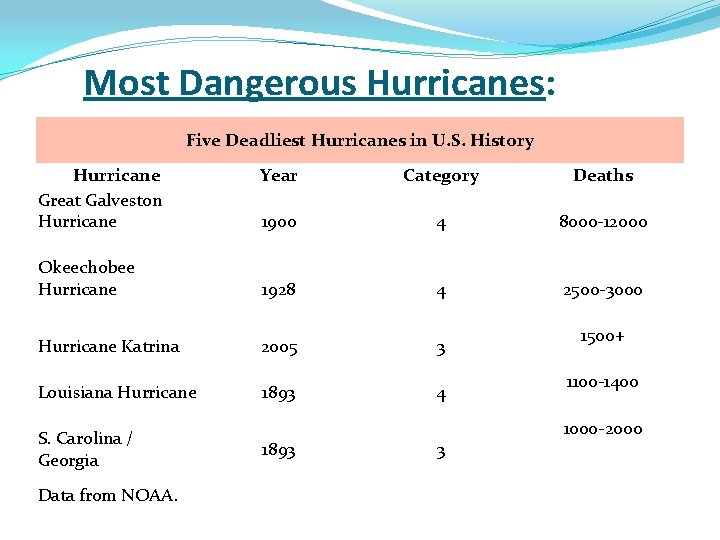
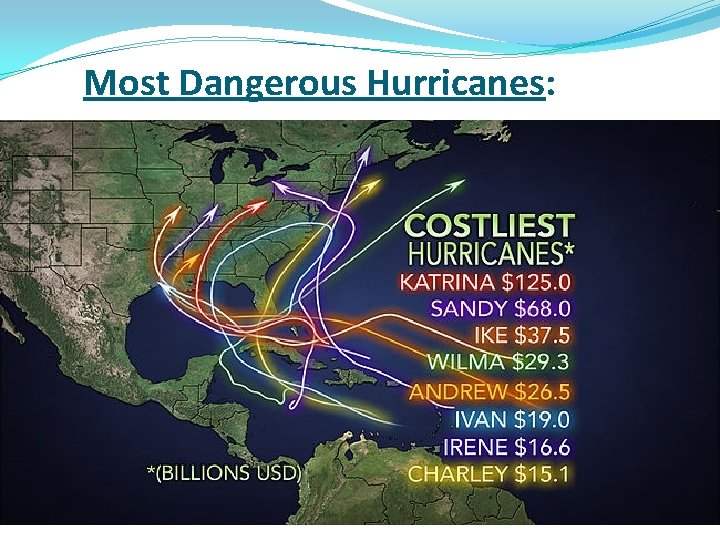
Most Dangerous Cyclones Strongest Hurricane Ever Recorded: Hurricane Patricia, 2015, Cat 5 Strongest Cyclone In World History: Typhoon Tip, 1979, Cat 5 Deadliest Hurricane in US History: Great Galveston Hurricane, 2005, Cat 4 Costliest Hurricane in US History: Hurricane Katrina, $125 billion, Cat 3
Most Dangerous Hurricanes:
Most Dangerous Hurricanes: Five Deadliest Hurricanes in U. S. History Hurricane Great Galveston Hurricane Year Category Deaths 1900 4 8000 -12000 Okeechobee Hurricane 1928 4 2500 -3000 Hurricane Katrina 2005 3 Louisiana Hurricane 1893 4 S. Carolina / Georgia Data from NOAA. 1893 3 1500+ 1100 -1400 1000 -2000
Most Dangerous Hurricanes:
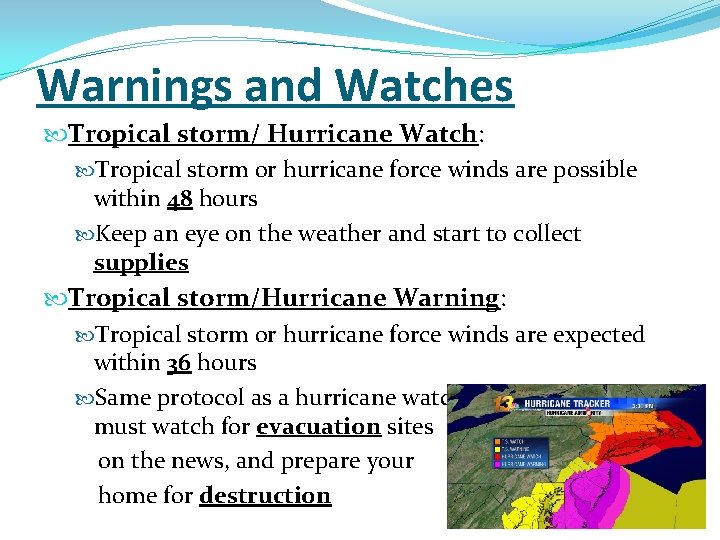
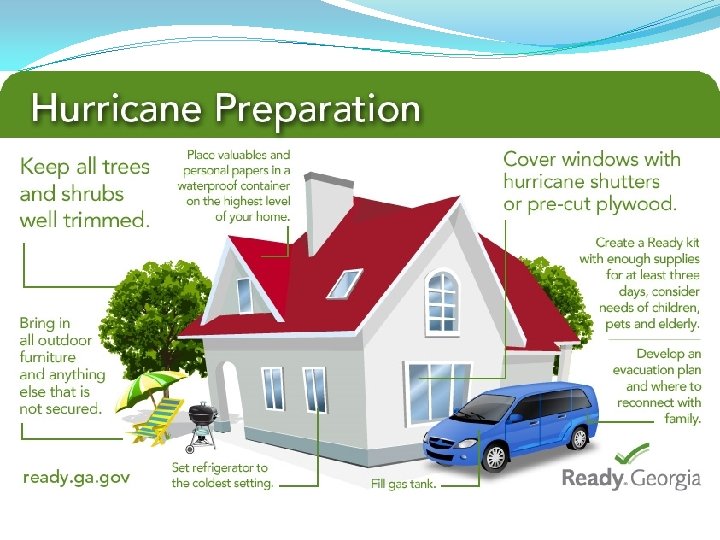
Warnings and Watches Tropical storm/ Hurricane Watch: Tropical storm or hurricane force winds are possible within 48 hours Keep an eye on the weather and start to collect supplies Tropical storm/Hurricane Warning: Tropical storm or hurricane force winds are expected within 36 hours Same protocol as a hurricane watch, but also now you must watch for evacuation sites on the news, and prepare your home for destruction