
LESSON 4 VOCABULARY assemble sembl Explanation to bring
LESSON 4
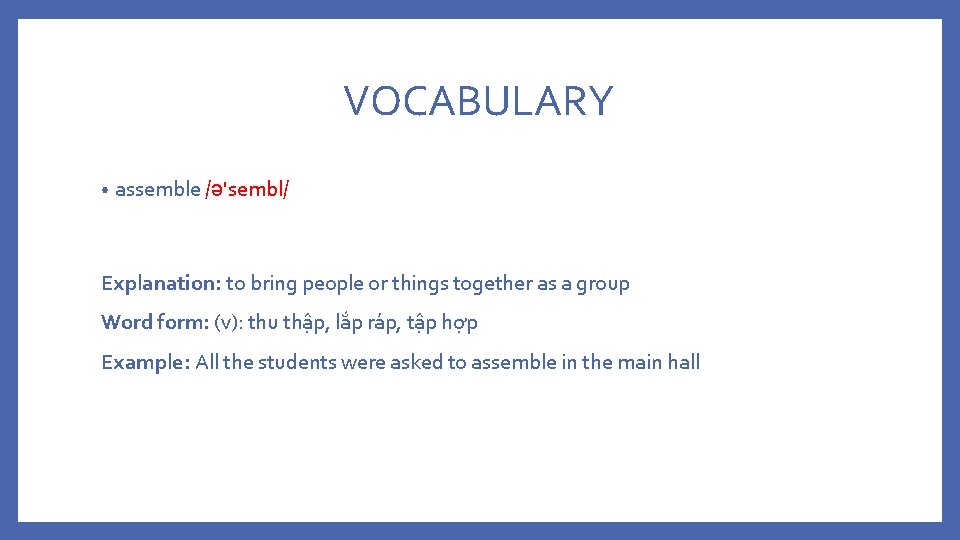
VOCABULARY • assemble /ə'sembl/ Explanation: to bring people or things together as a group Word form: (v): thu thập, lắp ráp, tập hợp Example: All the students were asked to assemble in the main hall Tất cả các sinh viên được yêu cầu tập hợp ở hội trường chính.
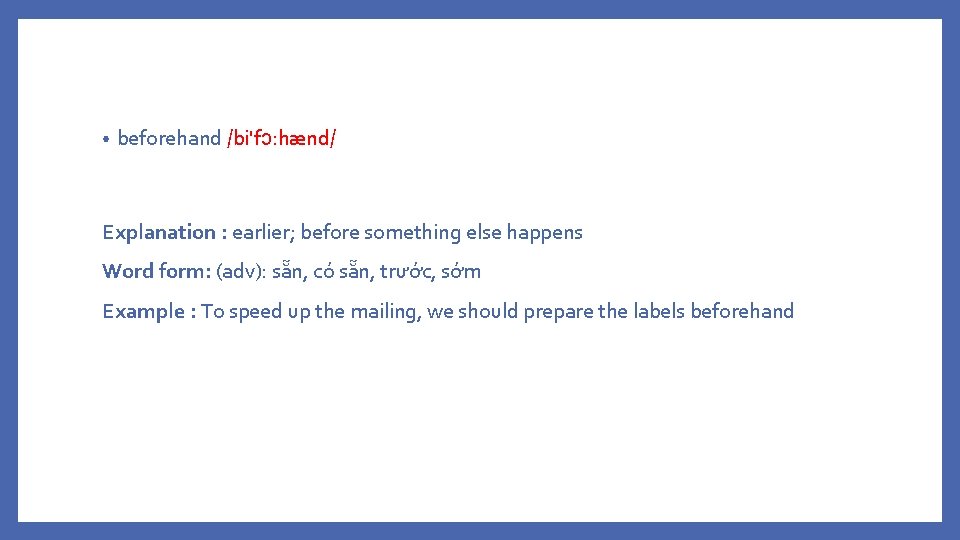
• beforehand /bi'fɔ: hænd/ Explanation : earlier; before something else happens Word form: (adv): sẵn, có sẵn, trước, sớm Example : To speed up the mailing, we should prepare the labels beforehand Để tăng tốc gửi thư, chúng ta nên chuẩn bị nhãn trước.

• complication /ˌkɑːmplɪˈkeɪʃn/ • Complicate /ˈkɒmplɪkeɪt/ (v) • Complicated /ˈkɒmplɪkeɪtɪd/ adj, Explanation: a complex combination of elements or things. Word form: (n): sự phức tạp, sự rắc rối Example : She will have to spend two more days in the hospital due to complications during the surgery. Cô sẽ phải mất hai ngày nữa trong bệnh viện do biến chứng trong khi phẫu thuật. Để tăng tốc gửi thư, chúng ta nên chuẩn bị nhãn trước.
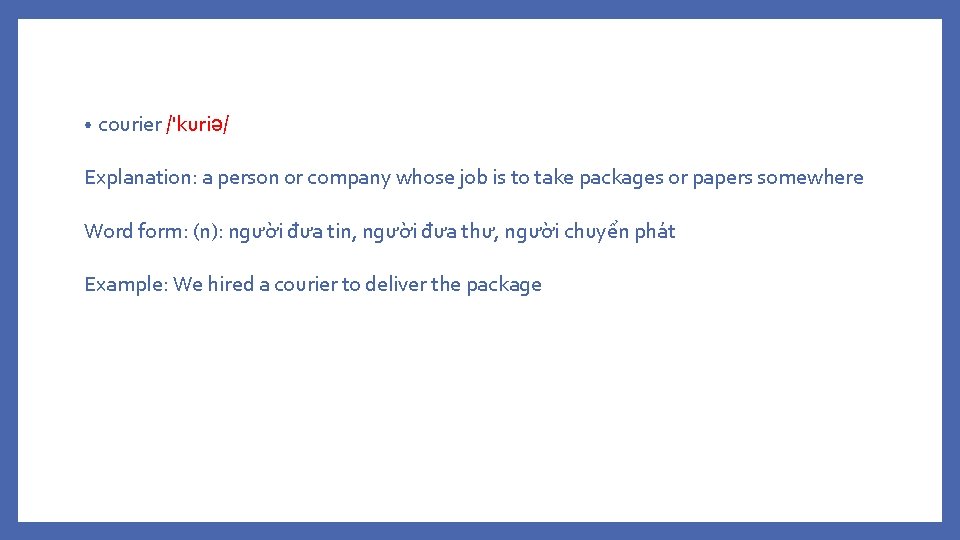
• courier /'kuriə/ Explanation: a person or company whose job is to take packages or papers somewhere Word form: (n): người đưa tin, người đưa thư, người chuyển phát Example: We hired a courier to deliver the package Chúng tôi đã thuê một người đưa thư để phân phát các kiện hàng.
• express /iks'pres/ Explanation: fast and direct Word form: (adj): nhanh, hỏa tốc, tốc hành. Example: It's important that this document be there tomorrow, so please send it express mail. Việc tài liệu này phải có ở chổ ngày mai vì nó rất quan trọng, do đó nên hãy gửi thư chuyển phát nhanh
• fold /fould/ Explanation: to bend something, especially paper or cloth Word form: (v): nếp gấp, gấp lại Explantion: Fold the letter into three parts before stuffing it into the envelope Gấp lá thư làm ba bước trước khi nhét nó vào bao thư.

• mention /'menʃn/ • Mentionable (adj) Explanation: an act of refering to somebody / something in speech or writing Word form: (n, v): (n) sự đề cập; (v) nói đến, đề cập đếm, đề xuất Example: You should mention in the letter that we can arrange for mailing the brochures as well as printing them Anh nên đề cập trong thư rằng chúng ta có thể thu xếp gửi (thư) tờ bướm cũng như là in ấn chúng.
• petition /pi'tiʃn/ • Petitioners ( n) Explanation: a written document signed by a large people that asks somebody to change something Word from: (n, v): (n) ‹sự/đơn› cầu xin, đơn kiến nghị, đơn thỉnh cầu; (v) cầu xin, kiến nghị Ví dụ: The petition was photocopied and distributed to workers who will collect the neccessary signatures Đơn kiến nghị được photocopy và phân phát đến những công nhân nào sẽ thu thập chữ ký cần thiết.
• proof /proof/ • Proofreader ( noun) • Proofing (gerund) Explanation: information, documents, etc. that show something is true Word form: (n): bằng chứng, chứng cớ Example: This letter was not proofed very carefully; it is full of typing mistakes Proofing a document is best done by starting at the end and reading backward. Lá thư này không được kiểm lỗi cẩn thận; nó đầy những lỗi đánh máy.
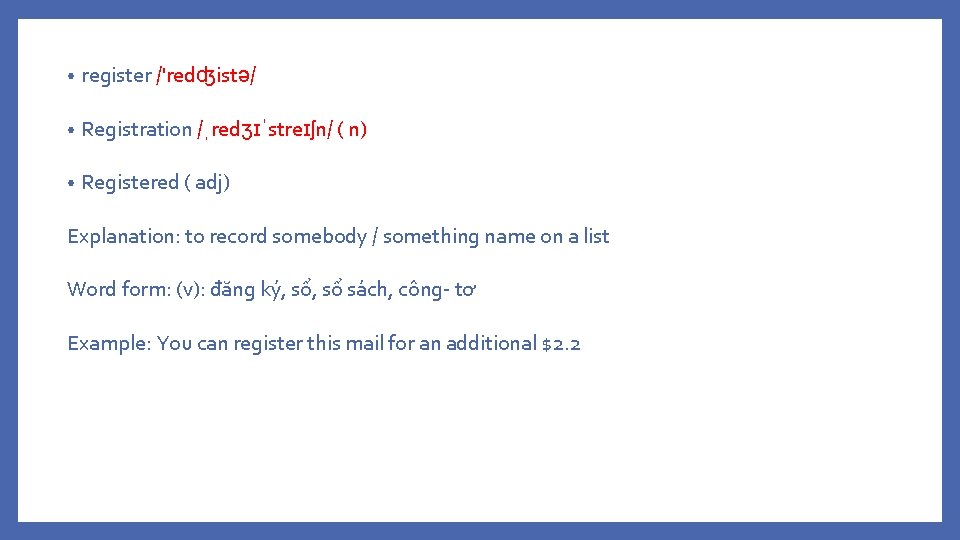
• register /'redʤistə/ • Registration /ˌredʒɪˈstreɪʃn/ ( n) • Registered ( adj) Explanation: to record somebody / something name on a list Word form: (v): đăng ký, sổ sách, công- tơ Example: You can register this mail for an additional $2. 2 Anh ấy có thể gửi đảm bảo thư này với một khoản 2. 2 đô-la phí bổ sung
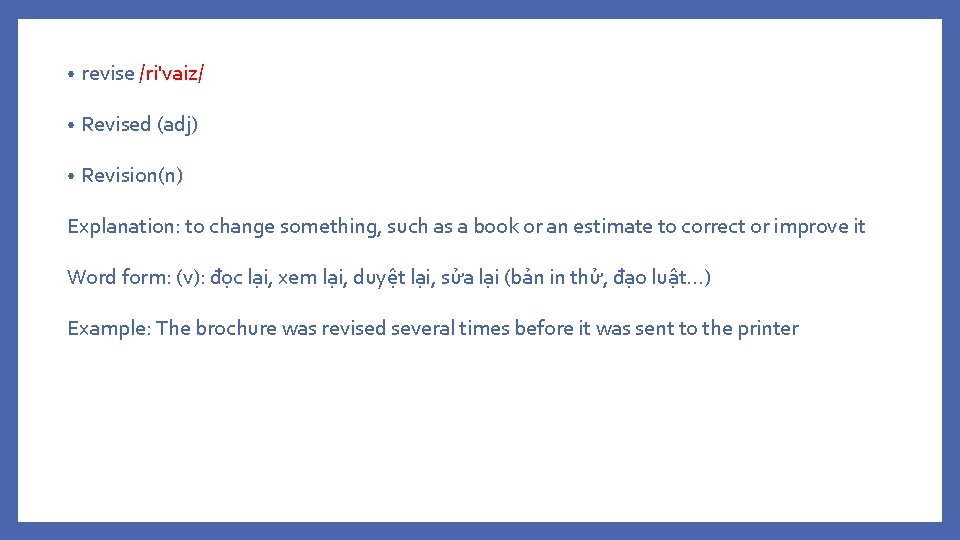
• revise /ri'vaiz/ • Revised (adj) • Revision(n) Explanation: to change something, such as a book or an estimate to correct or improve it Word form: (v): đọc lại, xem lại, duyệt lại, sửa lại (bản in thử, đạo luật. . . ) Example: The brochure was revised several times before it was sent to the printer Tờ bướm được duyệt lại vài lần trước khi nó được gửi đi in.
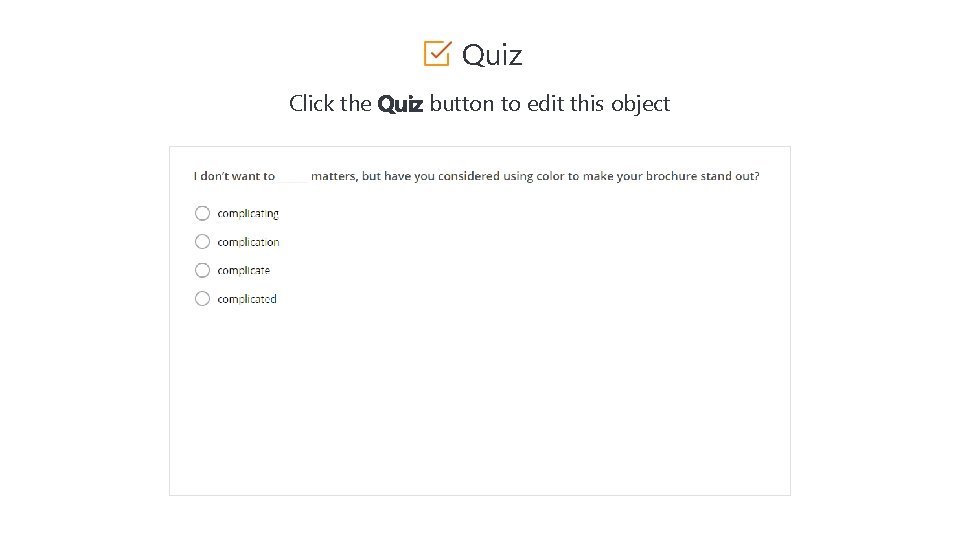
Quiz Click the Quiz button to edit this object

CONDITIONALS by Thanh My Center www. trungtamthanhmy. com
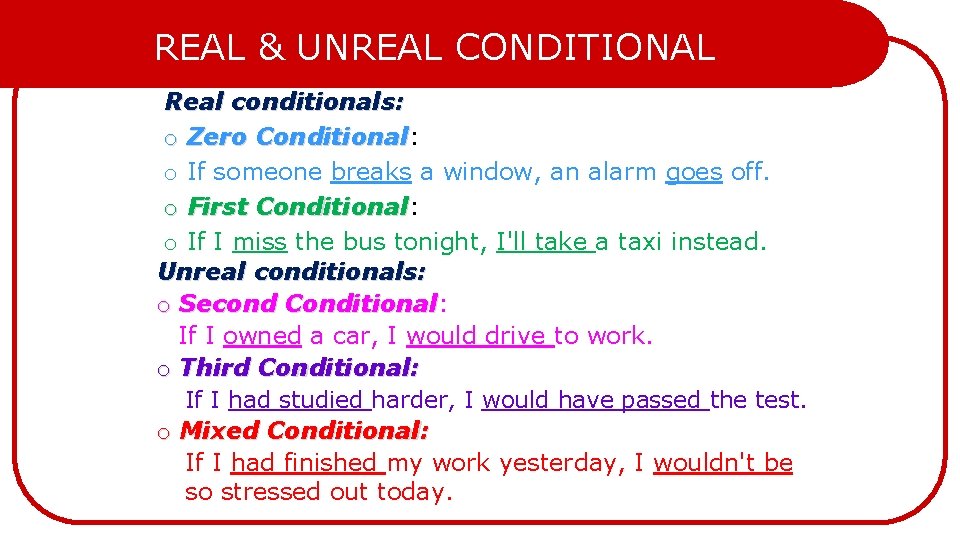
REAL & UNREAL CONDITIONAL Real conditionals: o Zero Conditional: Conditional o If someone breaks a window, an alarm goes off. o First Conditional: Conditional o If I miss the bus tonight, I'll take a taxi instead. Unreal conditionals: o Second Conditional: Conditional If I owned a car, I would drive to work. o Third Conditional: If I had studied harder, I would have passed the test. o Mixed Conditional: If I had finished my work yesterday, I wouldn't be so stressed out today.
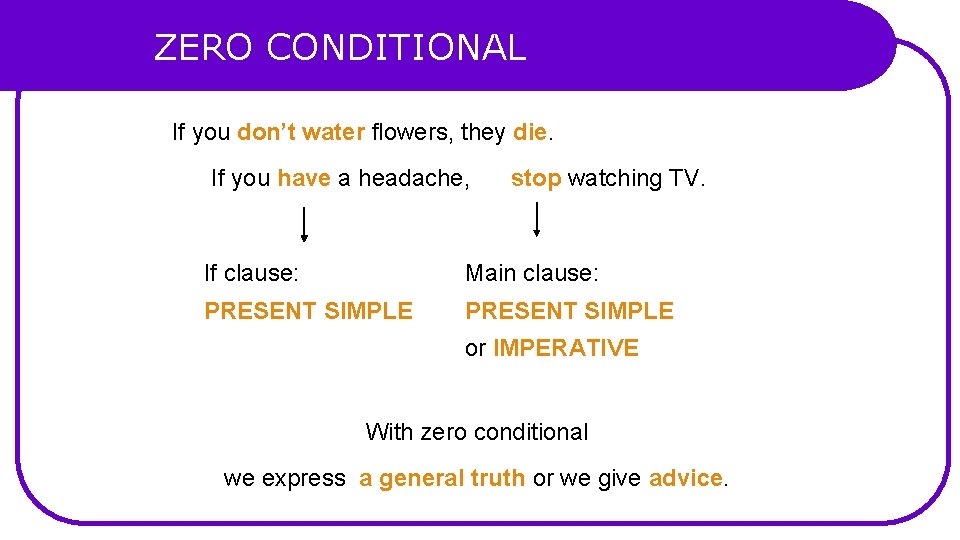
ZERO CONDITIONAL If you don’t water flowers, they die. If you have a headache, stop watching TV. If clause: Main clause: PRESENT SIMPLE or IMPERATIVE With zero conditional we express a general truth or we give advice.
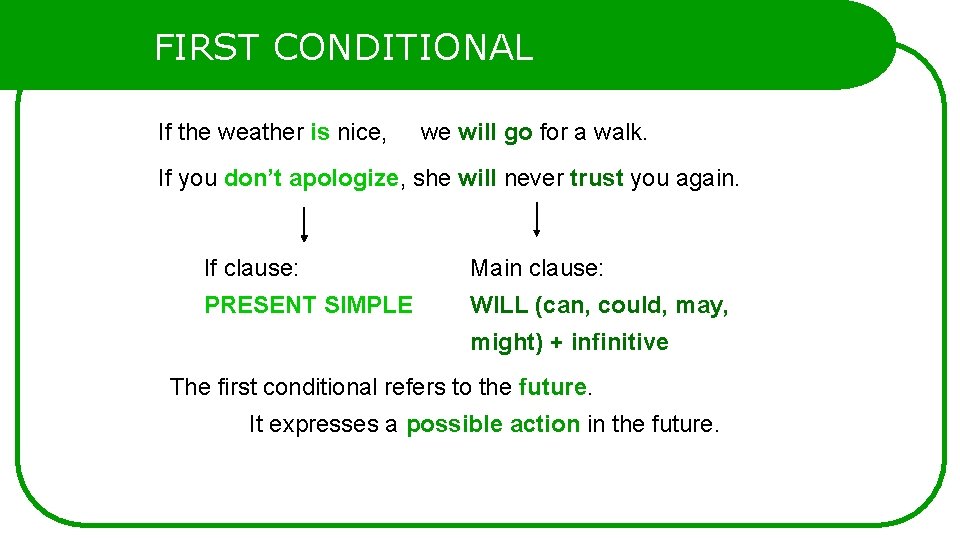
FIRST CONDITIONAL If the weather is nice, we will go for a walk. If you don’t apologize, she will never trust you again. If clause: Main clause: PRESENT SIMPLE WILL (can, could, may, might) + infinitive The first conditional refers to the future. It expresses a possible action in the future.
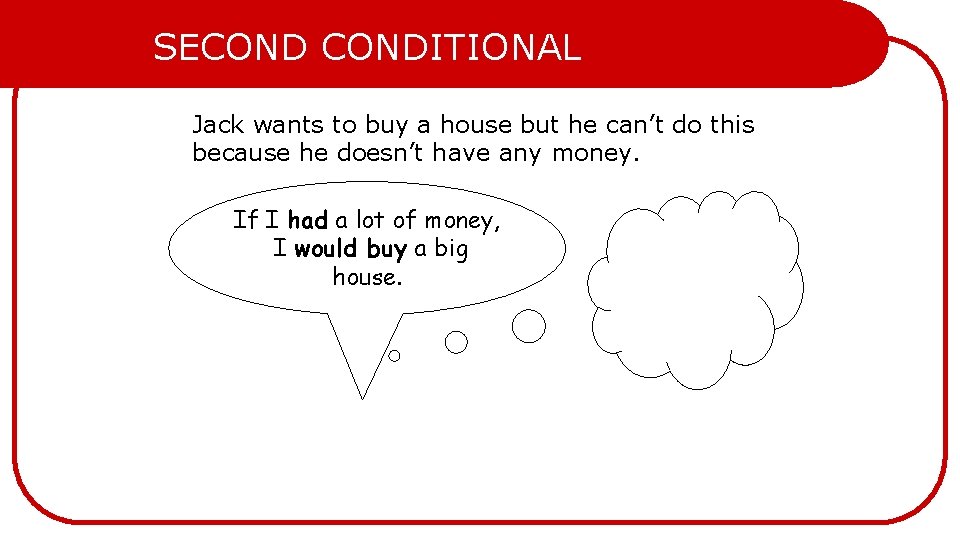
SECONDITIONAL Jack wants to buy a house but he can’t do this because he doesn’t have any money. If I had a lot of money, I would buy a big house.
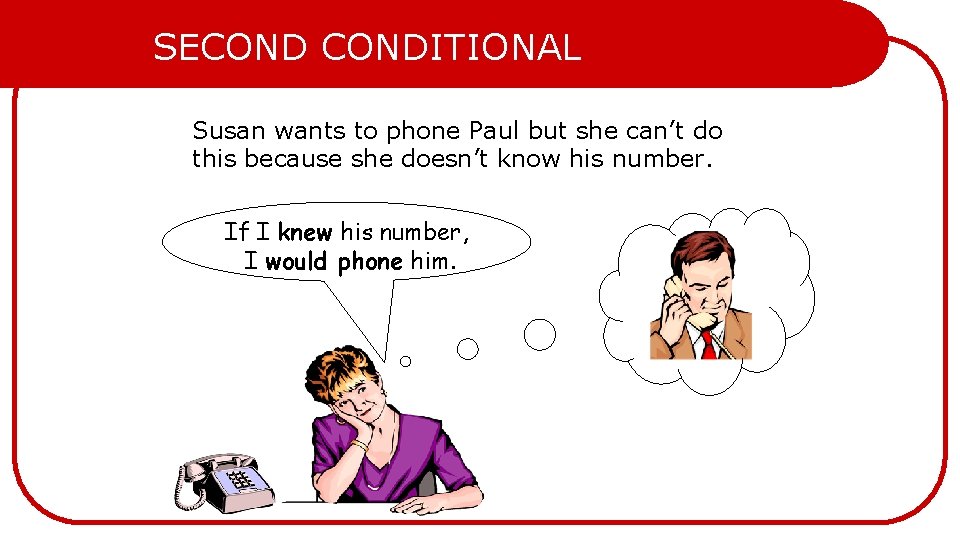
SECONDITIONAL Susan wants to phone Paul but she can’t do this because she doesn’t know his number. If I knew his number, I would phone him.
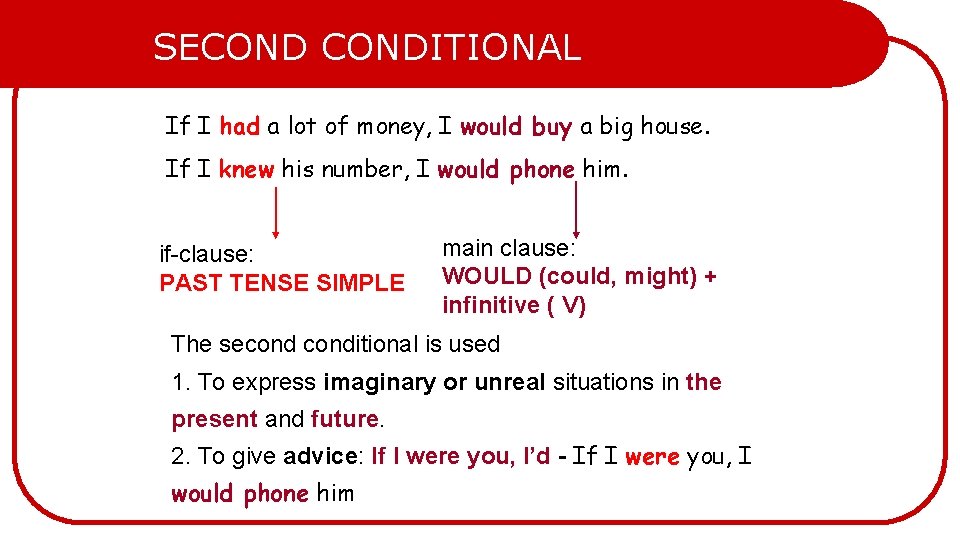
SECONDITIONAL If I had a lot of money, I would buy a big house. If I knew his number, I would phone him. if-clause: PAST TENSE SIMPLE main clause: WOULD (could, might) + infinitive ( V) The seconditional is used 1. To express imaginary or unreal situations in the present and future. 2. To give advice: If I were you, I’d - If I were you, I would phone him
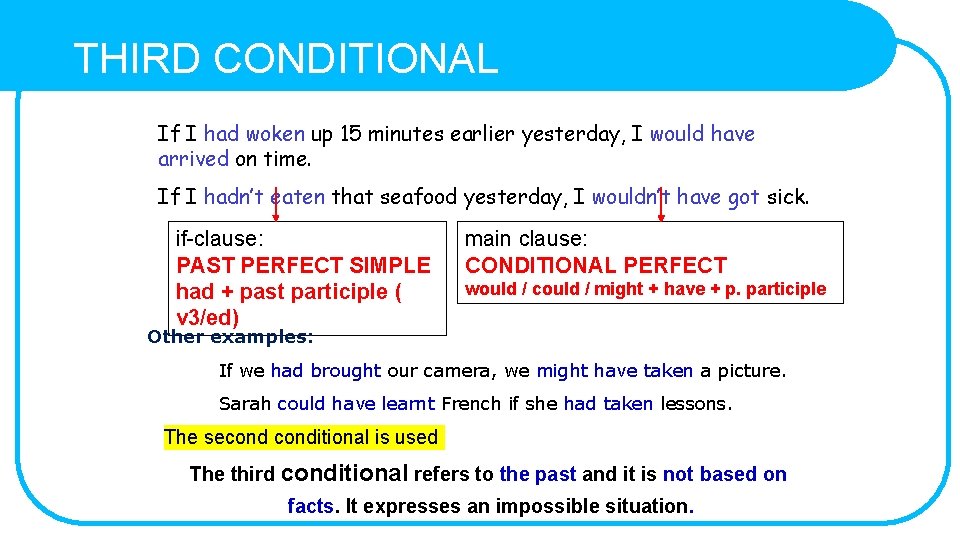
THIRD CONDITIONAL If I had woken up 15 minutes earlier yesterday, I would have arrived on time. If I hadn’t eaten that seafood yesterday, I wouldn’t have got sick. if-clause: PAST PERFECT SIMPLE had + past participle ( v 3/ed) main clause: CONDITIONAL PERFECT would / could / might + have + p. participle Other examples: If we had brought our camera, we might have taken a picture. Sarah could have learnt French if she had taken lessons. The seconditional is used The third conditional refers to the past and it is not based on facts. It expresses an impossible situation.
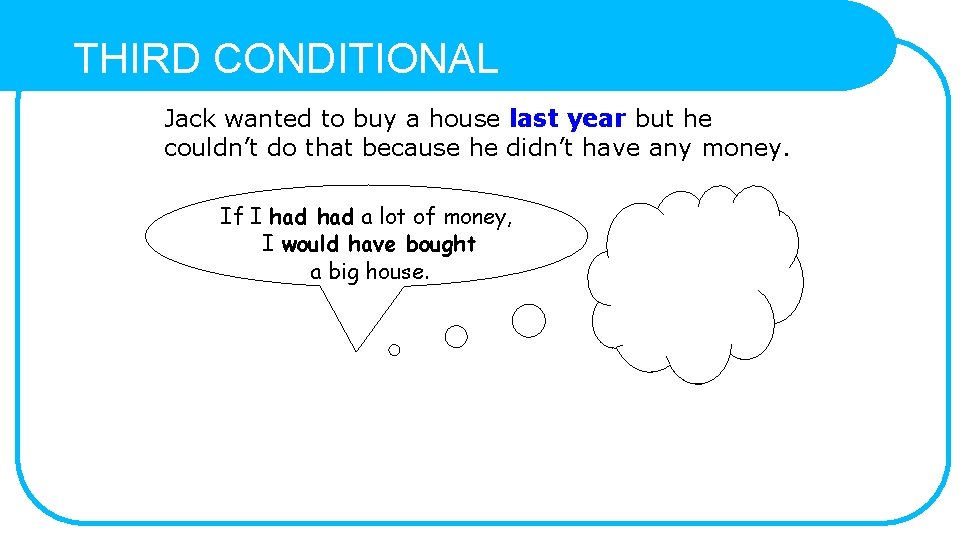
THIRD CONDITIONAL Jack wanted to buy a house last year but he couldn’t do that because he didn’t have any money. If I had a lot of money, I would have bought a big house.
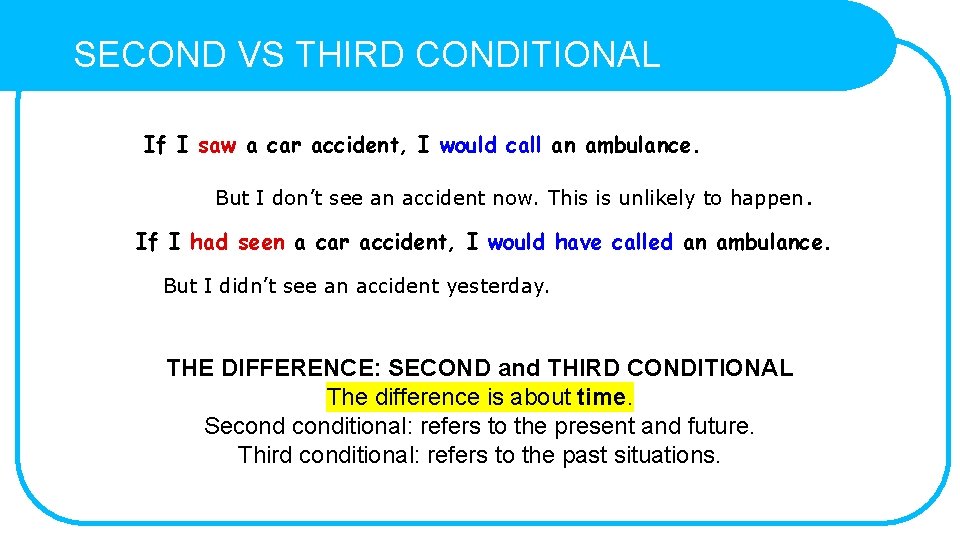
SECOND VS THIRD CONDITIONAL If I saw a car accident, I would call an ambulance. But I don’t see an accident now. This is unlikely to happen. If I had seen a car accident, I would have called an ambulance. But I didn’t see an accident yesterday. THE DIFFERENCE: SECOND and THIRD CONDITIONAL The difference is about time. Seconditional: refers to the present and future. Third conditional: refers to the past situations.
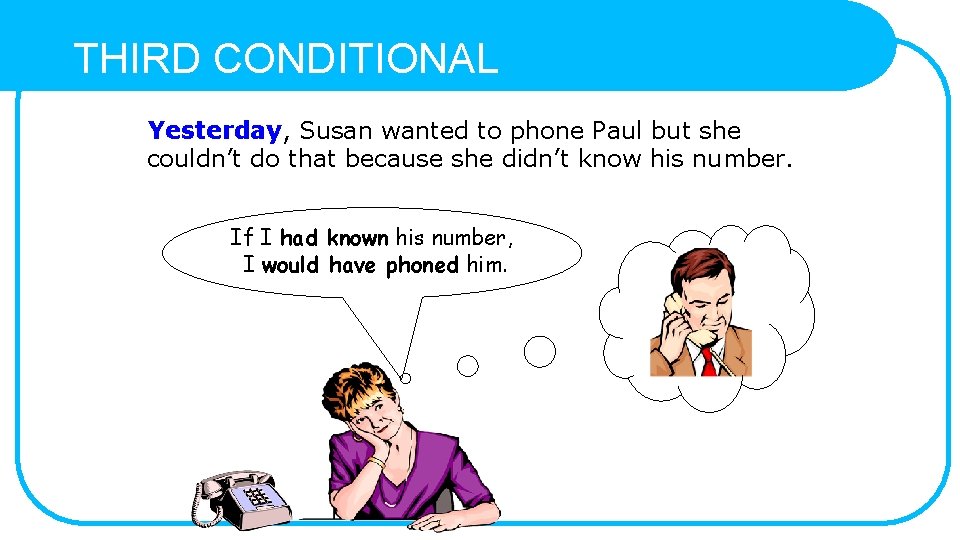
THIRD CONDITIONAL Yesterday, Susan wanted to phone Paul but she couldn’t do that because she didn’t know his number. If I had known his number, I would have phoned him.
UNLESS = IF … NOT We can use unless instead of if not in any conditional sentence: 1. Zero: I can’t help my friend unless I listen to her problems. 2. First: Unless your team wins this match, we won’t be happy. 3. Second: I wouldn’t save my pocket money unless I wanted something special.
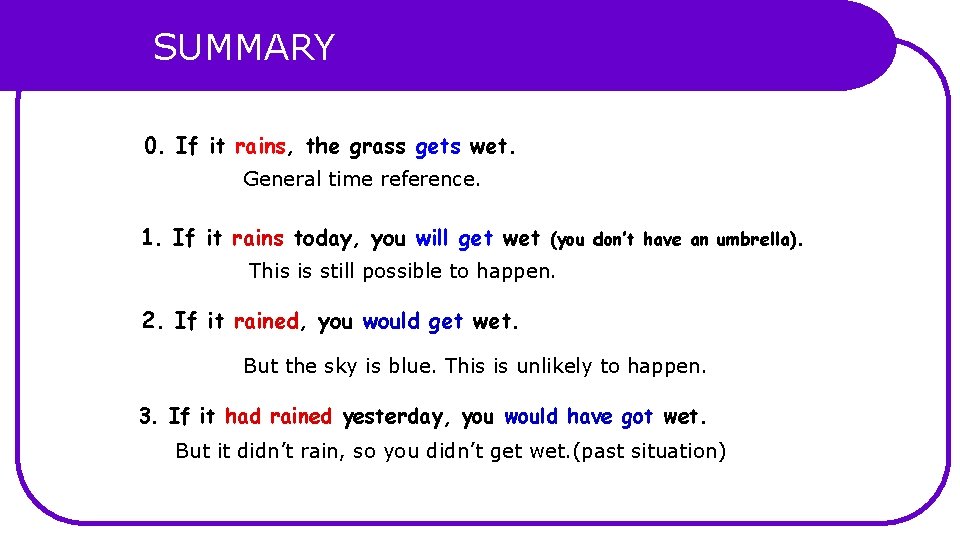
SUMMARY 0. If it rains, the grass gets wet. General time reference. 1. If it rains today, you will get wet (you don’t have an umbrella). This is still possible to happen. 2. If it rained, you would get wet. But the sky is blue. This is unlikely to happen. 3. If it had rained yesterday, you would have got wet. But it didn’t rain, so you didn’t get wet. (past situation)
Evaluation l https: //trungtamthanhmy. com/courses/quiz/tutor_quiz/c onditional-sentences-type-1 -2 -and-3/
- Slides: 27