
Lesson 4 The IPv 6 Header Understanding IPv
- Slides: 30
Lesson 4 The IPv 6 Header Understanding IPv 6 Slide: 1
Lesson Objectives n n n Structure of an IPv 6 packet IPv 4 header IPv 6 extension headers IPv 6 MTU Upper layer checksums Understanding IPv 6 Slide: 2
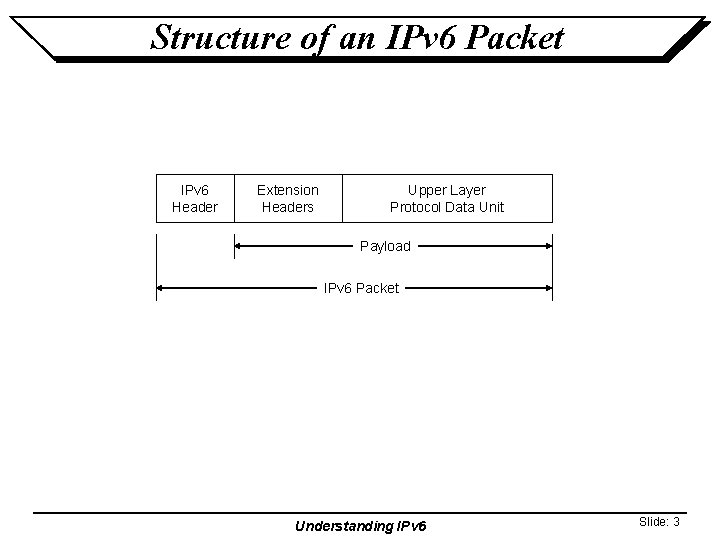
Structure of an IPv 6 Packet IPv 6 Header Extension Headers Upper Layer Protocol Data Unit Payload IPv 6 Packet Understanding IPv 6 Slide: 3
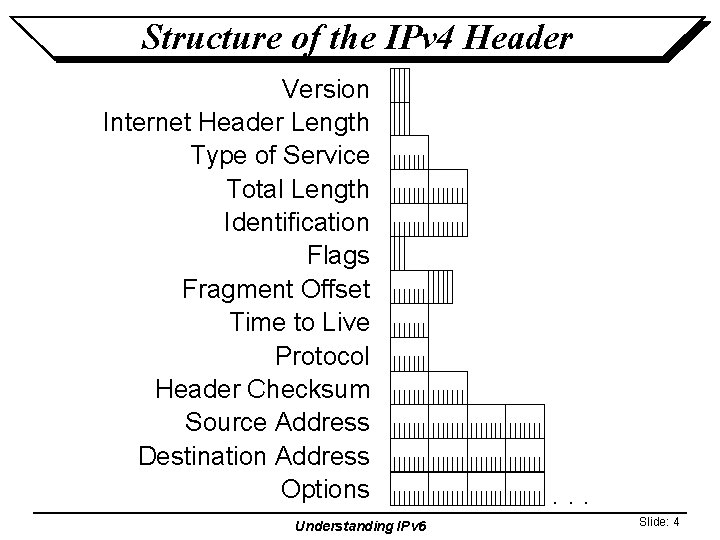
Structure of the IPv 4 Header Version Internet Header Length Type of Service Total Length Identification Flags Fragment Offset Time to Live Protocol Header Checksum Source Address Destination Address Options Understanding IPv 6 . . . Slide: 4
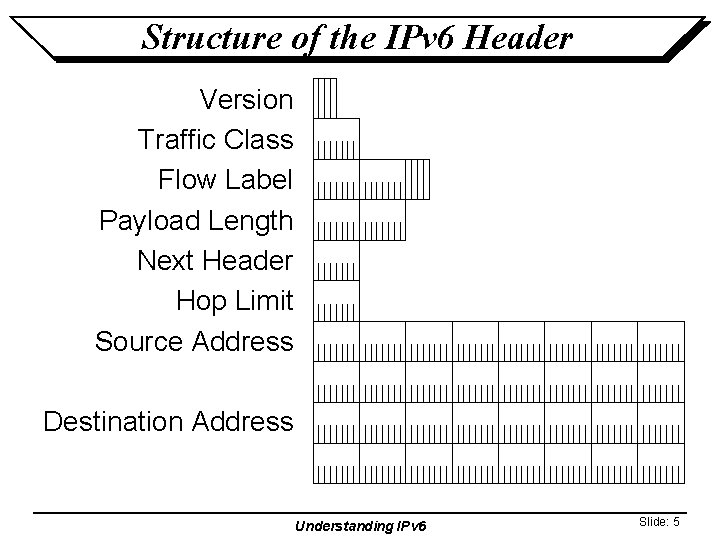
Structure of the IPv 6 Header Version Traffic Class Flow Label Payload Length Next Header Hop Limit Source Address Destination Address Understanding IPv 6 Slide: 5
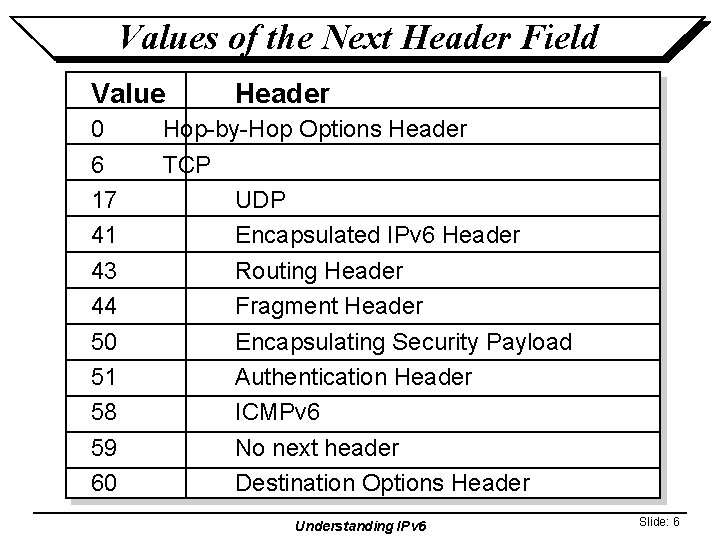
Values of the Next Header Field Value 0 6 17 41 43 44 50 51 58 59 60 Header Hop-by-Hop Options Header TCP UDP Encapsulated IPv 6 Header Routing Header Fragment Header Encapsulating Security Payload Authentication Header ICMPv 6 No next header Destination Options Header Understanding IPv 6 Slide: 6
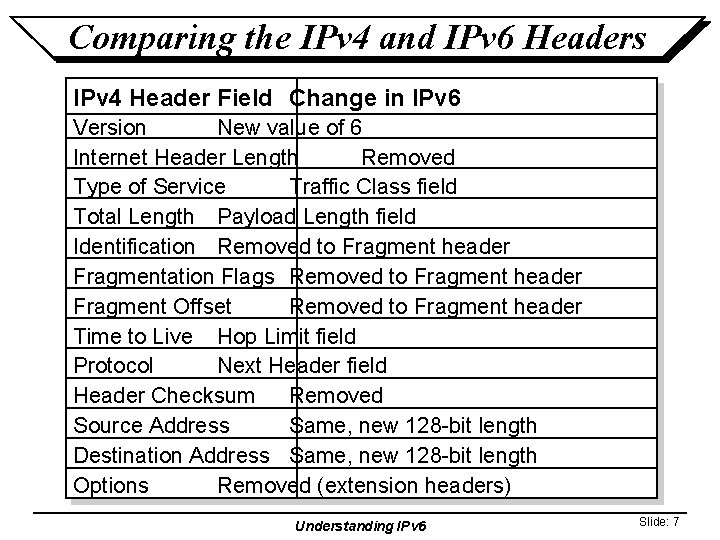
Comparing the IPv 4 and IPv 6 Headers IPv 4 Header Field Change in IPv 6 Version New value of 6 Internet Header Length Removed Type of Service Traffic Class field Total Length Payload Length field Identification Removed to Fragment header Fragmentation Flags Removed to Fragment header Fragment Offset Removed to Fragment header Time to Live Hop Limit field Protocol Next Header field Header Checksum Removed Source Address Same, new 128 -bit length Destination Address Same, new 128 -bit length Options Removed (extension headers) Understanding IPv 6 Slide: 7
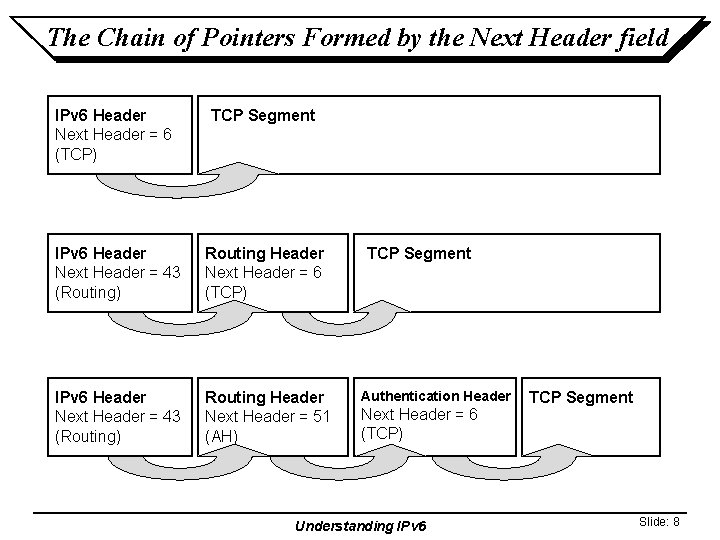
The Chain of Pointers Formed by the Next Header field IPv 6 Header Next Header = 6 (TCP) TCP Segment IPv 6 Header Next Header = 43 (Routing) Routing Header Next Header = 6 (TCP) IPv 6 Header Next Header = 43 (Routing) Routing Header Next Header = 51 (AH) TCP Segment Authentication Header Next Header = 6 (TCP) Understanding IPv 6 TCP Segment Slide: 8
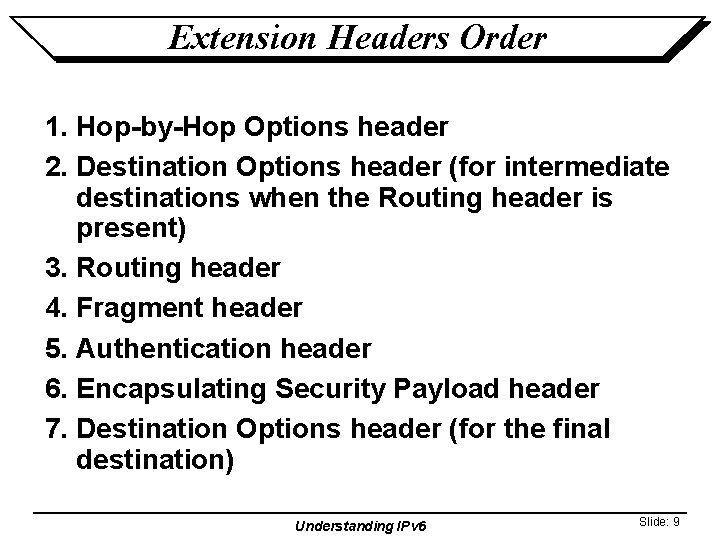
Extension Headers Order 1. Hop-by-Hop Options header 2. Destination Options header (for intermediate destinations when the Routing header is present) 3. Routing header 4. Fragment header 5. Authentication header 6. Encapsulating Security Payload header 7. Destination Options header (for the final destination) Understanding IPv 6 Slide: 9
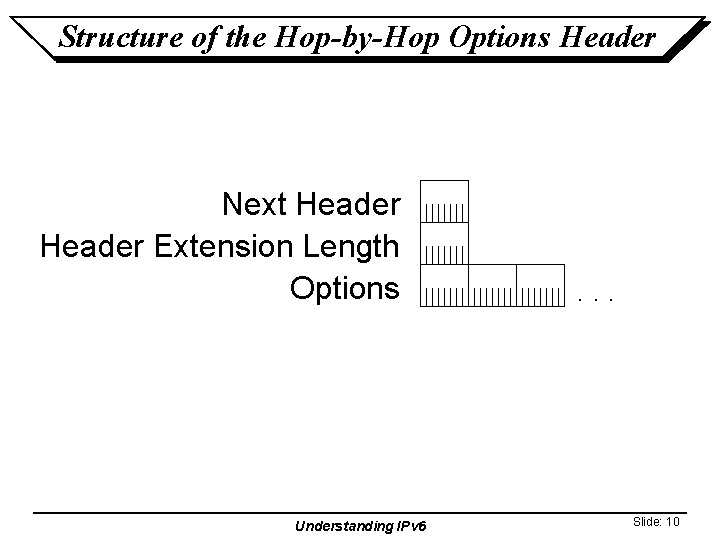
Structure of the Hop-by-Hop Options Header Next Header Extension Length Options Understanding IPv 6 . . . Slide: 10
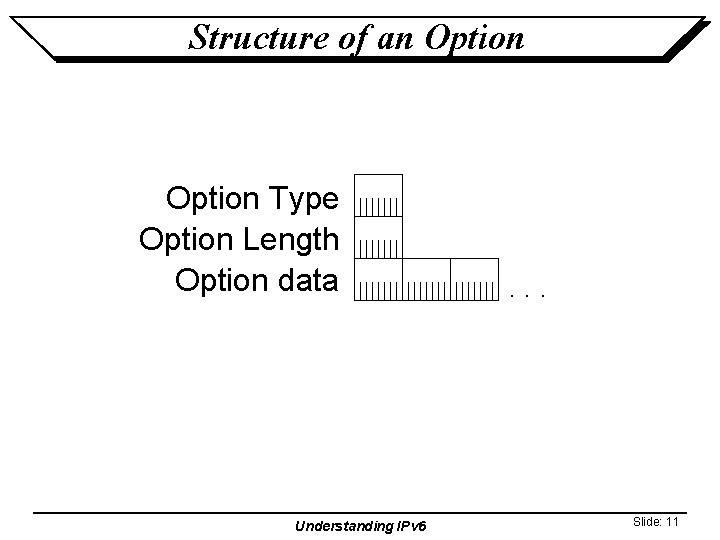
Structure of an Option Type Option Length Option data Understanding IPv 6 . . . Slide: 11
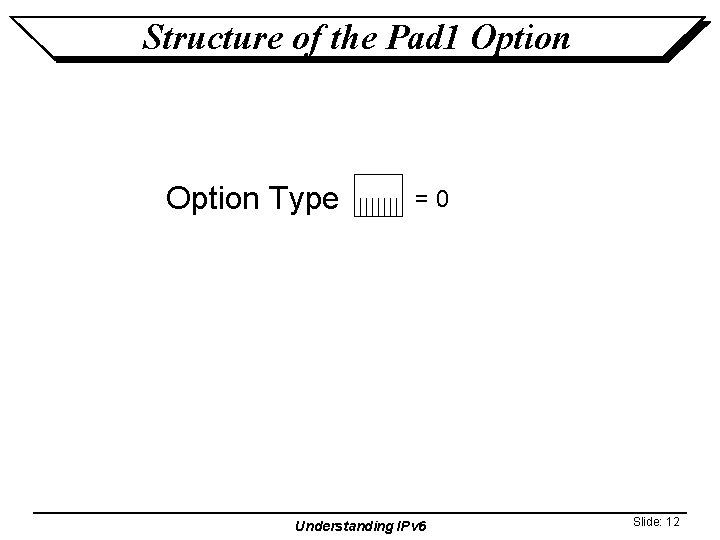
Structure of the Pad 1 Option Type =0 Understanding IPv 6 Slide: 12
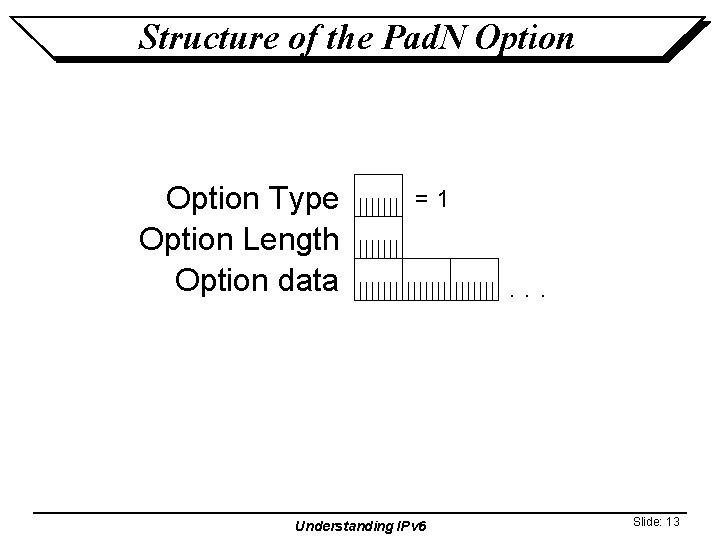
Structure of the Pad. N Option Type Option Length Option data =1 Understanding IPv 6 . . . Slide: 13
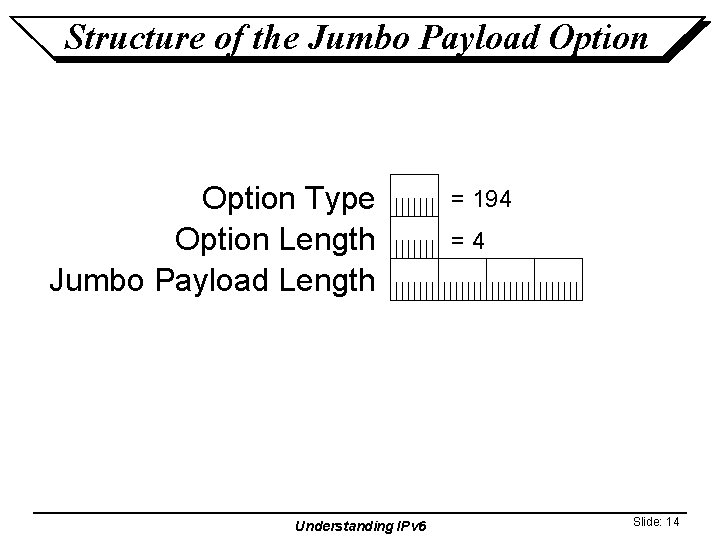
Structure of the Jumbo Payload Option Type Option Length Jumbo Payload Length Understanding IPv 6 = 194 =4 Slide: 14
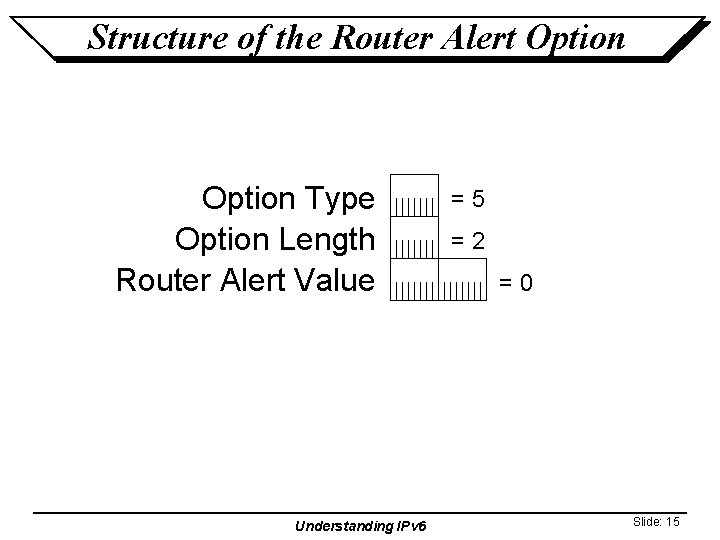
Structure of the Router Alert Option Type Option Length Router Alert Value Understanding IPv 6 =5 =2 =0 Slide: 15
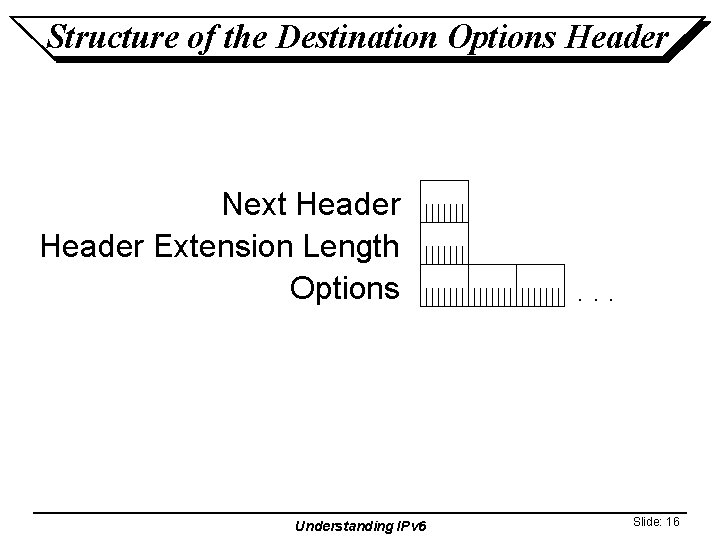
Structure of the Destination Options Header Next Header Extension Length Options Understanding IPv 6 . . . Slide: 16
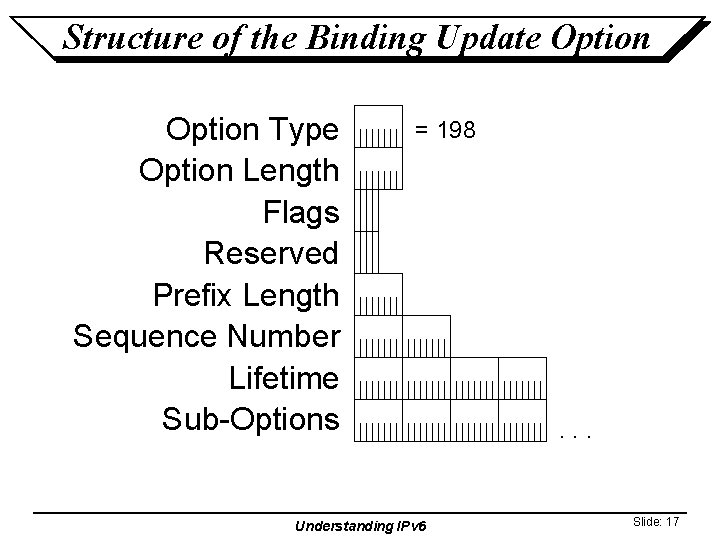
Structure of the Binding Update Option Type Option Length Flags Reserved Prefix Length Sequence Number Lifetime Sub-Options = 198 Understanding IPv 6 . . . Slide: 17
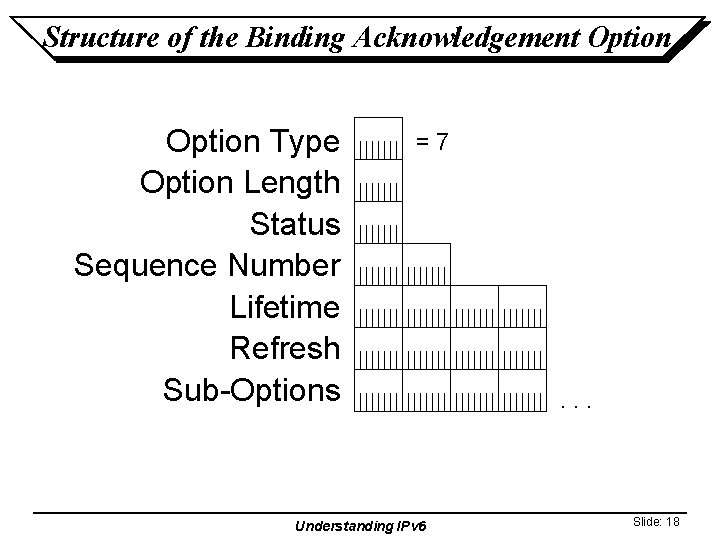
Structure of the Binding Acknowledgement Option Type Option Length Status Sequence Number Lifetime Refresh Sub-Options =7 Understanding IPv 6 . . . Slide: 18
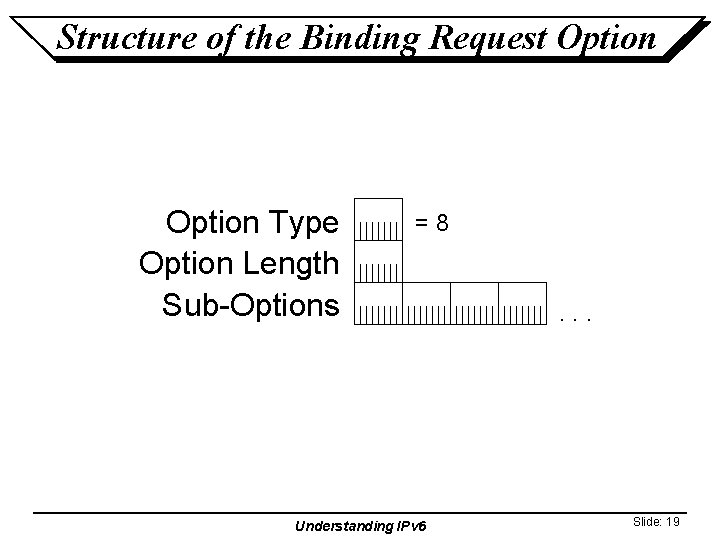
Structure of the Binding Request Option Type Option Length Sub-Options =8 Understanding IPv 6 . . . Slide: 19
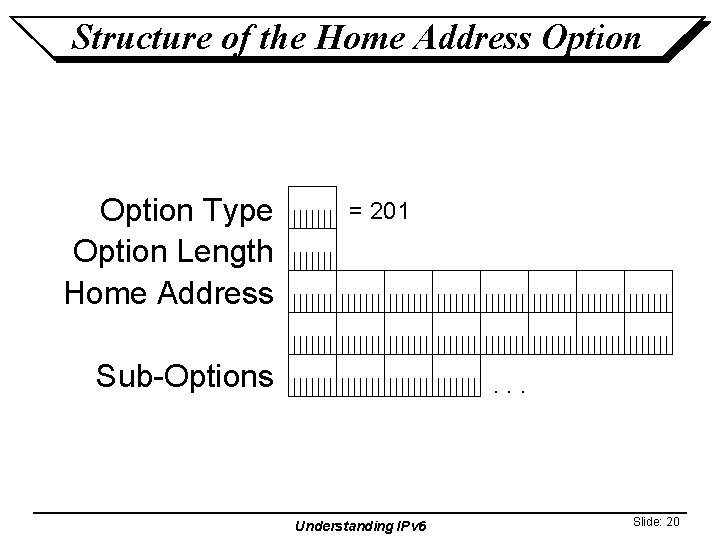
Structure of the Home Address Option Type Option Length Home Address = 201 Sub-Options . . . Understanding IPv 6 Slide: 20
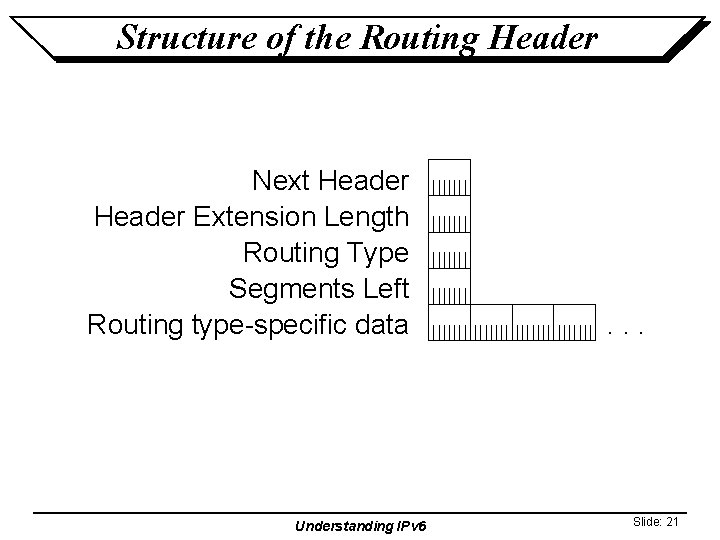
Structure of the Routing Header Next Header Extension Length Routing Type Segments Left Routing type-specific data Understanding IPv 6 . . . Slide: 21
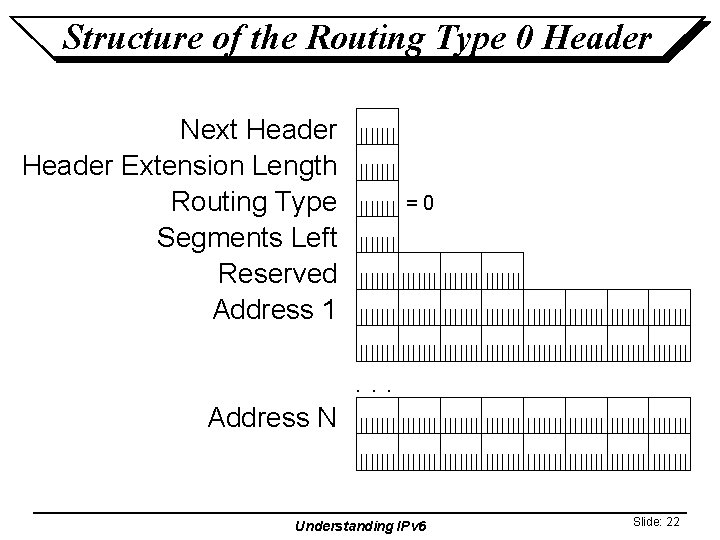
Structure of the Routing Type 0 Header Next Header Extension Length Routing Type Segments Left Reserved Address 1 =0 . . . Address N Understanding IPv 6 Slide: 22
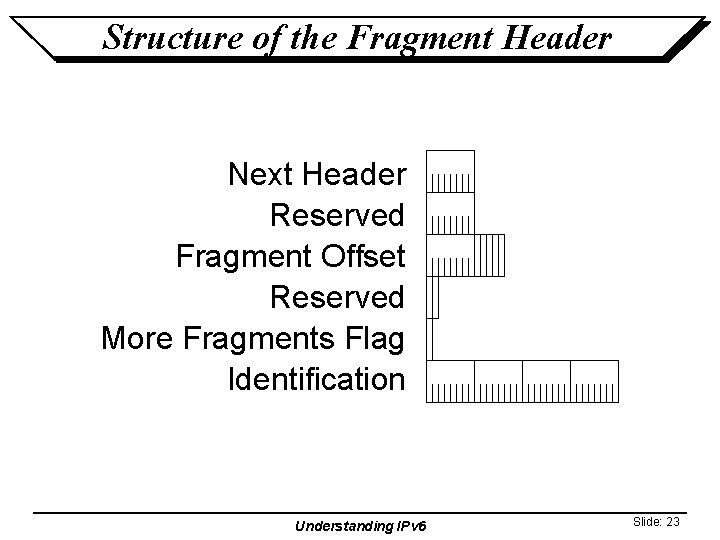
Structure of the Fragment Header Next Header Reserved Fragment Offset Reserved More Fragments Flag Identification Understanding IPv 6 Slide: 23
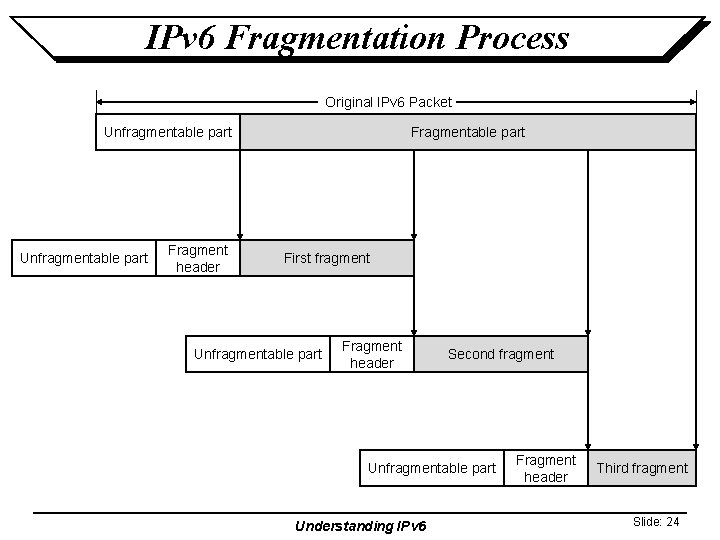
IPv 6 Fragmentation Process Original IPv 6 Packet Unfragmentable part Fragment header Fragmentable part First fragment Unfragmentable part Fragment header Second fragment Unfragmentable part Understanding IPv 6 Fragment header Third fragment Slide: 24
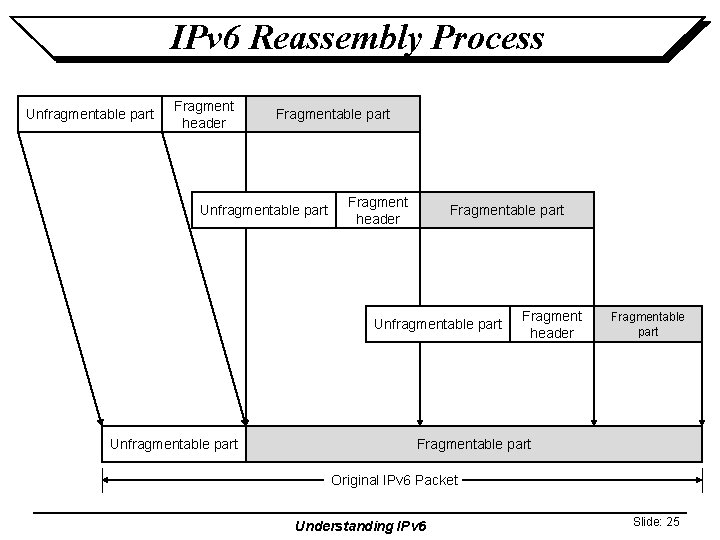
IPv 6 Reassembly Process Unfragmentable part Fragment header Fragmentable part Original IPv 6 Packet Understanding IPv 6 Slide: 25
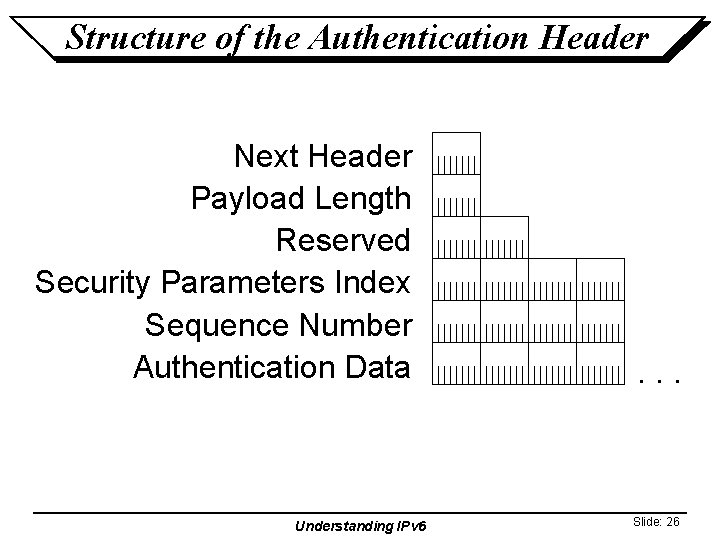
Structure of the Authentication Header Next Header Payload Length Reserved Security Parameters Index Sequence Number Authentication Data Understanding IPv 6 . . . Slide: 26
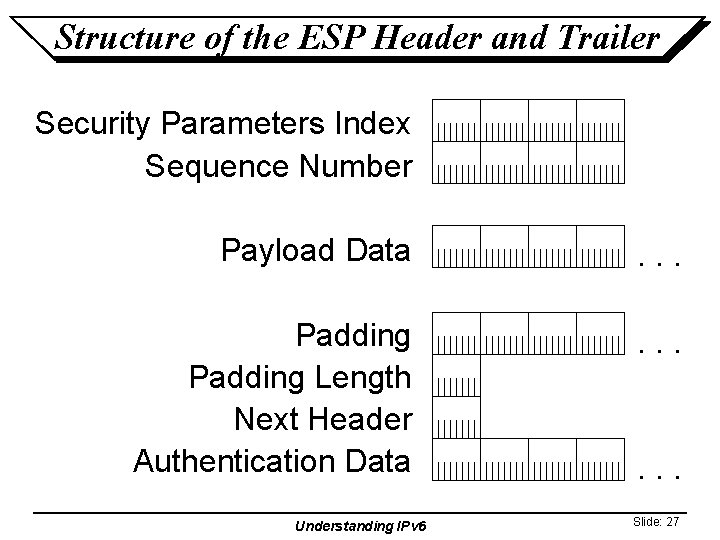
Structure of the ESP Header and Trailer Security Parameters Index Sequence Number Payload Data . . . Padding Length Next Header Authentication Data . . . Understanding IPv 6 . . . Slide: 27
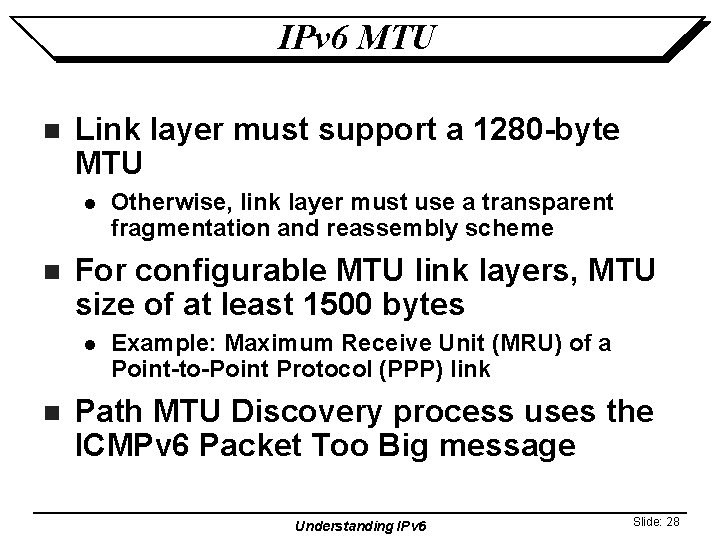
IPv 6 MTU n Link layer must support a 1280 -byte MTU l n For configurable MTU link layers, MTU size of at least 1500 bytes l n Otherwise, link layer must use a transparent fragmentation and reassembly scheme Example: Maximum Receive Unit (MRU) of a Point-to-Point Protocol (PPP) link Path MTU Discovery process uses the ICMPv 6 Packet Too Big message Understanding IPv 6 Slide: 28
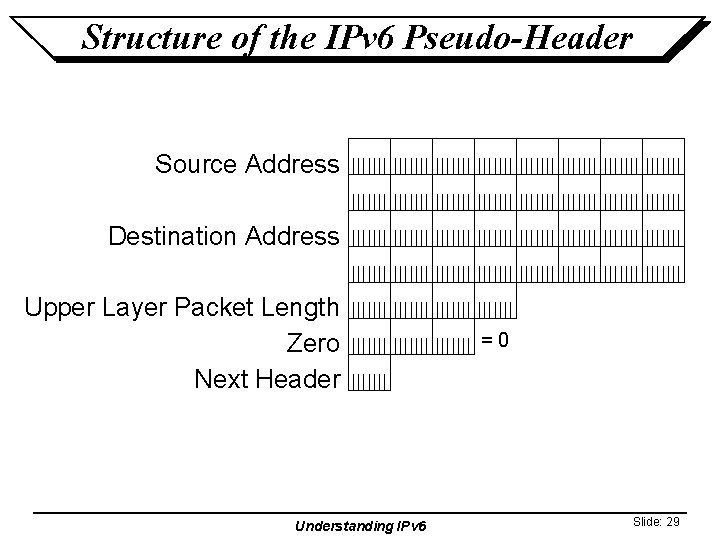
Structure of the IPv 6 Pseudo-Header Source Address Destination Address Upper Layer Packet Length Zero Next Header Understanding IPv 6 =0 Slide: 29
Review n n n Structure of an IPv 6 packet IPv 4 header IPv 6 extension headers IPv 6 MTU Upper layer checksums Understanding IPv 6 Slide: 30