
Lesson 4 Life in Ancient Rome Togas A

- Slides: 20
Lesson 4: Life in Ancient Rome
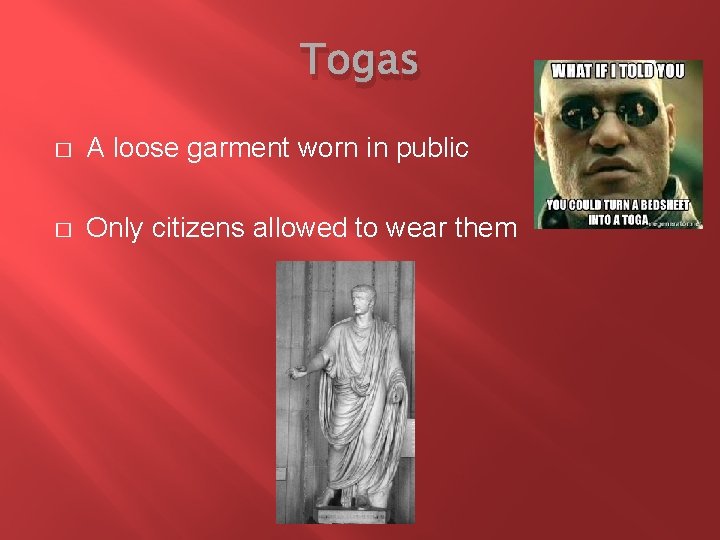
Togas � A loose garment worn in public � Only citizens allowed to wear them
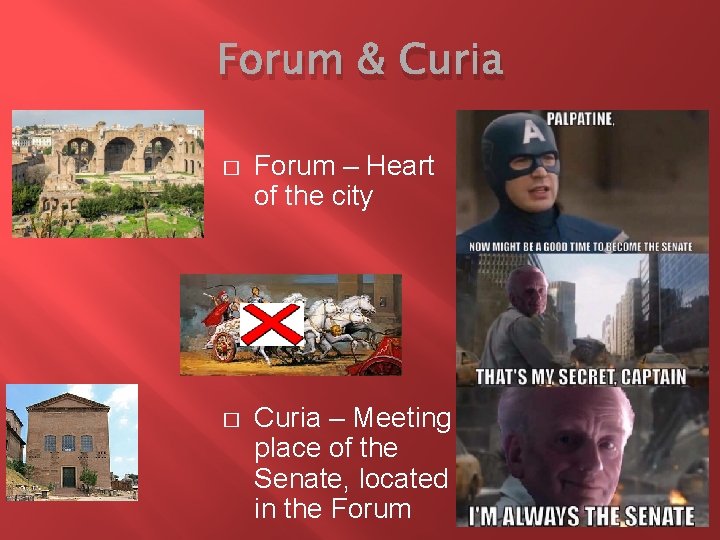
Forum & Curia � Forum – Heart of the city � Curia – Meeting place of the Senate, located in the Forum
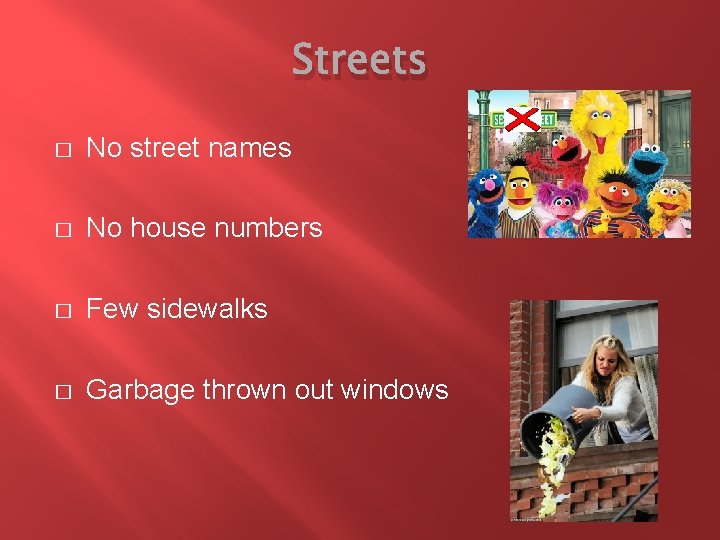
Streets � No street names � No house numbers � Few sidewalks � Garbage thrown out windows
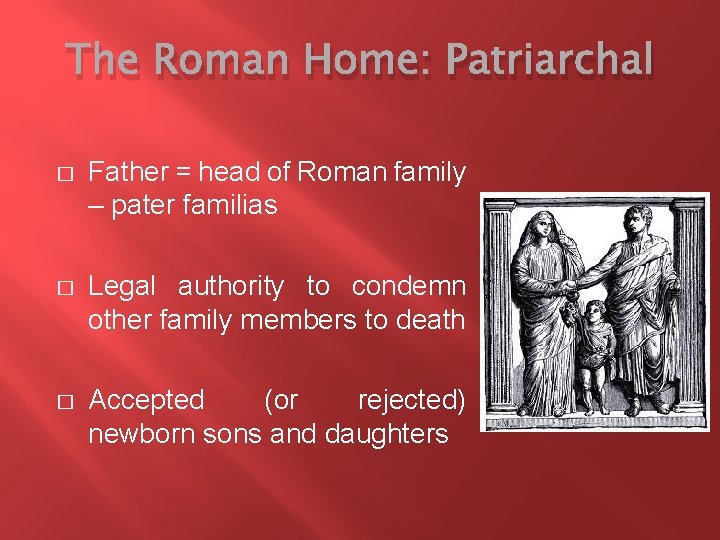
The Roman Home: Patriarchal � Father = head of Roman family – pater familias � Legal authority to condemn other family members to death � Accepted (or rejected) newborn sons and daughters
Boys � Three names � First name (praenomen) – chosen by parents � Middle name (nomen) – father’s clan � Third name (cognomen) – branch of father’s clan � E. g. Marcus Tullius Cicero
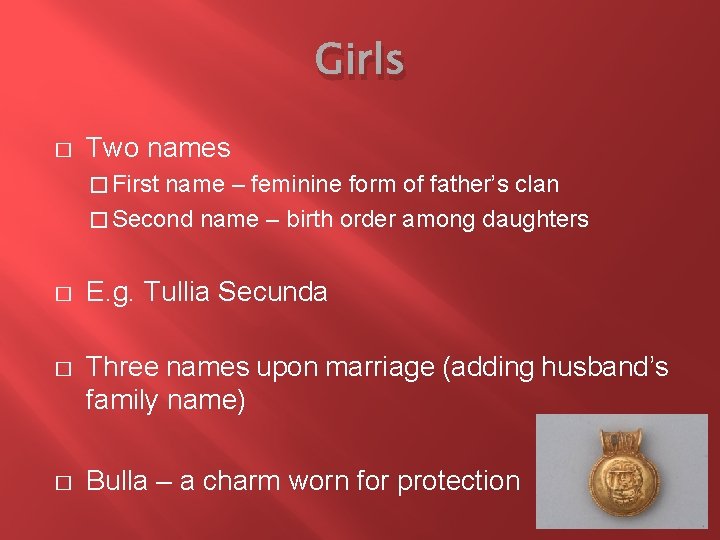
Girls � Two names � First name – feminine form of father’s clan � Second name – birth order among daughters � E. g. Tullia Secunda � Three names upon marriage (adding husband’s family name) � Bulla – a charm worn for protection
Teenagers � Roman boys went to Forum � Exchanged purple-bordered toga for plain white adult toga � Men’s haircut, first shave; banquest where boy made member of father’s clan and a citizen
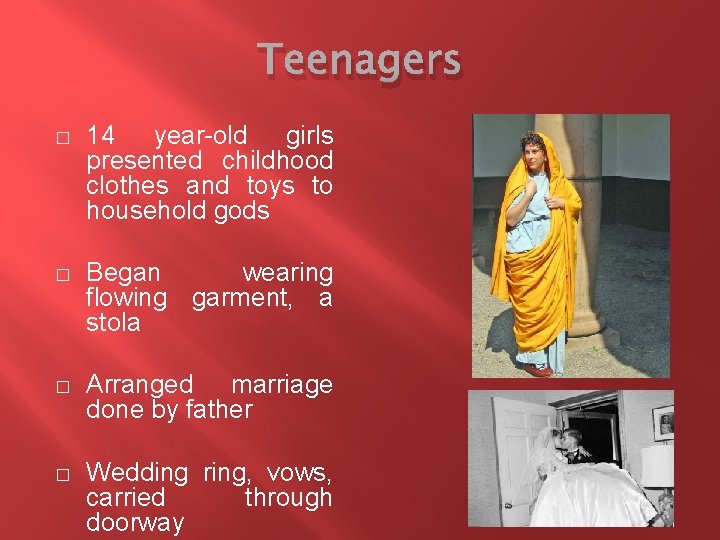
Teenagers � 14 year-old girls presented childhood clothes and toys to household gods � Began wearing flowing garment, a stola � Arranged marriage done by father � Wedding ring, vows, carried through doorway
Limited Rights for Women � Roman women could not: � Vote � Hold public office
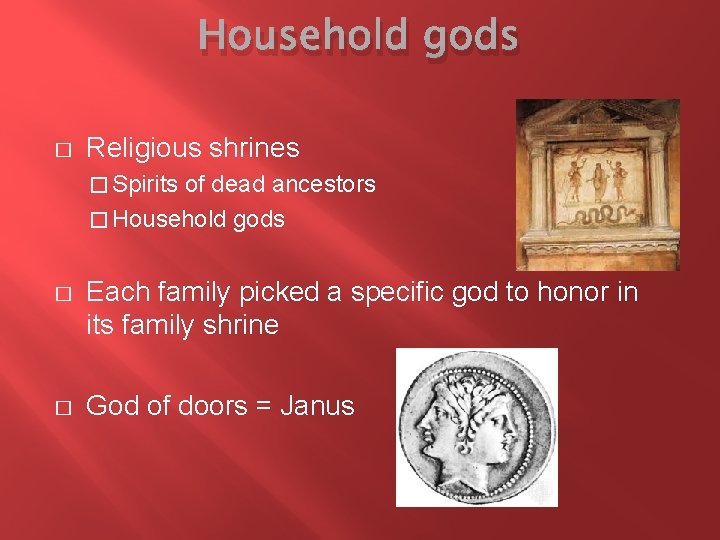
Household gods � Religious shrines � Spirits of dead ancestors � Household gods � Each family picked a specific god to honor in its family shrine � God of doors = Janus
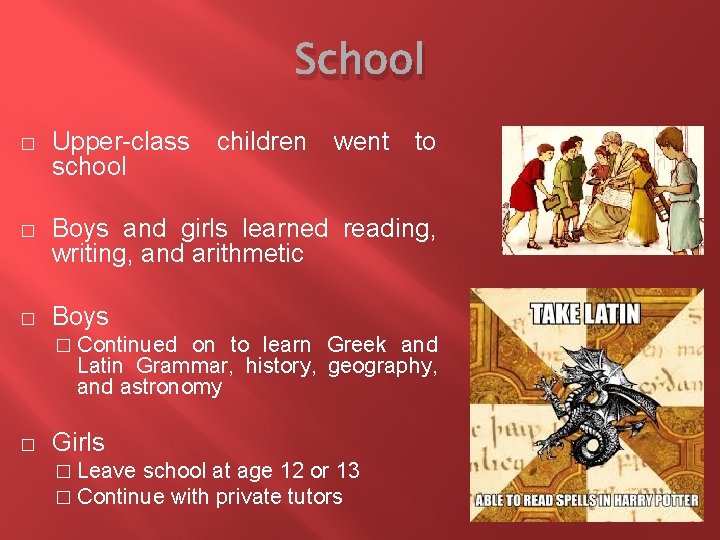
School � Upper-class school children went � Boys and girls learned reading, writing, and arithmetic � Boys � Continued to on to learn Greek and Latin Grammar, history, geography, and astronomy � Girls � Leave school at age 12 or 13 � Continue with private tutors
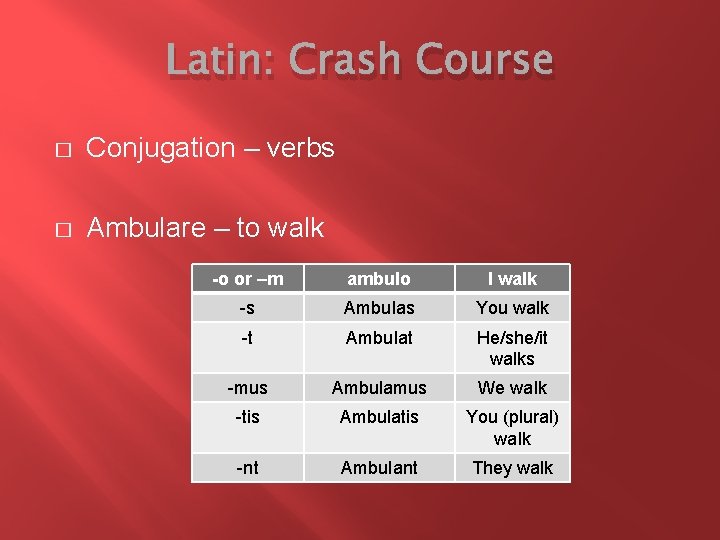
Latin: Crash Course � Conjugation – verbs � Ambulare – to walk -o or –m ambulo I walk -s Ambulas You walk -t Ambulat He/she/it walks -mus Ambulamus We walk -tis Ambulatis You (plural) walk -nt Ambulant They walk
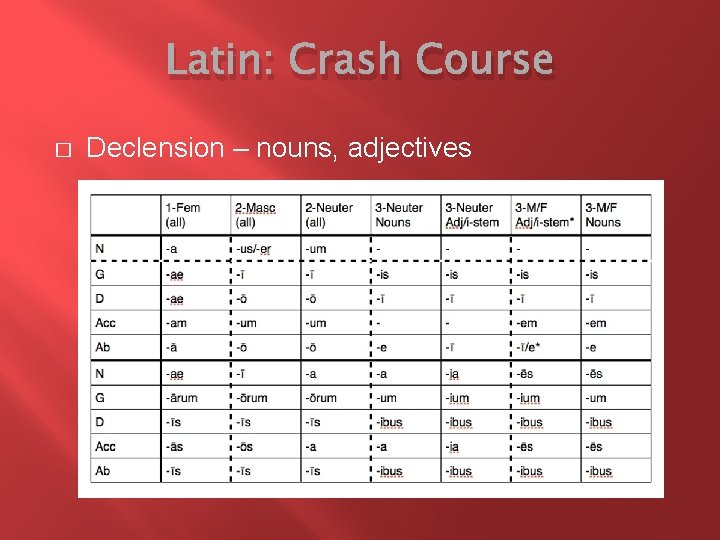
Latin: Crash Course � Declension – nouns, adjectives
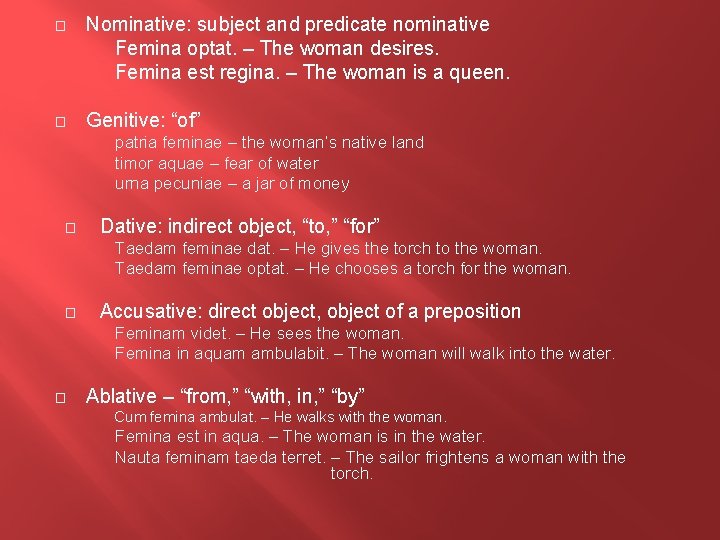
� Nominative: subject and predicate nominative Femina optat. – The woman desires. Femina est regina. – The woman is a queen. � Genitive: “of” patria feminae – the woman’s native land timor aquae – fear of water urna pecuniae – a jar of money � Dative: indirect object, “to, ” “for” Taedam feminae dat. – He gives the torch to the woman. Taedam feminae optat. – He chooses a torch for the woman. � Accusative: direct object, object of a preposition Feminam videt. – He sees the woman. Femina in aquam ambulabit. – The woman will walk into the water. � Ablative – “from, ” “with, in, ” “by” Cum femina ambulat. – He walks with the woman. Femina est in aqua. – The woman is in the water. Nauta feminam taeda terret. – The sailor frightens a woman with the torch.
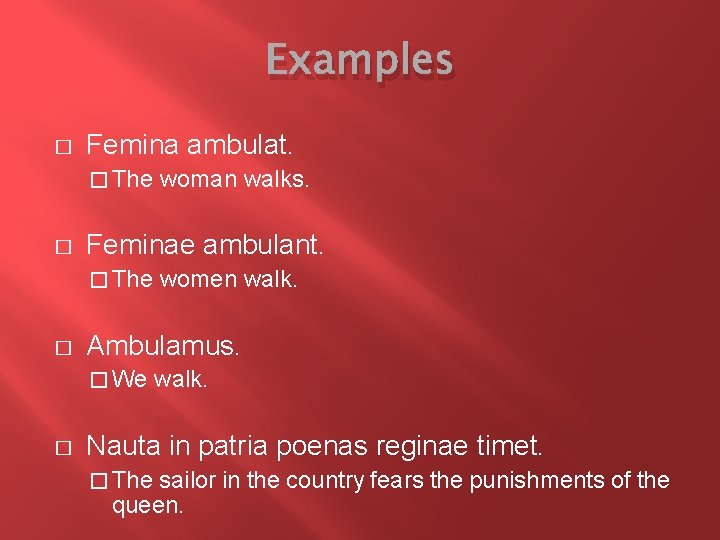
Examples � Femina ambulat. � The � Feminae ambulant. � The � women walk. Ambulamus. � We � woman walks. walk. Nauta in patria poenas reginae timet. � The sailor in the country fears the punishments queen. of the
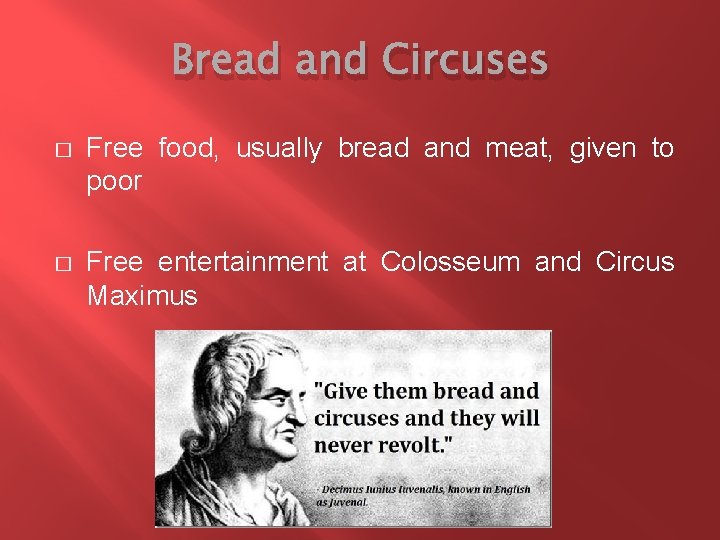
Bread and Circuses � Free food, usually bread and meat, given to poor � Free entertainment at Colosseum and Circus Maximus
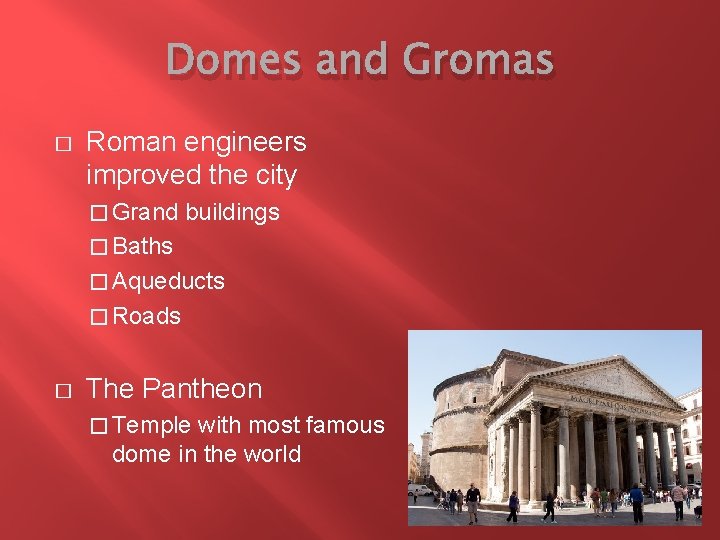
Domes and Gromas � Roman engineers improved the city � Grand buildings � Baths � Aqueducts � Roads � The Pantheon � Temple with most famous dome in the world
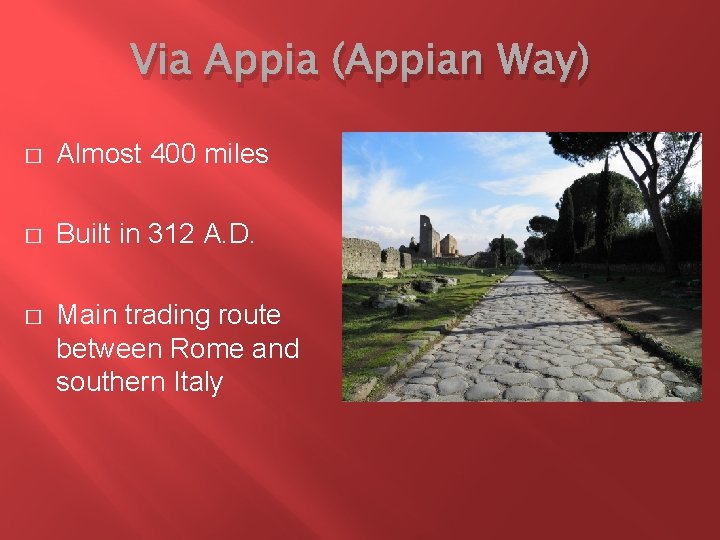
Via Appia (Appian Way) � Almost 400 miles � Built in 312 A. D. � Main trading route between Rome and southern Italy
p. 178, Refocus-Comprehension Questions, #s 1 -2 1) Why was travel in Rome easy? - Romans had a well-maintained network of roads to ease the movement of troops, goods, and messages. 2) What role did engineers play in Rome? - Engineers made the city livable; build grand buildings, baths, and aqueducts.