
Lesson 4 Erosion in Action SD 1 ENVIRONMENTAL

- Slides: 19
Lesson 4: Erosion in Action SD 1 ENVIRONMENTAL UNIT
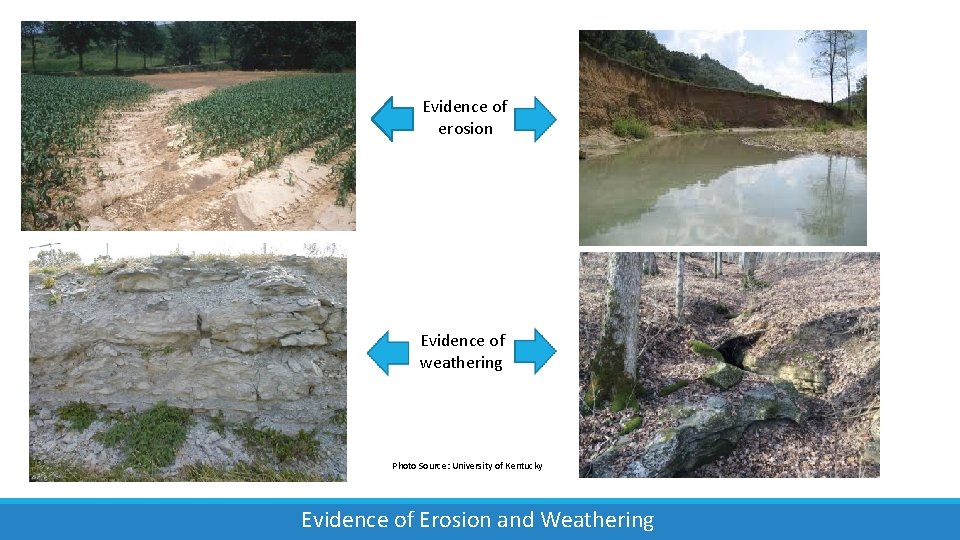
REVIEW: Erosion in Action Erosion is the wearing away of land by the action of natural forces. Even though erosion is a natural process, it can be increased or decreased by human activity. Water mixed with the soil from the ground runs down hills and into waterbodies. Hills are slowly disappearing because the soil and sediment that make up the hills are being washed away.
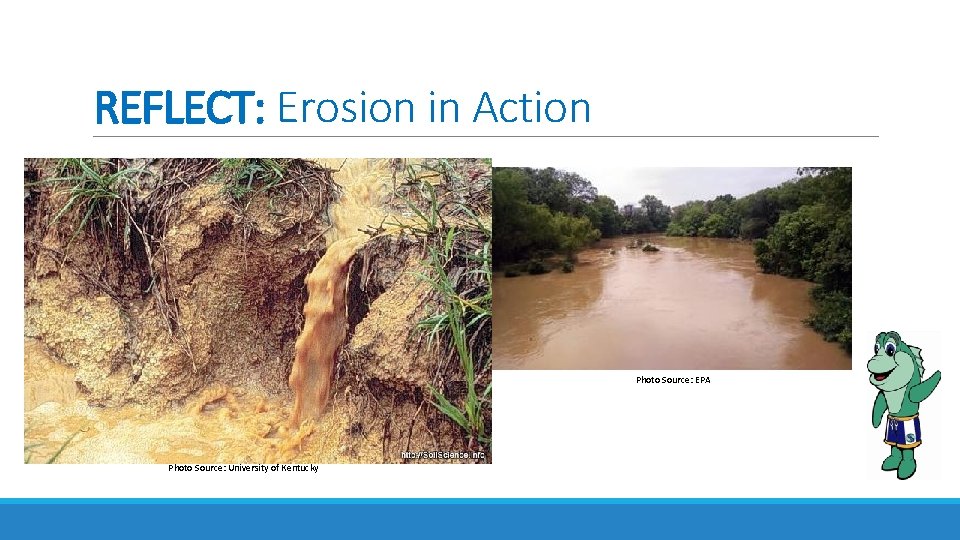
REFLECT: Erosion in Action Photo Source: EPA Photo Source: University of Kentucky
REFLECT: Erosion in Action Storm water runoff is the portion of precipitation that does not get absorbed into the ground and ultimately reaches a waterway. It often contains dissolved or suspended material. Runoff makes the water in streams and rivers muddy. This is bad for the animals and plants, including birds, fish and insects that live in and around our waterways and depend on clean water.
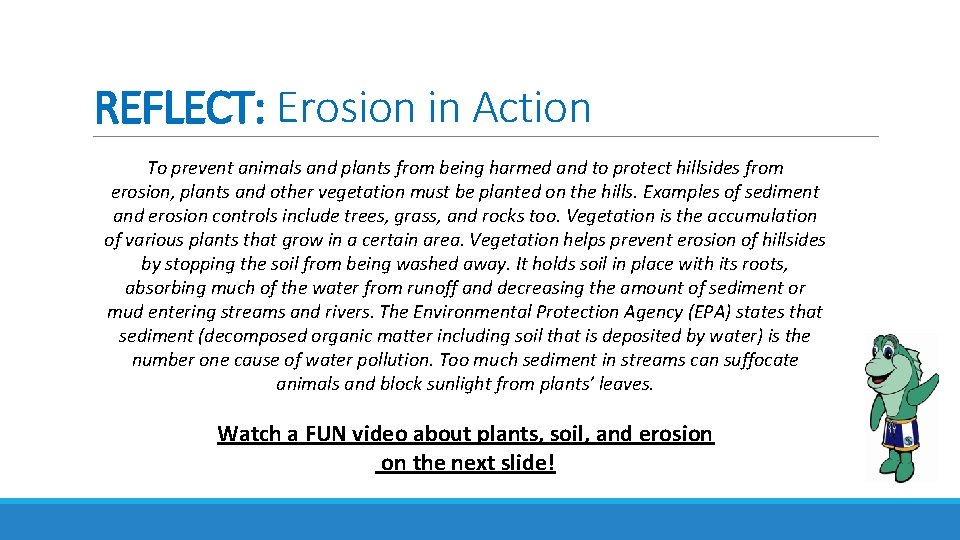
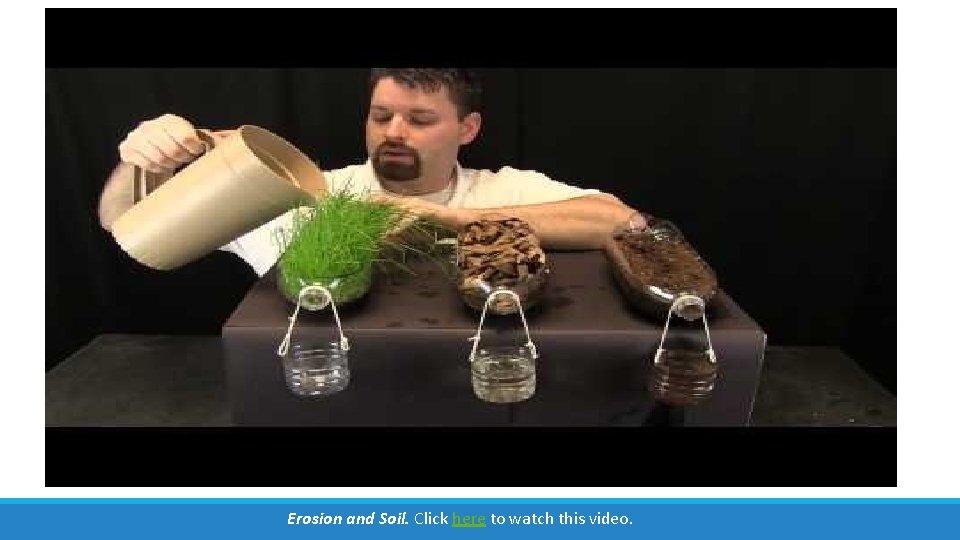
REFLECT: Erosion in Action To prevent animals and plants from being harmed and to protect hillsides from erosion, plants and other vegetation must be planted on the hills. Examples of sediment and erosion controls include trees, grass, and rocks too. Vegetation is the accumulation of various plants that grow in a certain area. Vegetation helps prevent erosion of hillsides by stopping the soil from being washed away. It holds soil in place with its roots, absorbing much of the water from runoff and decreasing the amount of sediment or mud entering streams and rivers. The Environmental Protection Agency (EPA) states that sediment (decomposed organic matter including soil that is deposited by water) is the number one cause of water pollution. Too much sediment in streams can suffocate animals and block sunlight from plants’ leaves. Watch a FUN video about plants, soil, and erosion on the next slide!
Erosion and Soil. Click here to watch this video.
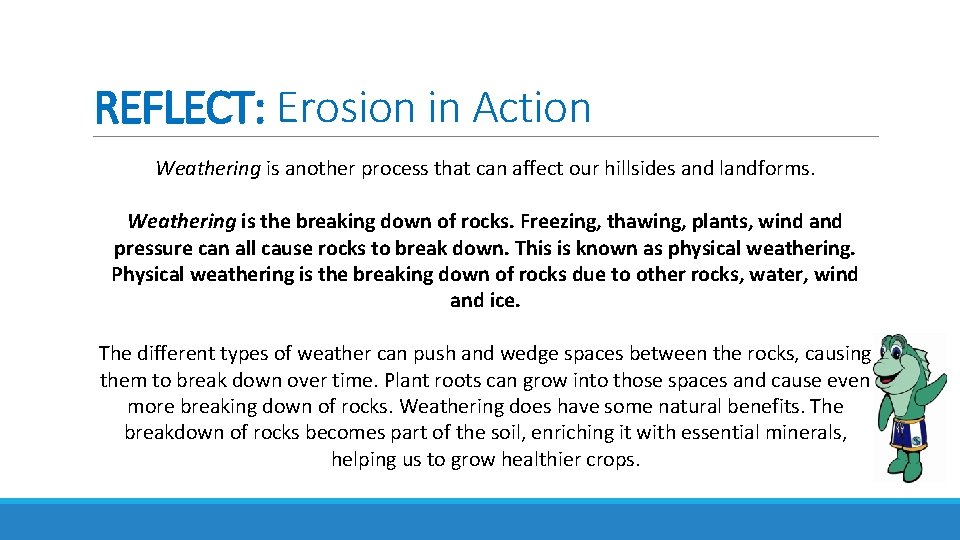
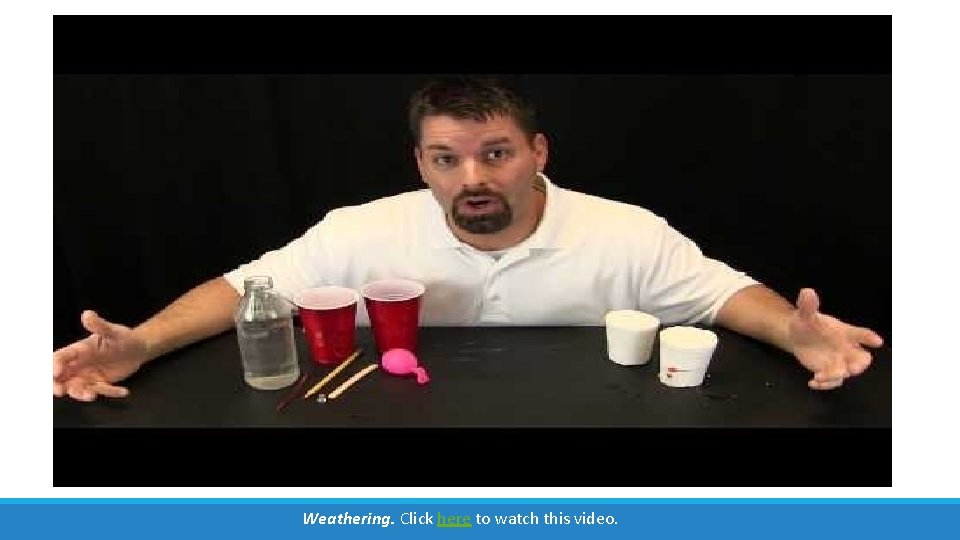
REFLECT: Erosion in Action Weathering is another process that can affect our hillsides and landforms. Weathering is the breaking down of rocks. Freezing, thawing, plants, wind and pressure can all cause rocks to break down. This is known as physical weathering. Physical weathering is the breaking down of rocks due to other rocks, water, wind and ice. The different types of weather can push and wedge spaces between the rocks, causing them to break down over time. Plant roots can grow into those spaces and cause even more breaking down of rocks. Weathering does have some natural benefits. The breakdown of rocks becomes part of the soil, enriching it with essential minerals, helping us to grow healthier crops.
Weathering. Click here to watch this video.
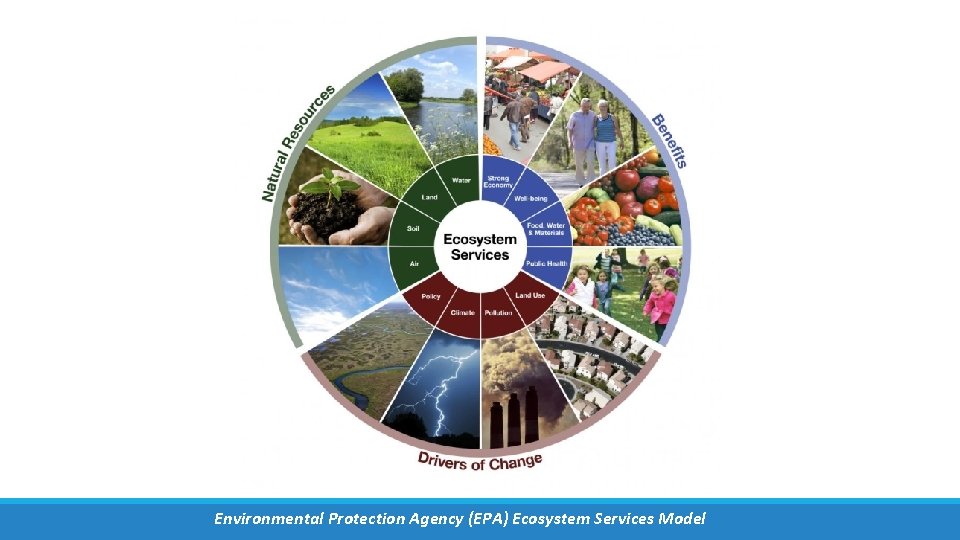
REFLECT: Erosion in Action If humans aren’t careful about how things such as buildings, houses and roads are constructed, we can cause erosion. Through careful planning and use of BMPs (Best Management Practices), we can prevent the effects of erosion like flooding, landslides, sinkholes and failing roads. We can also prevent sediment and other types of pollution from damaging local ecosystems. An ecosystem is a complex set of relationships among living resources, habitats and residents of a region.
Environmental Protection Agency (EPA) Ecosystem Services Model
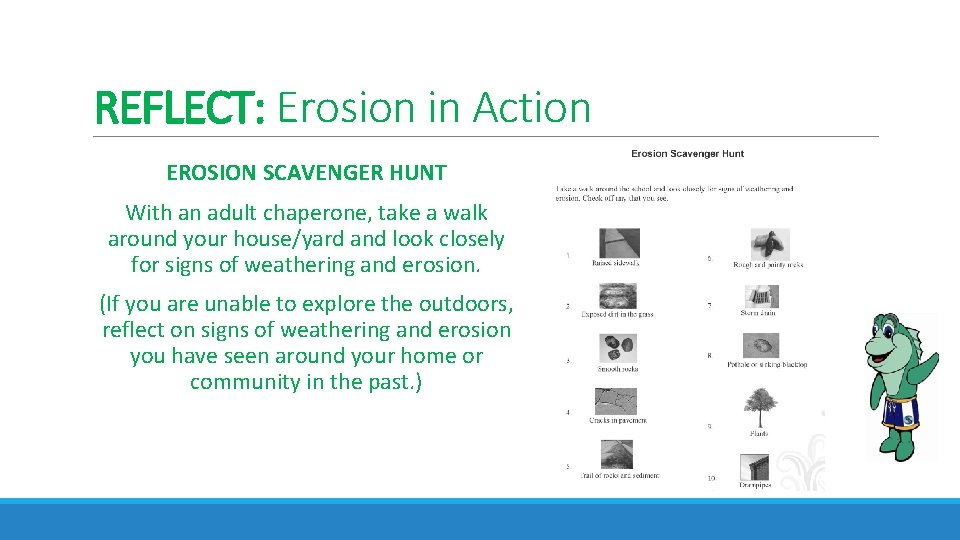
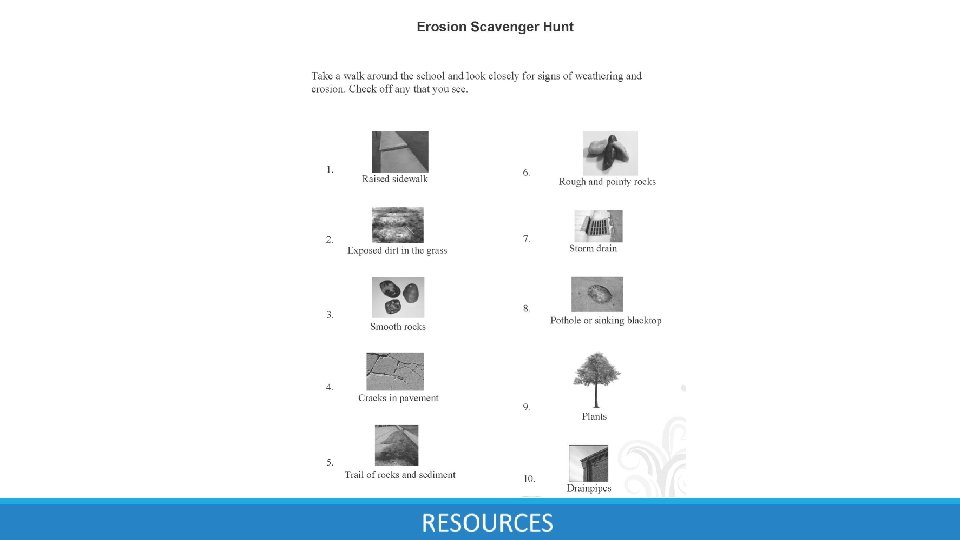
REFLECT: Erosion in Action EROSION SCAVENGER HUNT With an adult chaperone, take a walk around your house/yard and look closely for signs of weathering and erosion. (If you are unable to explore the outdoors, reflect on signs of weathering and erosion you have seen around your home or community in the past. )
REFLECT: Erosion in Action Answer the question below. 1. What signs of weathering and erosion did you notice? Describe what evidence of weathering and erosion you found below. This could include raised sidewalks, exposed dirt in the grass, smooth rocks, cracks in pavement, trail of rocks and sediment, rough and pointy rocks, storm drain, pothole or sinking blacktop, plants, and drainpipes. See the Erosion Scavenger Hunt for reference images of weathering and erosion. ___________________________________________________________________________
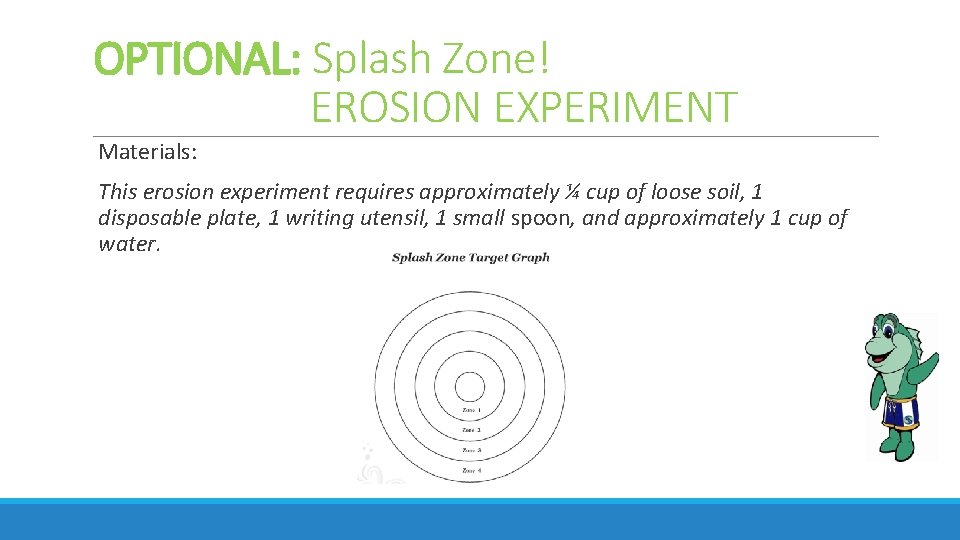
OPTIONAL: Splash Zone! EROSION EXPERIMENT Materials: This erosion experiment requires approximately ¼ cup of loose soil, 1 disposable plate, 1 writing utensil, 1 small spoon, and approximately 1 cup of water.
Click here to watch the Splash Zone Experiment Demo Video.
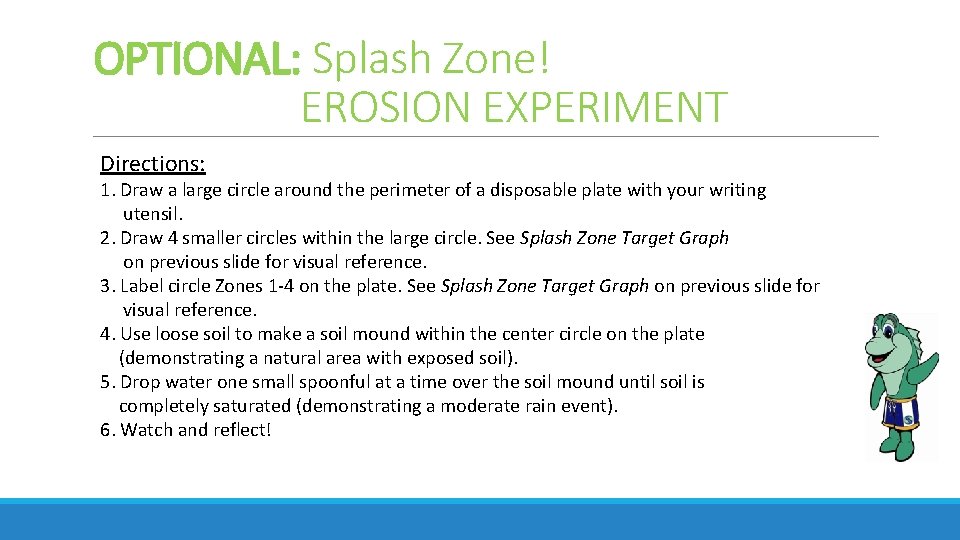
OPTIONAL: Splash Zone! EROSION EXPERIMENT Directions: 1. Draw a large circle around the perimeter of a disposable plate with your writing utensil. 2. Draw 4 smaller circles within the large circle. See Splash Zone Target Graph on previous slide for visual reference. 3. Label circle Zones 1‐ 4 on the plate. See Splash Zone Target Graph on previous slide for visual reference. 4. Use loose soil to make a soil mound within the center circle on the plate (demonstrating a natural area with exposed soil). 5. Drop water one small spoonful at a time over the soil mound until soil is completely saturated (demonstrating a moderate rain event). 6. Watch and reflect!
OPTIONAL: Splash Zone! EROSION EXPERIMENT Reflect: • What did you see? • Does soil erode, entering marked splash zones, with just one spoonful of water (light rain)? • Does erosion increase, spreading soil further into splash zones, as additional water (heavier rain) is added spoonful by spoonful? • What could be done to hold loose soil in place and minimize erosion during rain events?
Evidence of erosion Evidence of weathering Photo Source: University of Kentucky Evidence of Erosion and Weathering
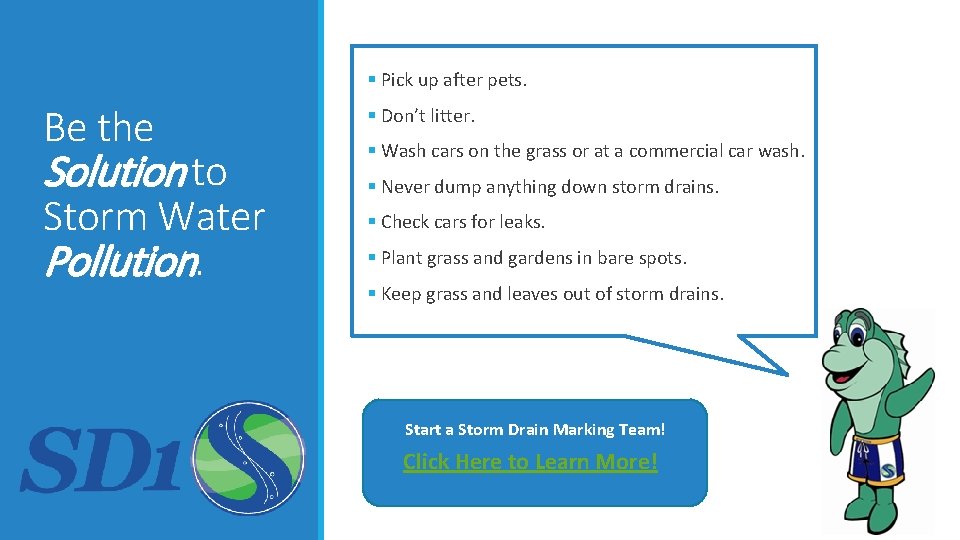
§ Pick up after pets. Be the Solution to Storm Water Pollution. § Don’t litter. § Wash cars on the grass or at a commercial car wash. § Never dump anything down storm drains. § Check cars for leaks. § Plant grass and gardens in bare spots. § Keep grass and leaves out of storm drains. Start a Storm Drain Marking Team! Click Here to Learn More!