
Lesson 4 Chapter 19 Blood2 Objectives 1 To
Lesson # 4 (Chapter 19) Blood-2 Objectives: 1 - To describe the types of white blood cells and their major functions. 2 - To describe the platelets and their functions. 4 - To discuss the reaction sequences responsible of blood clotting.
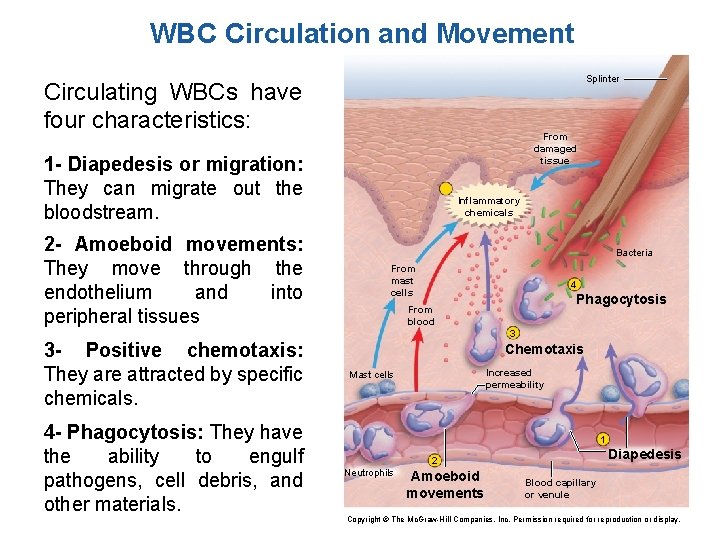
WBC Circulation and Movement Splinter Circulating WBCs have four characteristics: From damaged tissue 1 - Diapedesis or migration: They can migrate out the bloodstream. 2 - Amoeboid movements: They move through the endothelium and into peripheral tissues 3 - Positive chemotaxis: They are attracted by specific chemicals. 4 - Phagocytosis: They have the ability to engulf pathogens, cell debris, and other materials. Inflammatory chemicals Bacteria From mast cells 4 Phagocytosis From blood 3 Chemotaxis Increased permeability Mast cells 1 Neutrophils Diapedesis 2 Amoeboid movements Blood capillary or venule Copyright © The Mc. Graw-Hill Companies, Inc. Permission required for reproduction or display.
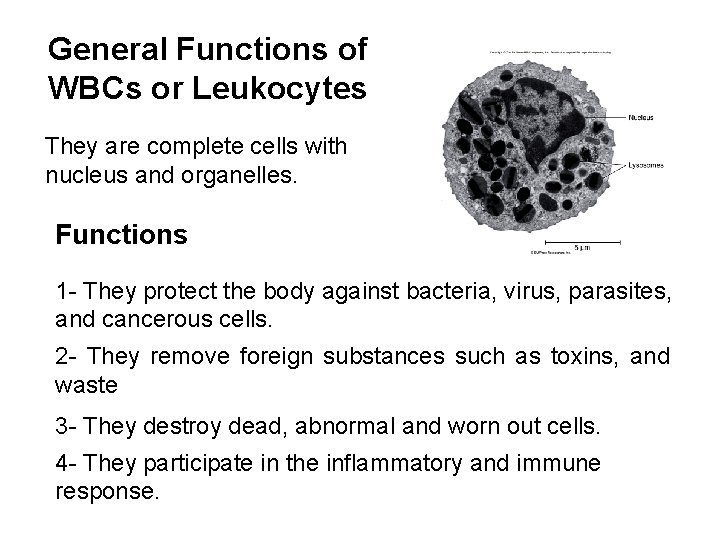
General Functions of WBCs or Leukocytes They are complete cells with nucleus and organelles. Functions 1 - They protect the body against bacteria, virus, parasites, and cancerous cells. 2 - They remove foreign substances such as toxins, and waste 3 - They destroy dead, abnormal and worn out cells. 4 - They participate in the inflammatory and immune response.

Types of White Blood Cells 1 - Granulocytes They contains granules, which contain lysosomal enzymes and bactericidal compounds. Neutrophils 2 - Agranulocytes They have few or any granules. Eosinophils Basophils Monocytes Lymphocytes
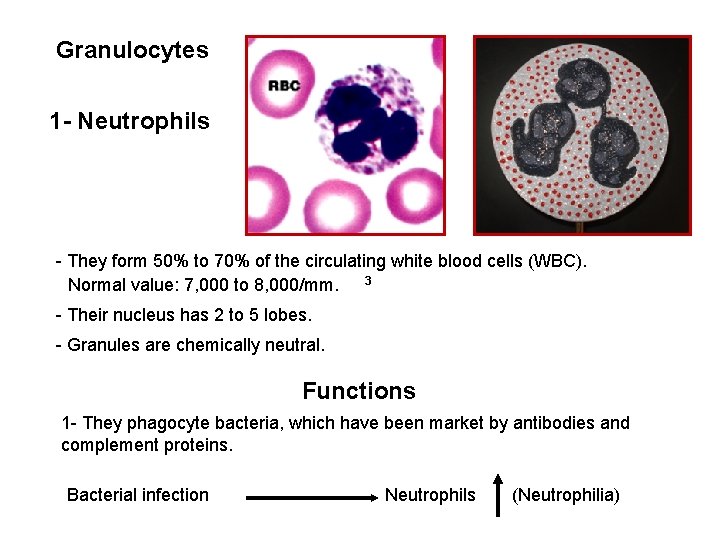
Granulocytes 1 - Neutrophils - They form 50% to 70% of the circulating white blood cells (WBC). Normal value: 7, 000 to 8, 000/mm. 3 - Their nucleus has 2 to 5 lobes. - Granules are chemically neutral. Functions 1 - They phagocyte bacteria, which have been market by antibodies and complement proteins. Bacterial infection Neutrophils (Neutrophilia)
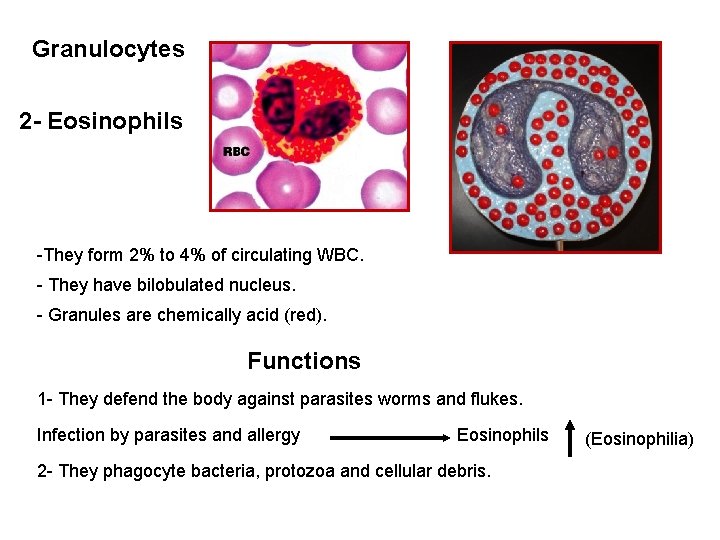
Granulocytes 2 - Eosinophils -They form 2% to 4% of circulating WBC. - They have bilobulated nucleus. - Granules are chemically acid (red). Functions 1 - They defend the body against parasites worms and flukes. Infection by parasites and allergy Eosinophils 2 - They phagocyte bacteria, protozoa and cellular debris. (Eosinophilia)

Granulocytes 3 - Basophils -They form less than 1% of circulating WBC. - Granules are chemically basic (purple to blue). - Granules contain histamine and heparin. Vasodilator Anticoagulant Function They accumulate in damaged tissues and release chemicals that enhance inflammation.

Agranulocytes 4 - Monocytes - They are the largest leukocytes. - They are spherical with a nucleus that is oval or kidney bean shaped. Functions 1 - They stay in the blood for only 24 hours and then they move into the peripheral tissues, where they become macrophages, which are very active and aggressive phagocytes. 2 - They release chemicals that attract other WBCs to the injury site. 3 - They defend the body against bacteria and viruses. 4 - They help activate the lymphocytes.
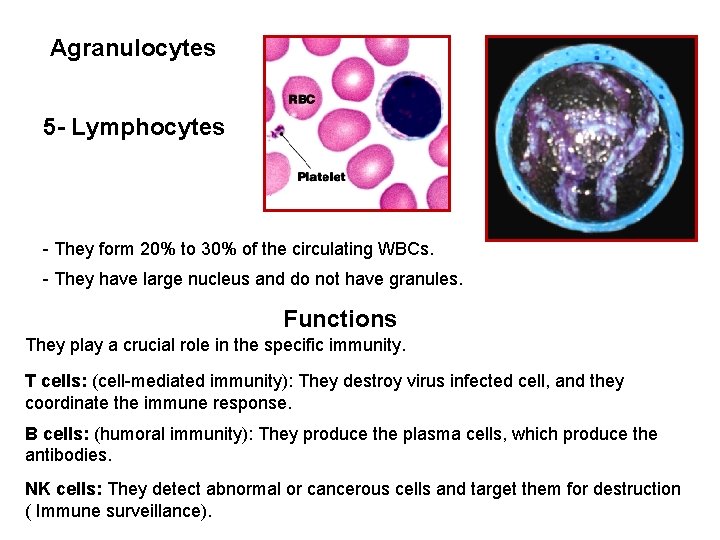
Agranulocytes 5 - Lymphocytes - They form 20% to 30% of the circulating WBCs. - They have large nucleus and do not have granules. Functions They play a crucial role in the specific immunity. T cells: (cell-mediated immunity): They destroy virus infected cell, and they coordinate the immune response. B cells: (humoral immunity): They produce the plasma cells, which produce the antibodies. NK cells: They detect abnormal or cancerous cells and target them for destruction ( Immune surveillance).
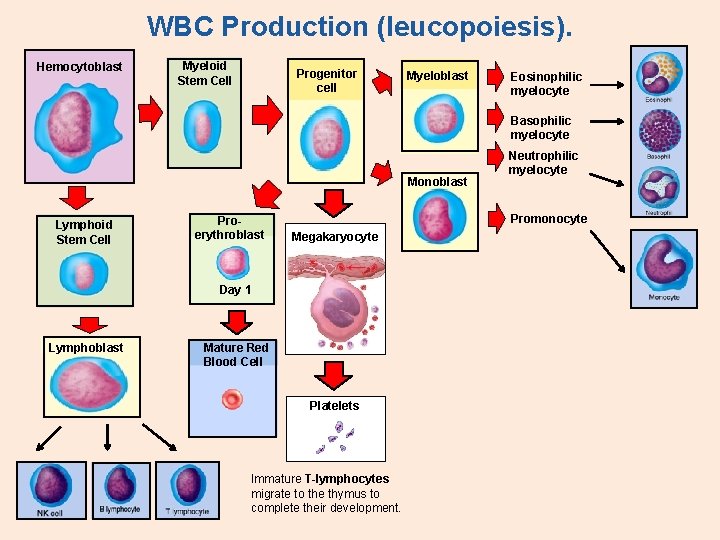
WBC Production (leucopoiesis). Hemocytoblast Myeloid Stem Cell Progenitor cell Myeloblast Eosinophilic myelocyte Basophilic myelocyte Monoblast Lymphoid Stem Cell Proerythroblast Promonocyte Megakaryocyte Day 1 Lymphoblast Neutrophilic myelocyte Mature Red Blood Cell Platelets Immature T-lymphocytes migrate to the thymus to complete their development.
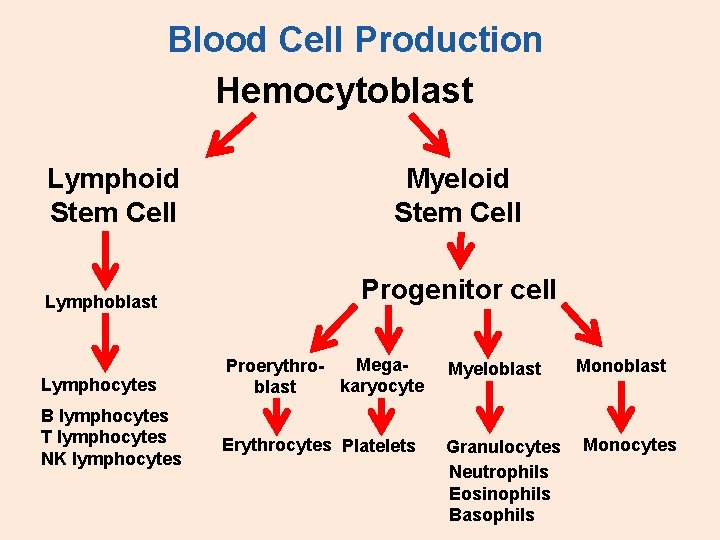
Blood Cell Production Hemocytoblast Lymphoid Stem Cell Lymphoblast Lymphocytes B lymphocytes T lymphocytes NK lymphocytes Myeloid Stem Cell Progenitor cell Mega. Proerythrokaryocyte blast Myeloblast Erythrocytes Platelets Granulocytes Neutrophils Eosinophils Basophils Monoblast Monocytes
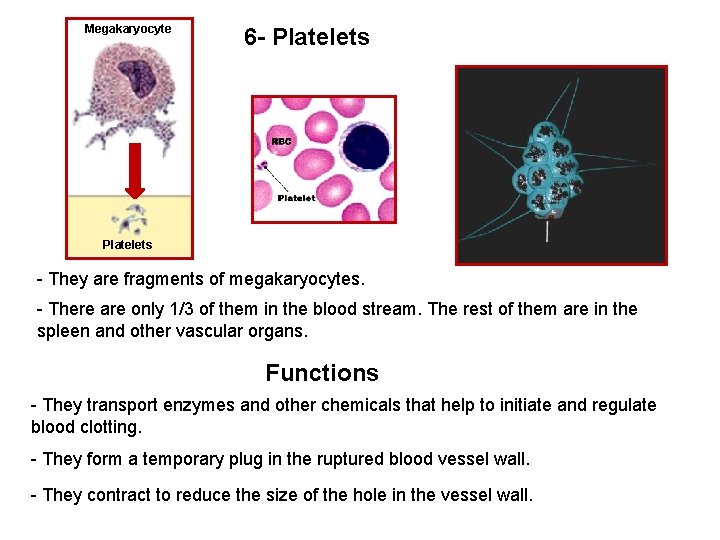
Megakaryocyte 6 - Platelets - They are fragments of megakaryocytes. - There are only 1/3 of them in the blood stream. The rest of them are in the spleen and other vascular organs. Functions - They transport enzymes and other chemicals that help to initiate and regulate blood clotting. - They form a temporary plug in the ruptured blood vessel wall. - They contract to reduce the size of the hole in the vessel wall.
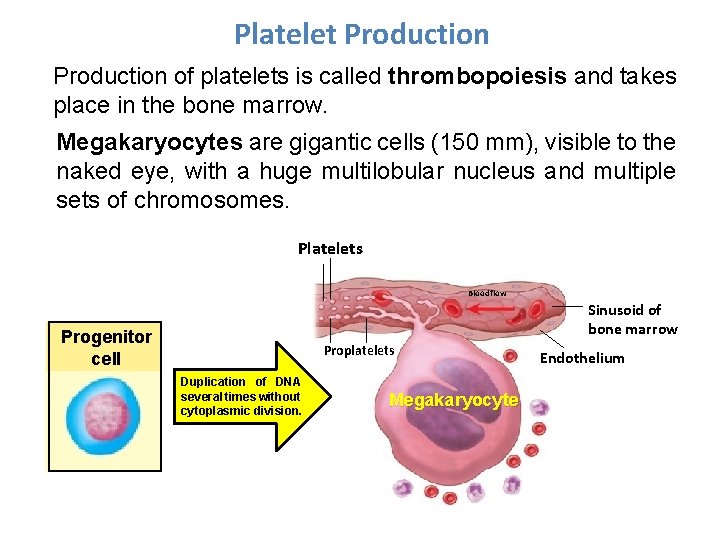
Platelet Production of platelets is called thrombopoiesis and takes place in the bone marrow. Megakaryocytes are gigantic cells (150 mm), visible to the naked eye, with a huge multilobular nucleus and multiple sets of chromosomes. Platelets Bloodflow Sinusoid of bone marrow Progenitor cell Proplatelets Duplication of DNA several times without cytoplasmic division. Megakaryocyte Endothelium
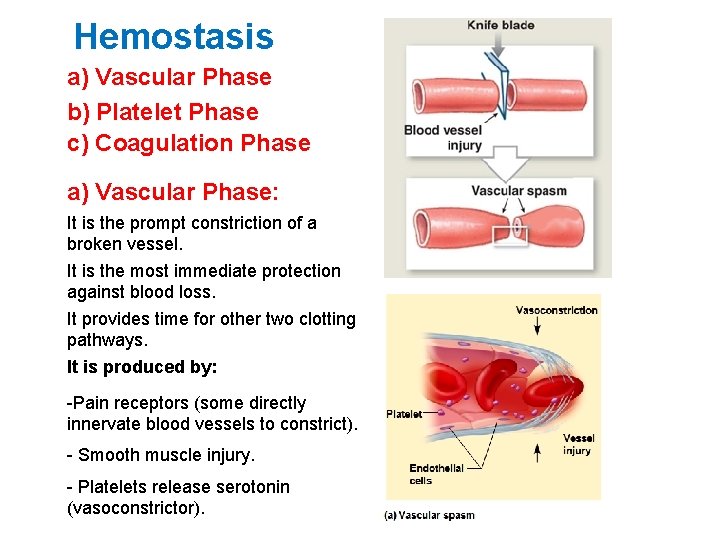
Hemostasis a) Vascular Phase b) Platelet Phase c) Coagulation Phase a) Vascular Phase: It is the prompt constriction of a broken vessel. It is the most immediate protection against blood loss. It provides time for other two clotting pathways. It is produced by: -Pain receptors (some directly innervate blood vessels to constrict). - Smooth muscle injury. - Platelets release serotonin (vasoconstrictor).
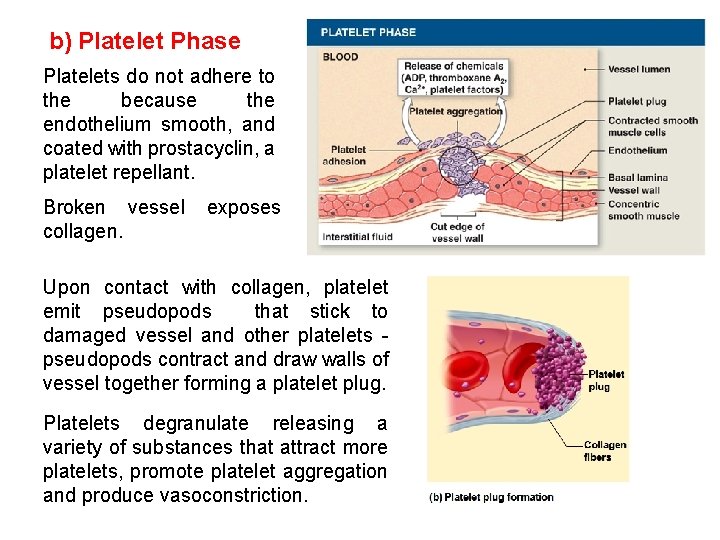
b) Platelet Phase Platelets do not adhere to the because the endothelium smooth, and coated with prostacyclin, a platelet repellant. Broken vessel collagen. exposes Upon contact with collagen, platelet emit pseudopods that stick to damaged vessel and other platelets pseudopods contract and draw walls of vessel together forming a platelet plug. Platelets degranulate releasing a variety of substances that attract more platelets, promote platelet aggregation and produce vasoconstriction.
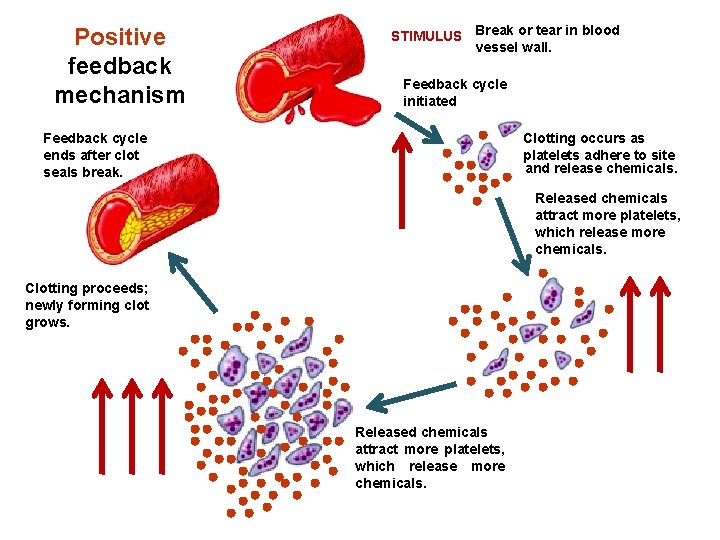
Positive feedback mechanism STIMULUS Break or tear in blood vessel wall. Feedback cycle initiated Feedback cycle ends after clot seals break. Clotting occurs as platelets adhere to site and release chemicals. Released chemicals attract more platelets, which release more chemicals. Clotting proceeds; newly forming clot grows. Released chemicals attract more platelets, which release more chemicals.
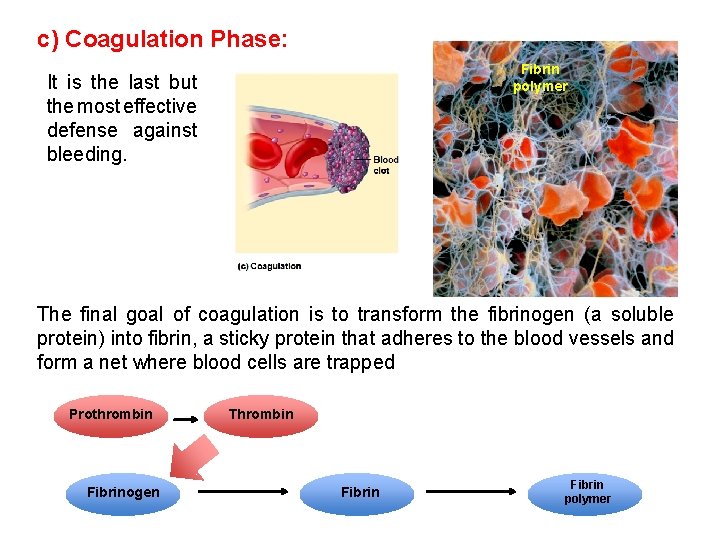
c) Coagulation Phase: Fibrin polymer It is the last but the most effective defense against bleeding. The final goal of coagulation is to transform the fibrinogen (a soluble protein) into fibrin, a sticky protein that adheres to the blood vessels and form a net where blood cells are trapped Prothrombin Fibrinogen Thrombin Fibrin polymer
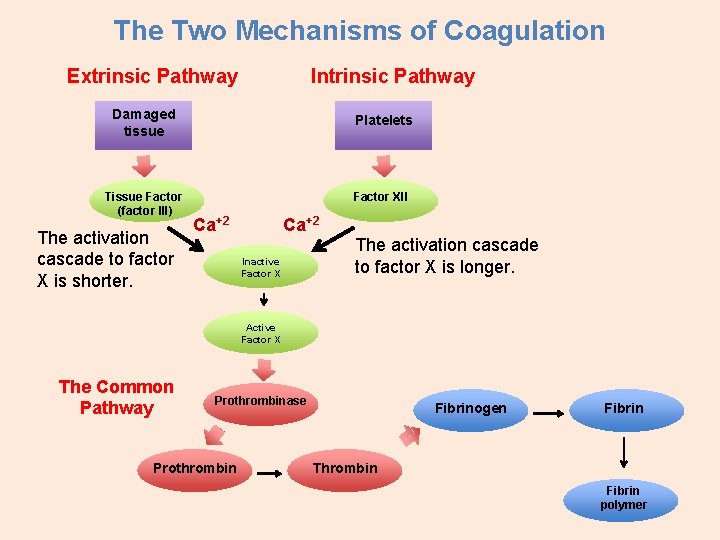
The Two Mechanisms of Coagulation Extrinsic Pathway Intrinsic Pathway Damaged tissue Platelets Tissue Factor (factor III) Factor XII The activation cascade to factor X is shorter. Ca+2 Inactive Factor X The activation cascade to factor X is longer. Active Factor X The Common Pathway Prothrombinase Prothrombin Fibrinogen Fibrin Thrombin Fibrin polymer
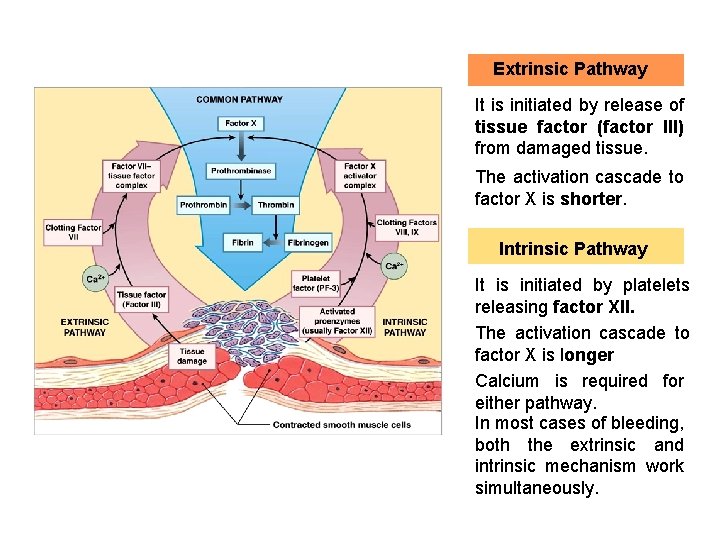
Extrinsic Pathway It is initiated by release of tissue factor (factor III) from damaged tissue. The activation cascade to factor X is shorter. Intrinsic Pathway It is initiated by platelets releasing factor XII. The activation cascade to factor X is longer Calcium is required for either pathway. In most cases of bleeding, both the extrinsic and intrinsic mechanism work simultaneously.
- Slides: 19