
LESSON 4 ASSESSING THE VICTIM 2011 National Safety
- Slides: 18
LESSON 4 ASSESSING THE VICTIM © 2011 National Safety Council 4 -1
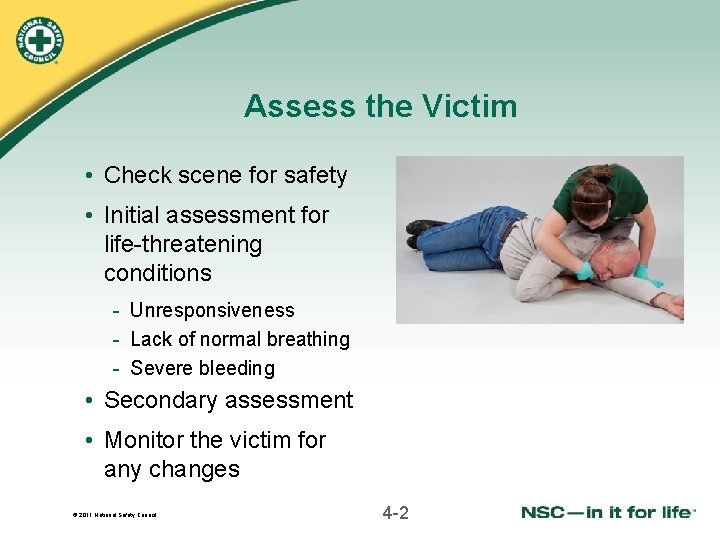
Assess the Victim • Check scene for safety • Initial assessment for life-threatening conditions - Unresponsiveness - Lack of normal breathing - Severe bleeding • Secondary assessment • Monitor the victim for any changes © 2011 National Safety Council 4 -2
Initial Assessment continued • Takes less than one minute • Do not move victim unless: - Imminent danger to victim - Cannot give life-saving care because of victim’s location or position • AVPU Scale - Alert Verbal stimuli (response) Painful stimuli (response) Unresponsive to all stimuli © 2011 National Safety Council 4 -3
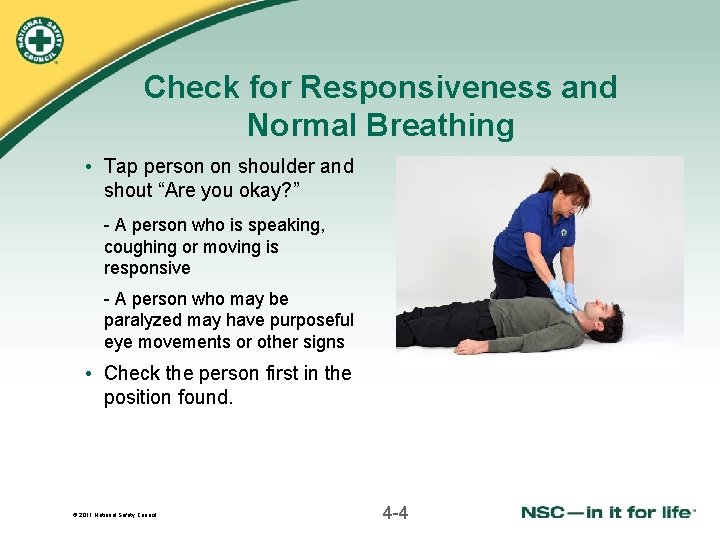
Check for Responsiveness and Normal Breathing • Tap person on shoulder and shout “Are you okay? ” - A person who is speaking, coughing or moving is responsive - A person who may be paralyzed may have purposeful eye movements or other signs • Check the person first in the position found. © 2011 National Safety Council 4 -4
Unresponsiveness • A sign of a life-threatening problem • Call 9 -1 -1 immediately • At same time look for normal breathing © 2011 National Safety Council 4 -5
Check for Normal Breathing • A victim who can speak or cough is breathing • Gasping is not normal breathing • Check victim first in position found © 2011 National Safety Council 4 -6
Breathing Normally? • If victim is breathing normally, continue assessment • If unresponsive victim is not breathing normally, start CPR © 2011 National Safety Council 4 -7
Check for Severe Bleeding • Severe bleeding is life-threatening • Control with direct pressure © 2011 National Safety Council 4 -8
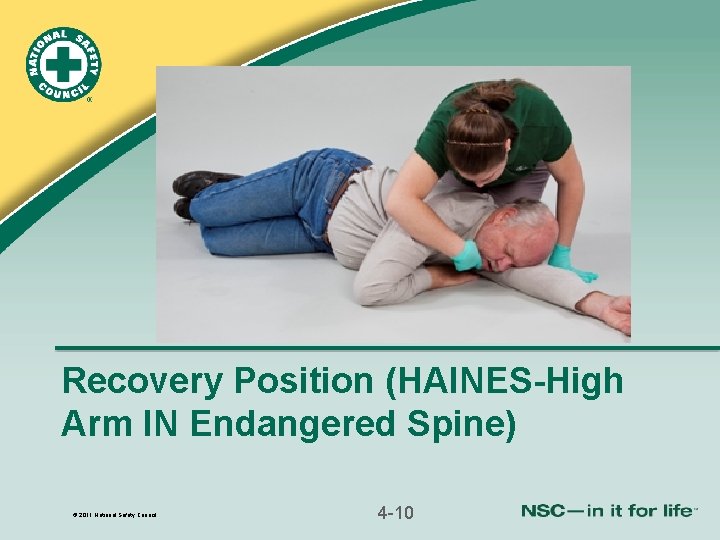
Recovery Position • Helps keep airway open • Allows fluid to drain from mouth • Prevents aspiration • If possible, put victim onto left side • Continue to monitor breathing © 2011 National Safety Council 4 -9
Recovery Position (HAINES-High Arm IN Endangered Spine) © 2011 National Safety Council 4 -10
Secondary Assessment • Performed only for victims without life-threatening conditions • Do not interrupt care for serious problem • Can provide additional information • Usually performed on responsive victims • Includes history and physical examination • Focused primarily on injured area © 2011 National Safety Council 4 -11
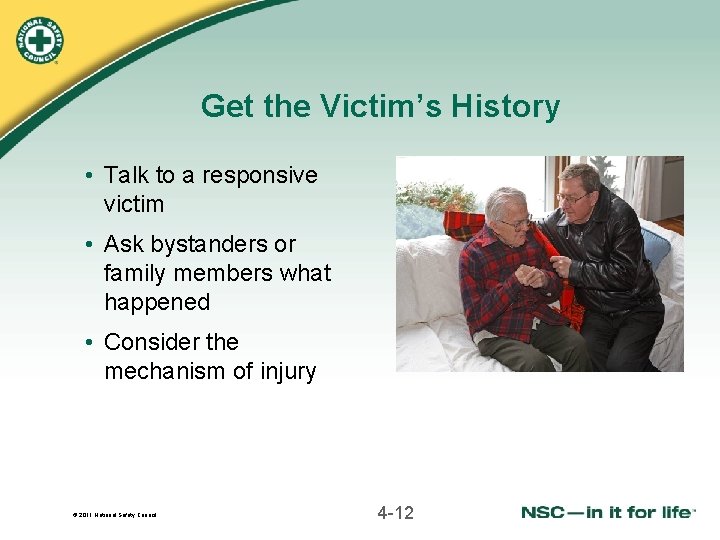
Get the Victim’s History • Talk to a responsive victim • Ask bystanders or family members what happened • Consider the mechanism of injury © 2011 National Safety Council 4 -12
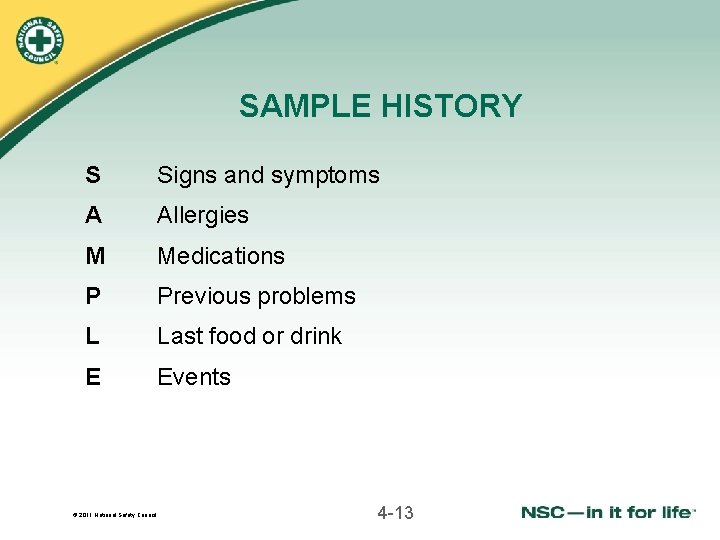
SAMPLE HISTORY S Signs and symptoms A Allergies M Medications P Previous problems L Last food or drink E Events © 2011 National Safety Council 4 -13
Unresponsive Victim • Ask family or bystanders what happened • Check the scene for clues • Consider effects of environmental extremes • Consider victim’s age © 2011 National Safety Council 4 -14
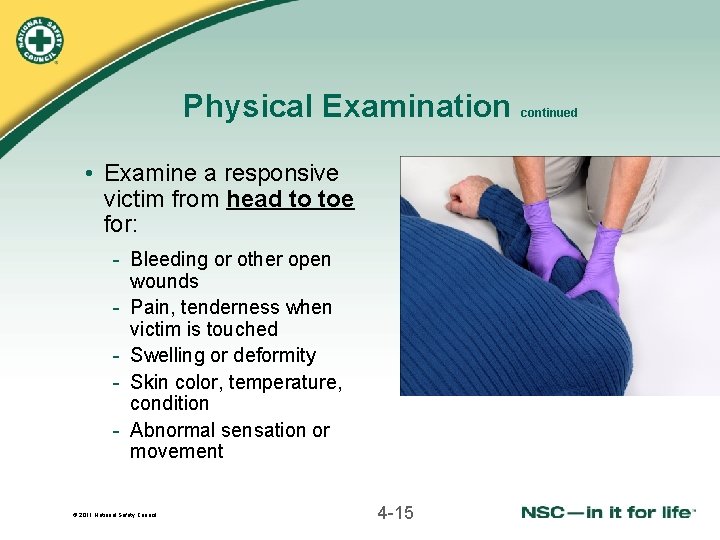
Physical Examination • Examine a responsive victim from head to toe for: - Bleeding or other open wounds - Pain, tenderness when victim is touched - Swelling or deformity - Skin color, temperature, condition - Abnormal sensation or movement © 2011 National Safety Council 4 -15 continued
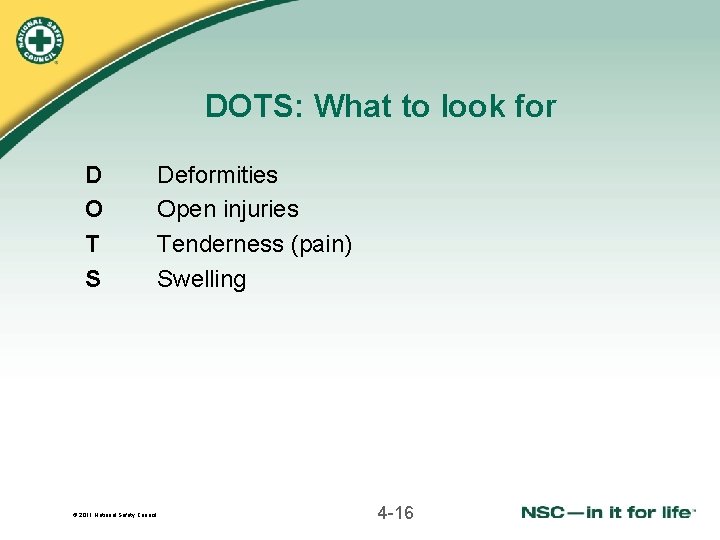
DOTS: What to look for D O T S © 2011 National Safety Council Deformities Open injuries Tenderness (pain) Swelling 4 -16
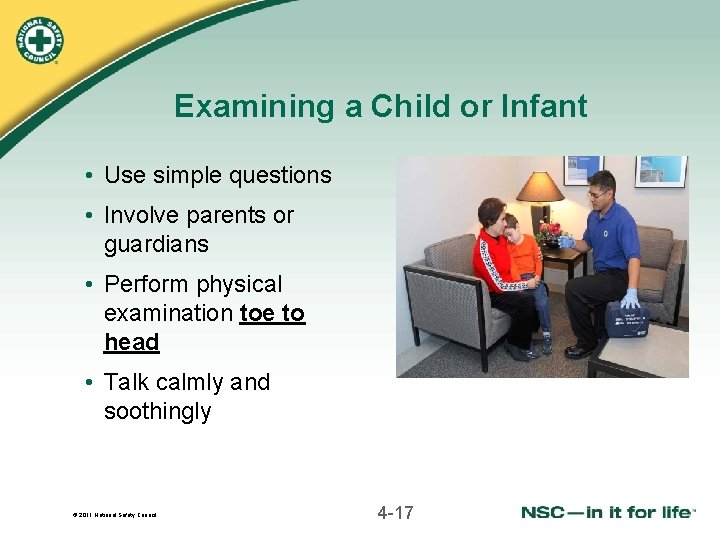
Examining a Child or Infant • Use simple questions • Involve parents or guardians • Perform physical examination toe to head • Talk calmly and soothingly © 2011 National Safety Council 4 -17
Monitor the Victim • Give first aid for any injury or illness • For unresponsive victim or victim with serious injury: - Make sure condition doesn’t get worse - Repeat breathing assessment at least every five minutes © 2011 National Safety Council 4 -18