
LESSON 4 1 EXTENDED MULTIPLICATION FACTS OVERVIEW STUDENTS

- Slides: 15
LESSON 4 -1 EXTENDED MULTIPLICATION FACTS OVERVIEW: STUDENTS FIND A RULE FOR SOLVING MULTIPLICATION PROBLEMS INVOLVING MULTIPLES OF 10. Math Vocabulary – extended multiplication facts
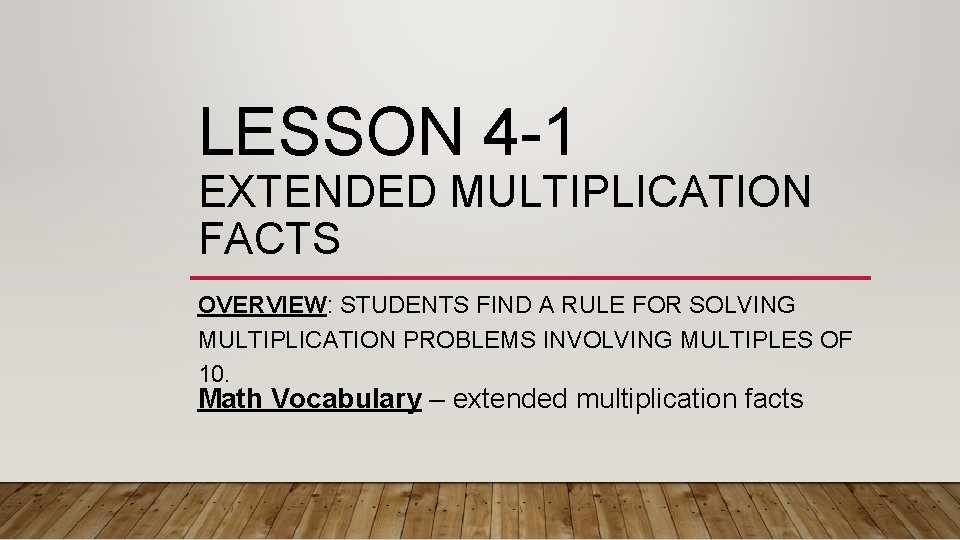
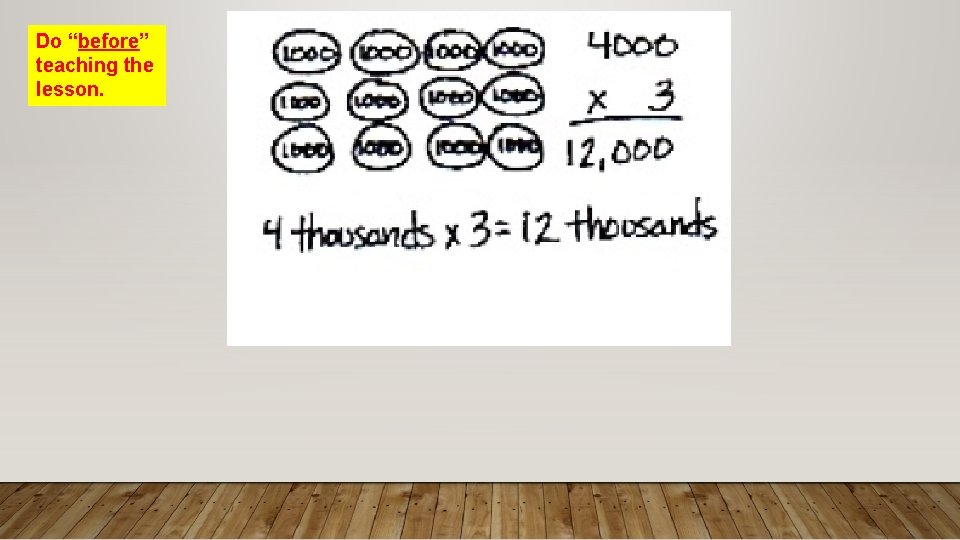
Do “before” teaching the lesson.
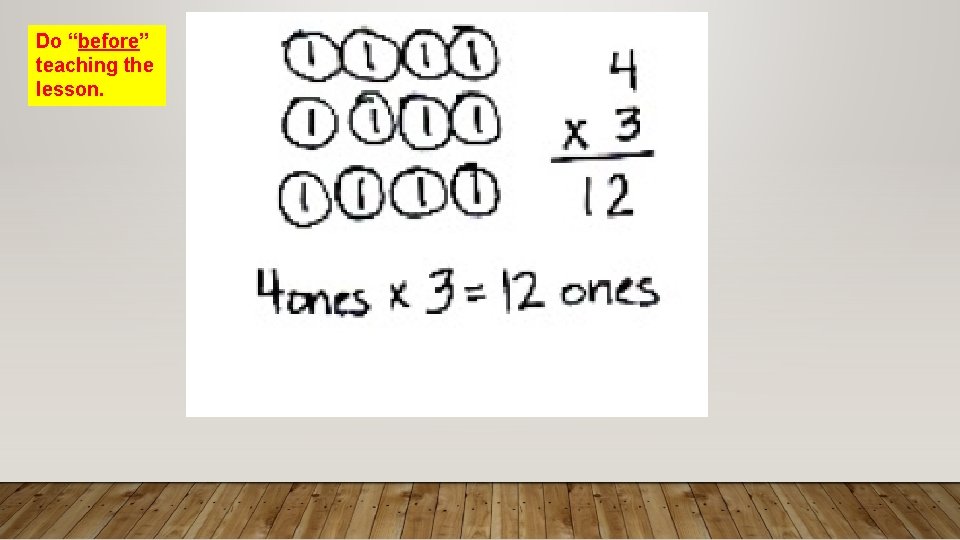
Do “before” teaching the lesson.
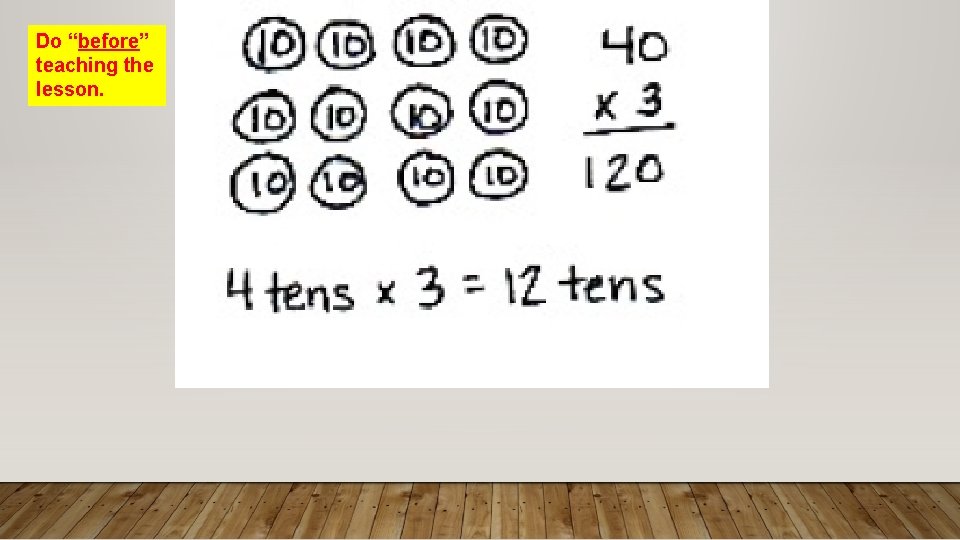
Do “before” teaching the lesson.
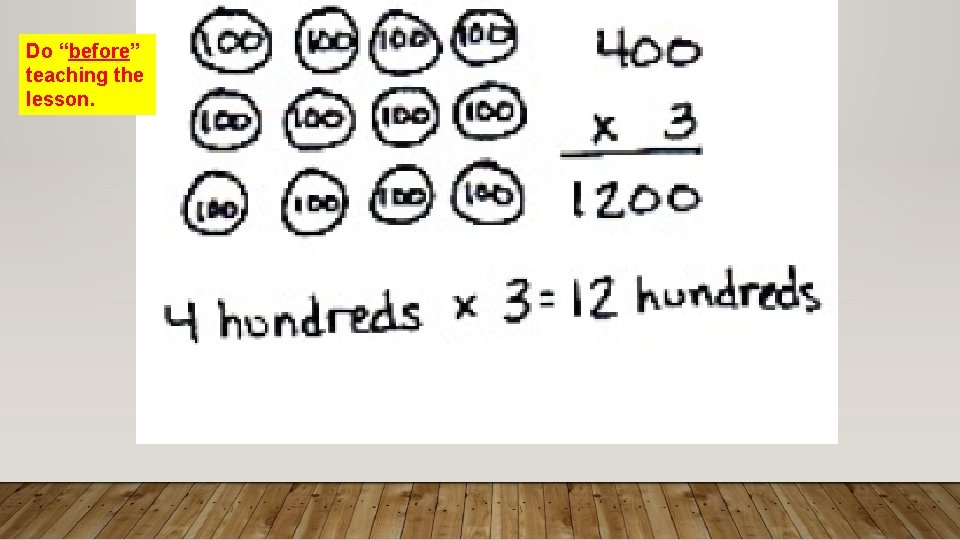
Do “before” teaching the lesson.
MATH MESSAGE • Lacey has 40 bottle caps. Donovan has 20 times as many bottle caps as Lacey. How many bottle caps does Donovan have?
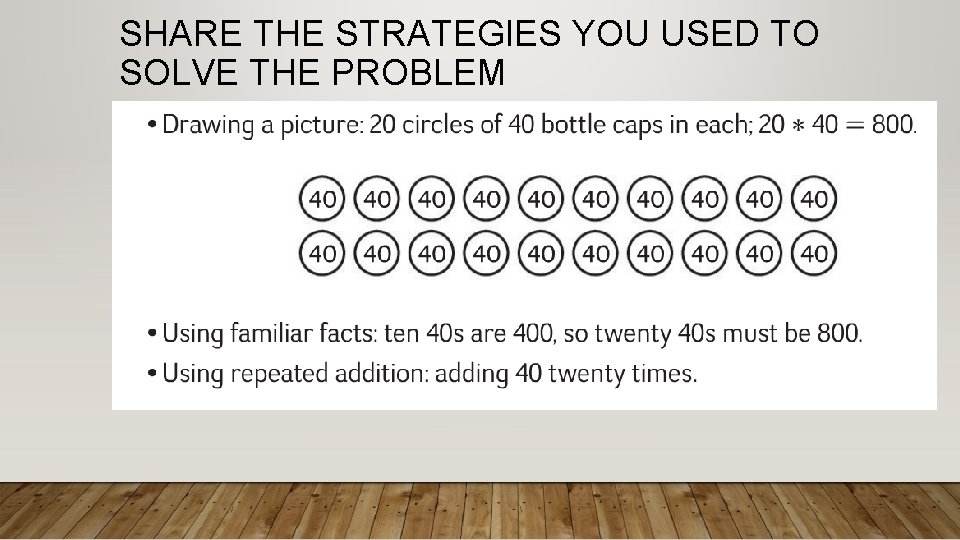
SHARE THE STRATEGIES YOU USED TO SOLVE THE PROBLEM
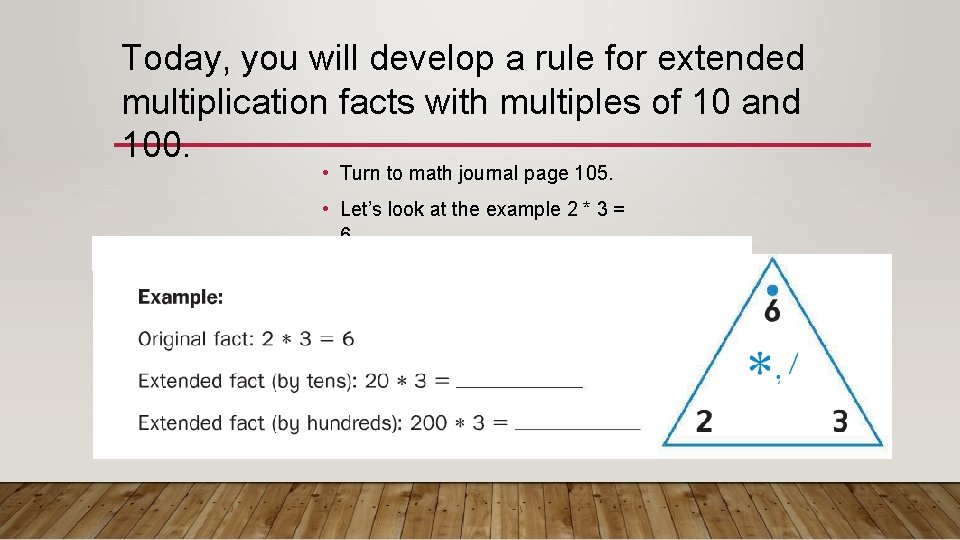
Today, you will develop a rule for extended multiplication facts with multiples of 10 and 100. • Turn to math journal page 105. • Let’s look at the example 2 * 3 = 6.
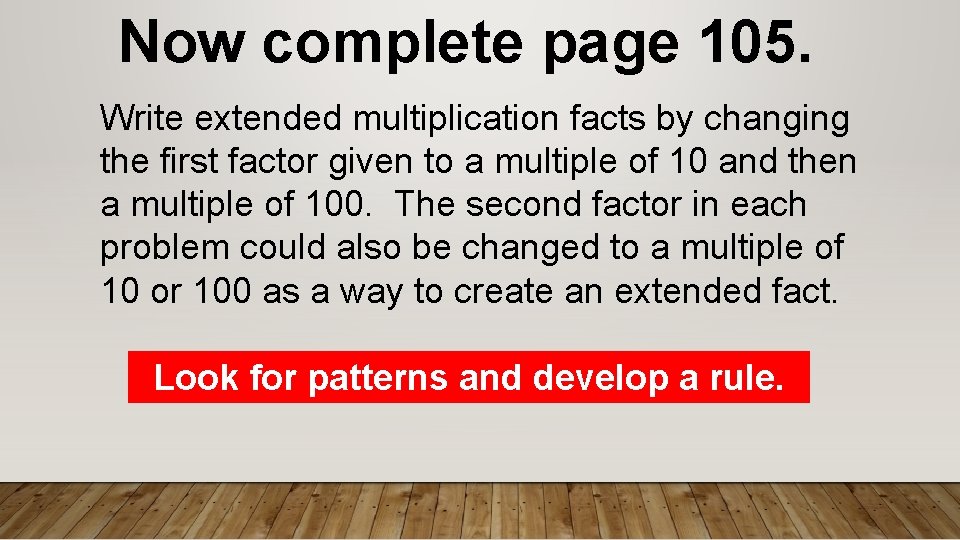
Now complete page 105. Write extended multiplication facts by changing the first factor given to a multiple of 10 and then a multiple of 100. The second factor in each problem could also be changed to a multiple of 10 or 100 as a way to create an extended fact. Look for patterns and develop a rule.
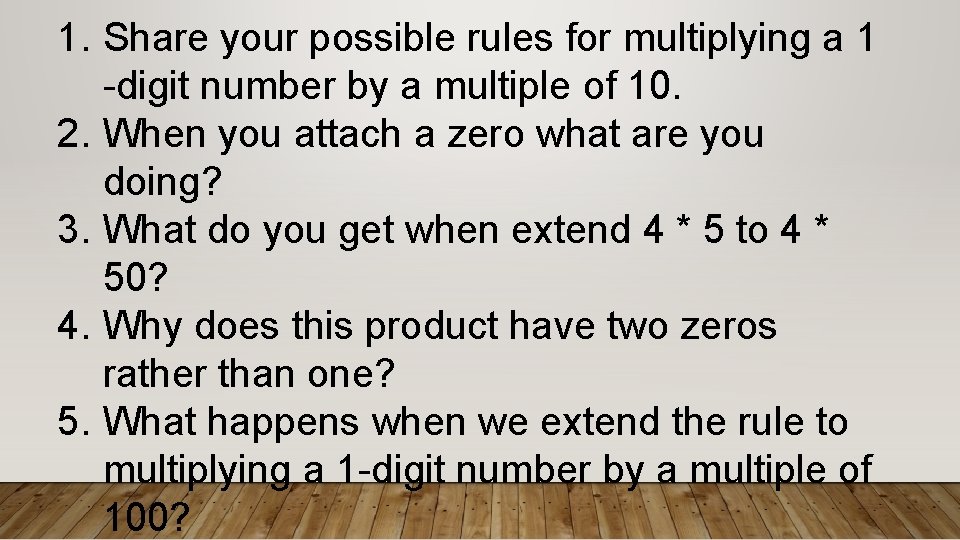
1. Share your possible rules for multiplying a 1 -digit number by a multiple of 10. 2. When you attach a zero what are you doing? 3. What do you get when extend 4 * 5 to 4 * 50? 4. Why does this product have two zeros rather than one? 5. What happens when we extend the rule to multiplying a 1 -digit number by a multiple of 100?
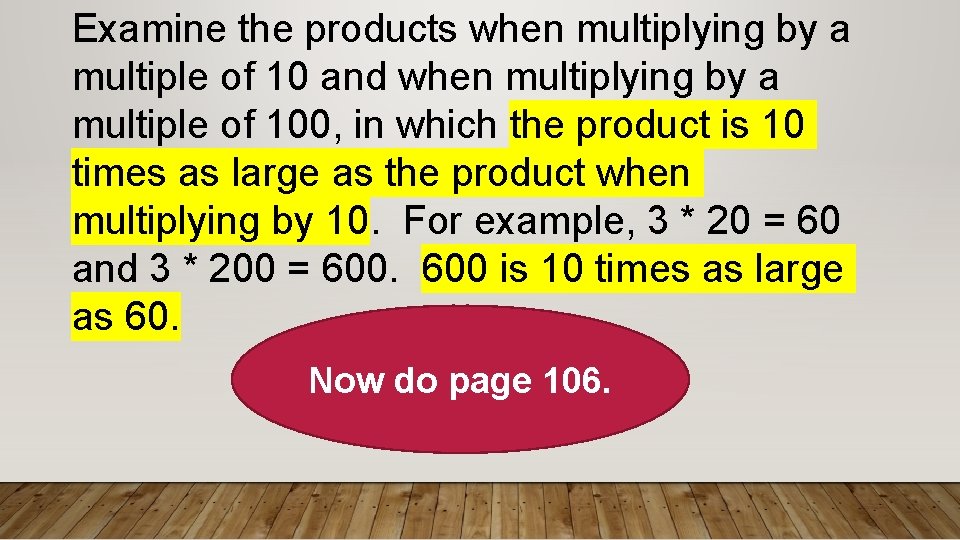
Examine the products when multiplying by a multiple of 10 and when multiplying by a multiple of 100, in which the product is 10 times as large as the product when multiplying by 10. For example, 3 * 20 = 60 and 3 * 200 = 600 is 10 times as large as 60. Now do page 106.
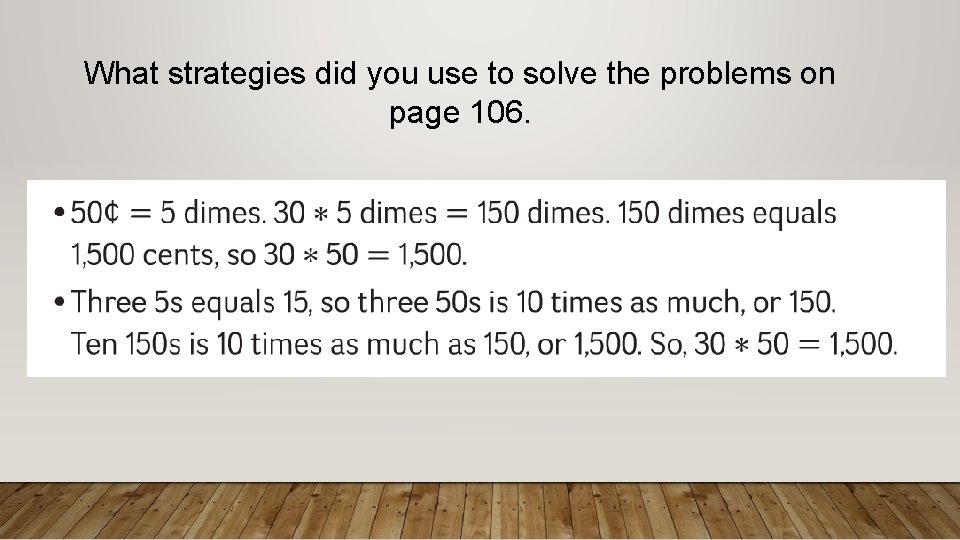
What strategies did you use to solve the problems on page 106.
How could the rule be extended beyond multiplying tens by tens?
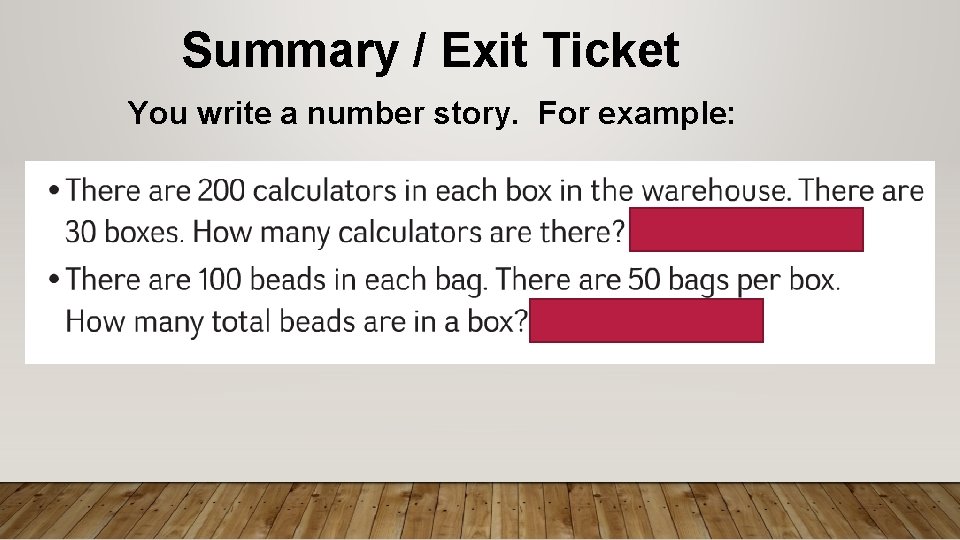
Summary / Exit Ticket You write a number story. For example: