
Lesson 3 what is a verb Greek as
Lesson 3 • what is a verb? • Greek as an inflected language (meaning is changed by addition of suffixes to end of word) • Is English an inflected language?
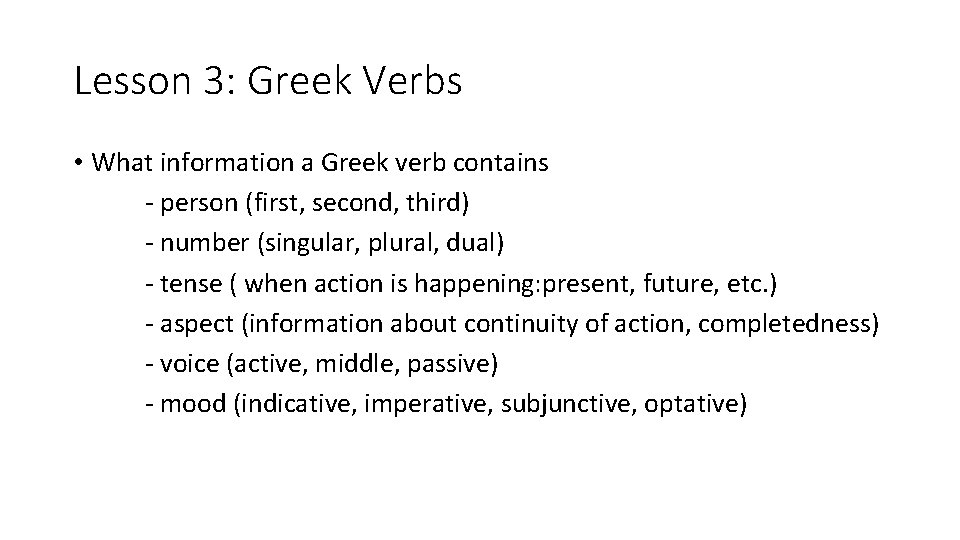
Lesson 3: Greek Verbs • What information a Greek verb contains - person (first, second, third) - number (singular, plural, dual) - tense ( when action is happening: present, future, etc. ) - aspect (information about continuity of action, completedness) - voice (active, middle, passive) - mood (indicative, imperative, subjunctive, optative)
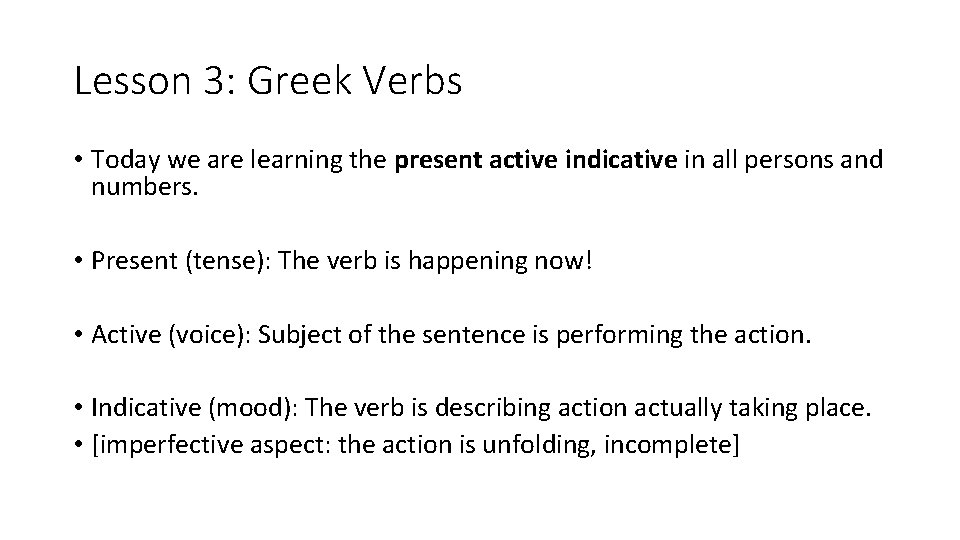
Lesson 3: Greek Verbs • Today we are learning the present active indicative in all persons and numbers. • Present (tense): The verb is happening now! • Active (voice): Subject of the sentence is performing the action. • Indicative (mood): The verb is describing action actually taking place. • [imperfective aspect: the action is unfolding, incomplete]

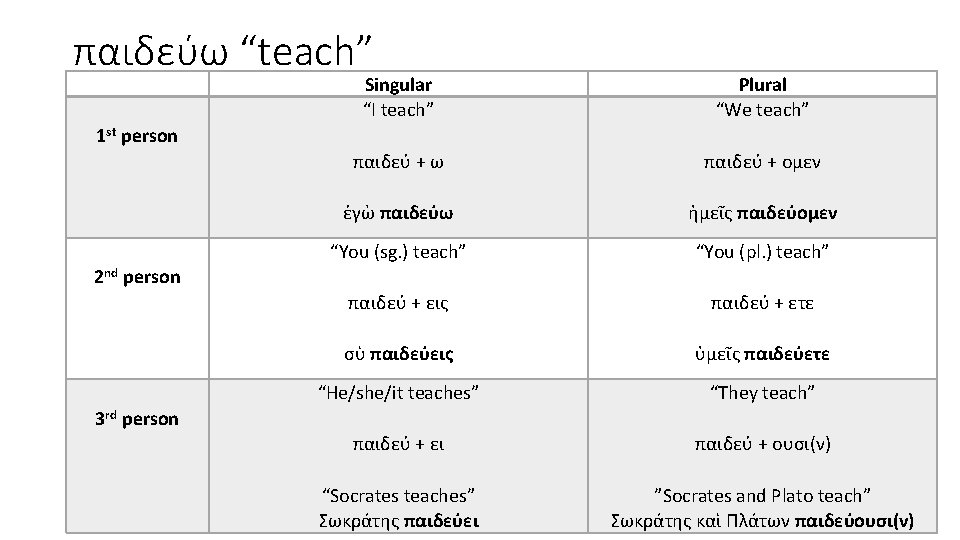
Lesson 3: Present Active Indicative Endings • Present stem: First principle part minus “-ω”: παιδεὺ-ω • Personal endings for present active indicative verbs: Singular Plural 1 st Person -ω - ομεν 2 nd Person - εις - ετε 3 rd Person - ει - ουσι(ν)
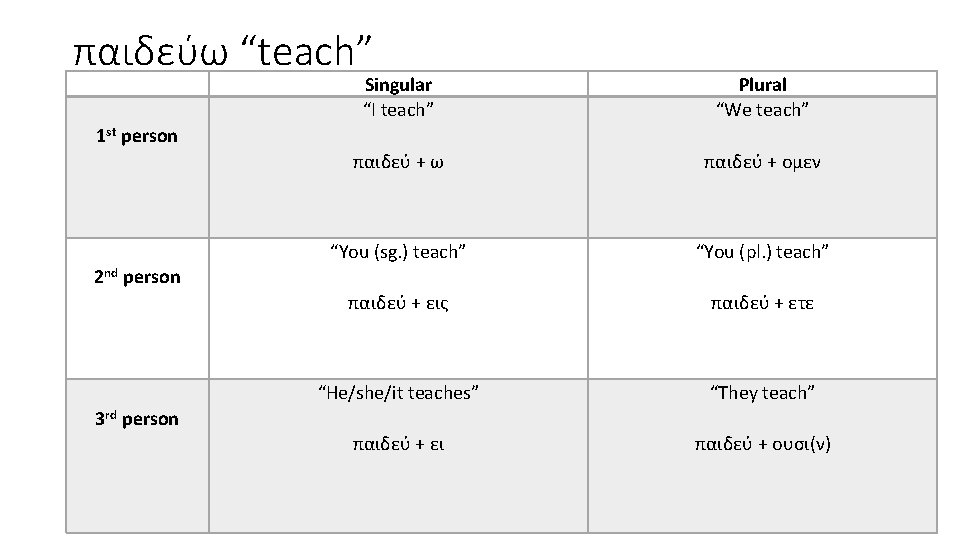
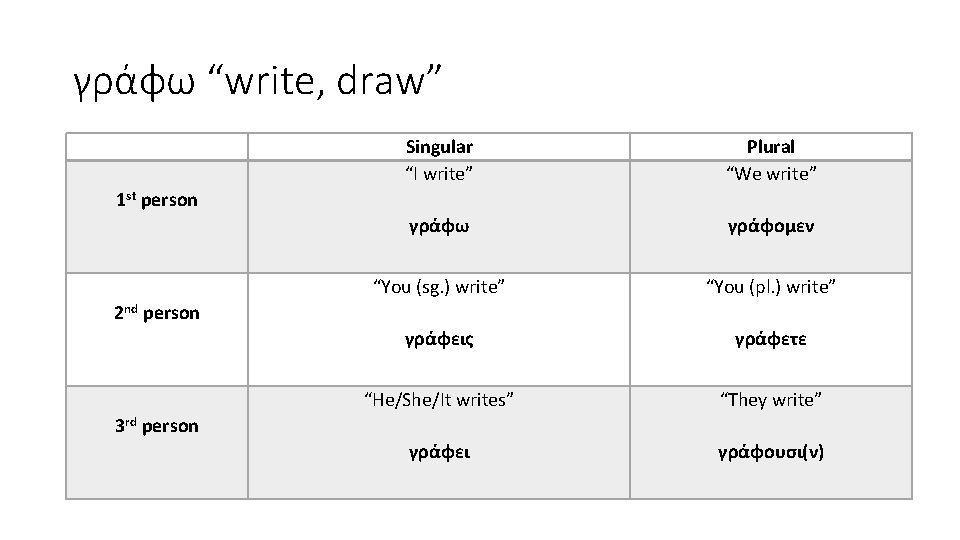
γράφω “write, draw” Singular “I write” Plural “We write” γράφω γράφομεν “You (sg. ) write” “You (pl. ) write” γράφεις γράφετε “He/She/It writes” “They write” γράφει γράφουσι(ν) 1 st person 2 nd person 3 rd person
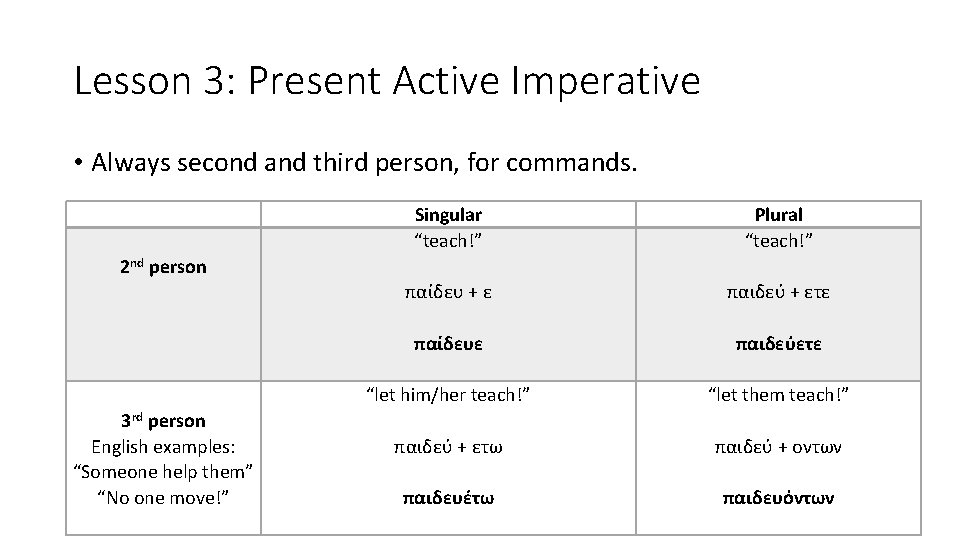
Lesson 3: Present Active Imperative • Always second and third person, for commands. Singular “teach!” Plural “teach!” παίδευ + ε παιδεύ + ετε παίδευε παιδεύετε “let him/her teach!” “let them teach!” παιδεύ + ετω παιδεύ + οντων παιδευέτω παιδευόντων 2 nd person 3 rd person English examples: “Someone help them” “No one move!”

Lesson 3: Present Active Infinitive • Present infinitive = present stem + ειν • παιδεύω παιδεύ + ειν παιδεύειν (“to teach”) • γράφω γράφ + ειν γράφειν (“to write”) • Infinitive used after ἐθέλω: I want to ______: • ἐθέλω _______
- Slides: 9