
Lesson 3 TAXONOMY THE SCIENCE OF CLASSIFICATION RECAP

- Slides: 29
Lesson 3 TAXONOMY: THE SCIENCE OF CLASSIFICATION
RECAP TIME BIO FACTS
Competencies 1. Identify, review the concepts of Basic Concept of Taxonomy 2. Identify the characteristics and examples of 5 Kingdom Approach
Activity (10 mins) Guide Questions: 1. What do you think are the bases of classifying organisms? 2. How do you think did taxonomist classify animals?
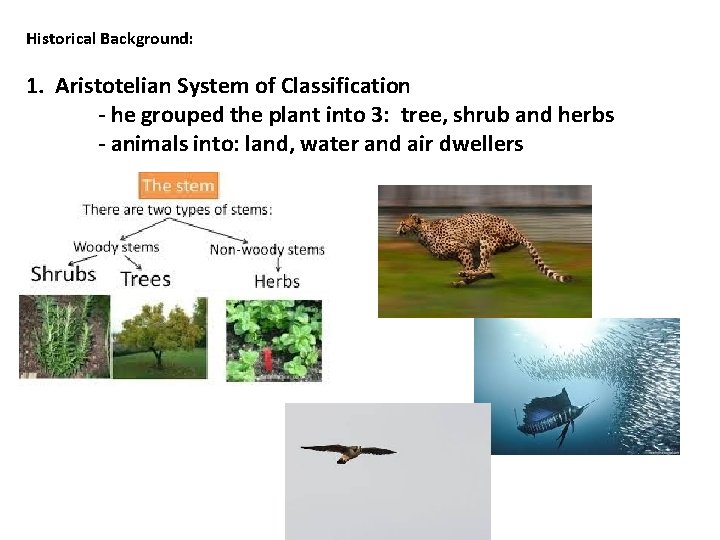
Historical Background: 1. Aristotelian System of Classification - he grouped the plant into 3: tree, shrub and herbs - animals into: land, water and air dwellers
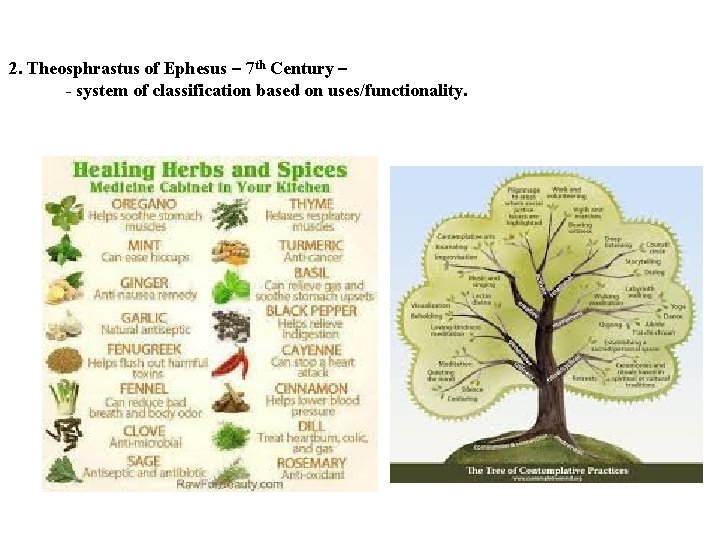
2. Theosphrastus of Ephesus – 7 th Century – - system of classification based on uses/functionality.
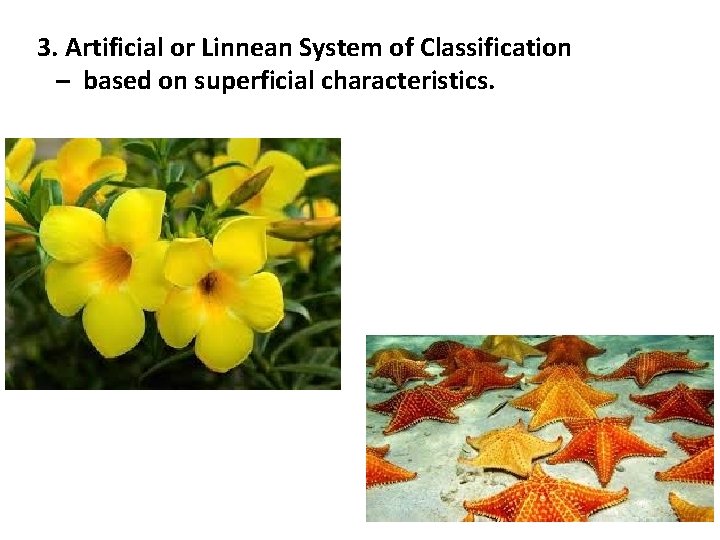
3. Artificial or Linnean System of Classification – based on superficial characteristics.
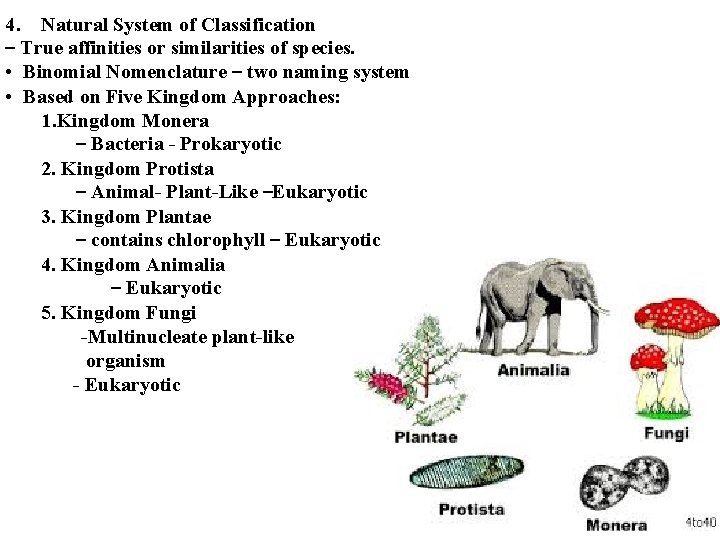
4. Natural System of Classification – True affinities or similarities of species. • Binomial Nomenclature – two naming system • Based on Five Kingdom Approaches: 1. Kingdom Monera – Bacteria - Prokaryotic 2. Kingdom Protista – Animal- Plant-Like –Eukaryotic 3. Kingdom Plantae – contains chlorophyll – Eukaryotic 4. Kingdom Animalia – Eukaryotic 5. Kingdom Fungi -Multinucleate plant-like organism - Eukaryotic
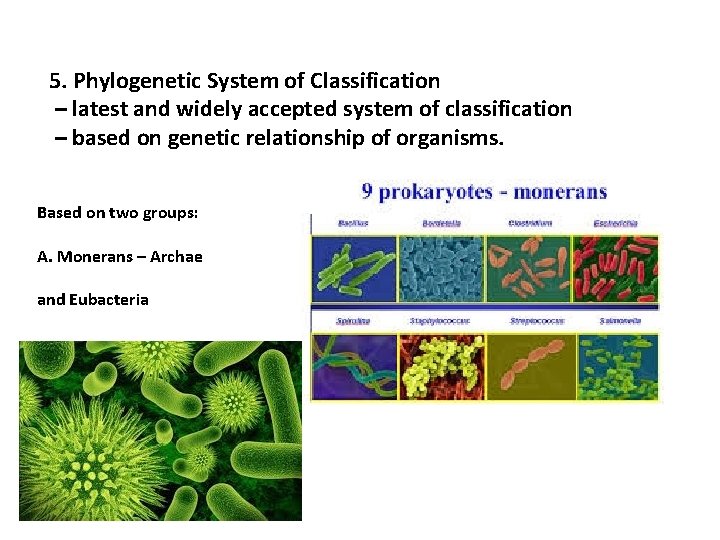
5. Phylogenetic System of Classification – latest and widely accepted system of classification – based on genetic relationship of organisms. Based on two groups: A. Monerans – Archae and Eubacteria
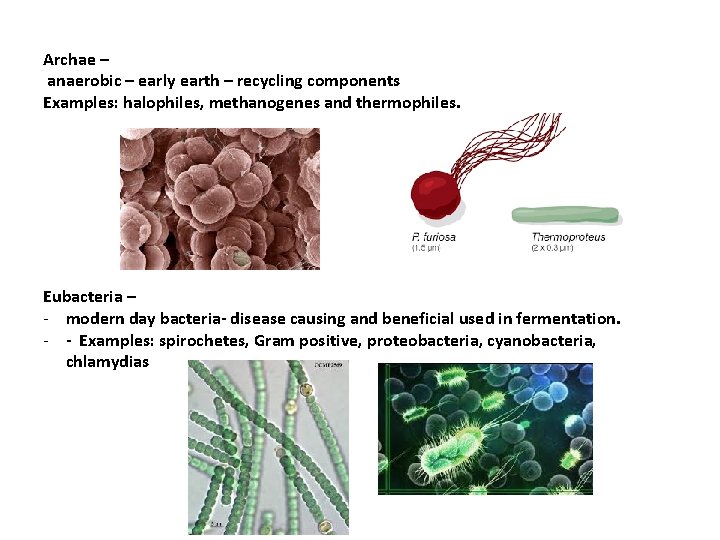
Archae – anaerobic – early earth – recycling components Examples: halophiles, methanogenes and thermophiles. Eubacteria – - modern day bacteria- disease causing and beneficial used in fermentation. - - Examples: spirochetes, Gram positive, proteobacteria, cyanobacteria, chlamydias
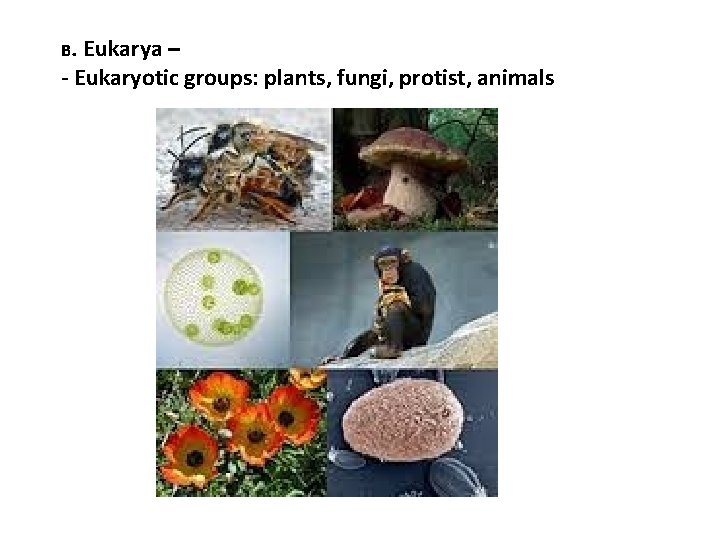
B. Eukarya – - Eukaryotic groups: plants, fungi, protist, animals
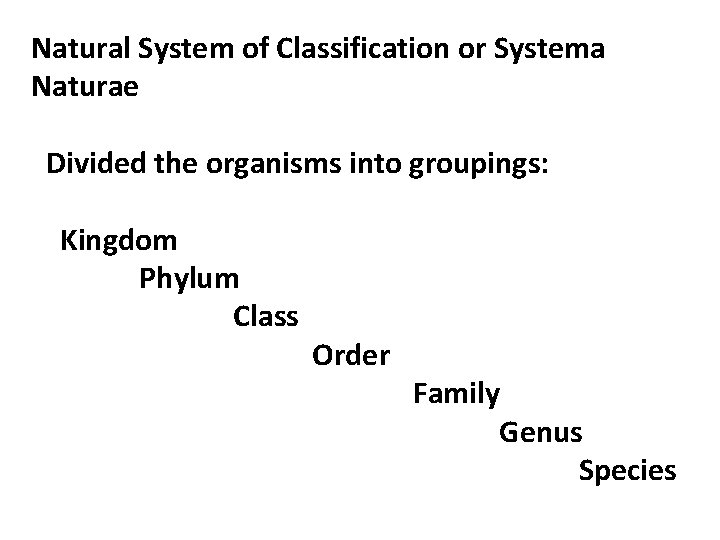
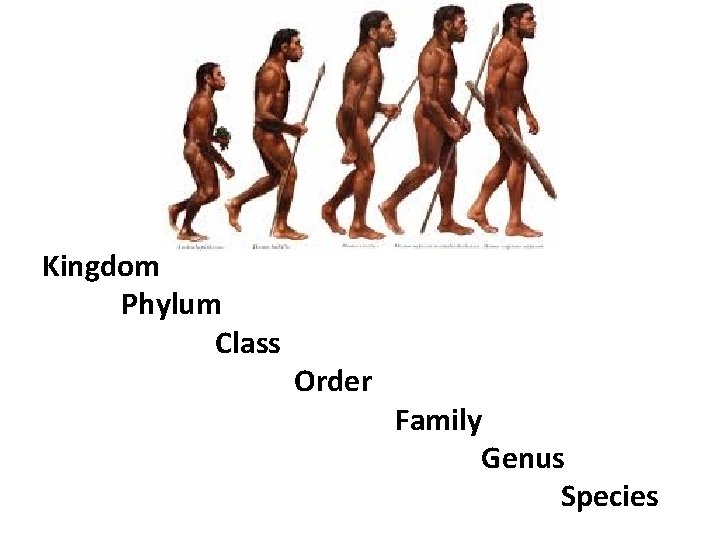
Natural System of Classification or Systema Naturae Divided the organisms into groupings: Kingdom Phylum Class Order Family Genus Species
Binomial Nomenclature or scientific name: advantage and disadvantage?
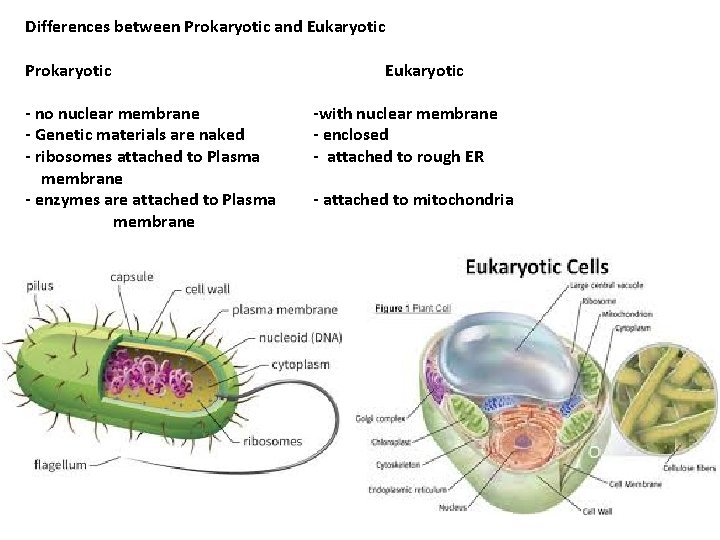
Differences between Prokaryotic and Eukaryotic Prokaryotic - no nuclear membrane - Genetic materials are naked - ribosomes attached to Plasma membrane - enzymes are attached to Plasma membrane Eukaryotic -with nuclear membrane - enclosed - attached to rough ER - attached to mitochondria
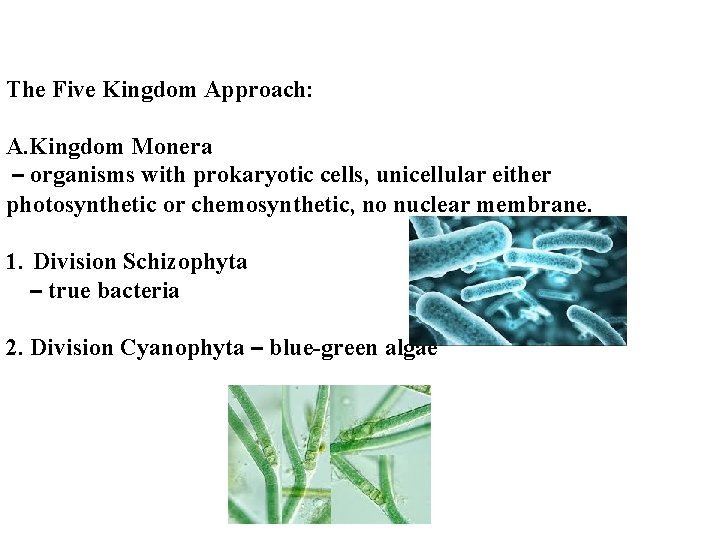
The Five Kingdom Approach: A. Kingdom Monera – organisms with prokaryotic cells, unicellular either photosynthetic or chemosynthetic, no nuclear membrane. 1. Division Schizophyta – true bacteria 2. Division Cyanophyta – blue-green algae
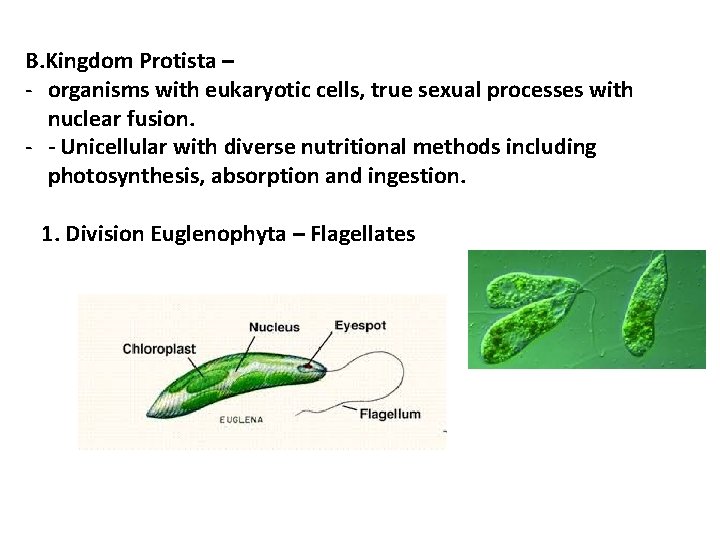
B. Kingdom Protista – - organisms with eukaryotic cells, true sexual processes with nuclear fusion. - - Unicellular with diverse nutritional methods including photosynthesis, absorption and ingestion. 1. Division Euglenophyta – Flagellates
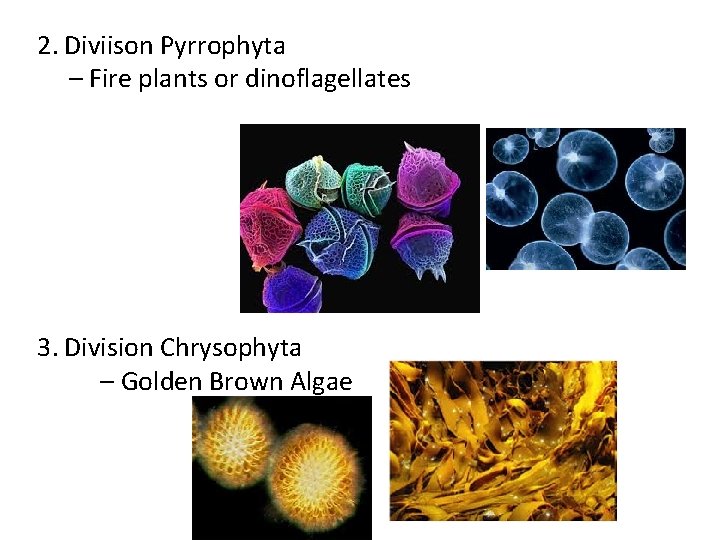
2. Diviison Pyrrophyta – Fire plants or dinoflagellates 3. Division Chrysophyta – Golden Brown Algae
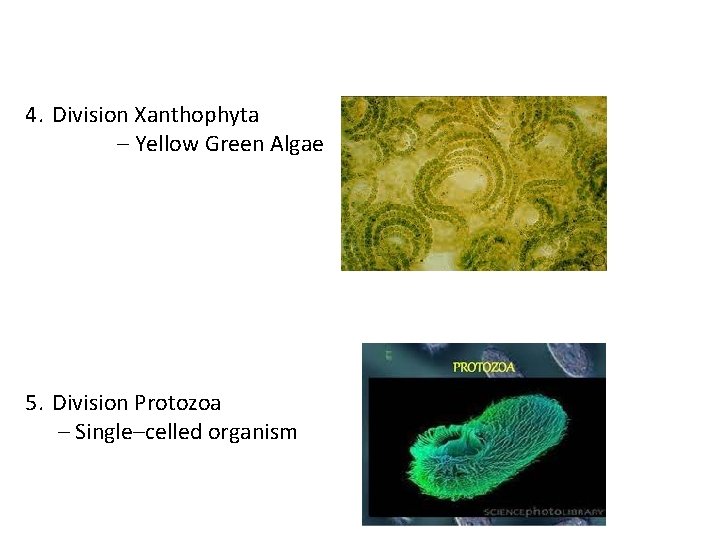
4. Division Xanthophyta – Yellow Green Algae 5. Division Protozoa – Single–celled organism
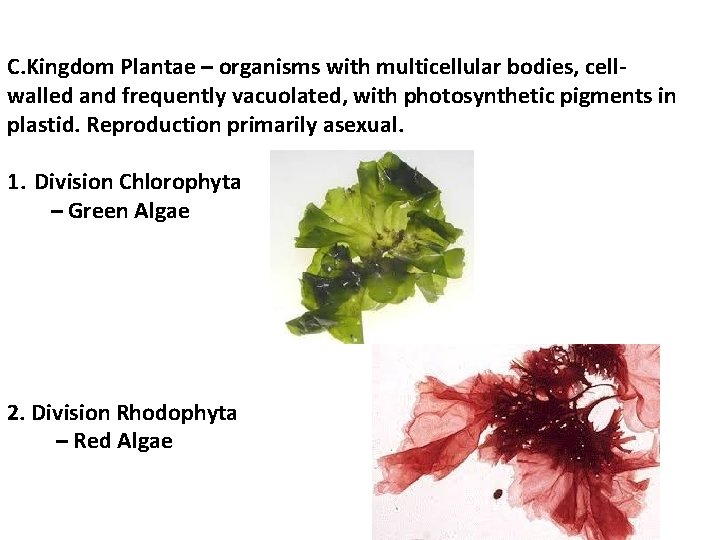
C. Kingdom Plantae – organisms with multicellular bodies, cellwalled and frequently vacuolated, with photosynthetic pigments in plastid. Reproduction primarily asexual. 1. Division Chlorophyta – Green Algae 2. Division Rhodophyta – Red Algae
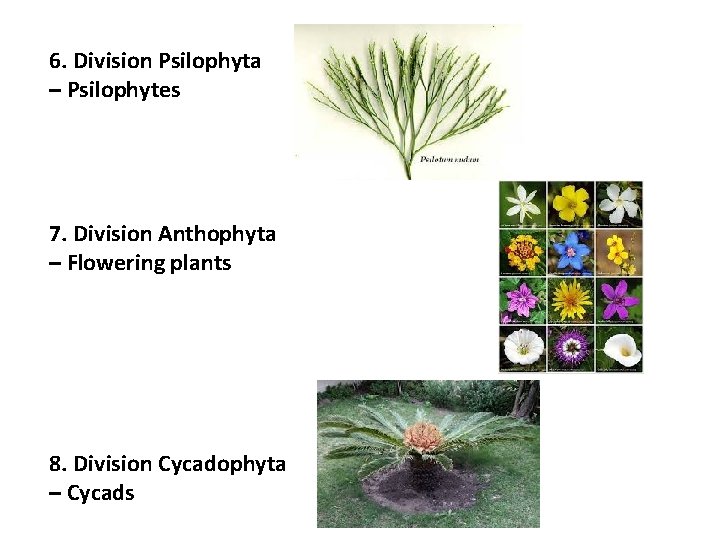
6. Division Psilophyta – Psilophytes 7. Division Anthophyta – Flowering plants 8. Division Cycadophyta – Cycads
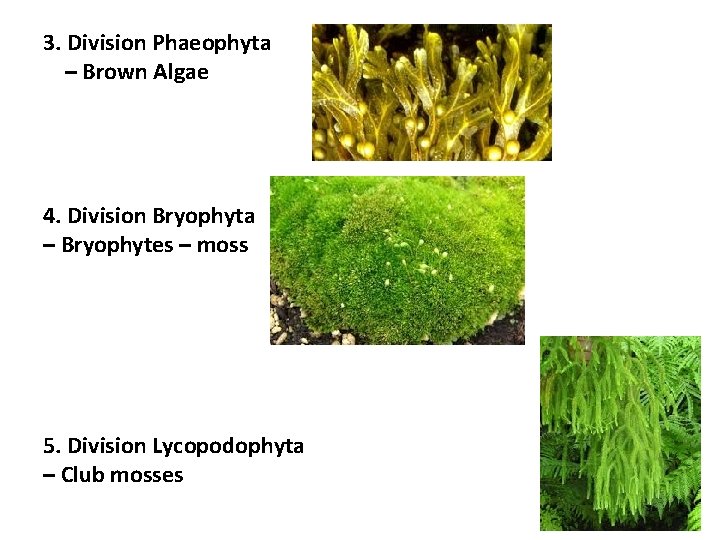
3. Division Phaeophyta – Brown Algae 4. Division Bryophyta – Bryophytes – moss 5. Division Lycopodophyta – Club mosses
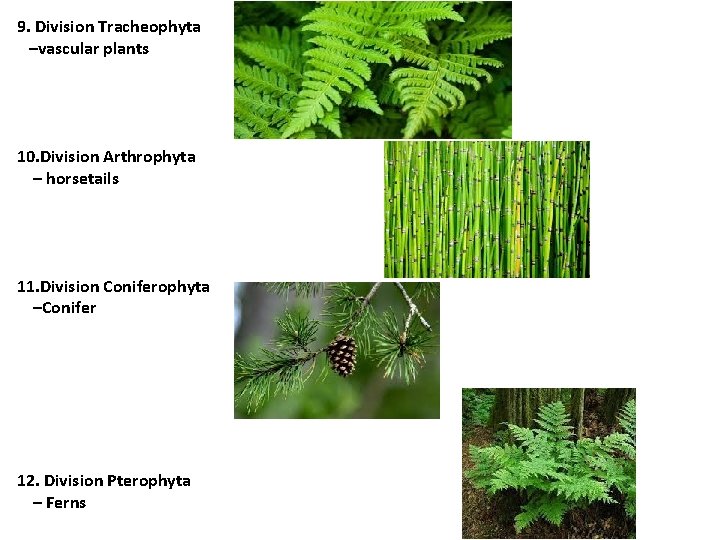
9. Division Tracheophyta –vascular plants 10. Division Arthrophyta – horsetails 11. Division Coniferophyta –Conifer 12. Division Pterophyta – Ferns
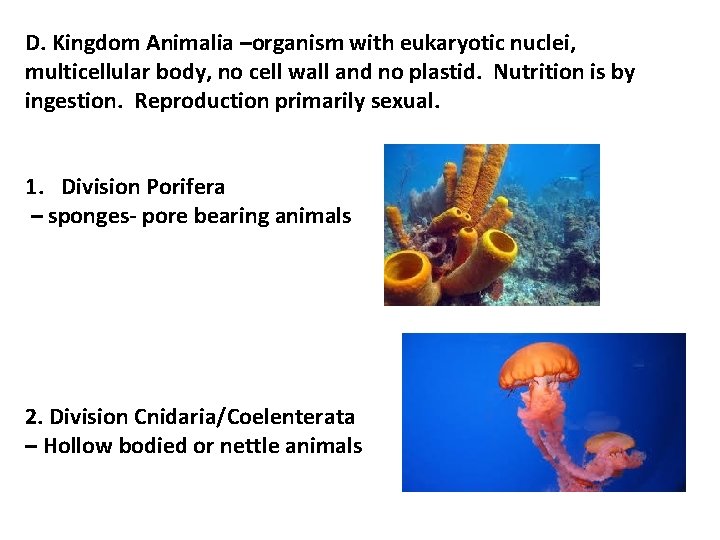
D. Kingdom Animalia –organism with eukaryotic nuclei, multicellular body, no cell wall and no plastid. Nutrition is by ingestion. Reproduction primarily sexual. 1. Division Porifera – sponges- pore bearing animals 2. Division Cnidaria/Coelenterata – Hollow bodied or nettle animals
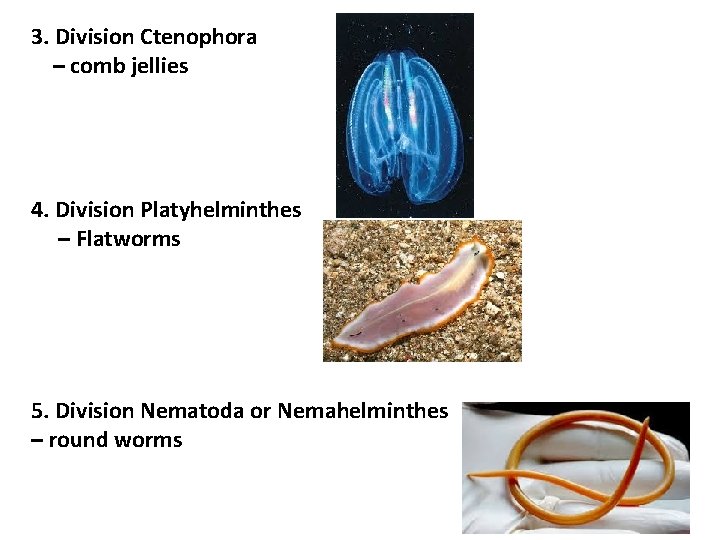
3. Division Ctenophora – comb jellies 4. Division Platyhelminthes – Flatworms 5. Division Nematoda or Nemahelminthes – round worms
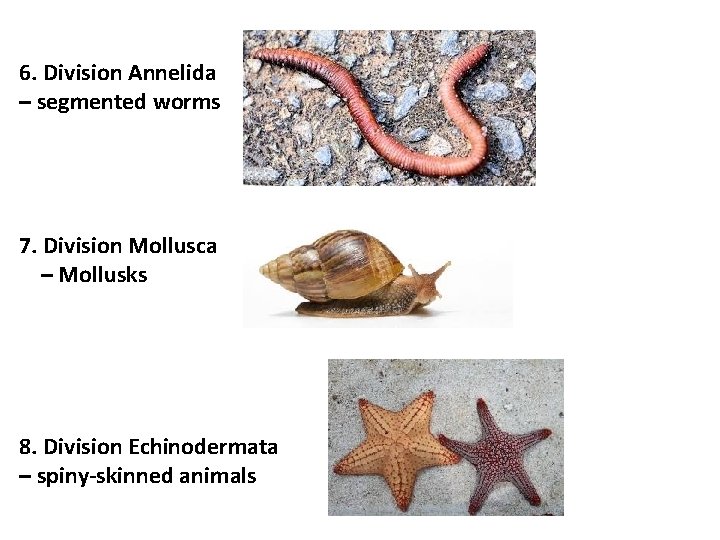
6. Division Annelida – segmented worms 7. Division Mollusca – Mollusks 8. Division Echinodermata – spiny-skinned animals
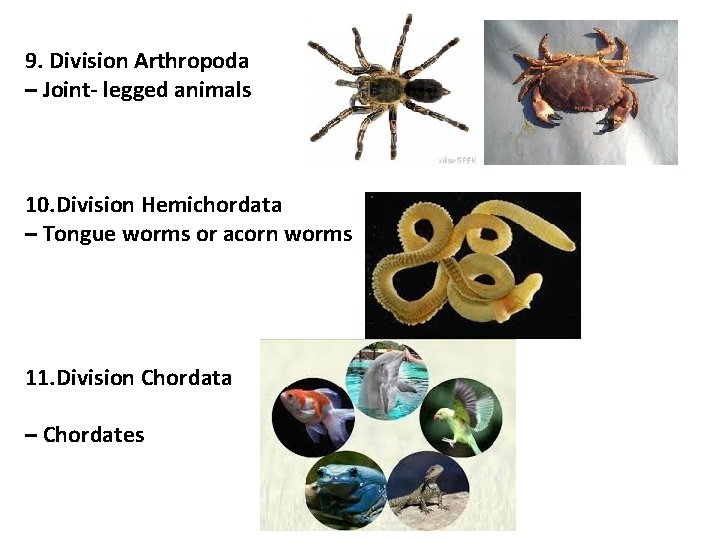
9. Division Arthropoda – Joint- legged animals 10. Division Hemichordata – Tongue worms or acorn worms 11. Division Chordata – Chordates
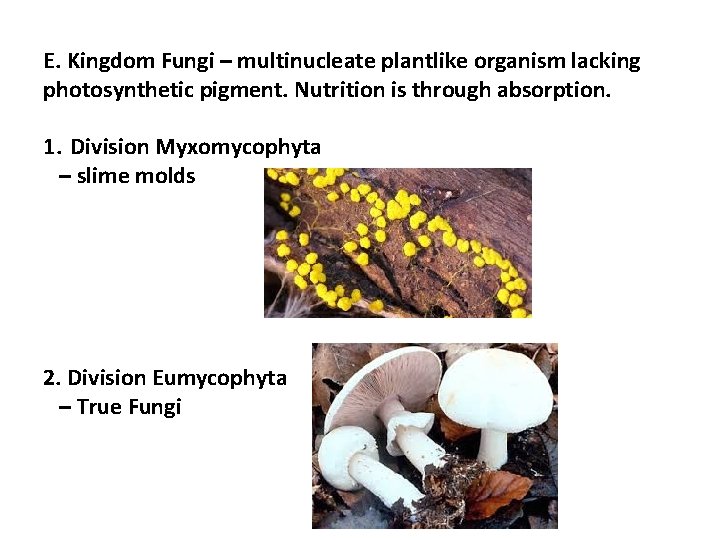
E. Kingdom Fungi – multinucleate plantlike organism lacking photosynthetic pigment. Nutrition is through absorption. 1. Division Myxomycophyta – slime molds 2. Division Eumycophyta – True Fungi
Kingdom Phylum Class Order Family Genus Species
Application Template 3: Sketch 1 representative per division based on the 5 Kingdoms