
Lesson 3 ENERGY TRANSFORMATIONS KINETIC VS POTENTIAL ENERGY


- Slides: 19
Lesson 3 ENERGY TRANSFORMATIONS KINETIC VS. POTENTIAL ENERGY
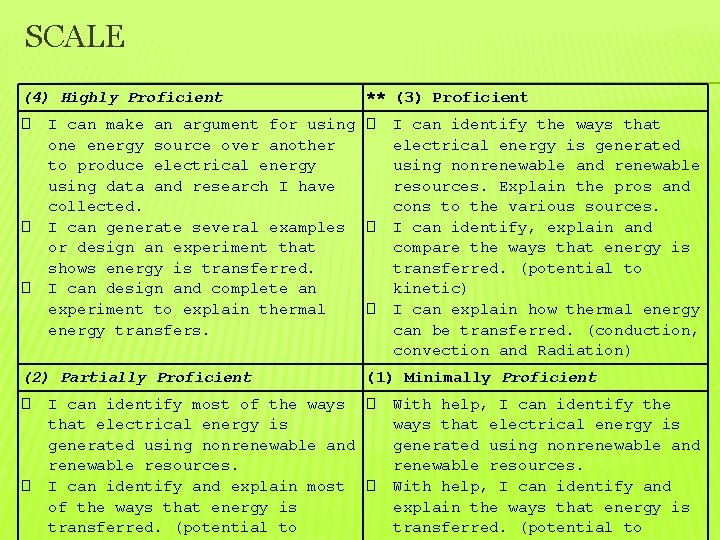
SCALE (4) Highly Proficient � � � I can make an argument for using � one energy source over another to produce electrical energy using data and research I have collected. I can generate several examples � or design an experiment that shows energy is transferred. I can design and complete an experiment to explain thermal � energy transfers. (2) Partially Proficient � � ** (3) Proficient I can identify the ways that electrical energy is generated using nonrenewable and renewable resources. Explain the pros and cons to the various sources. I can identify, explain and compare the ways that energy is transferred. (potential to kinetic) I can explain how thermal energy can be transferred. (conduction, convection and Radiation) (1) Minimally Proficient I can identify most of the ways � that electrical energy is generated using nonrenewable and renewable resources. I can identify and explain most � of the ways that energy is transferred. (potential to With help, I can identify the ways that electrical energy is generated using nonrenewable and renewable resources. With help, I can identify and explain the ways that energy is transferred. (potential to
NOTES: � The underlined information is the information that you should record in your notebook.
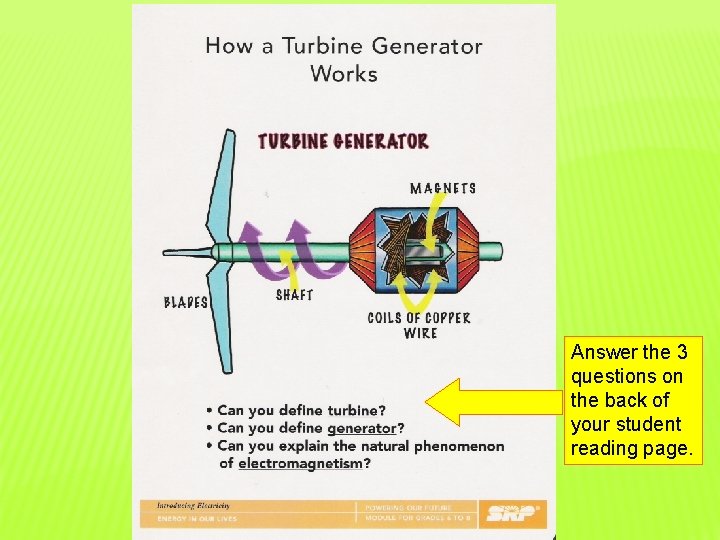
ENERGY � Turbine Generators spin to cause copper wire and magnets to create electricity. � Water, wind and steam are what spin a turbine. � Turbine – A machine with blades that spin
Answer the 3 questions on the back of your student reading page.
LAW OF CONSERVATION OF ENERGY � � � Energy can be neither created nor destroyed. Energy can only be transformed from one form to another Energy is constant Law of Thermodynamics Total amount of energy in the universe is constant. Energy can be neither created nor destroyed, but it can be changed from one form to another
ENERGY � The ability to do work or create change � Energy can be potential (stored) or kinetic � Potential (stored) energy: energy that is stored in some way � Kinetic energy: energy of motion, involves movement of some kind
POTENTIAL ENERGIES � Write the definition (Hint: it is underlined) � Write 1 example
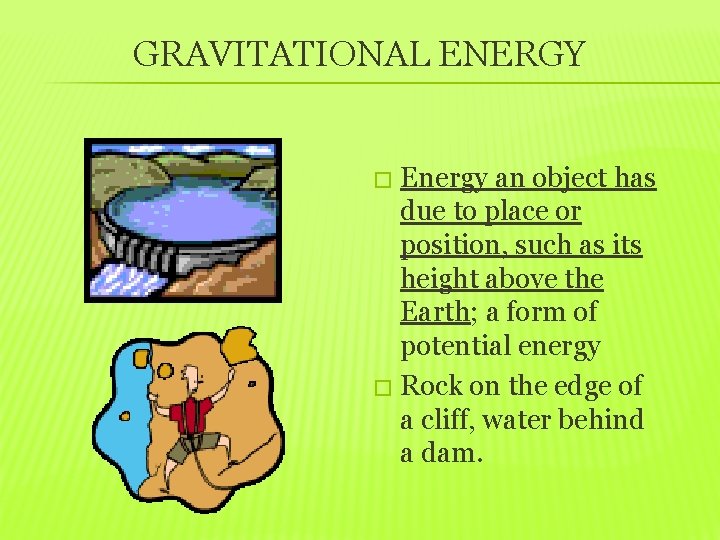
GRAVITATIONAL ENERGY Energy an object has due to place or position, such as its height above the Earth; a form of potential energy � Rock on the edge of a cliff, water behind a dam. �
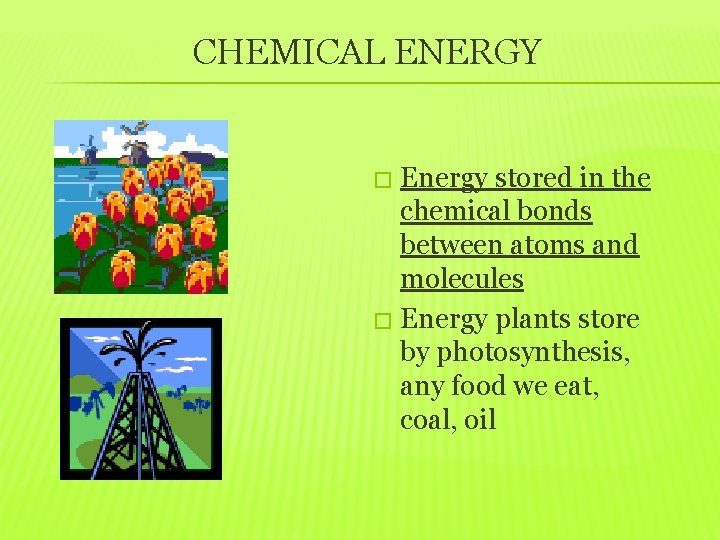
CHEMICAL ENERGY Energy stored in the chemical bonds between atoms and molecules � Energy plants store by photosynthesis, any food we eat, coal, oil �
NUCLEAR ENERGY Energy stored in the nucleus of an atom; the energy that holds an atom together; sometimes called atomic energy � Uranium in a nuclear power plant and plutonium in a bomb �
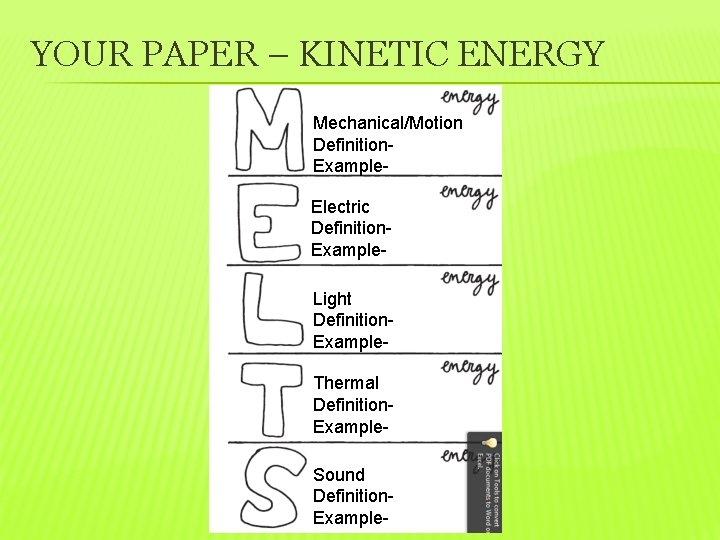
YOUR PAPER – KINETIC ENERGY Mechanical/Motion Definition. Example. Electric Definition. Example. Light Definition. Example. Thermal Definition. Example. Sound Definition. Example-
MECHANICAL (MOTION) ENERGY The energy of an object or substance in movement; sometimes just called kinetic energy � Person dancing, car in motion, a thrown ball, flowing water. �
ELECTRIC ENERGY The energy of electrons moving or flowing within a substance � Power lines or home wiring, electricity from a battery �
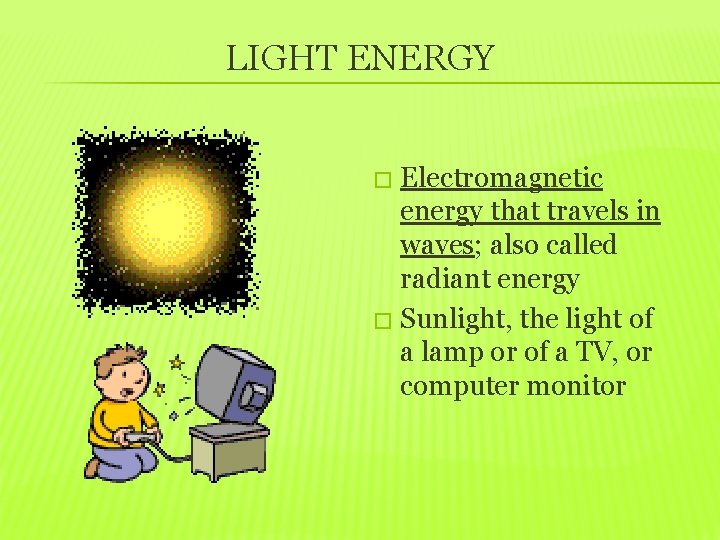
LIGHT ENERGY Electromagnetic energy that travels in waves; also called radiant energy � Sunlight, the light of a lamp or of a TV, or computer monitor �
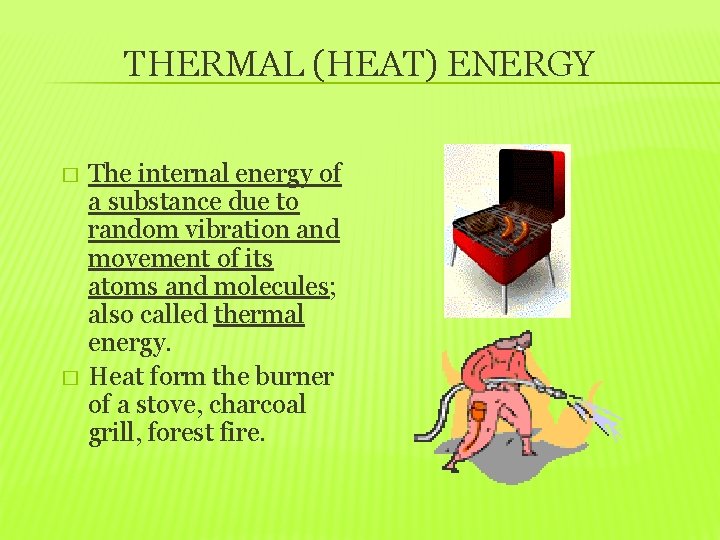
THERMAL (HEAT) ENERGY � � The internal energy of a substance due to random vibration and movement of its atoms and molecules; also called thermal energy. Heat form the burner of a stove, charcoal grill, forest fire.
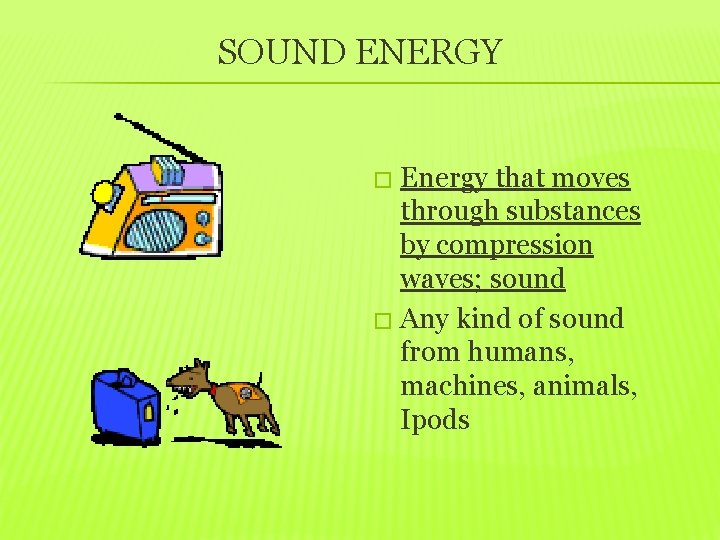
SOUND ENERGY Energy that moves through substances by compression waves; sound � Any kind of sound from humans, machines, animals, Ipods �
SCALE (4) Highly Proficient � � � I can make an argument for using � one energy source over another to produce electrical energy using data and research I have collected. I can generate several examples � or design an experiment that shows energy is transferred. I can design and complete an experiment to explain thermal � energy transfers. (2) Partially Proficient � � ** (3) Proficient I can identify the ways that electrical energy is generated using nonrenewable and renewable resources. Explain the pros and cons to the various sources. I can identify, explain and compare the ways that energy is transferred. (potential to kinetic) I can explain how thermal energy can be transferred. (conduction, convection and Radiation) (1) Minimally Proficient I can identify most of the ways � that electrical energy is generated using nonrenewable and renewable resources. I can identify and explain most � of the ways that energy is transferred. (potential to With help, I can identify the ways that electrical energy is generated using nonrenewable and renewable resources. With help, I can identify and explain the ways that energy is transferred. (potential to
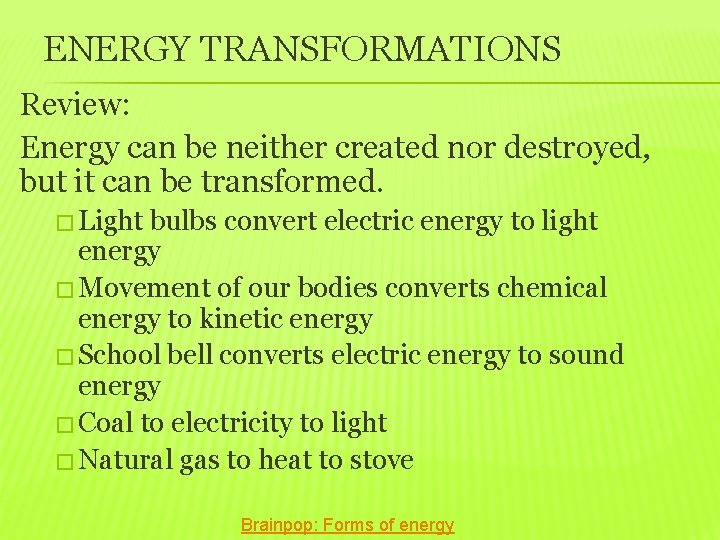
ENERGY TRANSFORMATIONS Review: Energy can be neither created nor destroyed, but it can be transformed. � Light bulbs convert electric energy to light energy � Movement of our bodies converts chemical energy to kinetic energy � School bell converts electric energy to sound energy � Coal to electricity to light � Natural gas to heat to stove Brainpop: Forms of energy