
Lesson 3 Creating an Alternate Ending to a
- Slides: 35
Lesson 3 Creating an Alternate Ending to a Story 1
As you become more experienced readers and writers, you develop more sophisticated abilities to construct meaning by analyzing and evaluating literature. 2
As you become more experienced readers and writers, you develop more sophisticated abilities to construct meaning by analyzing and evaluating literature. One way to analyze a story is to think of how the story would change if you changed certain aspects of the story. 3
As you become more experienced readers and writers, you develop more sophisticated abilities to construct meaning by analyzing and evaluating literature. One way to analyze a story is to think of how the story would change if you changed certain aspects of the story. For example, you might consider an alternative ending for the story. 4
Changing the ending will require you to write a NEW SCENE. 5
Changing the ending will require you to write a NEW SCENE. Your new scene can include several things that will change the ending of the story. 6
CHANGE A DECISION 7
CHANGE A DECISION One of the best ways to change a story is by simply changing a decision that a character struggled with. 8
CHANGE A DECISION One of the best ways to change a story is by simply changing a decision that a character struggled with. This could be anything from proclaiming eternal love to someone or wishing to banish someone to Siberia! 9
CHANGE A DECISION One of the best ways to change a story is by simply changing a decision that a character struggled with. This could be anything from proclaiming eternal love to someone or wishing to banish someone to Siberia! The more important the decision, the more drastic the change should be. 10
CHANGE A DECISION One of the best ways to change a story is by simply changing a decision that a character struggled with. This could be anything from proclaiming eternal love to someone or wishing to banish someone to Siberia! The more important the decision, the more drastic the change will be. You could even change a very minor decision so that it snowballs into a completely different ending. 11
CHANGE AN EVENT 12
CHANGE AN EVENT Another way to change the ending is to change the outcome of an important event. 13
CHANGE AN EVENT Another way to change the ending is to change the outcome of an important event. For example, if a particular character is stressed out, have your story put more pressure on that character to have him or her react in a more drastic manner. Maybe the character won't keep his or her cool or wits in your ending. 14
CHANGE AN EVENT Another way to change the ending is to change the outcome of an important event. For example, if a particular character is stressed out, have your story put more pressure on that character to have him or her react in a more drastic manner. Maybe the character won't keep his or her cool or wits in your ending. Or, if the character didn't take something very well in the original version of the story, consider making him or her take it very well in your version. 15
CHANGE A REALIZATION (EPIPHANY) 16
CHANGE A REALIZATION (EPIPHANY) Yet another way to alter the ending of a story is to have the characters realize something they might not even have realized at all in the original story. 17
CHANGE A REALIZATION (EPIPHANY) Yet another way to alter the ending of a story is to have the characters realize something they might not even have realized at all in the original story. Epiphanies will often have characters change the way they think about something and will affect the ending. (an epiphany is a discovery that someone makes about himself or herself. ) 18
ADD A NEW CHARACTER 19
ADD A NEW CHARACTER Still another way to create an alternate ending is to add a new setting, event, and a new character to your new scene. 20
ADD A NEW CHARACTER Still another way to create an alternate ending is to add a new setting, event, and a new character to your new scene. The things you can do with this are unlimited! 21
ADD A NEW CHARACTER Still another way to create an alternate ending is to add a new setting, event, and a new character to your new scene. The things you can do with this are unlimited! You can even shed new light on a character or event or explain something that wasn’t even talked about in the original story. . 22
The first step toward writing an original ending to a story is to read a passage. 23
The first step toward writing an original ending to a story is to read a passage. The passage that you will read is from the novel, The Joy Luck Club. 24
We will begin by reading, an excerpt from the chapter titled, “Two Kinds”, specifically lines 233 through 307. 25
After reading lines 233 through 307 in the chapter “Two Kinds, ” write a new ending for the excerpt. Your new ending should show a major character changing as a result of a series of events. You can rewrite the ending starting from any point in the selection. You need to add dialogue to your story and make your ending as creative as possible. 26
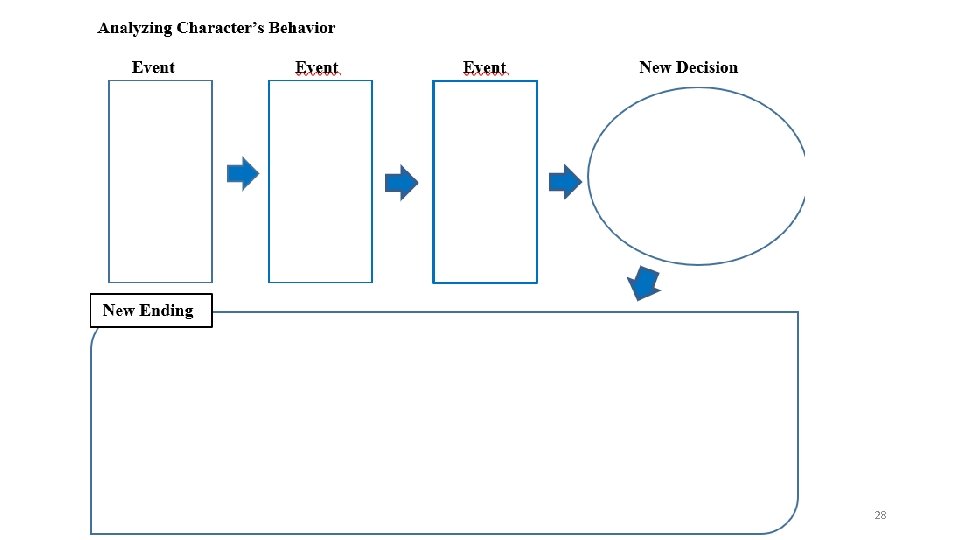
The organizer that you will use to pre-write is on the next slide. 27
28
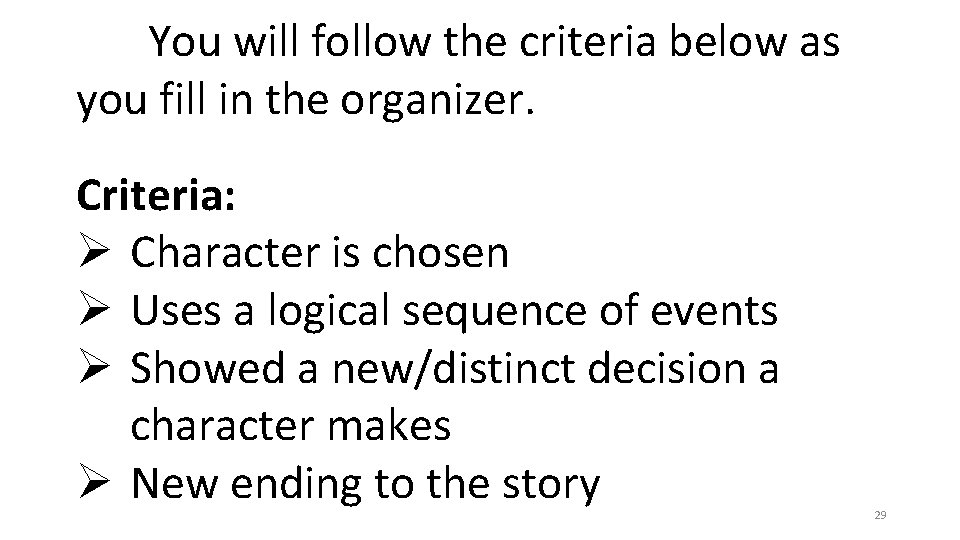
You will follow the criteria below as you fill in the organizer. Criteria: Ø Character is chosen Ø Uses a logical sequence of events Ø Showed a new/distinct decision a character makes Ø New ending to the story 29
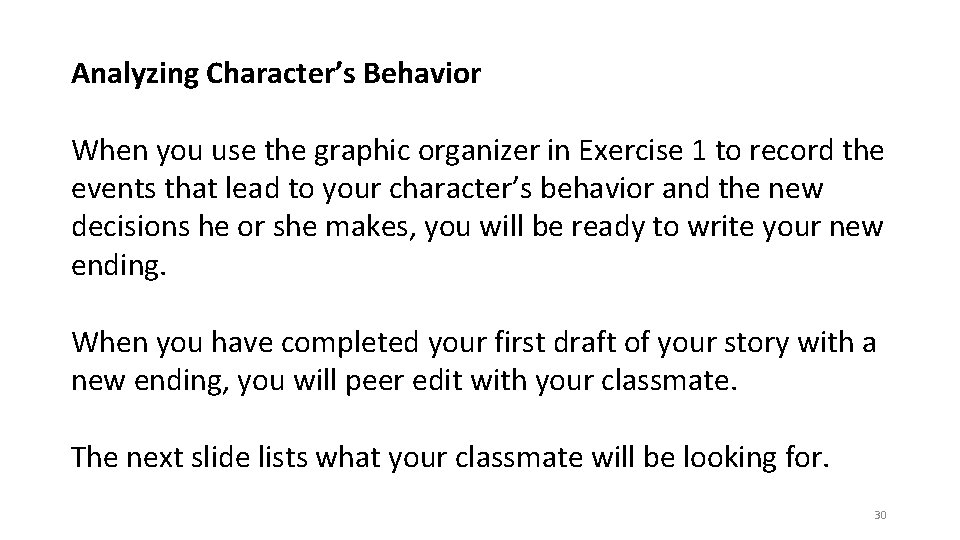
Analyzing Character’s Behavior When you use the graphic organizer in Exercise 1 to record the events that lead to your character’s behavior and the new decisions he or she makes, you will be ready to write your new ending. When you have completed your first draft of your story with a new ending, you will peer edit with your classmate. The next slide lists what your classmate will be looking for. 30
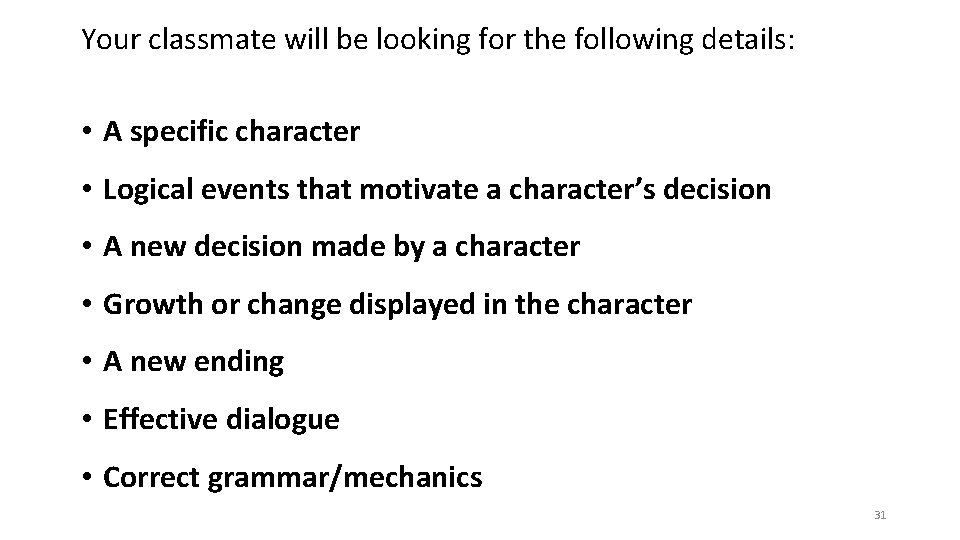
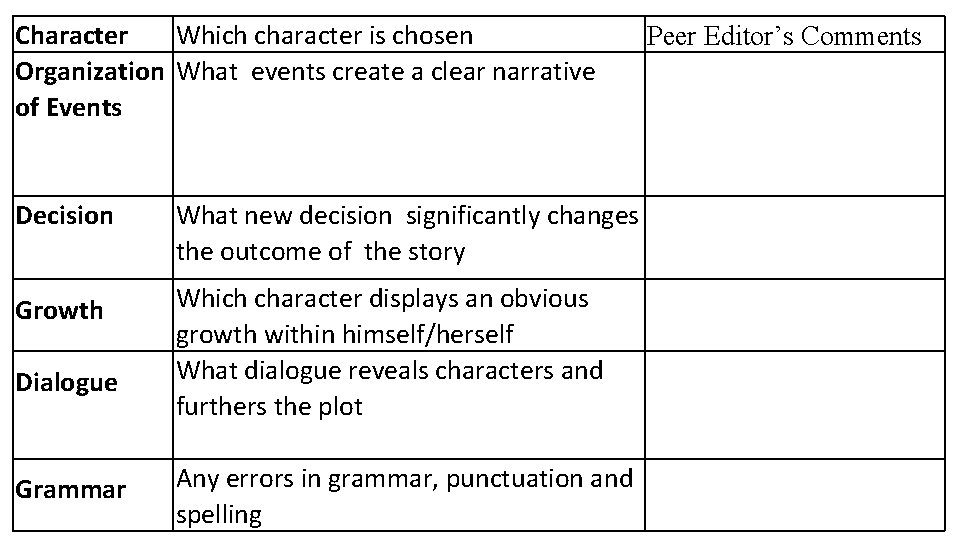
Your classmate will be looking for the following details: • A specific character • Logical events that motivate a character’s decision • A new decision made by a character • Growth or change displayed in the character • A new ending • Effective dialogue • Correct grammar/mechanics 31
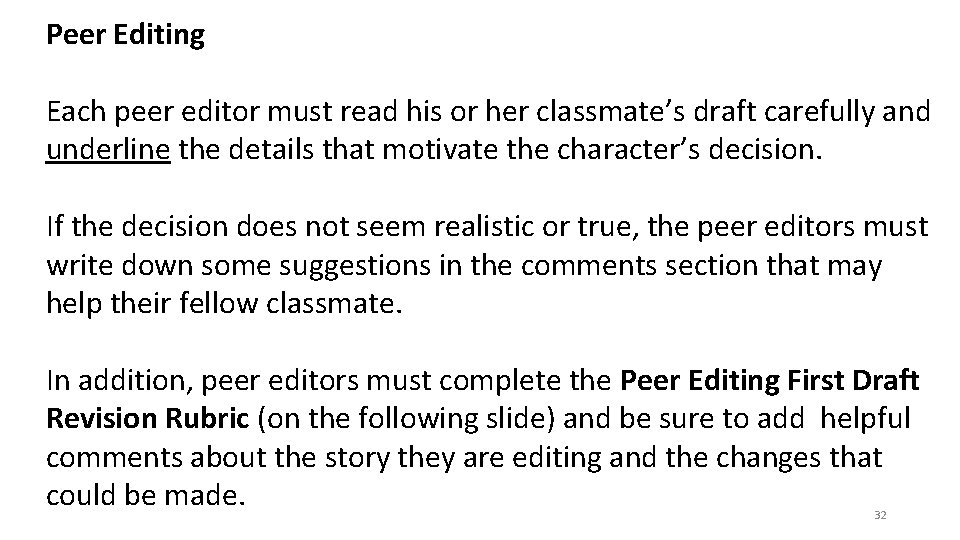
Peer Editing Each peer editor must read his or her classmate’s draft carefully and underline the details that motivate the character’s decision. If the decision does not seem realistic or true, the peer editors must write down some suggestions in the comments section that may help their fellow classmate. In addition, peer editors must complete the Peer Editing First Draft Revision Rubric (on the following slide) and be sure to add helpful comments about the story they are editing and the changes that could be made. 32
Character Which character is chosen Organization What events create a clear narrative of Events Decision What new decision significantly changes the outcome of the story Growth Which character displays an obvious growth within himself/herself What dialogue reveals characters and furthers the plot Dialogue Grammar Any errors in grammar, punctuation and spelling Peer Editor’s Comments 33
You are now ready to read the excerpt and write your new ending to “Two Kinds. ” The directions for Exercise 1 are on the next slide. Have fun and let the creative juices flow! 34
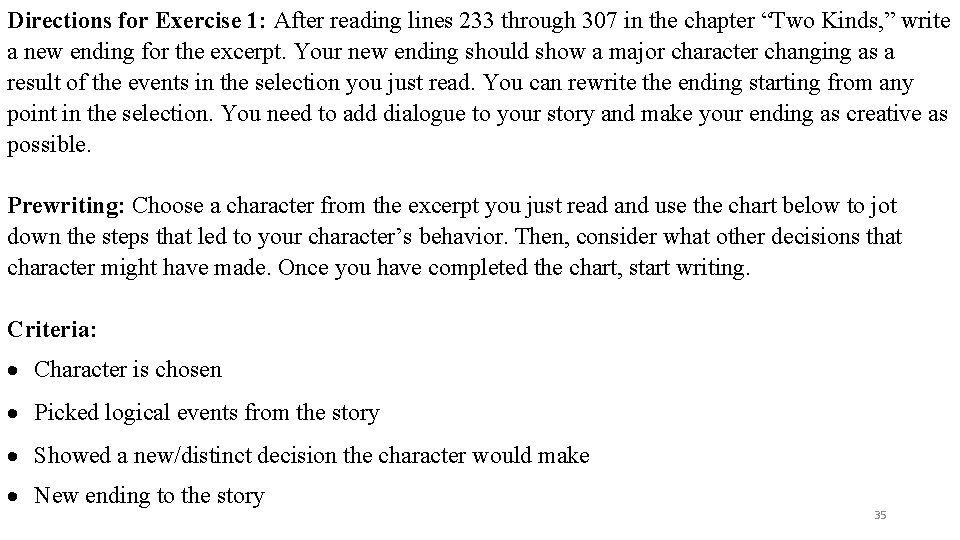
Directions for Exercise 1: After reading lines 233 through 307 in the chapter “Two Kinds, ” write a new ending for the excerpt. Your new ending should show a major character changing as a result of the events in the selection you just read. You can rewrite the ending starting from any point in the selection. You need to add dialogue to your story and make your ending as creative as possible. Prewriting: Choose a character from the excerpt you just read and use the chart below to jot down the steps that led to your character’s behavior. Then, consider what other decisions that character might have made. Once you have completed the chart, start writing. Criteria: Character is chosen Picked logical events from the story Showed a new/distinct decision the character would make New ending to the story 35