
Lesson 3 Basic RSA Principles 3 1 Learning
Lesson 3 | Basic RSA Principles 3 -1
Learning Outcomes • Define RSAs and explain how they contribute to road safety. • Describe the composition and purpose of an RSA team. • Identify the advantages of RSAs. 3 -2
Learning Outcomes • Describe the difference between in-service RSAs and design-stage RSAs. • Identify resources available to facilitate RSAs. 3 -3
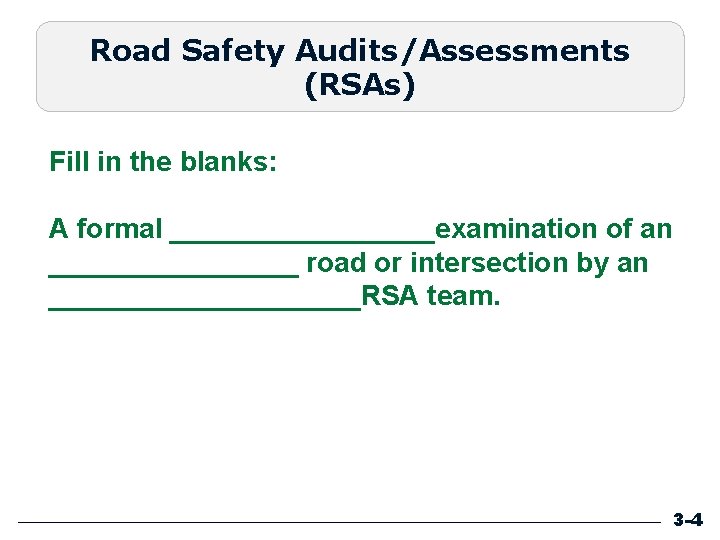
Road Safety Audits/Assessments (RSAs) Fill in the blanks: A formal _________examination of an ________ road or intersection by an __________RSA team. 3 -4
RSAs What elements of the road may present a safety issue: to what extent, to which road users, and under what circumstances? What engineering, enforcement, and/or education solutions exist to eliminate or mitigate the identified safety issues, both in the short and long term? 3 -5

RSAs “RSAs are a proven way to review just how safe our local roads are and can be a valuable tool for local government road professionals in making their roads safer. ” Tony Giancola Former Executive Director, NACE 3 -6
Traditional Safety Reviews Typically: • Reactive in nature • Not performed by a multi-disciplinary or independent safety review team • Concentrate on motorized traffic only • Do not consider human factors • Do not include a formal report • Do not require a formal response 3 -7
RSAs • • • Proactive approach Performed at any stage in a road’s lifecycle Independent, multidisciplinary team Look at ALL road users Consider 3 E’s (Engineering, Enforcement and Education) solutions • Comprehensive step-by-step process – includes a formal report and project owner response • Identify issues AND solutions 3 -8
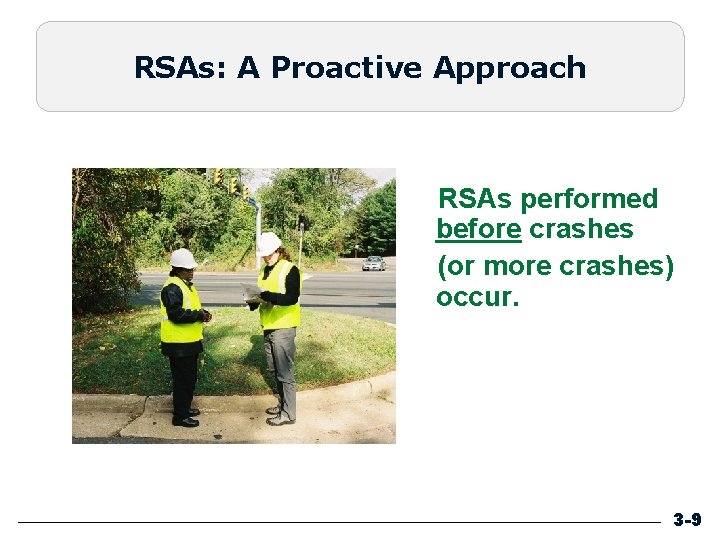
RSAs: A Proactive Approach RSAs performed before crashes (or more crashes) occur. 3 -9
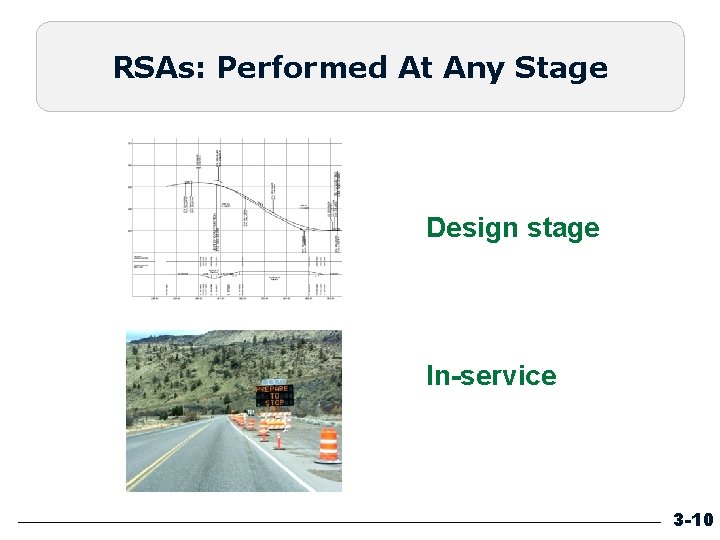
RSAs: Performed At Any Stage Design stage In-service 3 -10
![RSAs: Design Stage “I believe that [RSAs] are an excellent tool for evaluating and](http://slidetodoc.com/presentation_image_h2/f10a21642e556dafc9d444cab0db8d07/image-11.jpg "RSAs: Design Stage “I believe that [RSAs] are an excellent tool for evaluating and")
RSAs: Design Stage “I believe that [RSAs] are an excellent tool for evaluating and improving the safety of our highway system. In the projects we've done, we've seen the most benefit in doing an RSA during conceptual and preliminary design, when any improvements can be incorporated into our project estimates and final design. “ Beth Wright District Engineer Missouri DOT 3 -11
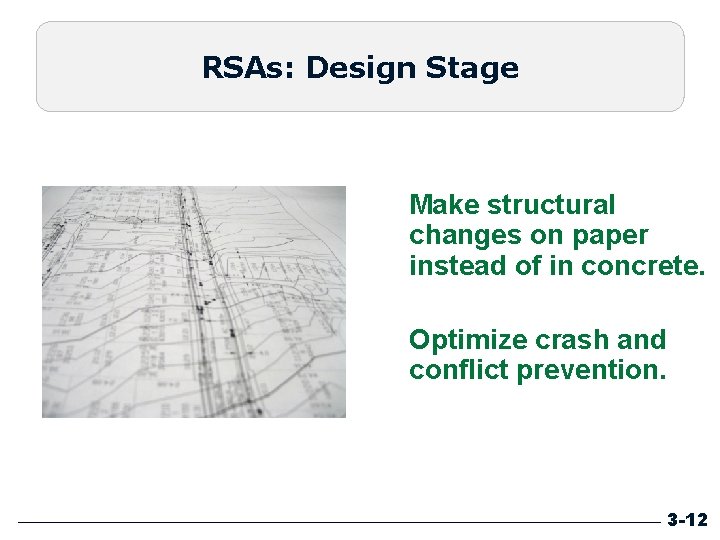
RSAs: Design Stage Make structural changes on paper instead of in concrete. Optimize crash and conflict prevention. 3 -12
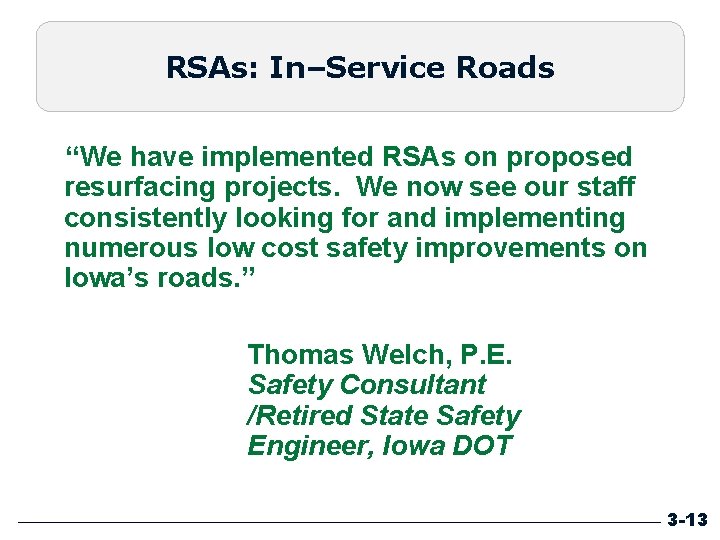
RSAs: In–Service Roads “We have implemented RSAs on proposed resurfacing projects. We now see our staff consistently looking for and implementing numerous low cost safety improvements on Iowa’s roads. ” Thomas Welch, P. E. Safety Consultant /Retired State Safety Engineer, Iowa DOT 3 -13
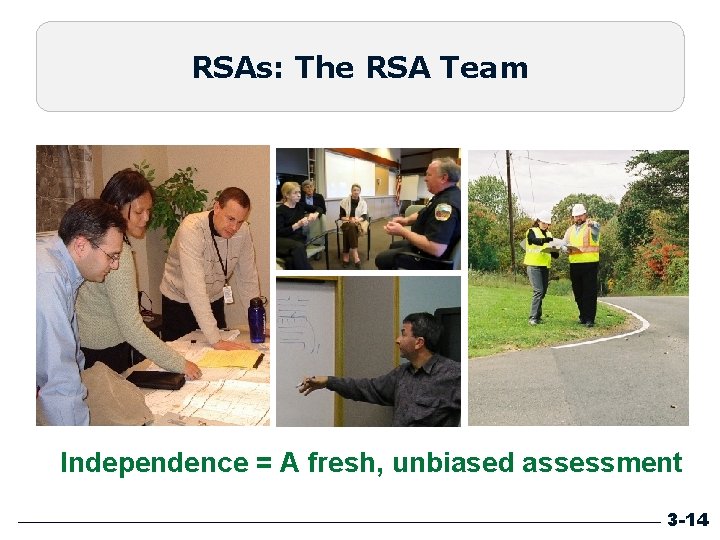
RSAs: The RSA Team Independence = A fresh, unbiased assessment 3 -14
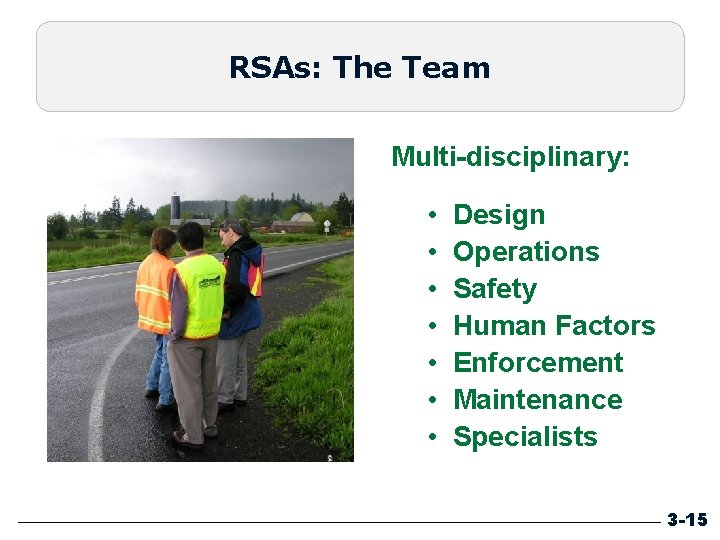
RSAs: The Team Multi-disciplinary: • • Design Operations Safety Human Factors Enforcement Maintenance Specialists 3 -15
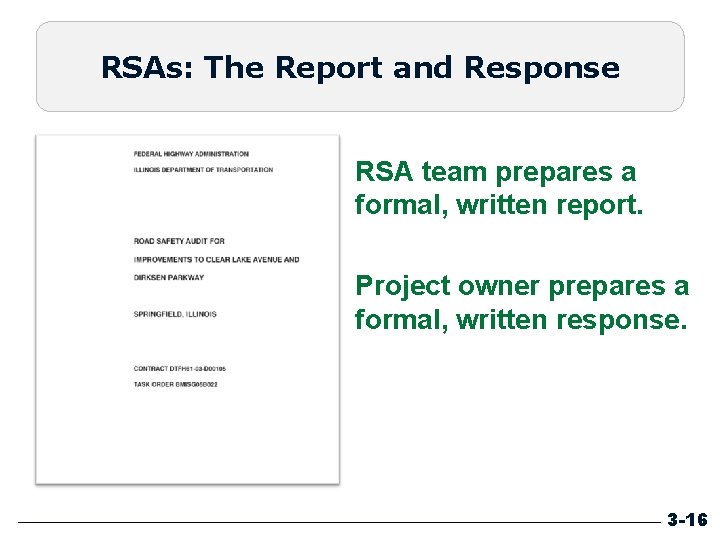
RSAs: The Report and Response RSA team prepares a formal, written report. Project owner prepares a formal, written response. 3 -16
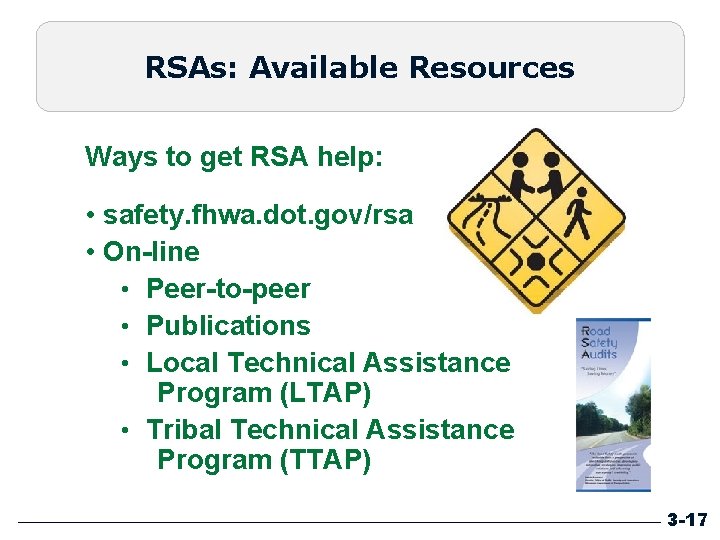
RSAs: Available Resources Ways to get RSA help: • safety. fhwa. dot. gov/rsa • On-line • Peer-to-peer • Publications • Local Technical Assistance Program (LTAP) • Tribal Technical Assistance Program (TTAP) 3 -17
Review: Learning Outcomes • Define RSAs and explain how they contribute to road safety. • Describe the composition and purpose of an RSA team. • Identify the advantages of RSAs. 3 -18
Review: Learning Outcomes • Describe the difference between in-service RSAs and design-stage RSAs. • Identify resources available to facilitate RSAs. 3 -19

Road Safety Questions? 3 -20
- Slides: 20