
Lesson 3 A Time of Conflict American Ships
- Slides: 10
Lesson 3: A Time of Conflict
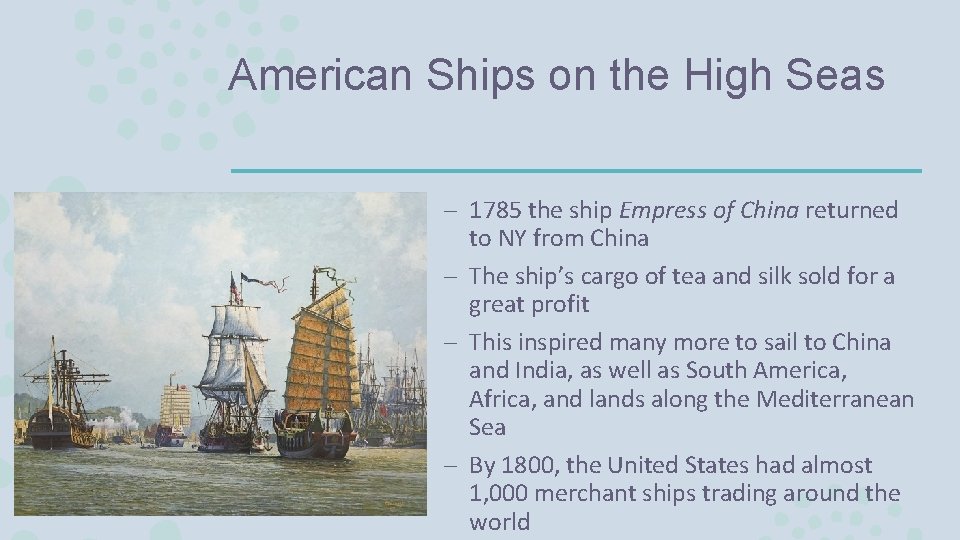
American Ships on the High Seas – 1785 the ship Empress of China returned to NY from China – The ship’s cargo of tea and silk sold for a great profit – This inspired many more to sail to China and India, as well as South America, Africa, and lands along the Mediterranean Sea – By 1800, the United States had almost 1, 000 merchant ships trading around the world
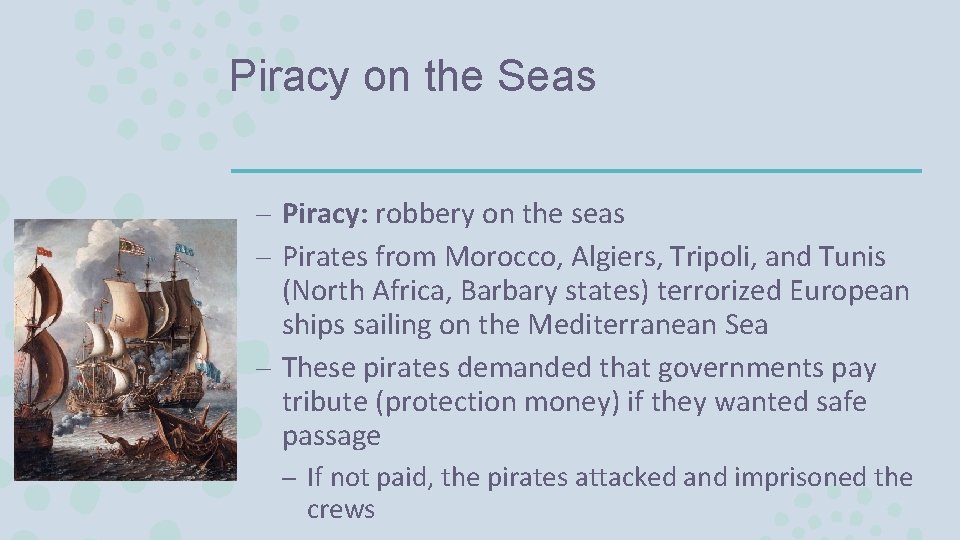
Piracy on the Seas – Piracy: robbery on the seas – Pirates from Morocco, Algiers, Tripoli, and Tunis (North Africa, Barbary states) terrorized European ships sailing on the Mediterranean Sea – These pirates demanded that governments pay tribute (protection money) if they wanted safe passage – If not paid, the pirates attacked and imprisoned the crews
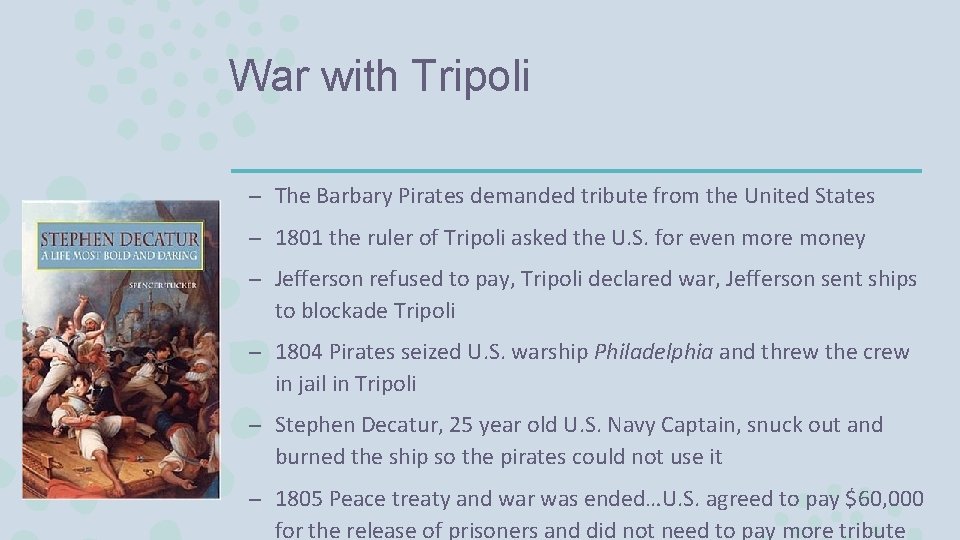
War with Tripoli – The Barbary Pirates demanded tribute from the United States – 1801 the ruler of Tripoli asked the U. S. for even more money – Jefferson refused to pay, Tripoli declared war, Jefferson sent ships to blockade Tripoli – 1804 Pirates seized U. S. warship Philadelphia and threw the crew in jail in Tripoli – Stephen Decatur, 25 year old U. S. Navy Captain, snuck out and burned the ship so the pirates could not use it – 1805 Peace treaty and war was ended…U. S. agreed to pay $60, 000 for the release of prisoners and did not need to pay more tribute
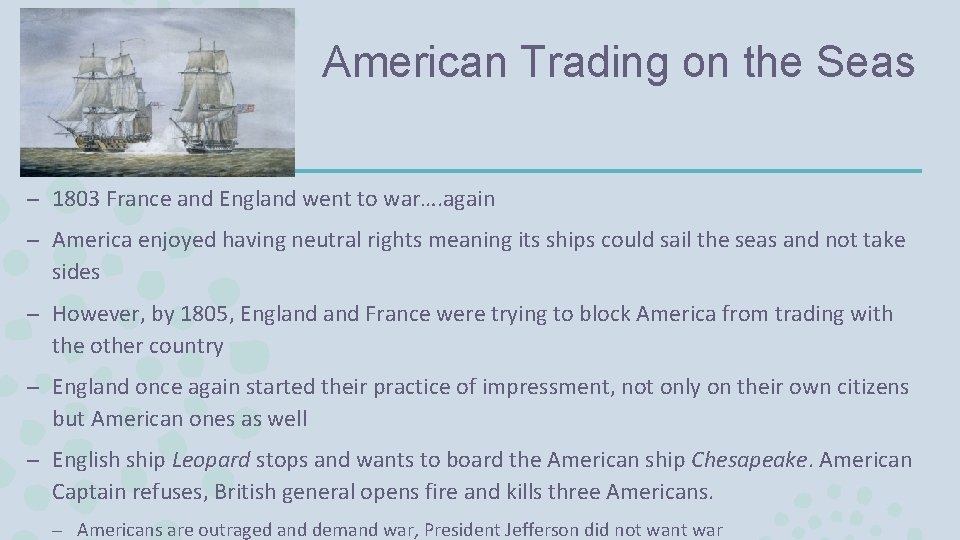
American Trading on the Seas – 1803 France and England went to war…. again – America enjoyed having neutral rights meaning its ships could sail the seas and not take sides – However, by 1805, England France were trying to block America from trading with the other country – England once again started their practice of impressment, not only on their own citizens but American ones as well – English ship Leopard stops and wants to board the American ship Chesapeake. American Captain refuses, British general opens fire and kills three Americans. – Americans are outraged and demand war, President Jefferson did not want war
Embargo Act – Passed December 1807 – Embargo- prohibits trade with another country – Was passed to retaliate against England for attacked the Chesapeake – Embargo Act was a disaster – It prevented trade with all foreign countries – No ships could leave the harbor, unemployment rose in New England – The South lacked a market for its cotton and tobacco – England just went elsewhere to get their goods – March 1809 the act was repealed and replaced with Nonintercourse Act (prohibited trade with just England France)
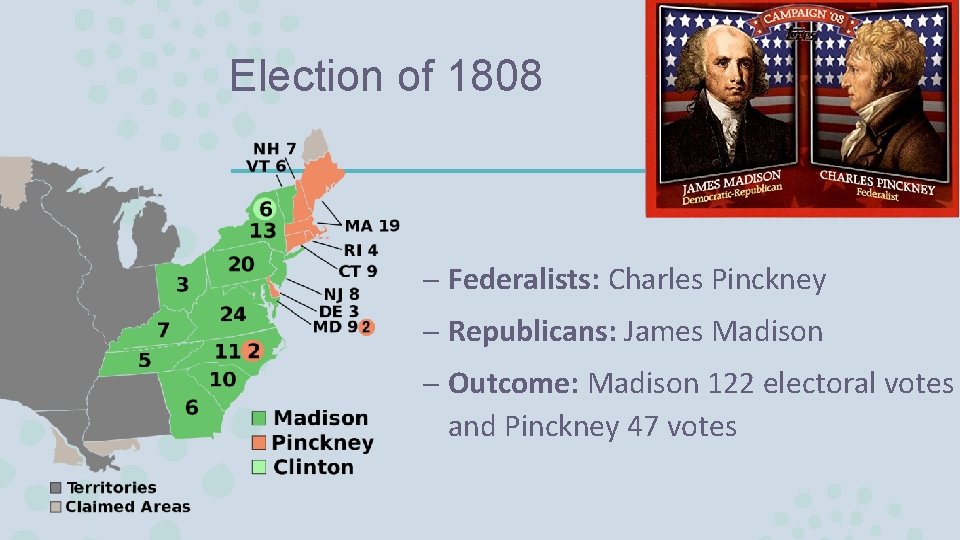
Election of 1808 – Federalists: Charles Pinckney – Republicans: James Madison – Outcome: Madison 122 electoral votes and Pinckney 47 votes
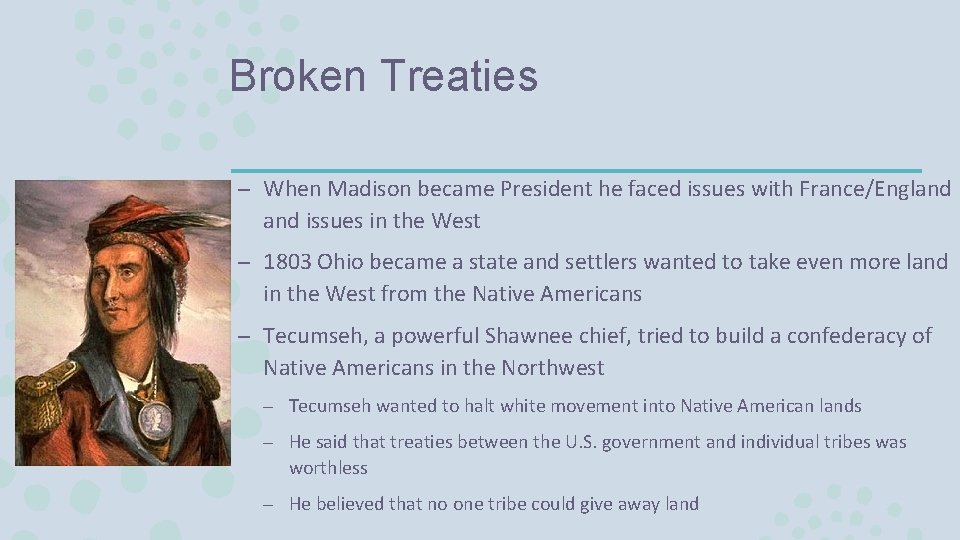
Broken Treaties – When Madison became President he faced issues with France/England issues in the West – 1803 Ohio became a state and settlers wanted to take even more land in the West from the Native Americans – Tecumseh, a powerful Shawnee chief, tried to build a confederacy of Native Americans in the Northwest – Tecumseh wanted to halt white movement into Native American lands – He said that treaties between the U. S. government and individual tribes was worthless – He believed that no one tribe could give away land
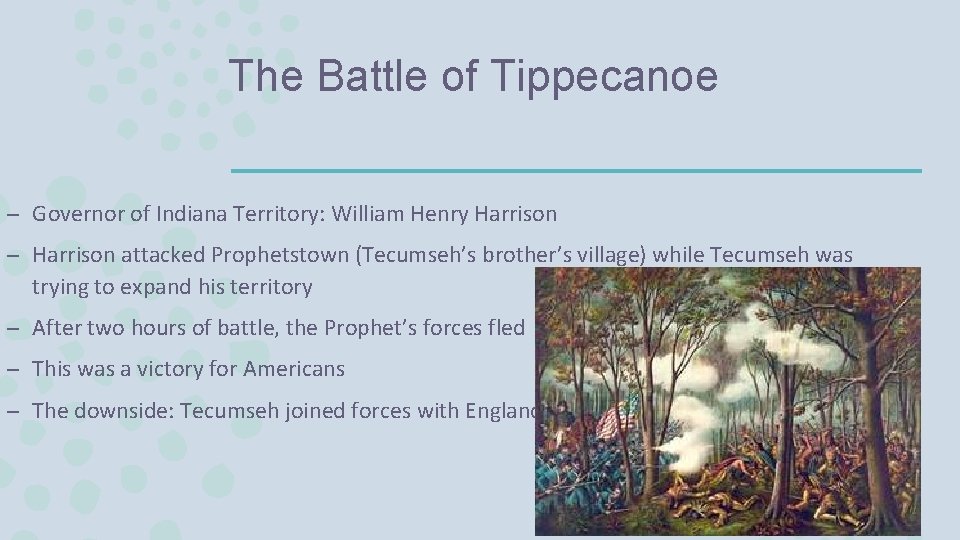
The Battle of Tippecanoe – Governor of Indiana Territory: William Henry Harrison – Harrison attacked Prophetstown (Tecumseh’s brother’s village) while Tecumseh was trying to expand his territory – After two hours of battle, the Prophet’s forces fled – This was a victory for Americans – The downside: Tecumseh joined forces with England
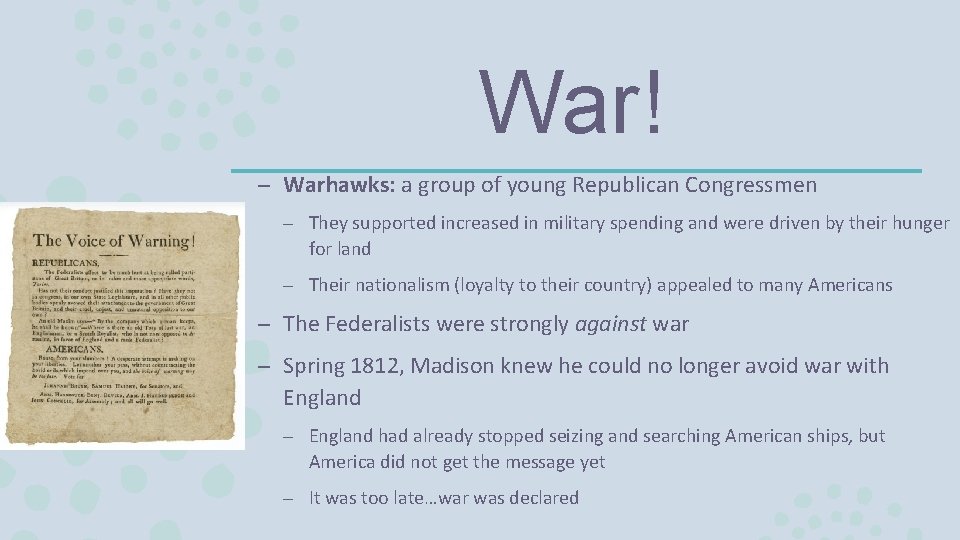
War! – Warhawks: a group of young Republican Congressmen – They supported increased in military spending and were driven by their hunger for land – Their nationalism (loyalty to their country) appealed to many Americans – The Federalists were strongly against war – Spring 1812, Madison knew he could no longer avoid war with England – England had already stopped seizing and searching American ships, but America did not get the message yet – It was too late…war was declared