
Lesson 28 102417 SWBAT describe factors that affect
Lesson 28 10/24/17 SWBAT describe factors that affect the pace of evolution Do Now: MC Questions

Do Now Key 1. B 2. D 3. A

Announcements • Make-up Lab today at lunch • Unit 2 Exam (Ch. 3, 4, and 5) on Monday, 10/30
Jellybean Evolution Lab
Vocab: Speciation: the evolutionary process by which new species arise. Adaptive radiation: Process in which organisms diversify rapidly into a multitude of new forms
Geographic isolation • A portion of individuals from a larger population may colonize a new area of habitat that is physically separated from that offset of the rest of the population. • Leads to speciation
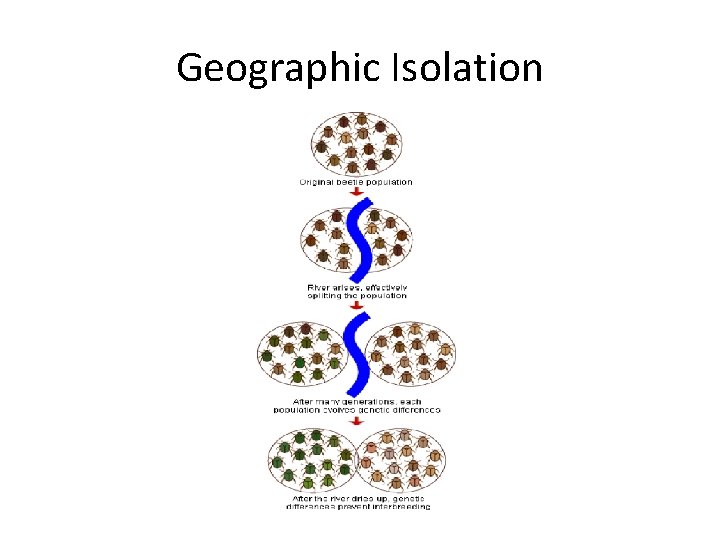
Geographic Isolation
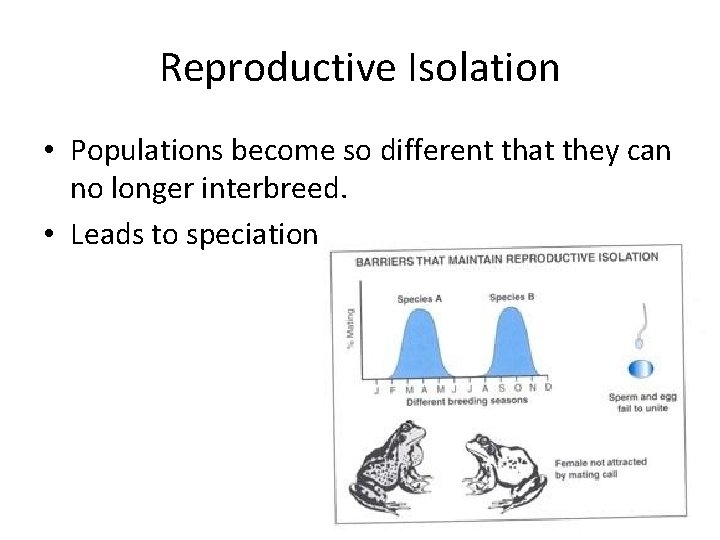
Reproductive Isolation • Populations become so different that they can no longer interbreed. • Leads to speciation
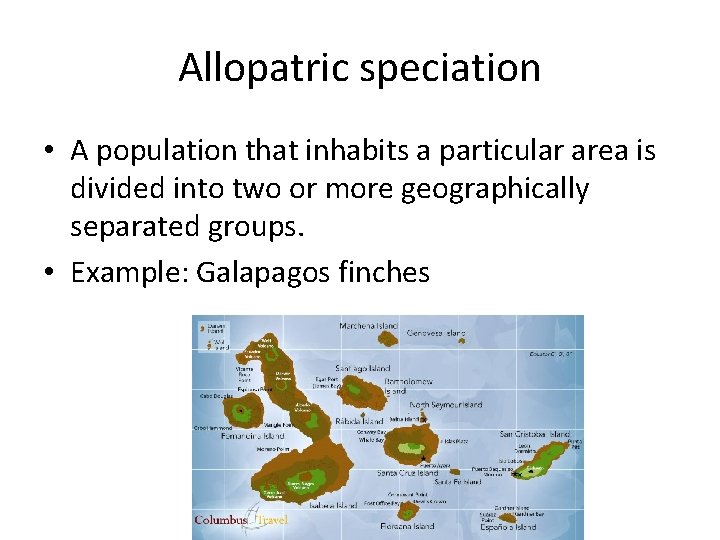
Allopatric speciation • A population that inhabits a particular area is divided into two or more geographically separated groups. • Example: Galapagos finches
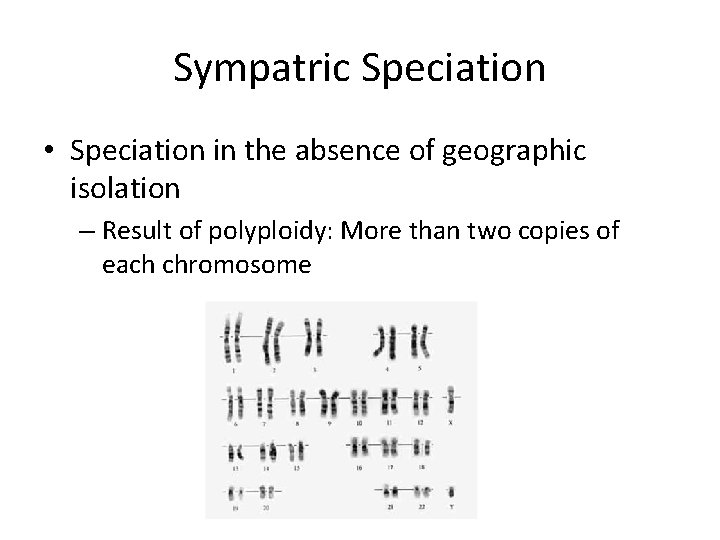
Sympatric Speciation • Speciation in the absence of geographic isolation – Result of polyploidy: More than two copies of each chromosome
Pace of evolution • Successful Adaptation: – Rate of environmental change: Lower rate of change higher chance of adaptability – Genetic Variation: Higher variation higher likelihood some individuals will be well suited to the new environment – Population size: Small population beneficial mutation spreads quickly – Generation time: Shorter time to reproductive maturity Evolve faster
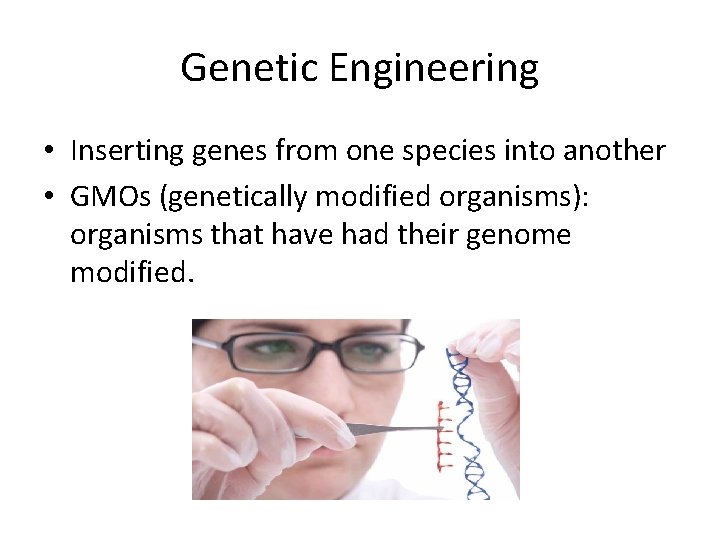
Genetic Engineering • Inserting genes from one species into another • GMOs (genetically modified organisms): organisms that have had their genome modified.
Evolution and Niches • Range of tolerance: limits to abiotic conditions organisms can tolerate. – Farther away from ideal organisms can’t reproduce or survive • Fundamental niche: Ideal conditions for a species to thrive without competition • Realized niche: When a species occupies a smaller niche due to the presence of competition
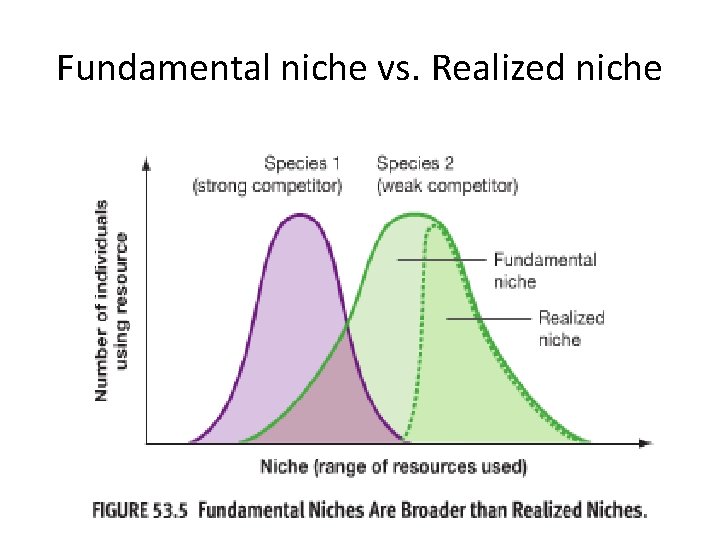
Fundamental niche vs. Realized niche
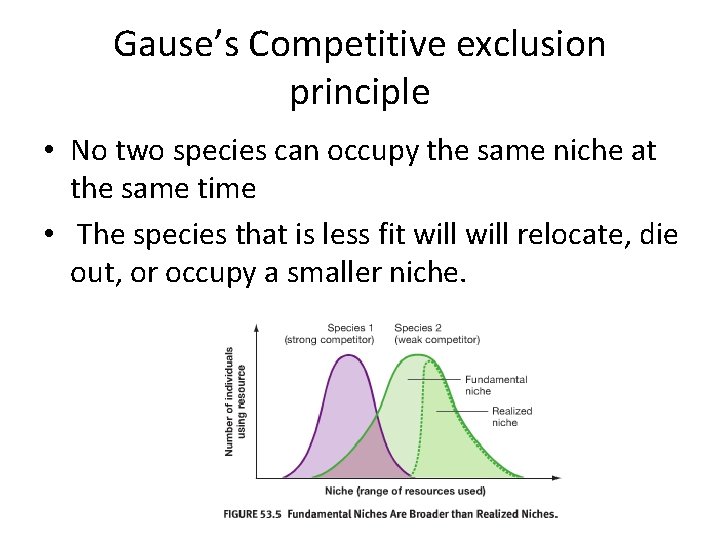
Gause’s Competitive exclusion principle • No two species can occupy the same niche at the same time • The species that is less fit will relocate, die out, or occupy a smaller niche.
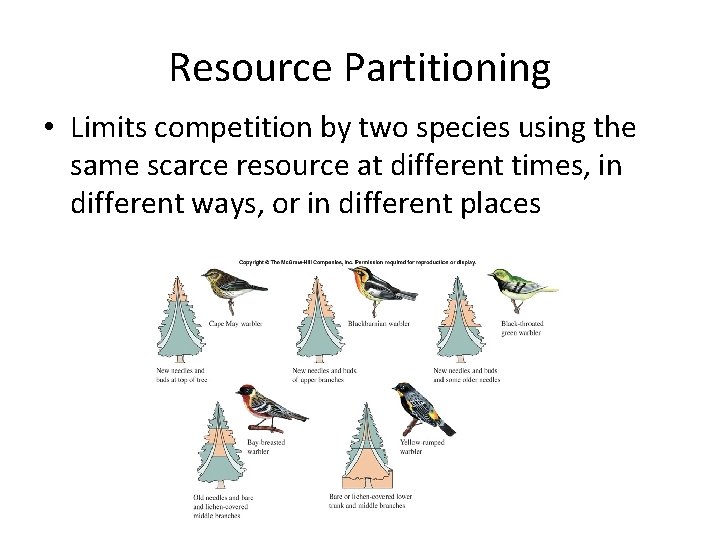
Resource Partitioning • Limits competition by two species using the same scarce resource at different times, in different ways, or in different places
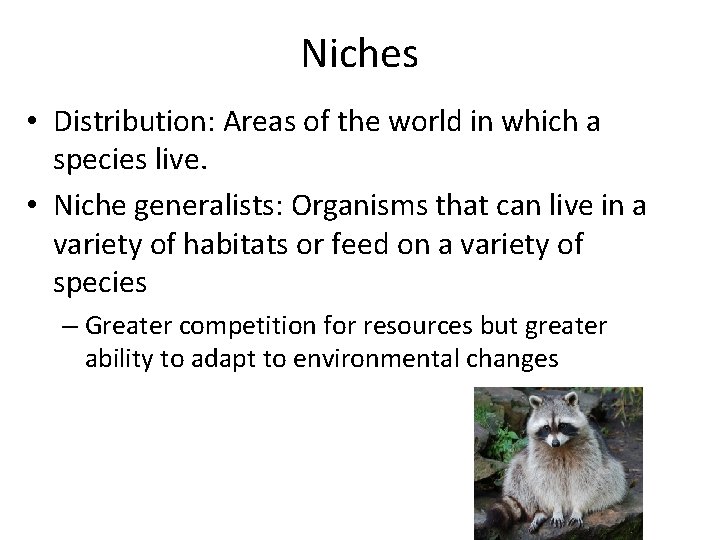
Niches • Distribution: Areas of the world in which a species live. • Niche generalists: Organisms that can live in a variety of habitats or feed on a variety of species – Greater competition for resources but greater ability to adapt to environmental changes
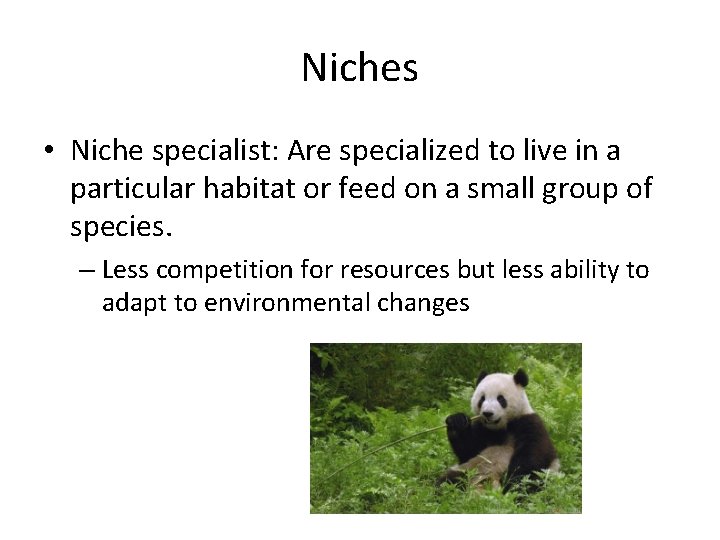
Niches • Niche specialist: Are specialized to live in a particular habitat or feed on a small group of species. – Less competition for resources but less ability to adapt to environmental changes
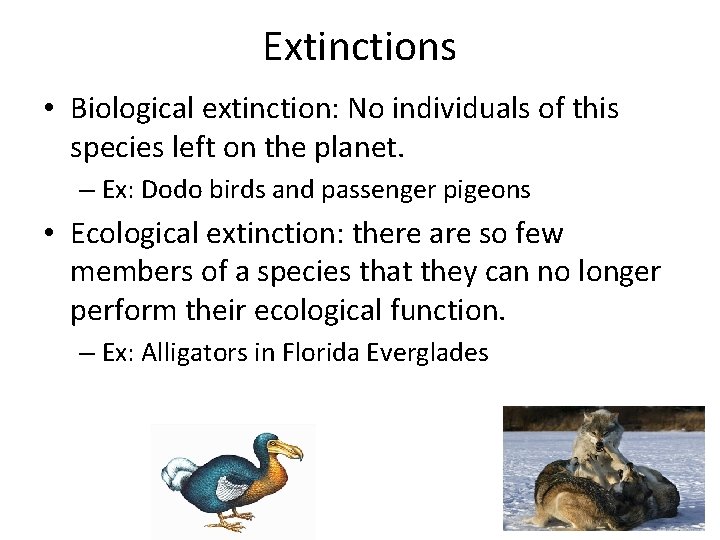
Extinctions • Biological extinction: No individuals of this species left on the planet. – Ex: Dodo birds and passenger pigeons • Ecological extinction: there are so few members of a species that they can no longer perform their ecological function. – Ex: Alligators in Florida Everglades
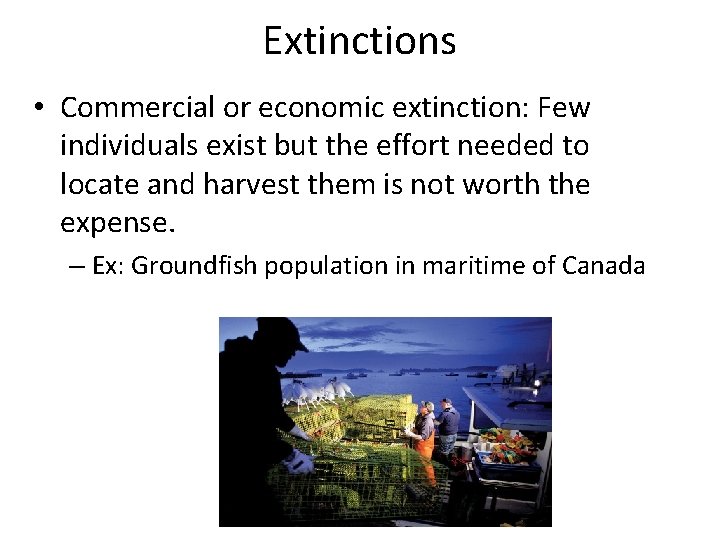
Extinctions • Commercial or economic extinction: Few individuals exist but the effort needed to locate and harvest them is not worth the expense. – Ex: Groundfish population in maritime of Canada
Extinction • Over the next 30 years, about 5 to 10% of all rain forest species are expected to be threatened due to extinction • The background rate of extinction of a species is 1 -10 a year • Freshwater species are currently at the greatest risk of extinction in the southwest
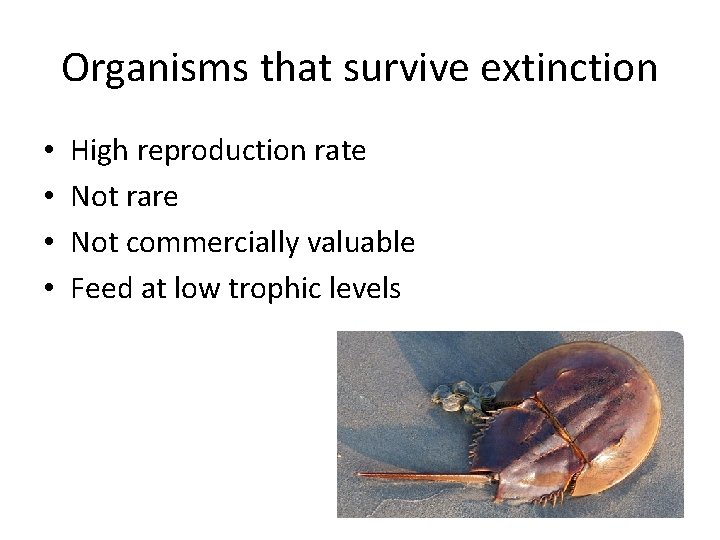
Organisms that survive extinction • • High reproduction rate Not rare Not commercially valuable Feed at low trophic levels
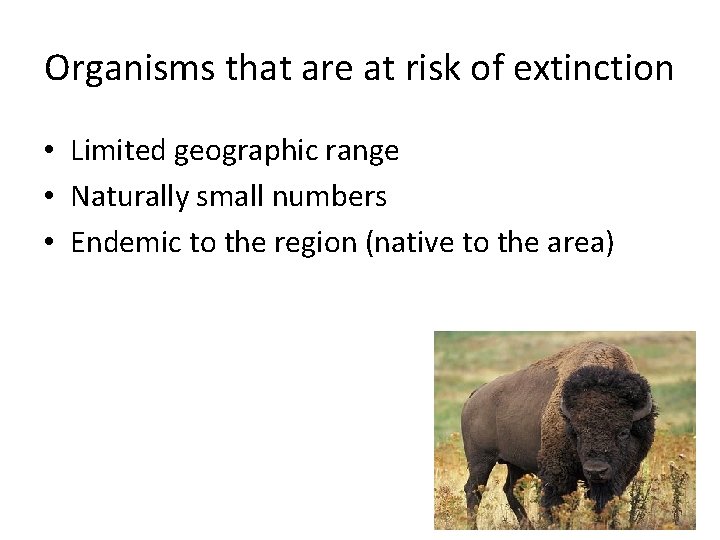
Organisms that are at risk of extinction • Limited geographic range • Naturally small numbers • Endemic to the region (native to the area)
Five Global Mass Extinctions • Pleistocene – Most Recent • Cretaceous – Adaptive radiation occurred which resulted in evolution of homo sapiens • Triassic • Permian – Largest extinction • Devonian
Homework • Homework: Read Benthic Bugs background info and answer questions
- Slides: 25