
Lesson 27 Oliver DNA look at the various

- Slides: 10
Lesson 27 Oliver
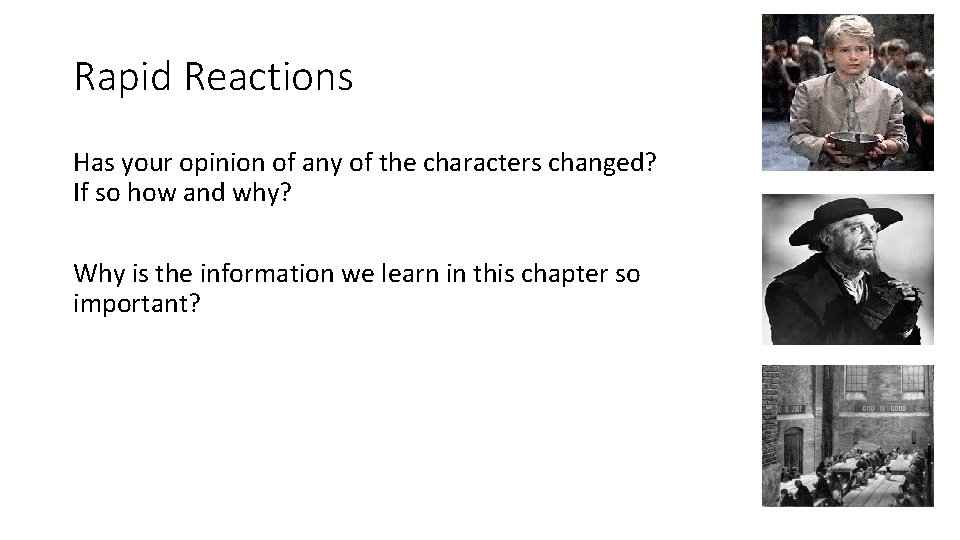
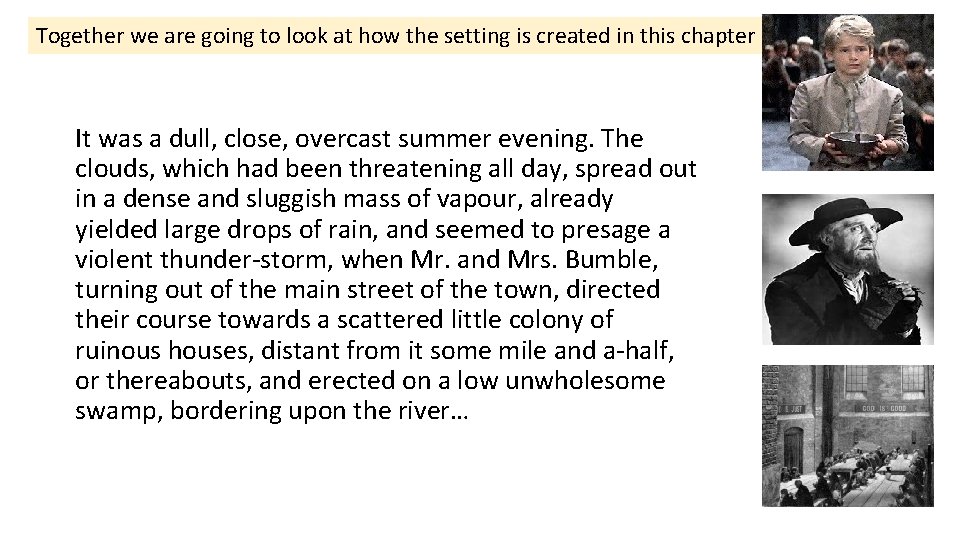
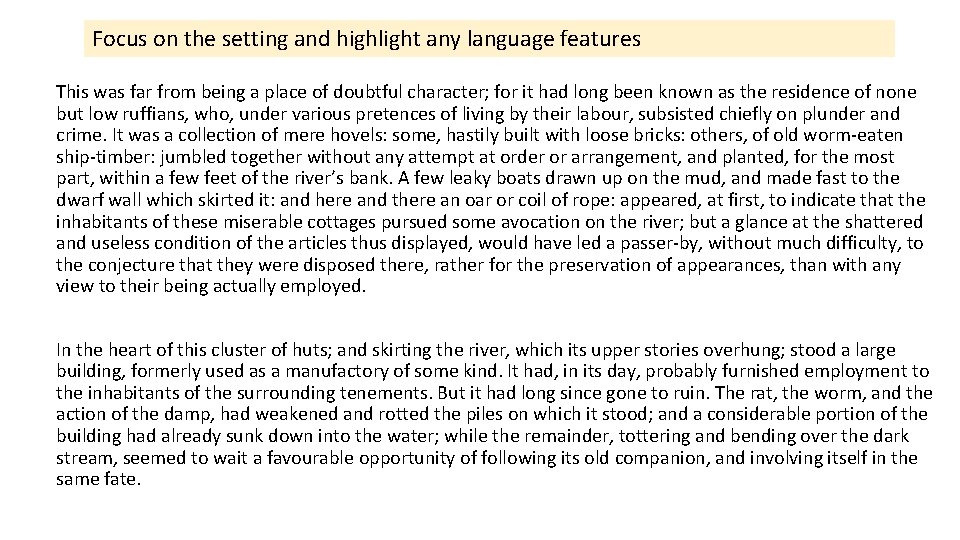
DNA: look at the various images of poverty-stricken areas of Victorian cities. Record as many adjectives and superlatives you can think of Challenge: Write an example for each one
Word Consciousness – Please record on the back page of your exercise books Word and definition Reverberate (of a loud noise) be repeated several times as an echo. "her deep booming laugh reverberated around the room" Affirmative agreeing with or consenting to a statement or request. "an affirmative answer" Tremulous timid; nervous. "he gave a tremulous smile" Or shaking or quivering slightly. "Barbara's voice was tremulous" Your definition Synonyms
Learning Journey Last lesson we looked at how Mr Bumble is presented and felt in chapter 37 We used our inference and analysis skills Today we are going to explore the language used to analyse the setting.
Contiguous read • We will now read chapter 38. • Read closely, focusing on how the setting is described
Rapid Reactions Has your opinion of any of the characters changed? If so how and why? Why is the information we learn in this chapter so important?
Together we are going to look at how the setting is created in this chapter It was a dull, close, overcast summer evening. The clouds, which had been threatening all day, spread out in a dense and sluggish mass of vapour, already yielded large drops of rain, and seemed to presage a violent thunder-storm, when Mr. and Mrs. Bumble, turning out of the main street of the town, directed their course towards a scattered little colony of ruinous houses, distant from it some mile and a-half, or thereabouts, and erected on a low unwholesome swamp, bordering upon the river…
Focus on the setting and highlight any language features This was far from being a place of doubtful character; for it had long been known as the residence of none but low ruffians, who, under various pretences of living by their labour, subsisted chiefly on plunder and crime. It was a collection of mere hovels: some, hastily built with loose bricks: others, of old worm-eaten ship-timber: jumbled together without any attempt at order or arrangement, and planted, for the most part, within a few feet of the river’s bank. A few leaky boats drawn up on the mud, and made fast to the dwarf wall which skirted it: and here and there an oar or coil of rope: appeared, at first, to indicate that the inhabitants of these miserable cottages pursued some avocation on the river; but a glance at the shattered and useless condition of the articles thus displayed, would have led a passer-by, without much difficulty, to the conjecture that they were disposed there, rather for the preservation of appearances, than with any view to their being actually employed. In the heart of this cluster of huts; and skirting the river, which its upper stories overhung; stood a large building, formerly used as a manufactory of some kind. It had, in its day, probably furnished employment to the inhabitants of the surrounding tenements. But it had long since gone to ruin. The rat, the worm, and the action of the damp, had weakened and rotted the piles on which it stood; and a considerable portion of the building had already sunk down into the water; while the remainder, tottering and bending over the dark stream, seemed to wait a favourable opportunity of following its old companion, and involving itself in the same fate.
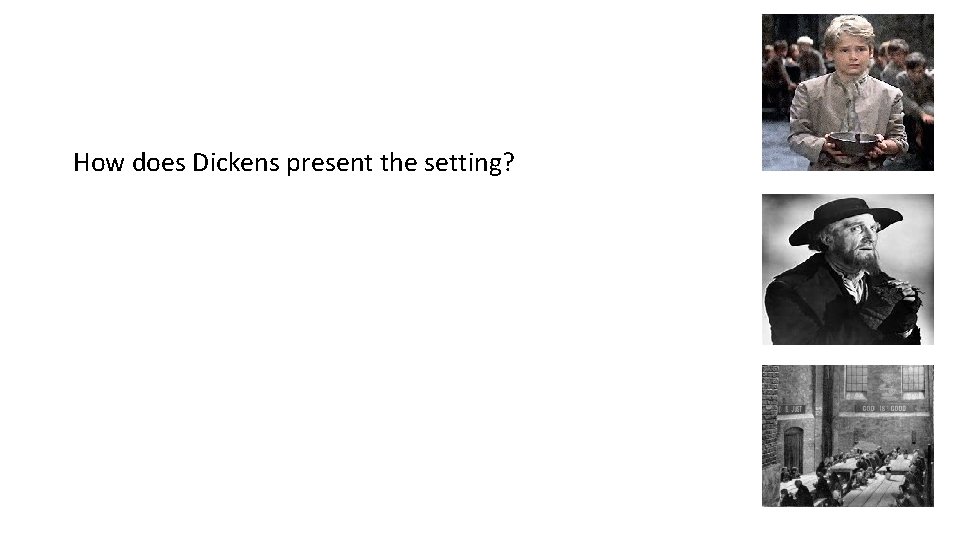
How does Dickens present the setting?
Now Read chapter 39 and 40 and add to your Cornell Notes