
Lesson 26 Imperfect Tense Oct 27 31 2014

- Slides: 11
Lesson 26 Imperfect Tense Oct. 27 -31, 2014
Past Tenses • So far, we have learned two types of past tenses in Latin: perfect and imperfect. • Although both are past tense, they express different shades of the past.
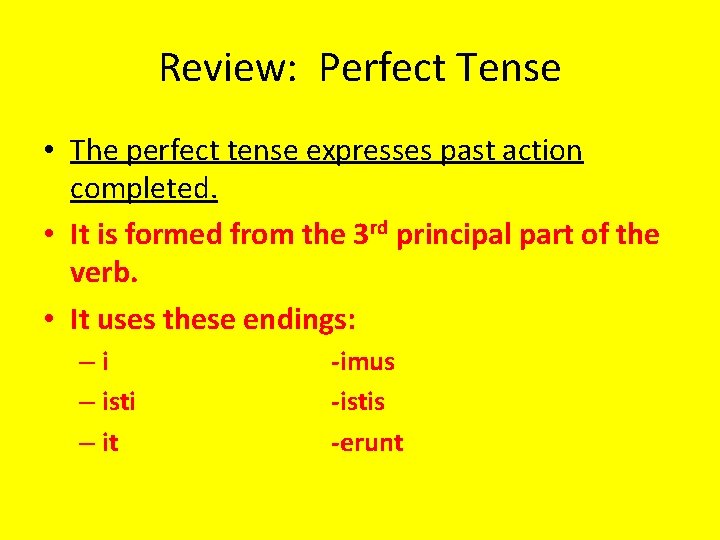
Review: Perfect Tense • The perfect tense expresses past action completed. • It is formed from the 3 rd principal part of the verb. • It uses these endings: –i – isti – it -imus -istis -erunt
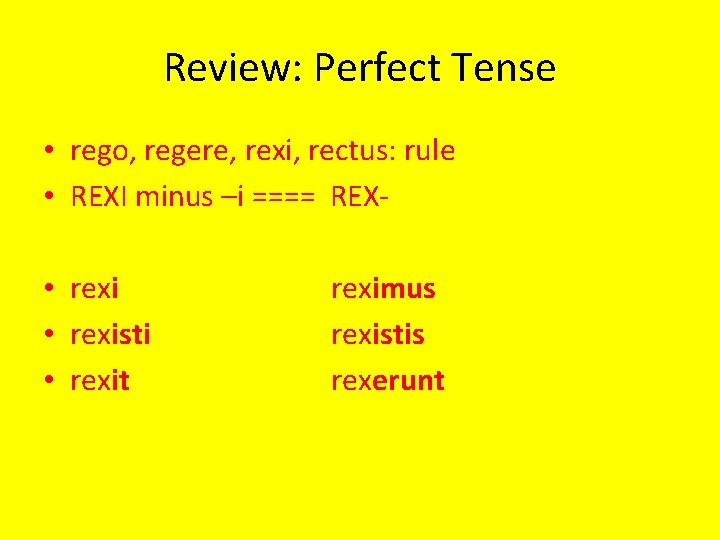
Review: Perfect Tense • rego, regere, rexi, rectus: rule • REXI minus –i ==== REX • rexisti • rexit reximus rexistis rexerunt
Review: Perfect Tense • Perfect tense can be translated 3 ways: – I verbed – I did verb – I have verbed
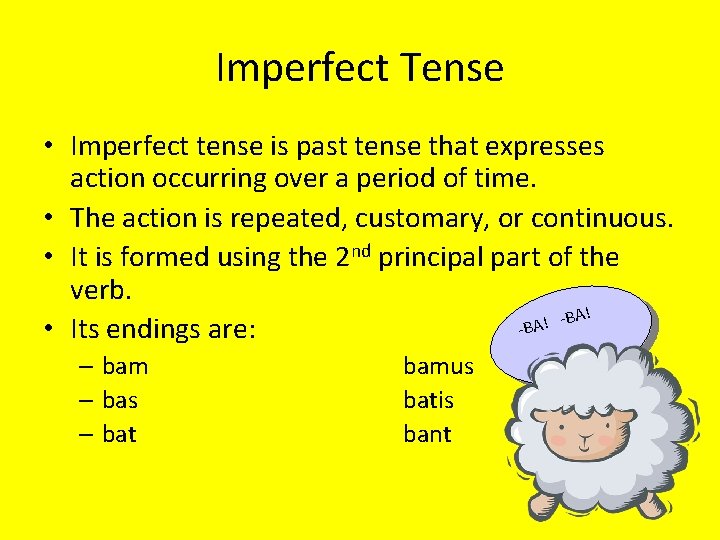
Imperfect Tense • Imperfect tense is past tense that expresses action occurring over a period of time. • The action is repeated, customary, or continuous. • It is formed using the 2 nd principal part of the verb. A! B ! -BA • Its endings are: – bam – bas – bat bamus batis bant
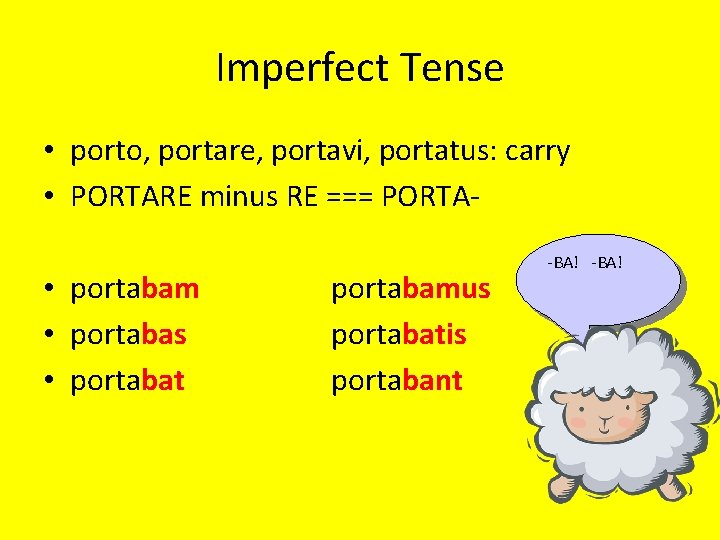
Imperfect Tense • porto, portare, portavi, portatus: carry • PORTARE minus RE === PORTA • portabam • portabas • portabat portabamus portabatis portabant -BA!
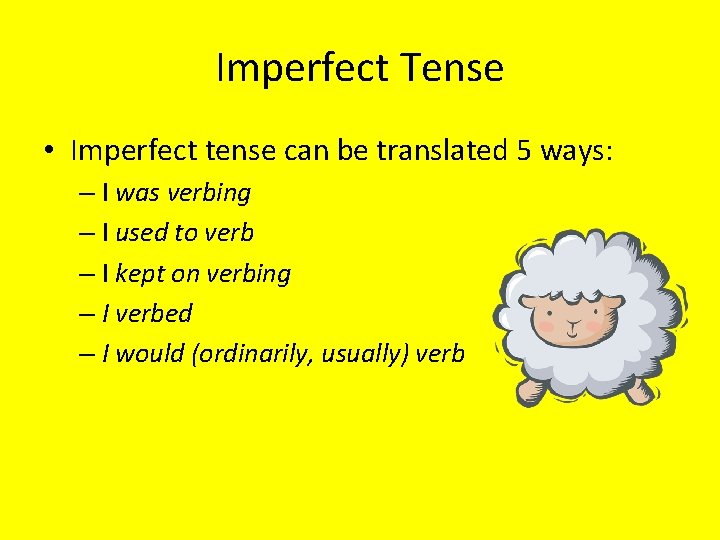
Imperfect Tense • Imperfect tense can be translated 5 ways: – I was verbing – I used to verb – I kept on verbing – I verbed – I would (ordinarily, usually) verb
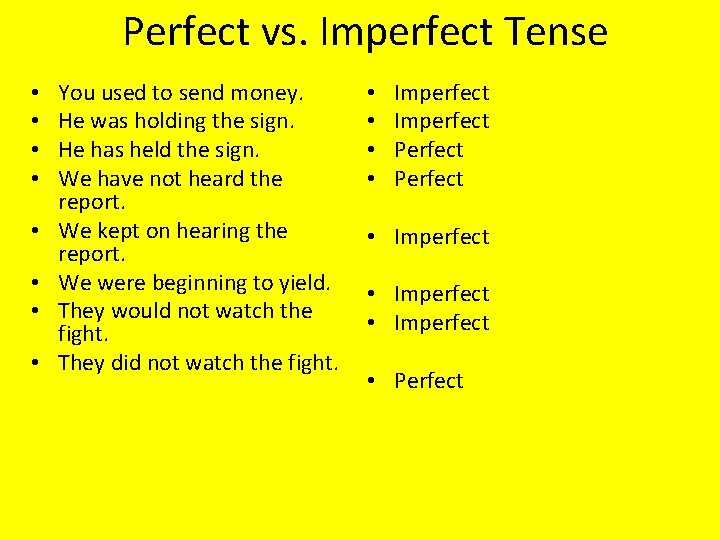
Perfect vs. Imperfect Tense • • You used to send money. He was holding the sign. He has held the sign. We have not heard the report. We kept on hearing the report. We were beginning to yield. They would not watch the fight. They did not watch the fight. • • Imperfect Perfect • Imperfect • Perfect
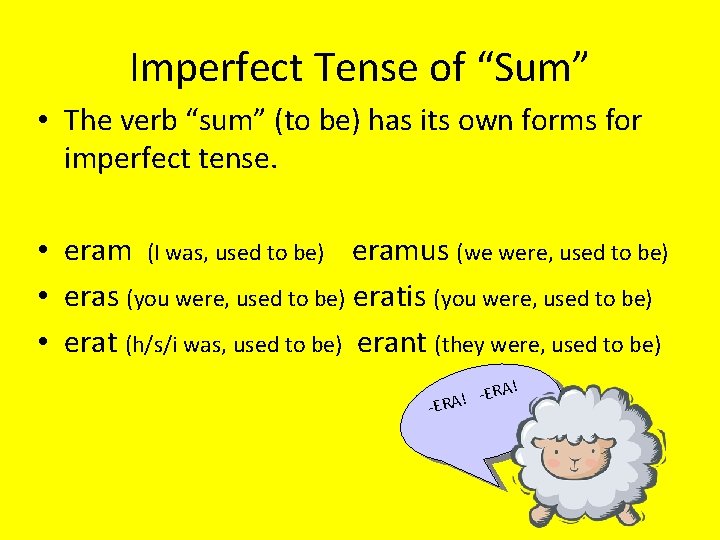
Imperfect Tense of “Sum” • The verb “sum” (to be) has its own forms for imperfect tense. • eram (I was, used to be) eramus (we were, used to be) • eras (you were, used to be) eratis (you were, used to be) • erat (h/s/i was, used to be) erant (they were, used to be) -ERA! ! A -ER
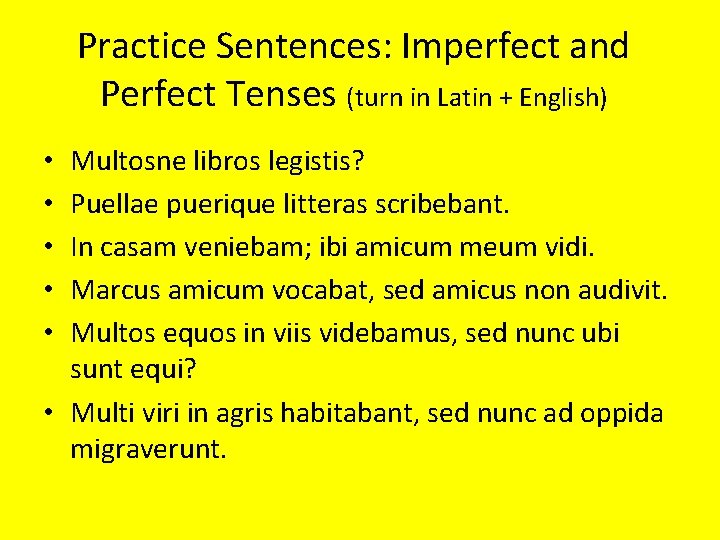
Practice Sentences: Imperfect and Perfect Tenses (turn in Latin + English) Multosne libros legistis? Puellae puerique litteras scribebant. In casam veniebam; ibi amicum meum vidi. Marcus amicum vocabat, sed amicus non audivit. Multos equos in viis videbamus, sed nunc ubi sunt equi? • Multi viri in agris habitabant, sed nunc ad oppida migraverunt. • • •