
Lesson 24 Photocell Electrical Characteristic and Circuit Model
- Slides: 13
Lesson 24: Photocell Electrical Characteristic and Circuit Model ET 332 a Dc Motors, Generators and Energy Conversion Devices 1 Lesson 24 332 a. pptx
Learning Objectives After this presentation you will be able to: Identify and interpret a photocell electrical characteristic Ø Find the maximum power output from a photocell Ø Calculate a photocell’s efficiency Ø Determine circuit model parameters for a photocell given its characteristic curve Ø Perform a calculation using the circuit model of a photocell. Ø 2 Lesson 24 332 a. pptx
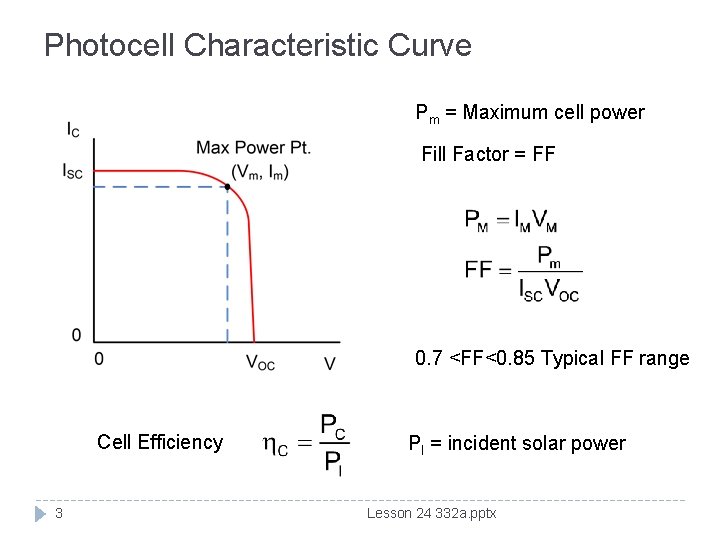
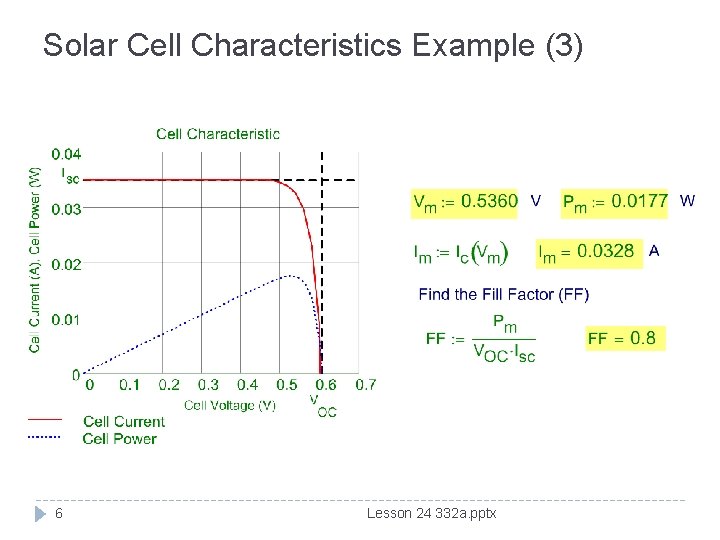
Photocell Characteristic Curve Pm = Maximum cell power Fill Factor = FF 0. 7 <FF<0. 85 Typical FF range Cell Efficiency 3 PI = incident solar power Lesson 24 332 a. pptx
Solar Cell Characteristics Example (1) 4 Lesson 24 332 a. pptx
Solar Cell Characteristics Example (2) 5 Lesson 24 332 a. pptx
Solar Cell Characteristics Example (3) 6 Lesson 24 332 a. pptx
Solar Cell Characteristics Example (4) 7 Lesson 24 332 a. pptx
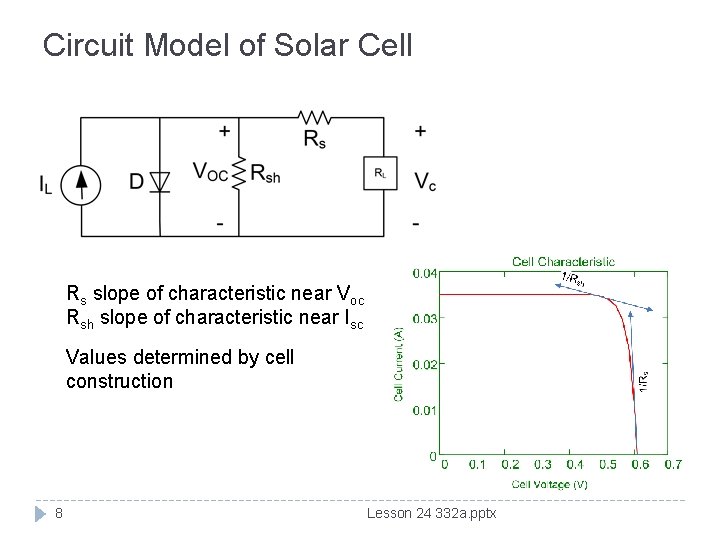
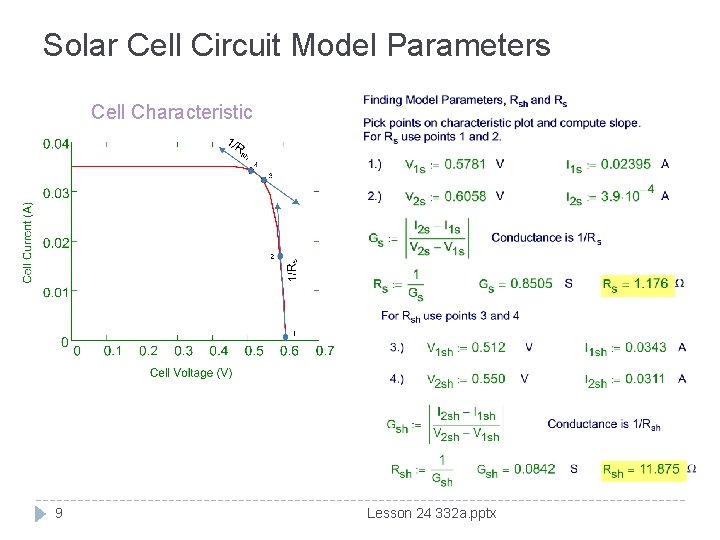
Circuit Model of Solar Cell Rs slope of characteristic near Voc Rsh slope of characteristic near Isc Values determined by cell construction 8 Lesson 24 332 a. pptx
Solar Cell Circuit Model Parameters Cell Characteristic 9 Lesson 24 332 a. pptx
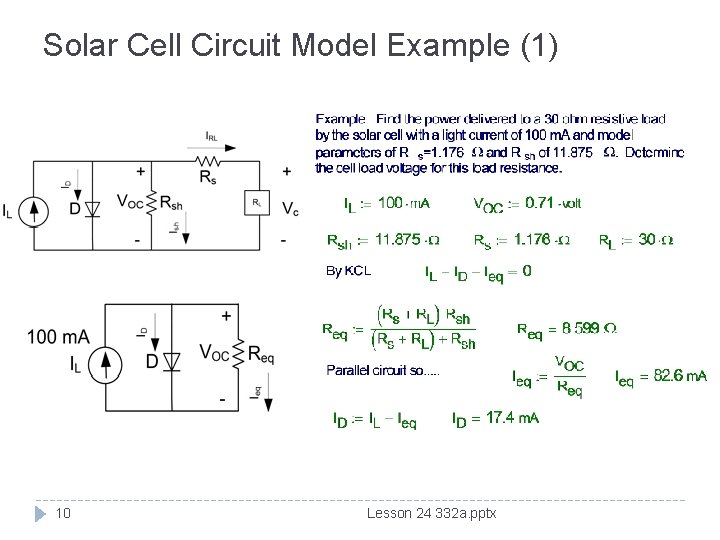
Solar Cell Circuit Model Example (1) 10 Lesson 24 332 a. pptx
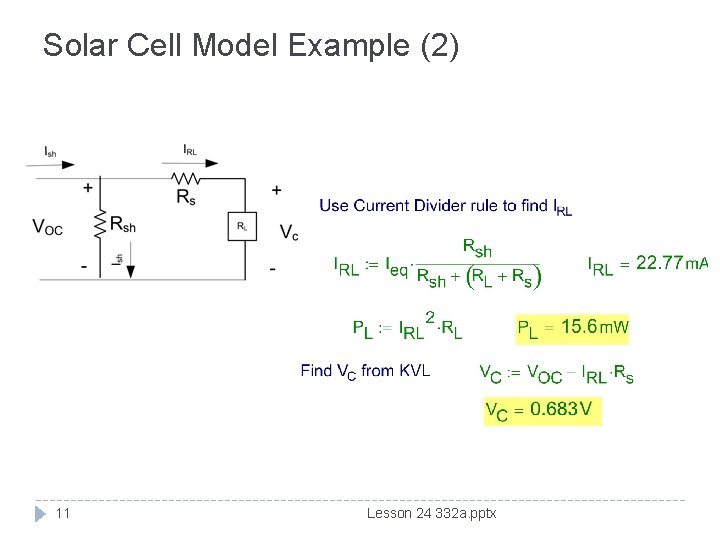
Solar Cell Model Example (2) 11 Lesson 24 332 a. pptx
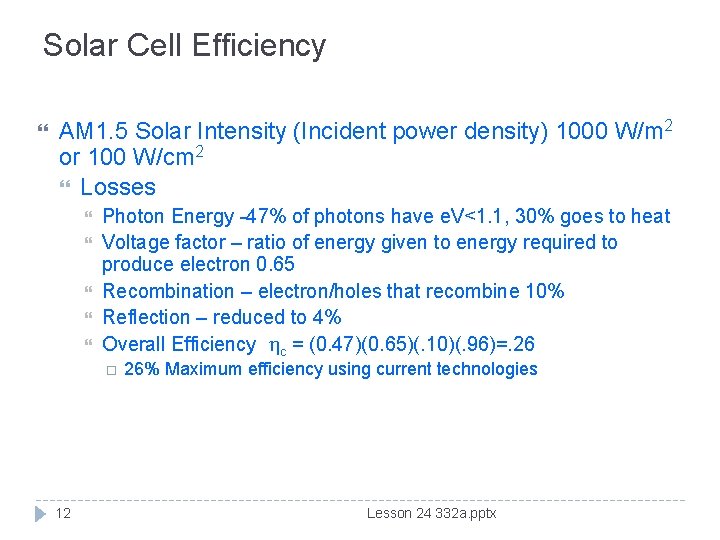
Solar Cell Efficiency AM 1. 5 Solar Intensity (Incident power density) 1000 W/m 2 or 100 W/cm 2 Losses Photon Energy -47% of photons have e. V<1. 1, 30% goes to heat Voltage factor – ratio of energy given to energy required to produce electron 0. 65 Recombination – electron/holes that recombine 10% Reflection – reduced to 4% Overall Efficiency hc = (0. 47)(0. 65)(. 10)(. 96)=. 26 12 26% Maximum efficiency using current technologies Lesson 24 332 a. pptx
End Lesson 24 ET 332 a Dc Motors, Generators and Energy Conversion Devices 13 Lesson 24 332 a. pptx