
LESSON 20 COLD AND HEAT EMERGENCIES 2011 National
- Slides: 23
LESSON 20 COLD AND HEAT EMERGENCIES © 2011 National Safety Council 20 -1
Mechanisms For Staying Warm • Metabolic processes - Most body heat produced this way • Contraction of muscle tissue - Including shivering • Vasoconstriction - Less radiation of heat away from skin © 2011 National Safety Council 20 -2
Mechanisms For Staying Cool • Vasodilation - More warm blood to surface of skin to be radiated away - Primary heat loss method • Sweating - Evaporation from skin surface cools body © 2011 National Safety Council 20 -3
Cold Emergencies • Frostbite • Hypothermia © 2011 National Safety Council 20 -4
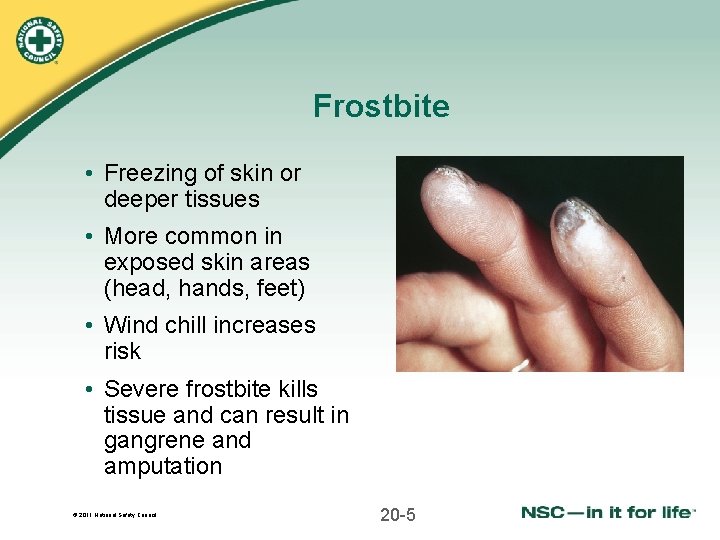
Frostbite • Freezing of skin or deeper tissues • More common in exposed skin areas (head, hands, feet) • Wind chill increases risk • Severe frostbite kills tissue and can result in gangrene and amputation © 2011 National Safety Council 20 -5
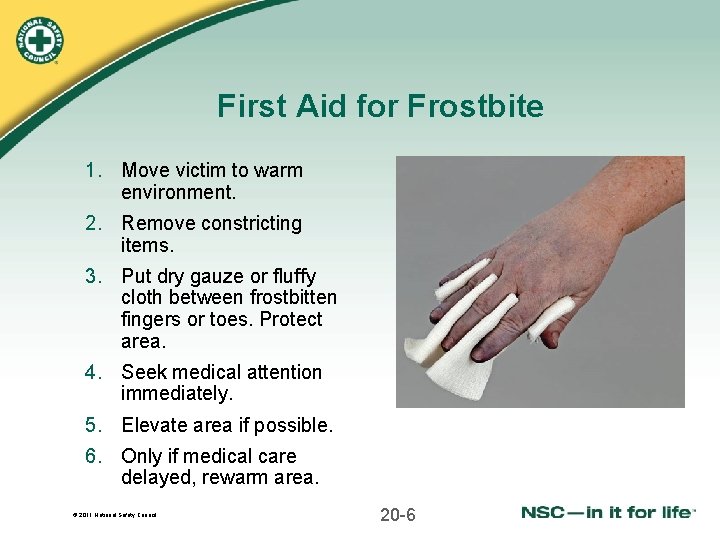
First Aid for Frostbite 1. Move victim to warm environment. 2. Remove constricting items. 3. Put dry gauze or fluffy cloth between frostbitten fingers or toes. Protect area. 4. Seek medical attention immediately. 5. Elevate area if possible. 6. Only if medical care delayed, rewarm area. © 2011 National Safety Council 20 -6
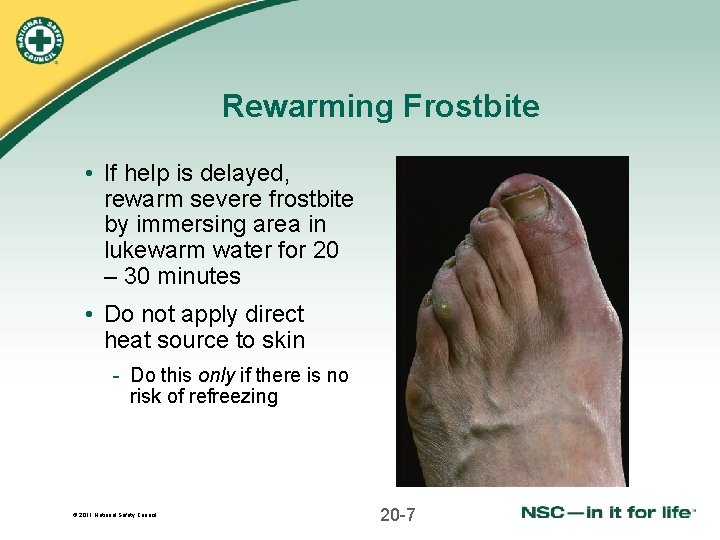
Rewarming Frostbite • If help is delayed, rewarm severe frostbite by immersing area in lukewarm water for 20 – 30 minutes • Do not apply direct heat source to skin - Do this only if there is no risk of refreezing © 2011 National Safety Council 20 -7
Hypothermia • Occurs when body cannot make heat as fast as it loses it • Body temperature < 95° F • Can occur whenever and wherever person feels cold • Progressive • May occur gradually or quickly • About 600 people die each year in United States © 2011 National Safety Council 20 -8
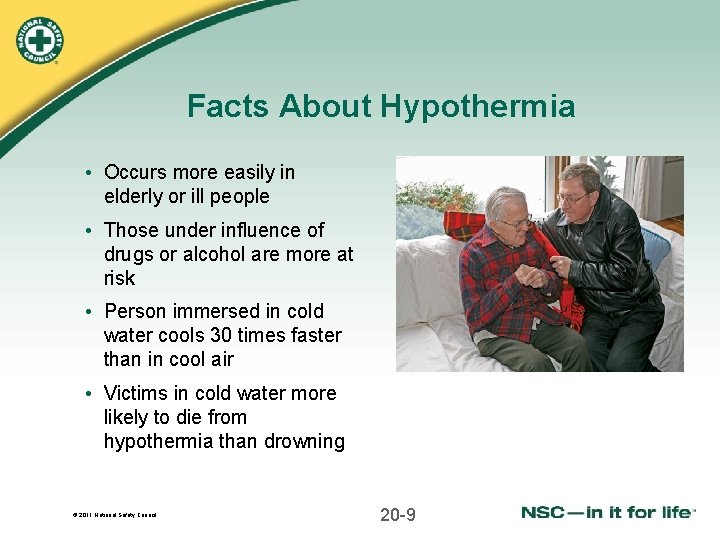
Facts About Hypothermia • Occurs more easily in elderly or ill people • Those under influence of drugs or alcohol are more at risk • Person immersed in cold water cools 30 times faster than in cool air • Victims in cold water more likely to die from hypothermia than drowning © 2011 National Safety Council 20 -9
Facts About Hypothermia continued • Victims in cardiac arrest after immersion in cold water have been resuscitated after a long time underwater Don’t Give Up! © 2011 National Safety Council 20 -10
Hypothermia: Early Signs and Symptoms • Shivering • Numbness • Lethargy • Poor coordination • Slurred speech • Infants may have bright red skin and little energy © 2011 National Safety Council 20 -11
Hypothermia: Late Signs and Symptoms • Shivering typically stops • Victim may not feel cold • Breathing becomes shallow • Mental status deteriorates • Victim may become unresponsive and stop breathing © 2011 National Safety Council 20 -12
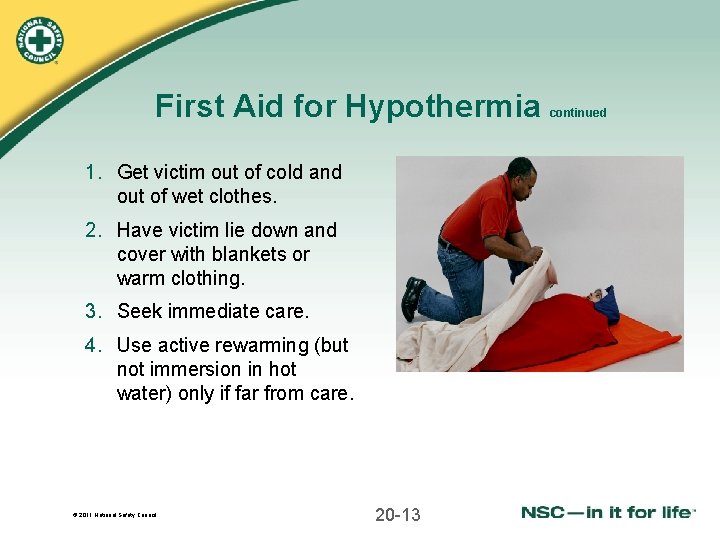
First Aid for Hypothermia 1. Get victim out of cold and out of wet clothes. 2. Have victim lie down and cover with blankets or warm clothing. 3. Seek immediate care. 4. Use active rewarming (but not immersion in hot water) only if far from care. © 2011 National Safety Council 20 -13 continued
Types of Heat Illness • Heat cramps - Least serious and usually occurs first • Heat exhaustion - Develops when body becomes dehydrated • Heatstroke - Medical emergency - If untreated, can cause death © 2011 National Safety Council 20 -14
Heat Emergencies • Most occur during hot weather but can also occur in hot settings (furnace room, factory, vehicle) • Average of 400 deaths/year • Heatstroke is progressive – starts with milder symptoms but can lead to death © 2011 National Safety Council 20 -15
Preventing Heat Emergencies • Wear loose, lightweight clothing • Rest frequently in cool or shady areas • Drink fluids before, during and after activity • Avoid alcohol and caffeine • Drink sports drink during endurance activities • Avoid exertion if overweight or elderly • Acclimatize to new hot area • During heat waves, check on those at risk • Do not leave children or pets alone in vehicle • Use sunscreen © 2011 National Safety Council 20 -16
Heat Cramps • Activity in hot environment can cause painful muscle cramps • More common in lower legs or abdominal muscles • Result when sweating lowers body’s sodium levels • May accompany heat exhaustion and heatstroke © 2011 National Safety Council 20 -17
Heat Exhaustion • Heavy sweating may lead to dehydration and depletion of salt and electrolytes if person doesn’t drink enough fluids • Unrelieved, may lead to heatstroke © 2011 National Safety Council 20 -18
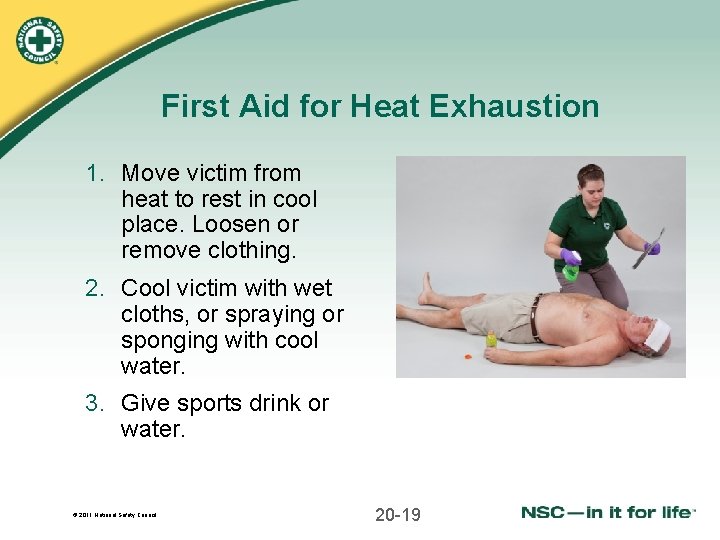
First Aid for Heat Exhaustion 1. Move victim from heat to rest in cool place. Loosen or remove clothing. 2. Cool victim with wet cloths, or spraying or sponging with cool water. 3. Give sports drink or water. © 2011 National Safety Council 20 -19
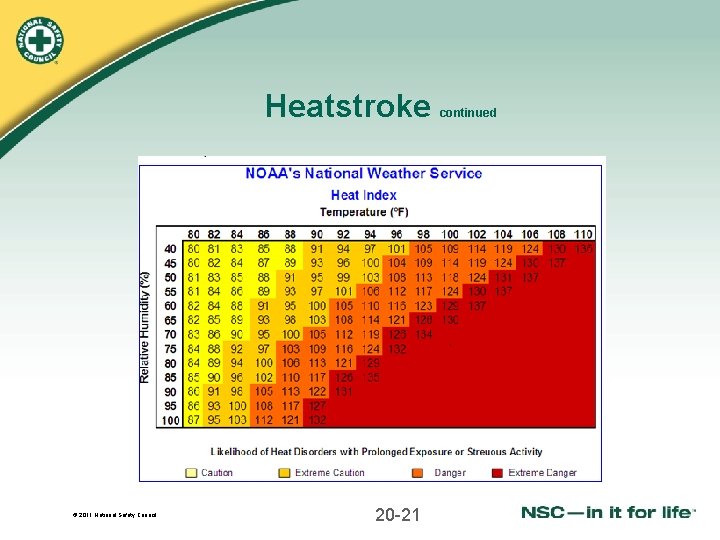
Heatstroke • Life-threatening emergency • More common during hot, summer periods • May develop slowly over days or more rapidly with strenuous activity • Victim may be dehydrated and not sweating or may be sweating heavily • Causes body temperatures ≥ 104° F © 2011 National Safety Council 20 -20
Heatstroke © 2011 National Safety Council 20 -21 continued
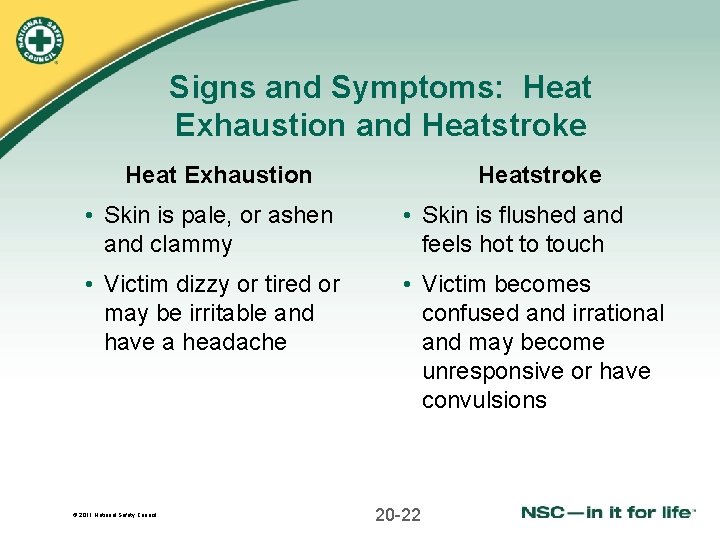
Signs and Symptoms: Heat Exhaustion and Heatstroke Heat Exhaustion Heatstroke • Skin is pale, or ashen and clammy • Skin is flushed and feels hot to touch • Victim dizzy or tired or may be irritable and have a headache • Victim becomes confused and irrational and may become unresponsive or have convulsions © 2011 National Safety Council 20 -22
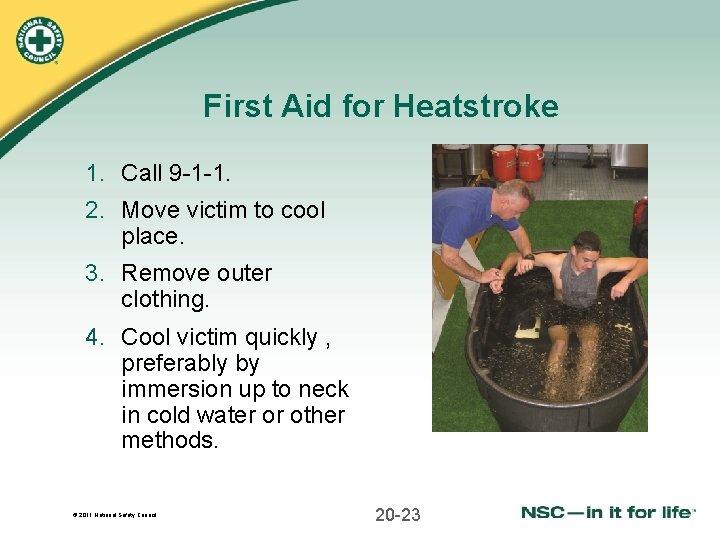
First Aid for Heatstroke 1. Call 9 -1 -1. 2. Move victim to cool place. 3. Remove outer clothing. 4. Cool victim quickly , preferably by immersion up to neck in cold water or other methods. © 2011 National Safety Council 20 -23