
Lesson 2 Utility Conflict Concepts and SHRP 2
- Slides: 74
Lesson 2 Utility Conflict Concepts and SHRP 2 R 15(B) Research Findings 2 -1
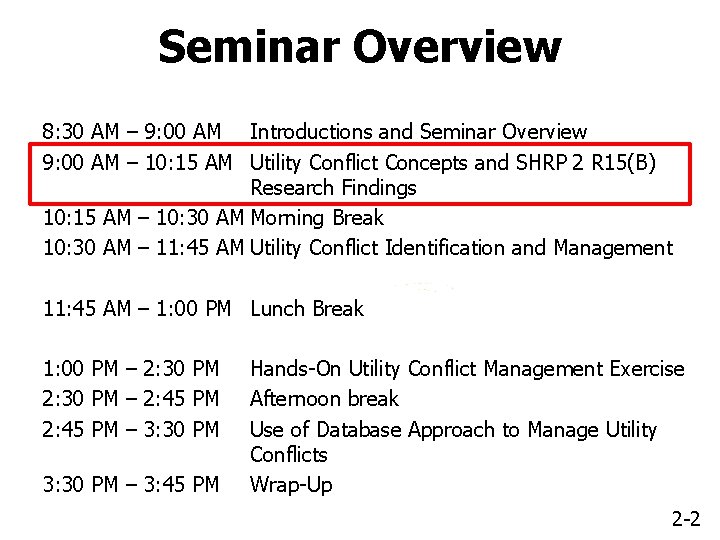
Seminar Overview 8: 30 AM – 9: 00 AM Introductions and Seminar Overview 9: 00 AM – 10: 15 AM Utility Conflict Concepts and SHRP 2 R 15(B) Research Findings 10: 15 AM – 10: 30 AM Morning Break 10: 30 AM – 11: 45 AM Utility Conflict Identification and Management 11: 45 AM – 1: 00 PM Lunch Break 1: 00 PM – 2: 30 PM – 2: 45 PM – 3: 30 PM – 3: 45 PM Hands-On Utility Conflict Management Exercise Afternoon break Use of Database Approach to Manage Utility Conflicts Wrap-Up 2 -2
Lesson 2 Overview • Utility conflict concepts • SHR 2 R 15(B) Research findings • Questions and answers 2 -3
2. 1 Utility Conflict Concepts 2 -4
Project Development Process 2 -5
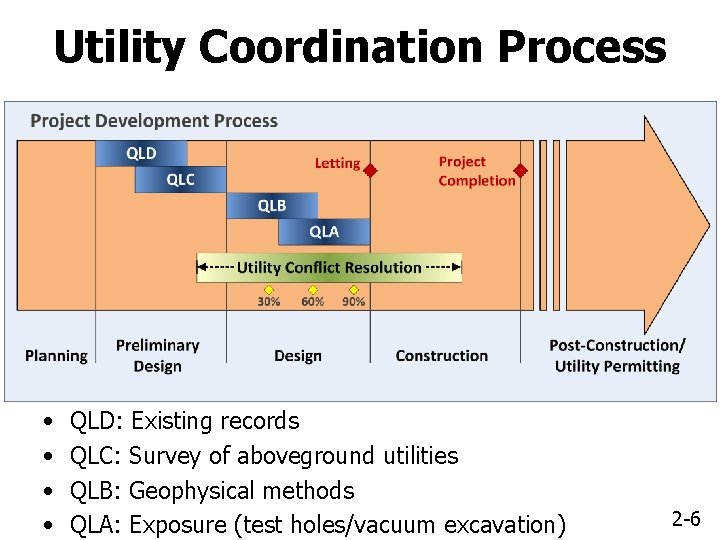
Utility Coordination Process • • QLD: Existing records QLC: Survey of aboveground utilities QLB: Geophysical methods QLA: Exposure (test holes/vacuum excavation) 2 -6
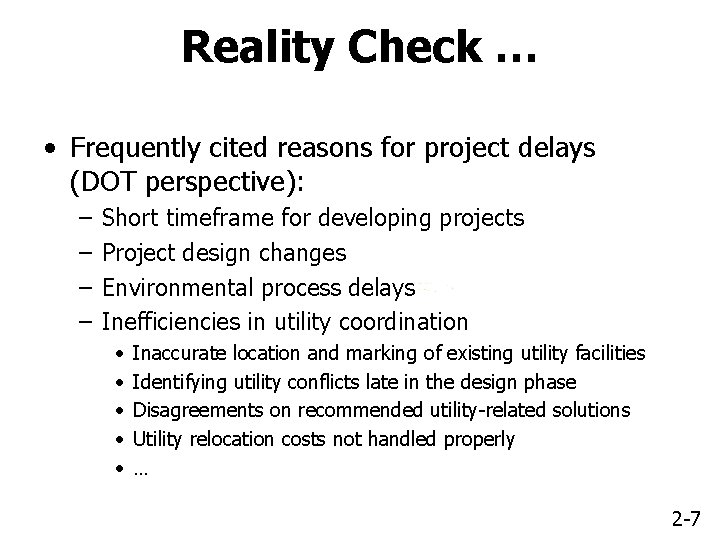
Reality Check … • Frequently cited reasons for project delays (DOT perspective): – – Short timeframe for developing projects Project design changes Environmental process delays Inefficiencies in utility coordination • • • Inaccurate location and marking of existing utility facilities Identifying utility conflicts late in the design phase Disagreements on recommended utility-related solutions Utility relocation costs not handled properly … 2 -7
Reality Check … • Frequently cited reasons for project delays (utility owner perspective): – – Limited resources (financial and personnel) Utility owner’s project development process protocols Coordination with other stakeholders during design Coordination with other stakeholders during construction – Changes in DOT design and schedules – Unrealistic schedule by DOT for utility relocations – Internal demands (maintenance, service upgrades) 2 -8
Consequences of Bad Utility Information • Incomplete/inaccurate utility data = BAD data • Negative impacts: – – Disruptions during construction Unplanned environmental corrective actions Damage to utility installations Delays and project overruns 2 -9
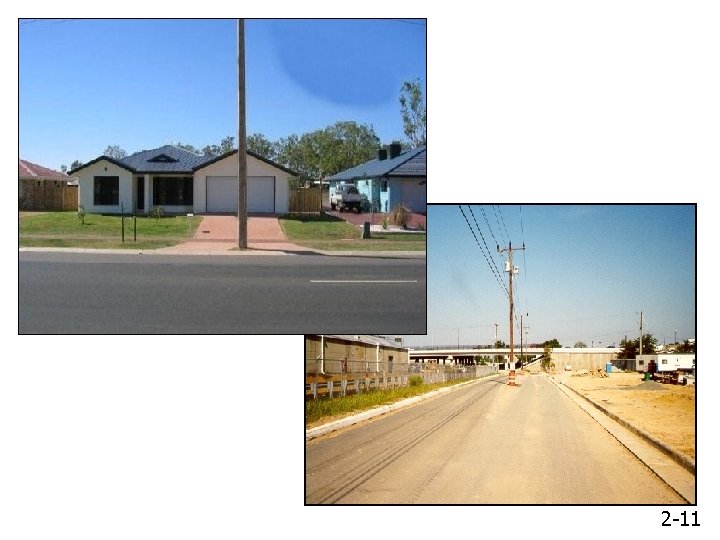
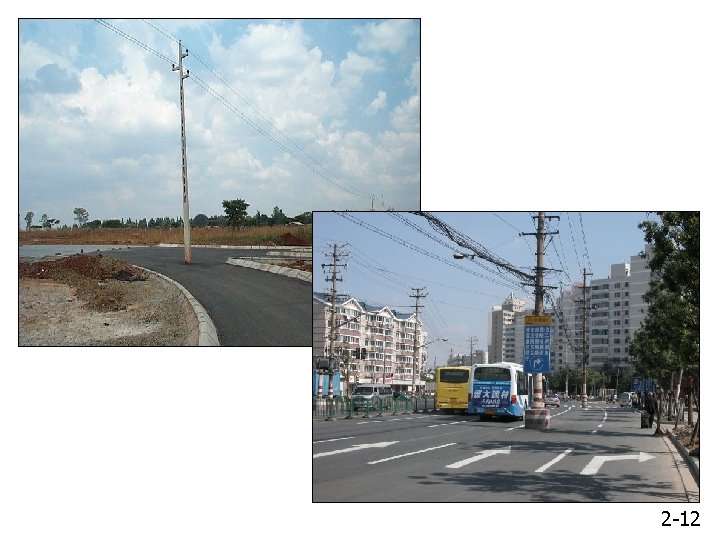
Utility Conflict Scenarios • Utility facility vs. transportation design feature (existing or proposed) • Utility facility vs. transportation construction activity or phasing • Planned utility facility vs. existing utility facility • Noncompliance with: – Utility accommodation statutes, regulations, and policies – Safety or accessibility regulations 2 -10
2 -11
2 -12
Solution Strategies • Remove, abandon, or relocate utilities in conflict – Relocating utilities NOT NECESSARILY OR ALWAYS the best or most cost-effective solution • Modify transportation facility • Protect-in-place utility installation • Accept an exception to policy 2 -13
Transportation Design Changes • Geometric alignment (horizontal/vertical): – Change grade – Offset centerline, widen one side of highway – Move ramps, driveways • Structure dimensions, other characteristics: – – Change embankment slope Add/modify retaining wall to reduce slope encroachment Redesign bridge footings and abutments, move pilings Redesign drainage structures 2 -14
Example: Widening Both Sides vs. One side of Highway • Issues to consider: – Widening both sides of highway impacts everyone (no one is spared!) – Widening one side can reduce utility impacts – Depends on what kind of utilities are affected 2 -15
Example: Embankment • Due to interstate widening, embankment had to be raised 50 -60 feet • Major gas and water facilities in the area • Large soil settlement expected • Modified project to protect-in-place utilities: – Foam layer – Thin concrete cap • Costly utility relocation was avoided 2 -16
Example: Bridge • Bridge project affected multiple utilities (power, water, sewer, etc. ) • Modifying horizontal bridge alignment slightly – Would have avoided any utility impact – Would not have impacted right-of-way – Would not have compromised bridge construction • Discovered during construction… too late! • Utility relocation costs = $5, 000 2 -17
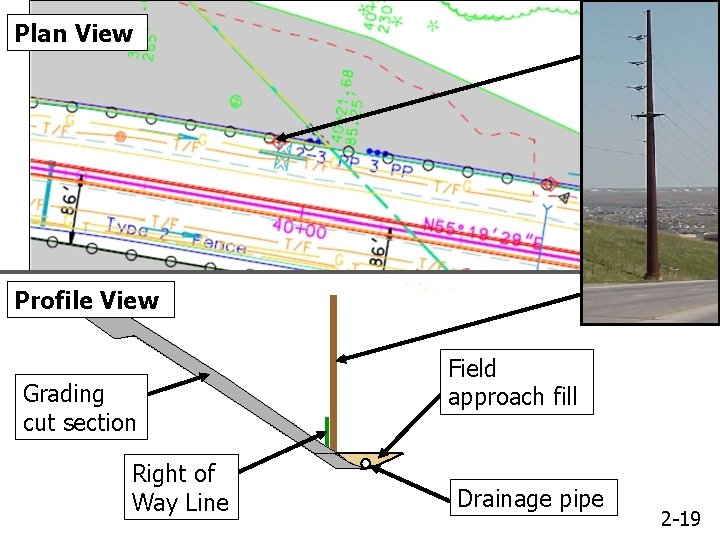
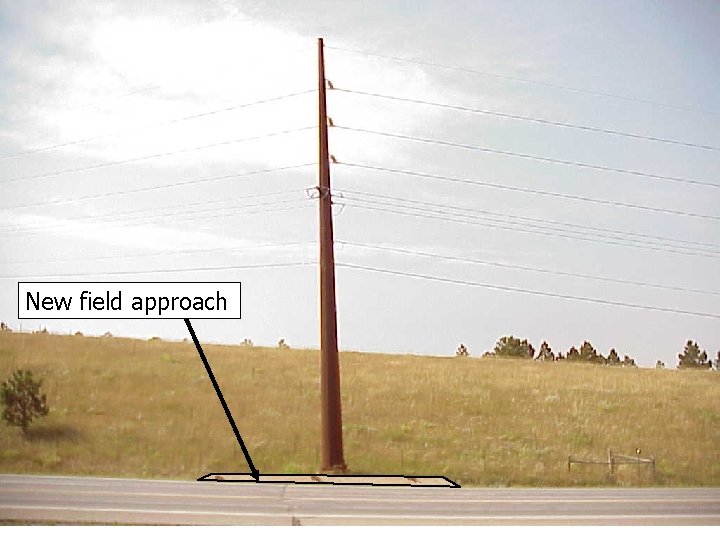
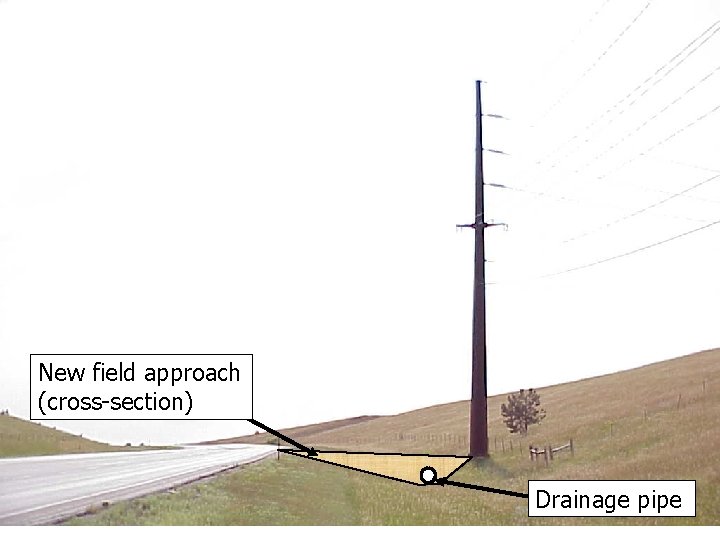
Example: Power Pole • • Rapid City, South Dakota Conflict discovered at 30% detailed design Redesign avoided utility adjustment Additional costs were paid by utility 2 -18
Plan View Profile View Grading cut section Right of Way Line Field approach fill Drainage pipe 2 -19
New field approach 2 -20
New field approach (cross-section) Drainage pipe 2 -21
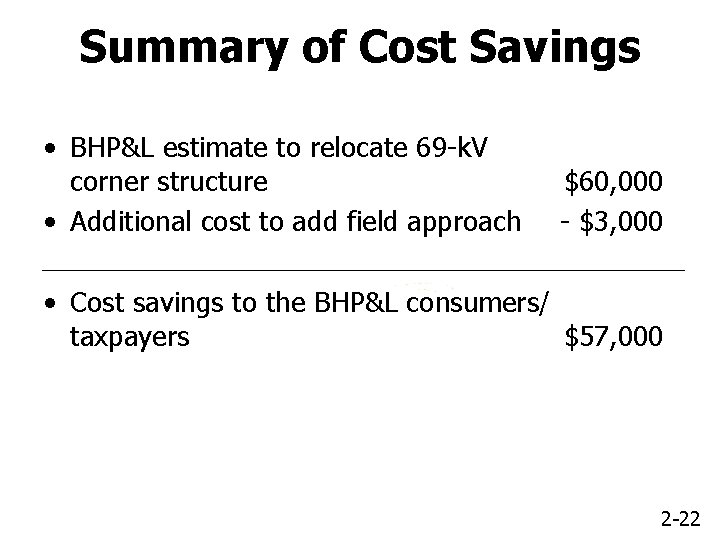
Summary of Cost Savings • BHP&L estimate to relocate 69 -k. V corner structure • Additional cost to add field approach $60, 000 - $3, 000 • Cost savings to the BHP&L consumers/ taxpayers $57, 000 2 -22
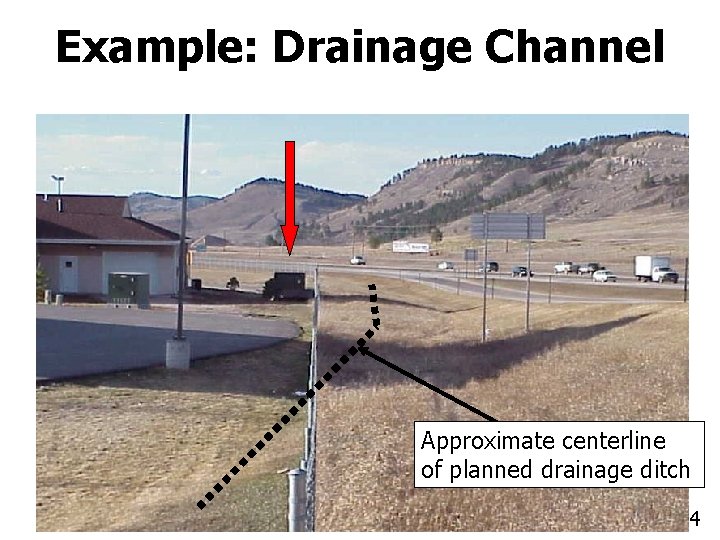
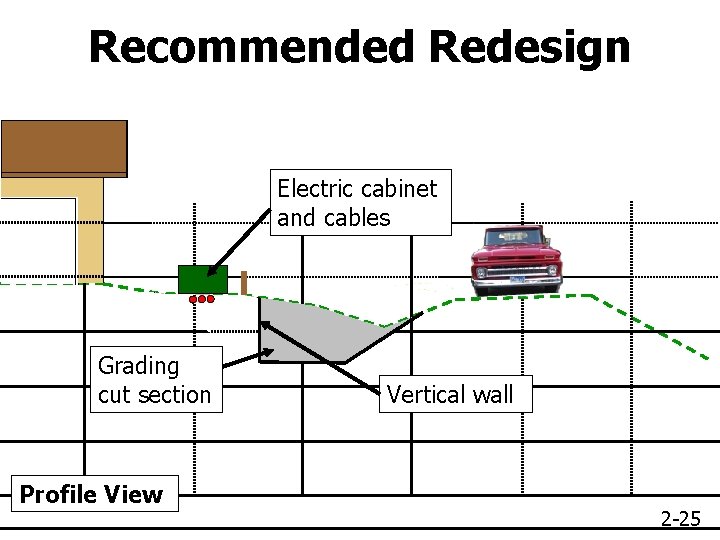
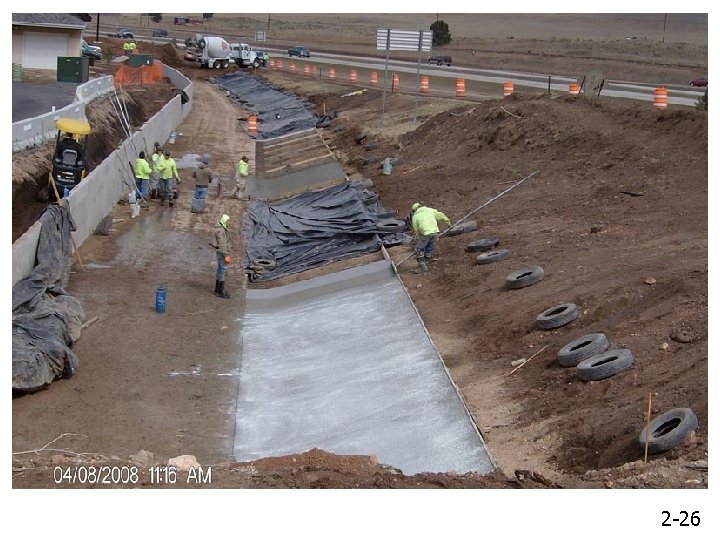
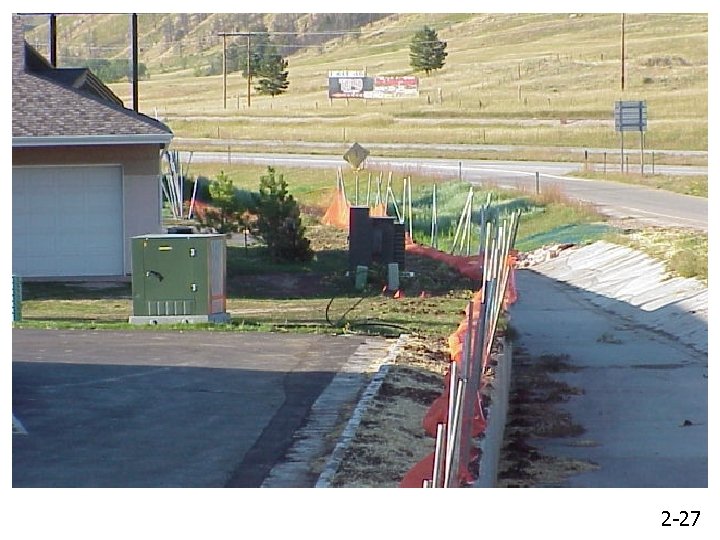
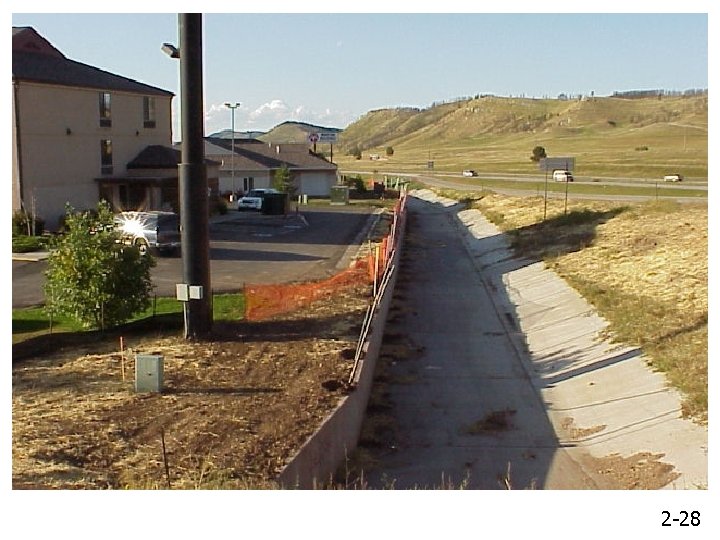
Example: Drainage Channel • Rapid City, South Dakota • Impact discovered during preliminary project scoping inspection • Typical concrete lined drainage ditch would have impacted electrical cabinet and cables • Recommendation: redesign sloped ditch to vertical wall • Additional benefit: elimination of some right of way acquisition 2 -23
Example: Drainage Channel Approximate centerline of planned drainage ditch 2 -24
Recommended Redesign Electric cabinet and cables Grading cut section Profile View Vertical wall 2 -25
2 -26
2 -27
2 -28
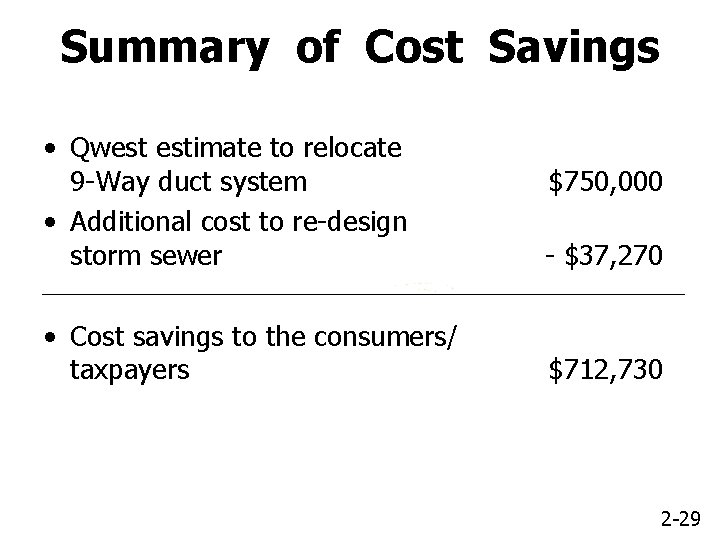
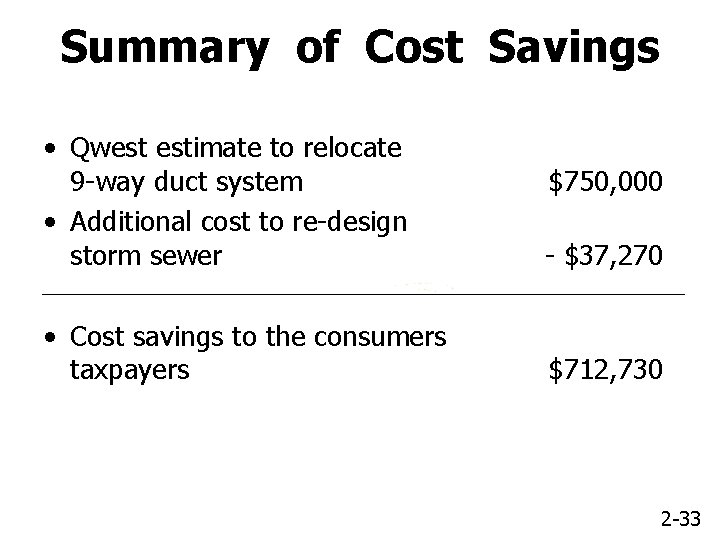
Summary of Cost Savings • Qwest estimate to relocate 9 -Way duct system • Additional cost to re-design storm sewer - $37, 270 • Cost savings to the consumers/ taxpayers $712, 730 $750, 000 2 -29
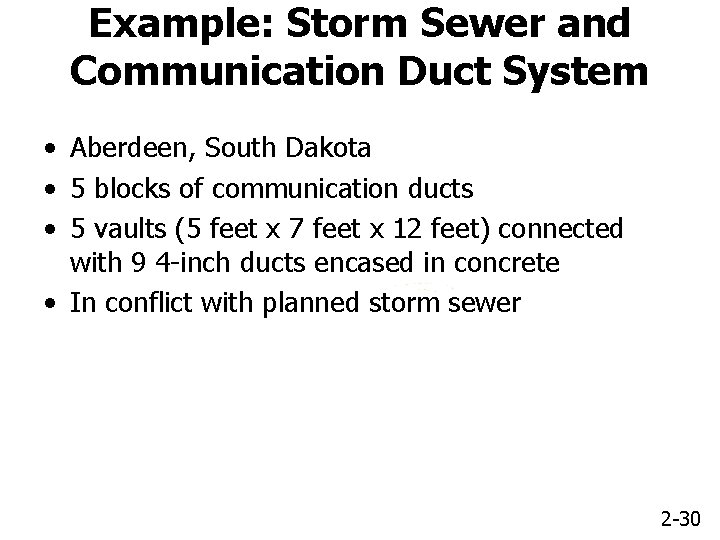
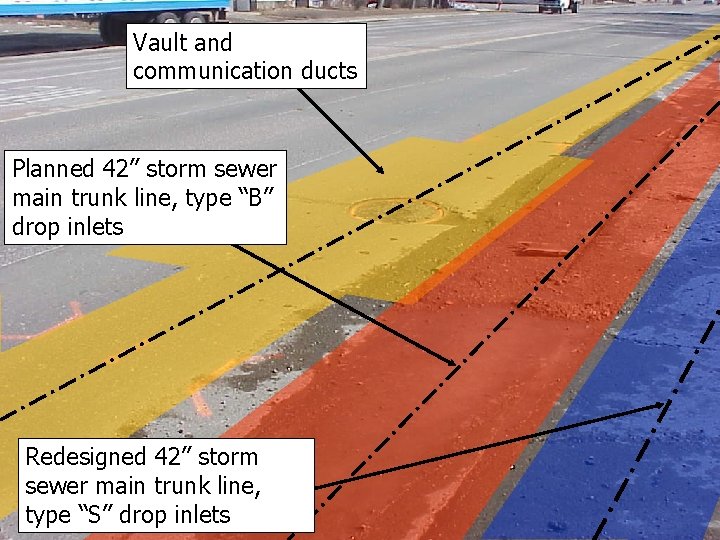
Example: Storm Sewer and Communication Duct System • Aberdeen, South Dakota • 5 blocks of communication ducts • 5 vaults (5 feet x 7 feet x 12 feet) connected with 9 4 -inch ducts encased in concrete • In conflict with planned storm sewer 2 -30
Vault and communication ducts Planned 42” storm sewer main trunk line, type “B” drop inlets Redesigned 42” storm sewer main trunk line, type “S” drop inlets 2 -31
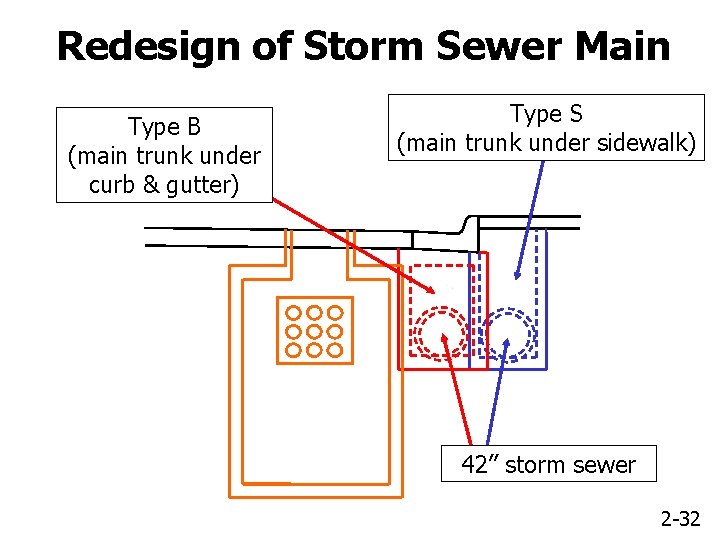
Redesign of Storm Sewer Main Type B (main trunk under curb & gutter) Type S (main trunk under sidewalk) 42” storm sewer 2 -32
Summary of Cost Savings • Qwest estimate to relocate 9 -way duct system • Additional cost to re-design storm sewer - $37, 270 • Cost savings to the consumers taxpayers $712, 730 $750, 000 2 -33
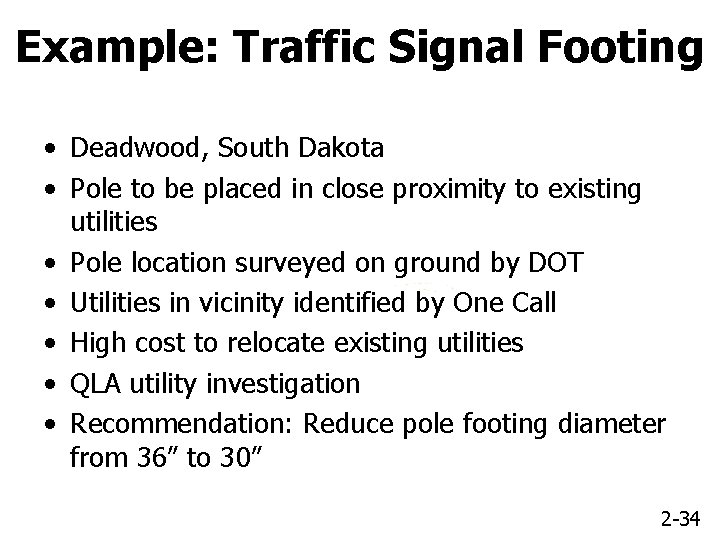
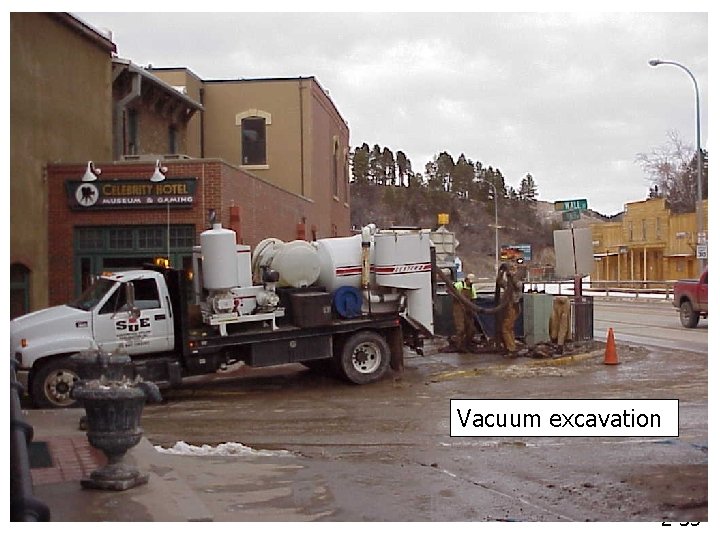
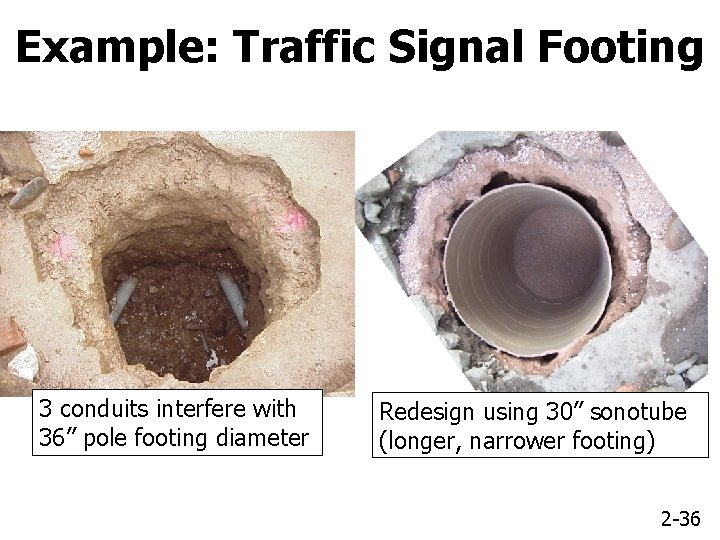
Example: Traffic Signal Footing • Deadwood, South Dakota • Pole to be placed in close proximity to existing utilities • Pole location surveyed on ground by DOT • Utilities in vicinity identified by One Call • High cost to relocate existing utilities • QLA utility investigation • Recommendation: Reduce pole footing diameter from 36” to 30” 2 -34
Vacuum excavation 2 -35
Example: Traffic Signal Footing 3 conduits interfere with 36” pole footing diameter Redesign using 30” sonotube (longer, narrower footing) 2 -36
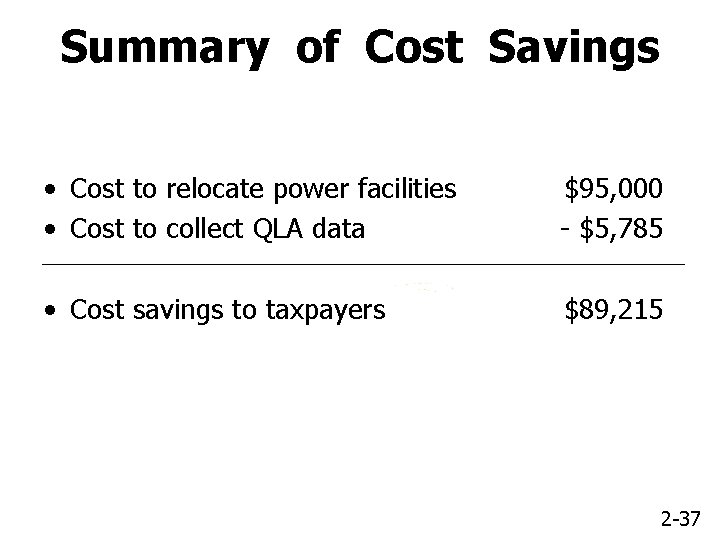
Summary of Cost Savings • Cost to relocate power facilities • Cost to collect QLA data $95, 000 - $5, 785 • Cost savings to taxpayers $89, 215 2 -37
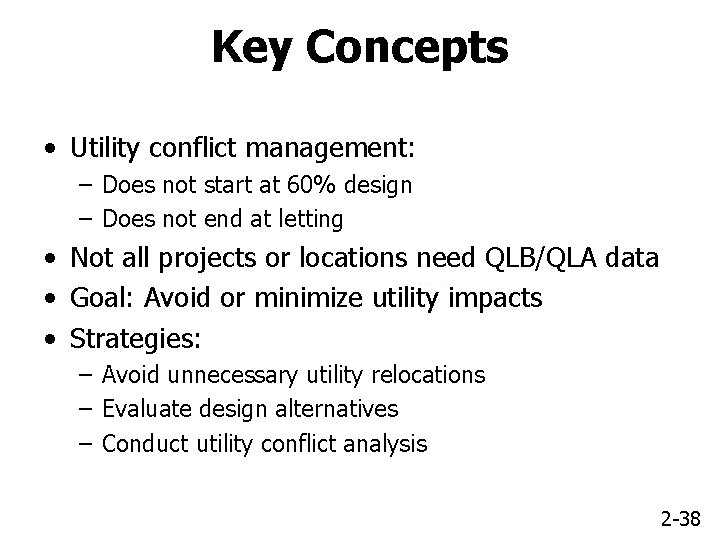
Key Concepts • Utility conflict management: – Does not start at 60% design – Does not end at letting • Not all projects or locations need QLB/QLA data • Goal: Avoid or minimize utility impacts • Strategies: – Avoid unnecessary utility relocations – Evaluate design alternatives – Conduct utility conflict analysis 2 -38
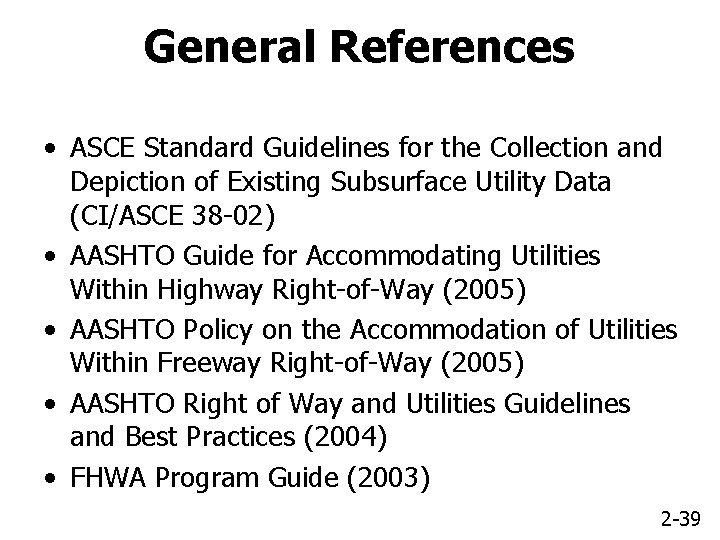
General References • ASCE Standard Guidelines for the Collection and Depiction of Existing Subsurface Utility Data (CI/ASCE 38 -02) • AASHTO Guide for Accommodating Utilities Within Highway Right-of-Way (2005) • AASHTO Policy on the Accommodation of Utilities Within Freeway Right-of-Way (2005) • AASHTO Right of Way and Utilities Guidelines and Best Practices (2004) • FHWA Program Guide (2003) 2 -39
2. 2 SHRP 2 R 15(B) Research Findings 2 -40
Background and Objectives • Utility conflict matrix (UCM) an important tool for managing utility conflicts • Objectives: – Review trends and identify best practices for the use of UCMs – Develop a recommended UCM approach and document related processes – Develop training materials for implementing prototype UCM 2 -41
Research Team • Texas Transportation Institute – Cesar Quiroga (PI), Edgar Kraus • Cardno TBE – Paul Scott, Nick Zembillas, Vinnie La. Vallette • Utility Mapping Services – Phil Meis, Tom Swafford • Ash Engineering – Janice Sands Ash, Gary Monday 2 -42
Project Phases • Phase I (03/09 – 02/10) – Surveys and interviews – Review of national trends – Prototype UCM development • Phase II (03/10 – 10/10) – Work sessions (California, Georgia, Texas) – Training material development • Phase III (11/10 – 07/11) – Training material testing – Implementation guideline development – Final report 2 -43
Surveys, Interviews, Trends, Prototype UCM • Online survey of 50 states: – 103 responses from 34 states – 82 responses from utility staff, 21 design staff – Headquarters and district level • Follow-up interviews to obtain additional information from DOTs: – 38 interviews with representatives from 23 states 2 -44
State of the Practice: Utility Facility Data Tracking 2 -45
State of the Practice: Utility Facility Data Tracking 2 -46
State of the Practice: Utility Conflict Data Tracking 2 -47
State of the Practice: Utility Conflict Data Tracking 2 -48
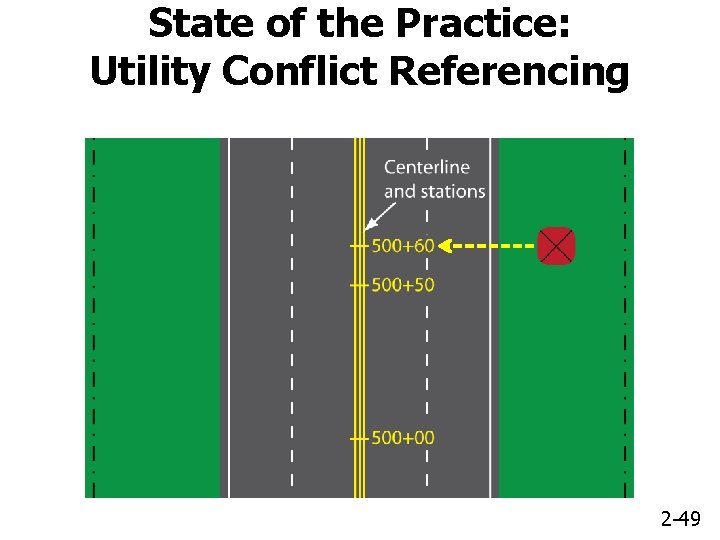
State of the Practice: Utility Conflict Referencing 2 -49
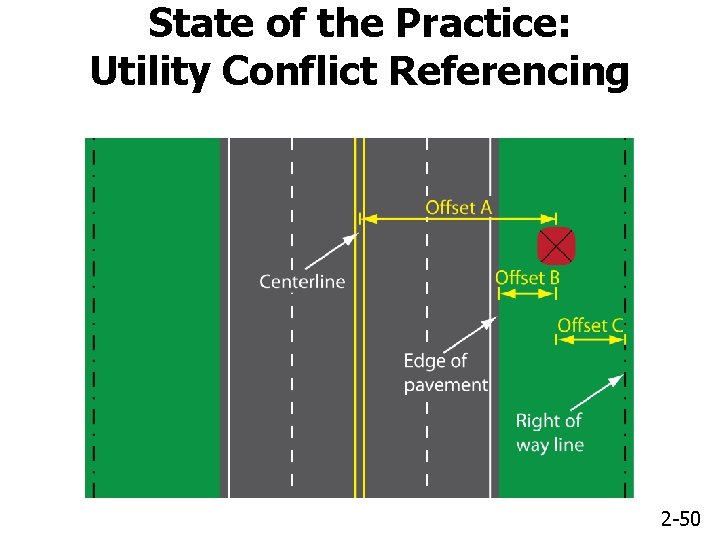
State of the Practice: Utility Conflict Referencing 2 -50
Utility Conflict Referencing: Longitudinal Alignments 2 -51
Utility Conflict Referencing: Offsets with Respect to 2 -52
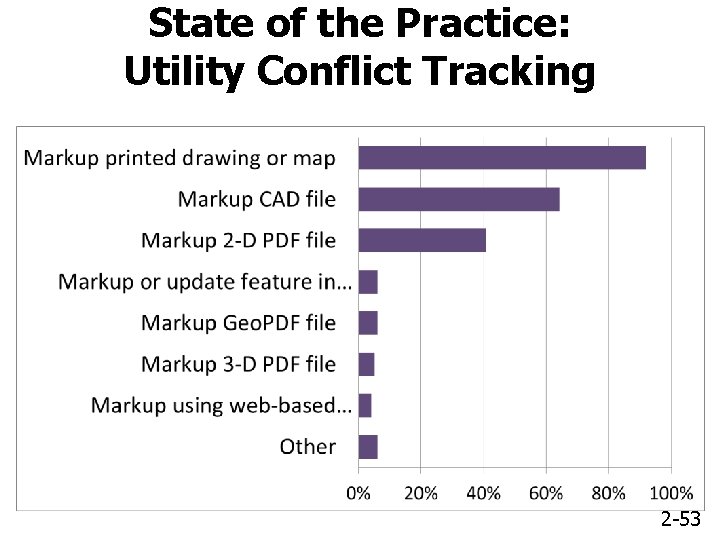
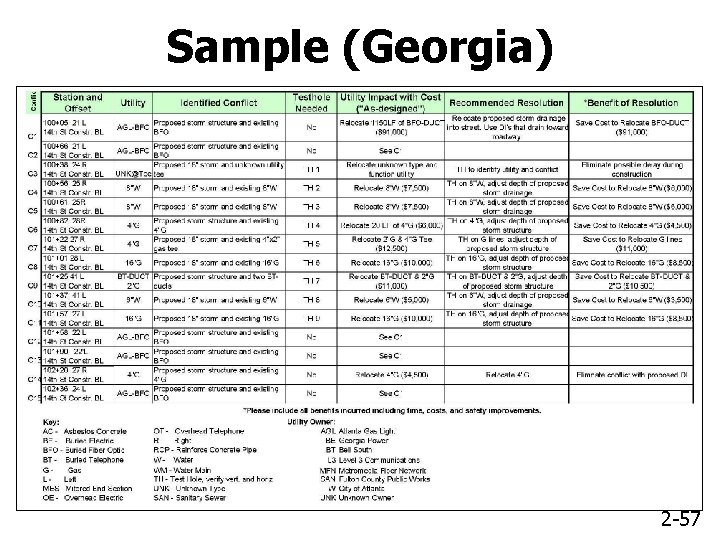
State of the Practice: Utility Conflict Tracking 2 -53
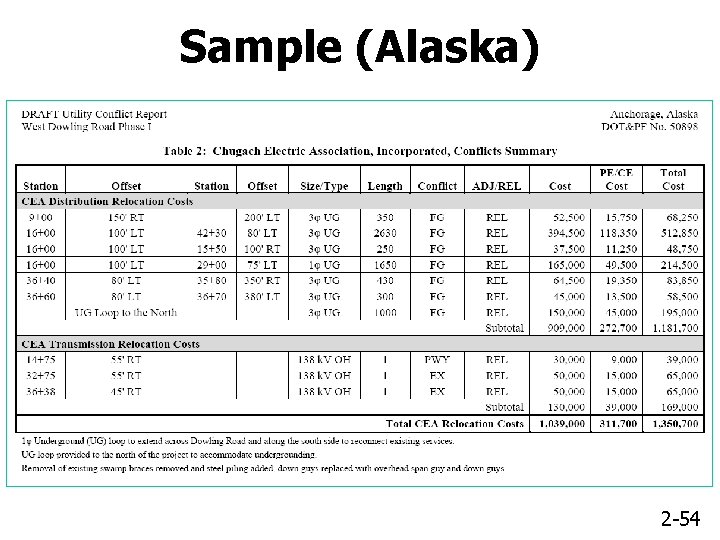
Sample (Alaska) 2 -54
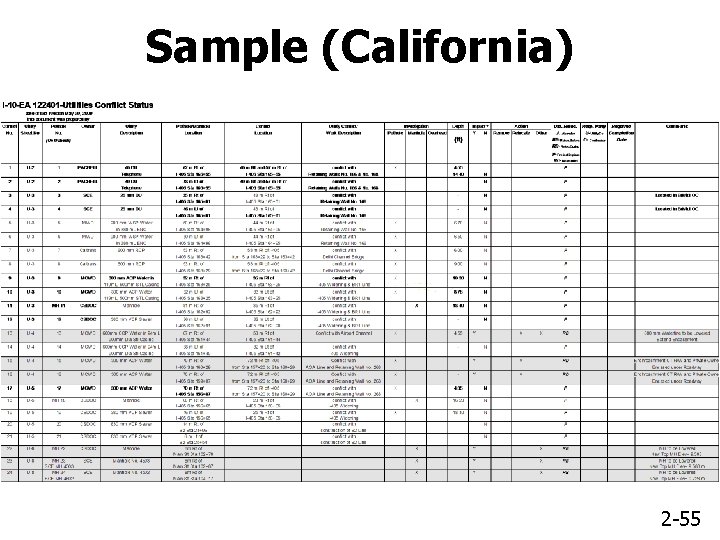
Sample (California) 2 -55
Sample (Florida) 2 -56
Sample (Georgia) 2 -57
Sample (Michigan) 2 -58
Sample (South Dakota) 2 -59
Sample (Texas) 2 -60
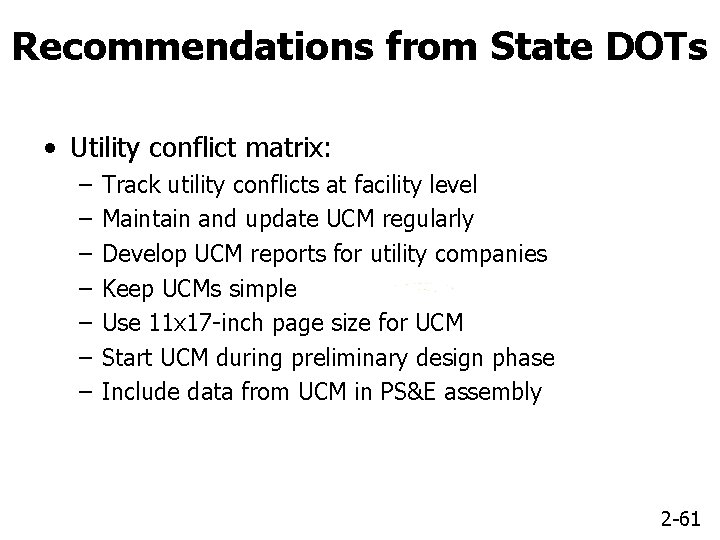
Recommendations from State DOTs • Utility conflict matrix: – – – – Track utility conflicts at facility level Maintain and update UCM regularly Develop UCM reports for utility companies Keep UCMs simple Use 11 x 17 -inch page size for UCM Start UCM during preliminary design phase Include data from UCM in PS&E assembly 2 -61
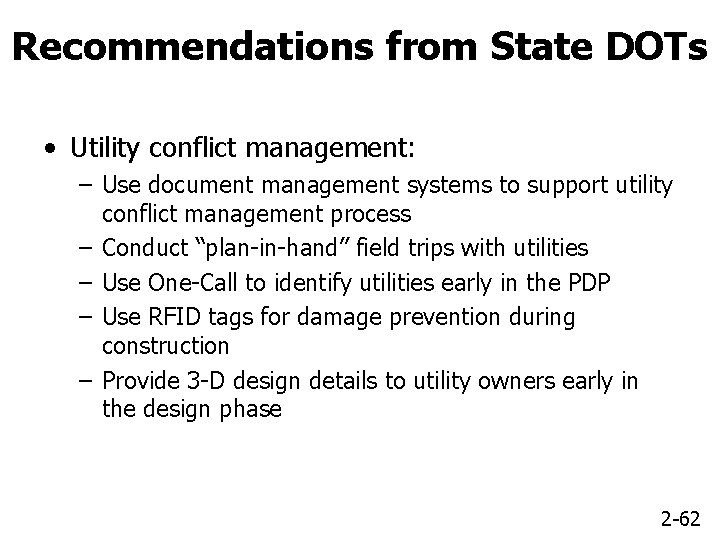
Recommendations from State DOTs • Utility conflict management: – Use document management systems to support utility conflict management process – Conduct “plan-in-hand” field trips with utilities – Use One-Call to identify utilities early in the PDP – Use RFID tags for damage prevention during construction – Provide 3 -D design details to utility owners early in the design phase 2 -62
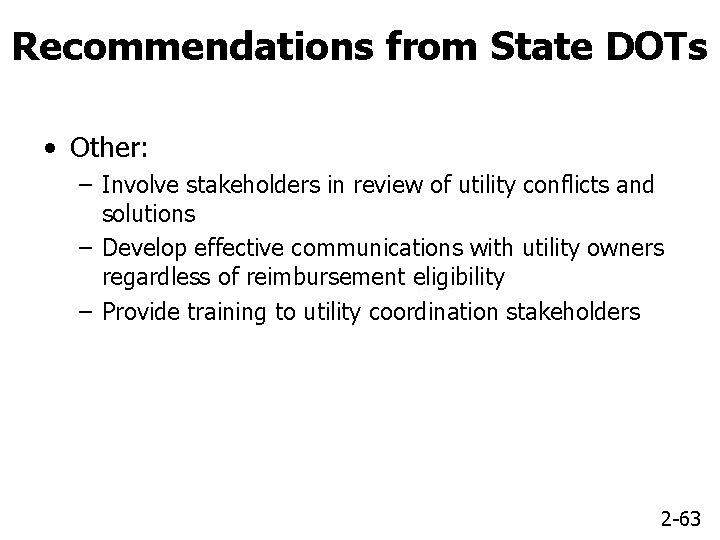
Recommendations from State DOTs • Other: – Involve stakeholders in review of utility conflicts and solutions – Develop effective communications with utility owners regardless of reimbursement eligibility – Provide training to utility coordination stakeholders 2 -63
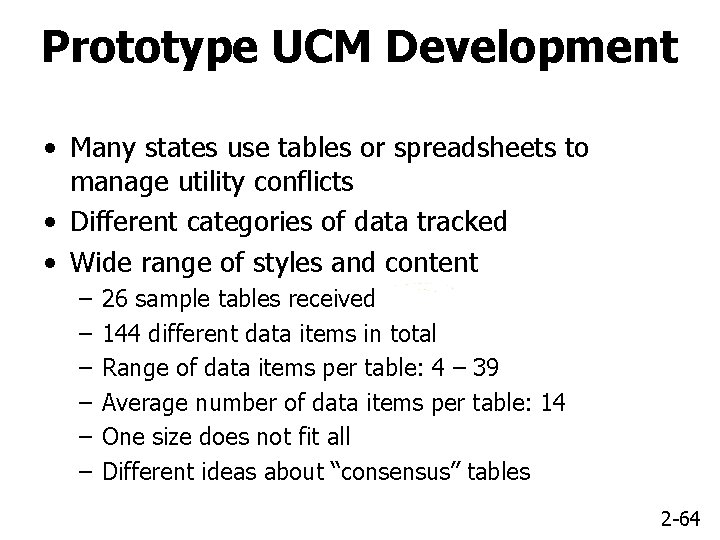
Prototype UCM Development • Many states use tables or spreadsheets to manage utility conflicts • Different categories of data tracked • Wide range of styles and content – – – 26 sample tables received 144 different data items in total Range of data items per table: 4 – 39 Average number of data items per table: 14 One size does not fit all Different ideas about “consensus” tables 2 -64
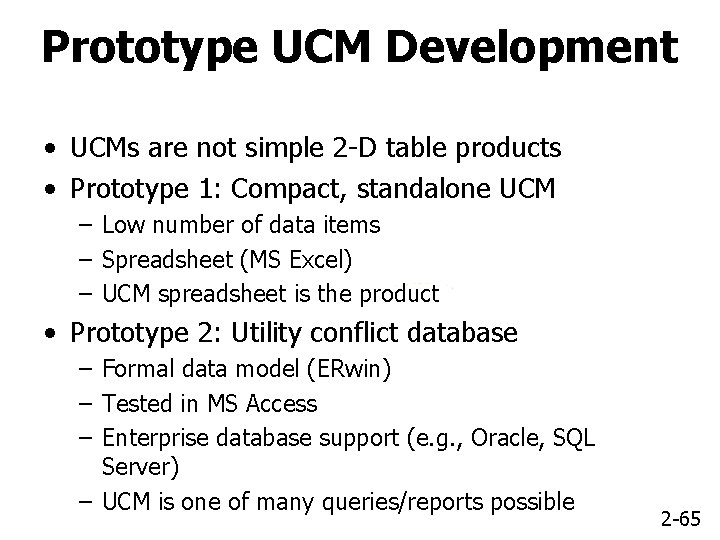
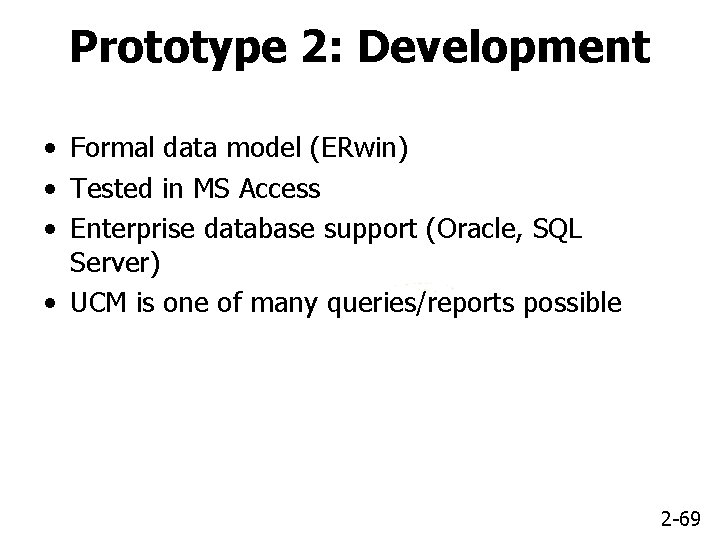
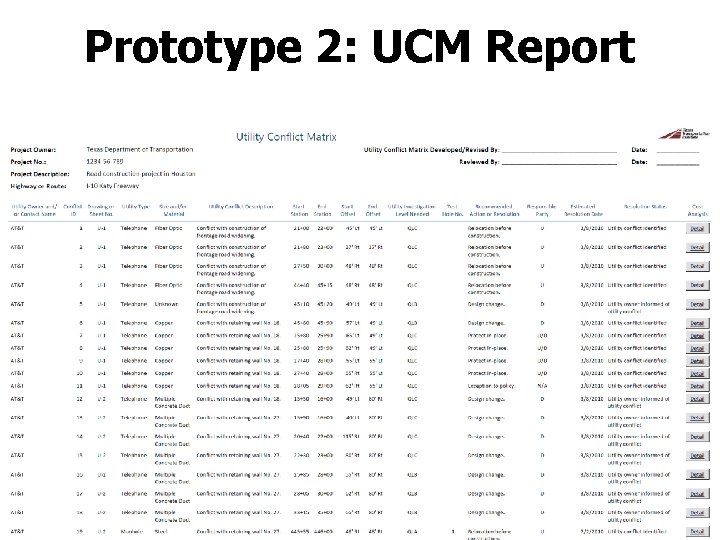
Prototype UCM Development • UCMs are not simple 2 -D table products • Prototype 1: Compact, standalone UCM – Low number of data items – Spreadsheet (MS Excel) – UCM spreadsheet is the product • Prototype 2: Utility conflict database – Formal data model (ERwin) – Tested in MS Access – Enterprise database support (e. g. , Oracle, SQL Server) – UCM is one of many queries/reports possible 2 -65
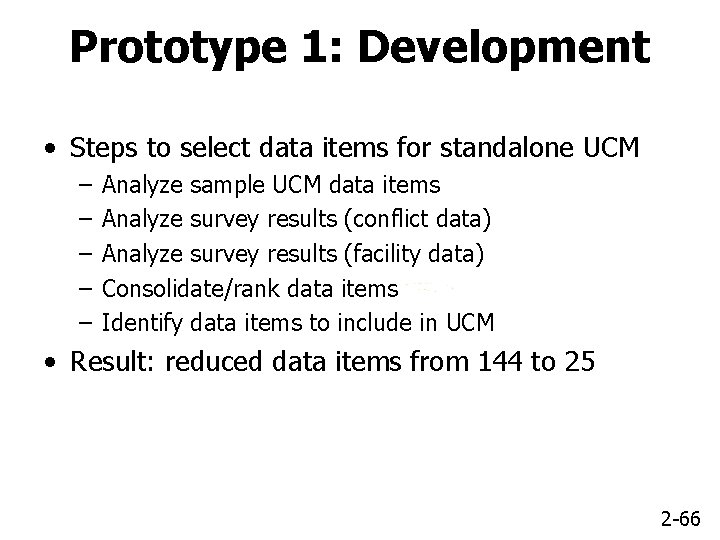
Prototype 1: Development • Steps to select data items for standalone UCM – – – Analyze sample UCM data items Analyze survey results (conflict data) Analyze survey results (facility data) Consolidate/rank data items Identify data items to include in UCM • Result: reduced data items from 144 to 25 2 -66
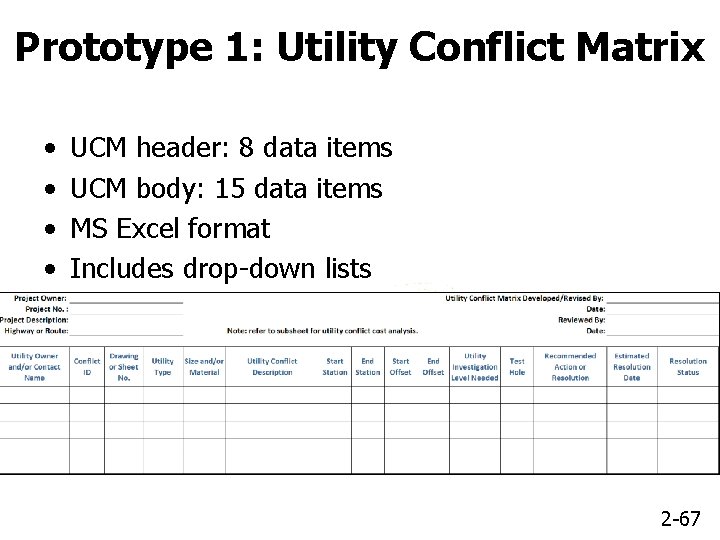
Prototype 1: Utility Conflict Matrix • • UCM header: 8 data items UCM body: 15 data items MS Excel format Includes drop-down lists 2 -67
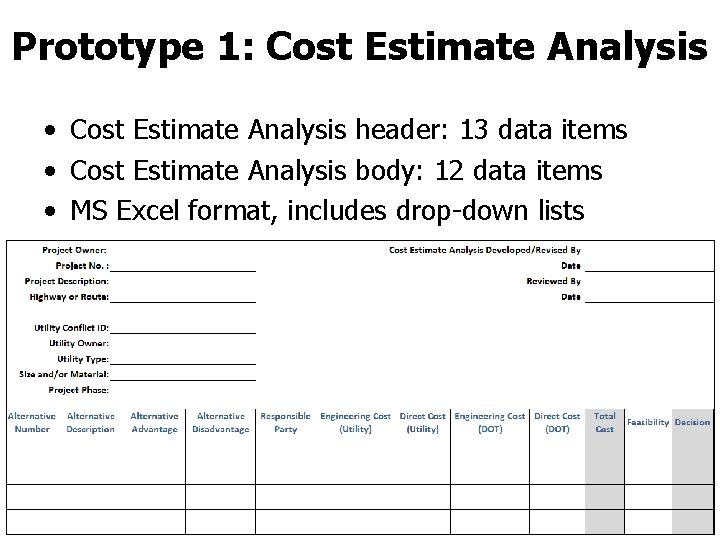
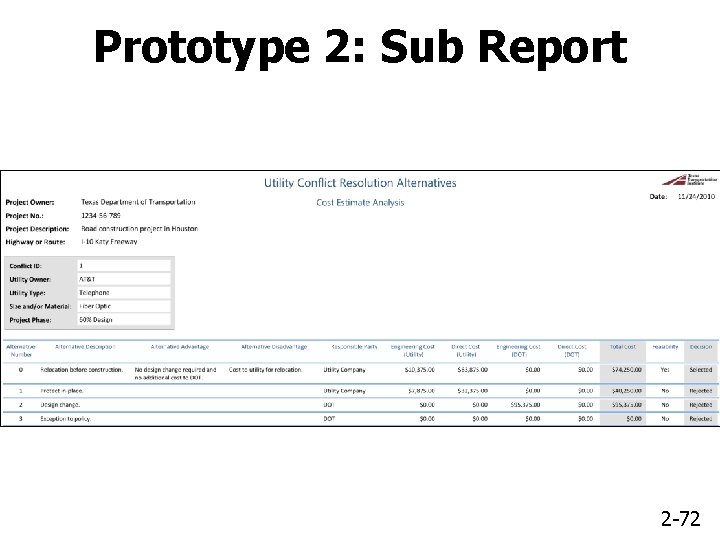
Prototype 1: Cost Estimate Analysis • Cost Estimate Analysis header: 13 data items • Cost Estimate Analysis body: 12 data items • MS Excel format, includes drop-down lists 2 -68
Prototype 2: Development • Formal data model (ERwin) • Tested in MS Access • Enterprise database support (Oracle, SQL Server) • UCM is one of many queries/reports possible 2 -69
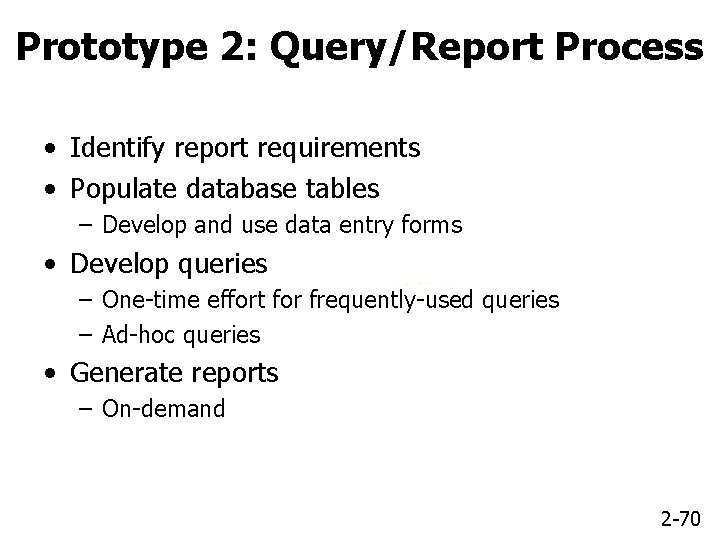
Prototype 2: Query/Report Process • Identify report requirements • Populate database tables – Develop and use data entry forms • Develop queries – One-time effort for frequently-used queries – Ad-hoc queries • Generate reports – On-demand 2 -70
Prototype 2: UCM Report 2 -71
Prototype 2: Sub Report 2 -72
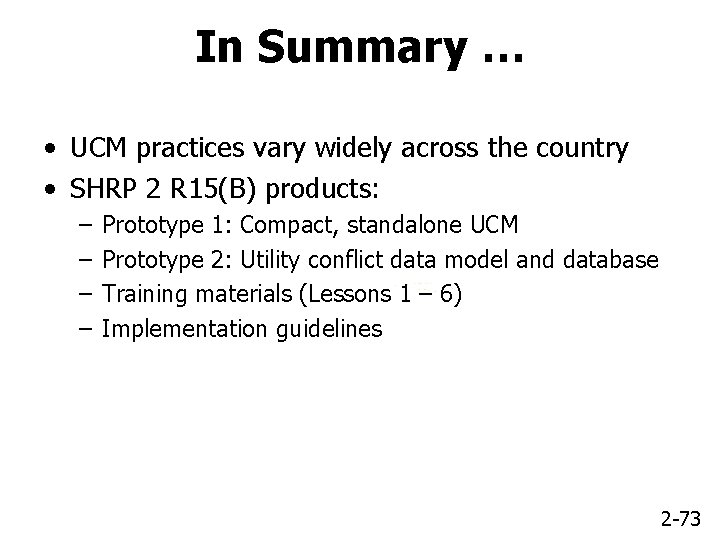
In Summary … • UCM practices vary widely across the country • SHRP 2 R 15(B) products: – – Prototype 1: Compact, standalone UCM Prototype 2: Utility conflict data model and database Training materials (Lessons 1 – 6) Implementation guidelines 2 -73
2. 3 Questions and Answers 2 -74