
Lesson 2 Product Supportability across the Life Cycle
Lesson 2: Product Supportability across the Life Cycle LOG 211 Lesson 2: Product Supportability across the Life Cycle FINAL v 1. 3 2 -1
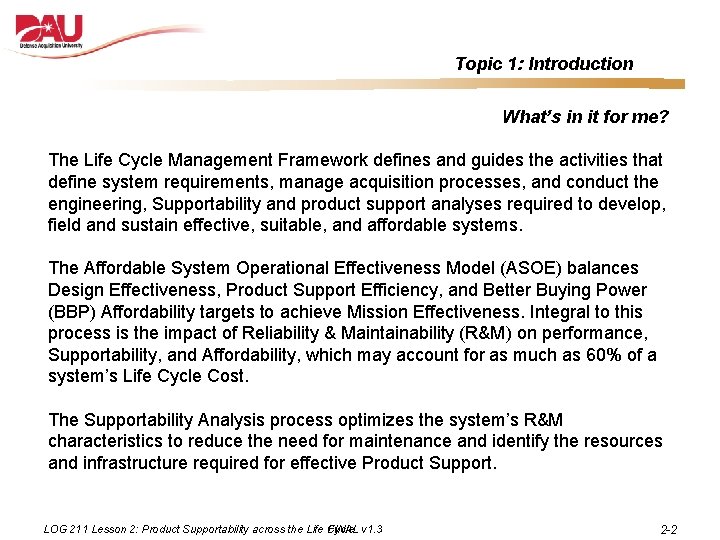
Topic 1: Introduction What’s in it for me? The Life Cycle Management Framework defines and guides the activities that define system requirements, manage acquisition processes, and conduct the engineering, Supportability and product support analyses required to develop, field and sustain effective, suitable, and affordable systems. The Affordable System Operational Effectiveness Model (ASOE) balances Design Effectiveness, Product Support Efficiency, and Better Buying Power (BBP) Affordability targets to achieve Mission Effectiveness. Integral to this process is the impact of Reliability & Maintainability (R&M) on performance, Supportability, and Affordability, which may account for as much as 60% of a system’s Life Cycle Cost. The Supportability Analysis process optimizes the system’s R&M characteristics to reduce the need for maintenance and identify the resources and infrastructure required for effective Product Support. LOG 211 Lesson 2: Product Supportability across the Life Cycle FINAL v 1. 3 2 -2
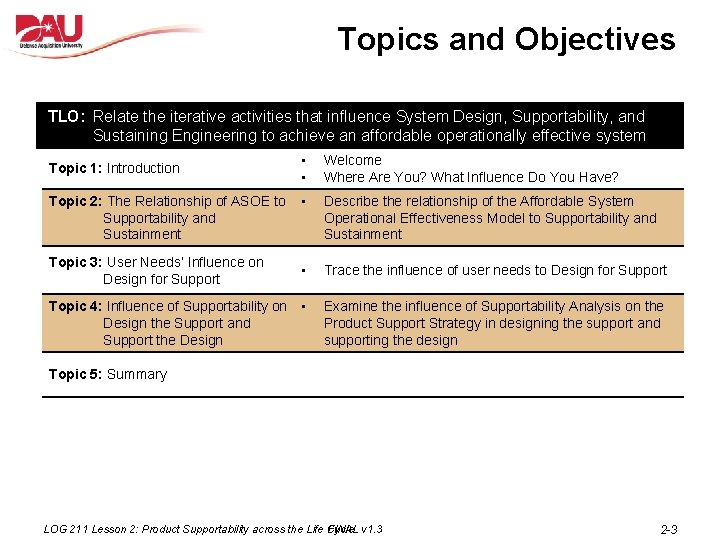
Topics and Objectives TLO: Relate the iterative activities that influence System Design, Supportability, and Topic Sustaining Engineering to achieve Objectives an affordable operationally effective system • • Welcome Where Are You? What Influence Do You Have? • Describe the relationship of the Affordable System Operational Effectiveness Model to Supportability and Sustainment • Trace the influence of user needs to Design for Support Topic 4: Influence of Supportability on • Design the Support and Support the Design Examine the influence of Supportability Analysis on the Product Support Strategy in designing the support and supporting the design Topic 1: Introduction Topic 2: The Relationship of ASOE to Supportability and Sustainment Topic 3: User Needs’ Influence on Design for Support Topic 5: Summary LOG 211 Lesson 2: Product Supportability across the Life Cycle FINAL v 1. 3 2 -3
Topic 2: The Relationship of ASOE to Supportability and Sustainment LOG 211 Lesson 2: Product Supportability across the Life Cycle FINAL v 1. 3 2 -4
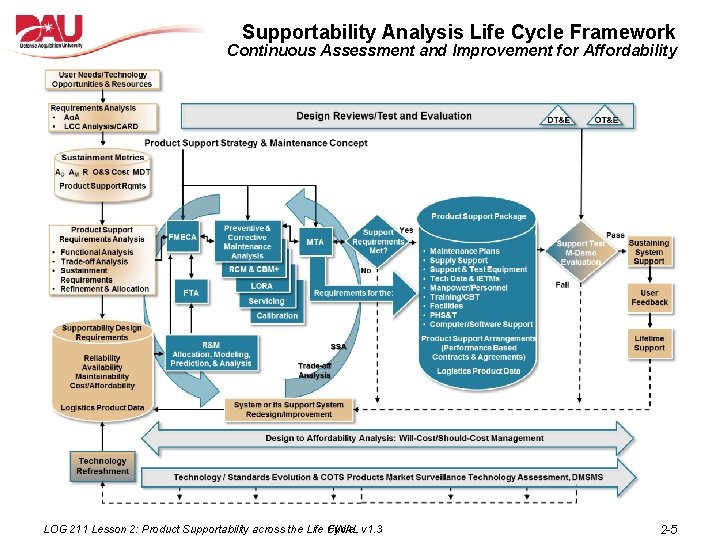
Supportability Analysis Life Cycle Framework Continuous Assessment and Improvement for Affordability LOG 211 Lesson 2: Product Supportability across the Life Cycle FINAL v 1. 3 2 -5
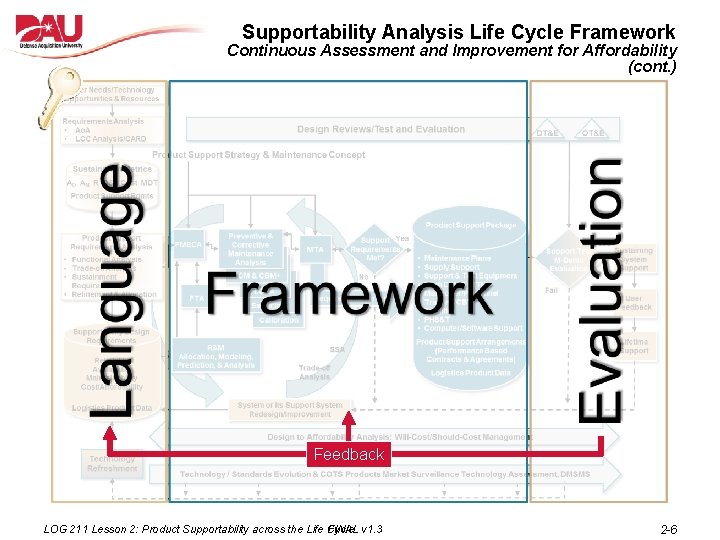
Supportability Analysis Life Cycle Framework Continuous Assessment and Improvement for Affordability (cont. ) Feedback LOG 211 Lesson 2: Product Supportability across the Life Cycle FINAL v 1. 3 2 -6
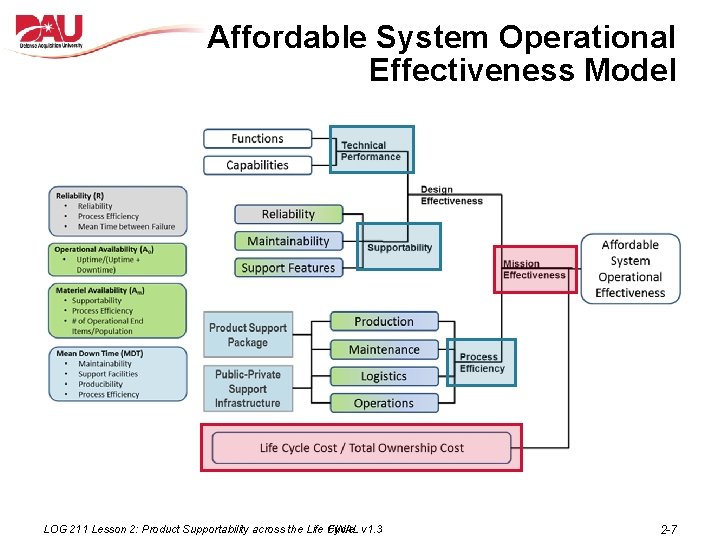
Affordable System Operational Effectiveness Model LOG 211 Lesson 2: Product Supportability across the Life Cycle FINAL v 1. 3 2 -7
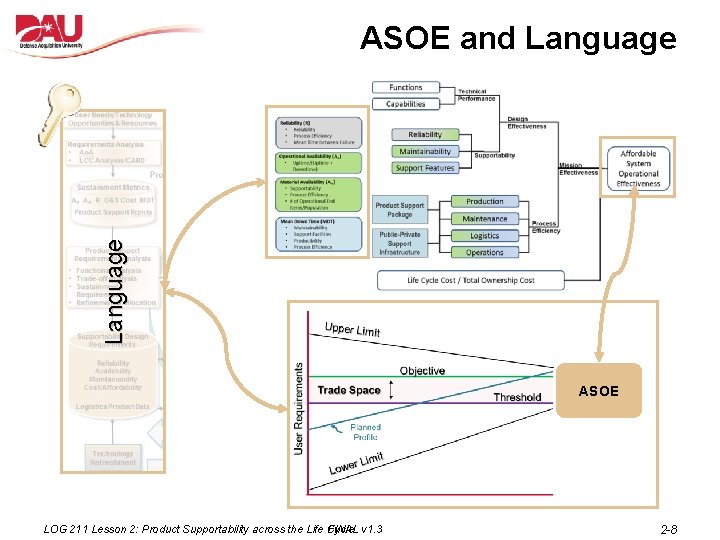
Language ASOE and Language ASOE LOG 211 Lesson 2: Product Supportability across the Life Cycle FINAL v 1. 3 2 -8
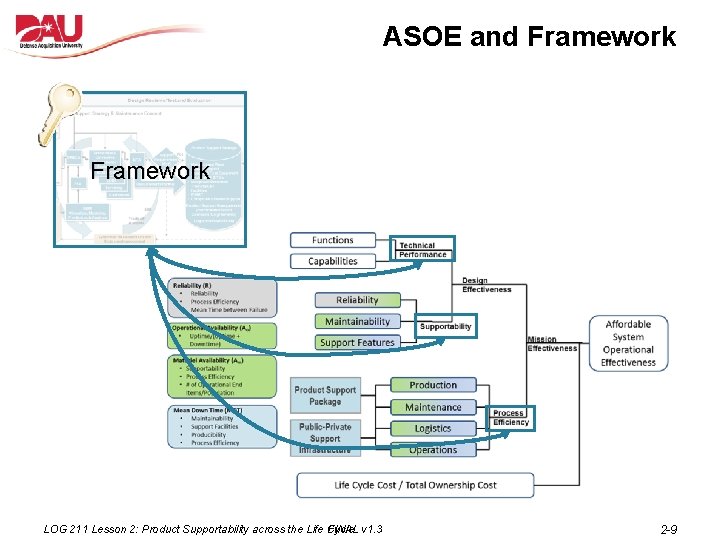
ASOE and Framework LOG 211 Lesson 2: Product Supportability across the Life Cycle FINAL v 1. 3 2 -9
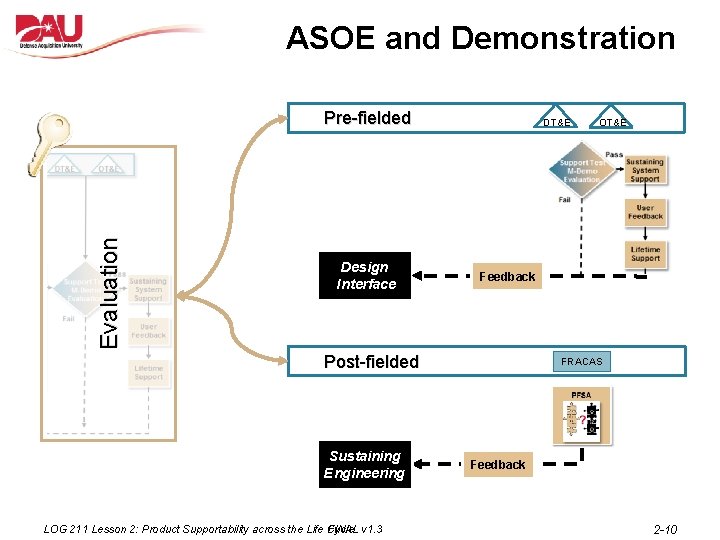
ASOE and Demonstration Evaluation Pre-fielded Design Interface DT&E Feedback Post-fielded Sustaining Engineering LOG 211 Lesson 2: Product Supportability across the Life Cycle FINAL v 1. 3 OT&E FRACAS Feedback 2 -10
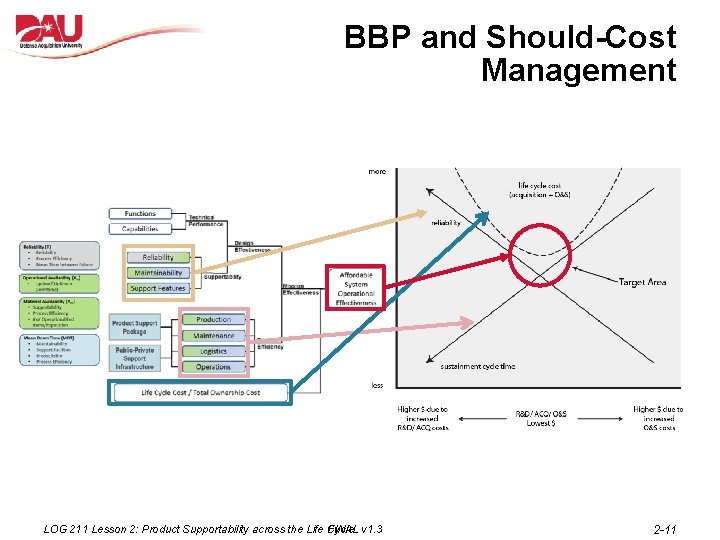
BBP and Should-Cost Management LOG 211 Lesson 2: Product Supportability across the Life Cycle FINAL v 1. 3 2 -11
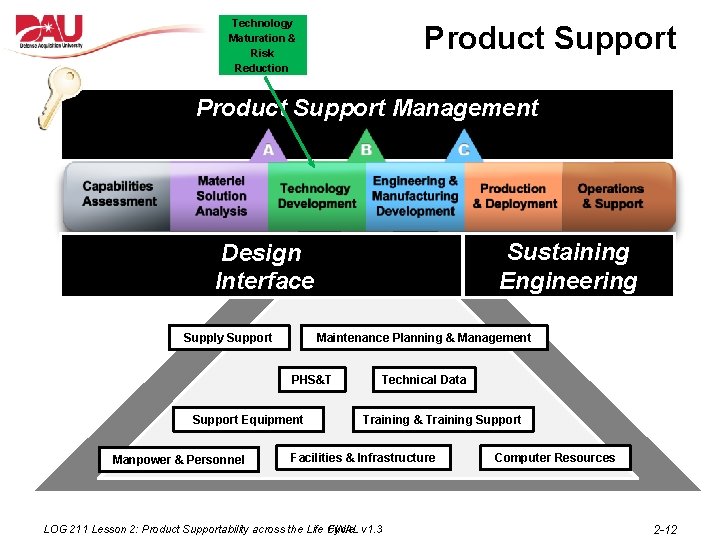
Technology Maturation & Risk Reduction Product Support Management Sustaining Engineering Design Interface Supply Support Maintenance Planning & Management PHS&T Support Equipment Manpower & Personnel Technical Data Training & Training Support Facilities & Infrastructure LOG 211 Lesson 2: Product Supportability across the Life Cycle FINAL v 1. 3 Computer Resources 2 -12
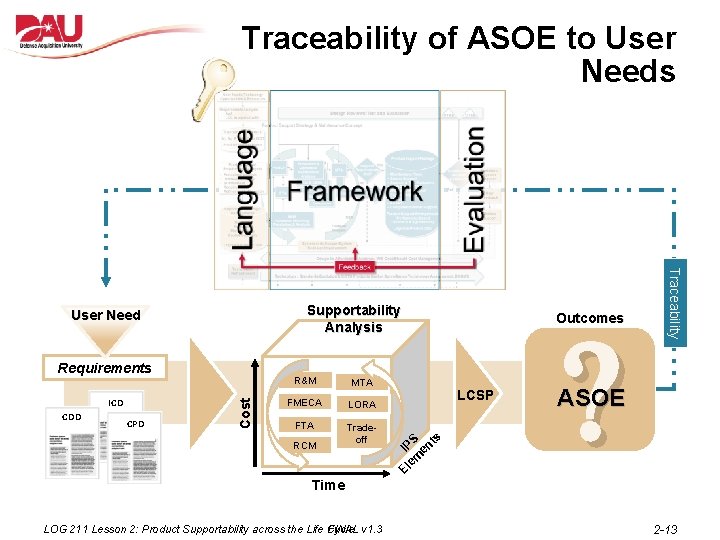
Traceability of ASOE to User Needs ICD CDD CPD Cost Requirements R&M MTA FMECA LORA FTA Tradeoff RCM Outcomes LCSP s S t IP en em El Traceability Supportability Analysis User Need ASOE Time LOG 211 Lesson 2: Product Supportability across the Life Cycle FINAL v 1. 3 2 -13
Topic 3: User Needs’ Influence on Design for Support LOG 211 Lesson 2: Product Supportability across the Life Cycle FINAL v 1. 3 2 -14
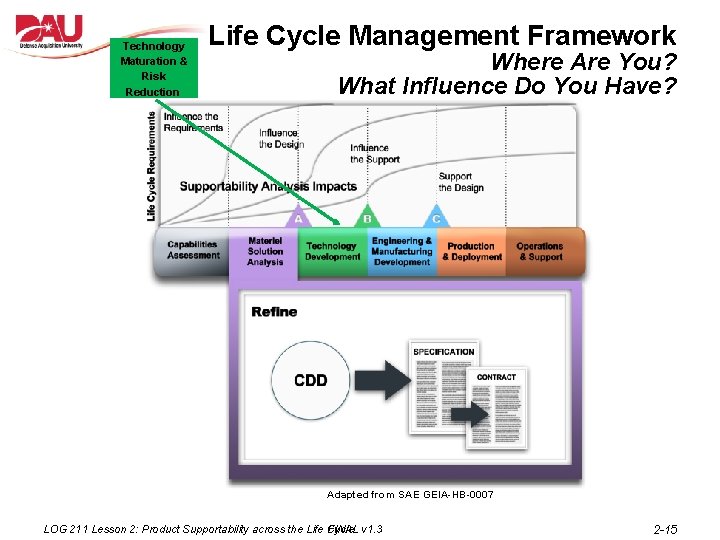
Technology Maturation & Risk Reduction Life Cycle Management Framework Where Are You? What Influence Do You Have? Adapted from SAE GEIA-HB-0007 LOG 211 Lesson 2: Product Supportability across the Life Cycle FINAL v 1. 3 2 -15
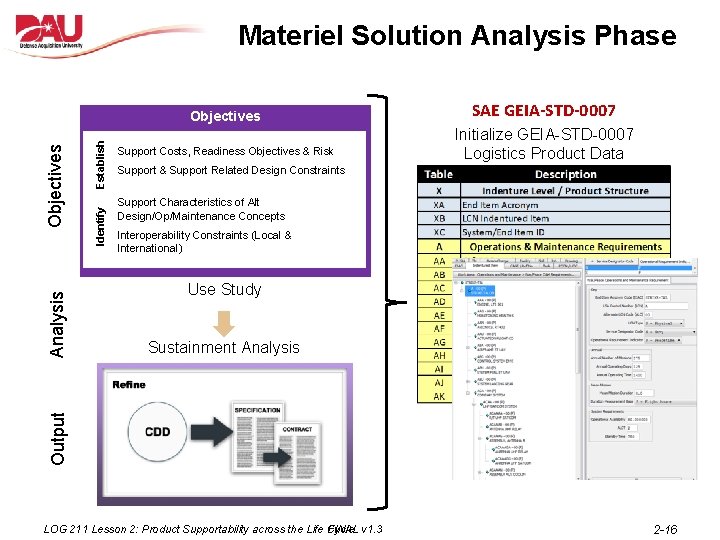
Establish Identify Objectives SAE GEIA-STD-0007 Support Costs, Readiness Objectives & Risk Initialize GEIA-STD-0007 Logistics Product Data Support & Support Related Design Constraints Support Characteristics of Alt Design/Op/Maintenance Concepts Interoperability Constraints (Local & International) Use Study Sustainment Analysis Output Analysis Objectives Materiel Solution Analysis Phase LOG 211 Lesson 2: Product Supportability across the Life Cycle FINAL v 1. 3 2 -16
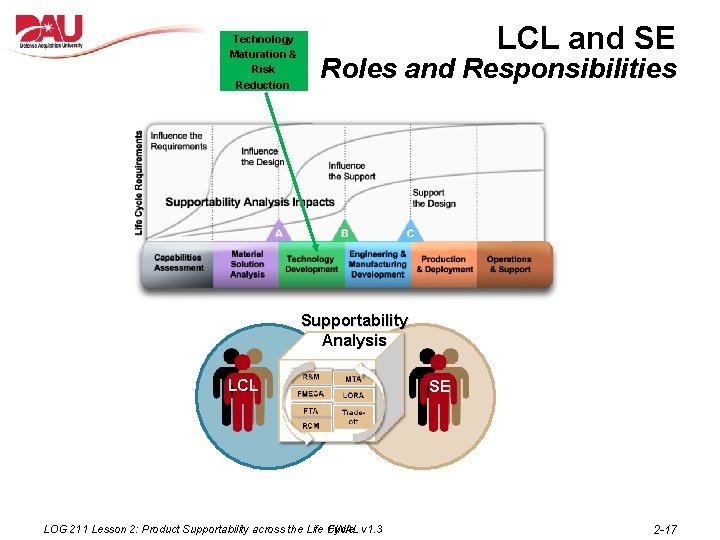
Technology Maturation & Risk Reduction LCL and SE Roles and Responsibilities Supportability Analysis LCL LOG 211 Lesson 2: Product Supportability across the Life Cycle FINAL v 1. 3 SE 2 -17
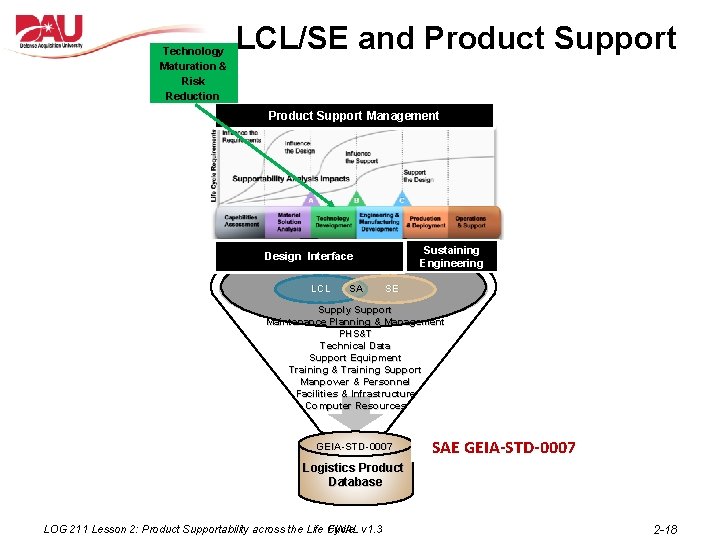
Technology Maturation & Risk Reduction LCL/SE and Product Support Management Sustaining Engineering Design Interface LCL SA SE Supply Support Maintenance Planning & Management PHS&T Technical Data Support Equipment Training & Training Support Manpower & Personnel Facilities & Infrastructure Computer Resources GEIA-STD-0007 SAE GEIA-STD-0007 Logistics Product Database LOG 211 Lesson 2: Product Supportability across the Life Cycle FINAL v 1. 3 2 -18
Topic 4: Influence of Supportability on Design the Support and Support the Design LOG 211 Lesson 2: Product Supportability across the Life Cycle FINAL v 1. 3 2 -19
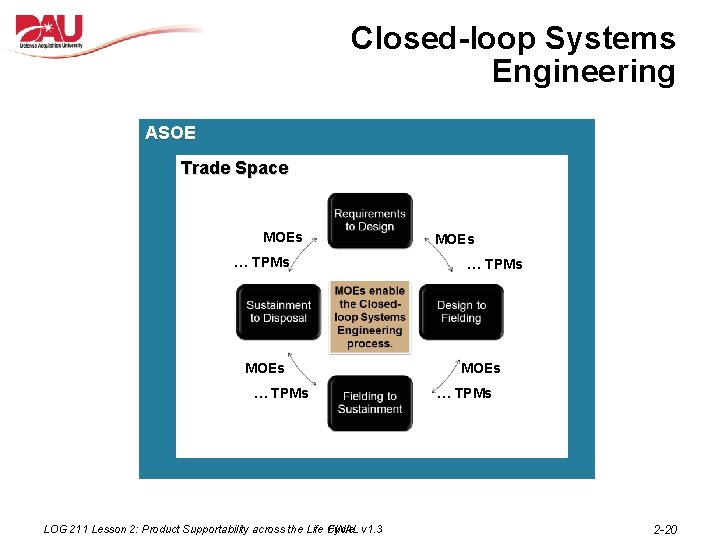
Closed-loop Systems Engineering ASOE Trade Space MOEs … TPMs LOG 211 Lesson 2: Product Supportability across the Life Cycle FINAL v 1. 3 MOEs … TPMs 2 -20
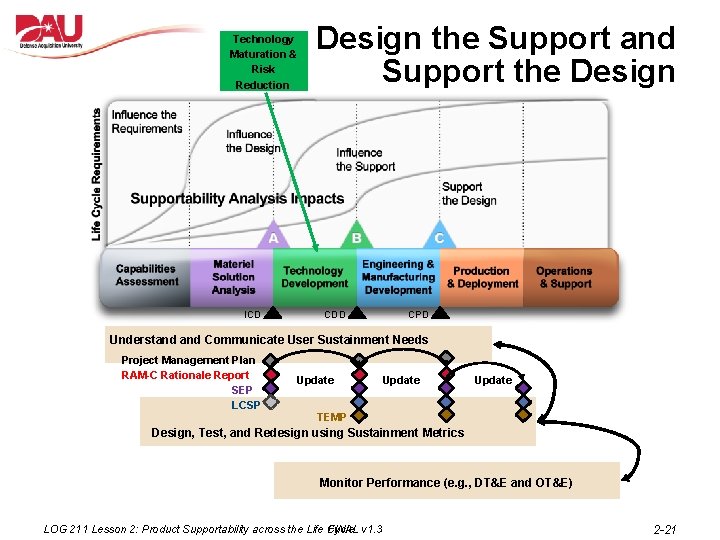
Technology Maturation & Risk Reduction ICD Design the Support and Support the Design CDD CPD Understand Communicate User Sustainment Needs Project Management Plan RAM-C Rationale Report SEP LCSP Update TEMP Design, Test, and Redesign using Sustainment Metrics Monitor Performance (e. g. , DT&E and OT&E) LOG 211 Lesson 2: Product Supportability across the Life Cycle FINAL v 1. 3 2 -21
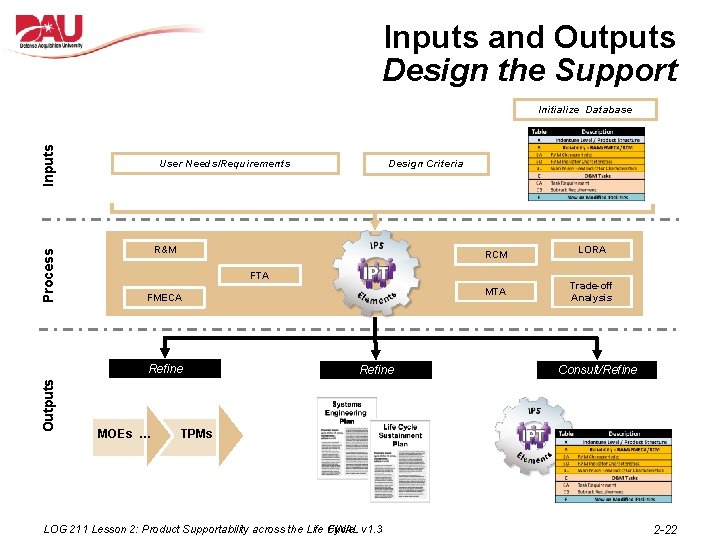
Inputs and Outputs Design the Support Process Inputs Initialize Database User Needs/Requirements R&M RCM FTA MTA FMECA Refine Outputs Design Criteria MOEs … Refine LORA Trade-off Analysis Consult/Refine TPMs LOG 211 Lesson 2: Product Supportability across the Life Cycle FINAL v 1. 3 2 -22
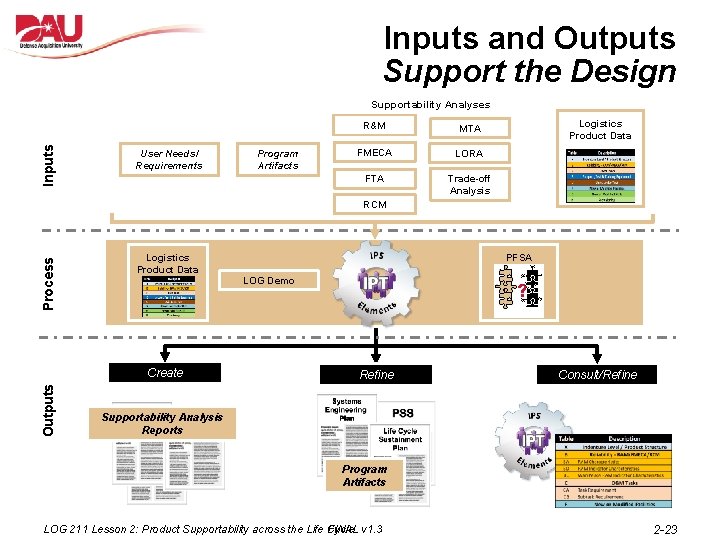
Inputs and Outputs Support the Design Inputs Supportability Analyses User Needs/ Requirements Program Artifacts R&M MTA FMECA LORA FTA Trade-off Analysis Logistics Product Data Process RCM Logistics Product Data Outputs Create PFSA LOG Demo ? Refine Consult/Refine Supportability Analysis Reports Program Artifacts LOG 211 Lesson 2: Product Supportability across the Life Cycle FINAL v 1. 3 2 -23
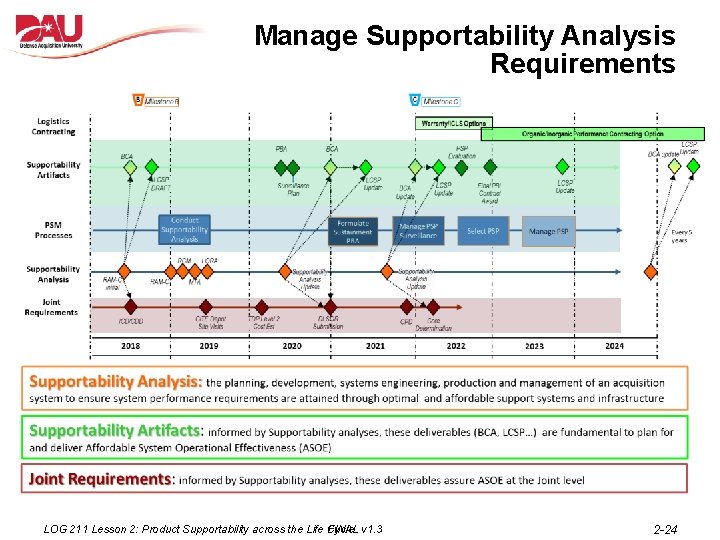
Manage Supportability Analysis Requirements LOG 211 Lesson 2: Product Supportability across the Life Cycle FINAL v 1. 3 2 -24
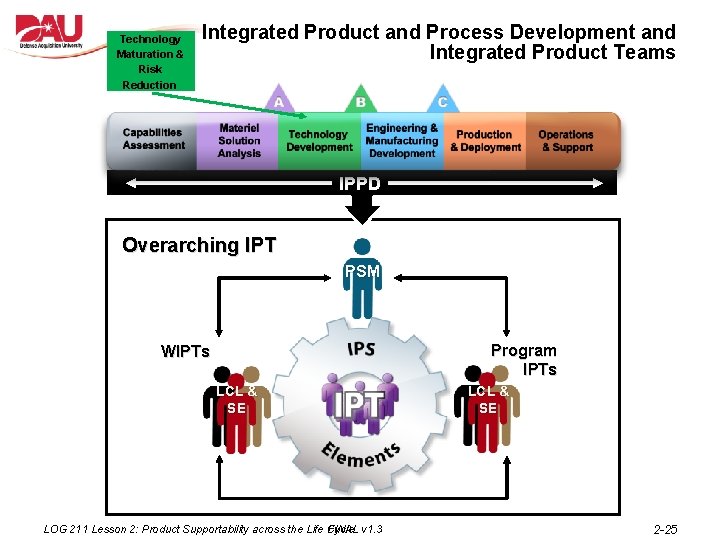
Technology Maturation & Risk Reduction Integrated Product and Process Development and Integrated Product Teams IPPD Overarching IPT PSM Program IPTs WIPTs LCL & SE LOG 211 Lesson 2: Product Supportability across the Life Cycle FINAL v 1. 3 LCL & SE 2 -25
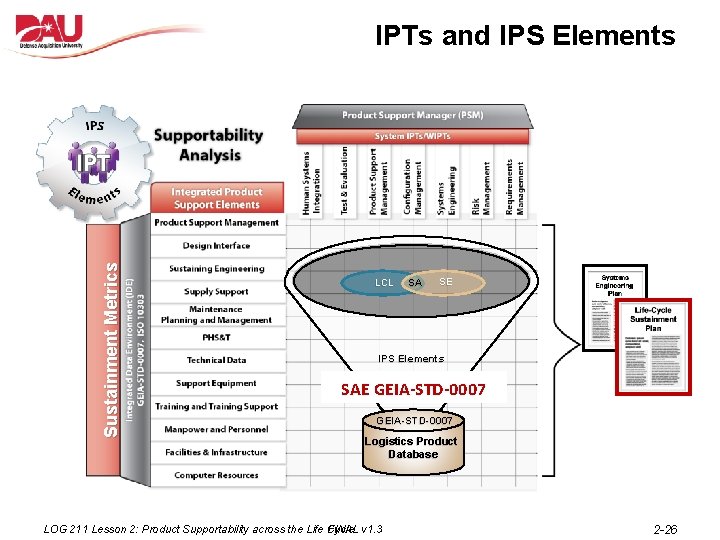
Sustainment Metrics IPTs and IPS Elements LCL SA SE IPS Elements SAE GEIA-STD-0007 Logistics Product Database LOG 211 Lesson 2: Product Supportability across the Life Cycle FINAL v 1. 3 2 -26
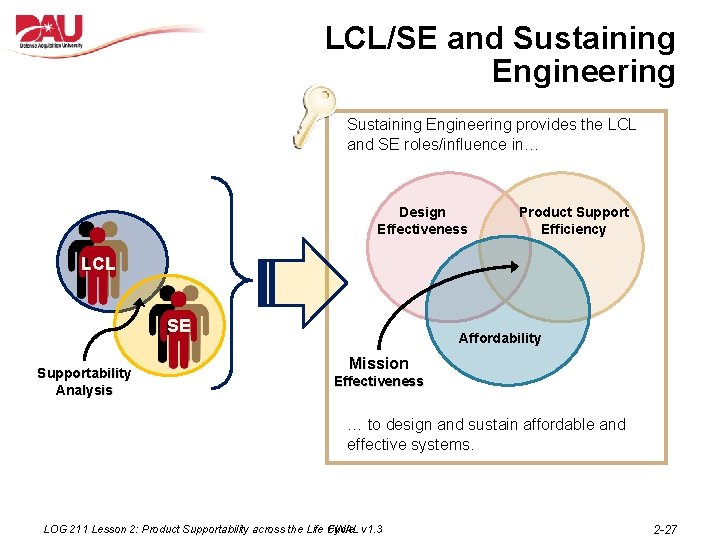
LCL/SE and Sustaining Engineering provides the LCL and SE roles/influence in… Design Effectiveness Product Support Efficiency LCL SE Supportability Analysis Affordability Mission Effectiveness … to design and sustain affordable and effective systems. LOG 211 Lesson 2: Product Supportability across the Life Cycle FINAL v 1. 3 2 -27
What are three overarching areas of the Supportability Analysis Life Cycle Framework and the three broad IPS Elements? Key Question Exercise 15 minutes Individual grade LOG 211 Lesson 2: Product Supportability across the Life Cycle FINAL v 1. 3 Directions Independently access Blackboard and select the Exercise link in the Lesson 2: Supportability across the Life Cycle folder to answer two questions. 2 -28
Topic 5: Summary LOG 211 Lesson 2: Product Supportability across the Life Cycle FINAL v 1. 3 2 -29
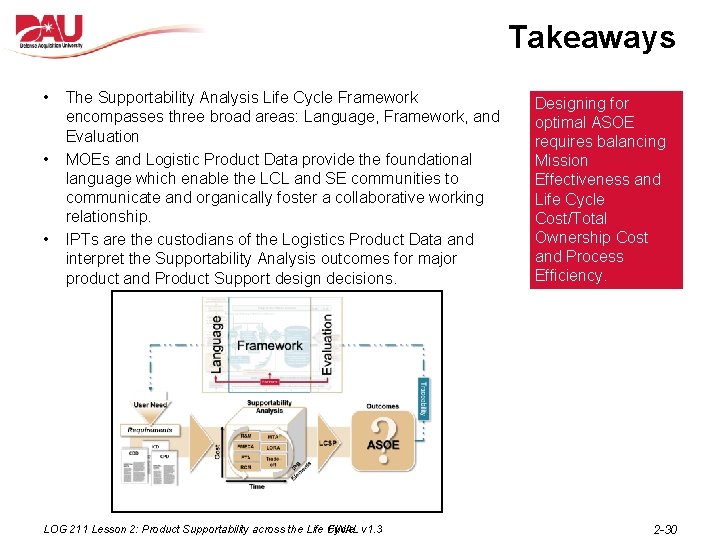
Takeaways • • • The Supportability Analysis Life Cycle Framework encompasses three broad areas: Language, Framework, and Evaluation MOEs and Logistic Product Data provide the foundational language which enable the LCL and SE communities to communicate and organically foster a collaborative working relationship. IPTs are the custodians of the Logistics Product Data and interpret the Supportability Analysis outcomes for major product and Product Support design decisions. LOG 211 Lesson 2: Product Supportability across the Life Cycle FINAL v 1. 3 Designing for optimal ASOE requires balancing Mission Effectiveness and Life Cycle Cost/Total Ownership Cost and Process Efficiency. 2 -30
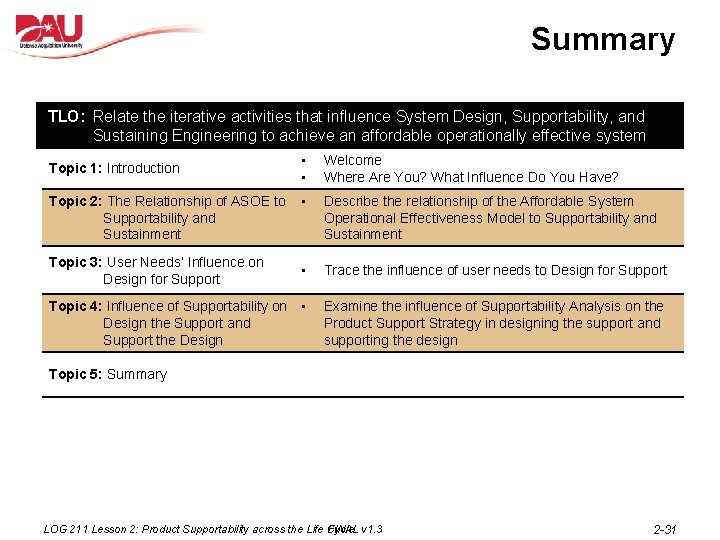
Summary TLO: Relate the iterative activities that influence System Design, Supportability, and Topic Sustaining Engineering to achieve Objectives an affordable operationally effective system • • Welcome Where Are You? What Influence Do You Have? • Describe the relationship of the Affordable System Operational Effectiveness Model to Supportability and Sustainment • Trace the influence of user needs to Design for Support Topic 4: Influence of Supportability on • Design the Support and Support the Design Examine the influence of Supportability Analysis on the Product Support Strategy in designing the support and supporting the design Topic 1: Introduction Topic 2: The Relationship of ASOE to Supportability and Sustainment Topic 3: User Needs’ Influence on Design for Support Topic 5: Summary LOG 211 Lesson 2: Product Supportability across the Life Cycle FINAL v 1. 3 2 -31
- Slides: 31