
Lesson 2 Insect Anatomy Unit Entomology Ms Gutierrez


- Slides: 23
Lesson# 2 – Insect Anatomy Unit: Entomology Ms. Gutierrez
In a group: Create an insect out of the play dough provided. �Be ready to present your insect to the entire class. Include in presentation: # of legs wings Any significant characteristics. Lets get started!
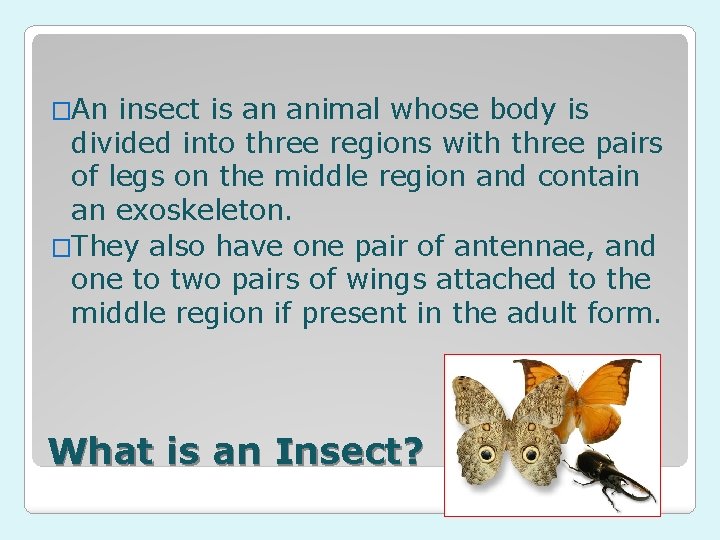
�An insect is an animal whose body is divided into three regions with three pairs of legs on the middle region and contain an exoskeleton. �They also have one pair of antennae, and one to two pairs of wings attached to the middle region if present in the adult form. What is an Insect?
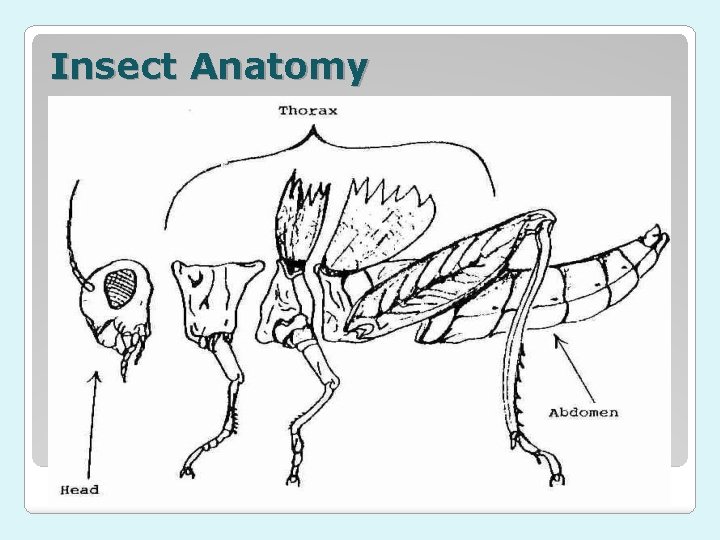
Insect Anatomy
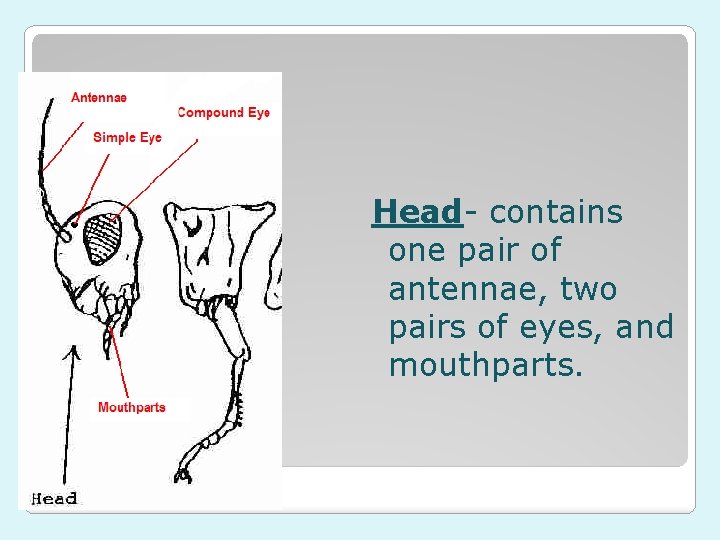
Head- contains one pair of antennae, two pairs of eyes, and mouthparts. 1. Head
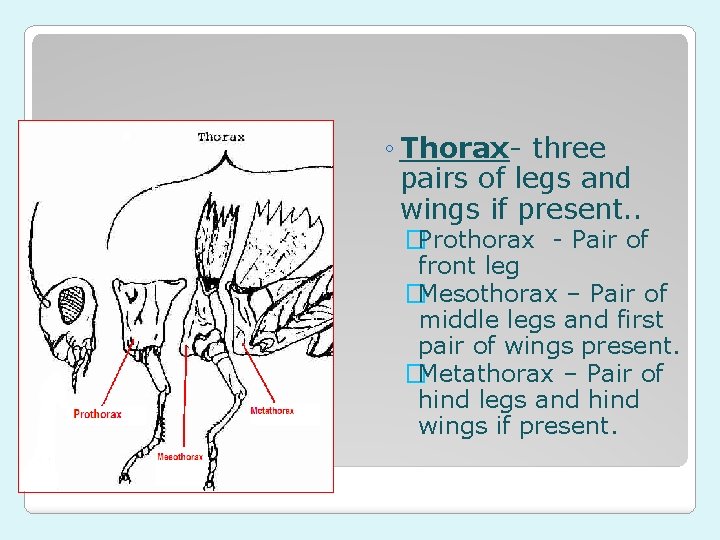
◦ Thorax- three pairs of legs and wings if present. . 2. Thorax �Prothorax - Pair of front leg �Mesothorax – Pair of middle legs and first pair of wings present. �Metathorax – Pair of hind legs and hind wings if present.
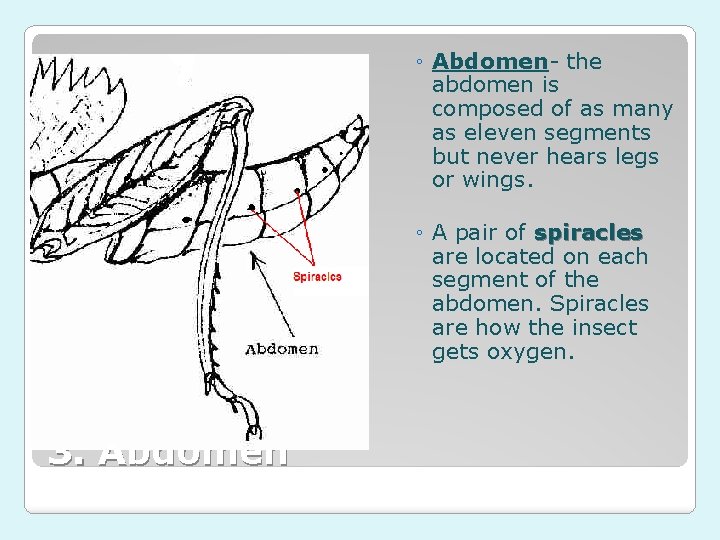
◦ Abdomen- the abdomen is composed of as many as eleven segments but never hears legs or wings. ◦ A pair of spiracles are located on each segment of the abdomen. Spiracles are how the insect gets oxygen. 3. Abdomen
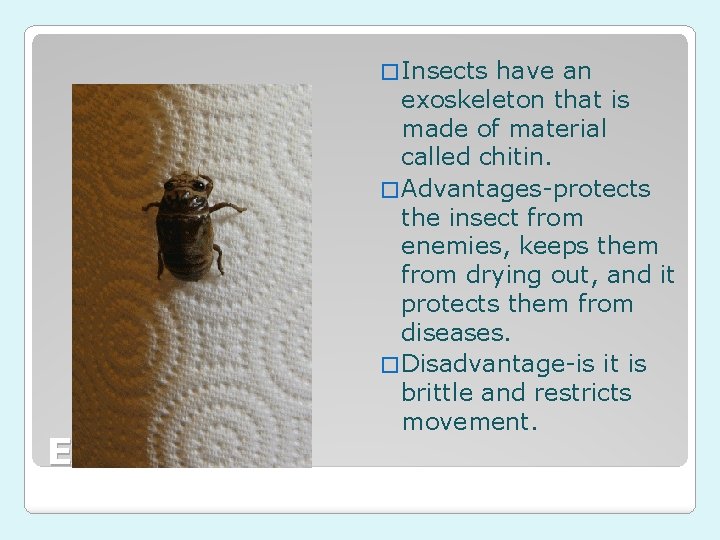
� Insects Exoskeleton have an exoskeleton that is made of material called chitin. � Advantages-protects the insect from enemies, keeps them from drying out, and it protects them from diseases. � Disadvantage-is it is brittle and restricts movement.
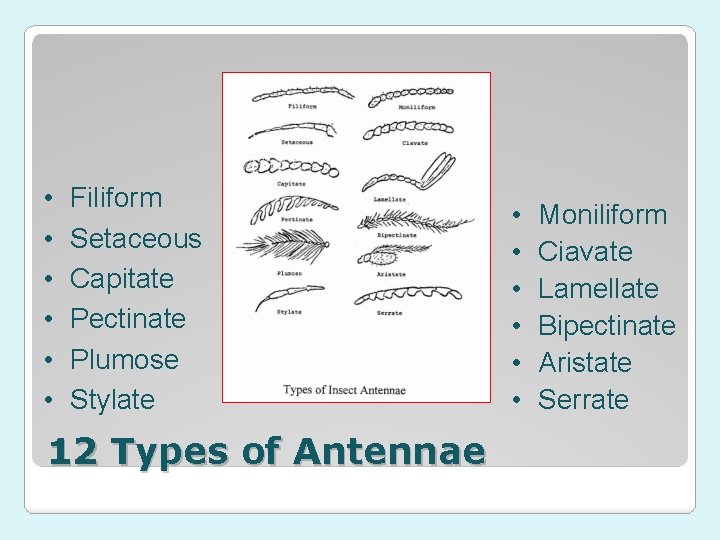
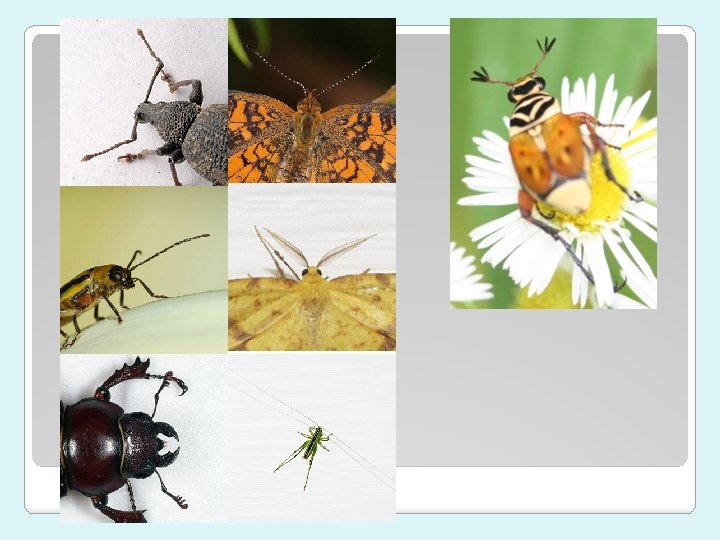
• • • Filiform Setaceous Capitate Pectinate Plumose Stylate 12 Types of Antennae • • • Moniliform Ciavate Lamellate Bipectinate Aristate Serrate
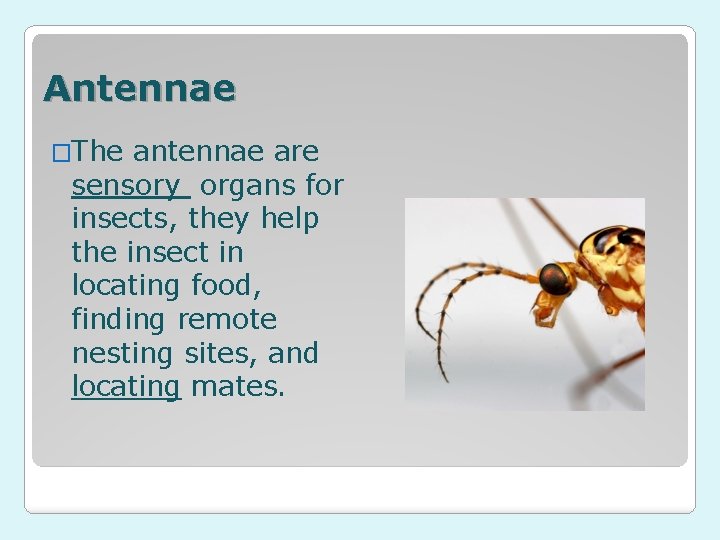
Antennae �The antennae are sensory organs for insects, they help the insect in locating food, finding remote nesting sites, and locating mates.
How do Insects eat?
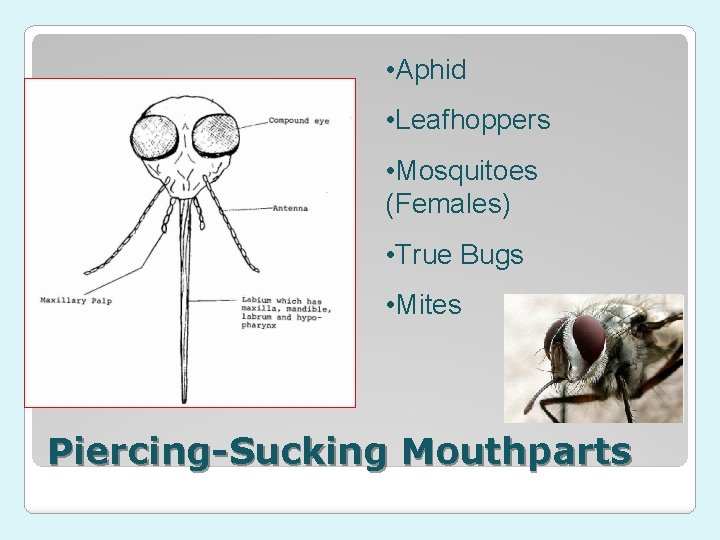
• Aphid • Leafhoppers • Mosquitoes (Females) • True Bugs • Mites Piercing-Sucking Mouthparts
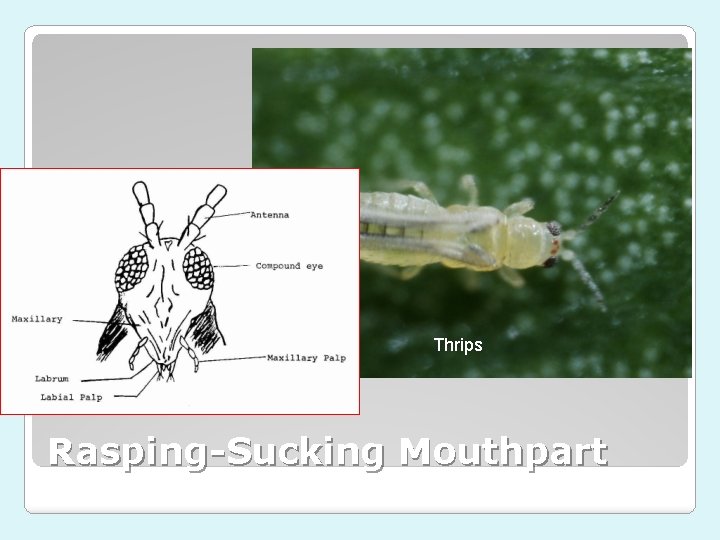
Thrips Rasping-Sucking Mouthpart
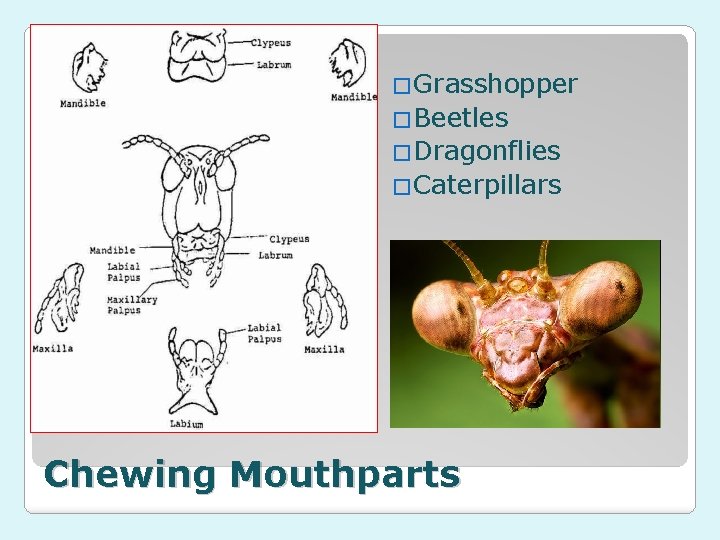
�Grasshopper �Beetles �Dragonflies �Caterpillars Chewing Mouthparts
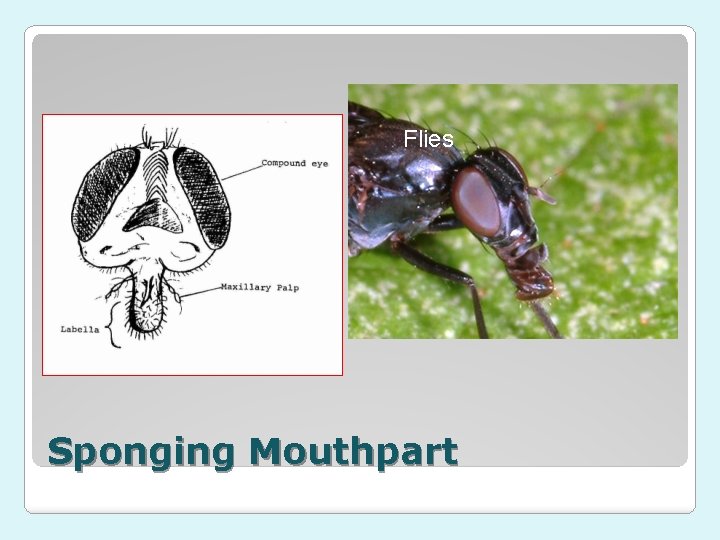
Flies Sponging Mouthpart
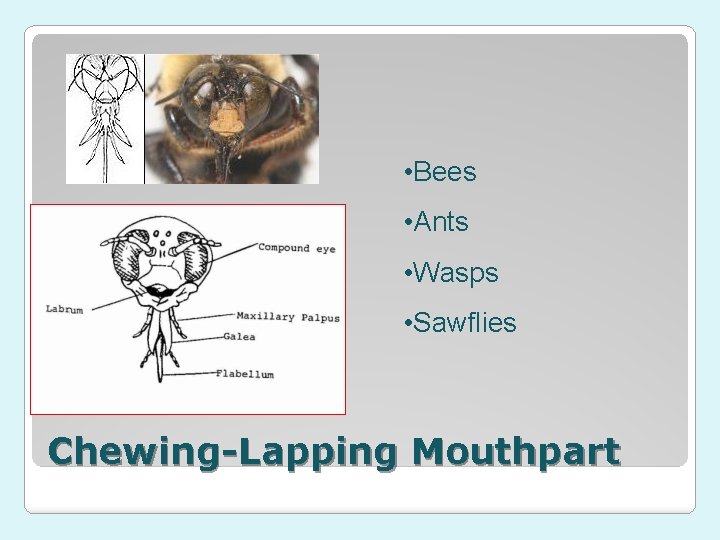
• Bees • Ants • Wasps • Sawflies Chewing-Lapping Mouthpart
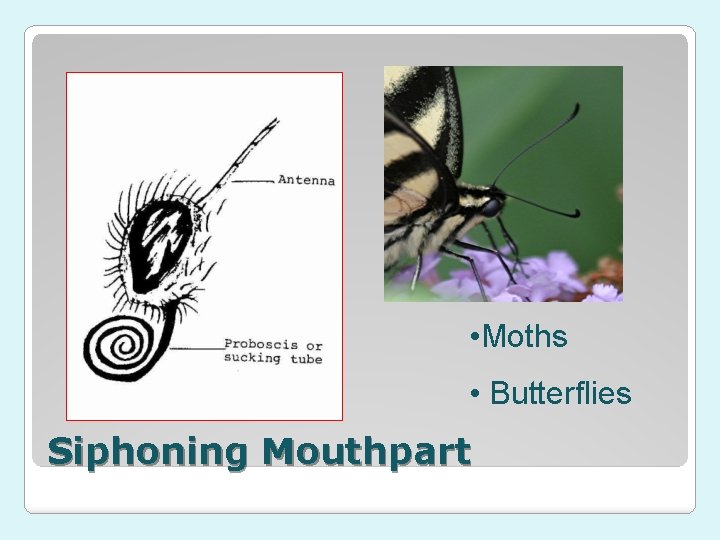
• Moths • Butterflies Siphoning Mouthpart
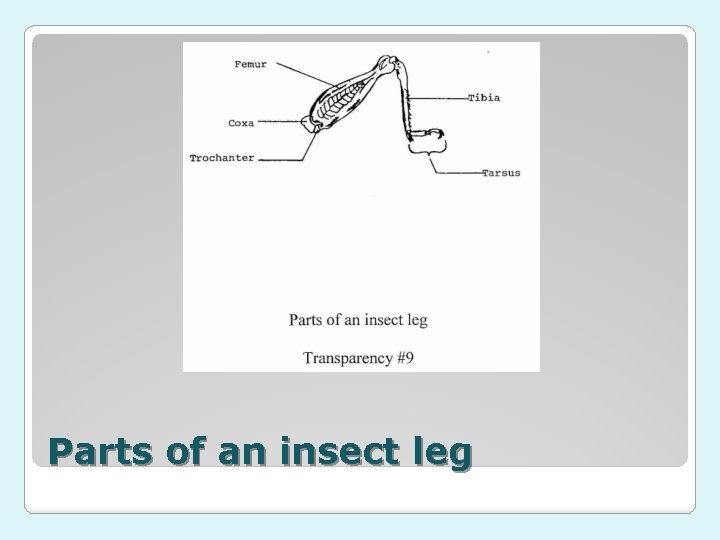
Parts of an insect leg
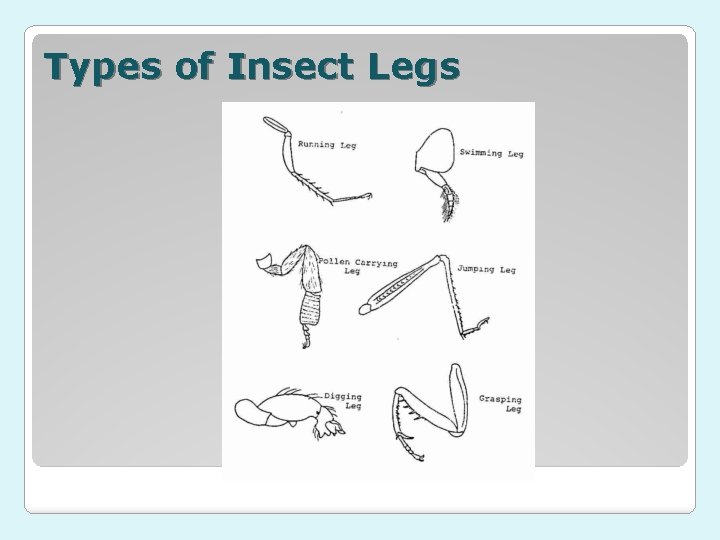
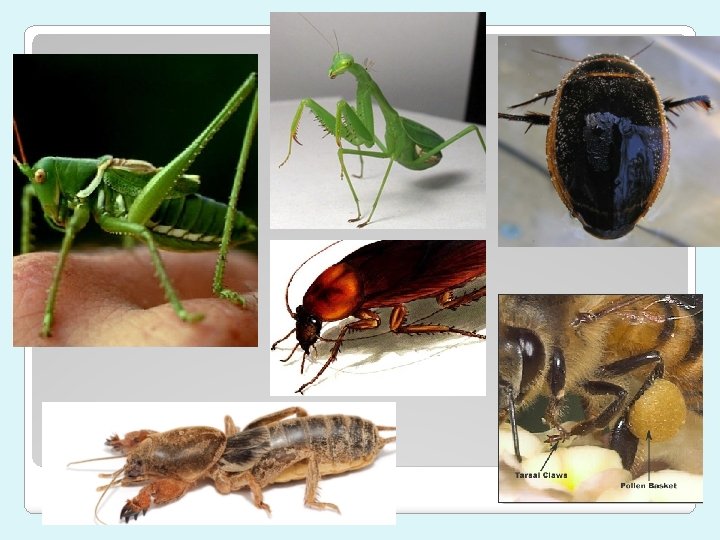
Types of Insect Legs
Lets Rhyme!
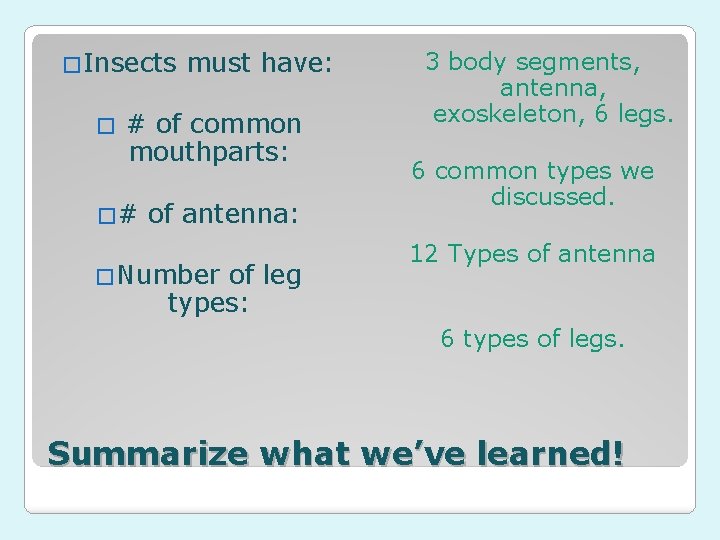
�Insects � must have: # of common mouthparts: �# of antenna: �Number of leg types: 3 body segments, antenna, exoskeleton, 6 legs. 6 common types we discussed. 12 Types of antenna 6 types of legs. Summarize what we’ve learned!