
Lesson 2 BMPs Best Management Practices SD 1
Lesson 2: BMPs Best Management Practices SD 1 ENVIRONMENTAL UNIT
REVIEW: What are BMPs? Best Management Practices (BMPs) are controls put in place to help prevent water pollution. This can be something people construct or an action they take that helps prevent water pollution from getting into our water.
REFLECT: BMPs Unfortunately, not all water pollution can be prevented. Sometimes in farming, manufacturing and development, there are cases where water pollution is expected to happen. In those cases, businesses can use water pollution prevention controls, known as Best Management Practices (BMPs) to control pollutants entering waterways.

REFLECT: BMPs According to the Environmental Protection Agency (EPA) BMPs are methods that have been determined to be the most effective and practical means of preventing or reducing pollution. SD 1’s DRIP initiative provides homeowners with step-by-step guides to help them implement methods of managing storm water runoff in their own yards and neighborhoods.
REFLECT: BMPs Some examples of BMPs used in the community are explained in the next few slides. Read each BMP and fill in the blank with the appropriate word from the provided word bank. Word Bank: Educate Pesticides Litter Runoff Fertilizers Fences Pretreat Soil

REFLECT: BMPs CONSTRUCTION SITE 1. When it rains, straw bales, silt fencing and plastic covers prevent loose _______ from washing into nearby waterways. These are good BMPs to use during construction. 2. After construction, grass, shrubs, trees and vegetation should be planted permanently. Word Bank: Educate Pesticides Litter Runoff Fertilizers Fences Pretreat Soil
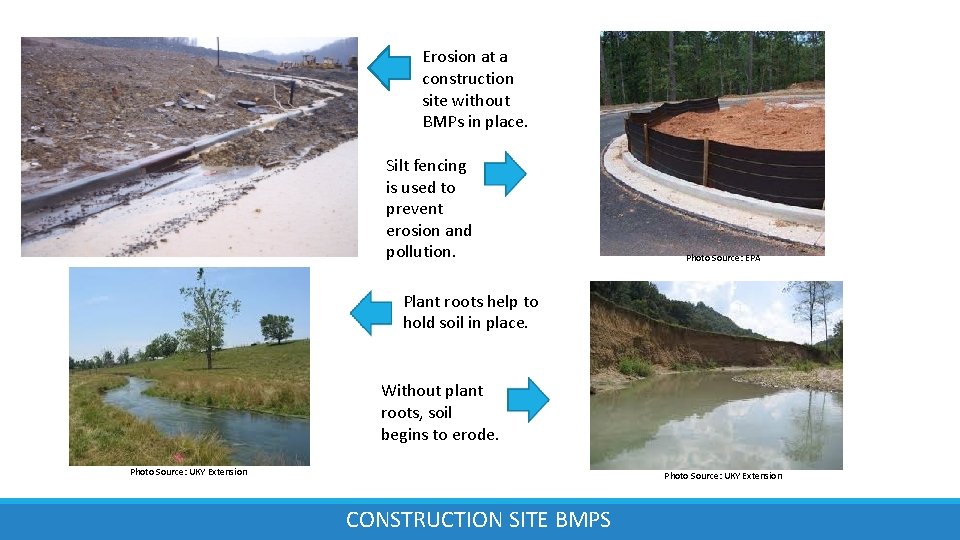
Erosion at a construction site without BMPs in place. Silt fencing is used to prevent erosion and pollution. Photo Source: EPA Plant roots help to hold soil in place. Without plant roots, soil begins to erode. Photo Source: UKY Extension CONSTRUCTION SITE BMPS
REFLECT: BMPs FARM 1. Farmers can build _______ to enclose cows to prevent manure from entering the streams. 2. Farmers could install a containment bin to hold the manure. Word Bank: Educate Pesticides Litter Runoff Fertilizers Fences Pretreat Soil
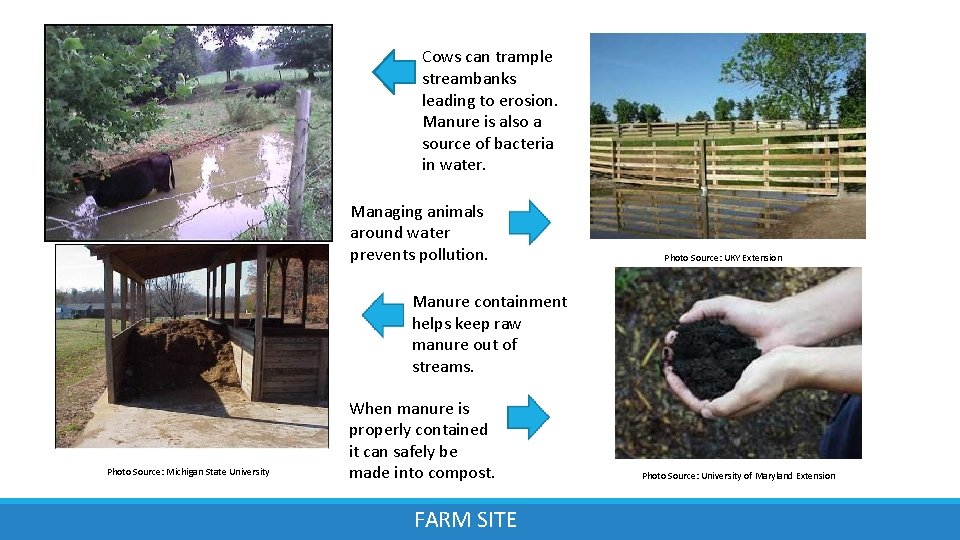
Cows can trample streambanks leading to erosion. Manure is also a source of bacteria in water. Managing animals around water prevents pollution. Photo Source: UKY Extension Manure containment helps keep raw manure out of streams. Photo Source: Michigan State University When manure is properly contained it can safely be made into compost. FARM SITE Photo Source: University of Maryland Extension
REFLECT: BMPs GOLF COURSE 1. Golf course owners can use grass clippings as a natural fertilizer. When clippings are left on the course, they decompose and reduce the need for applying fertilizer. 2. Golf course owners can use _______ and ______ sparingly and follow the label directions. 3. Rock gardens and shrubs can be planted to encourage infiltration of storm water. They also provide a great habitat for animals. Word Bank: Educate Pesticides Litter Runoff Fertilizers Fences Pretreat Soil
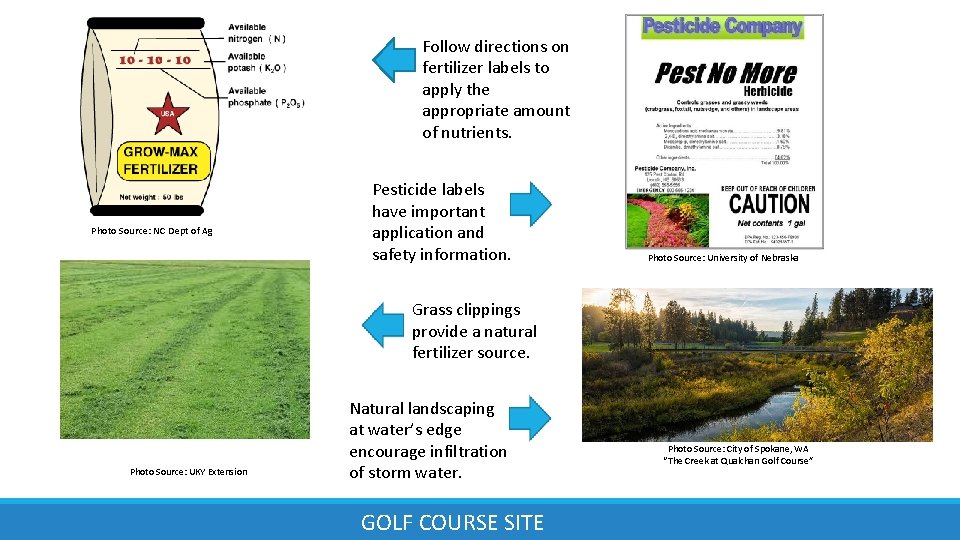
Follow directions on fertilizer labels to apply the appropriate amount of nutrients. Photo Source: NC Dept of Ag Pesticide labels have important application and safety information. Photo Source: University of Nebraska Grass clippings provide a natural fertilizer source. Photo Source: UKY Extension Natural landscaping at water’s edge encourage infiltration of storm water. GOLF COURSE SITE Photo Source: City of Spokane, WA “The Creek at Qualchan Golf Course”
REFLECT: BMPs INDUSTRIAL PLANT 1. Industries can properly _______ the water they use before discharging it. 2. Industries can implement vegetated roofs to slow the rate of _____. Vegetated roofs, also known as green roofs, also help reduce heating and cooling bills by providing insulation to buildings. Word Bank: Educate Pesticides Litter Runoff Fertilizers Fences Pretreat Soil
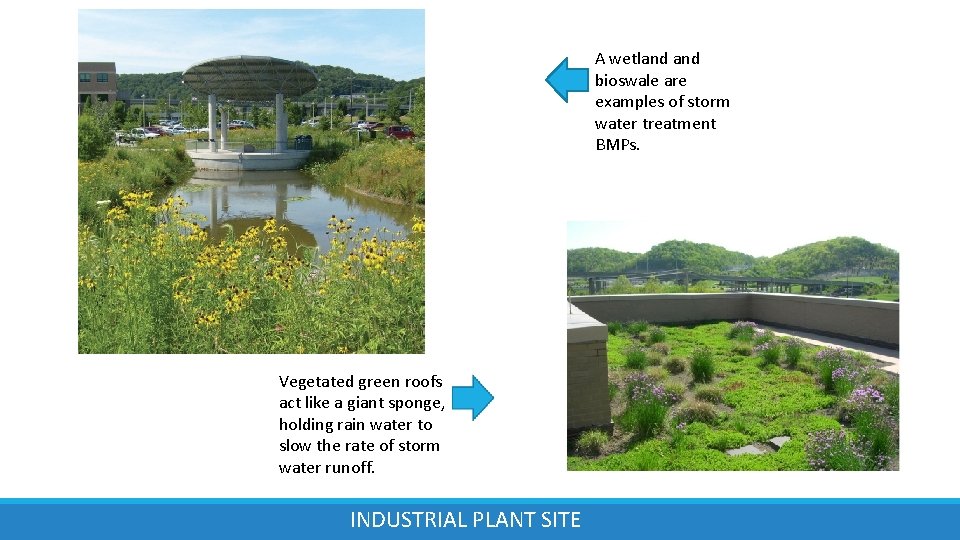
A wetland bioswale are examples of storm water treatment BMPs. Vegetated green roofs act like a giant sponge, holding rain water to slow the rate of storm water runoff. INDUSTRIAL PLANT SITE
REFLECT: BMPs RESIDENTIAL AREA 1. Residents can pick up after their pets when taking them for walks. 2. Residents can recycle or dispose of _____. 3. Residents can mark the storm drains in their neighborhoods with the message, “No dumping, drains to waterways” to ______ others that storm drains lead to local water bodies. 4. Residents can be smart shoppers and purchase environmentally friendly soaps and cleaning chemicals. 5. Residents can wash cars on a lawn or use a professional car wash. Word Bank: Educate Pesticides Litter Runoff Fertilizers Fences Pretreat Soil
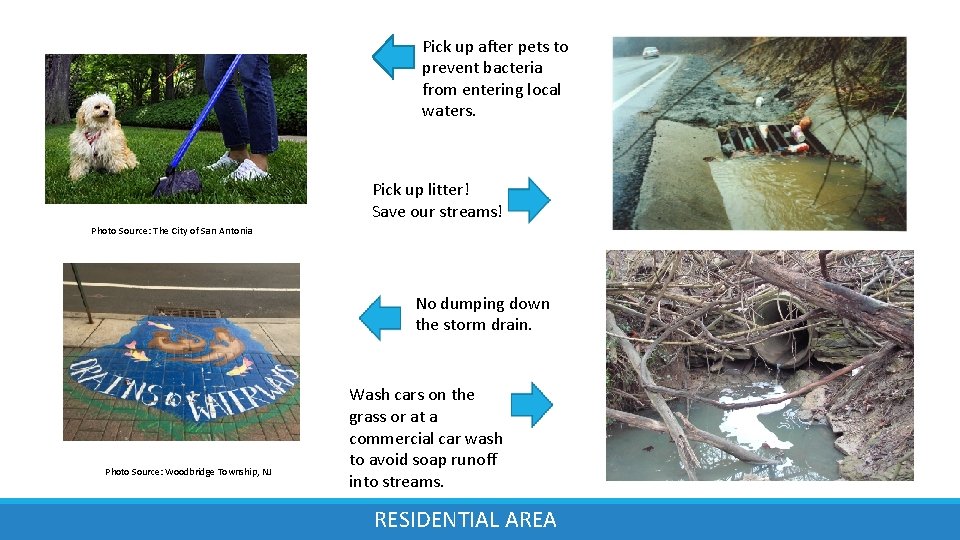
Pick up after pets to prevent bacteria from entering local waters. Pick up litter! Save our streams! Photo Source: The City of San Antonia No dumping down the storm drain. Photo Source: Woodbridge Township, NJ Wash cars on the grass or at a commercial car wash to avoid soap runoff into streams. RESIDENTIAL AREA
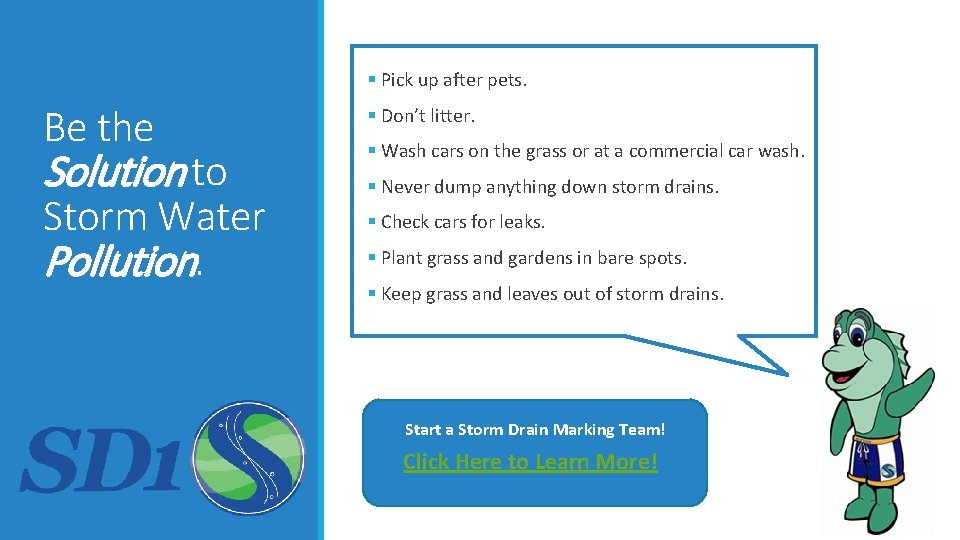
§ Pick up after pets. Be the Solution to Storm Water Pollution. § Don’t litter. § Wash cars on the grass or at a commercial car wash. § Never dump anything down storm drains. § Check cars for leaks. § Plant grass and gardens in bare spots. § Keep grass and leaves out of storm drains. Start a Storm Drain Marking Team! Click Here to Learn More!
- Slides: 16