
Lesson 16 Nuclear Medicine What is Nuclear Medicine

- Slides: 41
Lesson 16 Nuclear Medicine
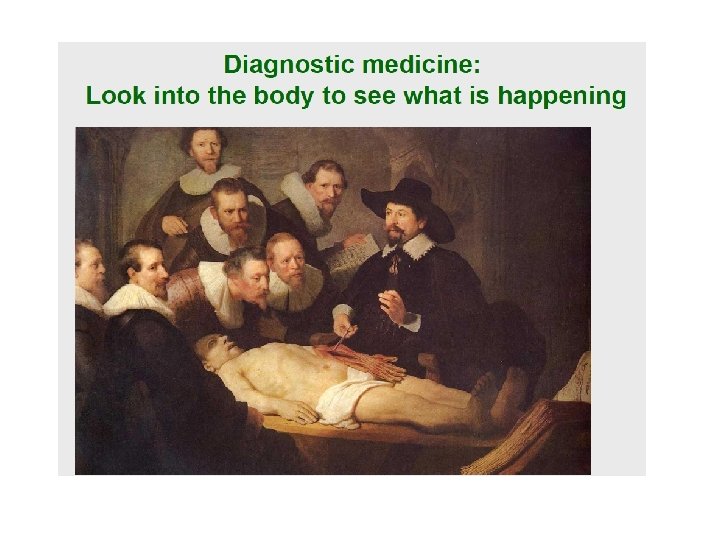
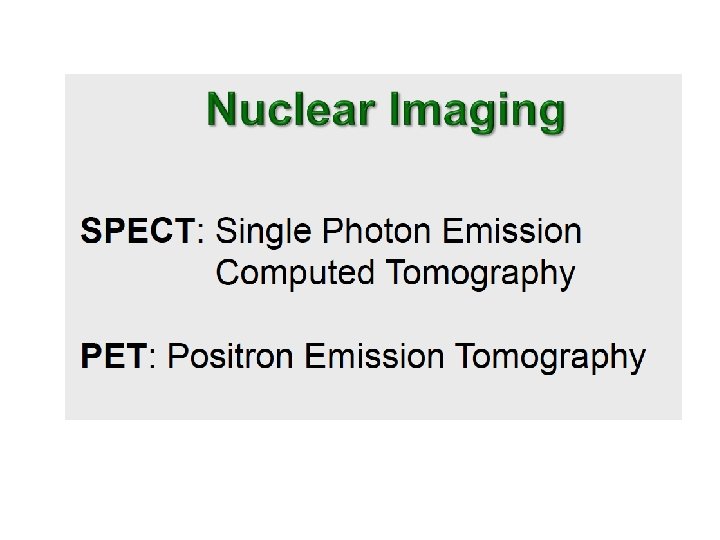
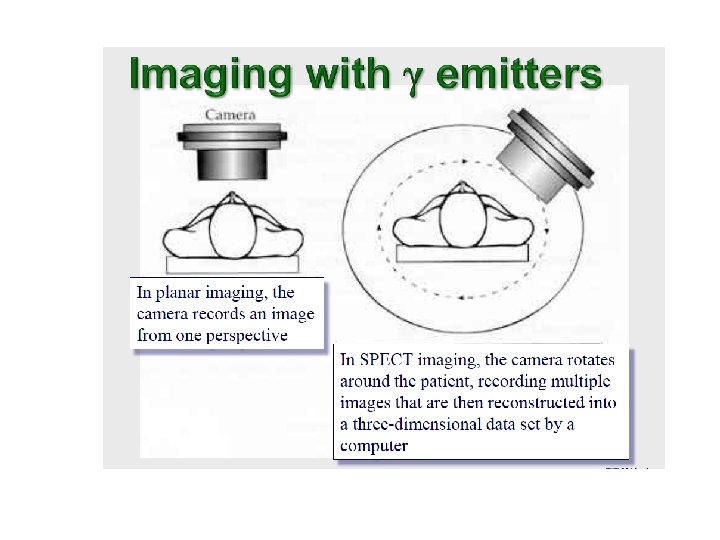
What is Nuclear Medicine? • Diagnosis and Treatment of Disease using small amounts of radio-nuclides (radiopharmaceuticals) • In diagnosis (imaging) emitted radiation is detected by special detectors (cameras) from injected radio-nuclides to give real time 3 D images of the body. • In treatment, radio-nuclides are injected into the body, concentrated in the organ of choice and damage the tissue.
Importance of Nuclear Medicine to students • Combines nuclear and radiochemistry, pharmacy, medicine, and radiation biology. • Nuclear medicine is a major employer of today’s nuclear and radiochemists, with an ever increasing demand for trained people. • Six figure starting salaries
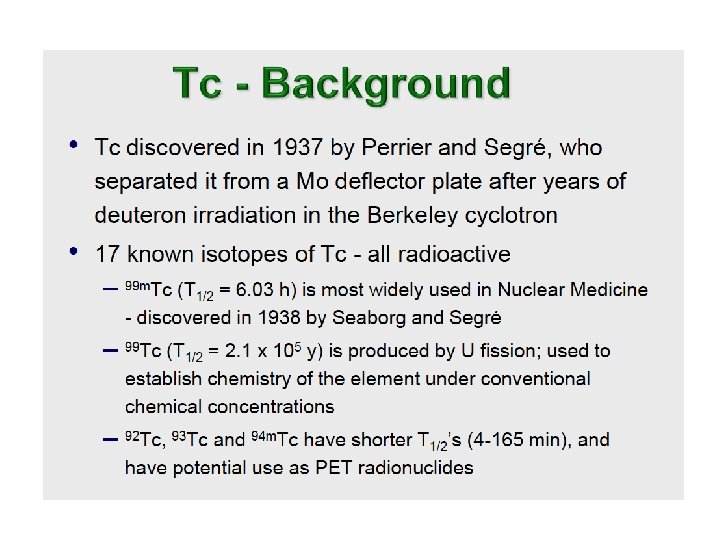
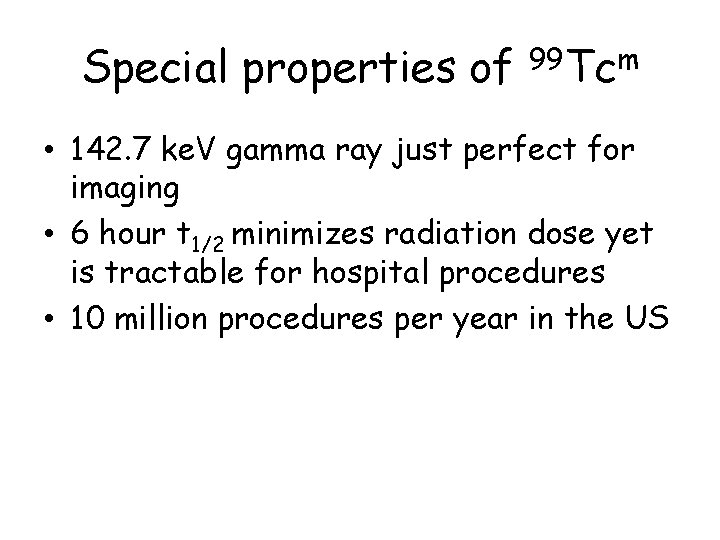
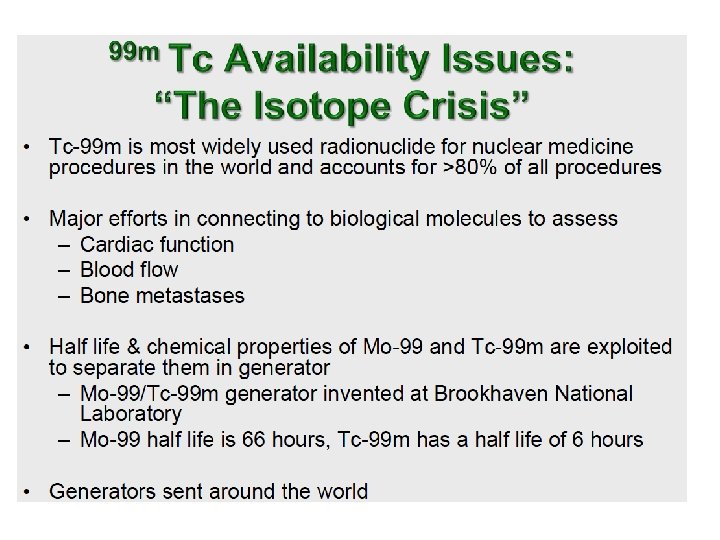
Special properties of 99 Tcm • 142. 7 ke. V gamma ray just perfect for imaging • 6 hour t 1/2 minimizes radiation dose yet is tractable for hospital procedures • 10 million procedures per year in the US
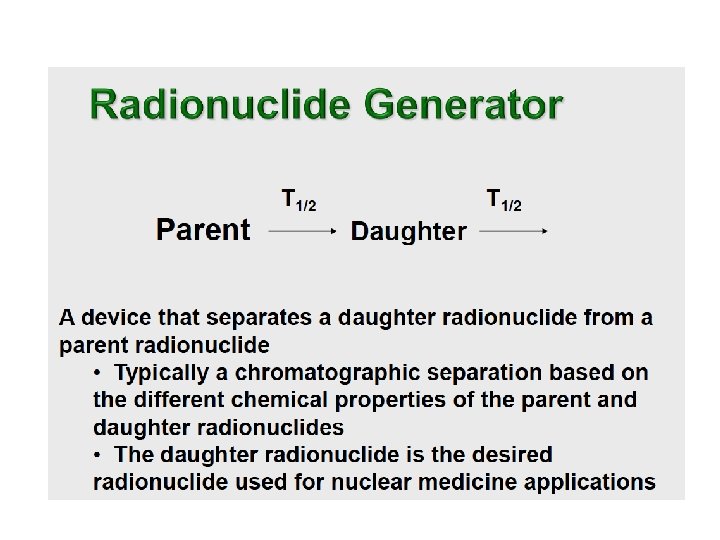
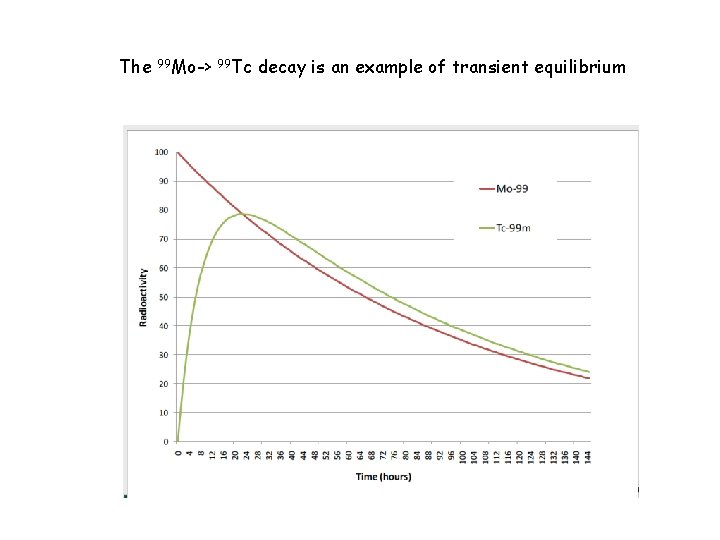
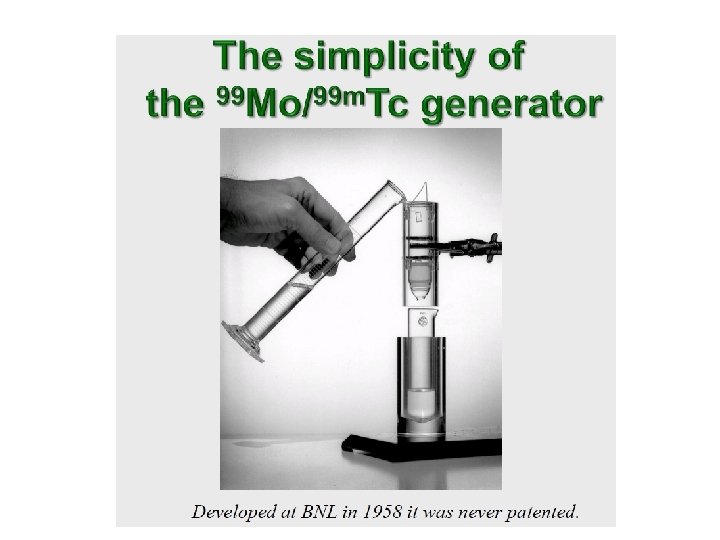
The 99 Mo-> 99 Tc decay is an example of transient equilibrium
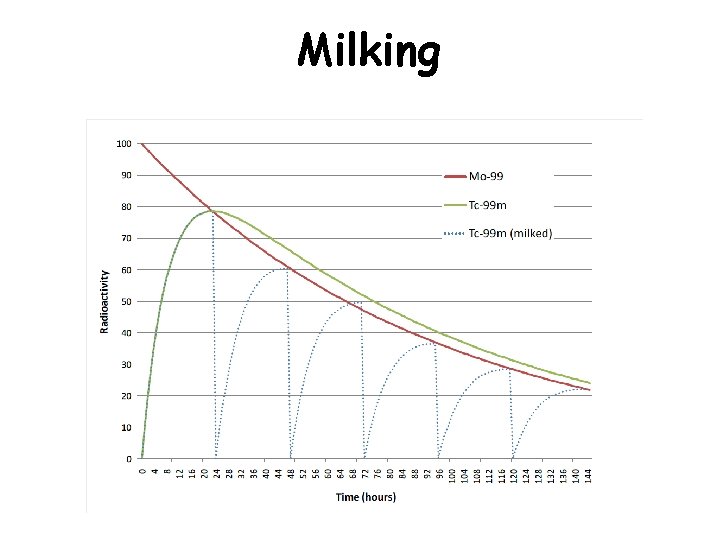
Milking
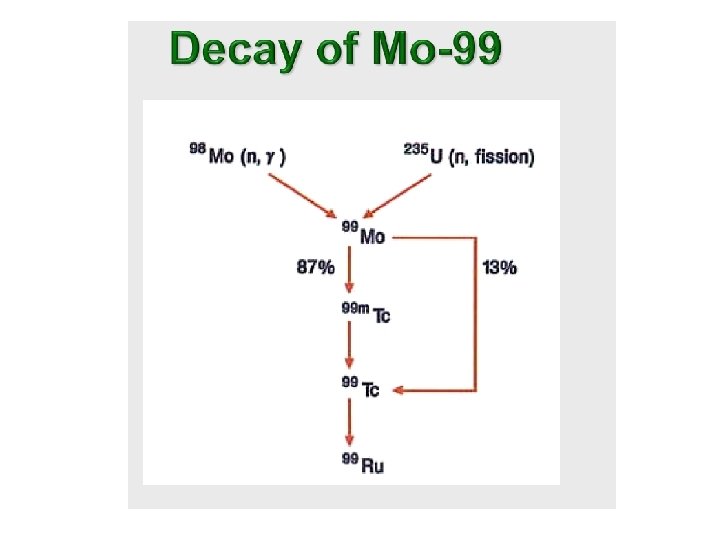
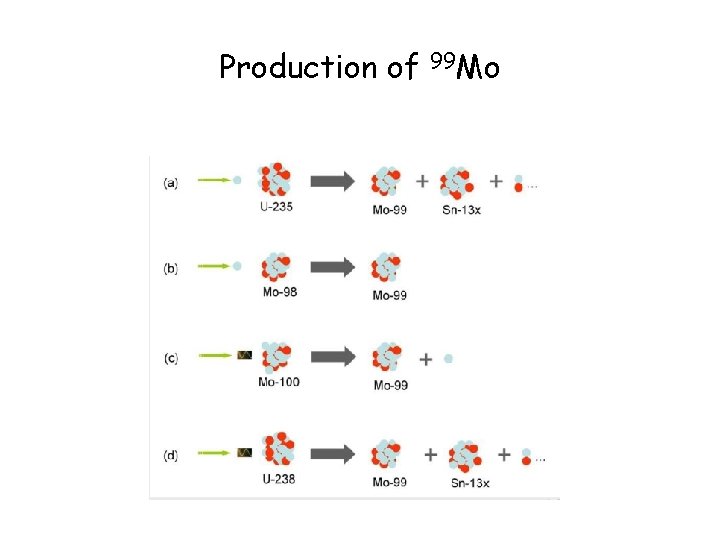
Production of 99 Mo
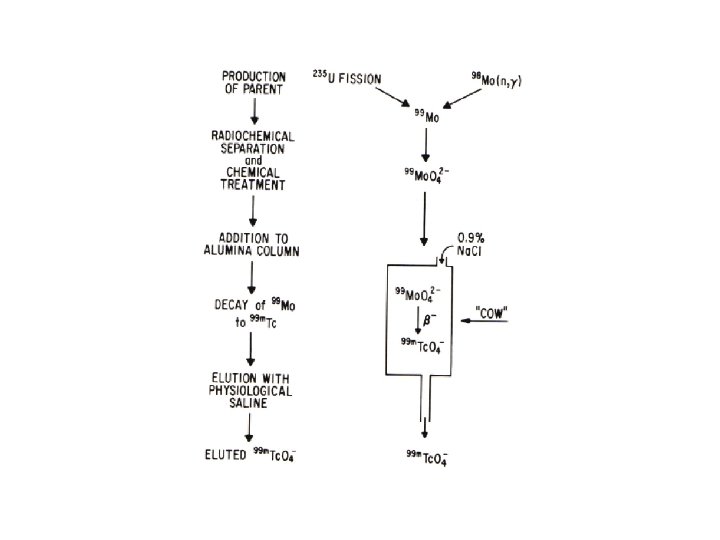
Details and Problems • Currently AECL/MDS Nordion supply 40% of the world’s demand for 99 Mo/99 Tc. • Chemistry is performed on the irradiated targets by AECL resulting in a 99 Mo soln. • The soln is shipped to MDS Nordion where it is loaded on the column and distributed. • The US demand requires about 34, 000 -46, 000 Ci are produced per week.
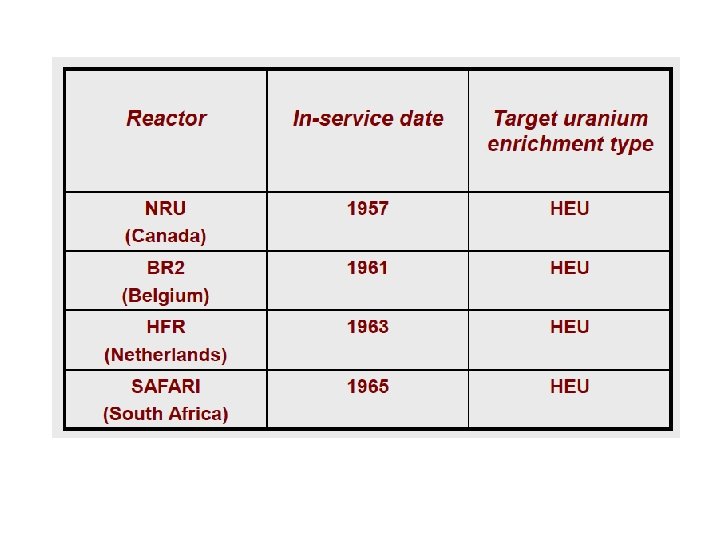
What is the Crisis? • These old reactors are nearing the end of their lifetime and their operation is not reliable. • Recently the Canadian and Dutch reactors underwent prolonged shutdowns • US use of 99 Mo was curtailed and rationed. • President Obama gave orders to Steven Chu (Sec. of Energy) to “solve the problem. ”
Special Problems for the US • We have no domestic supply of 99 Mo. US production was stopped in 1989. (It was claimed that non-US suppliers were subsidized and we could not compete. ) • High cost production facilities, risk of reactor operations, low market price • The best techniques involve the use of HEU (19. 7 % 235 U) which poses a national security problem. • The waste from the production is significant.
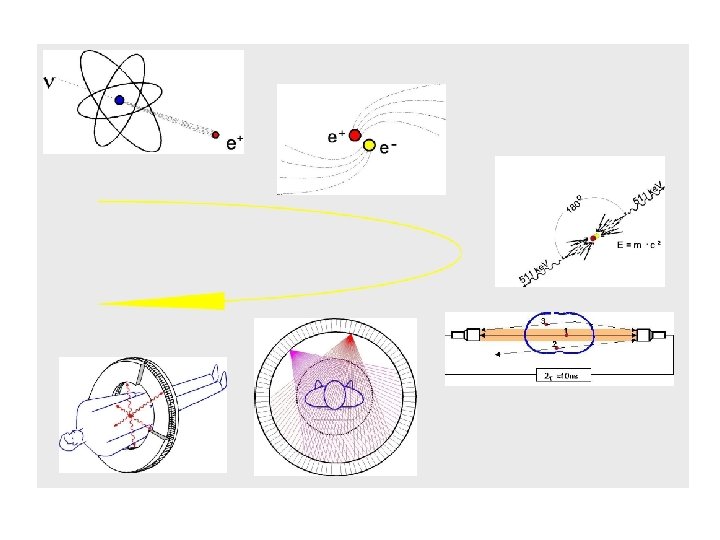
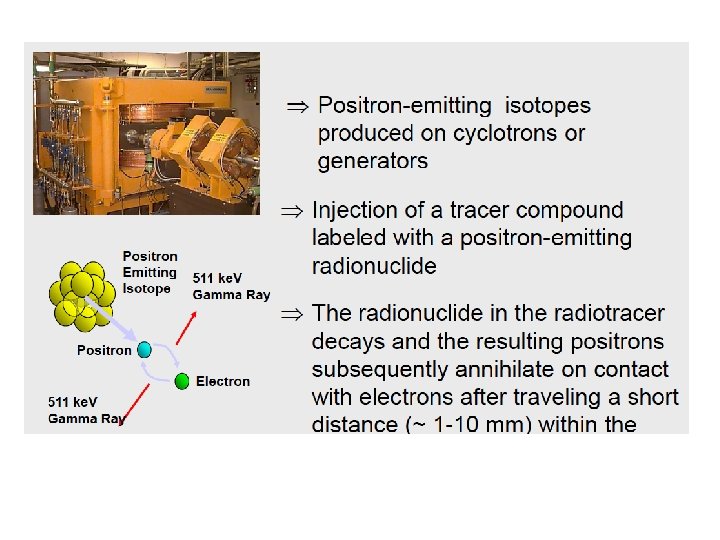
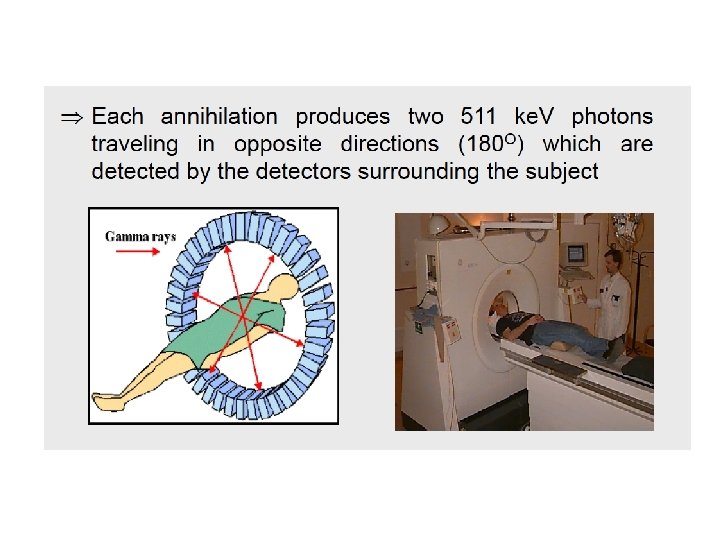
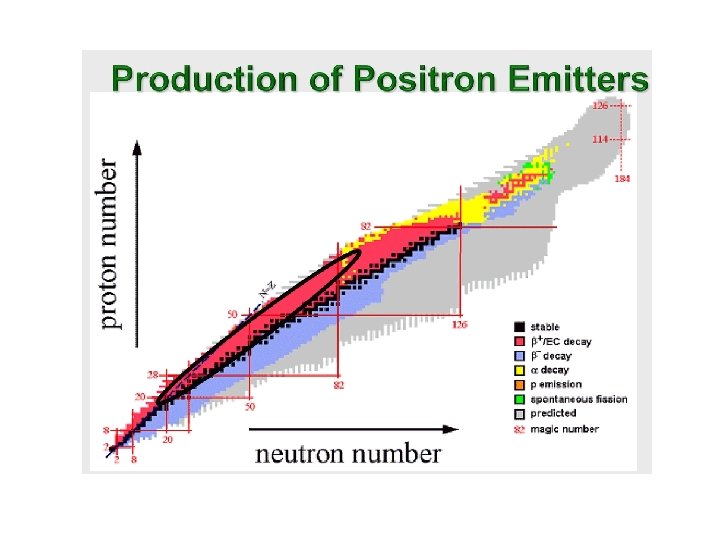
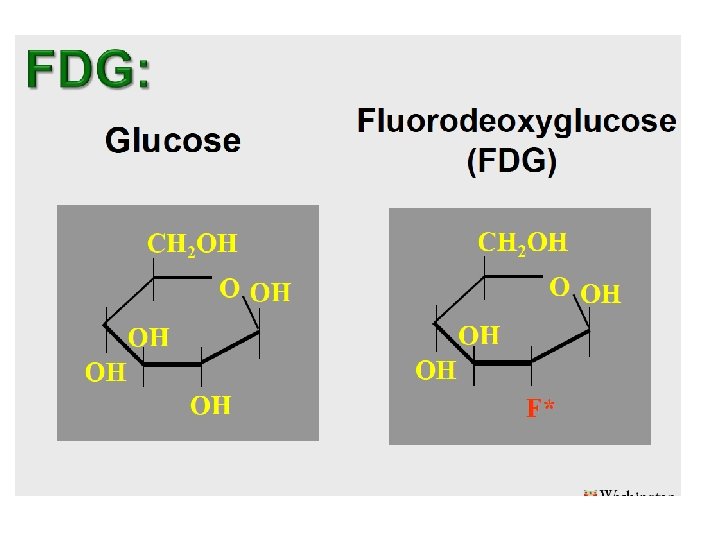
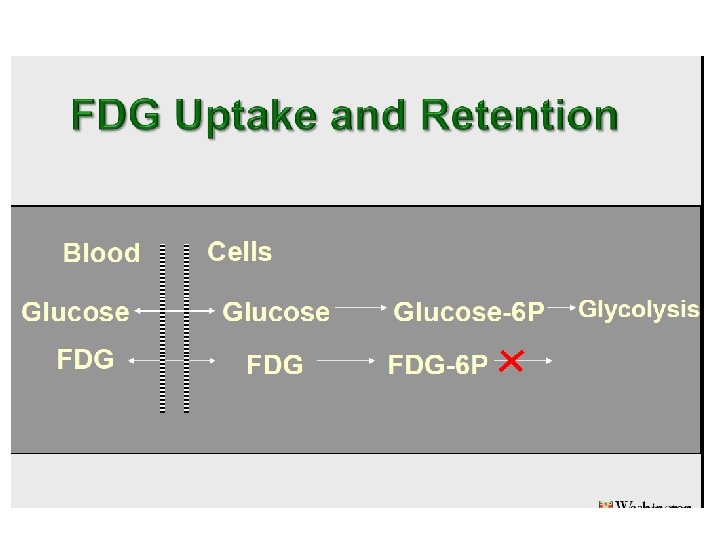
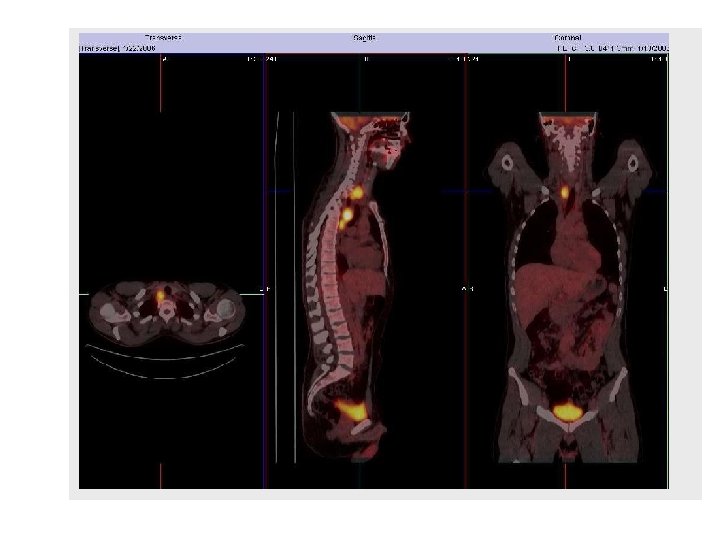
Positron Emission Tomography (PET) • PET imaging provides quantitative information about biochemical and physiological processes, in vivo • A tracer containing a positron emitter is injected, it decays emitting positrons and one detects the two 0. 511 Me. V photons resulting from the annihilation of the positron-electron interaction.
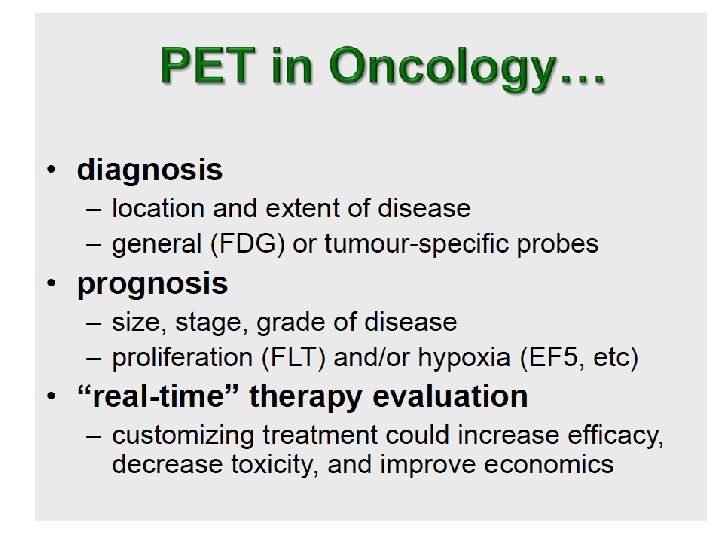
Special things you can do with PET • Real time imaging of brain functions. Effect of drugs, Alzheimer’s disease, psychiatry. • 90% of use in oncology • Pharmacology
Therapy • Oldest aspect of nuclear medicine • Idea is to use radiation to kill unhealthy cells • Problem is to do this without killing all the healthy cells. • A problem is that cancer cells are less oxygenated than normal cells and are more radiation resistant. • One trick is physical location, ie, fix the radionuclide in a cancer cell so that the decay will preferentially damage the cancer cell.
Tricks • BNCT (Boron neutron cancer therapy) • Attach boron compounds to tumor locations. • Boron has a very high thermal neutron capture cross section • n+10 B-> 11 B->7 Li + 4 He • Re-oxygenation
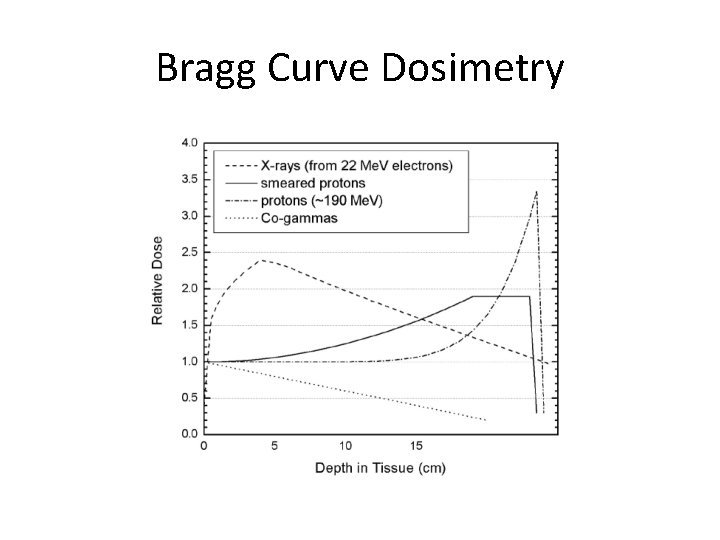
Bragg Curve Dosimetry
Thanks to