
Lesson 15 4 The Election of 1860 Today





- Slides: 74
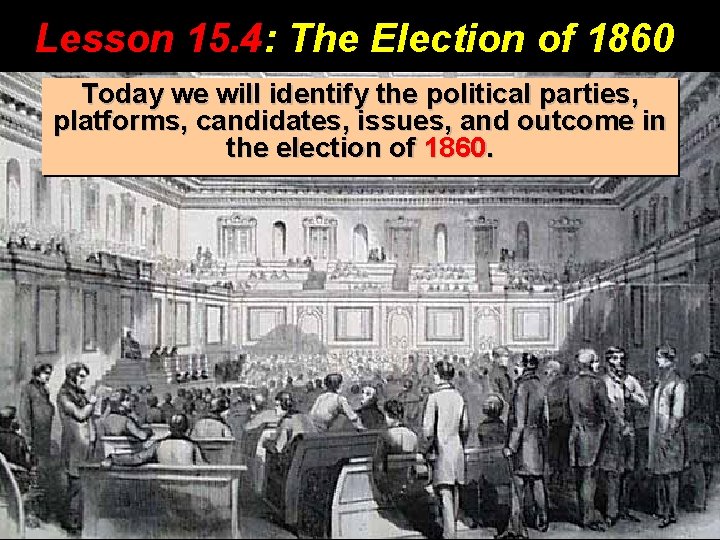
Lesson 15. 4: The Election of 1860 Today we will identify the political parties, platforms, candidates, issues, and outcome in the election of 1860.
Before we learned… Now we will learn… • The formation of the antislavery Republican Party further divided the country. • The election of Abraham Lincoln as president in 1860 led seven Southern states to secede from the Union.
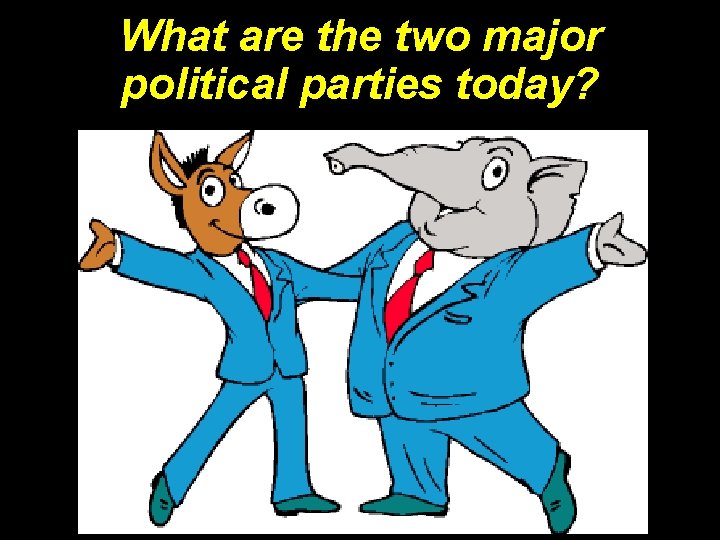
What are the two major political parties today?
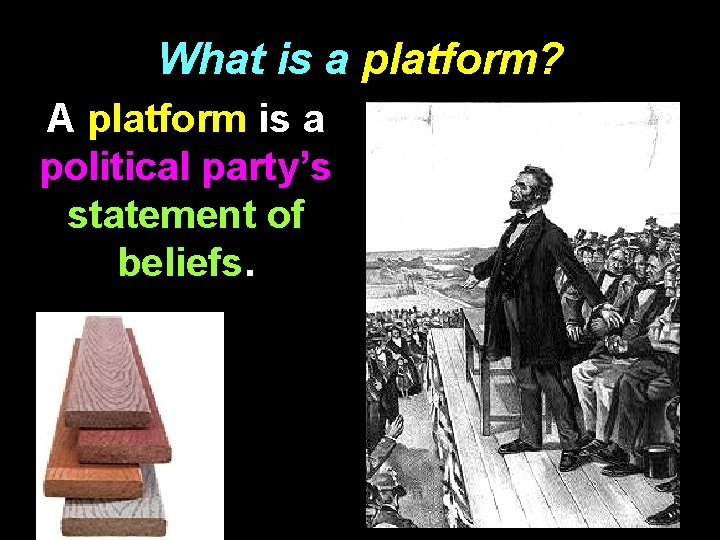
What is a platform? A platform is a political party’s statement of beliefs.
Who is a candidate for the presidency?
What is an issue people discuss or argue about today?
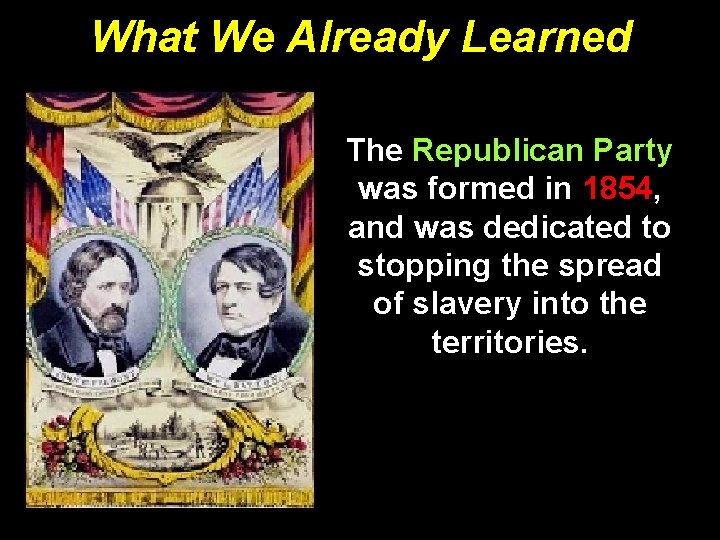
What We Already Learned The Republican Party was formed in 1854, and was dedicated to stopping the spread of slavery into the territories.
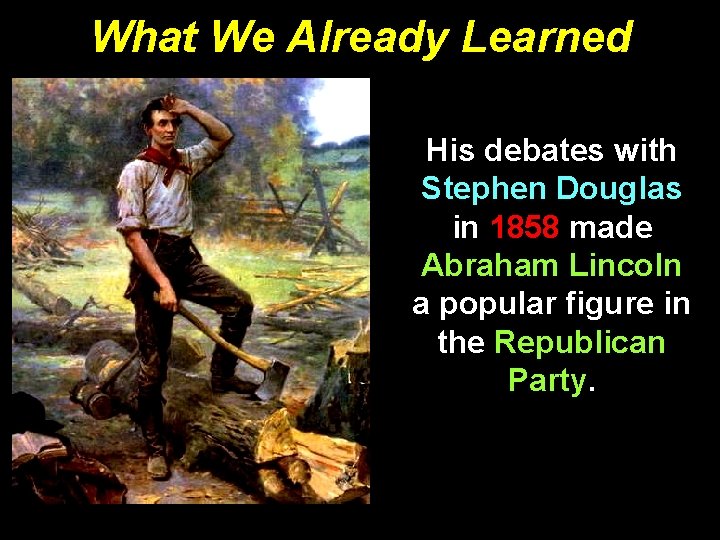
What We Already Learned His debates with Stephen Douglas in 1858 made Abraham Lincoln a popular figure in the Republican Party.
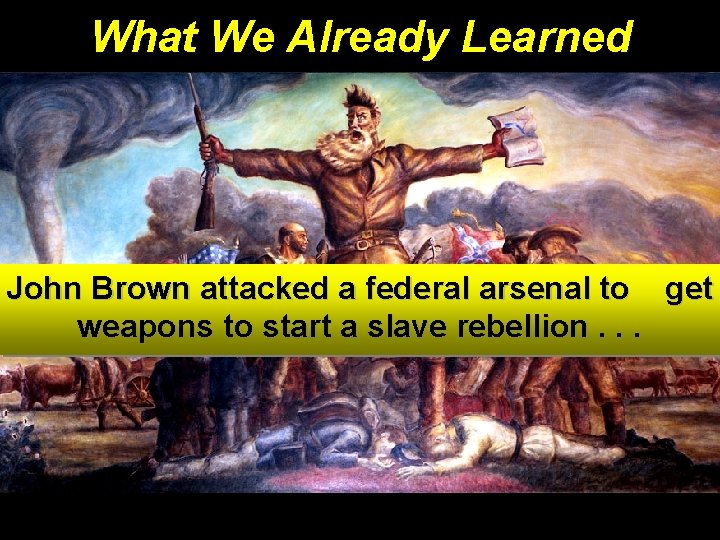
What We Already Learned John Brown attacked a federal arsenal to get weapons to start a slave rebellion. . .
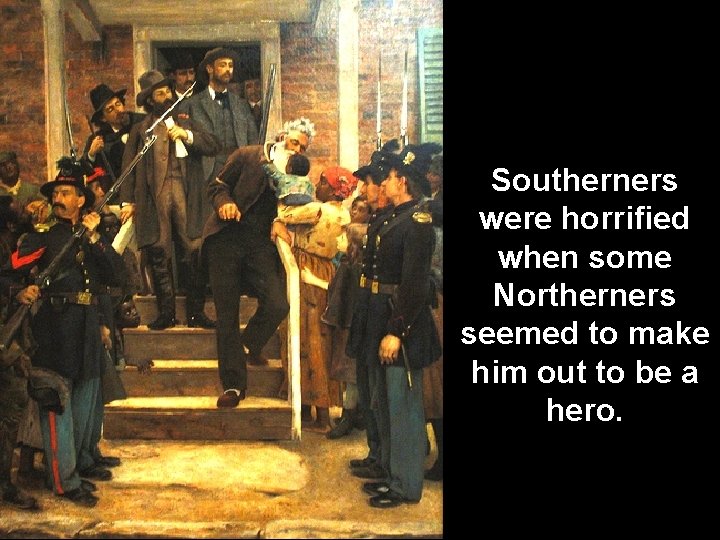
Southerners were horrified when some Northerners seemed to make him out to be a hero.
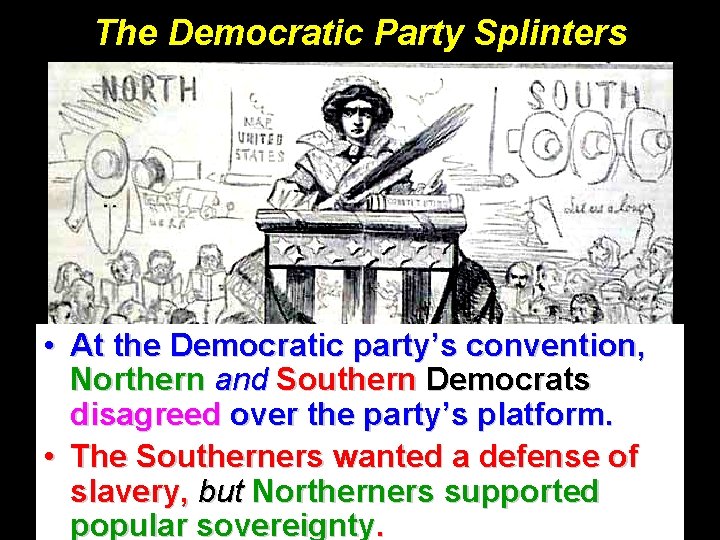
The Democratic Party Splinters • At the Democratic party’s convention, Northern and Southern Democrats disagreed over the party’s platform. • The Southerners wanted a defense of slavery, but Northerners supported popular sovereignty.
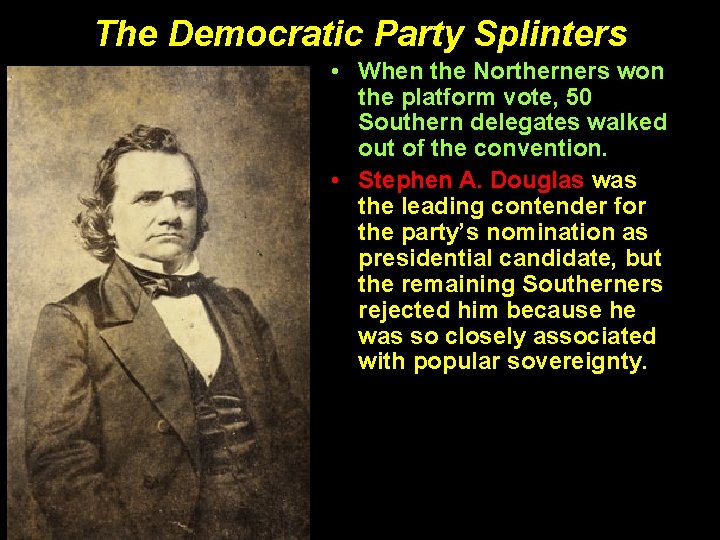
The Democratic Party Splinters • When the Northerners won the platform vote, 50 Southern delegates walked out of the convention. • Stephen A. Douglas was the leading contender for the party’s nomination as presidential candidate, but the remaining Southerners rejected him because he was so closely associated with popular sovereignty.
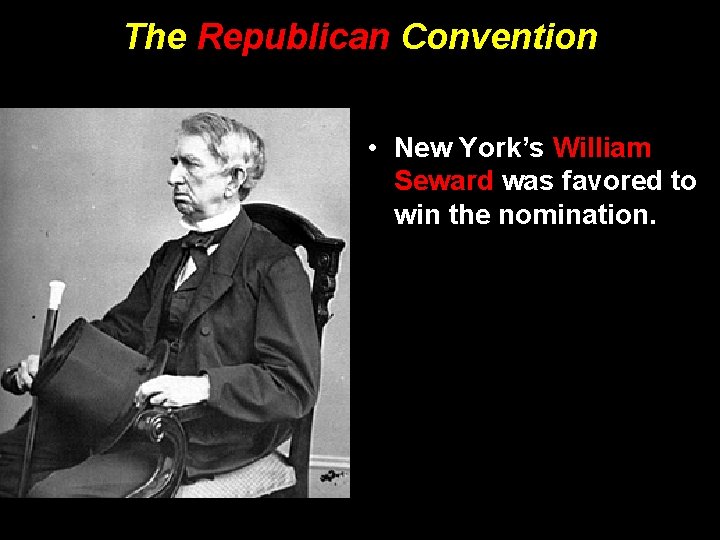
The Republican Convention • New York’s William Seward was favored to win the nomination.
The Republican Convention • New York’s William Seward was favored to win the nomination. • Abraham Lincoln, a lesser-known candidate from Illinois, won a surprise victory.
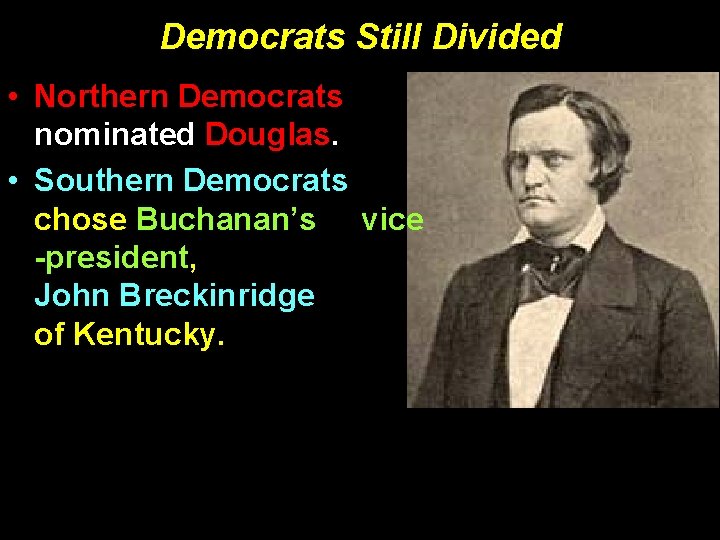
Democrats Still Divided • Northern Democrats nominated Douglas. • Southern Democrats chose Buchanan’s vice -president, John Breckinridge of Kentucky.
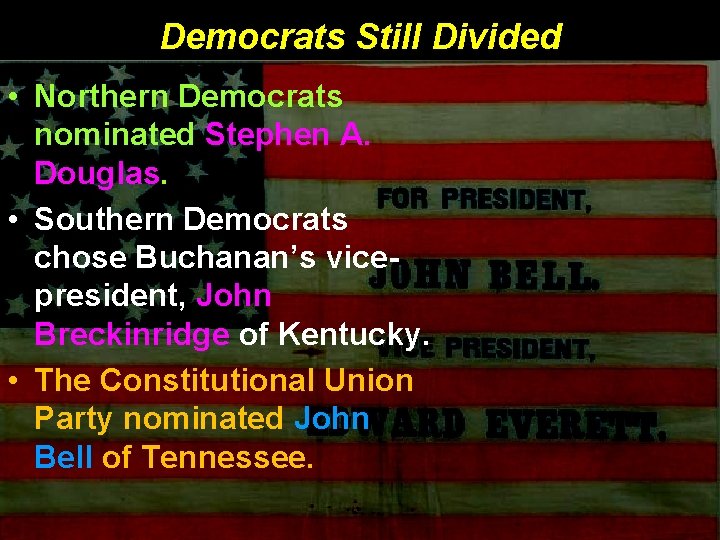
Democrats Still Divided • Northern Democrats nominated Stephen A. Douglas. • Southern Democrats chose Buchanan’s vicepresident, John Breckinridge of Kentucky. • The Constitutional Union Party nominated John Bell of Tennessee.
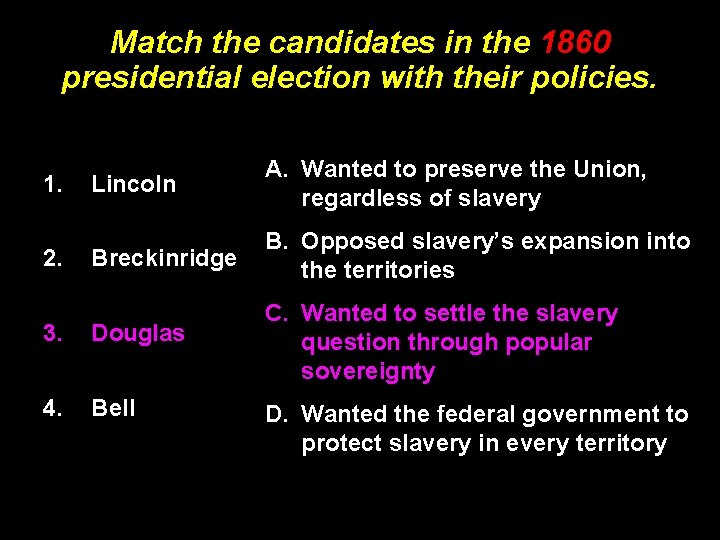
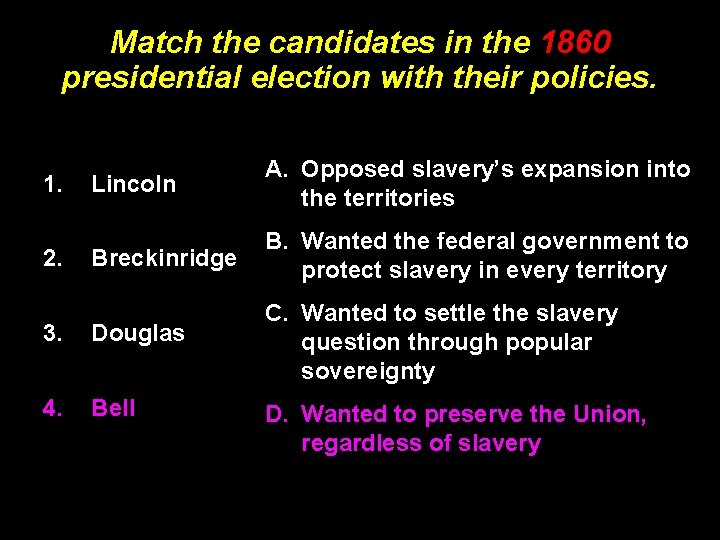
The candidates in the 1860 presidential election differed in their policies. • Lincoln opposed slavery’s expansion into the territories. • Breckinridge wanted the federal government to protect slavery in every territory. • Douglas wanted the slavery question settled through popular sovereignty. • Bell simply wanted to preserve the Union.
Why did the Democrats have two presidential candidates in 1860? A. It was too difficult for one candidate to do all the traveling necessary to win votes. B. Southern Democrats wanted a defense of slavery, but Northern Democrats supported popular sovereignty. C. They hoped that one of the two candidates would appeal to enough voters to win. D. Most Northern Democrats were abolitionists and couldn’t get along with the Southerners.
Why did the Democrats have two presidential candidates in 1860? A. It was too difficult for one candidate to do all the traveling necessary to win votes. B. Southern Democrats wanted a defense of slavery, but Northern Democrats supported popular sovereignty. C. They hoped that one of the two candidates would appeal to enough voters to win. D. Most Northern Democrats were abolitionists and couldn’t get along with the Southerners.
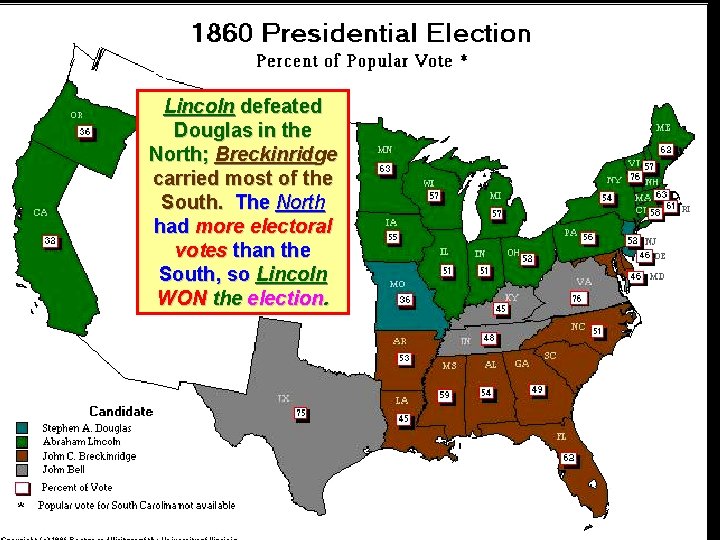
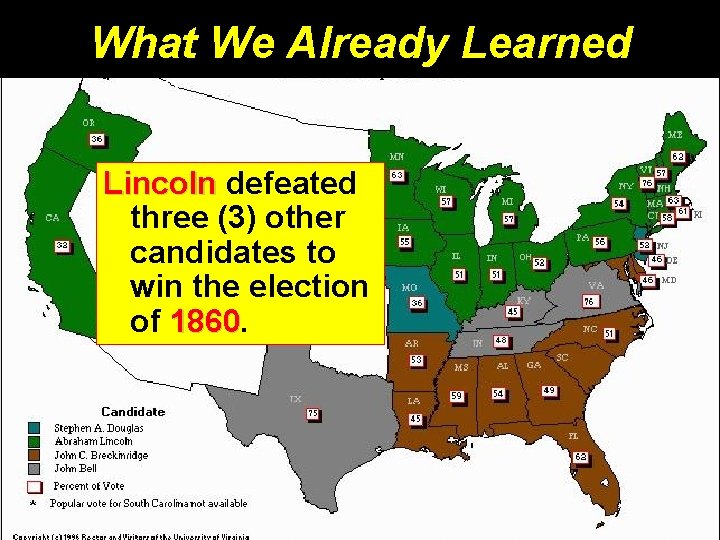
Lincoln defeated Douglas in the North; Breckinridge carried most of the South. The North had more electoral votes than the South, so Lincoln WON the election.
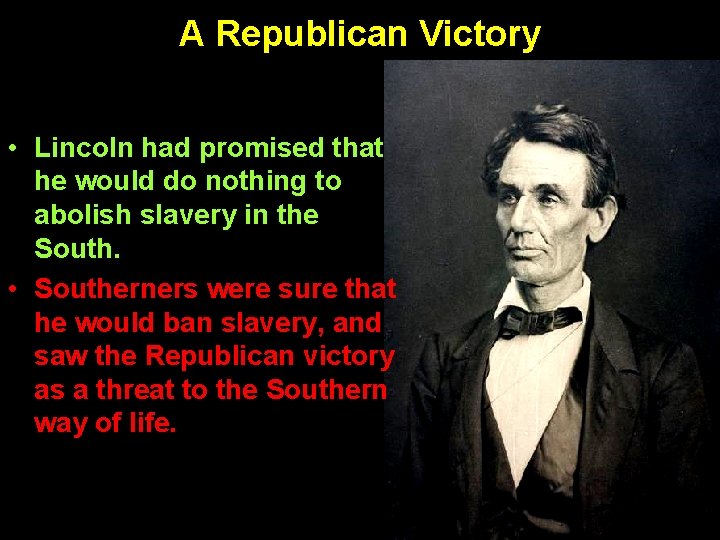
A Republican Victory • Lincoln had promised that he would do nothing to abolish slavery in the South. • Southerners were sure that he would ban slavery, and saw the Republican victory as a threat to the Southern way of life.
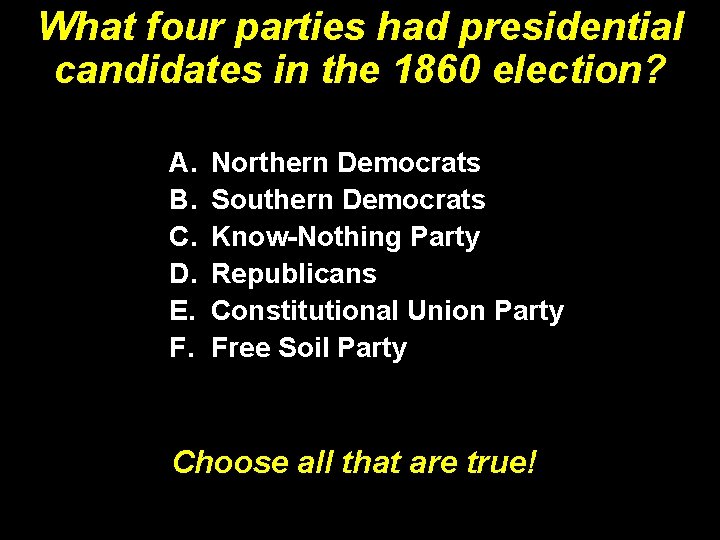
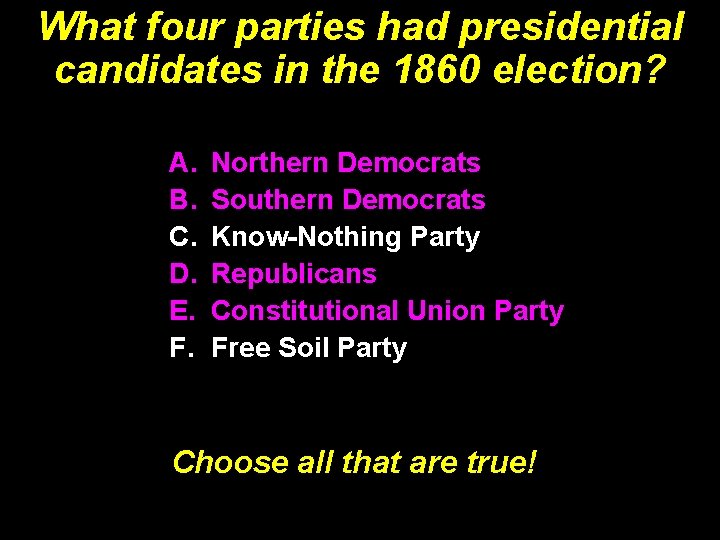
What four parties had presidential candidates in the 1860 election? A. B. C. D. E. F. Northern Democrats Southern Democrats Know-Nothing Party Republicans Constitutional Union Party Free Soil Party Choose all that are true!
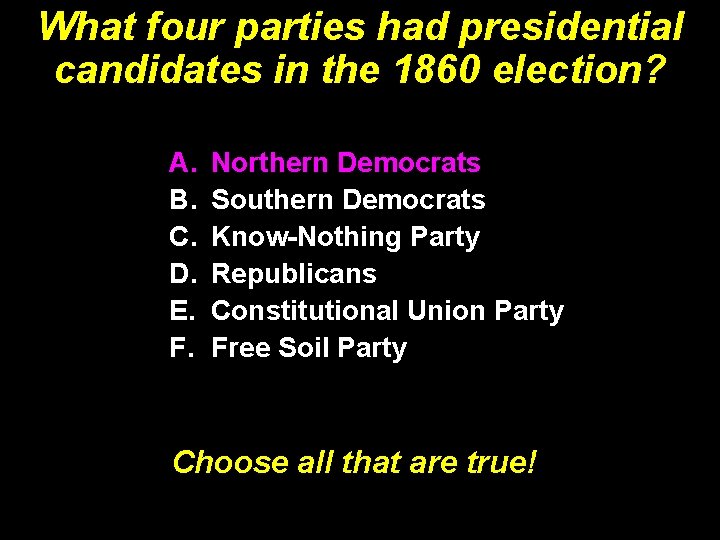
What four parties had presidential candidates in the 1860 election? A. B. C. D. E. F. Northern Democrats Southern Democrats Know-Nothing Party Republicans Constitutional Union Party Free Soil Party Choose all that are true!
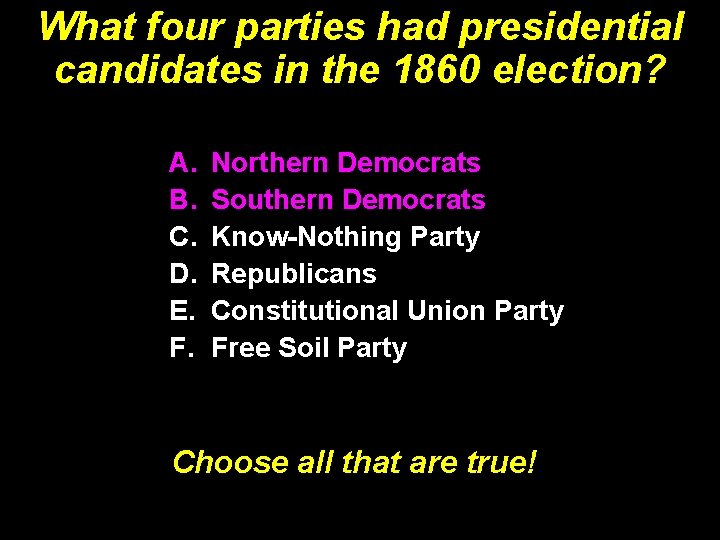
What four parties had presidential candidates in the 1860 election? A. B. C. D. E. F. Northern Democrats Southern Democrats Know-Nothing Party Republicans Constitutional Union Party Free Soil Party Choose all that are true!
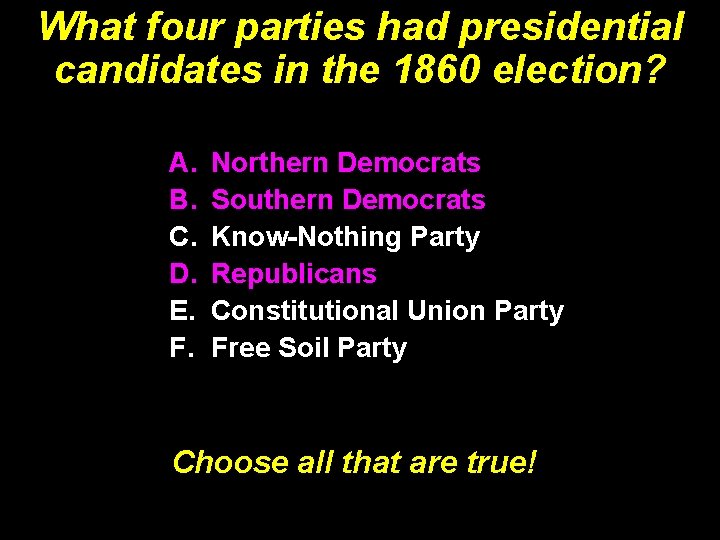
What four parties had presidential candidates in the 1860 election? A. B. C. D. E. F. Northern Democrats Southern Democrats Know-Nothing Party Republicans Constitutional Union Party Free Soil Party Choose all that are true!
What four parties had presidential candidates in the 1860 election? A. B. C. D. E. F. Northern Democrats Southern Democrats Know-Nothing Party Republicans Constitutional Union Party Free Soil Party Choose all that are true!
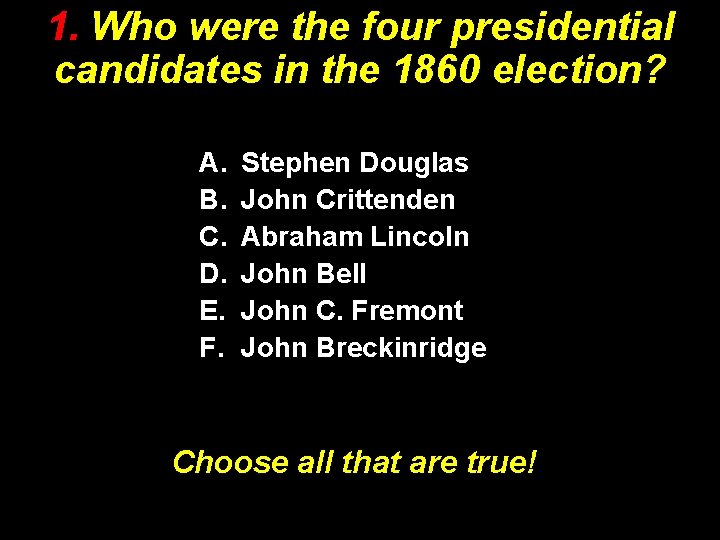
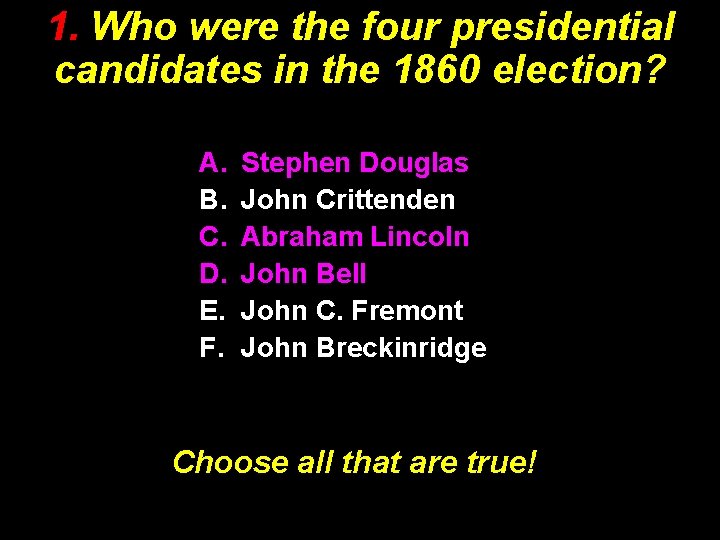
1. Who were the four presidential candidates in the 1860 election? A. B. C. D. E. F. Stephen Douglas John Crittenden Abraham Lincoln John Bell John C. Fremont John Breckinridge Choose all that are true!
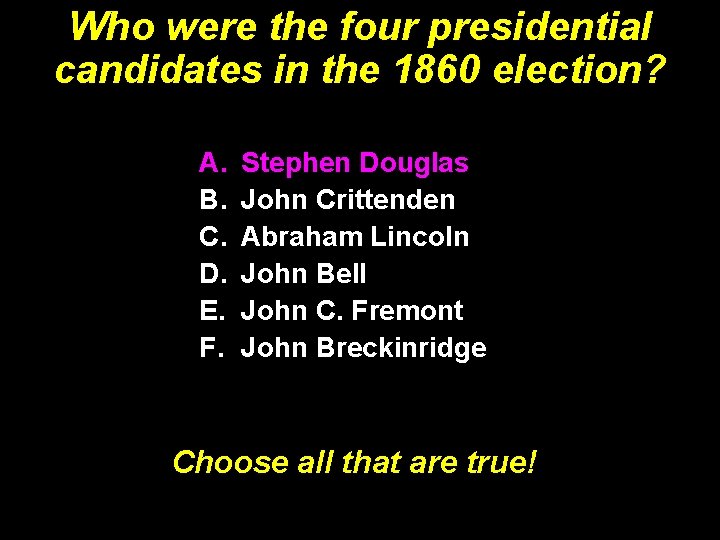
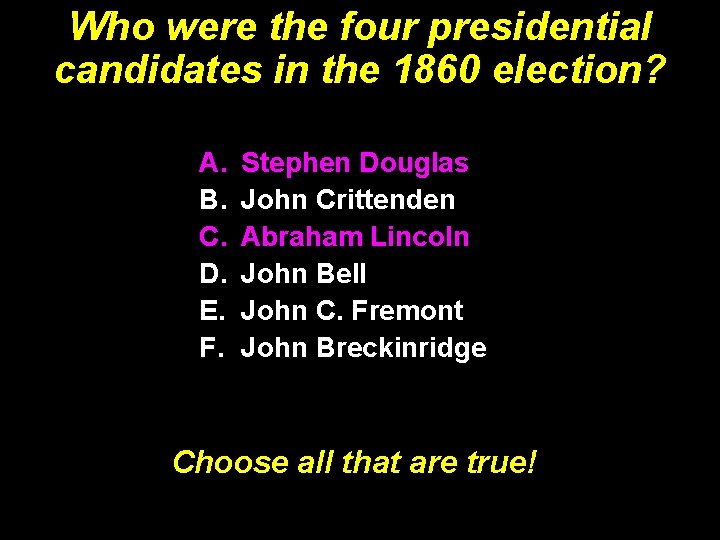
Who were the four presidential candidates in the 1860 election? A. B. C. D. E. F. Stephen Douglas John Crittenden Abraham Lincoln John Bell John C. Fremont John Breckinridge Choose all that are true!
Who were the four presidential candidates in the 1860 election? A. B. C. D. E. F. Stephen Douglas John Crittenden Abraham Lincoln John Bell John C. Fremont John Breckinridge Choose all that are true!
1. Who were the four presidential candidates in the 1860 election? A. B. C. D. E. F. Stephen Douglas John Crittenden Abraham Lincoln John Bell John C. Fremont John Breckinridge Choose all that are true!
Who were the four presidential candidates in the 1860 election? A. B. C. D. E. F. Stephen Douglas John Crittenden Abraham Lincoln John Bell John C. Fremont John Breckinridge Choose all that are true!
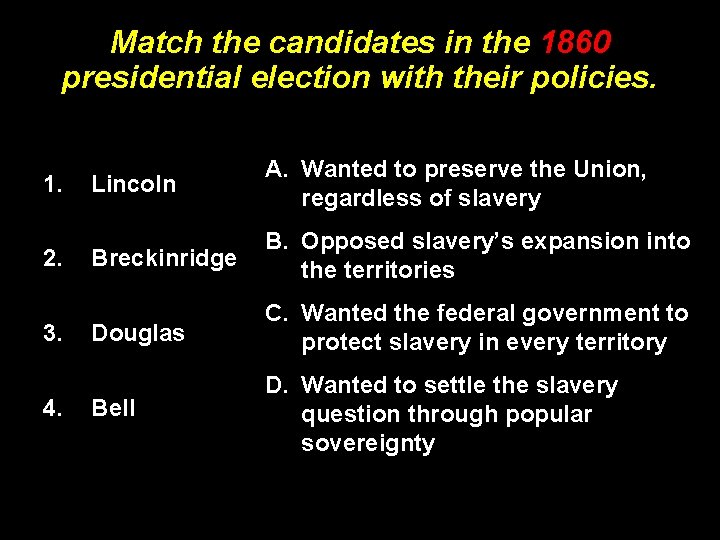
Match the candidates in the 1860 presidential election with their policies. 1. 2. 3. 4. Lincoln A. Wanted to preserve the Union, regardless of slavery Breckinridge B. Opposed slavery’s expansion into the territories Douglas C. Wanted the federal government to protect slavery in every territory Bell D. Wanted to settle the slavery question through popular sovereignty
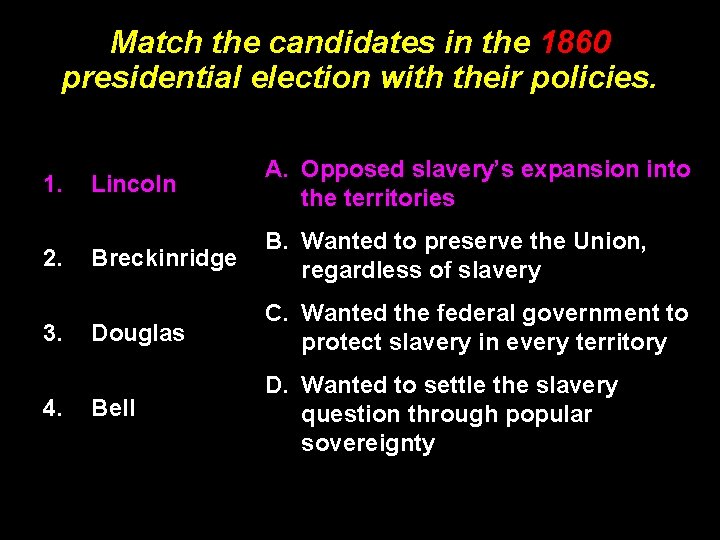
Match the candidates in the 1860 presidential election with their policies. 1. 2. 3. 4. Lincoln A. Opposed slavery’s expansion into the territories Breckinridge B. Wanted to preserve the Union, regardless of slavery Douglas C. Wanted the federal government to protect slavery in every territory Bell D. Wanted to settle the slavery question through popular sovereignty
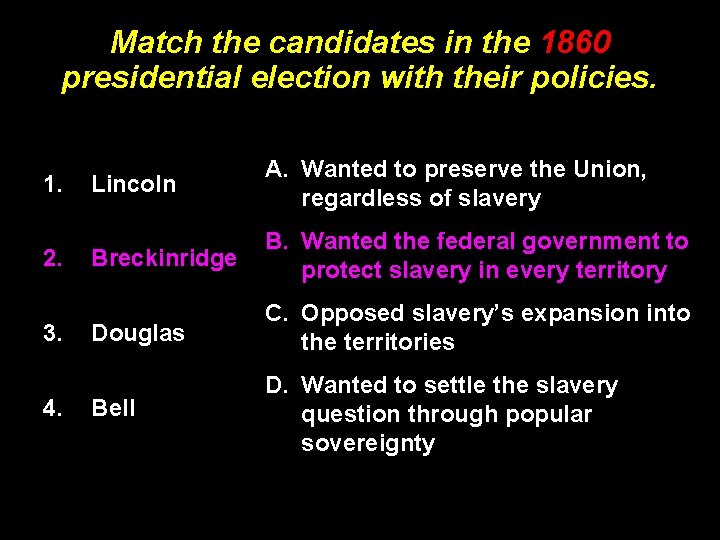
Match the candidates in the 1860 presidential election with their policies. 1. 2. 3. 4. Lincoln A. Wanted to preserve the Union, regardless of slavery Breckinridge B. Wanted the federal government to protect slavery in every territory Douglas C. Opposed slavery’s expansion into the territories Bell D. Wanted to settle the slavery question through popular sovereignty
Match the candidates in the 1860 presidential election with their policies. Lincoln A. Wanted to preserve the Union, regardless of slavery Breckinridge B. Opposed slavery’s expansion into the territories 3. Douglas C. Wanted to settle the slavery question through popular sovereignty 4. Bell 1. 2. D. Wanted the federal government to protect slavery in every territory
Match the candidates in the 1860 presidential election with their policies. Lincoln A. Opposed slavery’s expansion into the territories Breckinridge B. Wanted the federal government to protect slavery in every territory 3. Douglas C. Wanted to settle the slavery question through popular sovereignty 4. Bell 1. 2. D. Wanted to preserve the Union, regardless of slavery
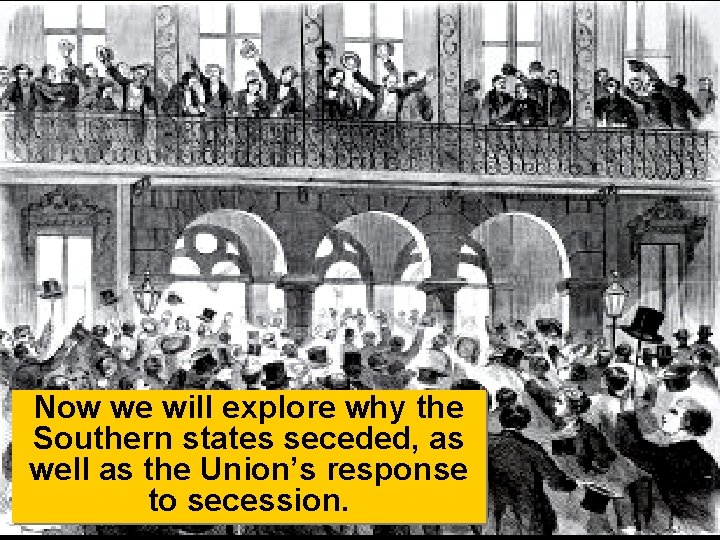
Now we will explore why the Southern states seceded, as well as the Union’s response to secession.
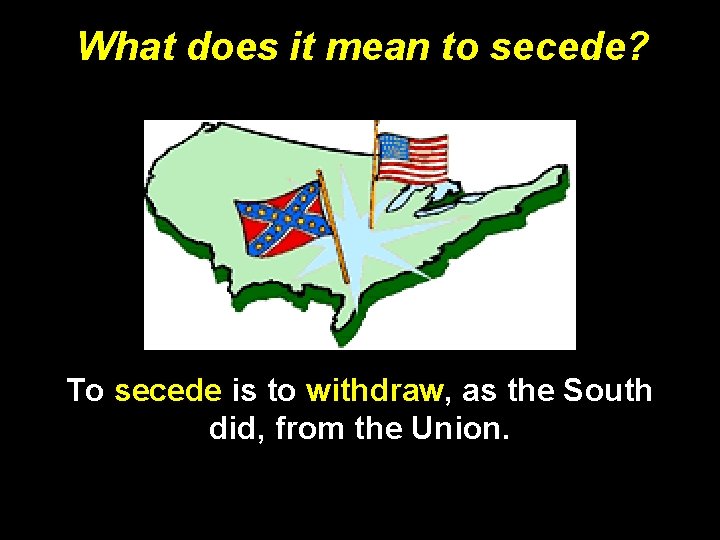
What does it mean to secede? To secede is to withdraw, as the South did, from the Union.
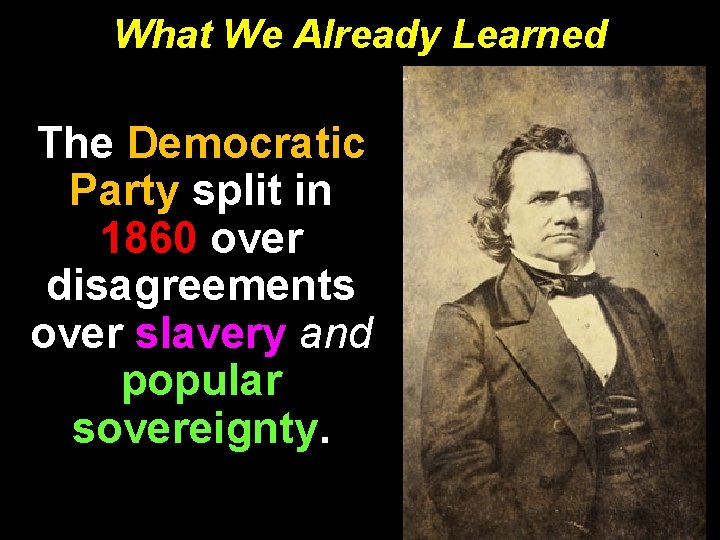
What We Already Learned The Democratic Party split in 1860 over disagreements over slavery and popular sovereignty.
What We Already Learned Lincoln defeated three (3) other candidates to win the election of 1860
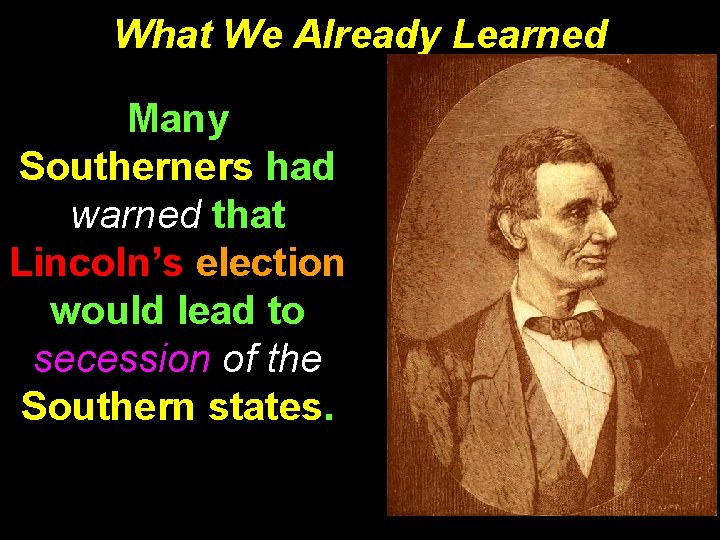
What We Already Learned Many Southerners had warned that Lincoln’s election would lead to secession of the Southern states.
Why did the South secede? • There were many factors beyond slavery that led to the secession of the South. • Differences in Culture • Differences in Economy • Differences in Political Philosophy • Diminished Influence • Over-estimation of the South’s Importance • Lincoln’s Election
Differences in Culture Aristocratic and Stratified in the SOUTH vs. Democratic and Fluid in the NORTH
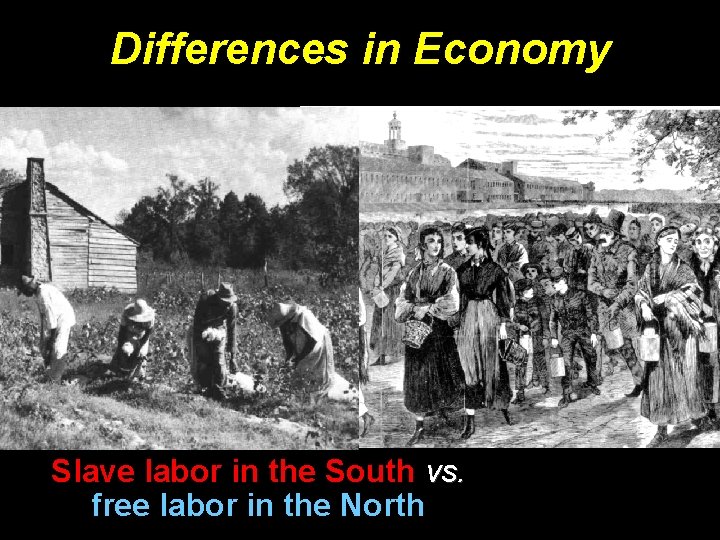
Differences in Economy Slave labor in the South vs. free labor in the North
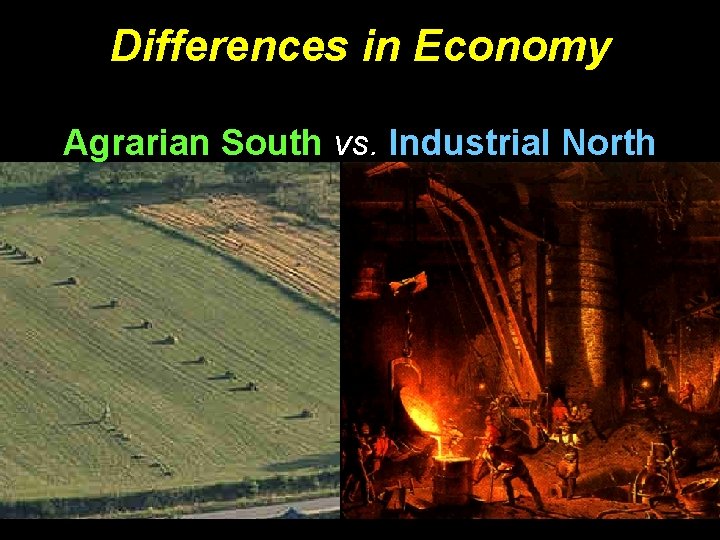
Differences in Economy Agrarian South vs. Industrial North
Differences in Political Philosophy Compact Theory v. Permanent Union
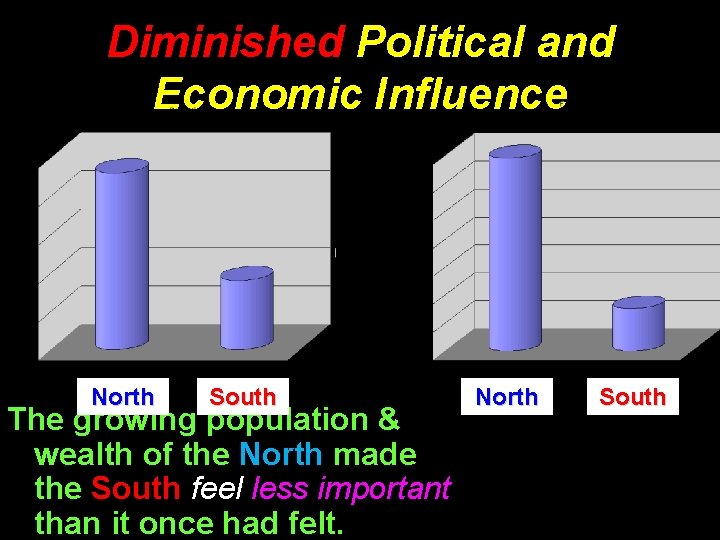
Diminished Political and Economic Influence North South The growing population & wealth of the North made the South feel less important than it once had felt. North South
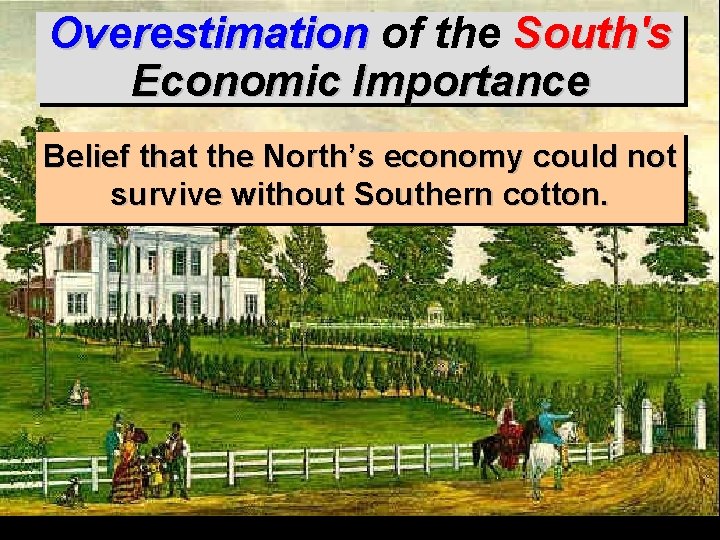
Overestimation of the South's Economic Importance Belief that the North’s economy could not survive without Southern cotton.
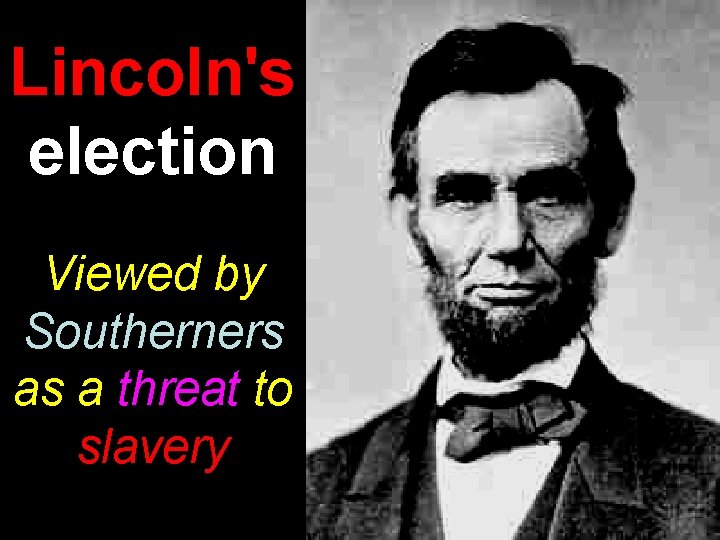
Lincoln's election Viewed by Southerners as a threat to slavery
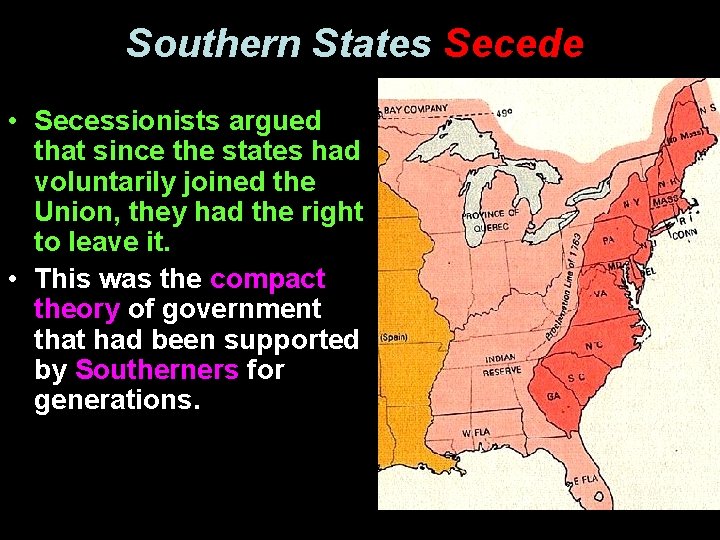
Southern States Secede • Secessionists argued that since the states had voluntarily joined the Union, they had the right to leave it. • This was the compact theory of government that had been supported by Southerners for generations.
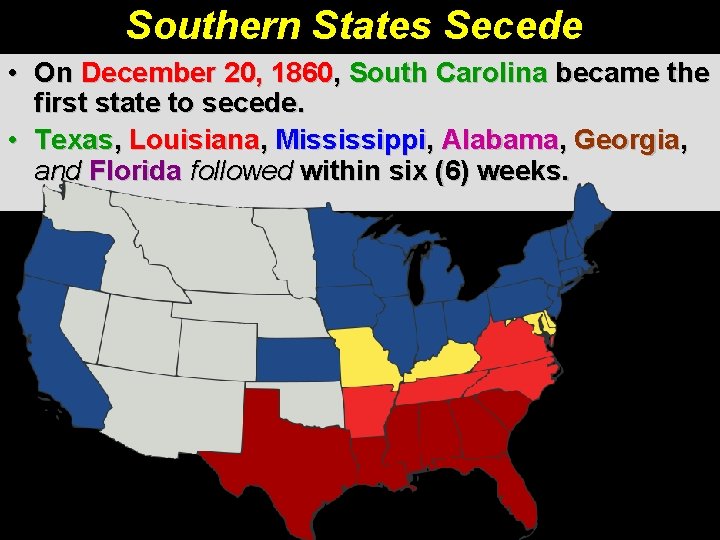
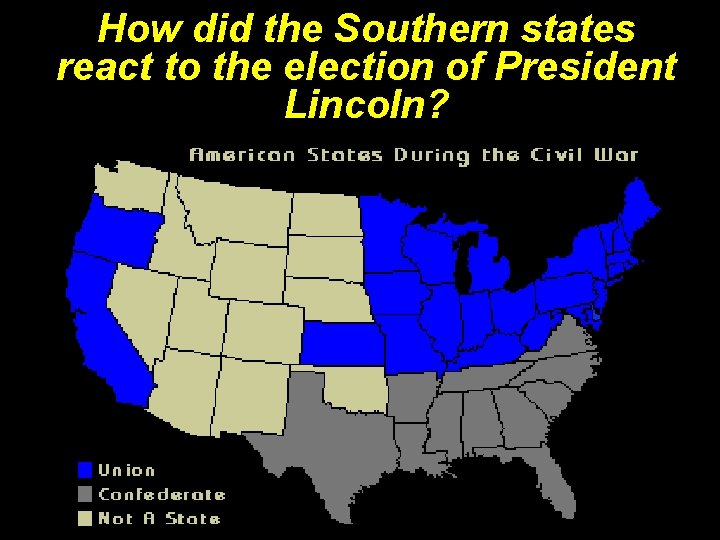
Southern States Secede • On December 20, 1860, South Carolina became the first state to secede. • Texas, Louisiana, Mississippi, Alabama, Georgia, and Florida followed within six (6) weeks.
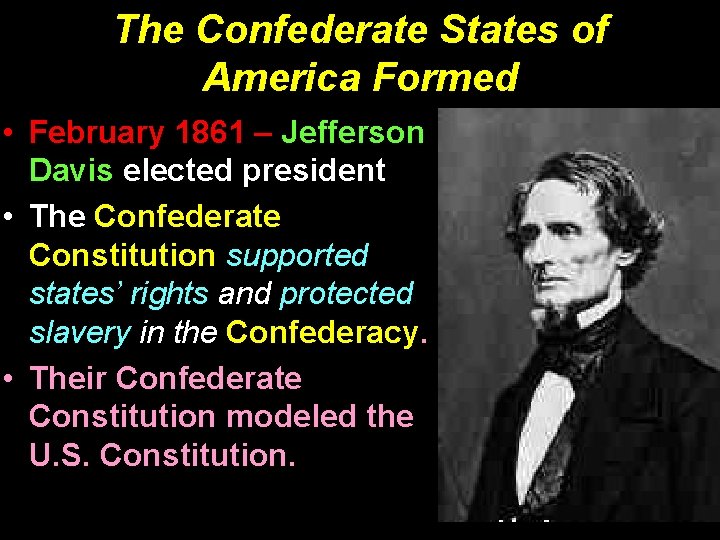
The Confederate States of America Formed • February 1861 – Jefferson Davis elected president • The Confederate Constitution supported states’ rights and protected slavery in the Confederacy. • Their Confederate Constitution modeled the U. S. Constitution.
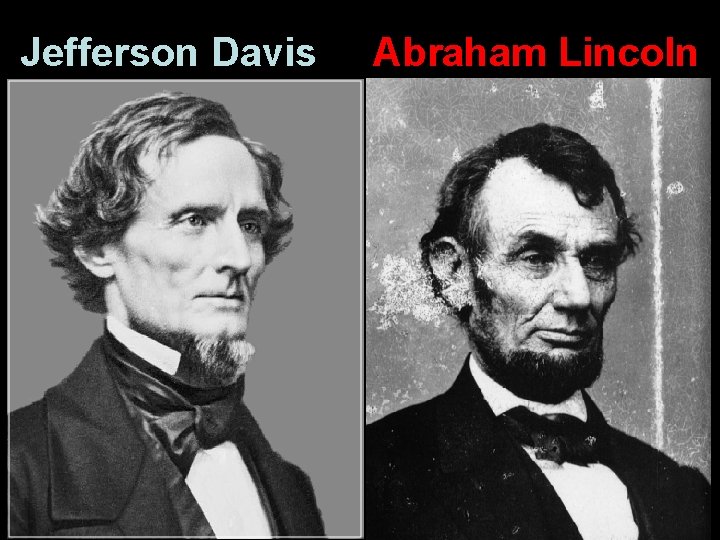
Jefferson Davis Abraham Lincoln
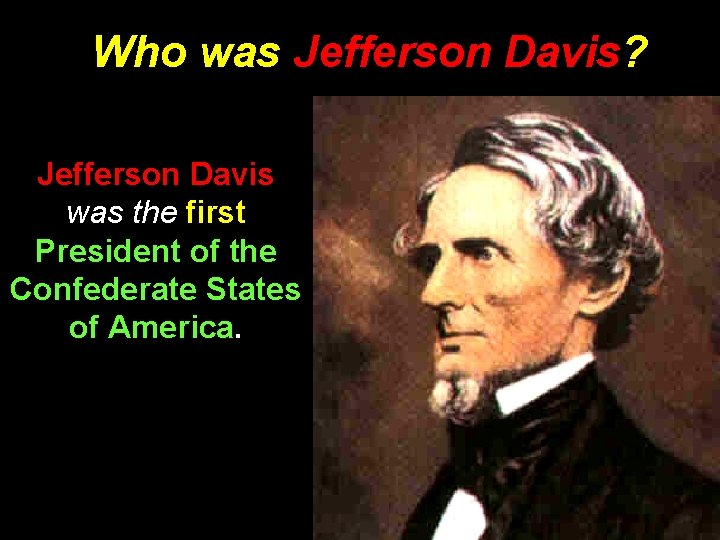
Who was Jefferson Davis? Jefferson Davis was the first President of the Confederate States of America.
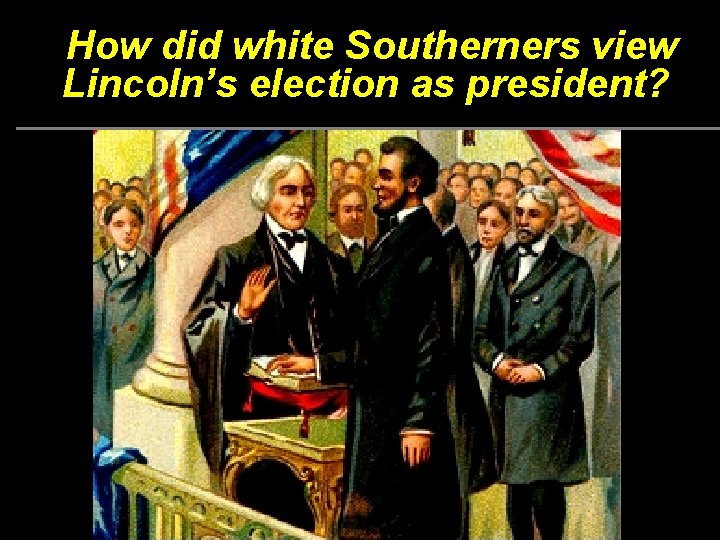
How did white Southerners view Lincoln’s election as president?
How did White Southerners view Lincoln’s election as president? A. They viewed it with laughter, since they had just seceded. B. They saw it as a threat to slavery and to their way of life. C. To them, it was an example of popular sovereignty. D. They saw it as a crooked election, with thousands of phony votes cast.
How did White Southerners view Lincoln’s election as president? A. They viewed it with laughter, since they had just seceded. B. They saw it as a threat to slavery and to their way of life. C. To them, it was an example of popular sovereignty. D. They saw it as a crooked election, with thousands of phony votes cast.
How did the Southern states react to the election of President Lincoln?
How did the Southern states react to the election of President Lincoln? A. They beginning impeachment proceedings immediately. B. They threatened to withhold their tariff duties until he resigned. C. They seceded from the Union. D. They refused to send their representatives to Congress that year.
How did the Southern states react to the election of President Lincoln? A. They beginning impeachment proceedings immediately. B. They threatened to withhold their tariff duties until he resigned. C. They seceded from the Union. D. They refused to send their representatives to Congress that year.
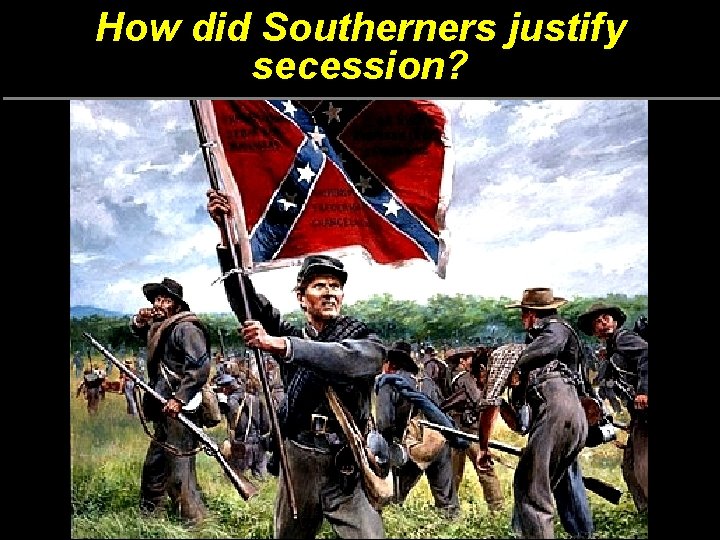
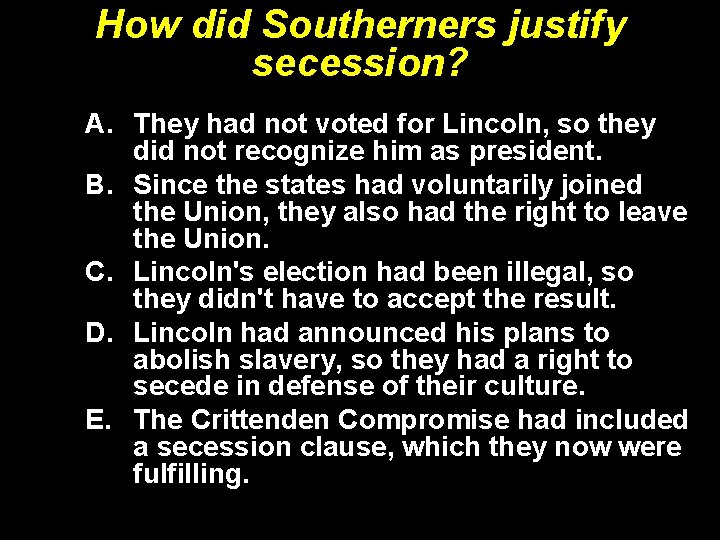
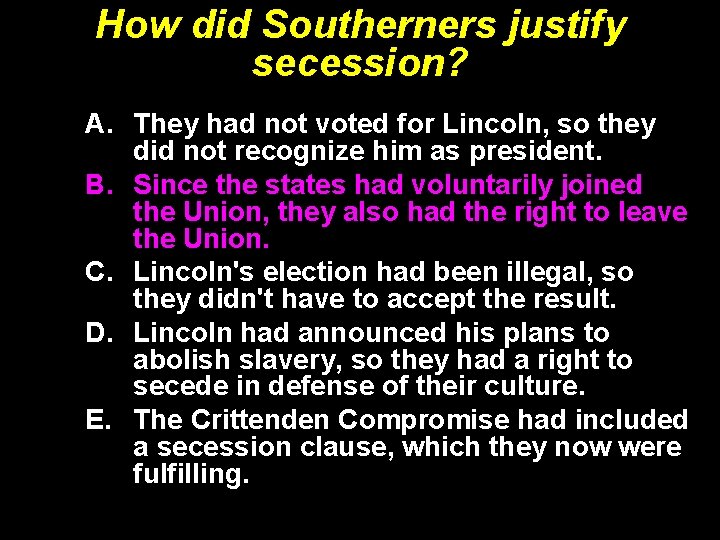
How did Southerners justify secession?
How did Southerners justify secession? A. They had not voted for Lincoln, so they did not recognize him as president. B. Since the states had voluntarily joined the Union, they also had the right to leave the Union. C. Lincoln's election had been illegal, so they didn't have to accept the result. D. Lincoln had announced his plans to abolish slavery, so they had a right to secede in defense of their culture. E. The Crittenden Compromise had included a secession clause, which they now were fulfilling.
How did Southerners justify secession? A. They had not voted for Lincoln, so they did not recognize him as president. B. Since the states had voluntarily joined the Union, they also had the right to leave the Union. C. Lincoln's election had been illegal, so they didn't have to accept the result. D. Lincoln had announced his plans to abolish slavery, so they had a right to secede in defense of their culture. E. The Crittenden Compromise had included a secession clause, which they now were fulfilling.
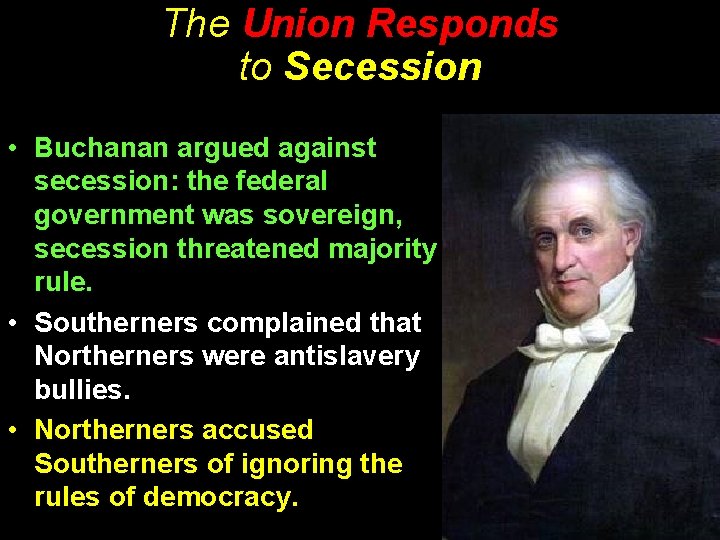
The Union Responds to Secession • Buchanan argued against secession: the federal government was sovereign, secession threatened majority rule. • Southerners complained that Northerners were antislavery bullies. • Northerners accused Southerners of ignoring the rules of democracy.
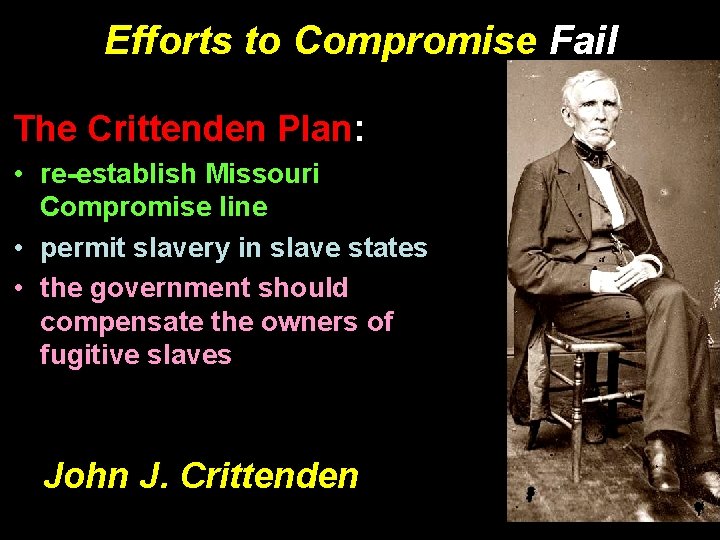
Efforts to Compromise Fail The Crittenden Plan: • re-establish Missouri Compromise line • permit slavery in slave states • the government should compensate the owners of fugitive slaves John J. Crittenden
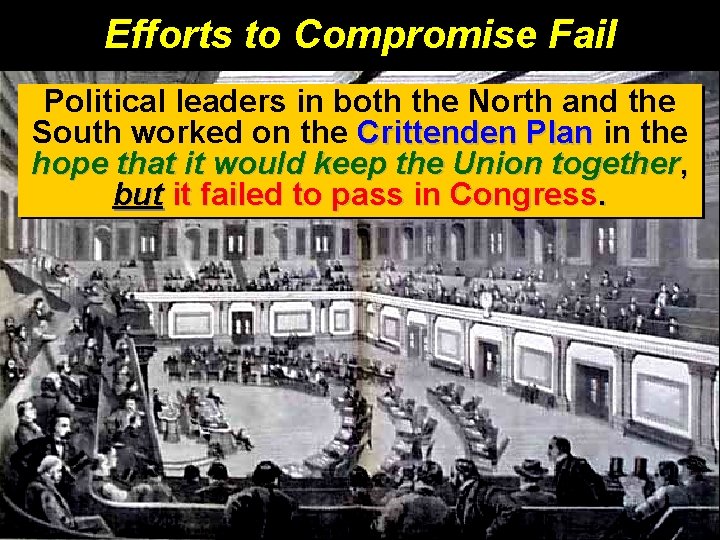
Efforts to Compromise Fail Political leaders in both the North and the South worked on the Crittenden Plan in the hope that it would keep the Union together, but it failed to pass in Congress.
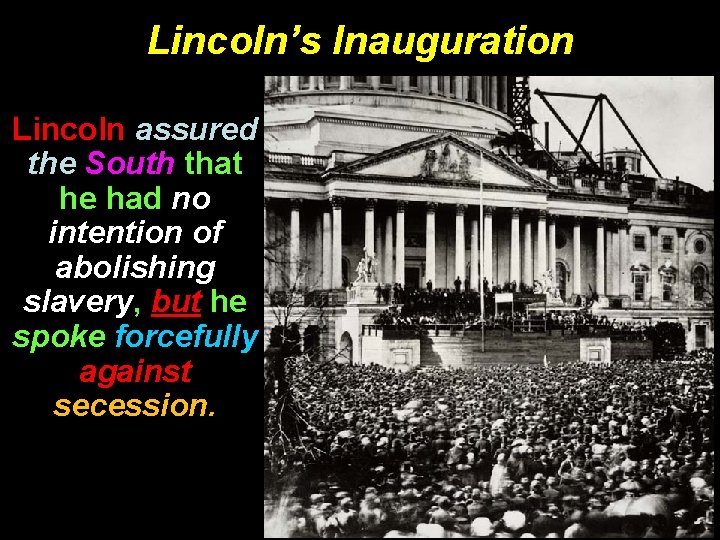
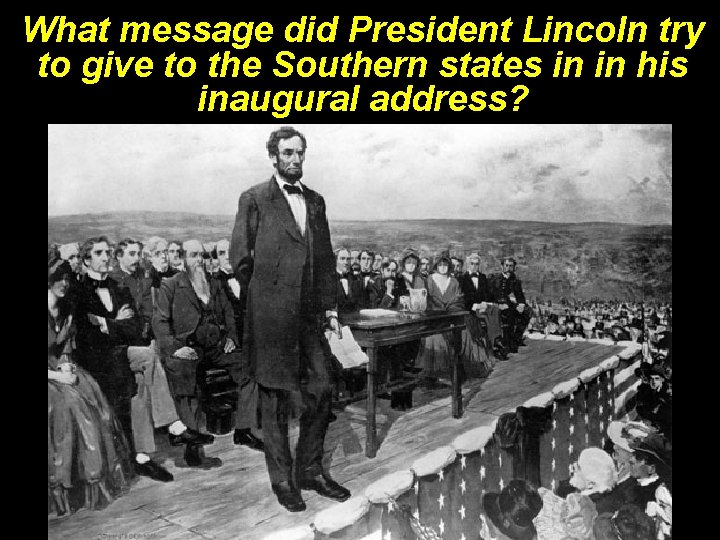
Lincoln’s Inauguration Lincoln assured the South that he had no intention of abolishing slavery, but he spoke forcefully against secession.
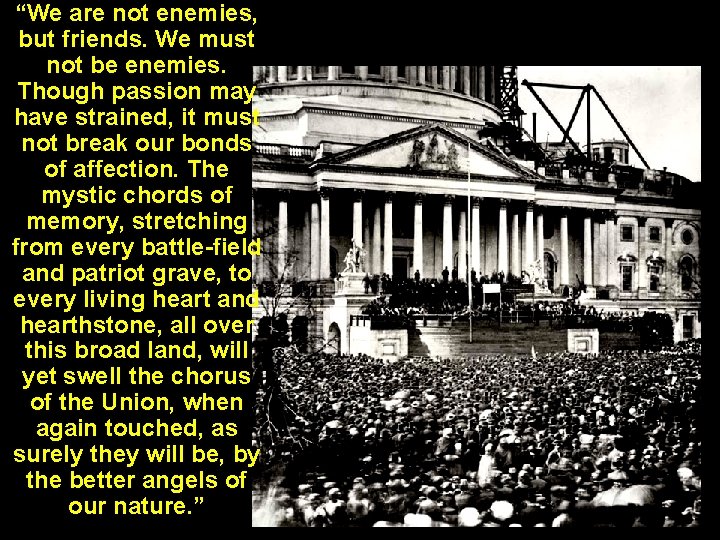
“We are not enemies, but friends. We must not be enemies. Though passion may have strained, it must not break our bonds of affection. The mystic chords of memory, stretching from every battle-field and patriot grave, to every living heart and hearthstone, all over this broad land, will yet swell the chorus of the Union, when again touched, as surely they will be, by the better angels of our nature. ”
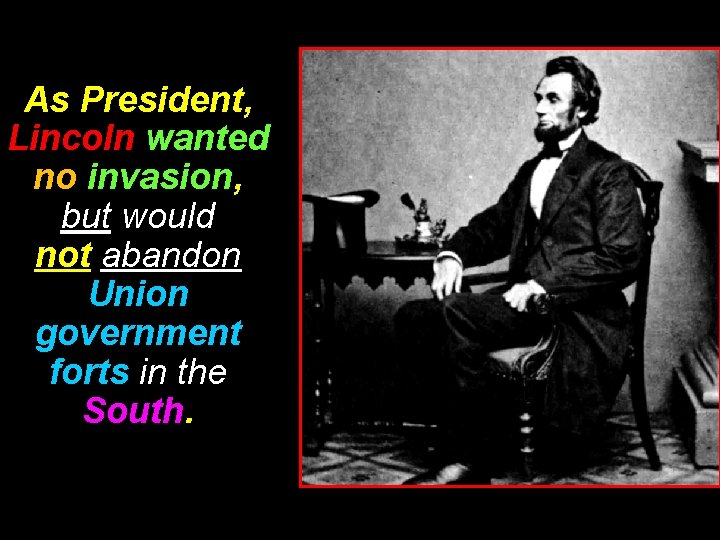
As President, Lincoln wanted no invasion, but would not abandon Union government forts in the South.
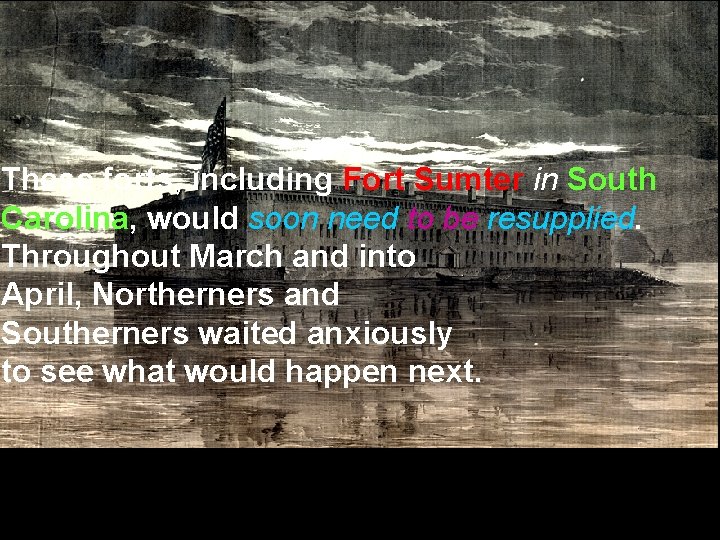
These forts, including Fort Sumter in South Carolina, would soon need to be resupplied. Throughout March and into April, Northerners and Southerners waited anxiously to see what would happen next.
What message did President Lincoln try to give to the Southern states in in his inaugural address?
What message did President Lincoln try to give to the Southern states in his inaugural address? A. Argument that the compact theory did not support secession B. Assurances to the South that he would not abolish slavery C. Strong statement against secession D. Threats to use military force against the South if it did not return to the Union at once E. A promise never to keep slavery out of the territories
What message did President Lincoln try to give to the Southern states in his inaugural address? A. Argument that the compact theory did not support secession B. Assurances to the South that he would not abolish slavery C. Strong statement against secession D. Threats to use military force against the South if it did not return to the Union at once E. A promise never to keep slavery out of the territories
Resources • • www. quia. com/files/quia/users/. . . /Lesson_15. 4 ab_-_2014 -2015. ppt Text: American History Beginnings to 1914