
Lesson 15 2 Pollution of the Atmosphere Air
- Slides: 8
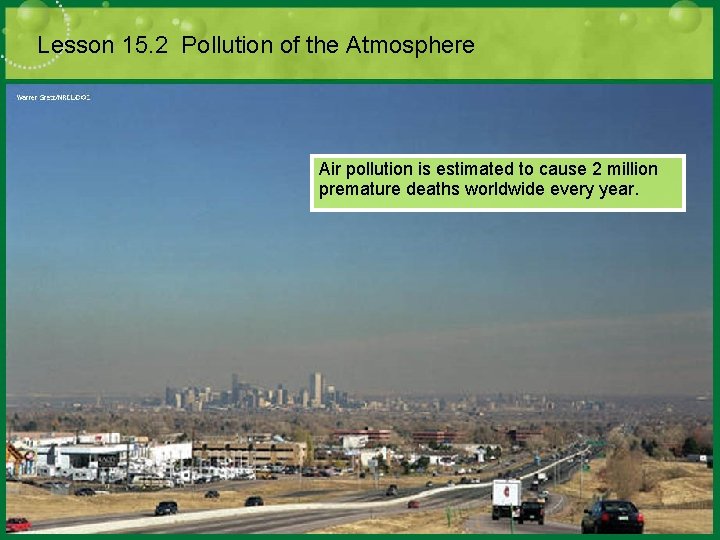
Lesson 15. 2 Pollution of the Atmosphere Air pollution is estimated to cause 2 million premature deaths worldwide every year.
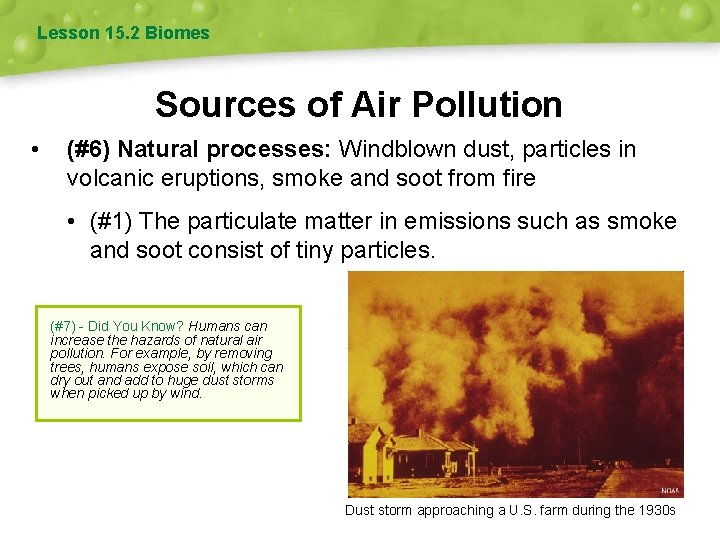
Lesson 15. 2 Biomes Sources of Air Pollution • (#6) Natural processes: Windblown dust, particles in volcanic eruptions, smoke and soot from fire • (#1) The particulate matter in emissions such as smoke and soot consist of tiny particles. (#7) - Did You Know? Humans can increase the hazards of natural air pollution. For example, by removing trees, humans expose soil, which can dry out and add to huge dust storms when picked up by wind. Dust storm approaching a U. S. farm during the 1930 s
Lesson 15. 2 Biomes Sources of Air Pollution • Human sources: Most come directly or indirectly from the burning of fossil fuels. • (#2) Power plants and factories are examples of point sources of pollution. • (#3) Most air pollution is the direct or indirect result of the combustion of fossil fuels. • (#4) Fossil fuels are carbon containing fuels that formed millions of years ago from the remains of organisms.
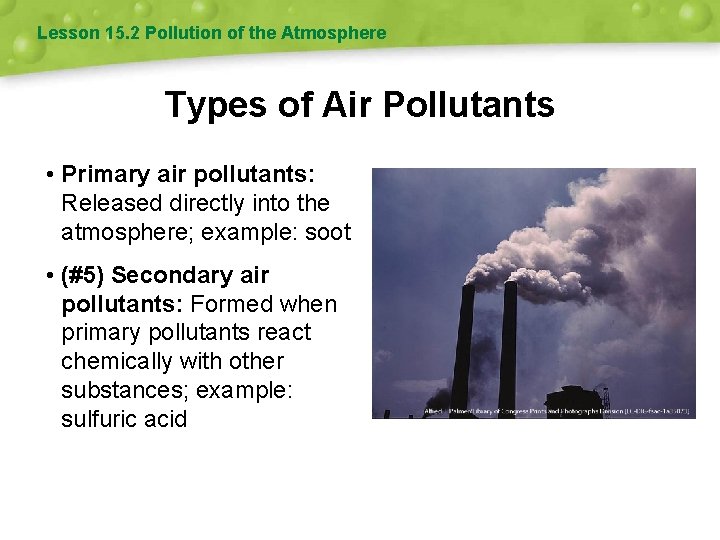
Lesson 15. 2 Pollution of the Atmosphere Types of Air Pollutants • Primary air pollutants: Released directly into the atmosphere; example: soot • (#5) Secondary air pollutants: Formed when primary pollutants react chemically with other substances; example: sulfuric acid
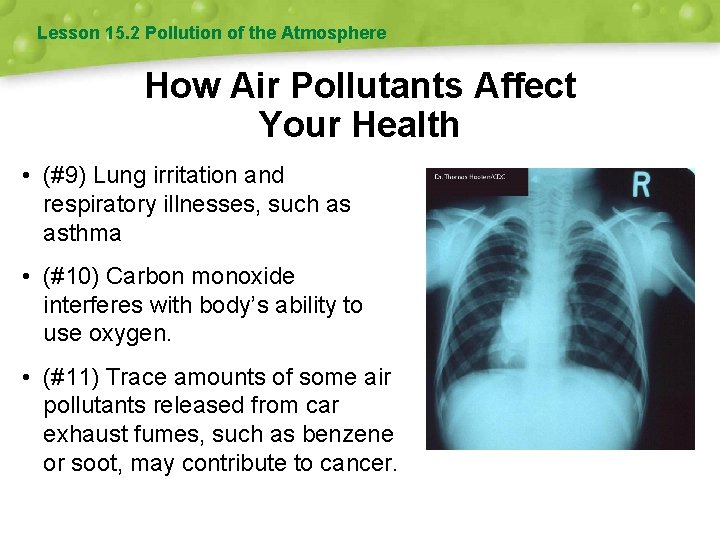
Lesson 15. 2 Pollution of the Atmosphere How Air Pollutants Affect Your Health • (#9) Lung irritation and respiratory illnesses, such as asthma • (#10) Carbon monoxide interferes with body’s ability to use oxygen. • (#11) Trace amounts of some air pollutants released from car exhaust fumes, such as benzene or soot, may contribute to cancer.
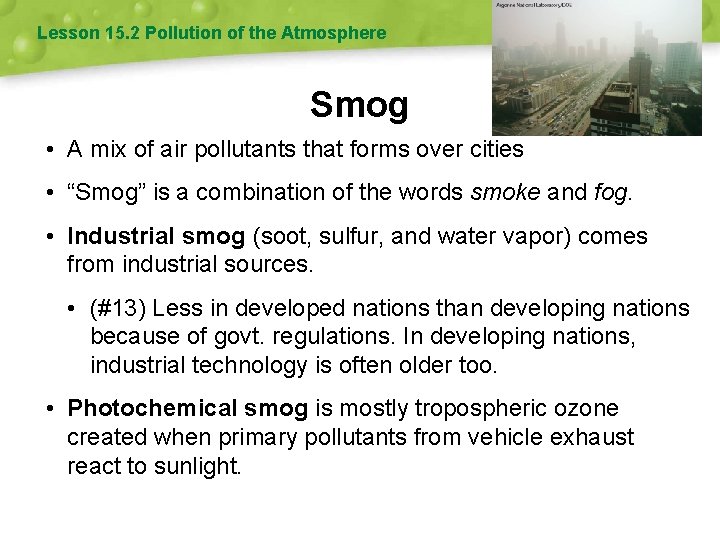
Lesson 15. 2 Pollution of the Atmosphere Smog • A mix of air pollutants that forms over cities • “Smog” is a combination of the words smoke and fog. • Industrial smog (soot, sulfur, and water vapor) comes from industrial sources. • (#13) Less in developed nations than developing nations because of govt. regulations. In developing nations, industrial technology is often older too. • Photochemical smog is mostly tropospheric ozone created when primary pollutants from vehicle exhaust react to sunlight.
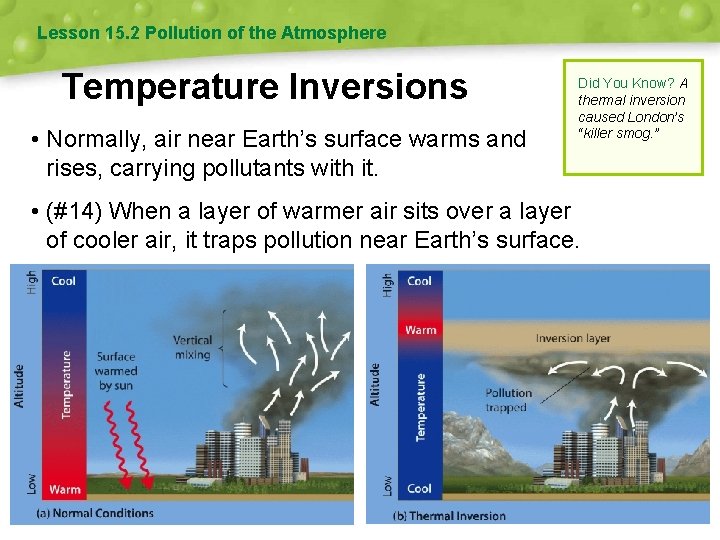
Lesson 15. 2 Pollution of the Atmosphere Temperature Inversions • Normally, air near Earth’s surface warms and rises, carrying pollutants with it. Did You Know? A thermal inversion caused London’s “killer smog. ” • (#14) When a layer of warmer air sits over a layer of cooler air, it traps pollution near Earth’s surface.
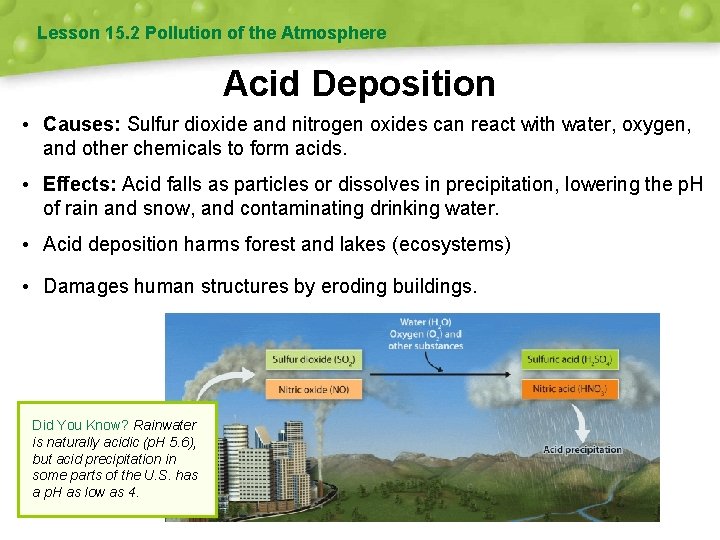
Lesson 15. 2 Pollution of the Atmosphere Acid Deposition • Causes: Sulfur dioxide and nitrogen oxides can react with water, oxygen, and other chemicals to form acids. • Effects: Acid falls as particles or dissolves in precipitation, lowering the p. H of rain and snow, and contaminating drinking water. • Acid deposition harms forest and lakes (ecosystems) • Damages human structures by eroding buildings. Did You Know? Rainwater is naturally acidic (p. H 5. 6), but acid precipitation in some parts of the U. S. has a p. H as low as 4.