
LESSON 13 CHEST ABDOMINAL AND PELVIC INJURIES 2011
LESSON 13 CHEST, ABDOMINAL AND PELVIC INJURIES © 2011 National Safety Council 13 -1
Common Causes of Chest Injuries Common causes: • Striking steering wheel in vehicle crash • Blow to chest • Fall from a height • Sports injury • Physical assault • Penetrating injury or impaled object © 2011 National Safety Council 13 -2
Serious Chest Injury General signs and symptoms: • Breathing problems • Severe pain • Bruising, swelling • Deformity • Coughing blood © 2011 National Safety Council 13 -3
Pneumothorax • Air escapes from injured lung into thoracic cavity causing collapse of some or all of lung • Results in respiratory distress • Call 9 -1 -1 © 2011 National Safety Council 13 -4
Hemothorax • Blood from injury accumulates in thoracic cavity, compressing the lung • Causes respiratory distress and possibly shock • Call 9 -1 -1 © 2011 National Safety Council 13 -5
Broken Ribs • Typically result from blunt trauma • Common in lower ribs and along the side • Usually cause severe pain, discoloration and swelling at site • Injuries to lungs or other underlying organs may also be present with severe trauma • Always call 9 -1 -1 © 2011 National Safety Council 13 -6
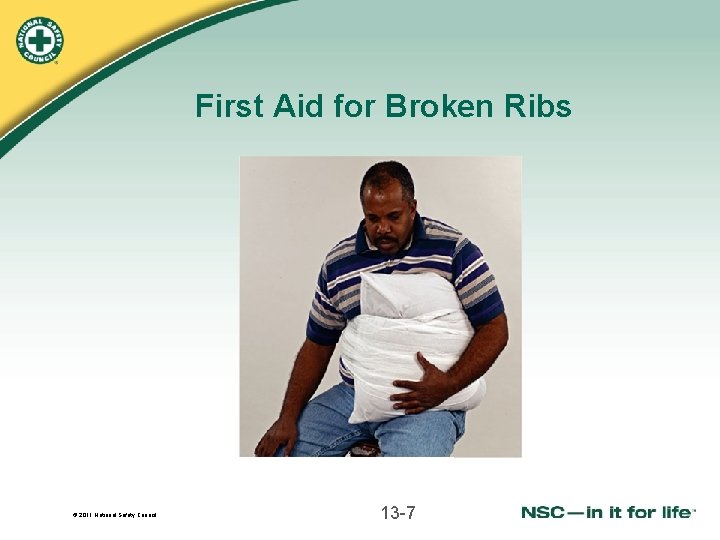
First Aid for Broken Ribs © 2011 National Safety Council 13 -7
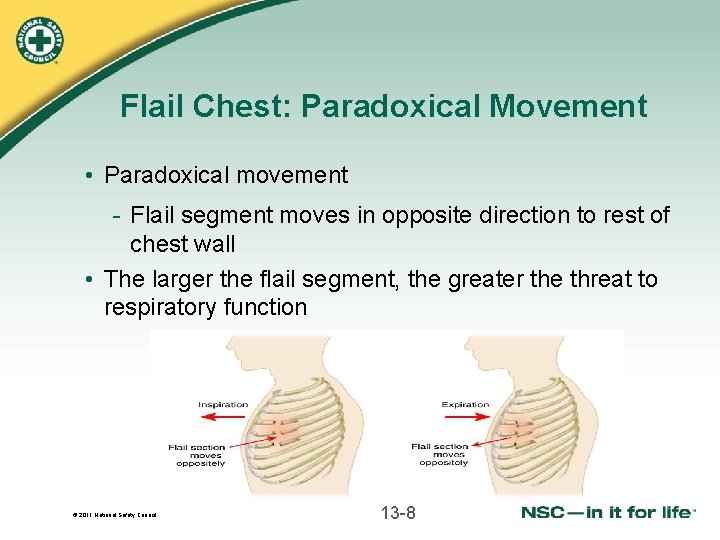
Flail Chest: Paradoxical Movement • Paradoxical movement - Flail segment moves in opposite direction to rest of chest wall • The larger the flail segment, the greater the threat to respiratory function © 2011 National Safety Council 13 -8
First Aid for Flail Chest 1. Call 9 -1 -1 2. Help victim sit in comfortable position for easiest breathing 3. Splint flail area 4. Position victim lying on injured side © 2011 National Safety Council 13 -9
Sucking Chest Wound • Open wound in chest caused by penetrating injury • Wound lets air move in and out of chest during breathing • Can be life threatening © 2011 National Safety Council 13 -10
First Aid for Sucking Chest Wound 1. Call 9 -1 -1 2. Put thin sterile dressing over wound 3. Cover dressing with plastic wrap to make air-tight seal, and tape on 3 sides 4. Position victim inclined toward injured side © 2011 National Safety Council 13 -11
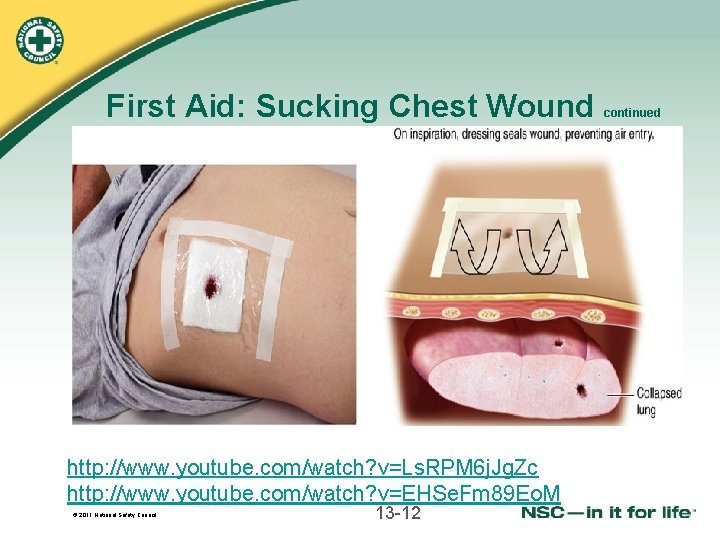
First Aid: Sucking Chest Wound http: //www. youtube. com/watch? v=Ls. RPM 6 j. Jg. Zc http: //www. youtube. com/watch? v=EHSe. Fm 89 Eo. M © 2011 National Safety Council 13 -12 continued
Abdominal Injuries • Include closed and open wounds • Commonly result from blow to abdomen or fall • May involve internal or external bleeding • Victim needs immediate medical care © 2011 National Safety Council 13 -13
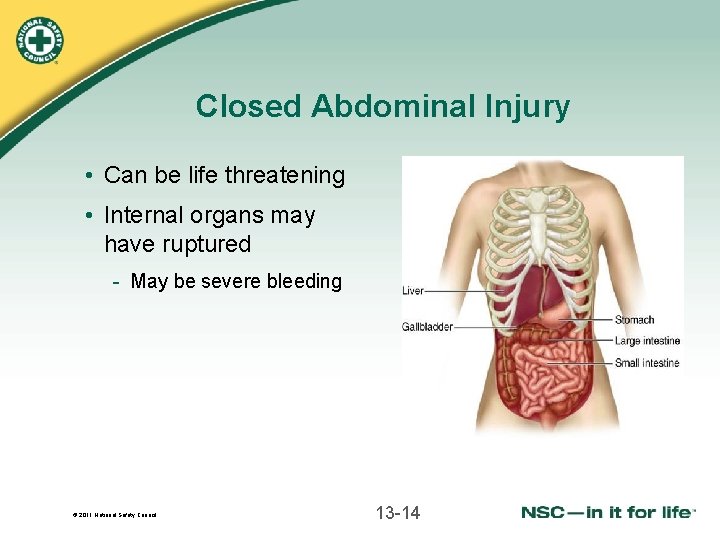
Closed Abdominal Injury • Can be life threatening • Internal organs may have ruptured - May be severe bleeding © 2011 National Safety Council 13 -14
First Aid for Closed Abdominal Injury 1. Call 9 -1 -1 2. Carefully position victim on back and loosen any tight clothing 3. Treat victim for shock and monitor victim’s breathing © 2011 National Safety Council 13 -15
Open Abdominal Wound • Usually injures internal organs (intestines, liver, kidneys or stomach) • Large wound may cause evisceration - Abdominal organs protrude through wound - Serious emergency © 2011 National Safety Council 13 -16
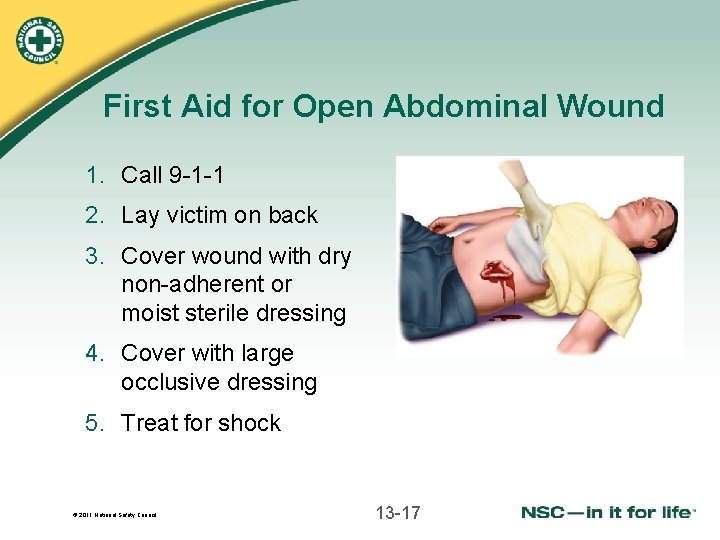
First Aid for Open Abdominal Wound 1. Call 9 -1 -1 2. Lay victim on back 3. Cover wound with dry non-adherent or moist sterile dressing 4. Cover with large occlusive dressing 5. Treat for shock © 2011 National Safety Council 13 -17
Pelvic Injuries • Most common is fractured pelvis • More common in elderly - May occur from fall • May cause severe internal bleeding - Life threatening - May cause shock • Victim may also have a spinal injury © 2011 National Safety Council 13 -18
First Aid for Pelvic Injuries 1. Call 9 -1 -1. 2. Help victim lie on back 3. If help delayed, immobilize legs together 4. Treat for shock. Monitor breathing and be ready to give CPR if needed © 2011 National Safety Council 13 -19
- Slides: 19