
Lesson 12 Presentation and Analysis of Data Bar
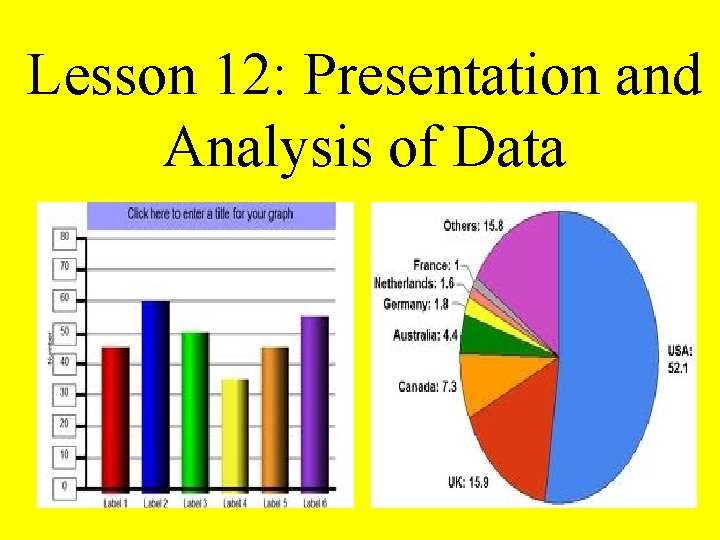
Lesson 12: Presentation and Analysis of Data
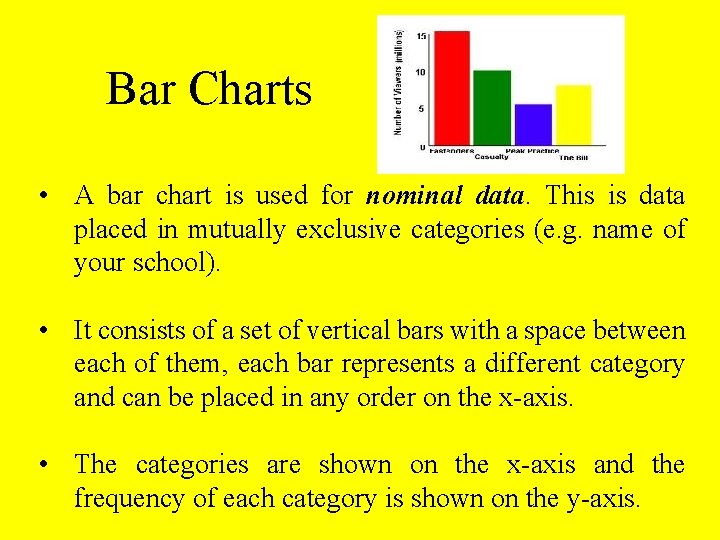
Bar Charts • A bar chart is used for nominal data. This is data placed in mutually exclusive categories (e. g. name of your school). • It consists of a set of vertical bars with a space between each of them, each bar represents a different category and can be placed in any order on the x-axis. • The categories are shown on the x-axis and the frequency of each category is shown on the y-axis.
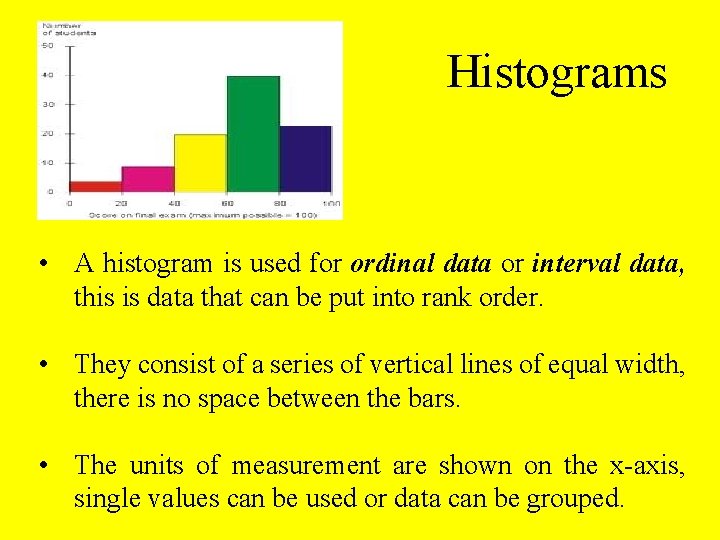
Histograms • A histogram is used for ordinal data or interval data, this is data that can be put into rank order. • They consist of a series of vertical lines of equal width, there is no space between the bars. • The units of measurement are shown on the x-axis, single values can be used or data can be grouped.
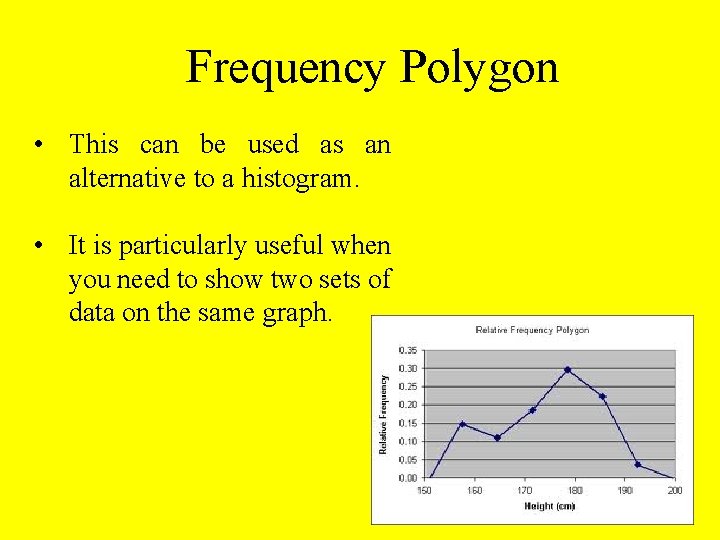
Frequency Polygon • This can be used as an alternative to a histogram. • It is particularly useful when you need to show two sets of data on the same graph.
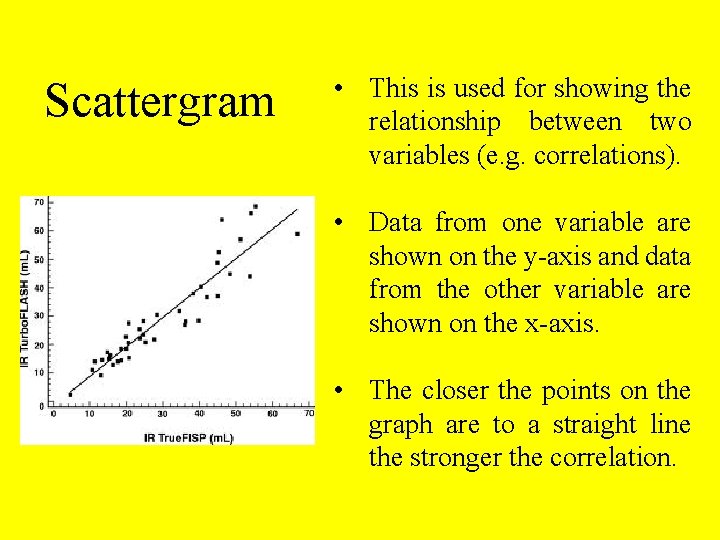
Scattergram • This is used for showing the relationship between two variables (e. g. correlations). • Data from one variable are shown on the y-axis and data from the other variable are shown on the x-axis. • The closer the points on the graph are to a straight line the stronger the correlation.
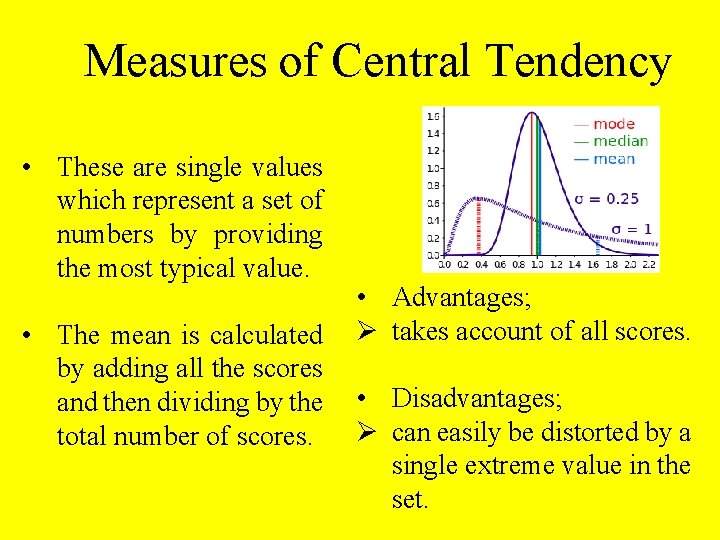
Measures of Central Tendency • These are single values which represent a set of numbers by providing the most typical value. • The mean is calculated by adding all the scores and then dividing by the total number of scores. • Advantages; Ø takes account of all scores. • Disadvantages; Ø can easily be distorted by a single extreme value in the set.
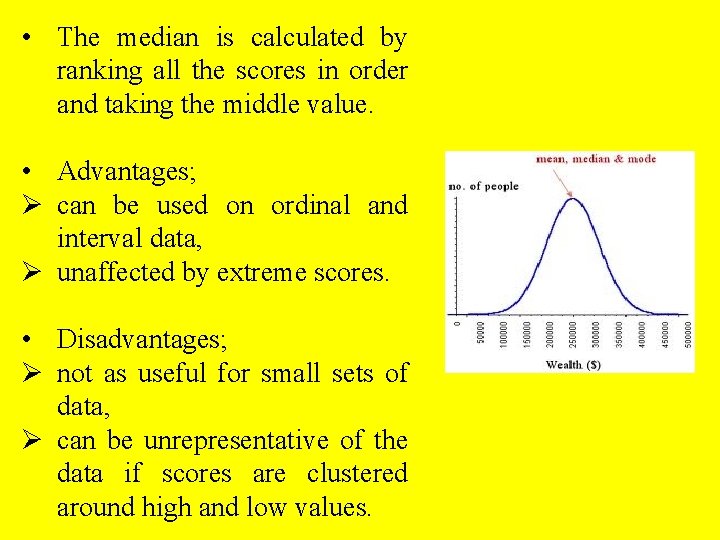
• The median is calculated by ranking all the scores in order and taking the middle value. • Advantages; Ø can be used on ordinal and interval data, Ø unaffected by extreme scores. • Disadvantages; Ø not as useful for small sets of data, Ø can be unrepresentative of the data if scores are clustered around high and low values.
• The mode is the most frequent value. • Ø Ø Ø Advantages; easy to calculate, works on nominal data, unaffected by extreme scores. • Disadvantages; Ø tells us nothing about other scores in the set, Ø limited usefulness if there is more than one modal score, Ø not useful for small sets of data.
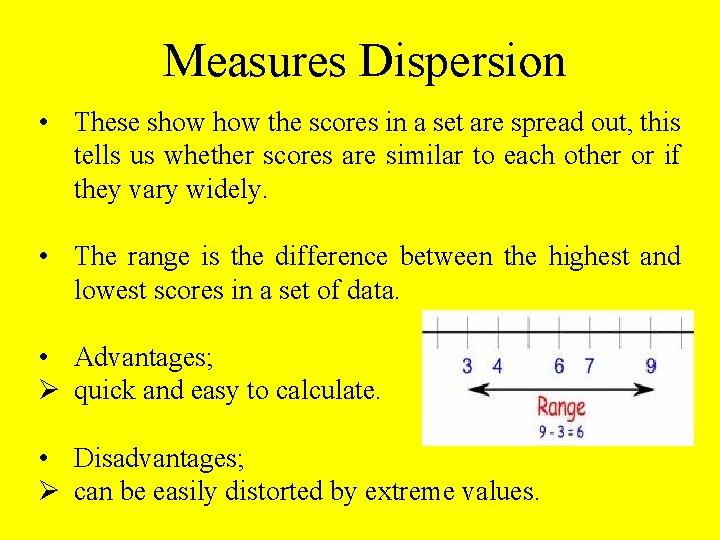
Measures Dispersion • These show the scores in a set are spread out, this tells us whether scores are similar to each other or if they vary widely. • The range is the difference between the highest and lowest scores in a set of data. • Advantages; Ø quick and easy to calculate. • Disadvantages; Ø can be easily distorted by extreme values.
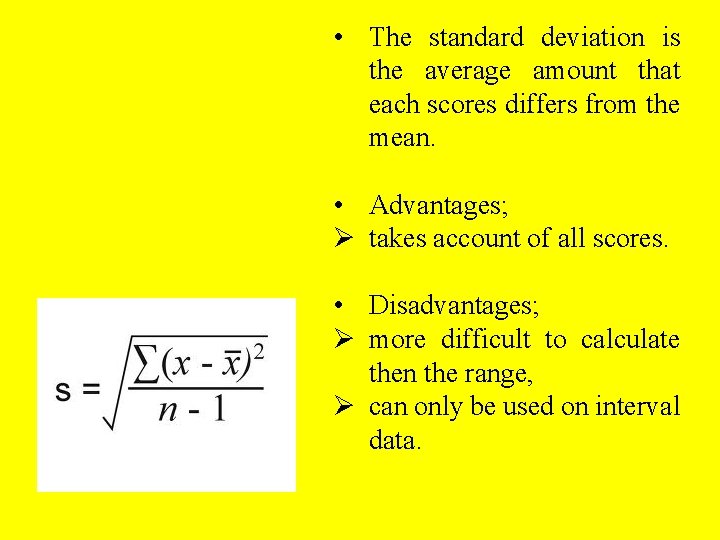
• The standard deviation is the average amount that each scores differs from the mean. • Advantages; Ø takes account of all scores. • Disadvantages; Ø more difficult to calculate then the range, Ø can only be used on interval data.
- Slides: 10