
lesson 12 PC Operating Systems in Review This
- Slides: 18
lesson 12 PC Operating Systems in Review
This lesson includes the following sections: • • UNIX DOS The Macintosh Operating System Windows 3. x OS/2 Warp Windows NT Windows 95 and 98 Linux • Windows 2000
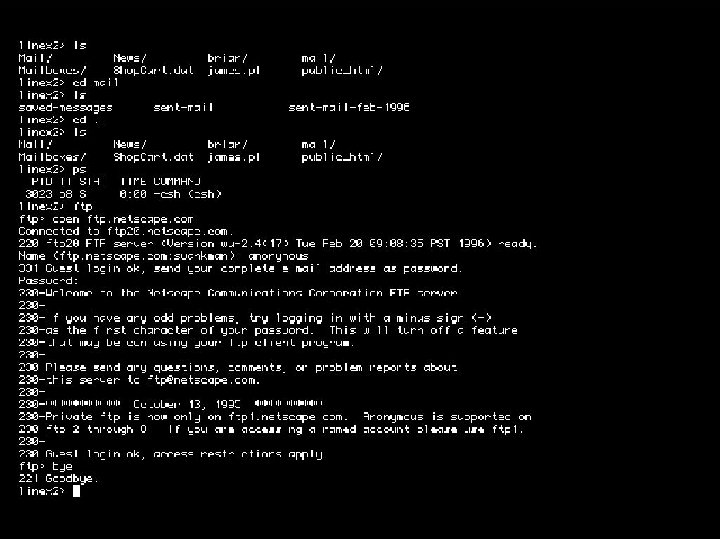
UNIX • UNIX is the oldest operating system used on PCs. • UNIX was the first multi-user, multiprocessor, multitasking operating system available for use on PCs. • Most versions of UNIX use a command-line interface, but some versions offer a GUI.
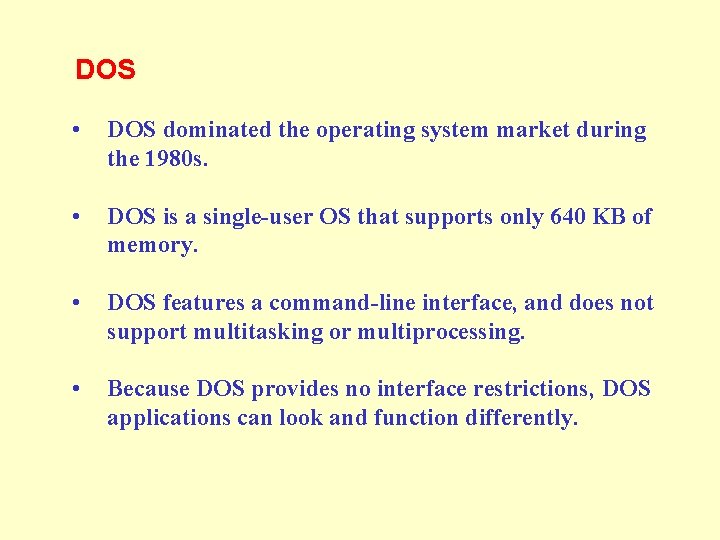
DOS • DOS dominated the operating system market during the 1980 s. • DOS is a single-user OS that supports only 640 KB of memory. • DOS features a command-line interface, and does not support multitasking or multiprocessing. • Because DOS provides no interface restrictions, DOS applications can look and function differently.
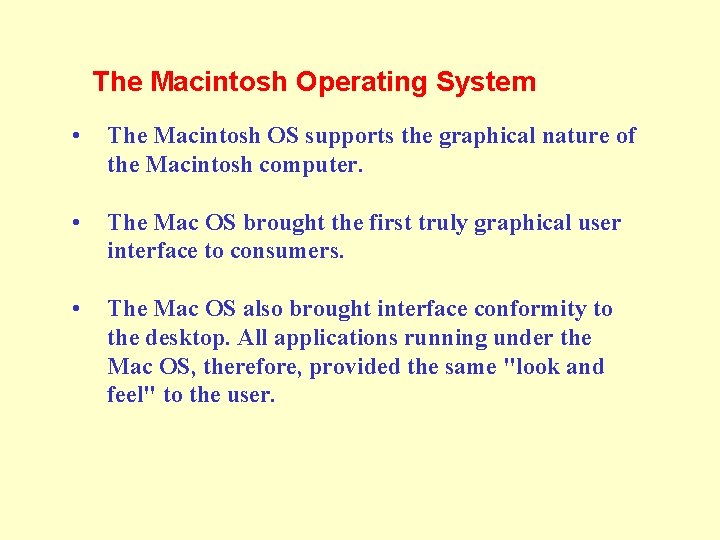
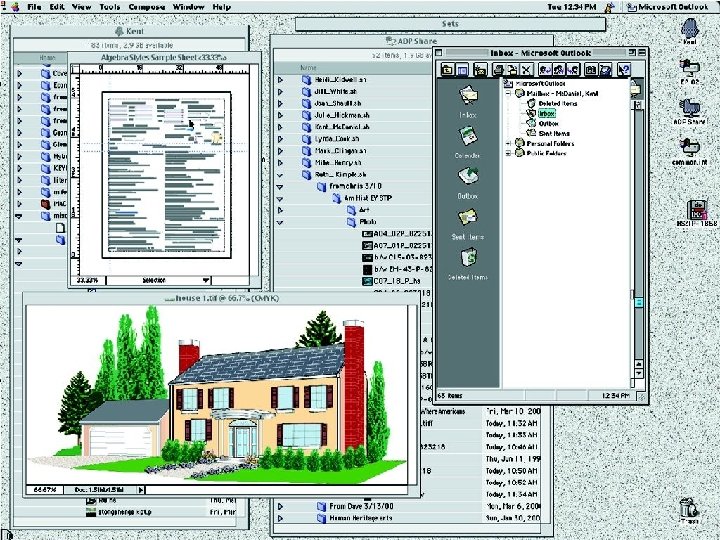
The Macintosh Operating System • The Macintosh OS supports the graphical nature of the Macintosh computer. • The Mac OS brought the first truly graphical user interface to consumers. • The Mac OS also brought interface conformity to the desktop. All applications running under the Mac OS, therefore, provided the same "look and feel" to the user.
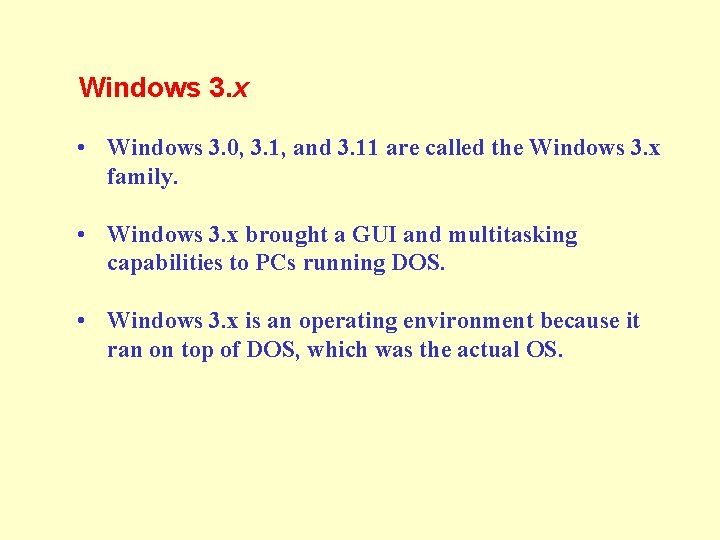
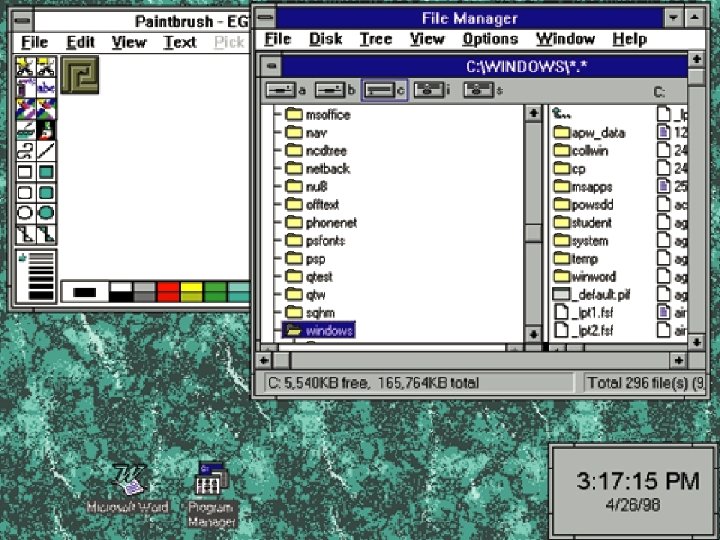
Windows 3. x • Windows 3. 0, 3. 1, and 3. 11 are called the Windows 3. x family. • Windows 3. x brought a GUI and multitasking capabilities to PCs running DOS. • Windows 3. x is an operating environment because it ran on top of DOS, which was the actual OS.
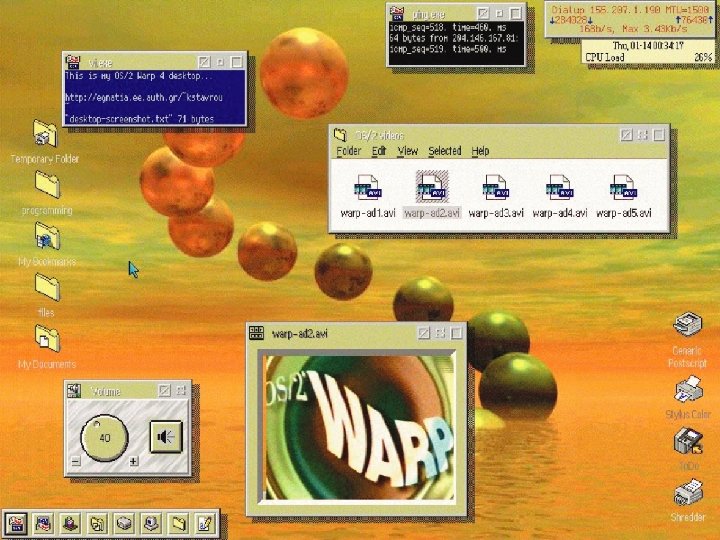
OS/2 Warp • OS/2 Warp was the first true GUI-based operating system for Intel-based PCs. • OS/2 is a multitasking OS that provides support for networking and multiple users. • It was the first PC OS to feature built-in speech recognition capabilities.
Windows NT • Microsoft's Windows NT was meant as a replacement for DOS, but was too resource- intensive to work on most PCs at the time of its release. • Microsoft issued two versions of Windows NT— Windows NT Workstation and Windows NT Server. • NT is a very powerful and robust OS, resistant to system crashes.
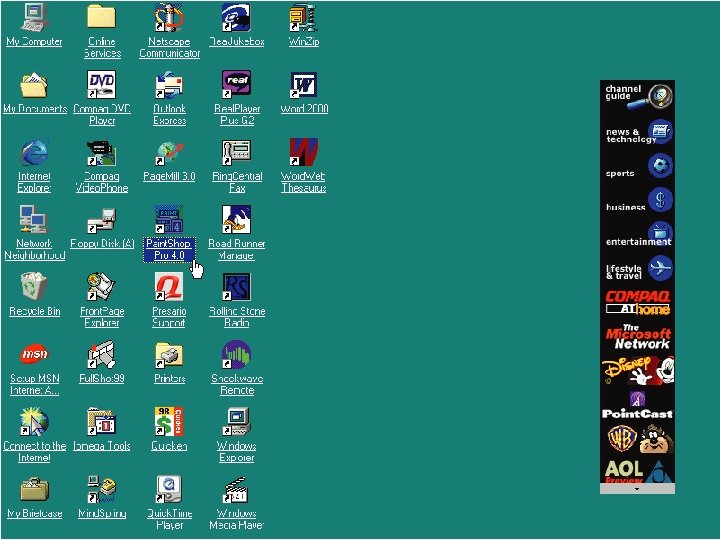
Windows 95 and 98 • Windows 95 was Microsoft's first true GUI-based, 32 -bit operating system for Intel PCs. • Windows 95 supports multitasking and can run older DOS and Windows 3. x programs. • Windows 98's features include advanced Internet capabilities, an improved user interface, and enhanced file system performance, among others.
Linux • Linux is a recently developed version of UNIX, which is available for free or at a very low cost from various sources. • Linux is a very powerful 32 -bit OS that supports multitasking, multiple users, networking, and virtually any application. • Linux can run on nearly any type of computer. • Because of its power and openness, Linux is attracting many users, including students, teachers, Internet service providers, and others.
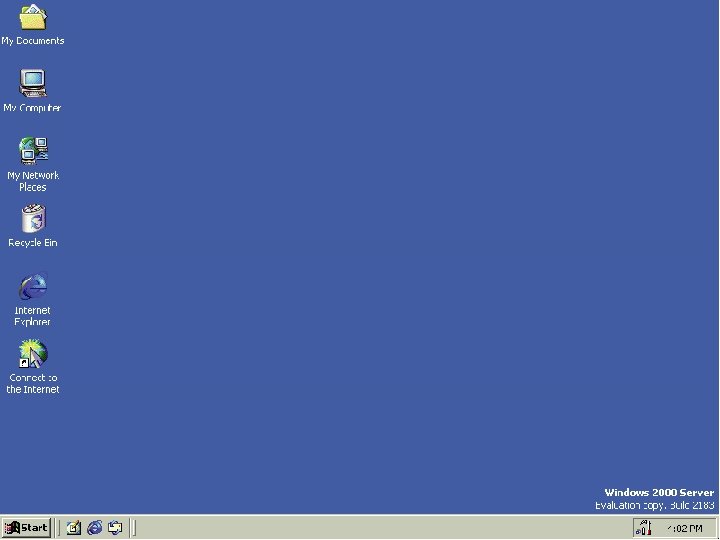
Windows 2000 • Windows 2000 features the same interface and features of Windows 98, with the file system, networking, power, and stability of Windows NT. • Several versions of Windows 2000 are available, each targeting a specific user or computing environment, from home PCs to large enterprise networks.
lesson 12 review • List all the major PC operating systems. • Identify some of the limitations of DOS. • List two features that made the Macintosh OS popular. • Differentiate between the terms operating environment and operating system. • List the various versions of Windows.