
LESSON 12 KEPLERS LAWS OF PLANETARY MOTION Heliocentric
- Slides: 19
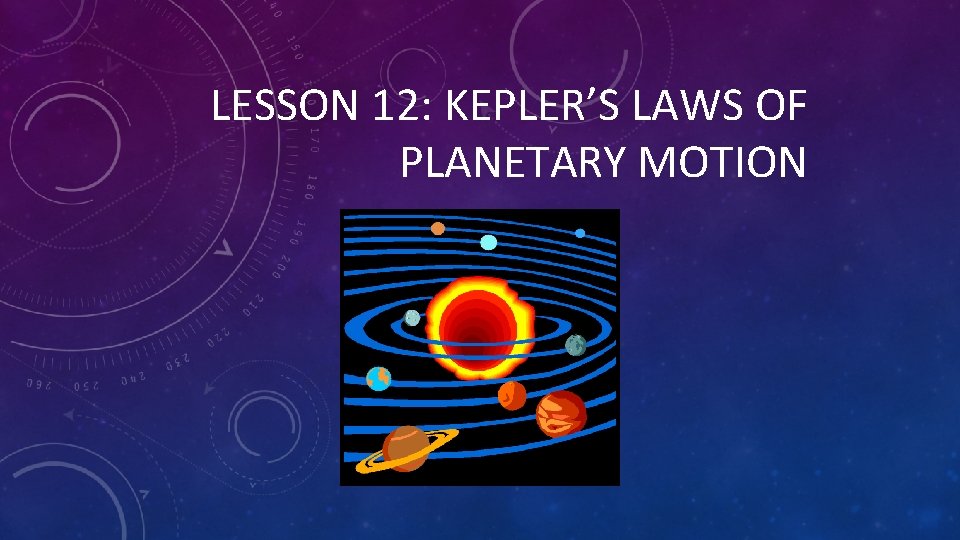
LESSON 12: KEPLER’S LAWS OF PLANETARY MOTION
Heliocentric Model ● Copernicus published his heliocentric theory in 1543 ○ Helios = Sun Centric = centered ○ 1400 years afters Ptolemy geocentric model ■ Geo = Earth centeric = center His observations of planets could only be explained by putting the Sun at the center of our solar sytem
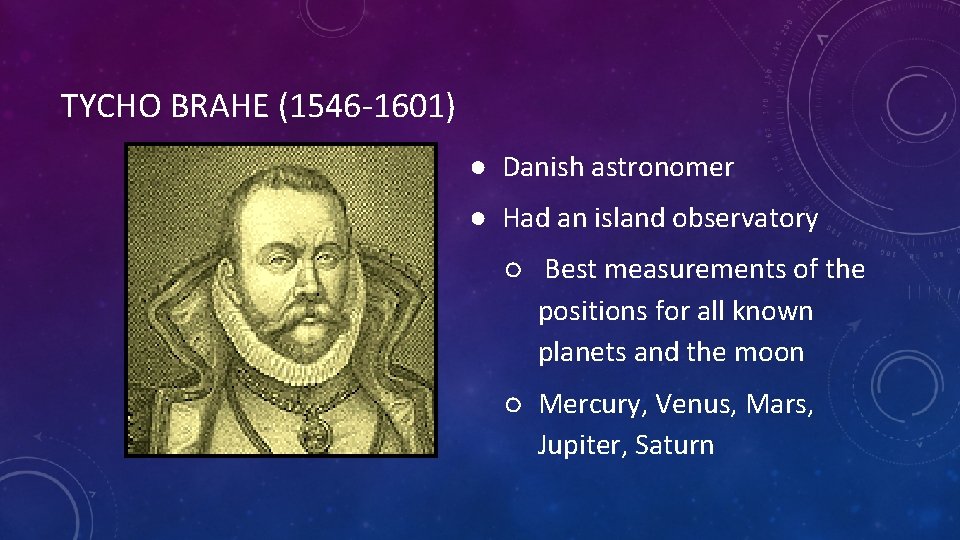
TYCHO BRAHE (1546 -1601) ● Danish astronomer ● Had an island observatory ○ Best measurements of the positions for all known planets and the moon ○ Mercury, Venus, Mars, Jupiter, Saturn
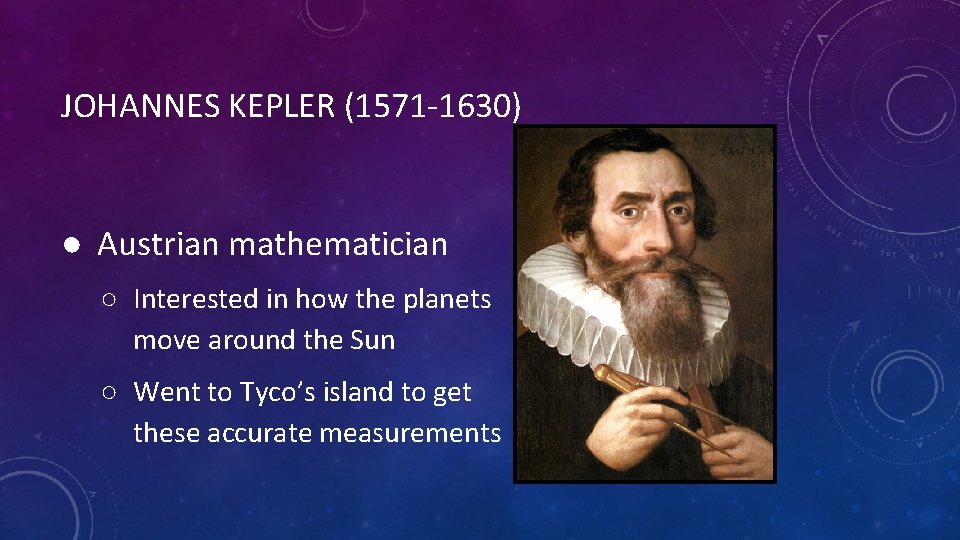
JOHANNES KEPLER (1571 -1630) ● Austrian mathematician ○ Interested in how the planets move around the Sun ○ Went to Tyco’s island to get these accurate measurements
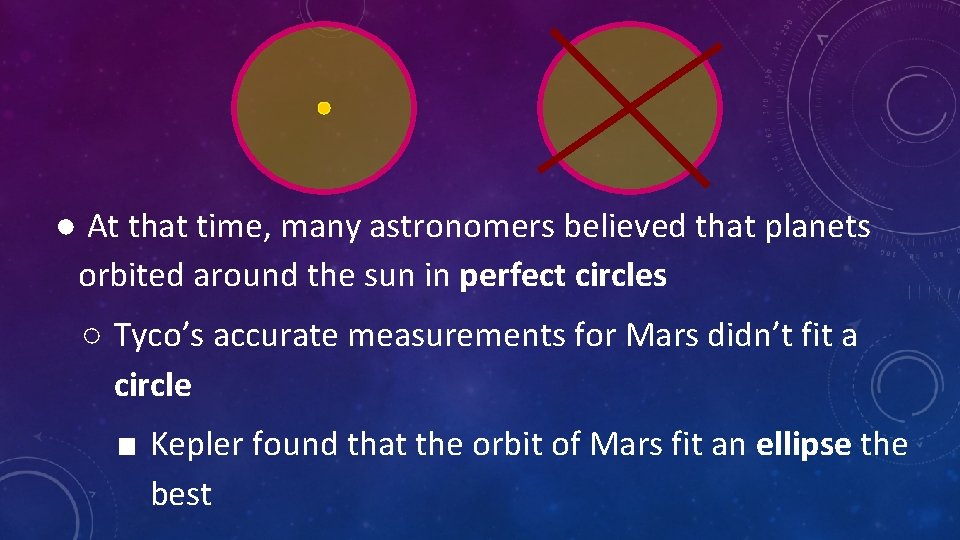
● At that time, many astronomers believed that planets orbited around the sun in perfect circles ○ Tyco’s accurate measurements for Mars didn’t fit a circle ■ Kepler found that the orbit of Mars fit an ellipse the best
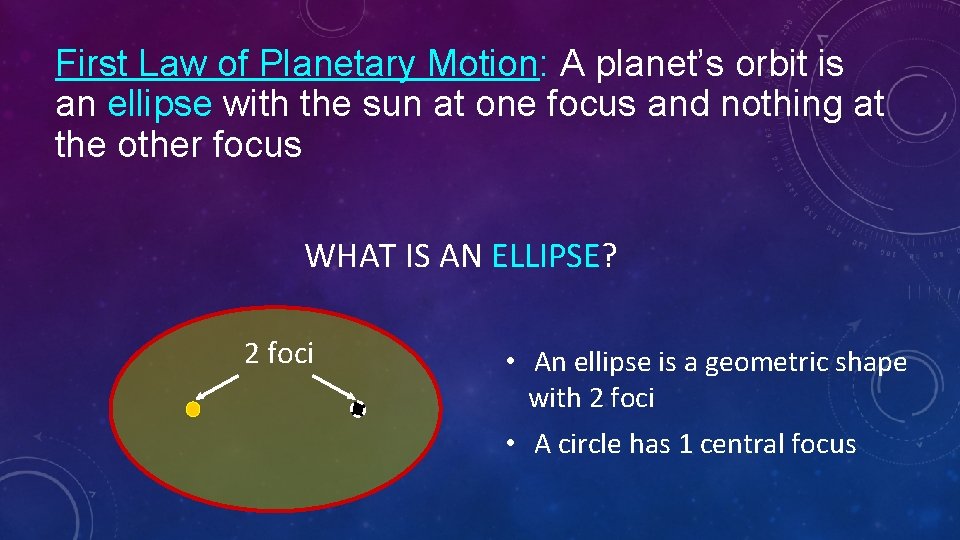
First Law of Planetary Motion: A planet’s orbit is an ellipse with the sun at one focus and nothing at the other focus WHAT IS AN ELLIPSE? 2 foci • An ellipse is a geometric shape with 2 foci • A circle has 1 central focus
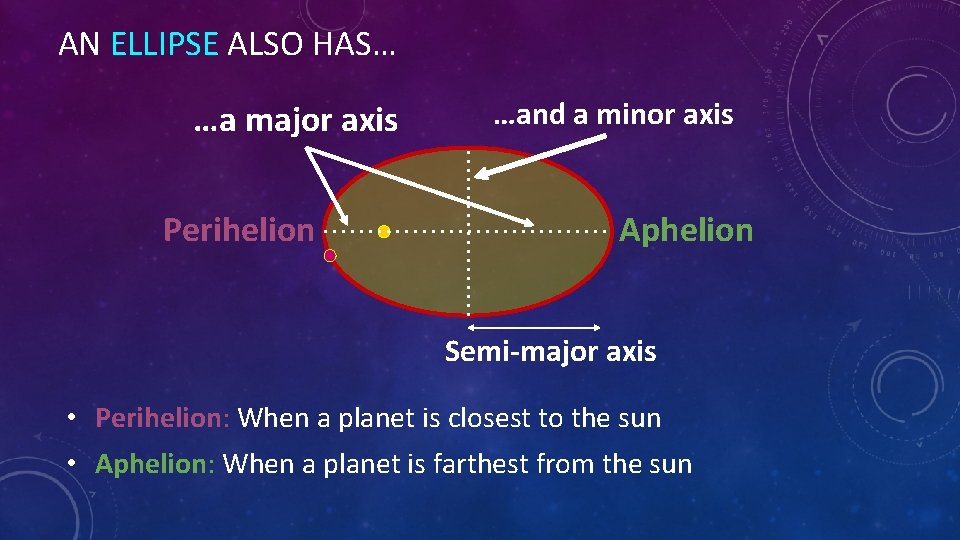
AN ELLIPSE ALSO HAS… …a major axis Perihelion …and a minor axis Aphelion Semi-major axis • Perihelion: When a planet is closest to the sun • Aphelion: When a planet is farthest from the sun
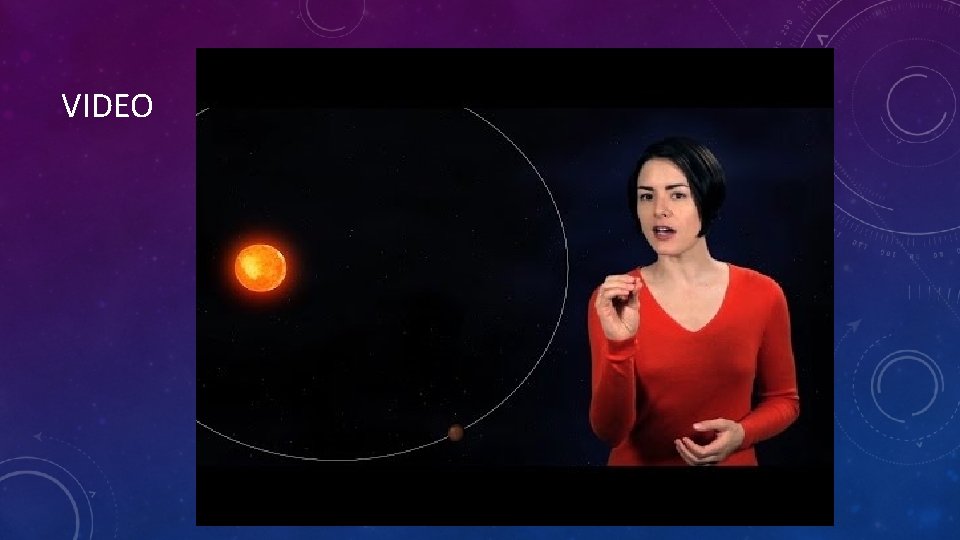
VIDEO
Second Law of Planetary Motion: the line joining the planets to the Sun sweeps out “equal areas in equal times” as the planet travels around the ellipse
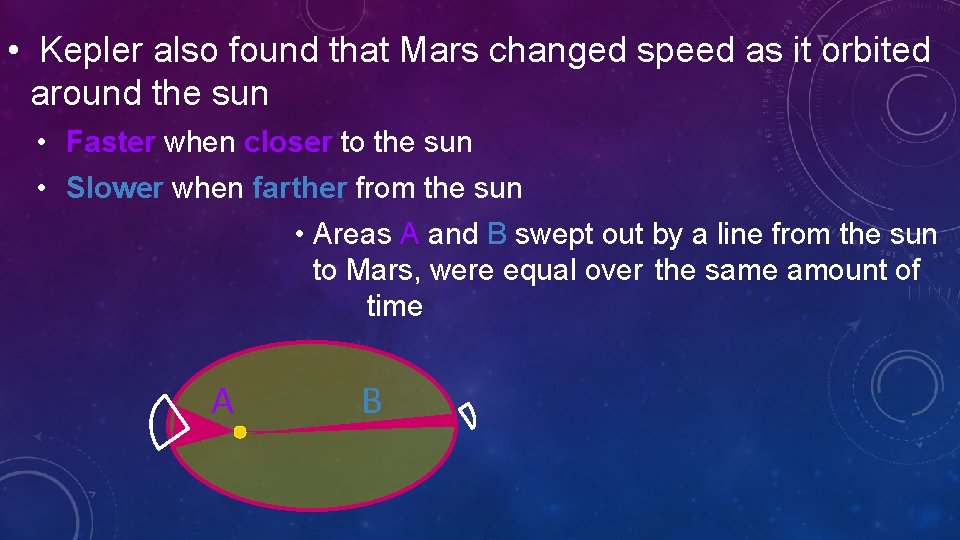
• Kepler also found that Mars changed speed as it orbited around the sun • Faster when closer to the sun • Slower when farther from the sun • Areas A and B swept out by a line from the sun to Mars, were equal over the same amount of time A B
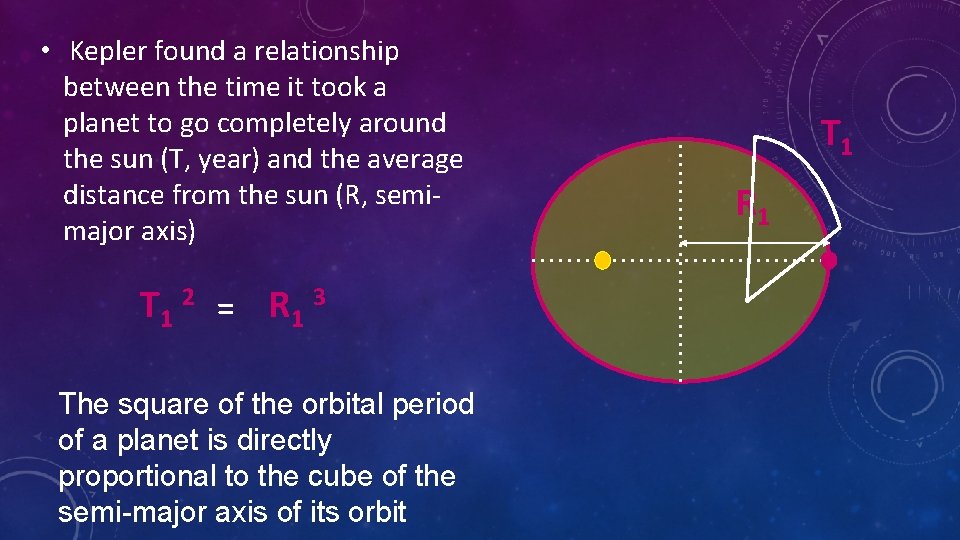
• Kepler found a relationship between the time it took a planet to go completely around the sun (T, year) and the average distance from the sun (R, semimajor axis) T 1 2 = R 1 3 The square of the orbital period of a planet is directly proportional to the cube of the semi-major axis of its orbit T 1 R 1
VIDEO
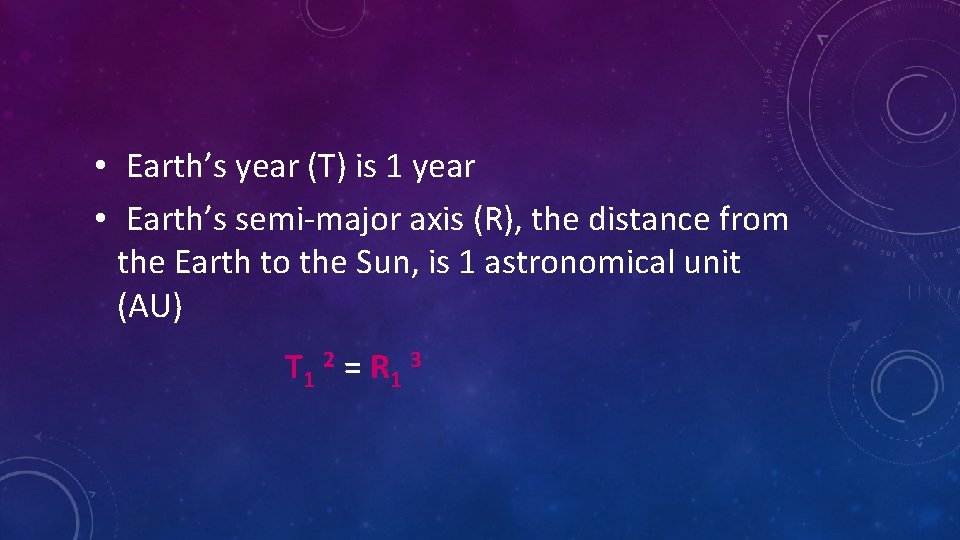
• Earth’s year (T) is 1 year • Earth’s semi-major axis (R), the distance from the Earth to the Sun, is 1 astronomical unit (AU) T 1 2 = R 1 3
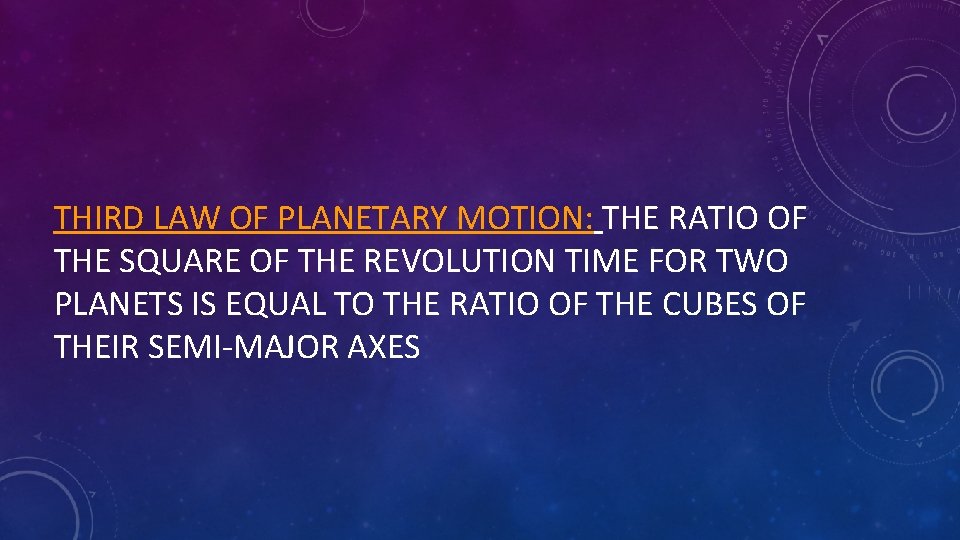
THIRD LAW OF PLANETARY MOTION: THE RATIO OF THE SQUARE OF THE REVOLUTION TIME FOR TWO PLANETS IS EQUAL TO THE RATIO OF THE CUBES OF THEIR SEMI-MAJOR AXES
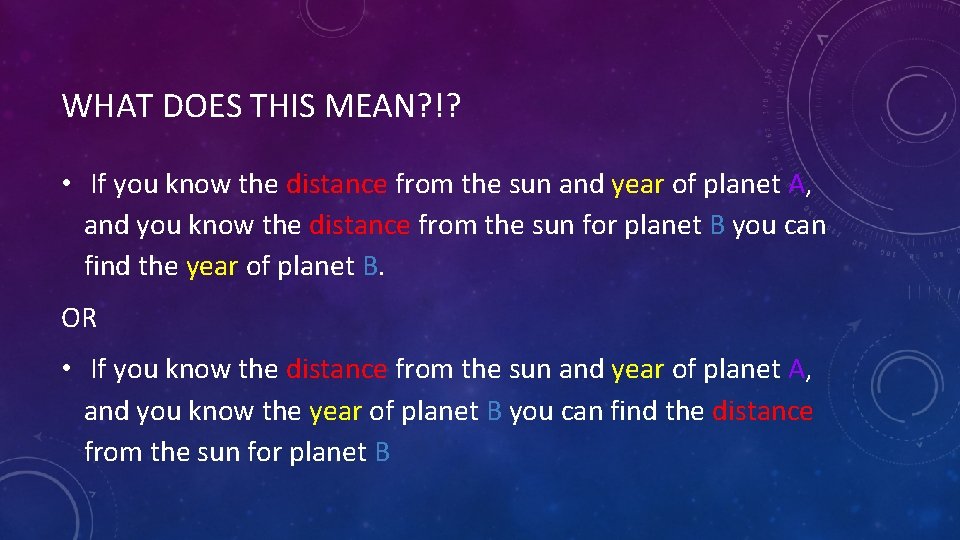
WHAT DOES THIS MEAN? !? • If you know the distance from the sun and year of planet A, and you know the distance from the sun for planet B you can find the year of planet B. OR • If you know the distance from the sun and year of planet A, and you know the year of planet B you can find the distance from the sun for planet B
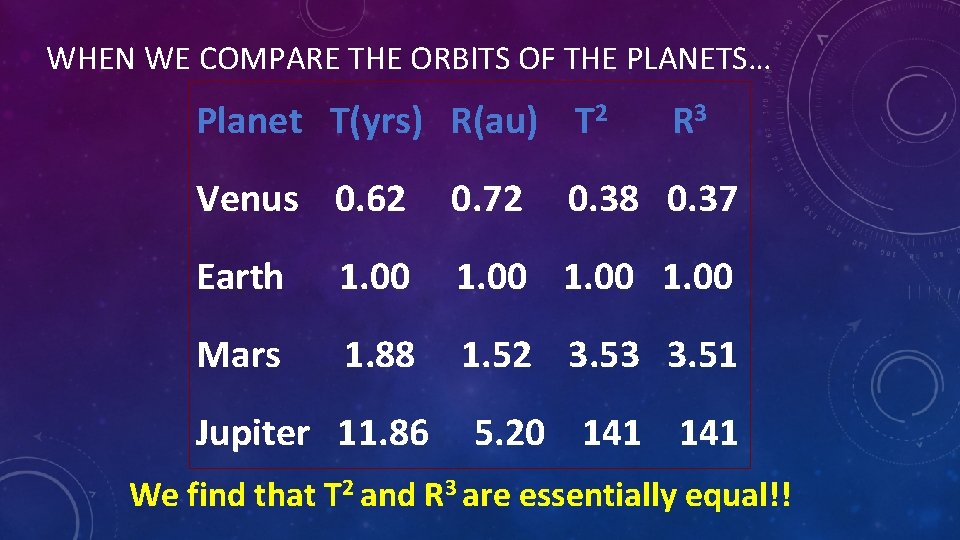
WHEN WE COMPARE THE ORBITS OF THE PLANETS… Planet T(yrs) R(au) T 2 R 3 Venus 0. 62 0. 72 Earth 1. 00 Mars 1. 88 1. 52 3. 53 3. 51 Jupiter 11. 86 0. 38 0. 37 5. 20 141 We find that T 2 and R 3 are essentially equal!!
VIDEO
KEPLER’S LAWS APPLY TO ANY CELESTIAL BODY ORBITING ANOTHER CELESTIAL BODY • Any planet around a sun • The moon around the Earth • Any satellite around the Earth • The International Space Station • Any rings around any planet
http: //science. sbcc. edu/physics/flash/Keplers%20 Laws. html