
Lesson 12 Ecological History of Asia Colonialism through
- Slides: 13
Lesson 12: Ecological History of Asia – Colonialism through the Modern Industrial Era Amy Duray EVPP 490 003 March 17, 2010
Colonialism • China and Korea react to European and American imperial efforts by withdrawing. • Japan instead adopts the ideology and expansionist policies of the westerners, and becomes itself a colonial power, invading the Korean Peninsula and the Island of Formosa (Taiwan). • SE Asia. A time of uninterrupted growth, globalization and major exploitation of the natural resources. Plantation economies were the dominant economies of the region.
Ecological Impacts of Colonialism • Rapid population growth and increasing urbanization. • Rapid spread of manufacturing and mechanization of previously labor-intensive activities (farming, mining, transportation) • Increasing pollution and biodiversity loss
China’s Modern History • Famine, Human displacement, and Agricultural degradation during inter-war years • Mao’s Revolution • “Great Leap Forward” – 1948 and the subsequent doubling of agricultural irrigation from 1950 -1976. • Net impact: increasing degradation of ecosystems for increasing food production
Korea and Japan • Japan and occupied state • Korean War (1950 -1953) • Intense industrialization, often concentrated in small economic zones (Japanese kombinatos) • Reliance on external natural resources to fuel economic growth
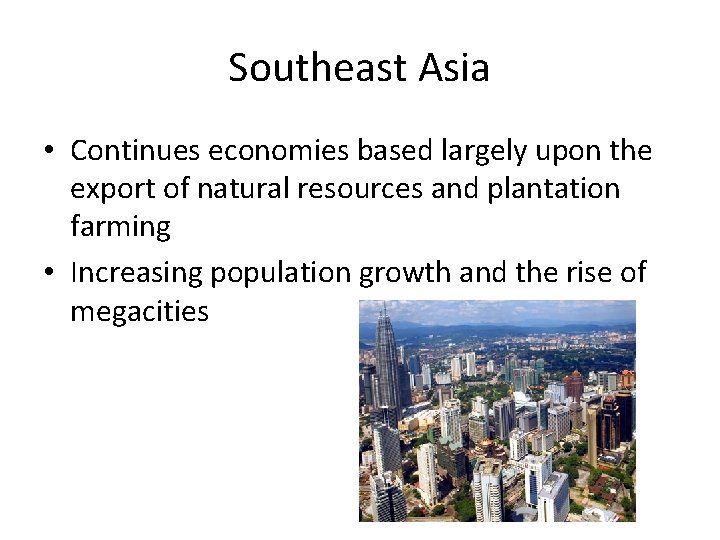
Southeast Asia • Continues economies based largely upon the export of natural resources and plantation farming • Increasing population growth and the rise of megacities
Land Use and Degradation (1 of 2) • Heavy Metal Soil Contamination in Japan – Copper contamination in rice fields ca. 1900 in local areas adjacent to mines – Cadmium contamination of rice fields ca. 1950 • Soil Erosion – The Loess Plateau – Fragile soils - originally forested, but converted to agricultural uses more than 3000 years ago – Agriculture causes >2. 2 Billion tons of soil loss each year
Land Use and Degradation (2 of 2) • Erosion in the Phillipines – Cash cropping in Luzon under Spanish Colonial period, continued during U. S. tenancy – Remote island peasants migrated upland cleared lands for subsistence use when population growth and plantations took hold in coastal areas – Agroforestry seemed to arrest some soil erosion in 1970 s, but resumed as timber is increasingly harvested for trade in later decades.
Water Scarcity and Quality (1 of 2) • Ashio Copper Mine, Japan – Watarase River, Tochigi Prefecture – Mine tailings contaminate the river – Sulphuric acid rain contaminates local waters • Minamata Bay, Japan – Mercury contamination as a result of manufacturing and waste dumping – Fish contamination and “cat-dancing disease” – More than 100 people died during the three decades it took to stop the pollution
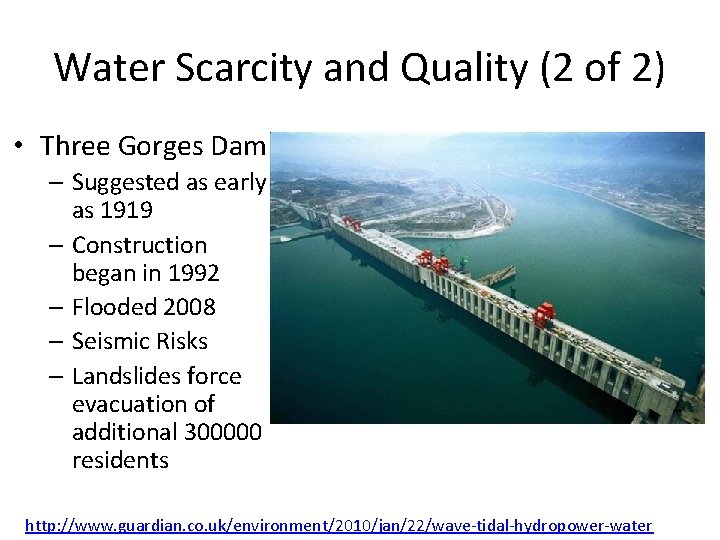
Water Scarcity and Quality (2 of 2) • Three Gorges Dam – Suggested as early as 1919 – Construction began in 1992 – Flooded 2008 – Seismic Risks – Landslides force evacuation of additional 300000 residents http: //www. guardian. co. uk/environment/2010/jan/22/wave-tidal-hydropower-water
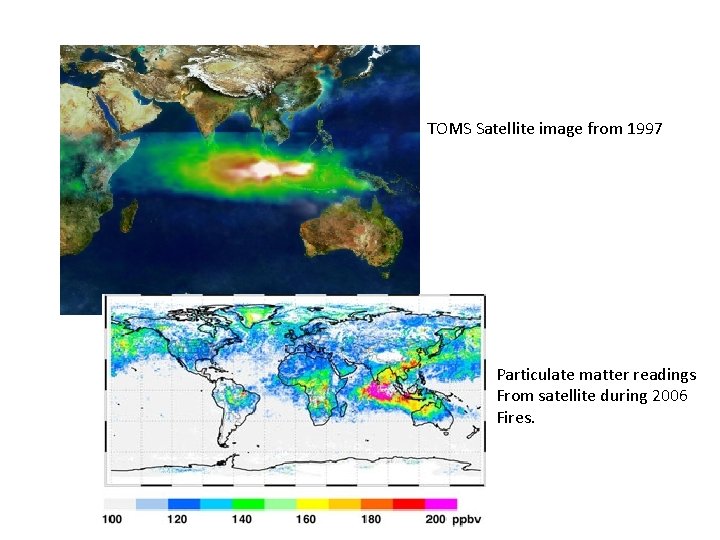
Air Quality and Transboundary Haze • Indonesian Forest Fires, 1982 -1983; 19971998; 2006 – High PM 10 air pollution events over prolonged periods – Potential ENSO contribution – Peat bogs continue to burn for years below the surface, contributing to continuing pollution
TOMS Satellite image from 1997 Particulate matter readings From satellite during 2006 Fires.
Next time • Country reports