
Lesson 12 Dialogue 1 Grammar y ydu bmi
Lesson 12 Dialogue 1 Grammar
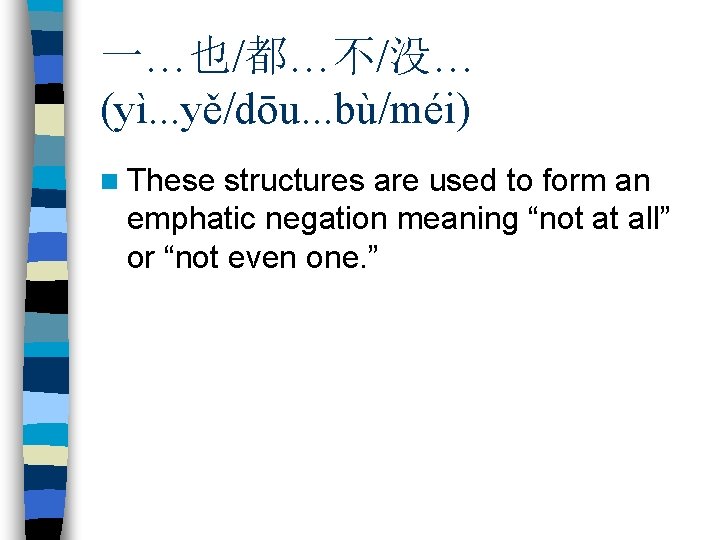
一…也/都…不/没… (yì. . . yě/dōu. . . bù/méi) n These structures are used to form an emphatic negation meaning “not at all” or “not even one. ”
Subject + 一(yī) + Measure Word + Object + 也/都(yě/dōu) + 不/没 (bù/méi) + Verb 小李一個朋友也没有。 n Xiǎo Lǐ yí ge péngyou yě méiyǒu. n Little Li does not have a single friend. n n If the noun after 一 (yī) is countable, a proper measure word should be used between 一 (yī) and the noun.
爸爸今天一杯茶都没喝。 n Bàba jīntiān yì bēi chá dōu méi hē. n My father didn’t have a single cup of tea today. n n If the noun after 一 (yī) is countable, a proper measure word should be used between 一 (yī) and the noun.
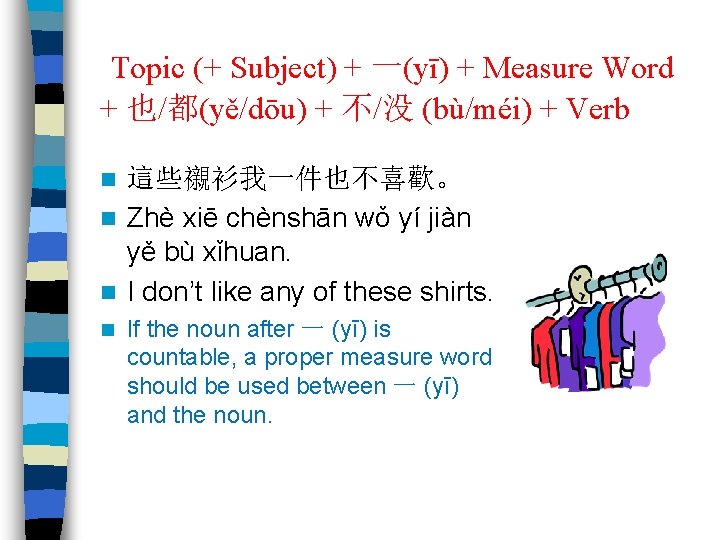
Topic (+ Subject) + 一(yī) + Measure Word + 也/都(yě/dōu) + 不/没 (bù/méi) + Verb 這些襯衫我一件也不喜歡。 n Zhè xiē chènshān wǒ yí jiàn yě bù xǐhuan. n I don’t like any of these shirts. n n If the noun after 一 (yī) is countable, a proper measure word should be used between 一 (yī) and the noun.
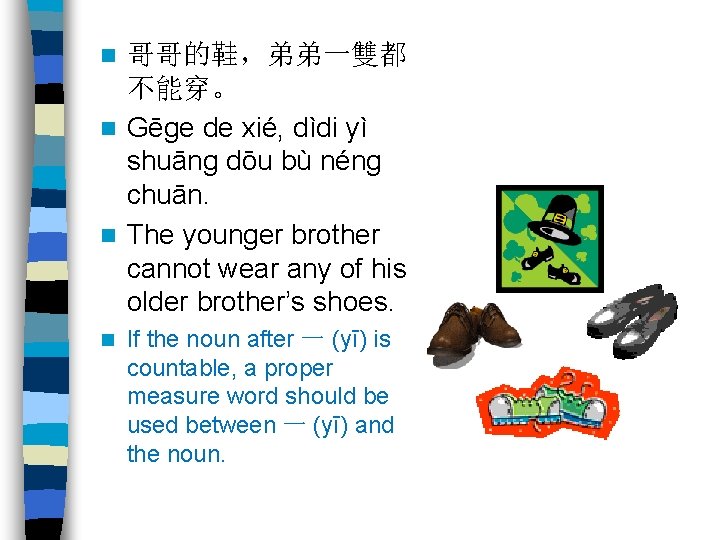
哥哥的鞋,弟弟一雙都 不能穿。 n Gēge de xié, dìdi yì shuāng dōu bù néng chuān. n The younger brother cannot wear any of his older brother’s shoes. n n If the noun after 一 (yī) is countable, a proper measure word should be used between 一 (yī) and the noun.
Subject + 一點兒 (yì diǎnr) + Object + 也/都 (yě/dōu) + 不/没 (bù/méi) + Verb 他去了商店,可是一點兒東西 也没買。 n Tā qù le shāngdiàn, kěshì yì diǎnr dōngxi yě méi mǎi. n He went to the store, but he didn’t buy anything at all. n If the noun is uncountable, the phrase 一點兒 (yì diǎnr) is usually used instead. n
媽媽做菜一點兒味精都不放。 n Māma zuò cài yì diǎnr wèijīng dōu bú fang. n Mom doesn’t use any MSG in her cooking. n If the noun is uncountable, the phrase 一點兒 (yì diǎnr) is usually used instead. n
The construction 一點兒 (yìdiǎnr) + 也/都 (yě/dōu) + 不 (bù/méi) can also be used before an adjective to express emphatic negation. n 這兒的冬天一點兒也不冷。 n Zhèr de dōngtiān yì diǎnr yě bù lěng. n Winter here is not cold at all.
That school is not pretty at all. n 那個學校一點兒也不漂亮。 n Nà ge xuéxiào yì diǎnr yě bú piàoliang.
This glass of iced tea doesn’t taste good at all. n 這杯冰茶一點兒都不好喝。 n Zhè bēi bīngchá yì diǎnr dōu bù hǎohē.
Adverb 多/少 (duō/shǎo) + V (duō) and 少 (shǎo) are two adjectives whose usage is rather unusual. n To express the idea of doing something “more” or “less, ” one places 多 (duō) or 少 (shǎo) before the verb. n多
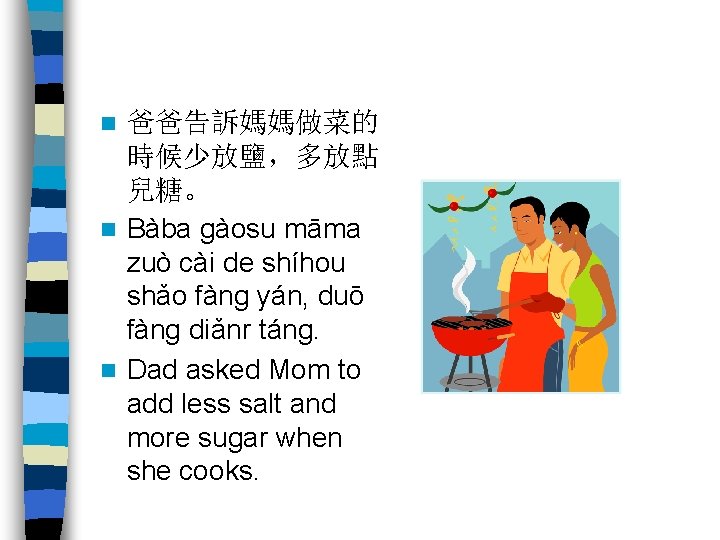
爸爸告訴媽媽做菜的 時候少放鹽,多放點 兒糖。 n Bàba gàosu māma zuò cài de shíhou shǎo fàng yán, duō fàng diǎnr táng. n Dad asked Mom to add less salt and more sugar when she cooks. n
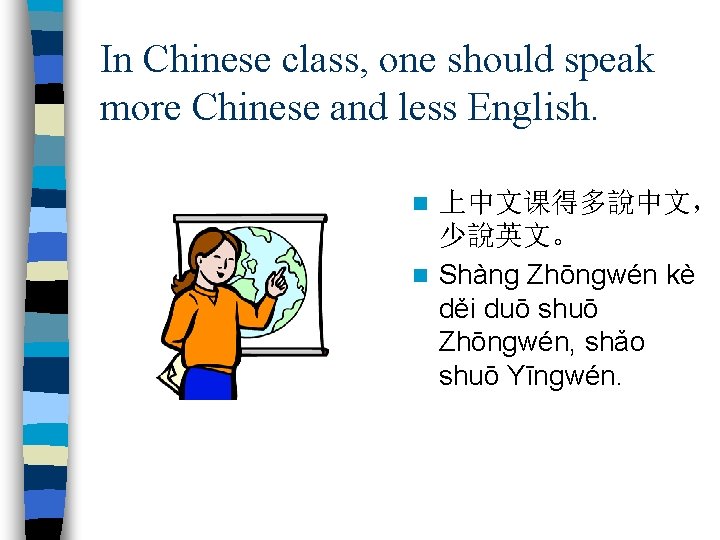
In Chinese class, one should speak more Chinese and less English. 上中文课得多說中文, 少說英文。 n Shàng Zhōngwén kè děi duō shuō Zhōngwén, shǎo shuō Yīngwén. n
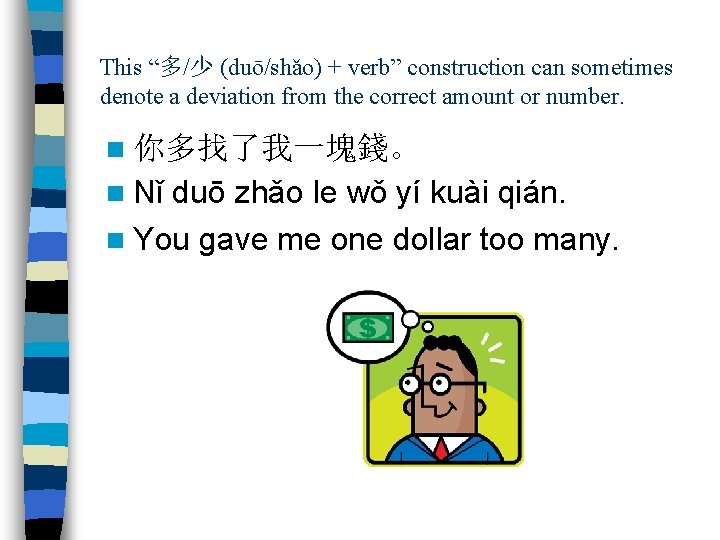
This “多/少 (duō/shǎo) + verb” construction can sometimes denote a deviation from the correct amount or number. n 你多找了我一塊錢。 n Nǐ duō zhǎo le wǒ yí kuài qián. n You gave me one dollar too many.
The teacher told us to write fifty characters. I wrote forty-five. I was five short. n 老師說要寫五十個字,我寫了四十五個, 少寫了五個。 n Lǎoshī shuō yào xiě wǔshí ge zì, wǒ xiě le sìshíwǔ ge, shǎo xiě le wǔ ge.
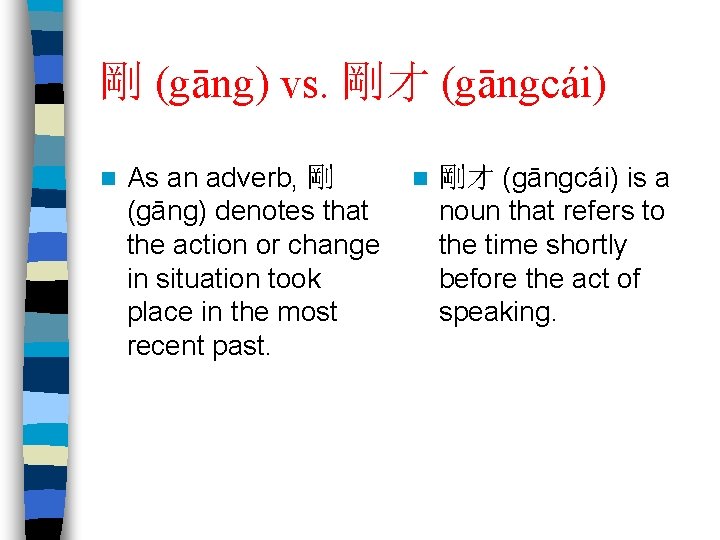
剛 (gāng) vs. 剛才 (gāngcái) n As an adverb, 剛 (gāng) denotes that the action or change in situation took place in the most recent past. n 剛才 (gāngcái) is a noun that refers to the time shortly before the act of speaking.
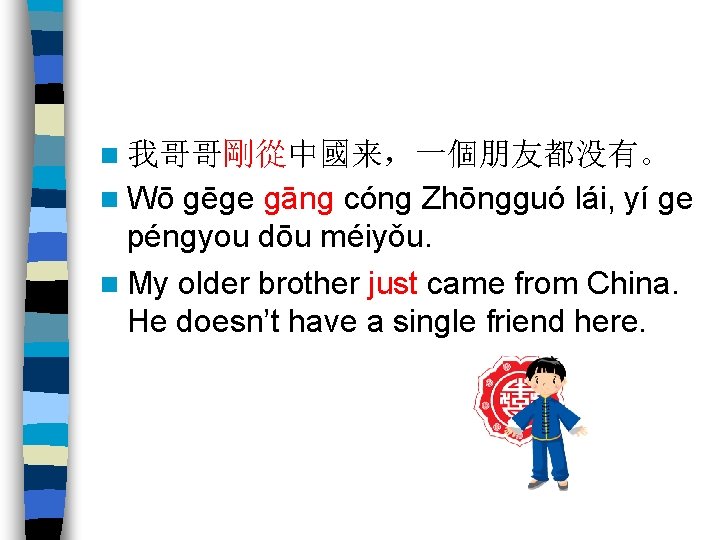
n 我哥哥剛從中國来,一個朋友都没有。 n Wō gēge gāng cóng Zhōngguó lái, yí ge péngyou dōu méiyǒu. n My older brother just came from China. He doesn’t have a single friend here.
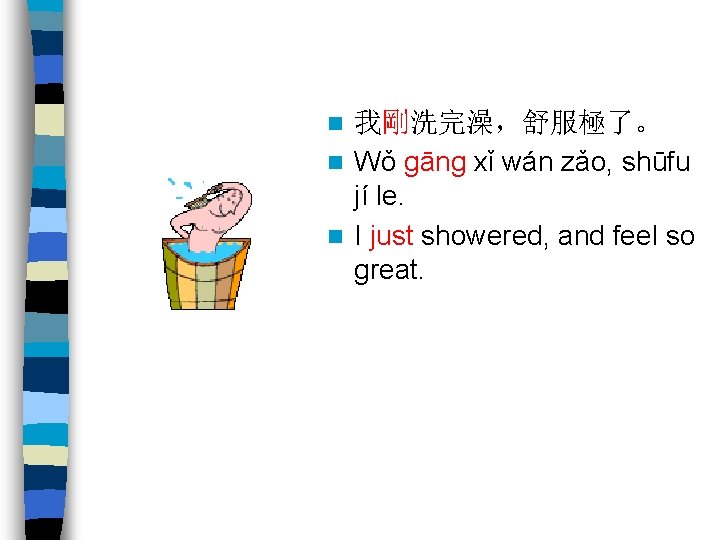
我剛洗完澡,舒服極了。 n Wǒ gāng xǐ wán zǎo, shūfu jí le. n I just showered, and feel so great. n
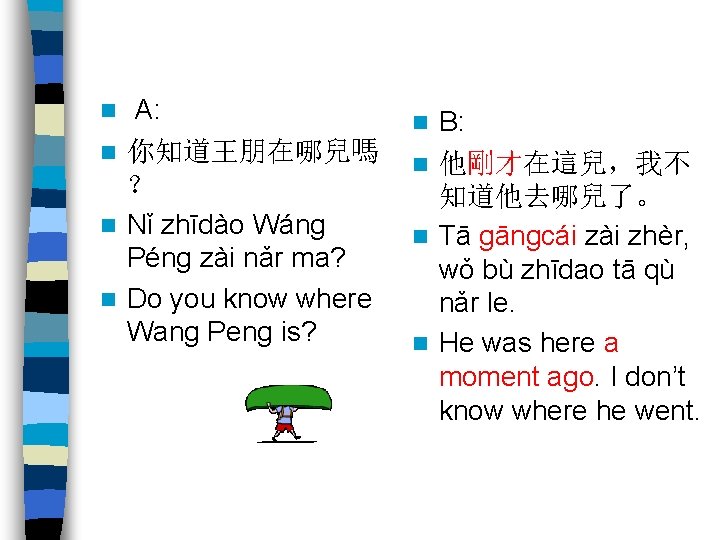
A: n 你知道王朋在哪兒嗎 ? n Nǐ zhīdào Wáng Péng zài nǎr ma? n Do you know where Wang Peng is? n B: n 他剛才在這兒,我不 知道他去哪兒了。 n Tā gāngcái zài zhèr, wǒ bù zhīdao tā qù nǎr le. n He was here a moment ago. I don’t know where he went. n
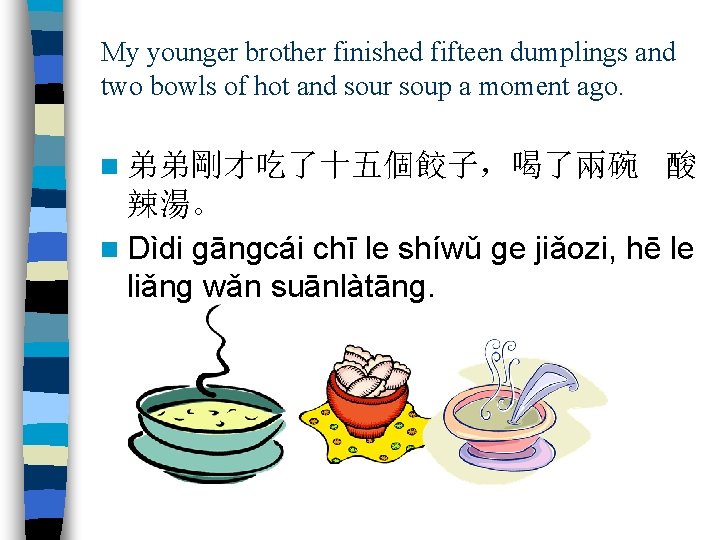
My younger brother finished fifteen dumplings and two bowls of hot and sour soup a moment ago. n 弟弟剛才吃了十五個餃子,喝了兩碗 酸 辣湯。 n Dìdi gāngcái chī le shíwǔ ge jiǎozi, hē le liǎng wǎn suānlàtāng.
Although 刚 (gāng) and 刚才 (gāngcái) are similar in meaning, they are classified as different parts of speech and are therefore used differently. n 剛 (gāng) can be followed by an expression that indicates the duration of time. 他剛走了兩天。 n Tā gāng zǒu le liǎng tiān. n He left only two days ago. n
Unlike 剛才 (gāngcái), 剛 (gāng) cannot be followed by the negation words 不 (bù) or 没 (méi). A: n 你剛才為什麼没說? n Nǐ gāngcái wèishénme méi shuō? n Why didn’t you say it a moment ago. n B: n 我剛才不想說。 n Wǒ gāngcái bù xiǎng shuō. n I didn’t want to say it a moment ago. n
A sentence that includes 剛才 (gāngcái) often ends with了 (le) A: 你剛才去哪兒了 ?老師要你去辦公室 找他。 n Nǐ gāngcái qù nǎr le? Lǎoshī yào nǐ qù bàngōngshì zhǎo tā. n Where were you a moment ago? The teacher wanted you to go to his office. n B: 我刚才去圖書館 了。 n Wǒ gāngcái qù túshūguǎn le. n I went to the library. n
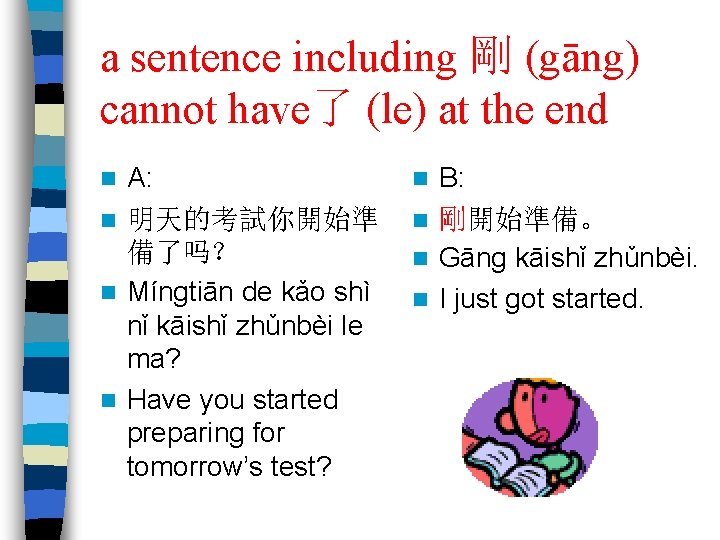
a sentence including 剛 (gāng) cannot have了 (le) at the end A: n 明天的考試你開始準 備了吗? n Míngtiān de kǎo shì nǐ kāishǐ zhǔnbèi le ma? n Have you started preparing for tomorrow’s test? n B: n 剛開始準備。 n Gāng kāishǐ zhǔnbèi. n I just got started. n
Resultative Complements n Following a verb, an adjective or another verb can be used to denote the result of the action, hence the term resultative complement.
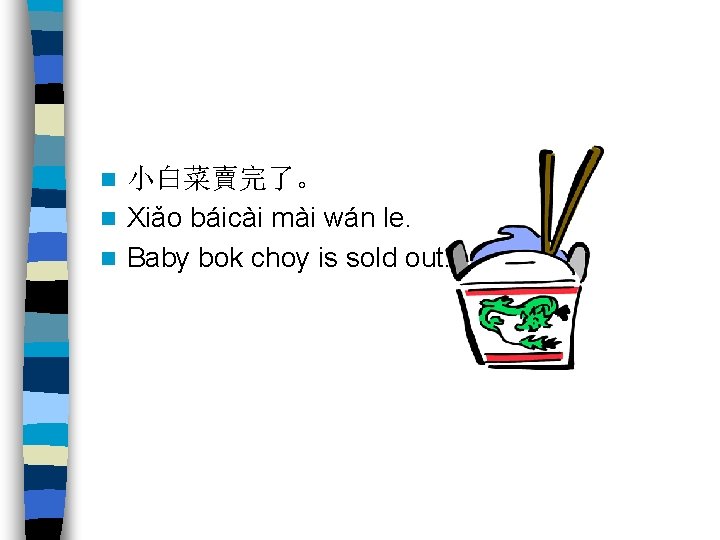
小白菜賣完了。 n Xiǎo báicài mài wán le. n Baby bok choy is sold out. n
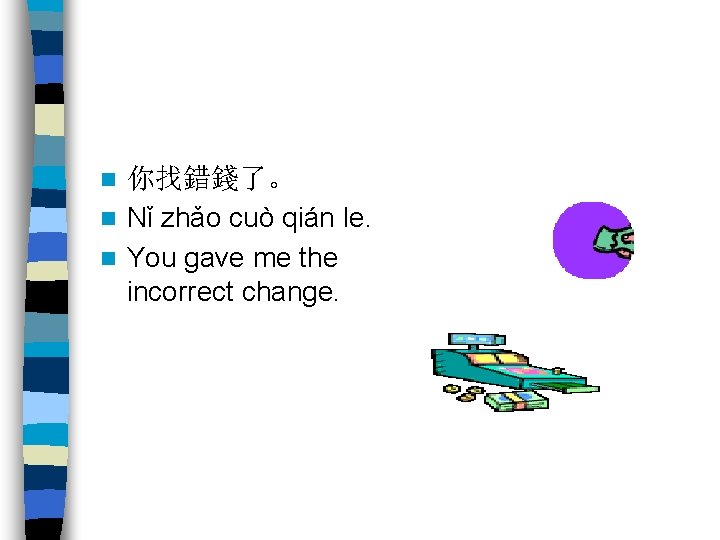
你找錯錢了。 n Nǐ zhǎo cuò qián le. n You gave me the incorrect change. n
![[清楚 qīngchu, clear] 那個人是誰你看清楚 了嗎? n Nà ge rén shì shéi nǐ kàn qīngchu](http://slidetodoc.com/presentation_image_h2/48775967b44f7f71eaee4d1756b702c2/image-29.jpg "[清楚 qīngchu, clear] 那個人是誰你看清楚 了嗎? n Nà ge rén shì shéi nǐ kàn qīngchu")
[清楚 qīngchu, clear] 那個人是誰你看清楚 了嗎? n Nà ge rén shì shéi nǐ kàn qīngchu le ma? n Did you see clearly who that person was? n
太好了,這個字你寫 對了。 n Tài hǎo le, zhè ge zì nǐ xiě duì le. n Great! You wrote this character correctly. n
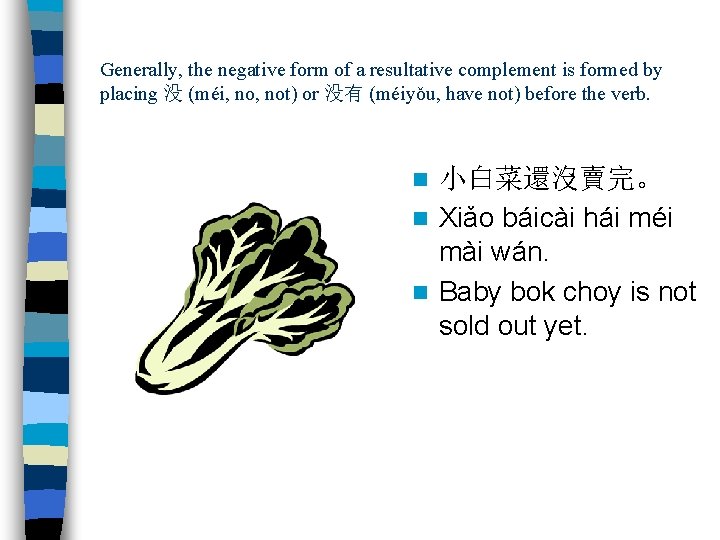
Generally, the negative form of a resultative complement is formed by placing 没 (méi, not) or 没有 (méiyǒu, have not) before the verb. 小白菜還沒賣完。 n Xiǎo báicài hái méi mài wán. n Baby bok choy is not sold out yet. n
那個人我没看清楚。 n Nà ge rén wǒ méi kàn qīngchu. n I didn’t see clearly who that person was. n
糟糕,這個字你没有 寫對。 n Zāogāo, zhè ge zì nǐ méiyǒu xiě duì. n Shoot! You didn’t write this character correctly. n
好 (hǎo) as a Resultative Complement (hǎo) can serve as a complement following a verb, indicating the completion of an action. It often indicates readiness to start the next action or event. n好
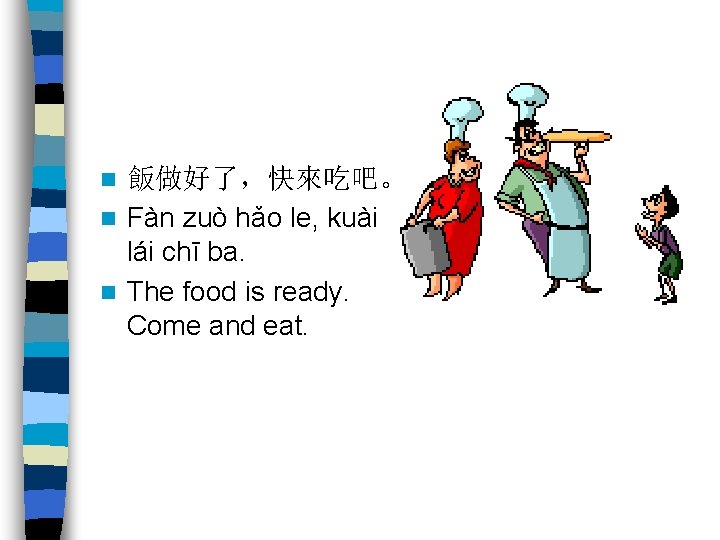
飯做好了,快來吃吧。 n Fàn zuò hǎo le, kuài lái chī ba. n The food is ready. Come and eat. n
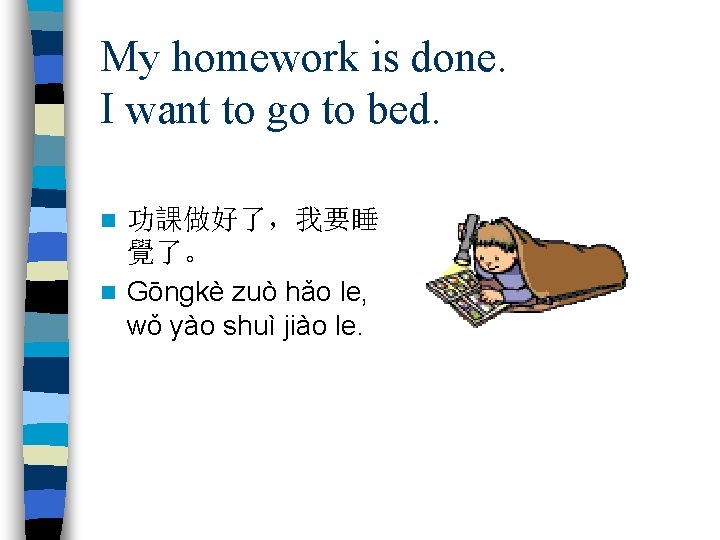
My homework is done. I want to go to bed. 功課做好了,我要睡 覺了。 n Gōngkè zuò hǎo le, wǒ yào shuì jiào le. n
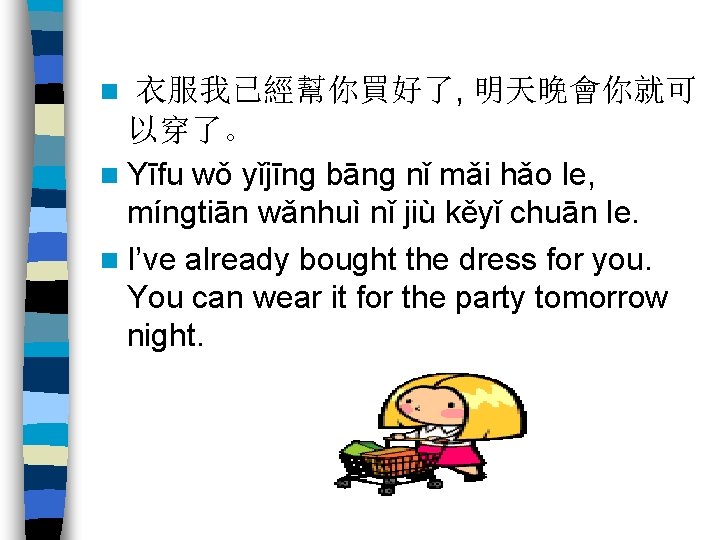
衣服我已經幫你買好了, 明天晚會你就可 以穿了。 n Yīfu wǒ yǐjīng bāng nǐ mǎi hǎo le, míngtiān wǎnhuì nǐ jiù kěyǐ chuān le. n I’ve already bought the dress for you. You can wear it for the party tomorrow night. n
- Slides: 38