
Lesson 11 Introduction to Integrated Water Resources Management
- Slides: 33
Lesson 11: Introduction to Integrated Water Resources Management Dr. S. Sivakumar University of Jaffna, Sri Lanka sssiva 100@gmail. com
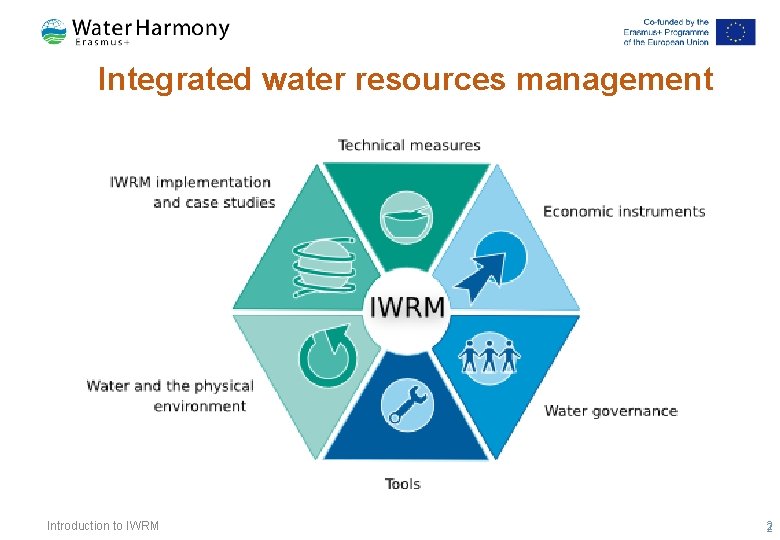
Integrated water resources management Introduction to IWRM 2
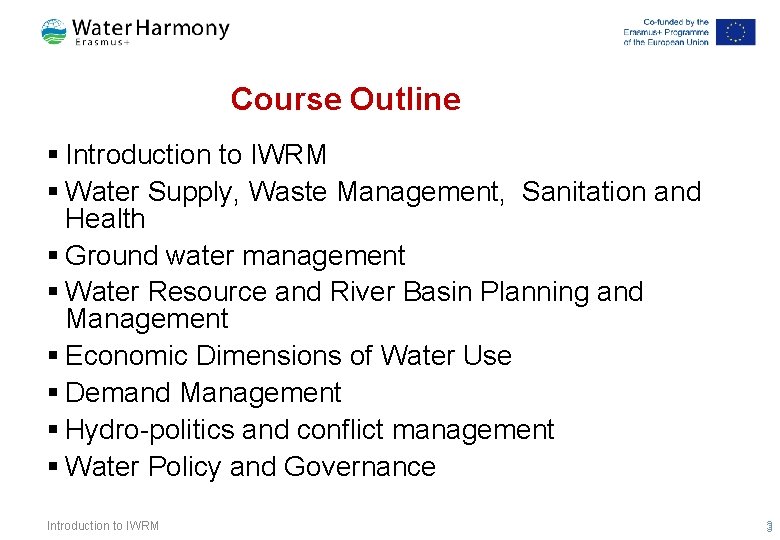
Course Outline § Introduction to IWRM § Water Supply, Waste Management, Sanitation and Health § Ground water management § Water Resource and River Basin Planning and Management § Economic Dimensions of Water Use § Demand Management § Hydro-politics and conflict management § Water Policy and Governance Introduction to IWRM 3
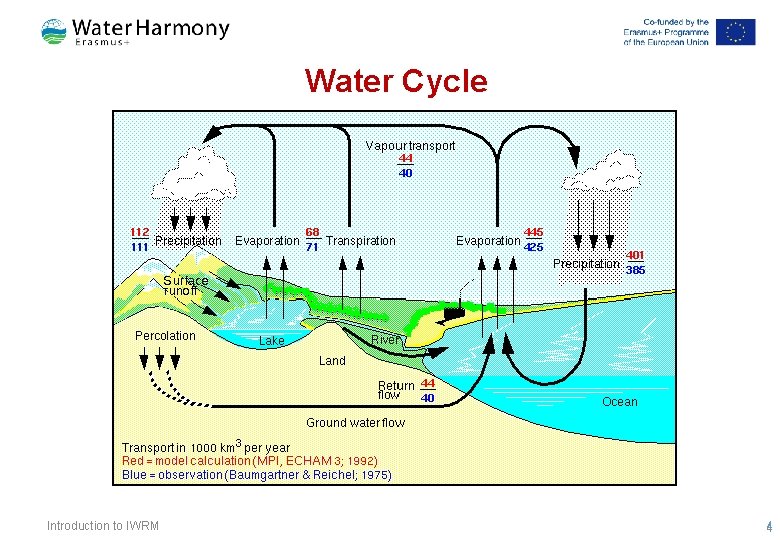
Water Cycle Introduction to IWRM 4
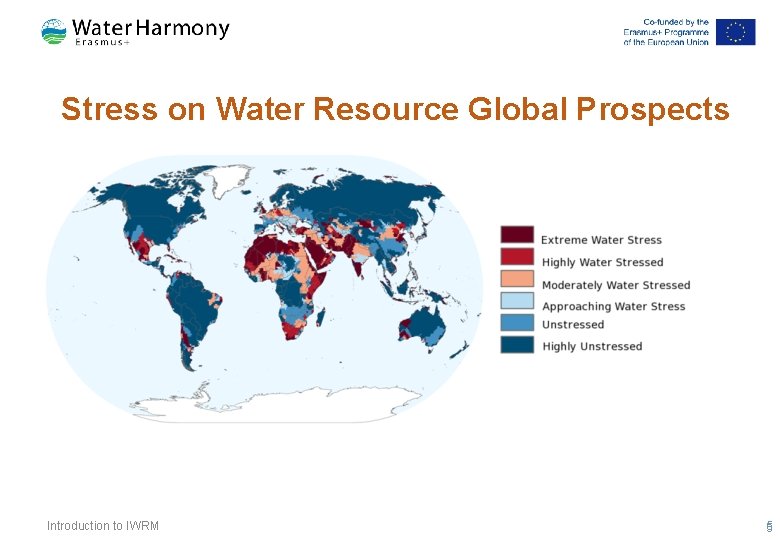
Stress on Water Resource Global Prospects Introduction to IWRM 5
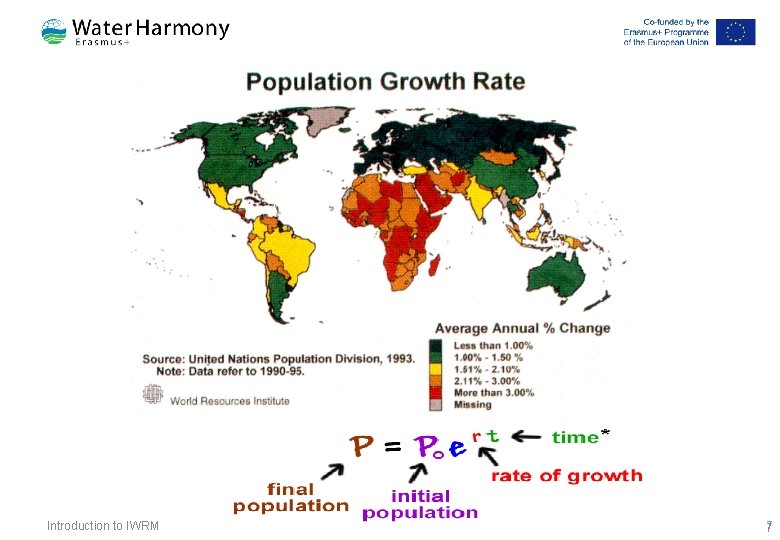
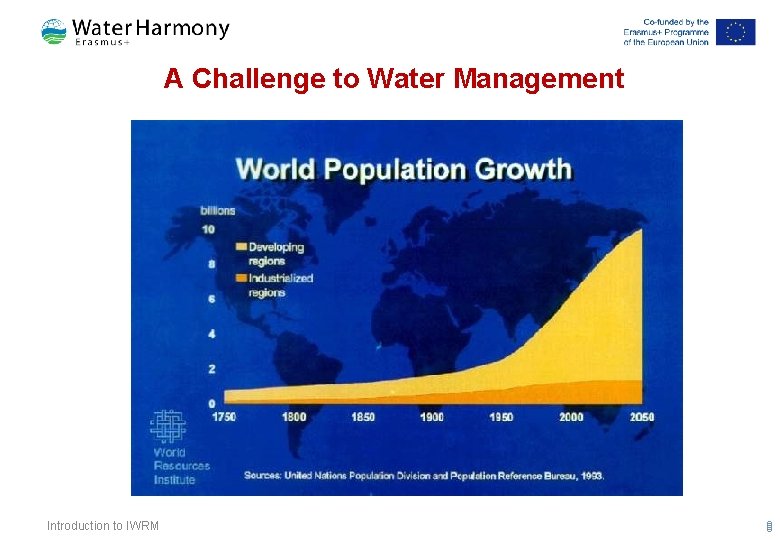
Stress on Water Resource Global Prospects • • Exponential population growth Increased Water Demand for Food and Drinking Increased economic activities Pressure on fragile ecosystems Water rights Water management, use and discharge (pollution) Climate change All these issues transversally cross all levels of human activities. The situation is even more complex, as there is a recognised water governance crisis. Introduction to IWRM 6
Introduction to IWRM 7
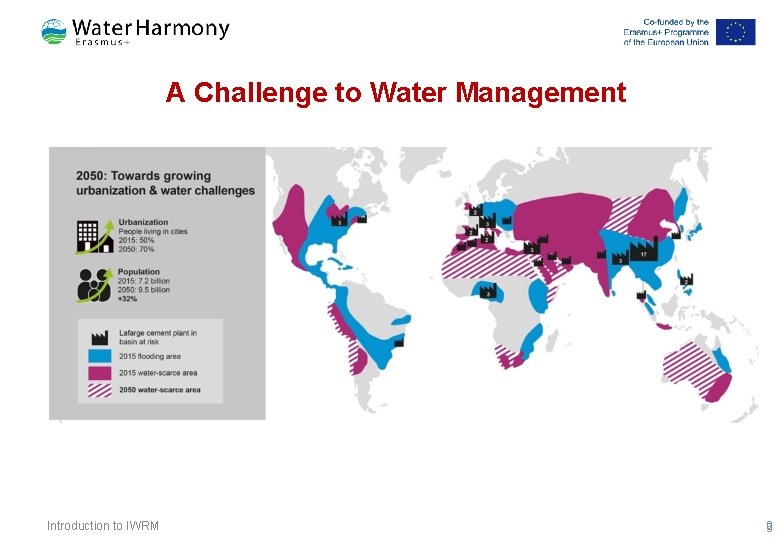
A Challenge to Water Management Introduction to IWRM 8
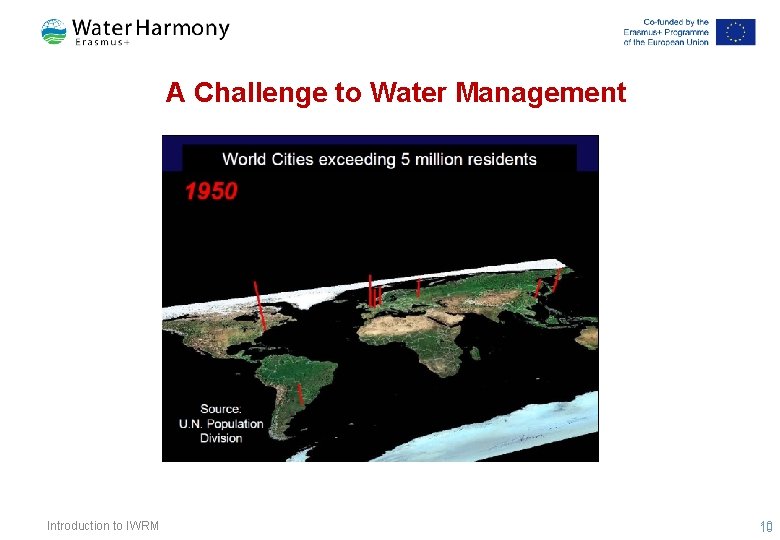
A Challenge to Water Management Introduction to IWRM 9
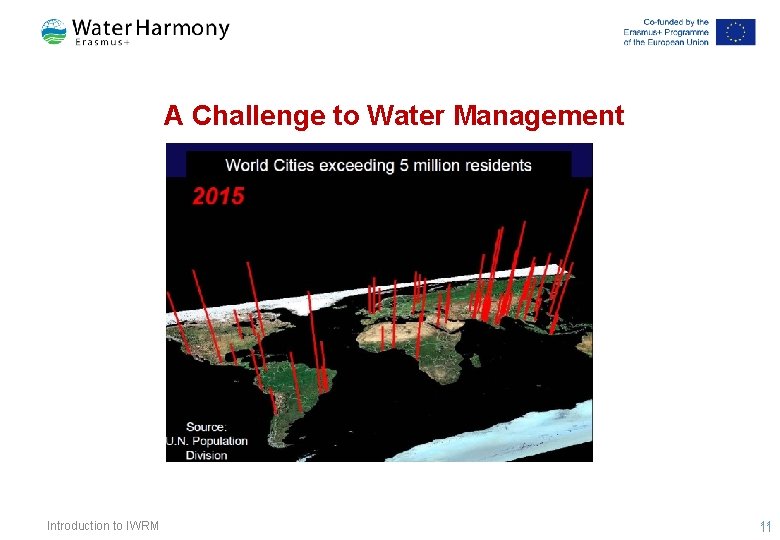
A Challenge to Water Management Introduction to IWRM 10
A Challenge to Water Management Introduction to IWRM 11
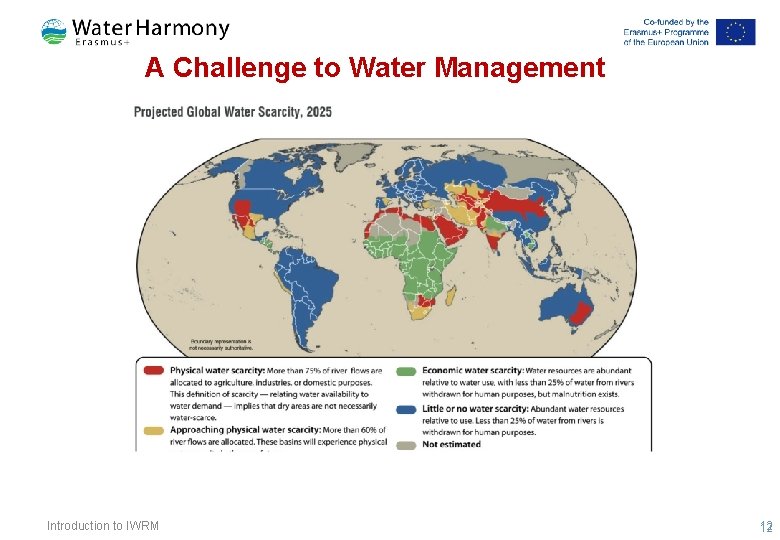
A Challenge to Water Management Introduction to IWRM 12
Introduction to IWRM 13
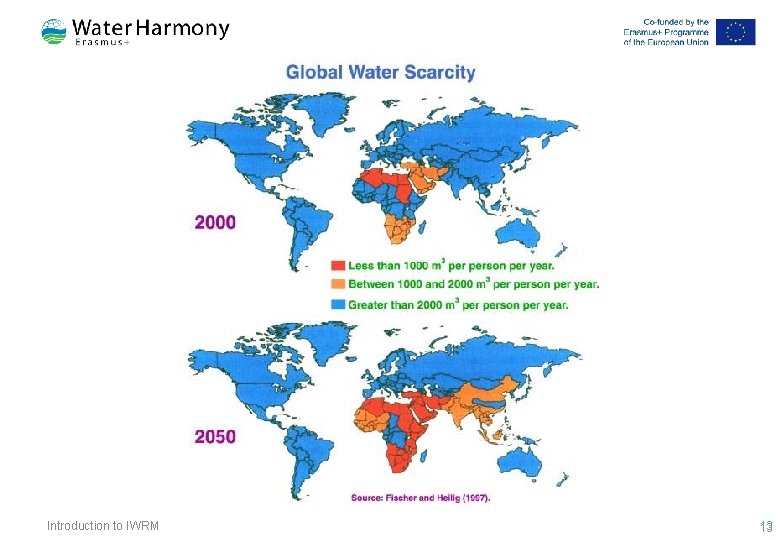
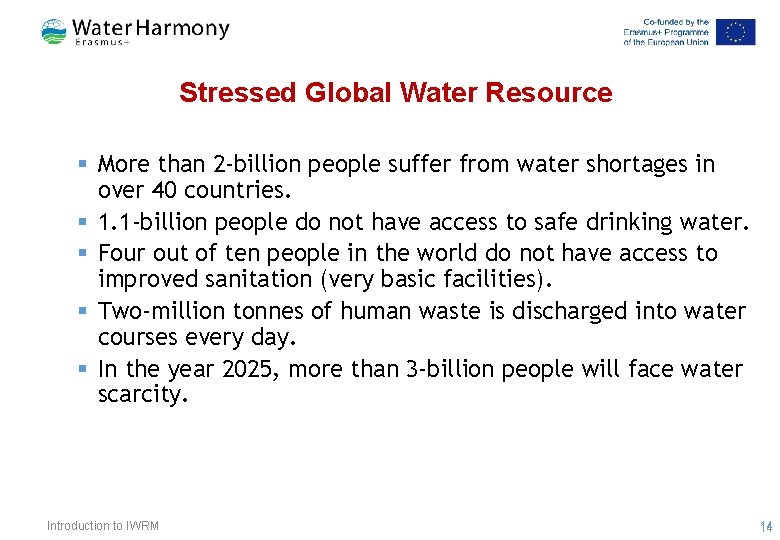
Stressed Global Water Resource § More than 2 -billion people suffer from water shortages in over 40 countries. § 1. 1 -billion people do not have access to safe drinking water. § Four out of ten people in the world do not have access to improved sanitation (very basic facilities). § Two-million tonnes of human waste is discharged into water courses every day. § In the year 2025, more than 3 -billion people will face water scarcity. Introduction to IWRM 14
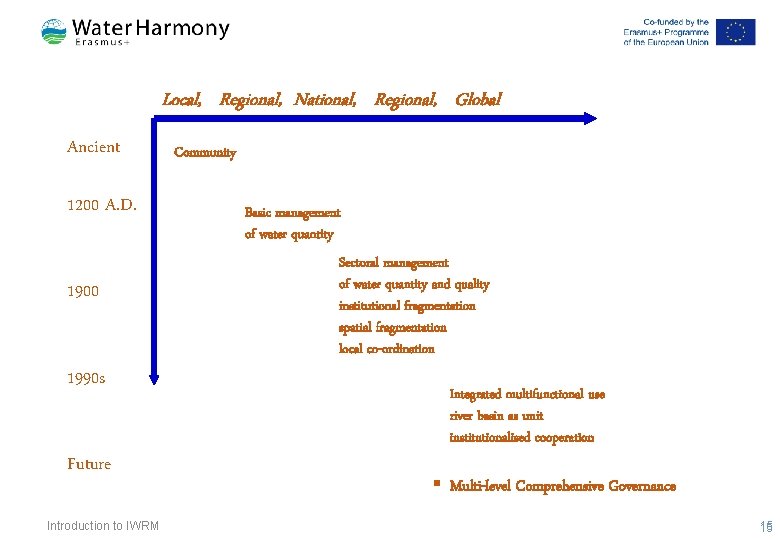
Local, Regional, National, Regional, Global Ancient 1200 A. D. 1900 1990 s Future Introduction to IWRM Community Basic management of water quantity Sectoral management of water quantity and quality institutional fragmentation spatial fragmentation local co-ordination Integrated multifunctional use river basin as unit institutionalised cooperation § Multi-level Comprehensive Governance 15
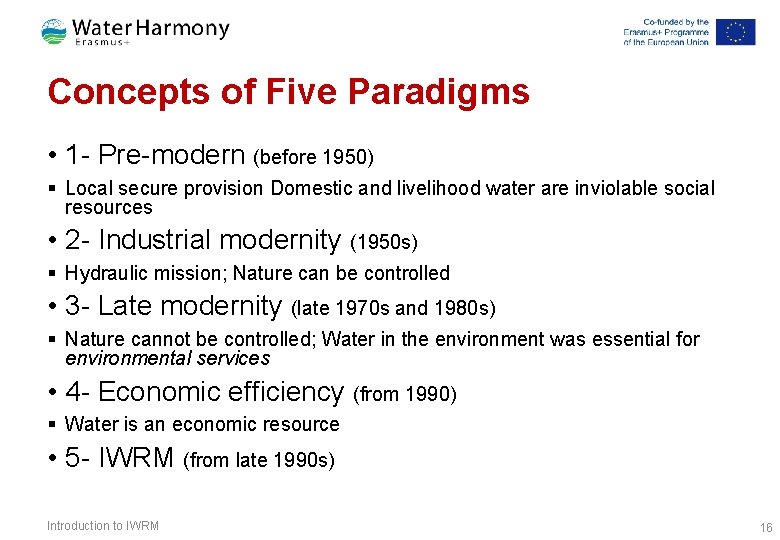
Concepts of Five Paradigms • 1 - Pre-modern (before 1950) § Local secure provision Domestic and livelihood water are inviolable social resources • 2 - Industrial modernity (1950 s) § Hydraulic mission; Nature can be controlled • 3 - Late modernity (late 1970 s and 1980 s) § Nature cannot be controlled; Water in the environment was essential for environmental services • 4 - Economic efficiency (from 1990) § Water is an economic resource • 5 - IWRM (from late 1990 s) Introduction to IWRM 16
Dublin Principles • Fresh water is a finite and vulnerable resource, essential to sustain life, development and environment • Water development and management should be based on a participatory approach, involving users, planners and policy makers at all levels • Women play a central part in the provision, Management and safeguarding of water • Water has an economic value and should be recognized as an economic (and social) good Introduction to IWRM 17
Integrated Water Resources Management § IWRM is a process which promotes the coordinated development and management of water, land related resources, in order to maximize the resultant economic and social welfare in an equitable manner without compromising the sustainability of vital ecosystems Introduction to IWRM 18
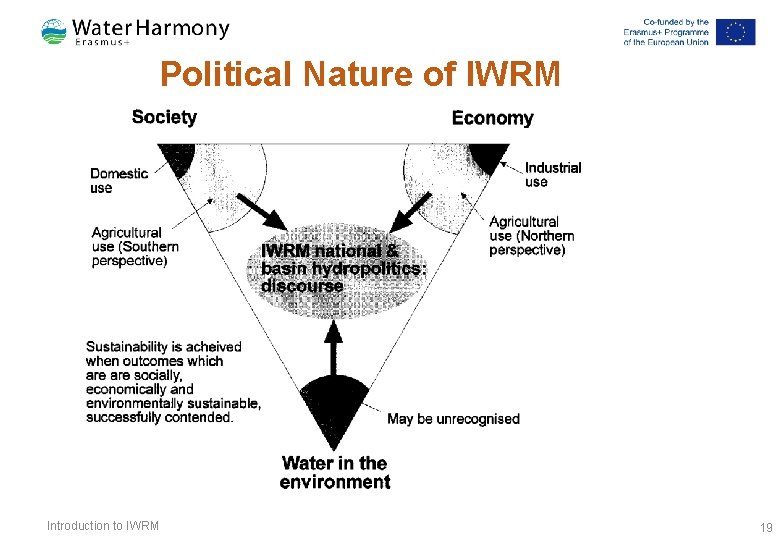
Political Nature of IWRM Introduction to IWRM 19
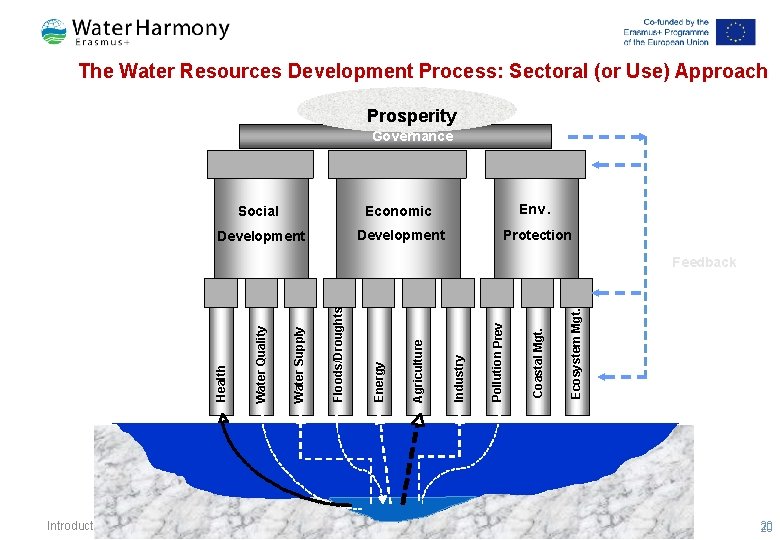
The Water Resources Development Process: Sectoral (or Use) Approach Prosperity Governance Policy/Inst. Framework Objectives Social Economic Env. Development Protection Introduction to IWRM Ecosystem Mgt. Coastal Mgt. Pollution Prev Industry Agriculture Energy Water Supply Water Quality Activity Sectors (water uses) Health Management Institutions Floods/Droughts Feedback 20
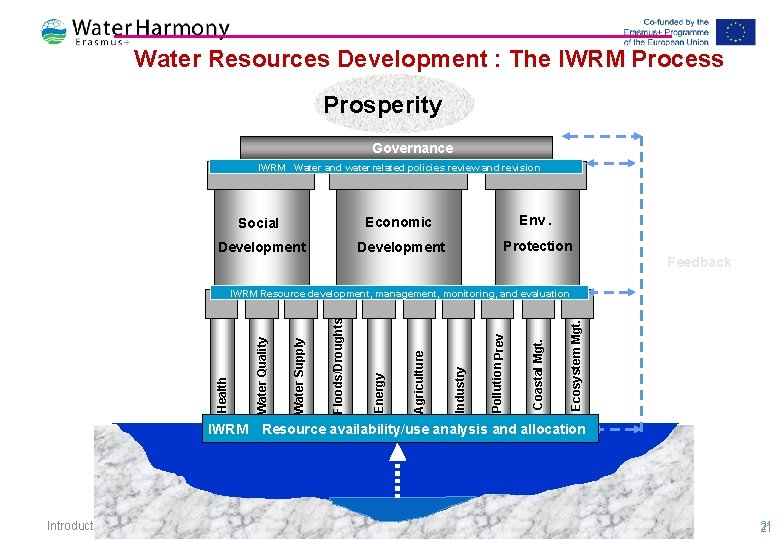
Water Resources Development : The IWRM Process Prosperity Governance IWRM Water and water related policies review and revision Policy/Inst. Framework Economic Env. Development Protection IWRM Introduction to IWRM Ecosystem Mgt. Coastal Mgt. Pollution Prev Industry Agriculture Energy Floods/Droughts Water Supply Health Activity Sectors (water uses) Feedback IWRM Resource development, management, monitoring, and evaluation Management Institutions Water Quality Objectives Social Resource availability/use analysis and allocation 21
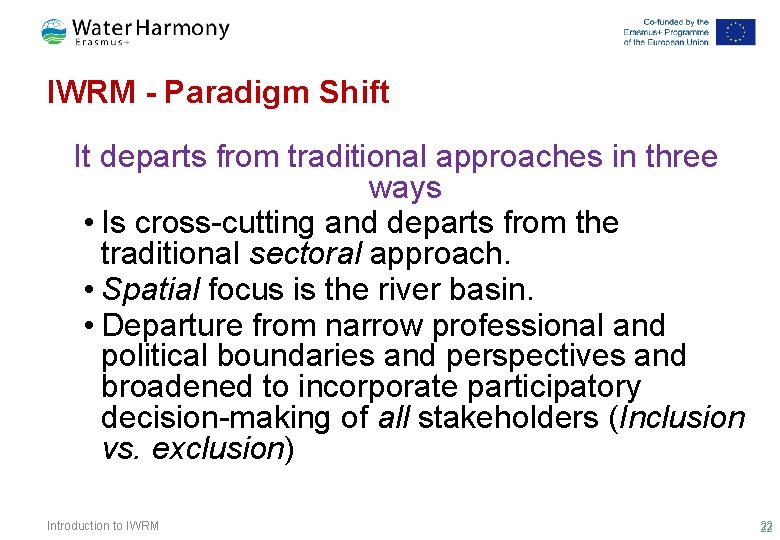
IWRM - Paradigm Shift It departs from traditional approaches in three ways • Is cross-cutting and departs from the traditional sectoral approach. • Spatial focus is the river basin. • Departure from narrow professional and political boundaries and perspectives and broadened to incorporate participatory decision-making of all stakeholders (Inclusion vs. exclusion) Introduction to IWRM 22
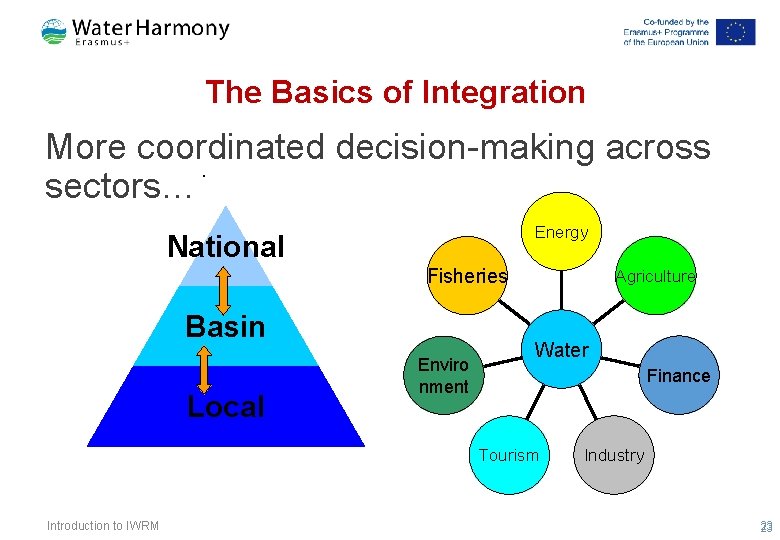
The Basics of Integration More coordinated decision-making across . sectors… Energy National Fisheries Basin Local Enviro nment Agriculture Water Finance Tourism Introduction to IWRM Industry 23
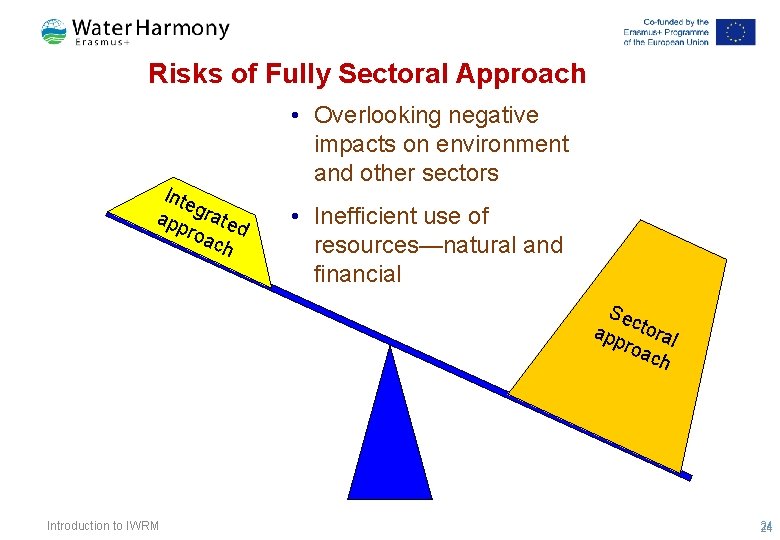
Risks of Fully Sectoral Approach Inte app grate roa d ch • Overlooking negative impacts on environment and other sectors • Inefficient use of resources—natural and financial Se app ctoral roa ch Introduction to IWRM 24
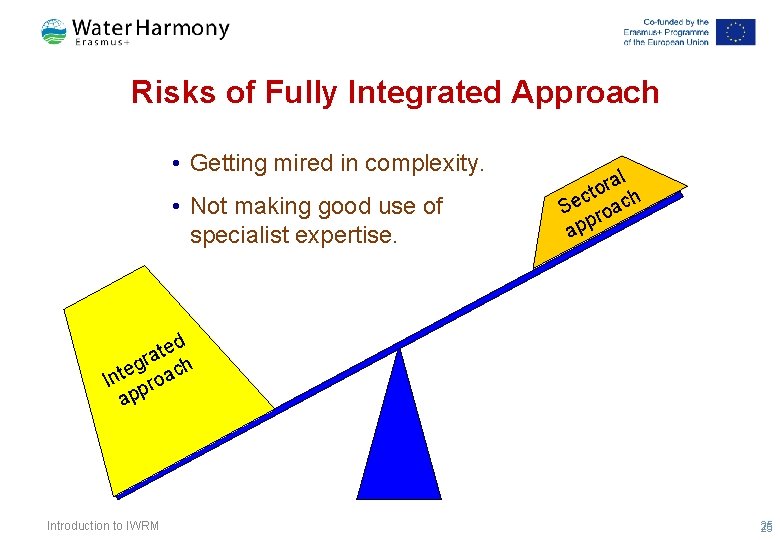
Risks of Fully Integrated Approach • Getting mired in complexity. • Not making good use of specialist expertise. l a r cto ch e S roa p ap d e t ra h g e c Int proa ap Introduction to IWRM 25
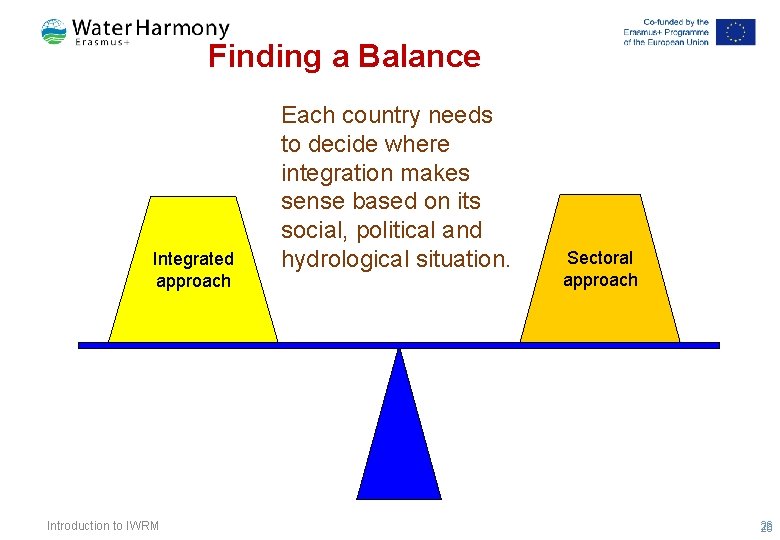
Finding a Balance Integrated approach Introduction to IWRM Each country needs to decide where integration makes sense based on its social, political and hydrological situation. Sectoral approach 26
IWRM - A Management Process for Water Governance A shift from water development to governance Manage the water resource for long-term, sustainable uses for future generations Governance implies the capacity to both generate and implement appropriate policies Established consensus and participation Requires capacity building Introduction to IWRM 27
Global Events in Promoting IWRM Adopted at International Conference on Water and Environment (ICWE), Dublin 1992, Contributed to Agenda 21/Rio Declaration (chapter. 18 on freshwater resources) at United Nations Conference on Environment and Development (UNCED) or Earth Summit, Rio de Janeiro 1992 UN CSD (“Rio + 5, 10, 20) World Water Forums (at 3 years intervals) Stockholm water week (annually) Introduction to IWRM 28
Global Water Partnership ü To promote the concept and implementation of Integrated Water Resources Management (IWRM) to help resolve current and future water crises. ü Transform ground reality, through broad based stakeholder partnerships, to influence policy. ü Function as neutral change agent in facilitating policy formulation. ü Provide a focal point to overcome “fragmented” efforts leading to unsustainable management and development. Introduction to IWRM 29
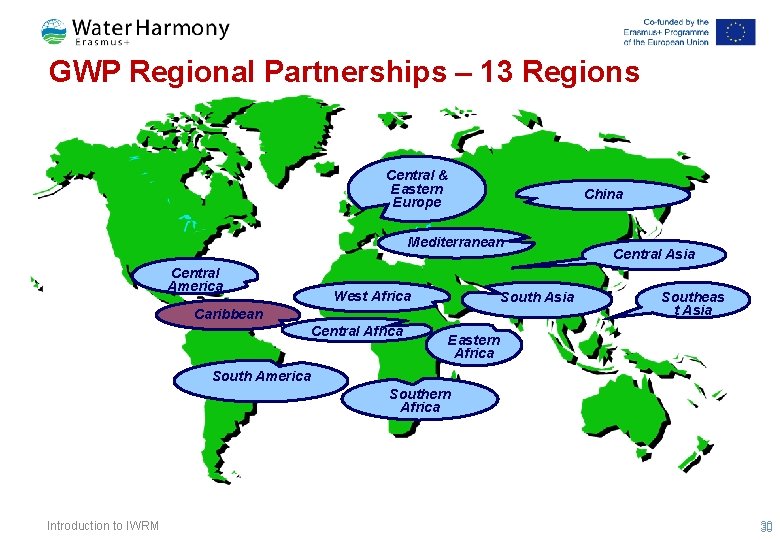
GWP Regional Partnerships – 13 Regions Central & Eastern Europe China Mediterranean Central America West Africa South Asia Caribbean Central Africa Central Asia Southeas t Asia Eastern Africa South America Southern Africa Introduction to IWRM 30
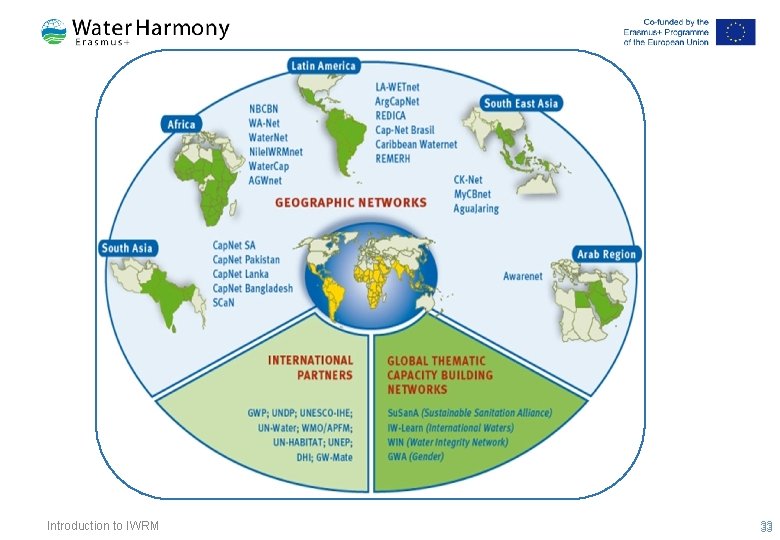
Cap. Net is an associated project of the UNDP The Objective of Cap. Net is to enhance human resources development for Integrated Water Resources Management through strengthening or establishment of a number of regional IWRM networks able to deliver education and training support for improved management of water resources. Introduction to IWRM 31
Capacity Building üGlobal Initiatives üCap. Net üUNESCO-IHE üUN University üWaternet üSaci. WATERs üOther Initiatives üSIWI üAustralian Initiatives Introduction to IWRM 32
Thank You Introduction to IWRM 33