
Lesson 10 Moments and Work Revision Physics KS

- Slides: 37
Lesson 10 - Moments and Work Revision Physics - KS 3 Forces in Action Mrs Wolstenholme 1
Complete the task Moments: 1. What is the moment of a force? 2. Write down two ways to increase the moment about a pivot. Resume once you’re finished
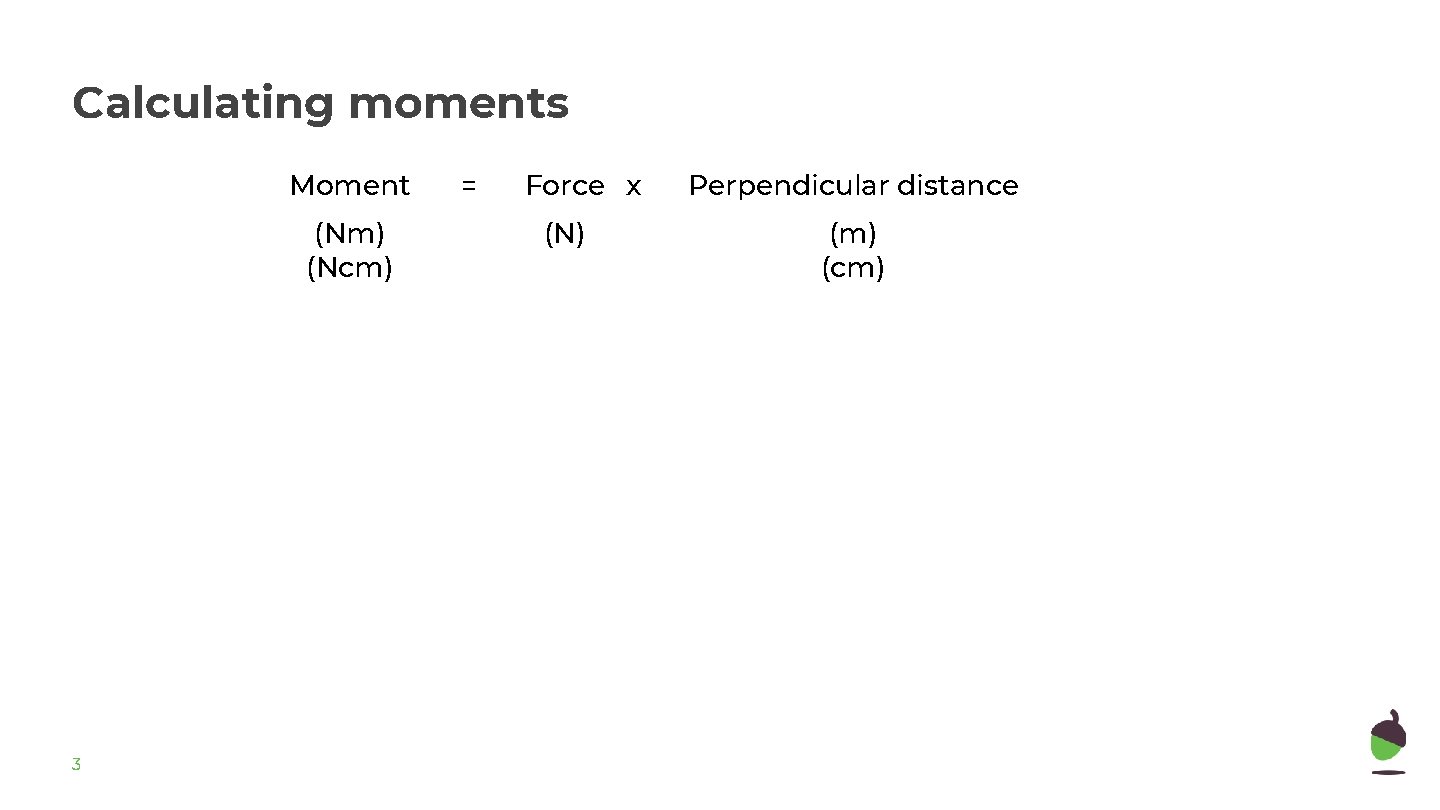
Calculating moments Moment (Nm) (Ncm) 3 = Force x (N) Perpendicular distance (m) (cm)
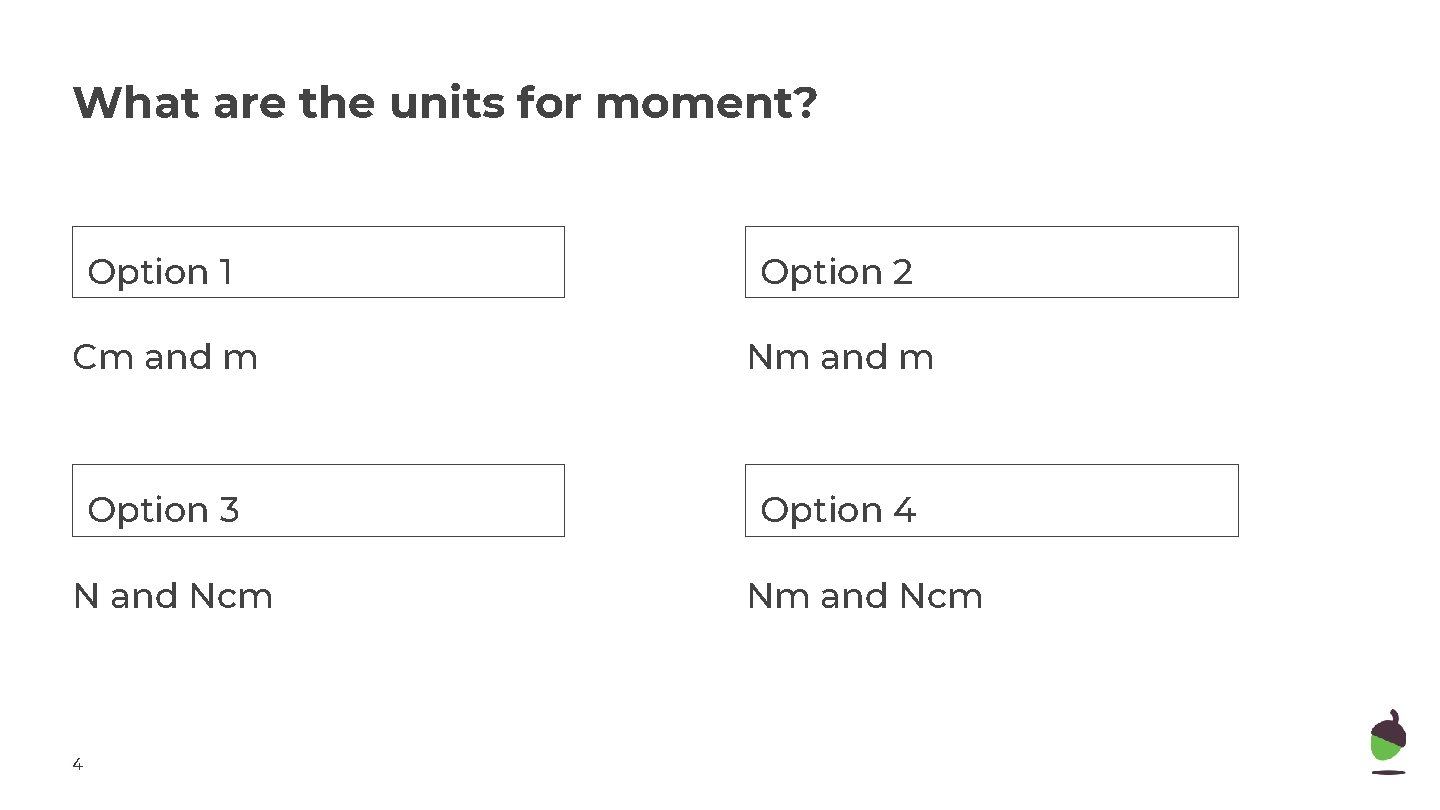
What are the units for moment? Option 1 Option 2 Cm and m Nm and m Option 33 Option 44 N and Ncm Nm and Ncm 4
What are the units for perpendicular distance? Option 1 Option 2 Cm and m Nm and m Option 33 Option 44 N and Ncm Nm and Ncm 5
What is the unit force? Option 1 Option 2 m Nm Option 33 Option 44 Ncm N 6
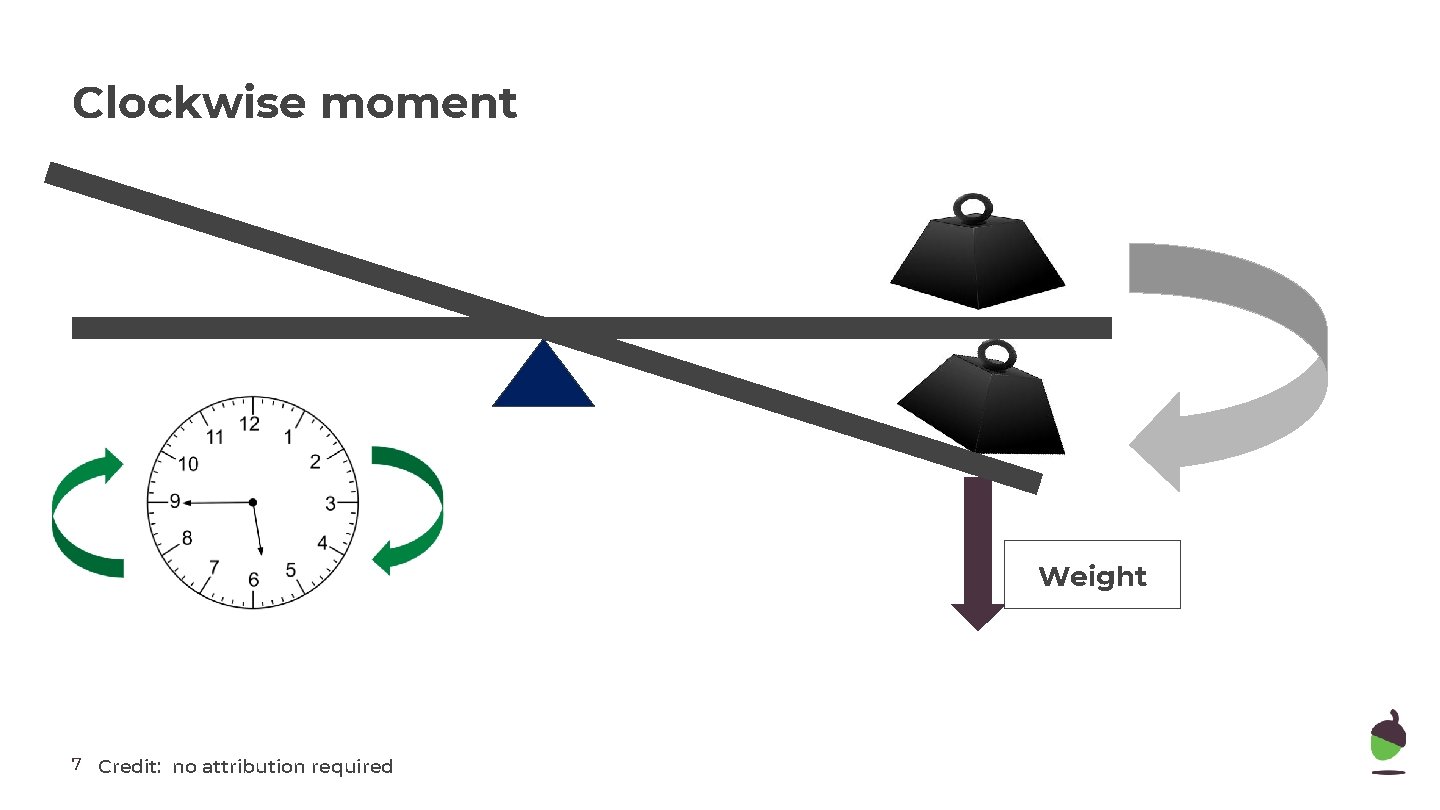
Clockwise moment Weight 7 Credit: no attribution required
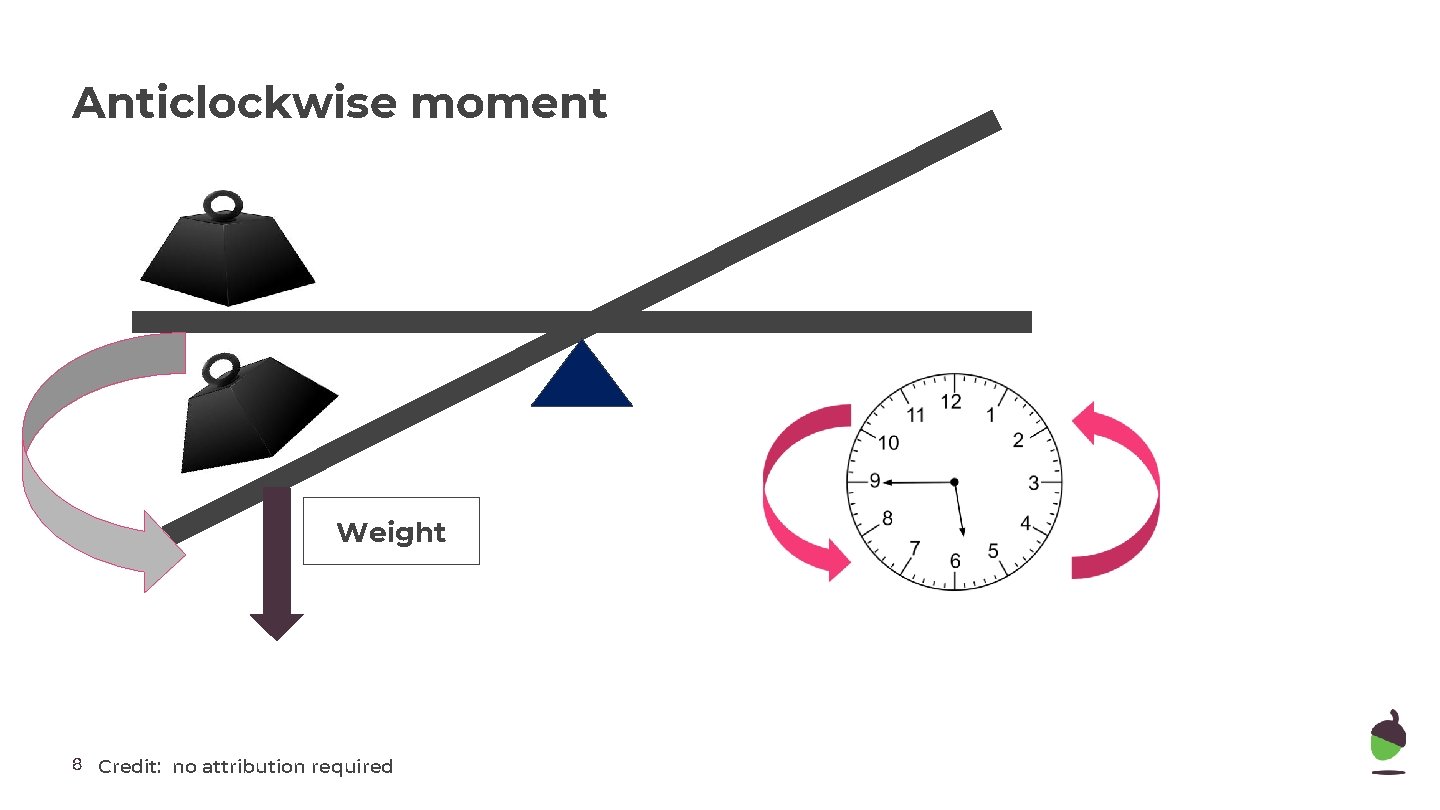
Anticlockwise moment Weight 8 Credit: no attribution required
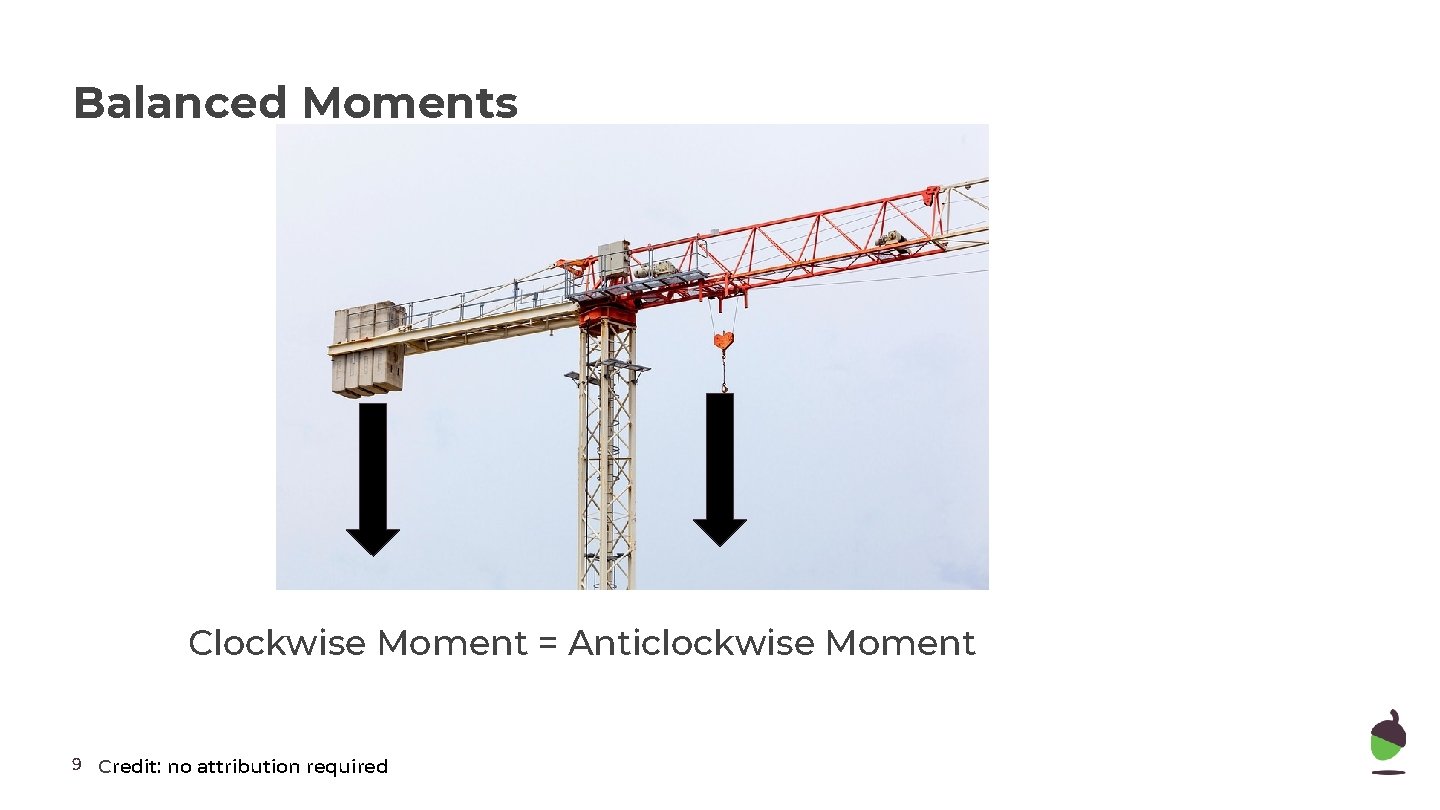
Balanced Moments Clockwise Moment = Anticlockwise Moment 9 Credit: no attribution required
Which Direction will an object rotate because of a clockwise moment? Option 1 Option 2 Same as a clock hand Up Option 33 Option 44 Opposite to a clock hand Down 10
Which Direction will an object rotate because of an anticlockwise moment? Option 1 Option 2 Same as a clock hand Up Option 33 Option 44 Opposite to a clock hand Down 11
For an object to be balanced: Option 1 Option 2 Left side moment = Right side Clockwise moment is larger than moment anticlockwise moment Option 33 Option 44 Clockwise moment = There are no forces on the object Anticlockwise moment 12
Complete the task Fill in the gaps Moments can be _____ or ____ ● Clockwise moments cause a rotation in the ______ direction of a clock hand ● Anticlockwise moments cause a ____ in the opposite direction of a _____ hand ● For an object to be balanced ……………. . . Resume once you’re finished
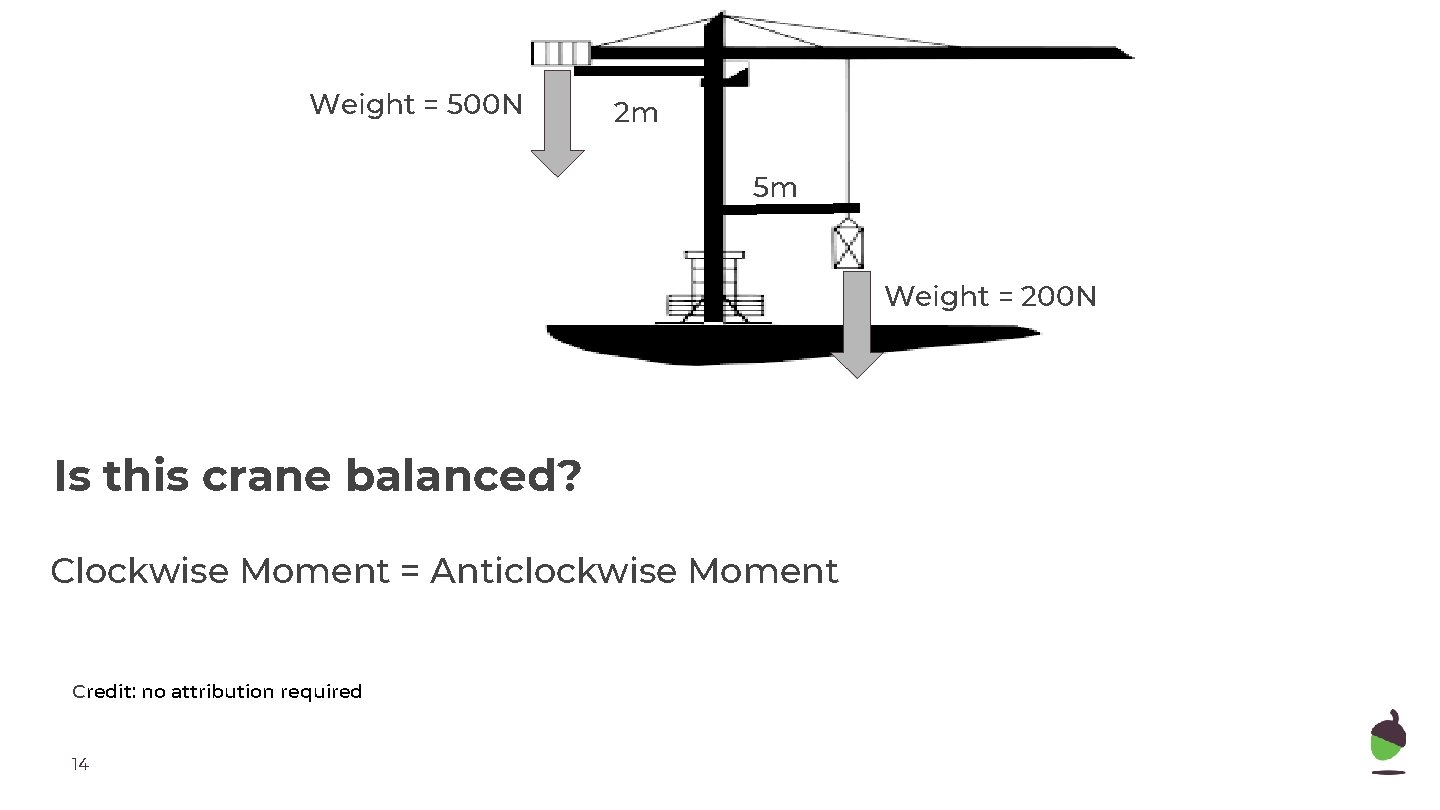
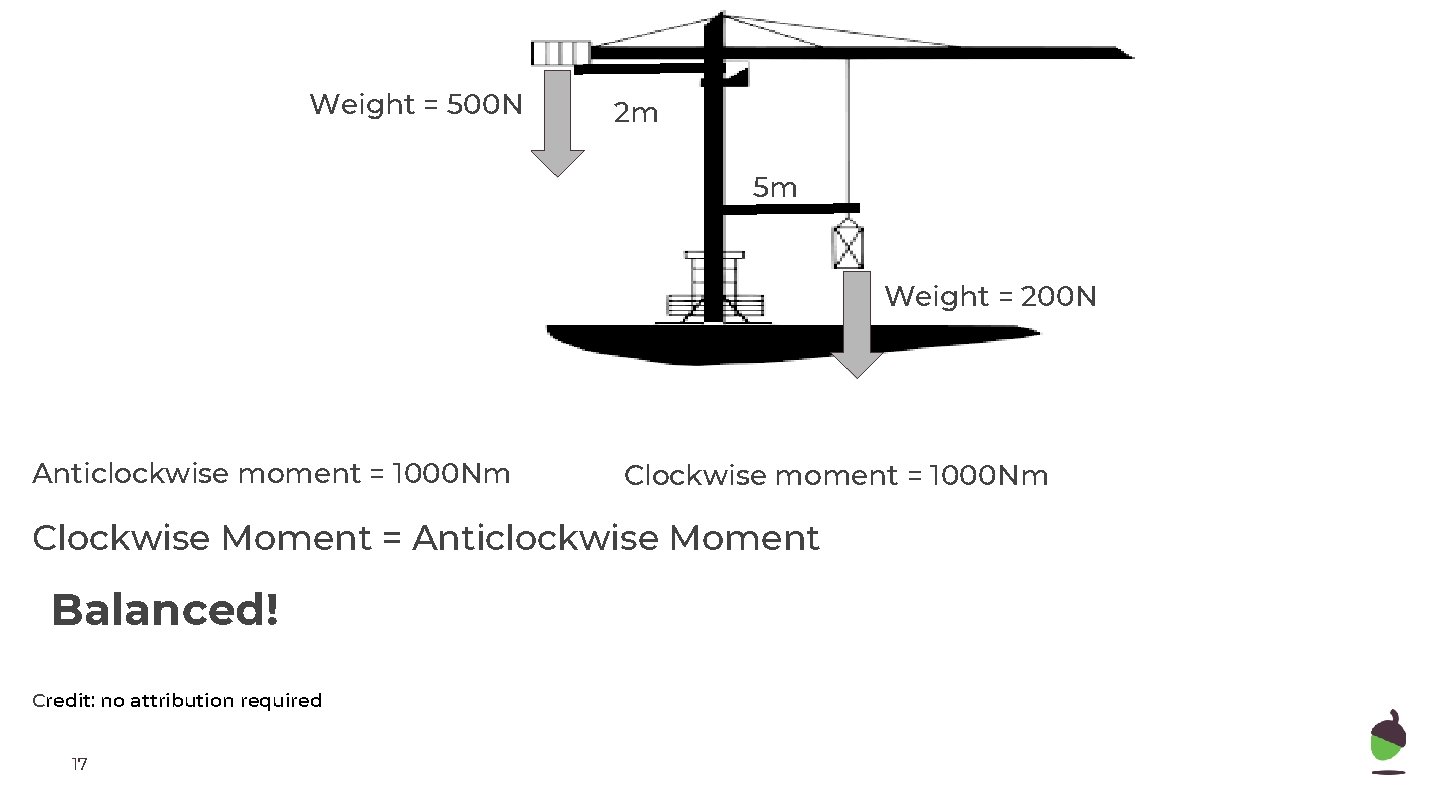
Weight = 500 N 2 m 5 m Weight = 200 N Is this crane balanced? Clockwise Moment = Anticlockwise Moment Credit: no attribution required 14
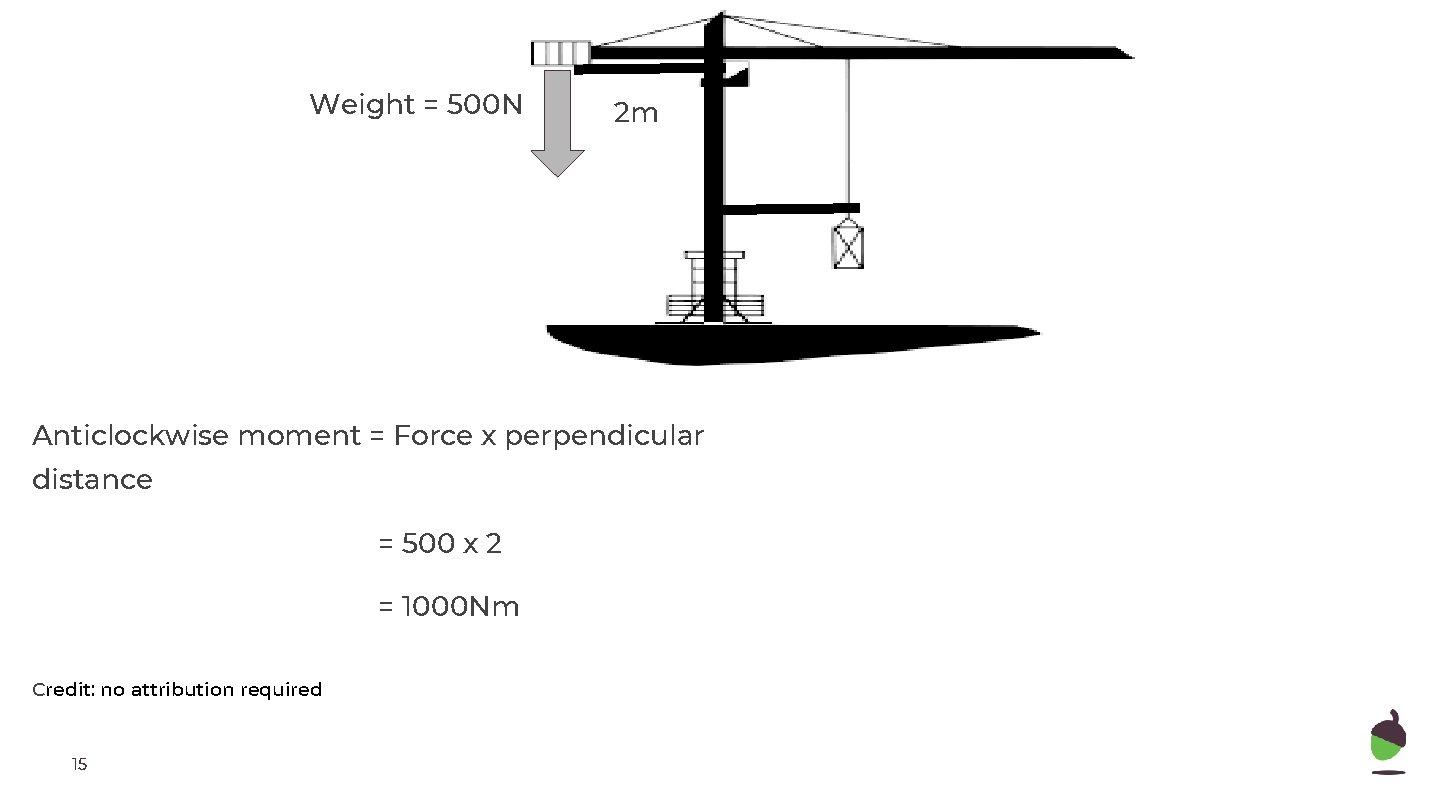
Weight = 500 N 2 m Anticlockwise moment = Force x perpendicular distance = 500 x 2 = 1000 Nm Credit: no attribution required 15
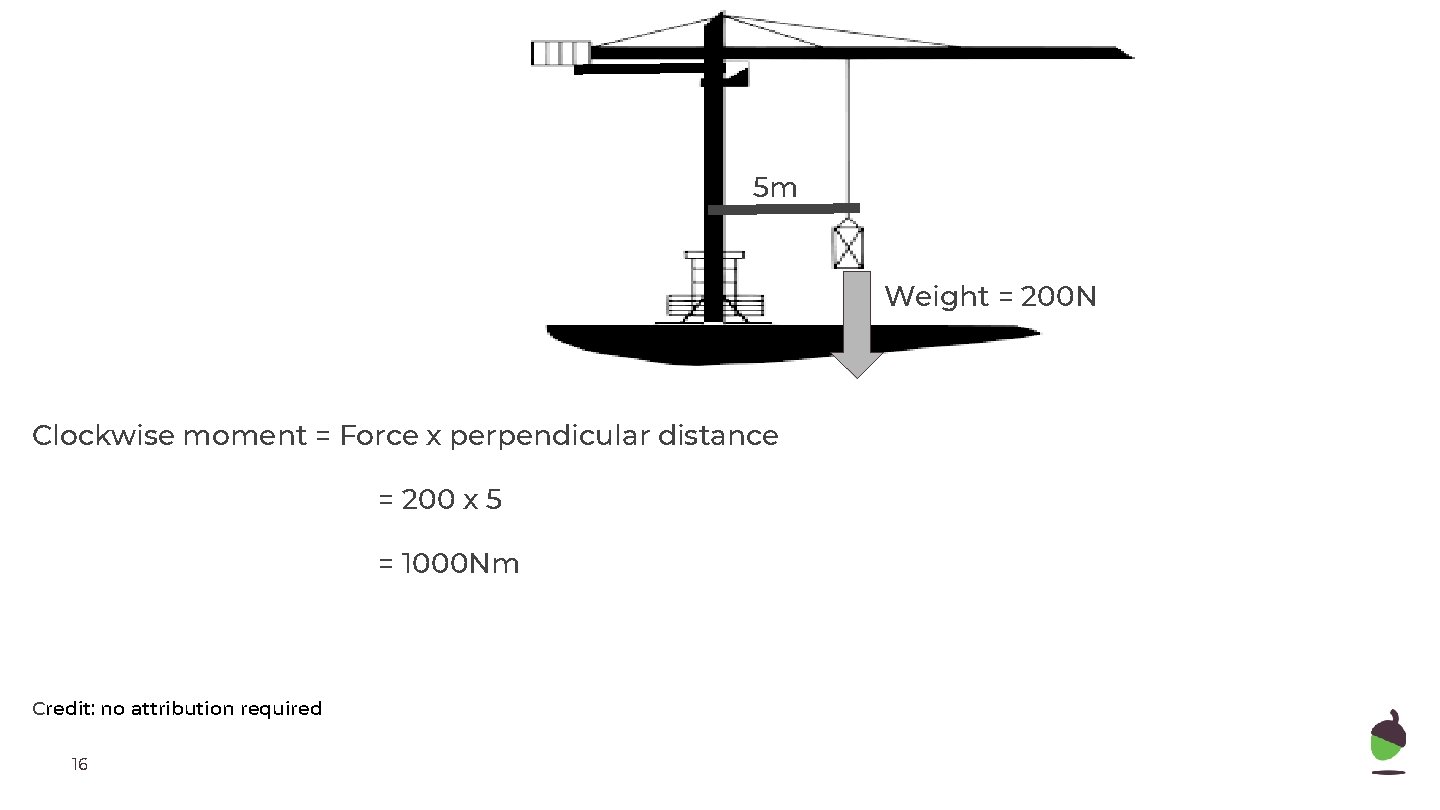
5 m Weight = 200 N Clockwise moment = Force x perpendicular distance = 200 x 5 = 1000 Nm Credit: no attribution required 16
Weight = 500 N 2 m 5 m Weight = 200 N Anticlockwise moment = 1000 Nm Clockwise Moment = Anticlockwise Moment Balanced! Credit: no attribution required 17
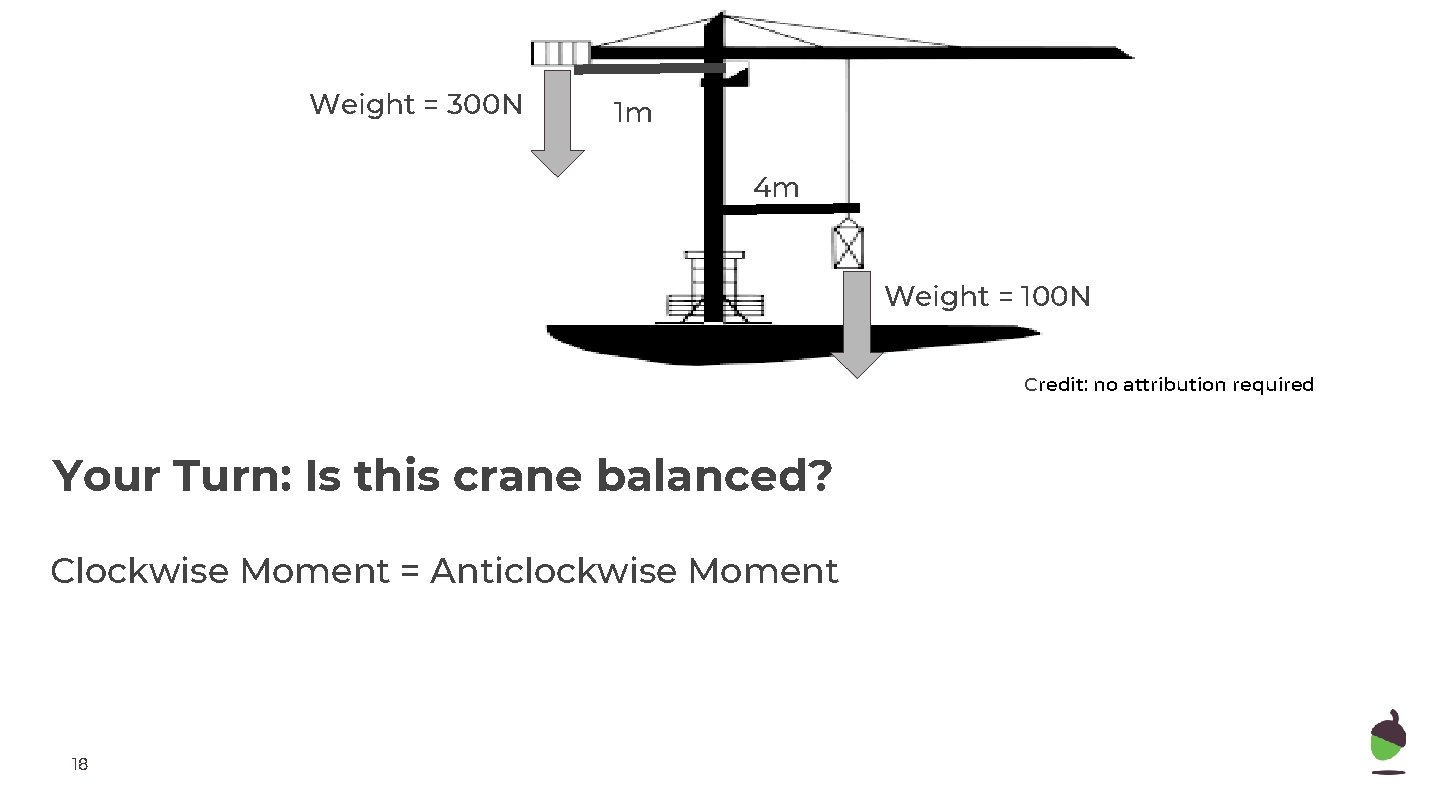
Weight = 300 N 1 m 4 m Weight = 100 N Credit: no attribution required Your Turn: Is this crane balanced? Clockwise Moment = Anticlockwise Moment 18
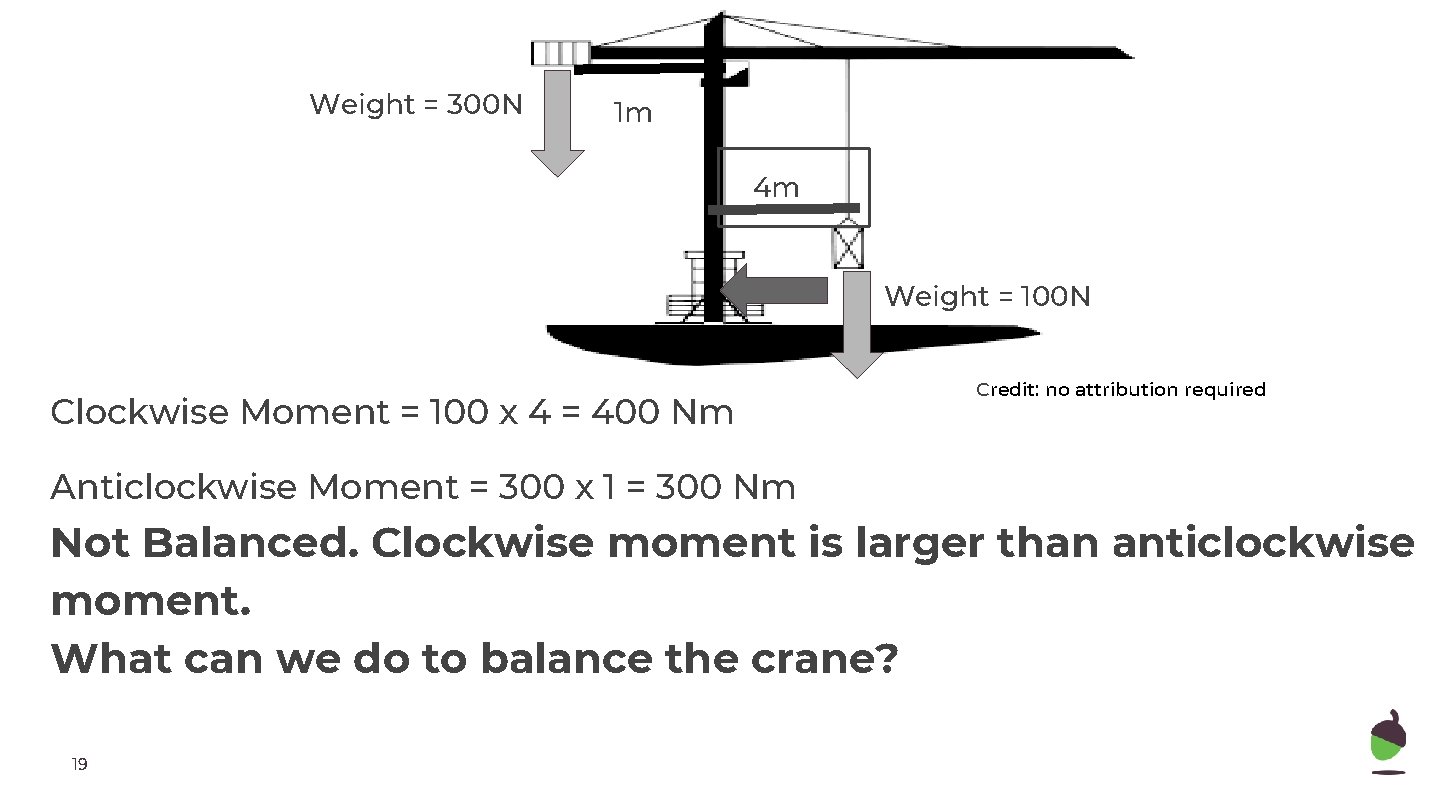
Weight = 300 N 1 m 4 m Weight = 100 N Clockwise Moment = 100 x 4 = 400 Nm Credit: no attribution required Anticlockwise Moment = 300 x 1 = 300 Nm Not Balanced. Clockwise moment is larger than anticlockwise moment. What can we do to balance the crane? 19
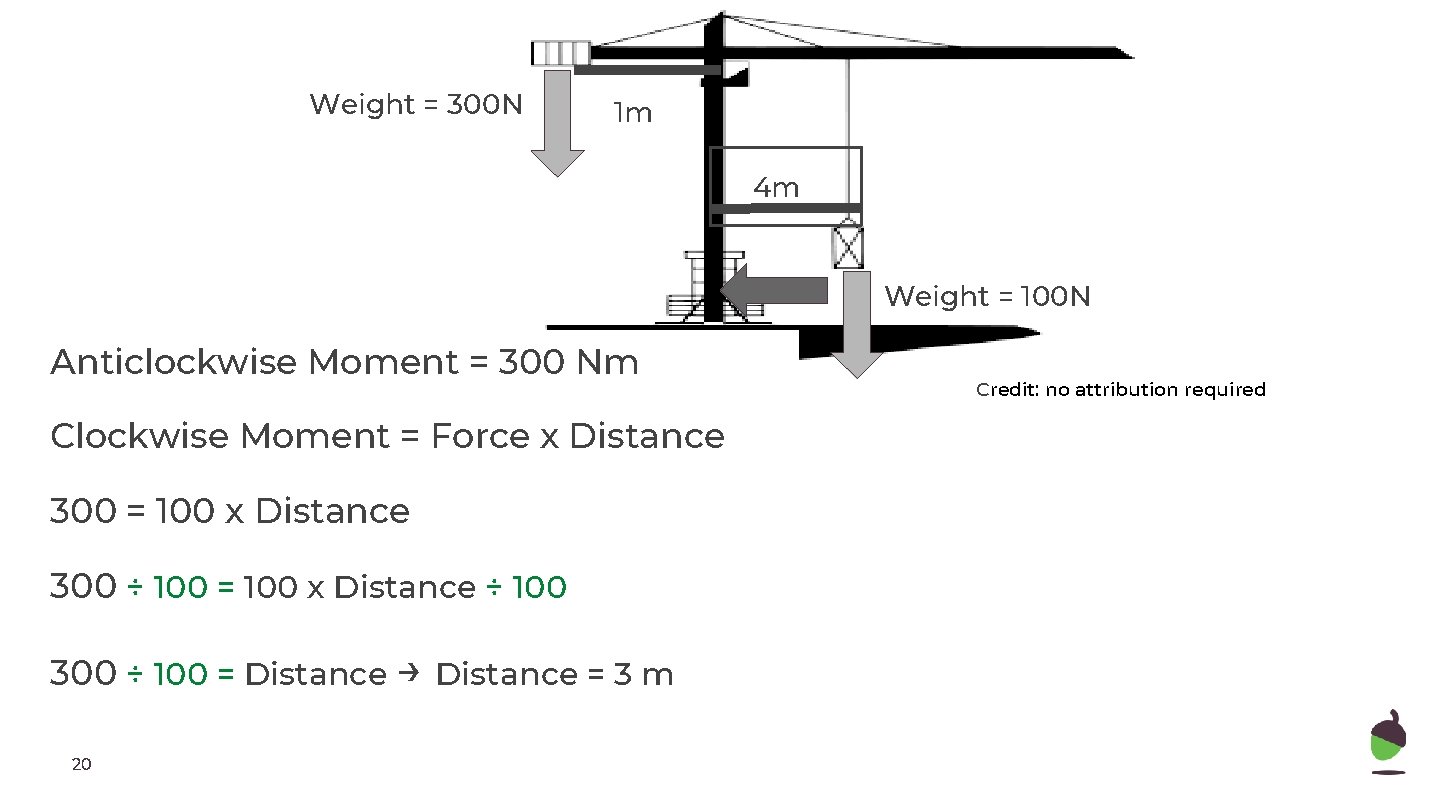
Weight = 300 N 1 m 4 m Weight = 100 N Anticlockwise Moment = 300 Nm Clockwise Moment = Force x Distance 300 = 100 x Distance 300 ÷ 100 = 100 x Distance ÷ 100 300 ÷ 100 = Distance → Distance = 3 m 20 Credit: no attribution required
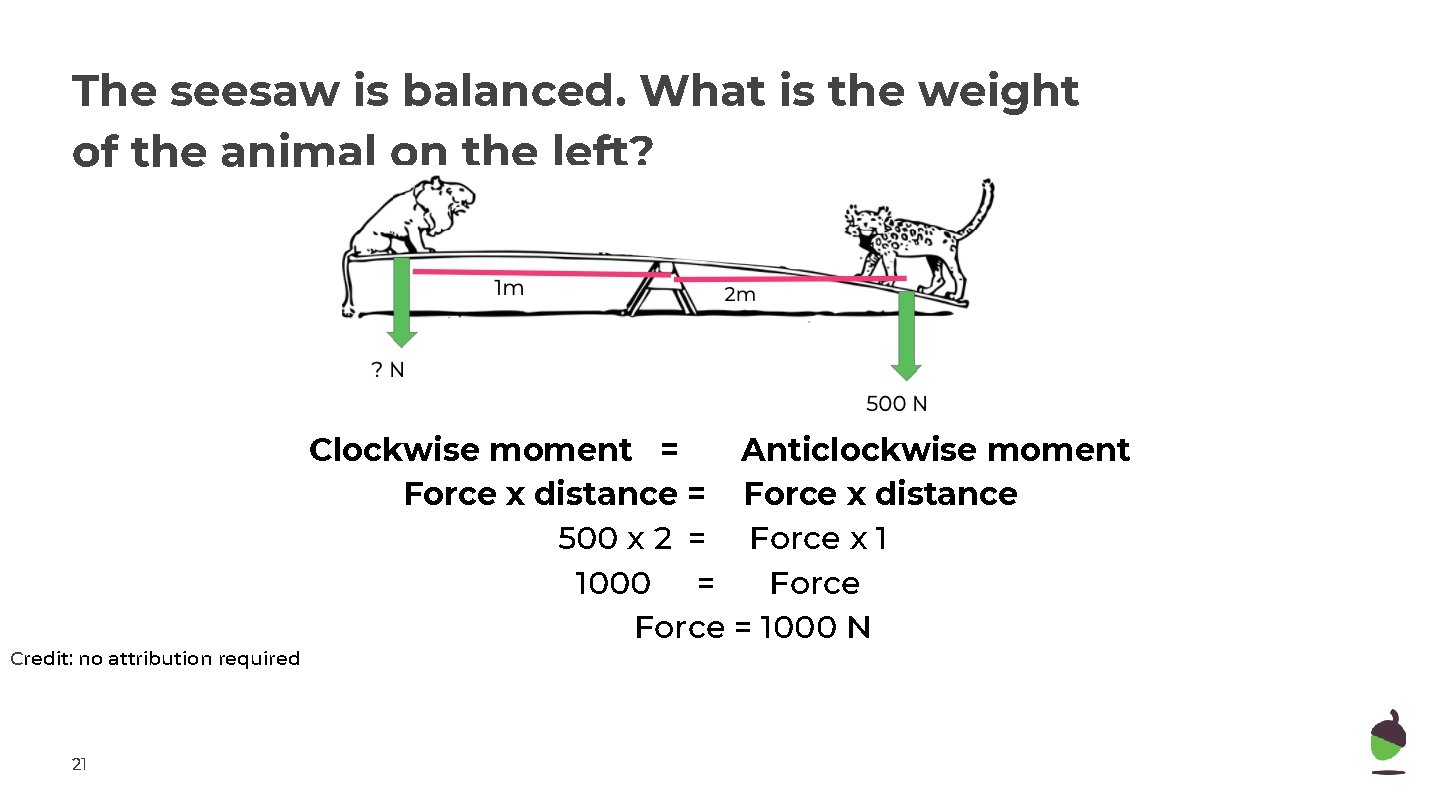
The seesaw is balanced. What is the weight of the animal on the left? Credit: no attribution required 21 Clockwise moment = Anticlockwise moment Force x distance = Force x distance 500 x 2 = Force x 1 1000 = Force = 1000 N
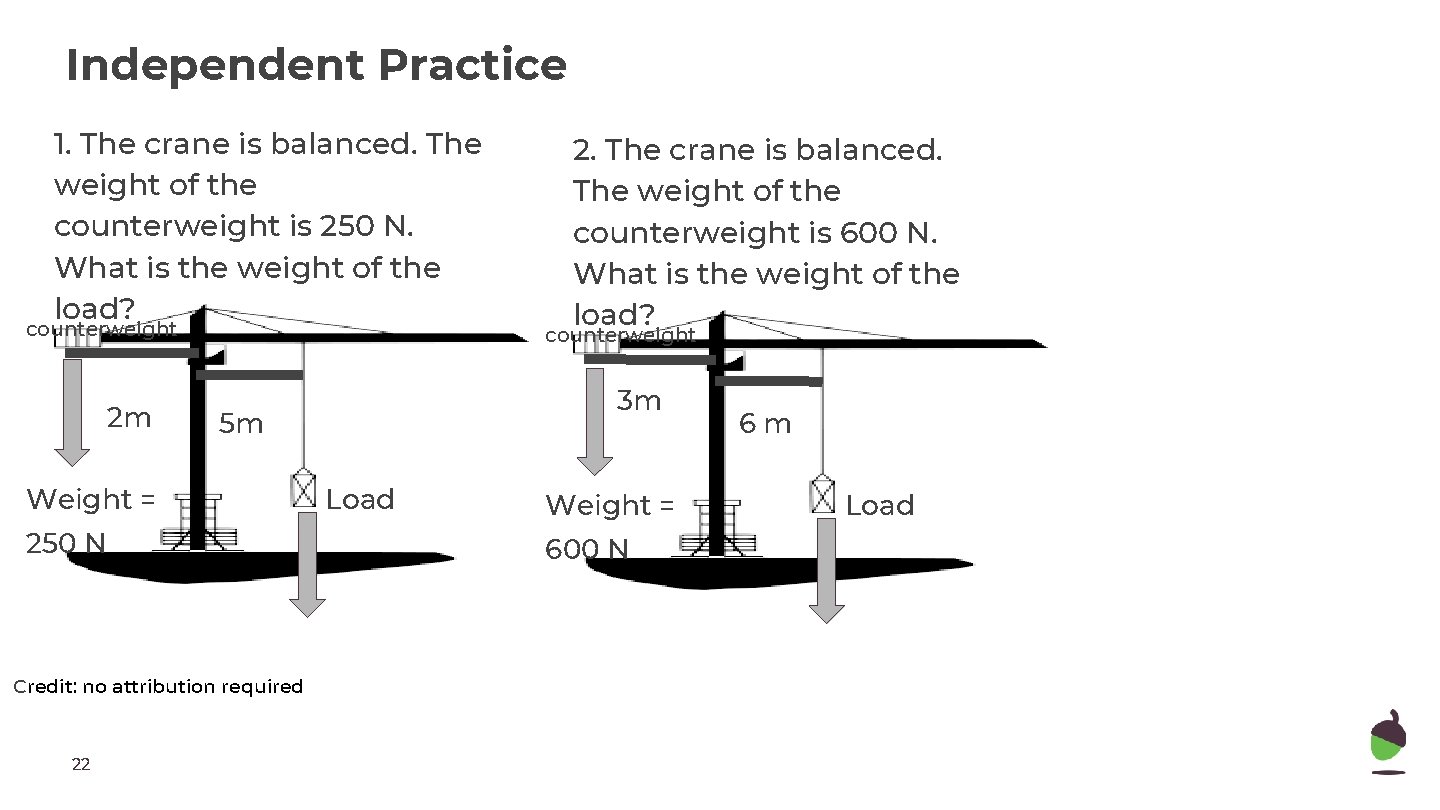
Independent Practice 1. The crane is balanced. The weight of the counterweight is 250 N. What is the weight of the load? counterweight 2 m 250 N Credit: no attribution required 22 counterweight 3 m 5 m Weight = 2. The crane is balanced. The weight of the counterweight is 600 N. What is the weight of the load? Load Weight = 600 N 6 m Load
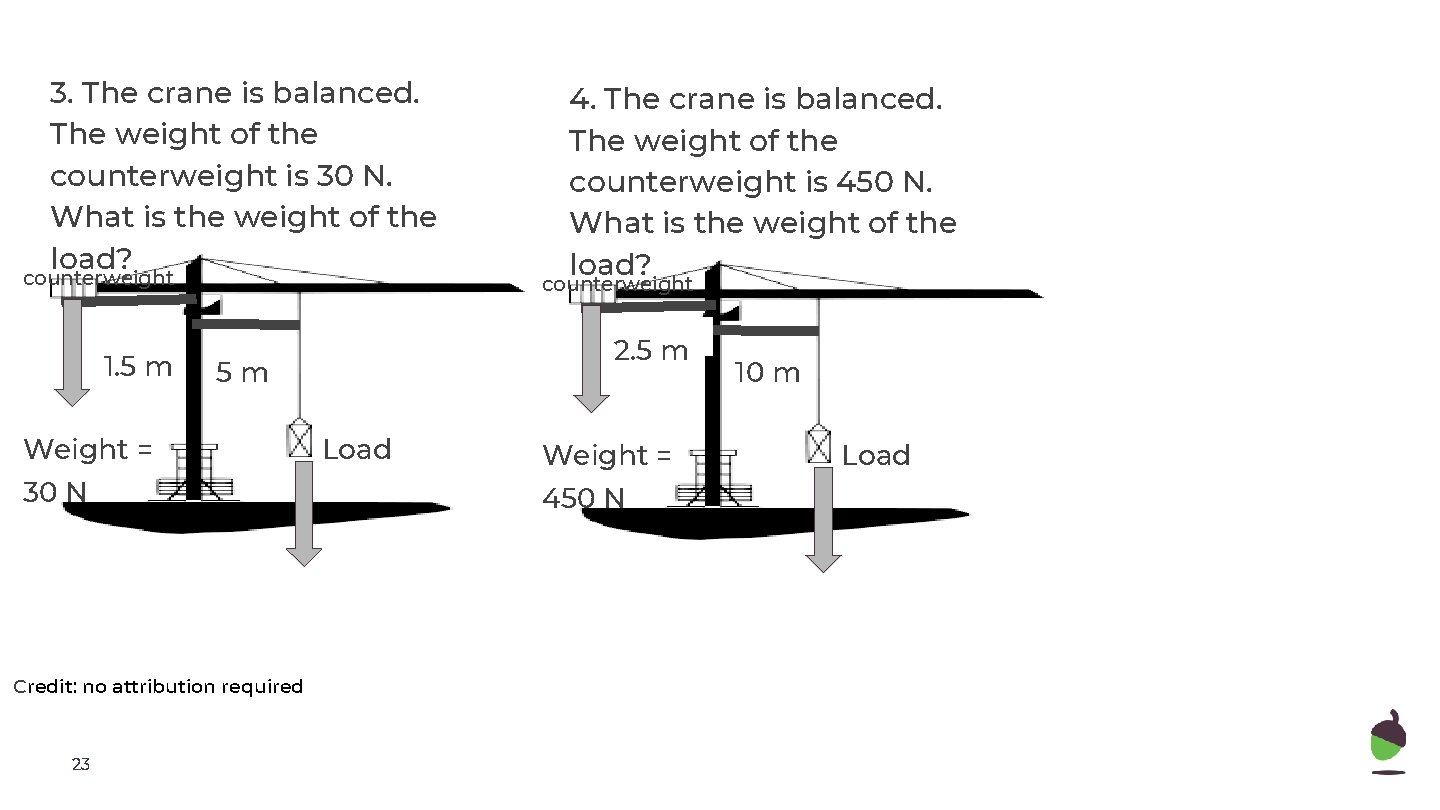
3. The crane is balanced. The weight of the counterweight is 30 N. What is the weight of the load? counterweight 1. 5 m 30 N Credit: no attribution required 23 counterweight 2. 5 m 5 m Weight = 4. The crane is balanced. The weight of the counterweight is 450 N. What is the weight of the load? Load Weight = 450 N 10 m Load
Work Done Exerts a force Energy is transferred Work is done 24
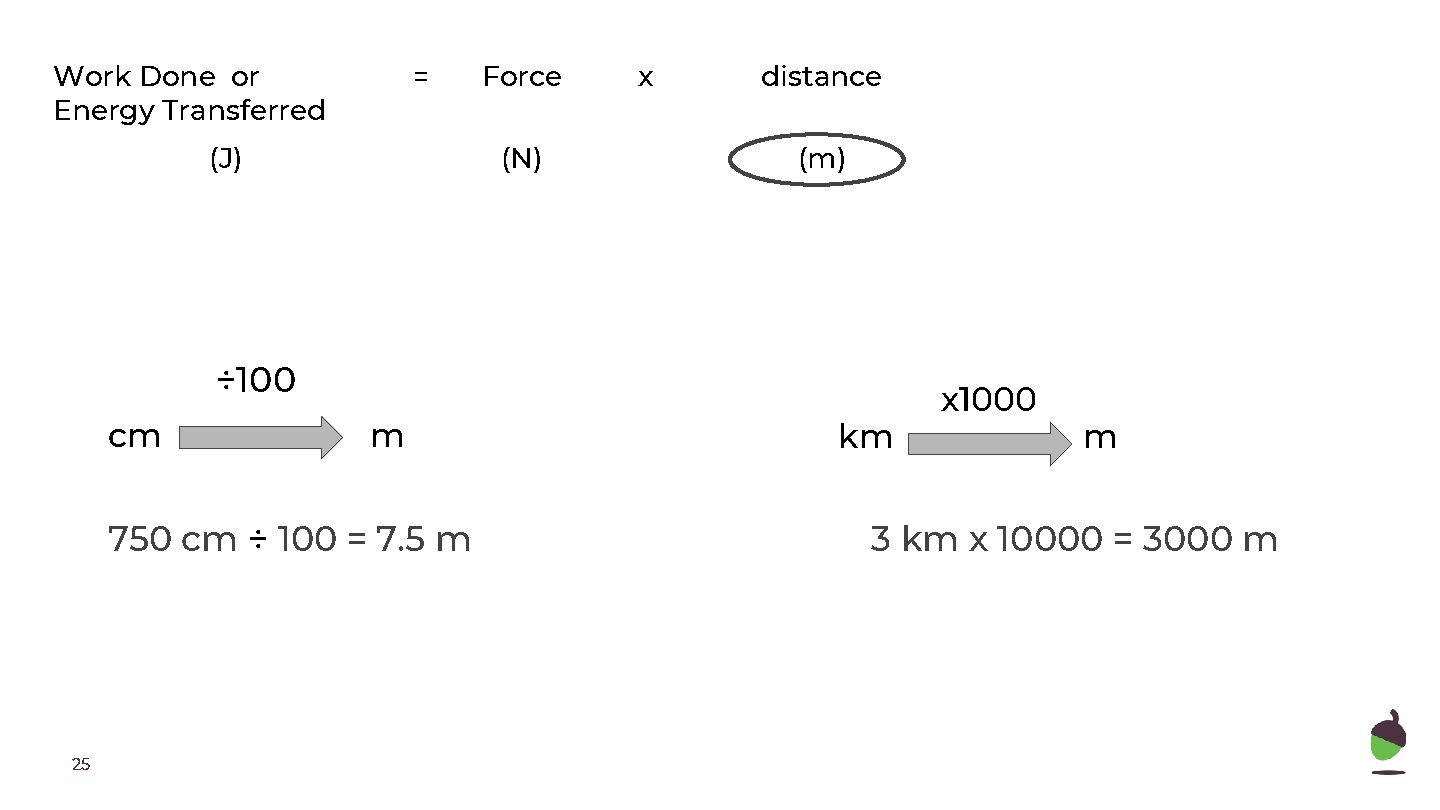
Work Done or Energy Transferred = (J) Force (N) x distance (m) ÷ 100 cm m 750 cm ÷ 100 = 7. 5 m 25 km x 1000 m 3 km x 10000 = 3000 m
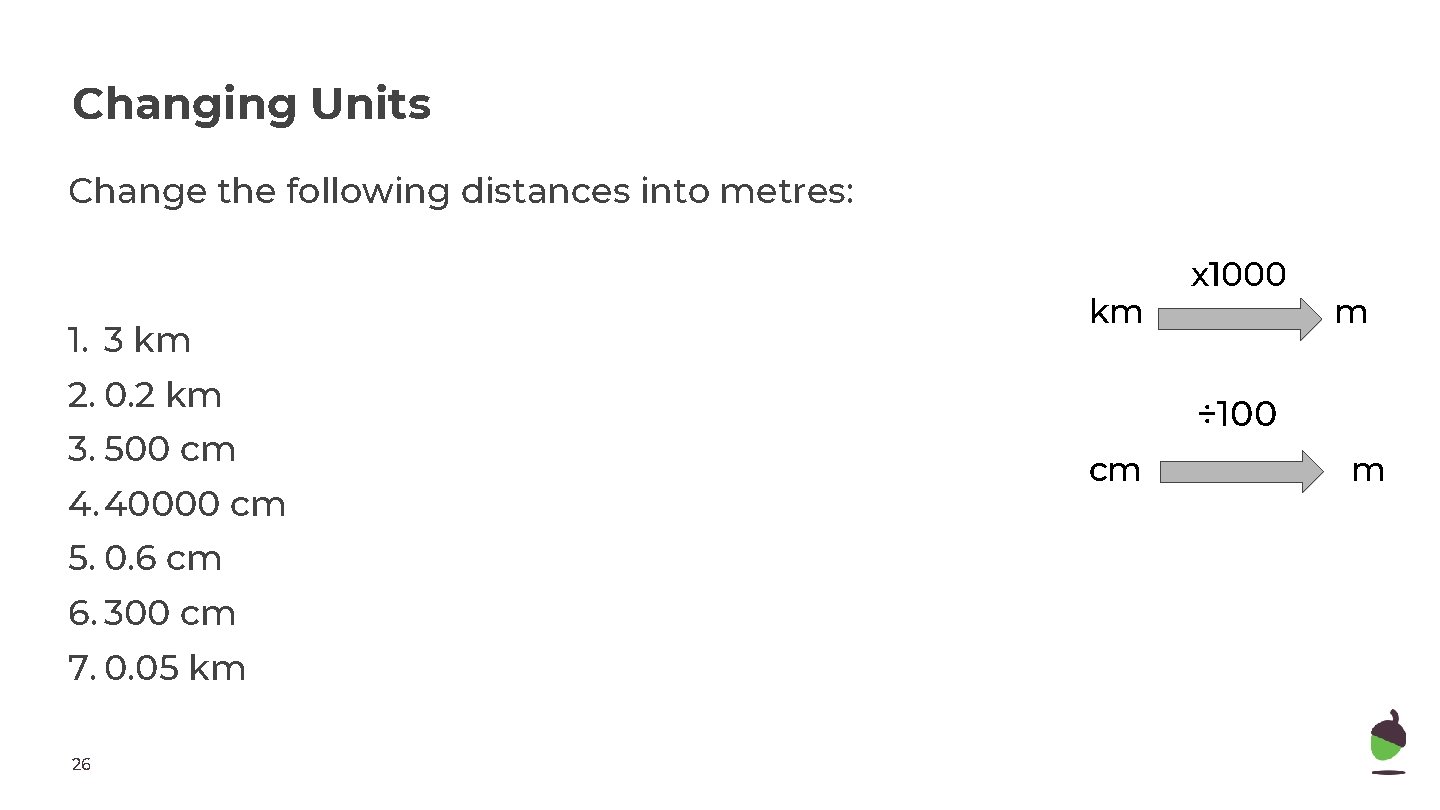
Changing Units Change the following distances into metres: 1. 3 km km 2. 0. 2 km 3. 500 cm 4. 40000 cm 5. 0. 6 cm 6. 300 cm 7. 0. 05 km 26 x 1000 m ÷ 100 cm m
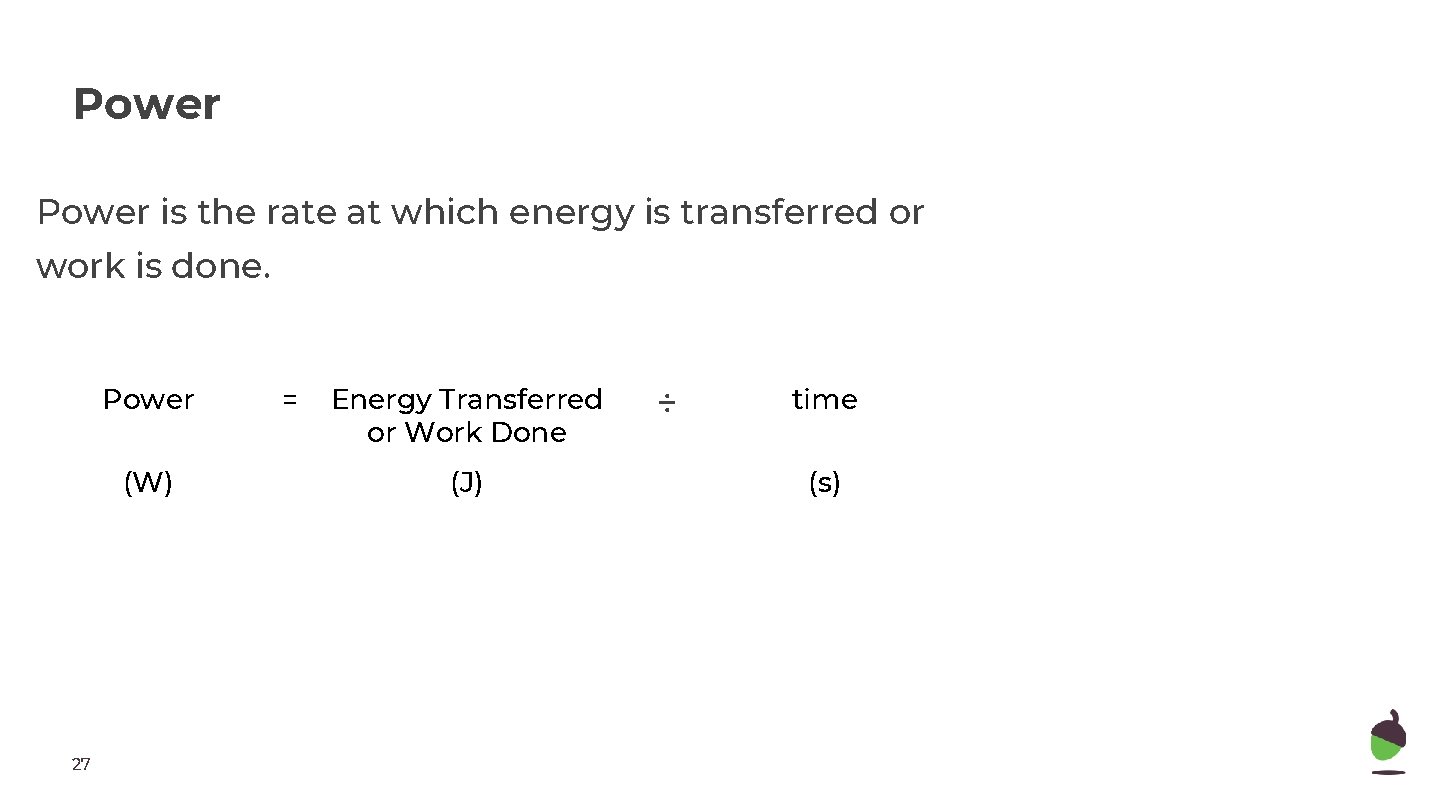
Power is the rate at which energy is transferred or work is done. Power (W) 27 = Energy Transferred or Work Done (J) ÷ time (s)
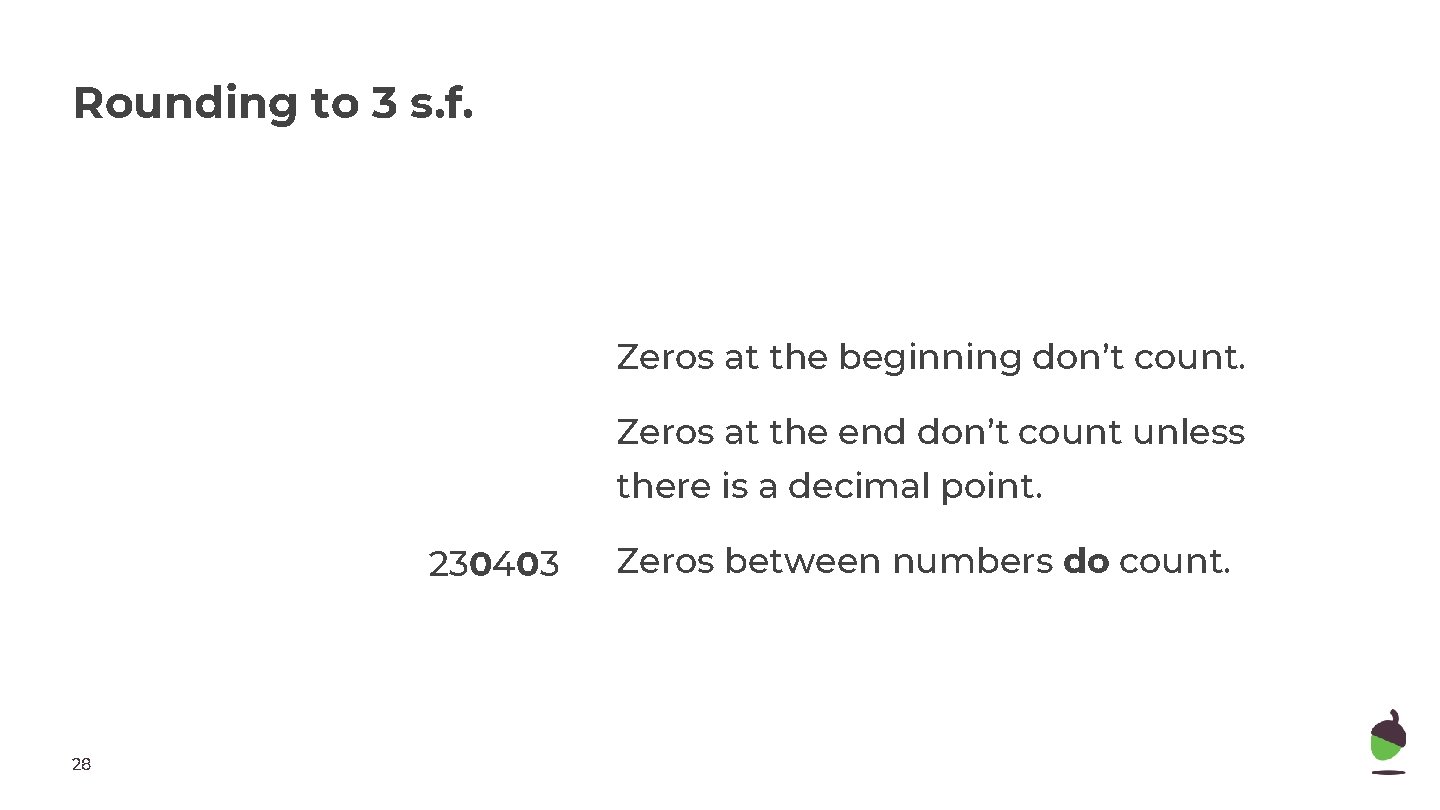
Rounding to 3 s. f. Zeros at the beginning don’t count. Zeros at the end don’t count unless there is a decimal point. 230403 28 Zeros between numbers do count.
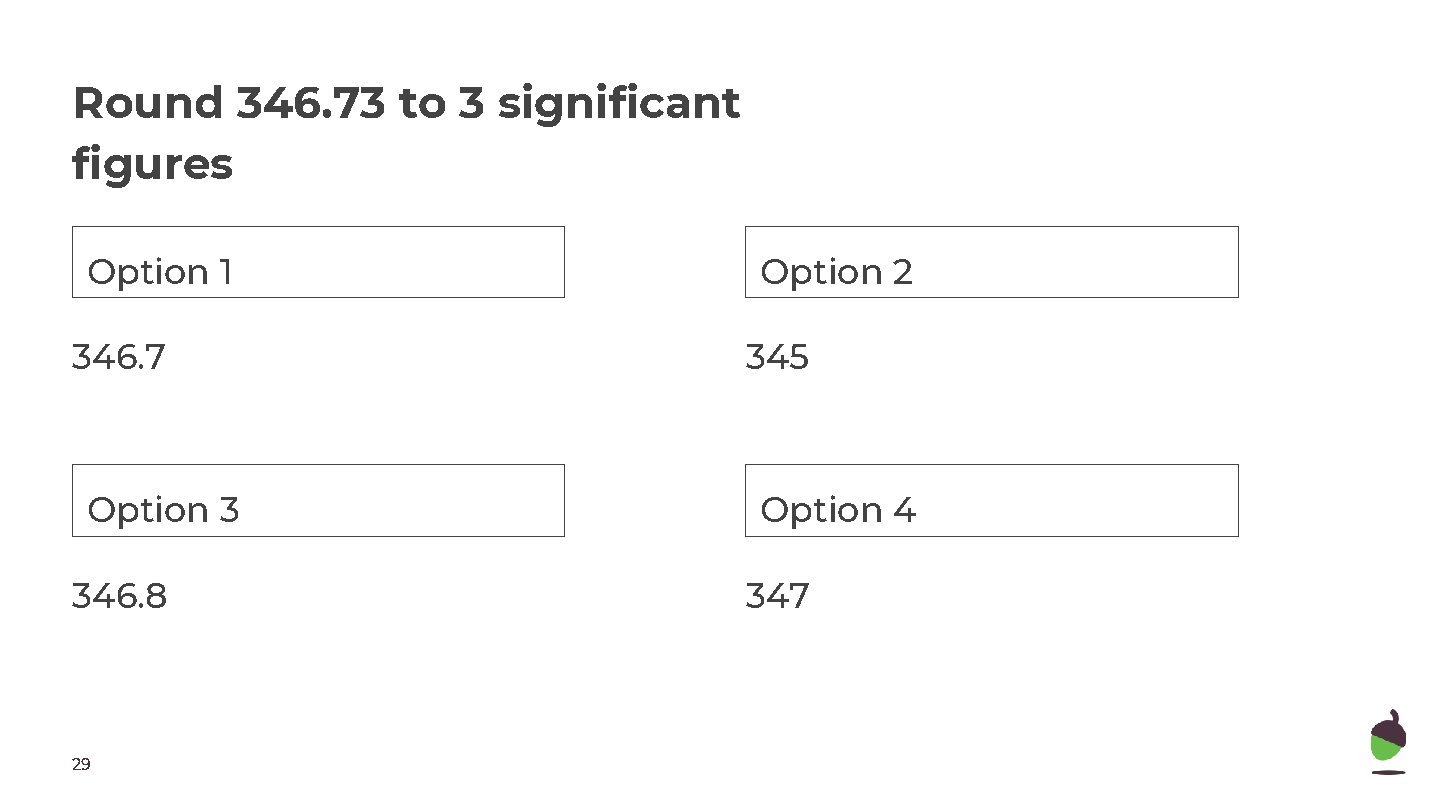
Round 346. 73 to 3 significant figures Option 1 Option 2 346. 7 345 Option 33 Option 44 346. 8 347 29
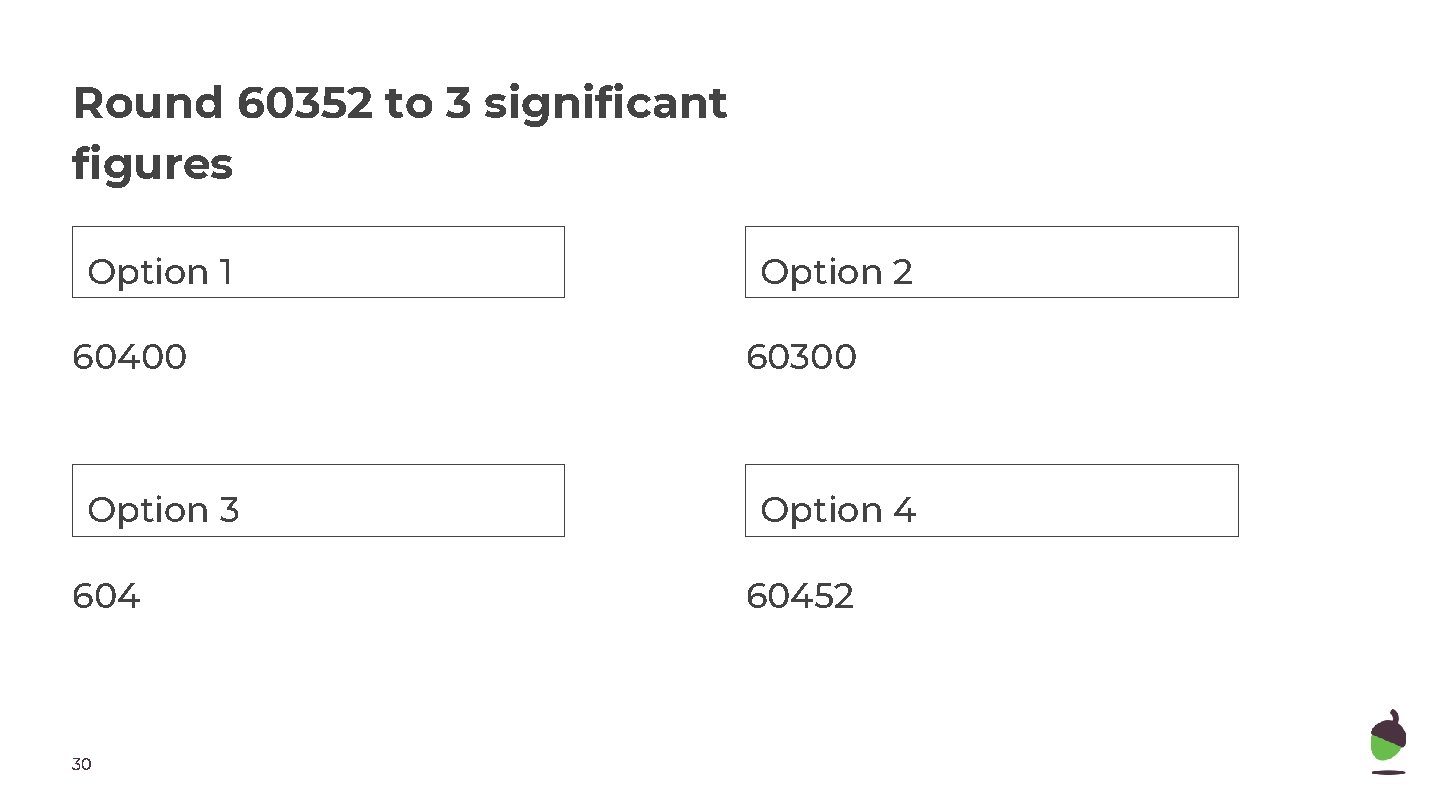
Round 60352 to 3 significant figures Option 1 Option 2 60400 60300 Option 33 Option 44 60452 30
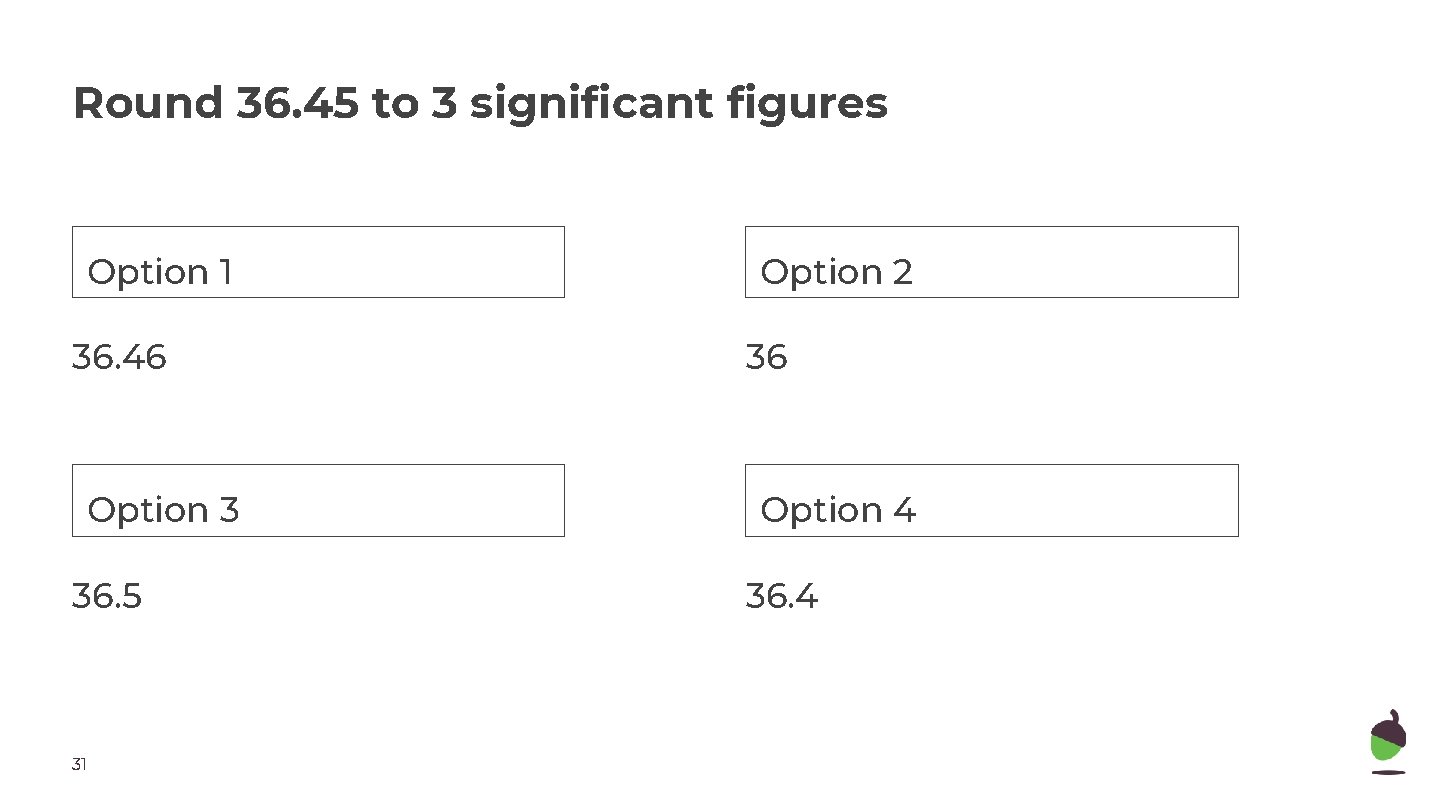
Round 36. 45 to 3 significant figures Option 1 Option 2 36. 46 36 Option 33 Option 44 36. 5 36. 4 31
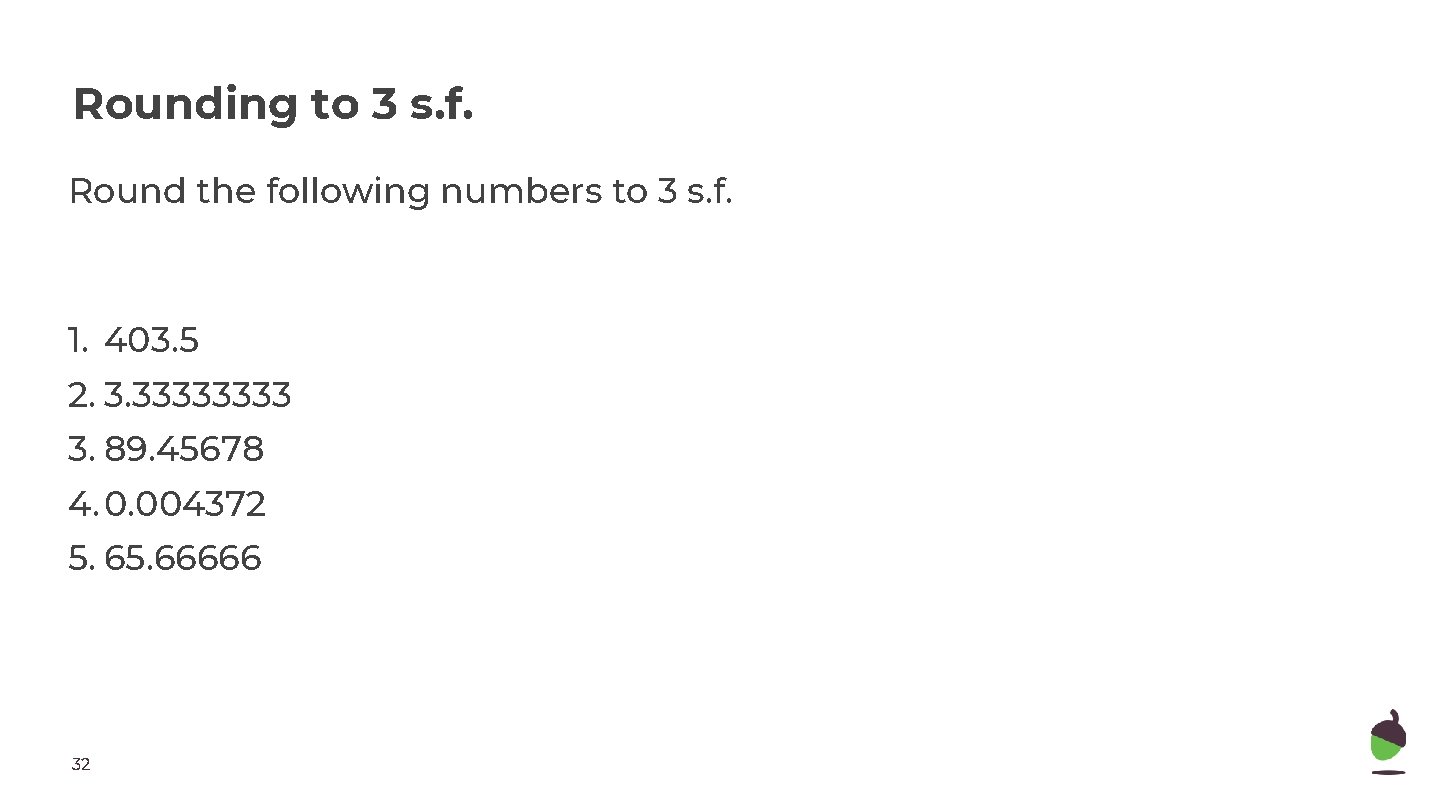
Rounding to 3 s. f. Round the following numbers to 3 s. f. 1. 403. 5 2. 3. 3333 3. 89. 45678 4. 0. 004372 5. 66666 32
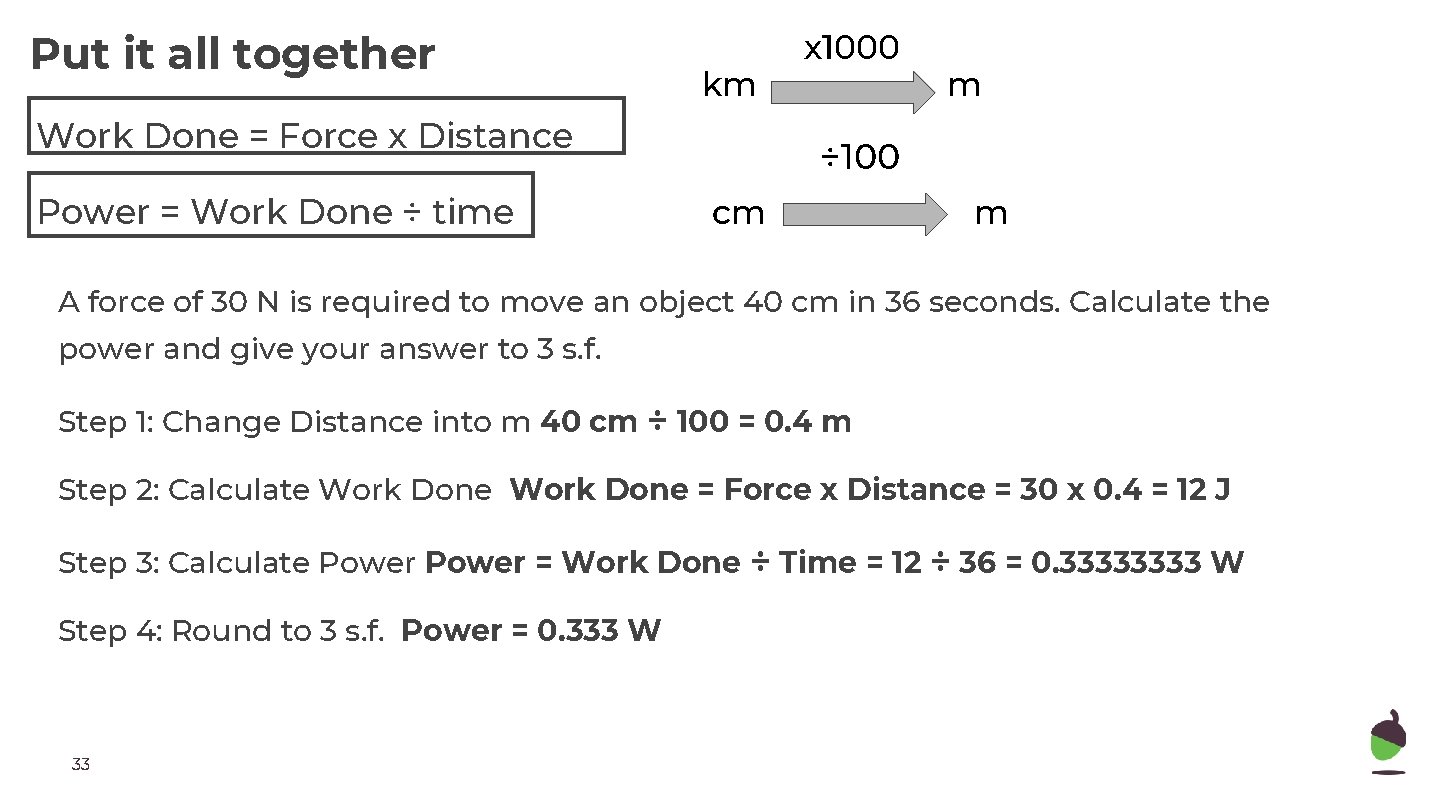
Put it all together km Work Done = Force x Distance Power = Work Done ÷ time x 1000 m ÷ 100 cm m A force of 30 N is required to move an object 40 cm in 36 seconds. Calculate the power and give your answer to 3 s. f. Step 1: Change Distance into m 40 cm ÷ 100 = 0. 4 m Step 2: Calculate Work Done = Force x Distance = 30 x 0. 4 = 12 J Step 3: Calculate Power = Work Done ÷ Time = 12 ÷ 36 = 0. 3333 W Step 4: Round to 3 s. f. Power = 0. 333 W 33
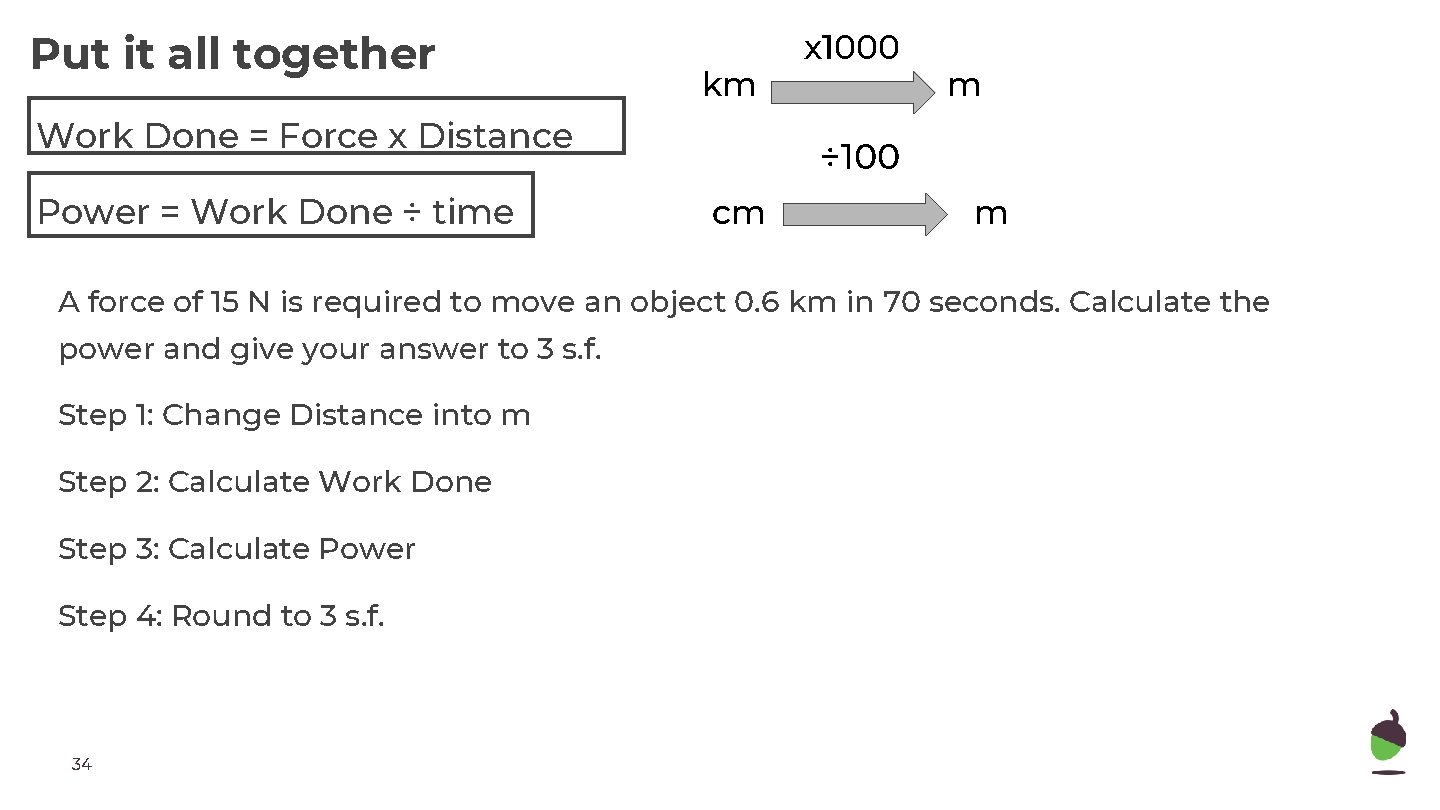
Put it all together km Work Done = Force x Distance Power = Work Done ÷ time x 1000 m ÷ 100 cm m A force of 15 N is required to move an object 0. 6 km in 70 seconds. Calculate the power and give your answer to 3 s. f. Step 1: Change Distance into m Step 2: Calculate Work Done Step 3: Calculate Power Step 4: Round to 3 s. f. 34
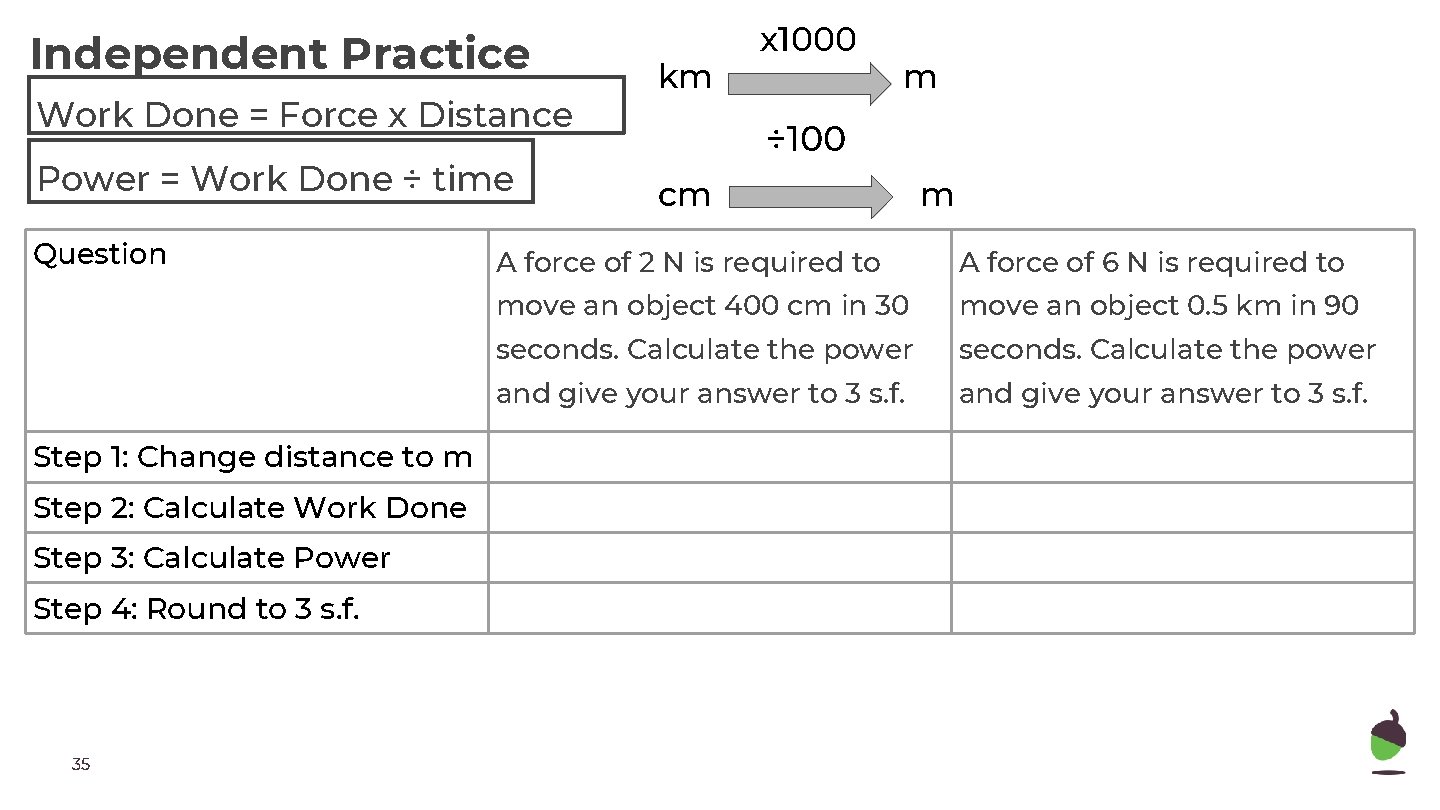
Independent Practice Work Done = Force x Distance Power = Work Done ÷ time Question Step 1: Change distance to m Step 2: Calculate Work Done Step 3: Calculate Power Step 4: Round to 3 s. f. 35 km x 1000 m ÷ 100 cm m A force of 2 N is required to A force of 6 N is required to move an object 400 cm in 30 move an object 0. 5 km in 90 seconds. Calculate the power and give your answer to 3 s. f.
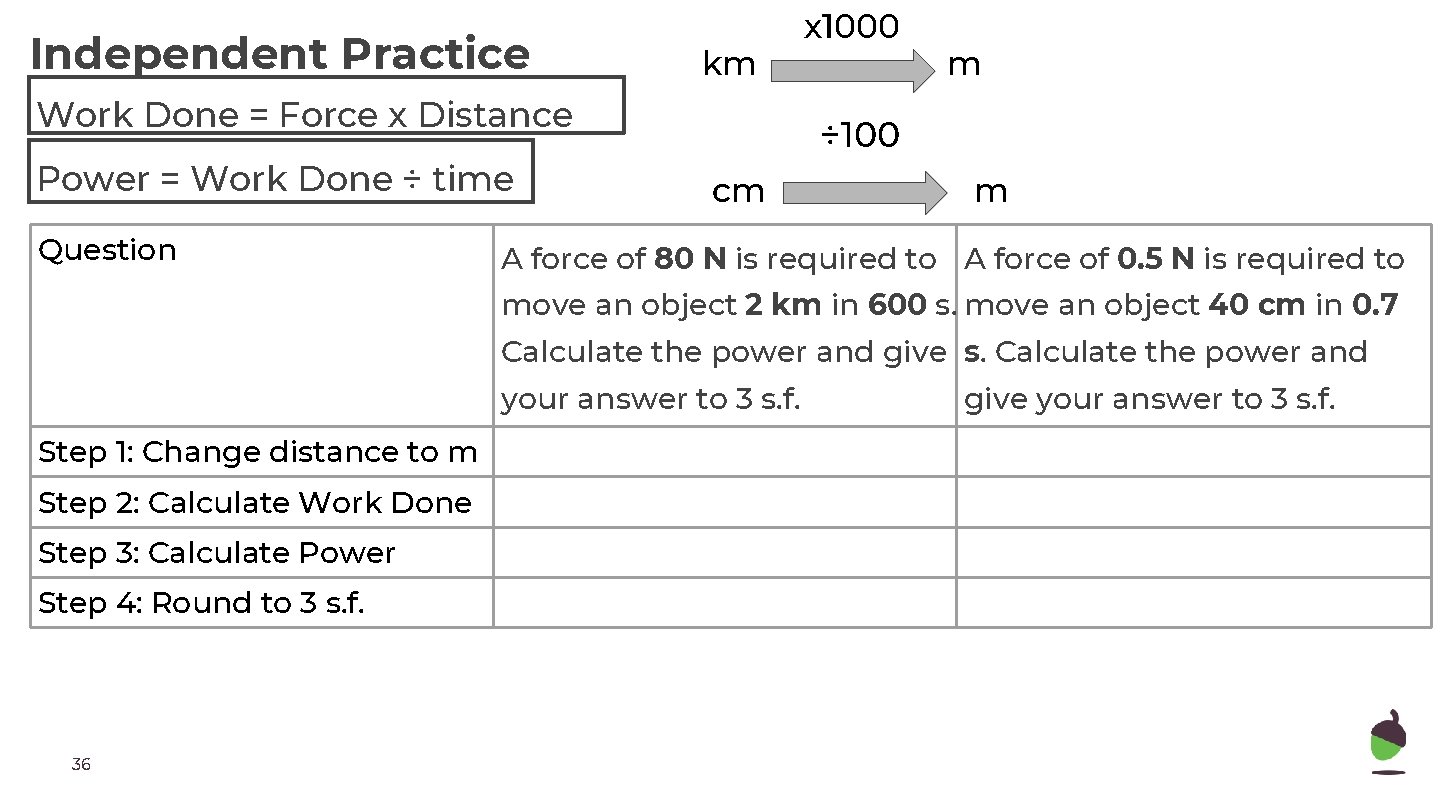
Independent Practice km Work Done = Force x Distance Power = Work Done ÷ time Question x 1000 m ÷ 100 cm m A force of 80 N is required to A force of 0. 5 N is required to move an object 2 km in 600 s. move an object 40 cm in 0. 7 Calculate the power and give s. Calculate the power and your answer to 3 s. f. Step 1: Change distance to m Step 2: Calculate Work Done Step 3: Calculate Power Step 4: Round to 3 s. f. 36 give your answer to 3 s. f.
Well Done! 37