
Lesson 10 Chapter 22 Immunity1 Objectives 1 To
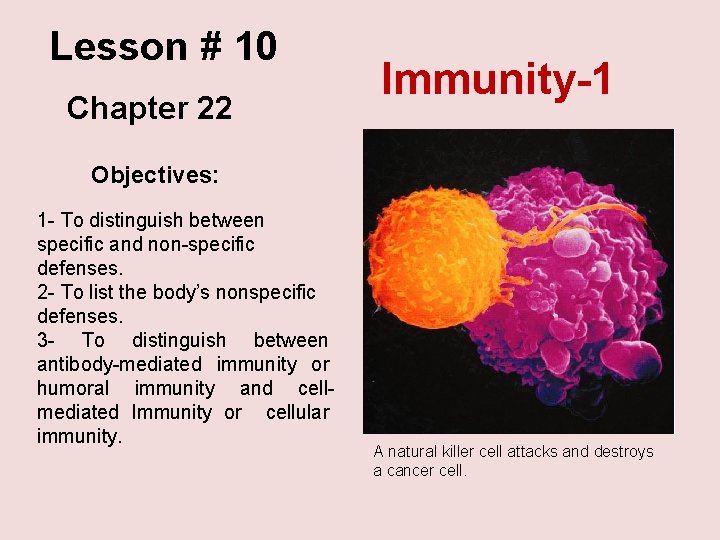
Lesson # 10 Chapter 22 Immunity-1 Objectives: 1 - To distinguish between specific and non-specific defenses. 2 - To list the body’s nonspecific defenses. 3 - To distinguish between antibody-mediated immunity or humoral immunity and cellmediated Immunity or cellular immunity. A natural killer cell attacks and destroys a cancer cell.
The Lymphoid System and Body Defenses 1 - Nonspecific Defenses They do not distinguish one type of threat from another. The response is the same, regardless of the type of invading agent. The protection provided is called nonspecific resistance. 1 - Physical Barriers 5 - Complement 2 - Phagocytes 6 - Inflammatory Response 3 - Immunological Surveillance 7 - Fever 4 - Interferons 2 - Specific Defenses They protect against a specific threat, and are ineffective against a different threat. The protection provided by the specific defenses is called Immunity or specific resistance. The Immunity or specific resistance depends on the activity of specific lymphocytes.
Nonspecific Defenses
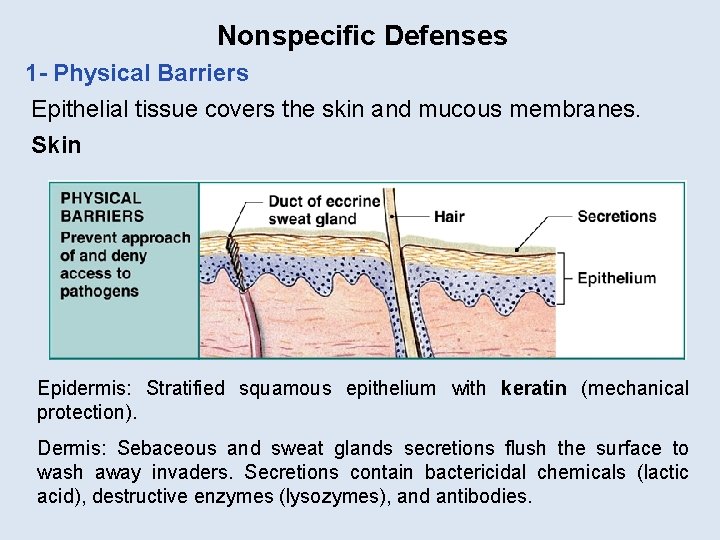
Nonspecific Defenses 1 - Physical Barriers Epithelial tissue covers the skin and mucous membranes. Skin Epidermis: Stratified squamous epithelium with keratin (mechanical protection). Dermis: Sebaceous and sweat glands secretions flush the surface to wash away invaders. Secretions contain bactericidal chemicals (lactic acid), destructive enzymes (lysozymes), and antibodies.
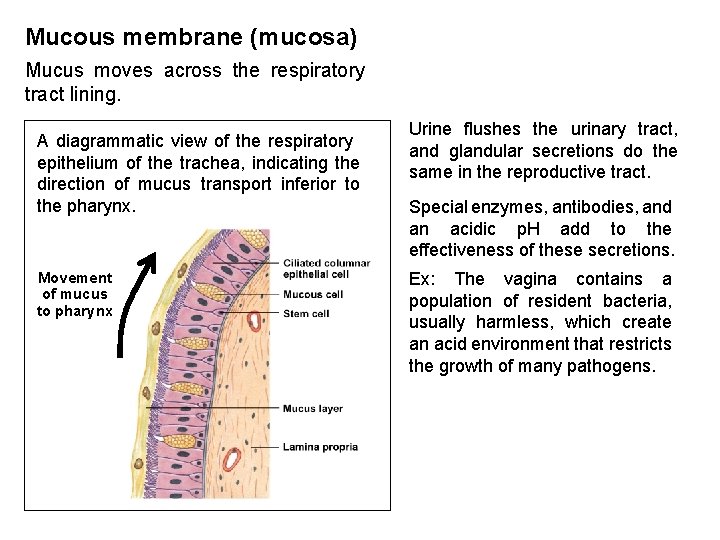
Mucous membrane (mucosa) Mucus moves across the respiratory tract lining. A diagrammatic view of the respiratory epithelium of the trachea, indicating the direction of mucus transport inferior to the pharynx. Movement of mucus to pharynx Urine flushes the urinary tract, and glandular secretions do the same in the reproductive tract. Special enzymes, antibodies, and an acidic p. H add to the effectiveness of these secretions. Ex: The vagina contains a population of resident bacteria, usually harmless, which create an acid environment that restricts the growth of many pathogens.
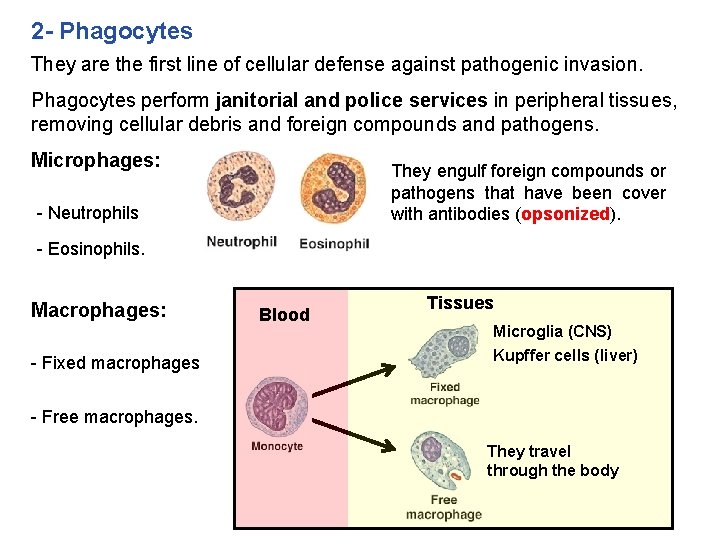
2 - Phagocytes They are the first line of cellular defense against pathogenic invasion. Phagocytes perform janitorial and police services in peripheral tissues, removing cellular debris and foreign compounds and pathogens. Microphages: They engulf foreign compounds or pathogens that have been cover with antibodies (opsonized). - Neutrophils - Eosinophils. Macrophages: - Fixed macrophages Blood Tissues Microglia (CNS) Kupffer cells (liver) - Free macrophages. They travel through the body
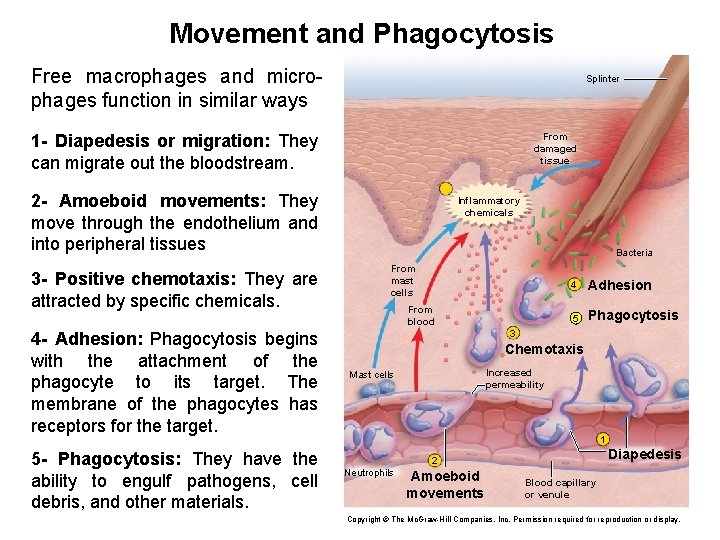
Movement and Phagocytosis Free macrophages and microphages function in similar ways Splinter 1 - Diapedesis or migration: They can migrate out the bloodstream. From damaged tissue 2 - Amoeboid movements: They move through the endothelium and into peripheral tissues 3 - Positive chemotaxis: They are attracted by specific chemicals. 4 - Adhesion: Phagocytosis begins with the attachment of the phagocyte to its target. The membrane of the phagocytes has receptors for the target. 5 - Phagocytosis: They have the ability to engulf pathogens, cell debris, and other materials. Inflammatory chemicals Bacteria From mast cells From blood 4 Adhesion 5 Phagocytosis 3 Chemotaxis Increased permeability Mast cells 1 Neutrophils Diapedesis 2 Amoeboid movements Blood capillary or venule Copyright © The Mc. Graw-Hill Companies, Inc. Permission required for reproduction or display.
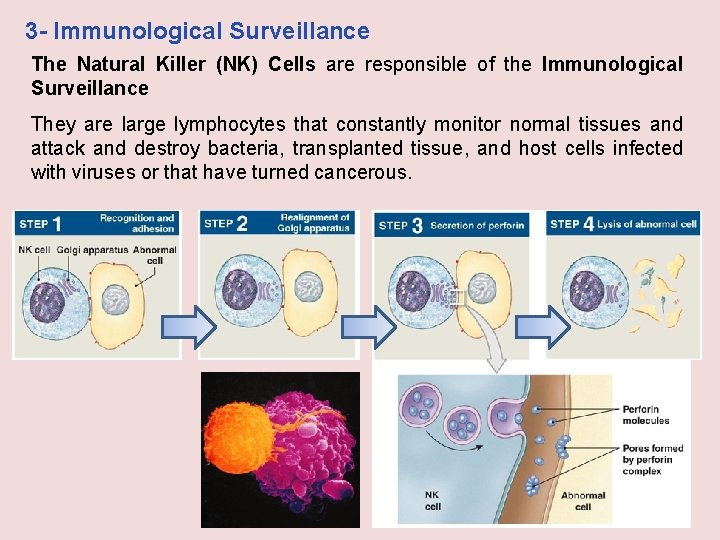
3 - Immunological Surveillance The Natural Killer (NK) Cells are responsible of the Immunological Surveillance They are large lymphocytes that constantly monitor normal tissues and attack and destroy bacteria, transplanted tissue, and host cells infected with viruses or that have turned cancerous.
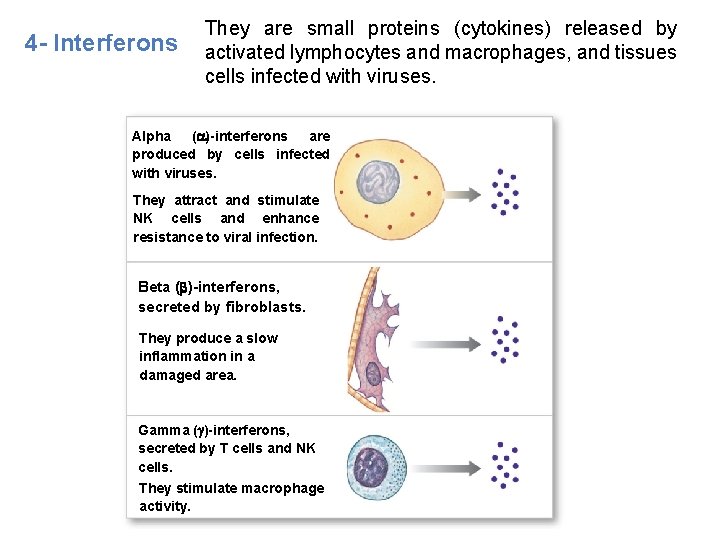
4 - Interferons They are small proteins (cytokines) released by activated lymphocytes and macrophages, and tissues cells infected with viruses. Alpha ( )-interferons are produced by cells infected with viruses. They attract and stimulate NK cells and enhance resistance to viral infection. Beta ( )-interferons, secreted by fibroblasts. They produce a slow inflammation in a damaged area. Gamma ( )-interferons, secreted by T cells and NK cells. They stimulate macrophage activity.
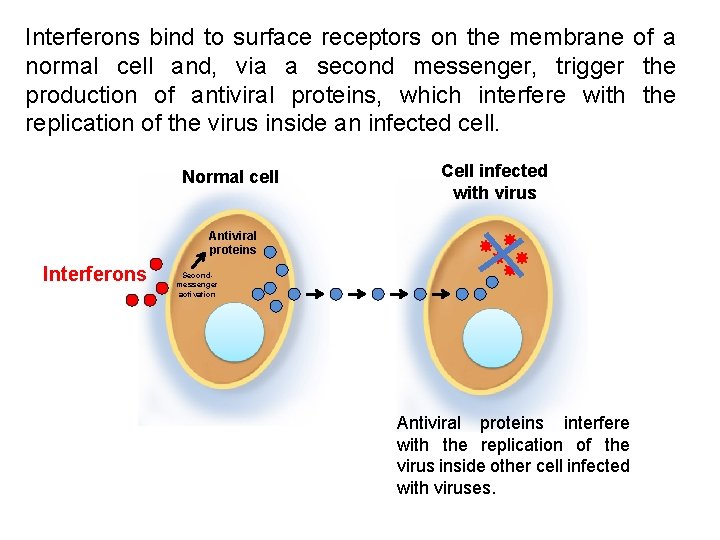
Interferons bind to surface receptors on the membrane of a normal cell and, via a second messenger, trigger the production of antiviral proteins, which interfere with the replication of the virus inside an infected cell. Normal cell Cell infected with virus Antiviral proteins Interferons Secondmessenger activation Antiviral proteins interfere with the replication of the virus inside other cell infected with viruses.
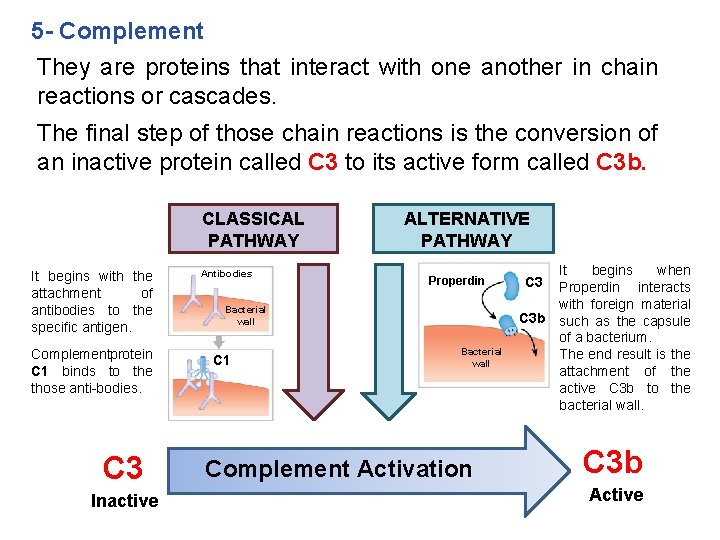
5 - Complement They are proteins that interact with one another in chain reactions or cascades. The final step of those chain reactions is the conversion of an inactive protein called C 3 to its active form called C 3 b. CLASSICAL PATHWAY It begins with the attachment of antibodies to the specific antigen. Complementprotein C 1 binds to the those anti-bodies. C 3 Inactive Antibodies ALTERNATIVE PATHWAY Properdin Bacterial wall C 1 Bacterial wall Complement Activation It begins when Properdin interacts with foreign material C 3 b such as the capsule of a bacterium. The end result is the attachment of the active C 3 b to the bacterial wall. C 3 b Active
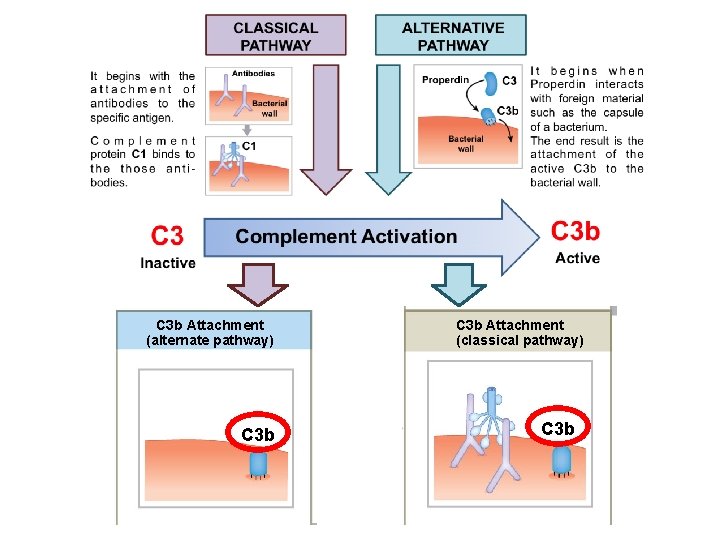
C 3 b Attachment (alternate pathway) C 3 b Attachment (classical pathway) C 3 b
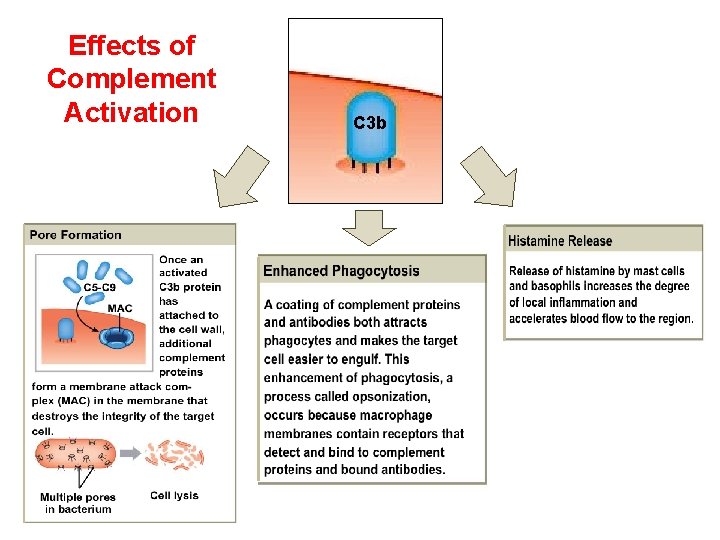
Effects of Complement Activation C 3 b
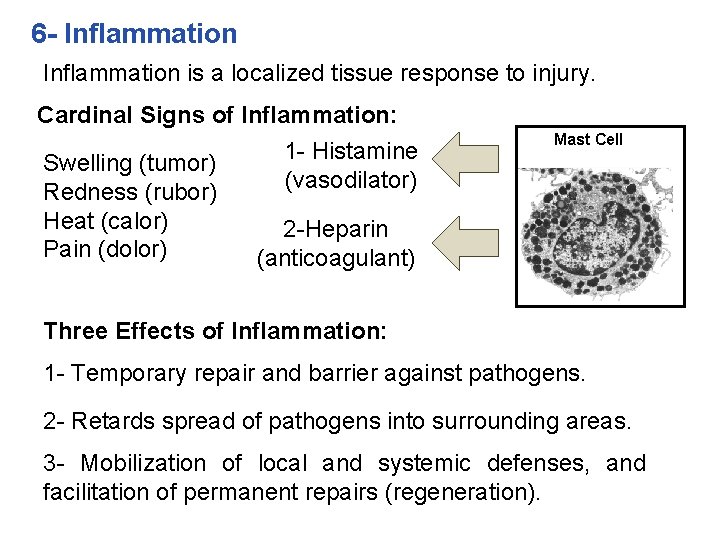
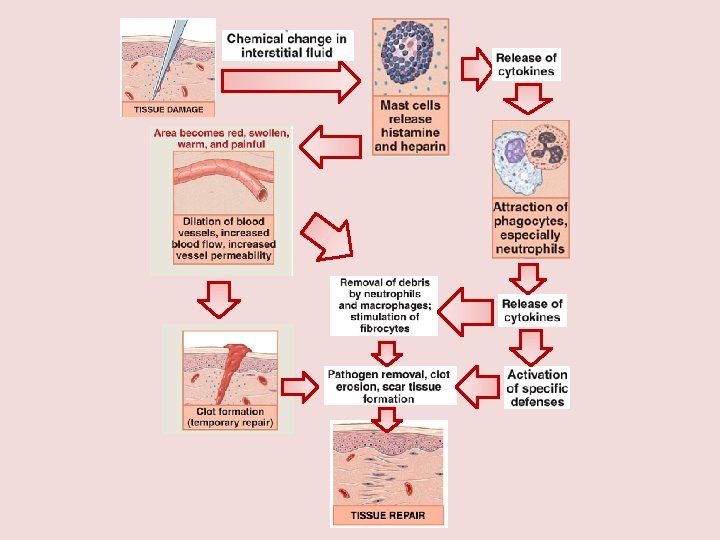
6 - Inflammation is a localized tissue response to injury. Cardinal Signs of Inflammation: Swelling (tumor) Redness (rubor) Heat (calor) Pain (dolor) 1 - Histamine (vasodilator) Mast Cell 2 -Heparin (anticoagulant) Three Effects of Inflammation: 1 - Temporary repair and barrier against pathogens. 2 - Retards spread of pathogens into surrounding areas. 3 - Mobilization of local and systemic defenses, and facilitation of permanent repairs (regeneration).
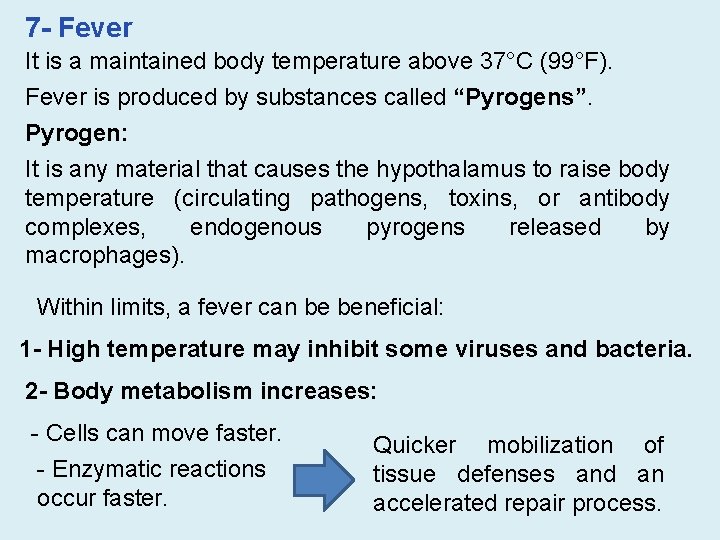
7 - Fever It is a maintained body temperature above 37°C (99°F). Fever is produced by substances called “Pyrogens”. Pyrogen: It is any material that causes the hypothalamus to raise body temperature (circulating pathogens, toxins, or antibody complexes, endogenous pyrogens released by macrophages). Within limits, a fever can be beneficial: 1 - High temperature may inhibit some viruses and bacteria. 2 - Body metabolism increases: - Cells can move faster. - Enzymatic reactions occur faster. Quicker mobilization of tissue defenses and an accelerated repair process.
Adaptive (specific) Defenses
Specific Defenses (Immunity) The immune system has the ability to recognize substances that are not normally present in the body. When these substances trigger a response of the immune system they are called antigens. Antigen: Any substance that triggers a response of the immune system. - Foreign substances. Antigens - Substances, which are normally present in the body, but that have been modified or altered. All cells and tissues of the body contain substance that can be potentially antigenic, but they normally do not stimulate the immune system, unless they have been modified. The immune system is said to exhibit tolerance to those substances.
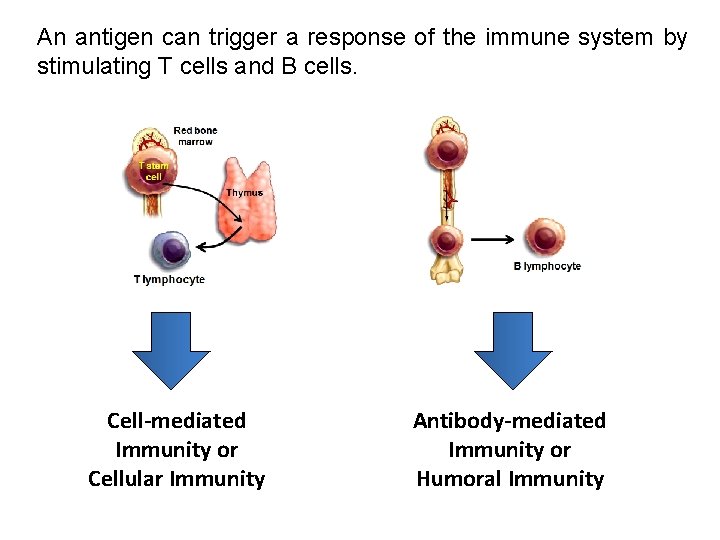
An antigen can trigger a response of the immune system by stimulating T cells and B cells. Cell-mediated Immunity or Cellular Immunity Antibody-mediated Immunity or Humoral Immunity
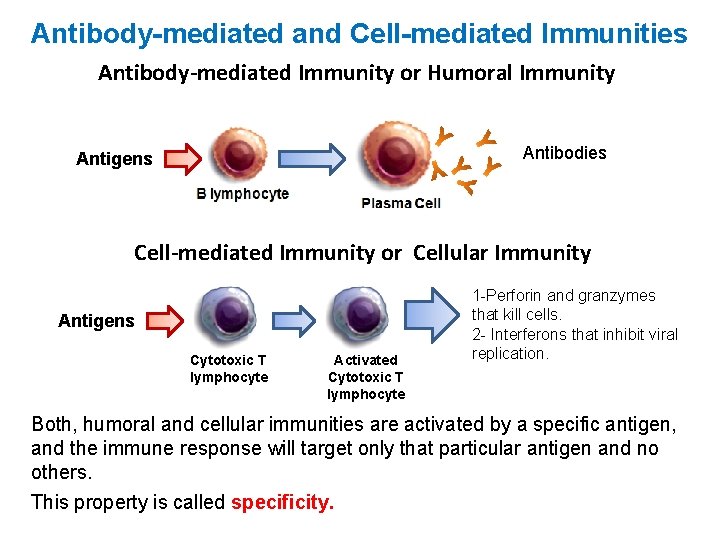
Antibody-mediated and Cell-mediated Immunities Antibody-mediated Immunity or Humoral Immunity Antibodies Antigens Cell-mediated Immunity or Cellular Immunity Antigens Cytotoxic T lymphocyte Activated Cytotoxic T lymphocyte 1 -Perforin and granzymes that kill cells. 2 - Interferons that inhibit viral replication. Both, humoral and cellular immunities are activated by a specific antigen, and the immune response will target only that particular antigen and no others. This property is called specificity.
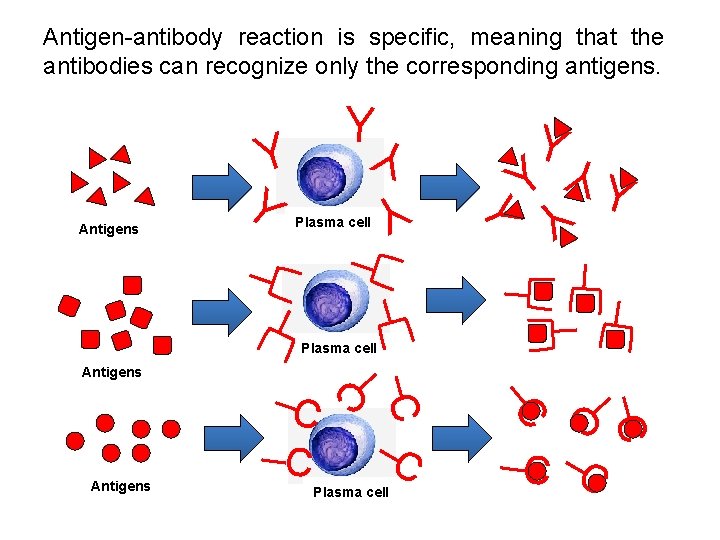
Antigen-antibody reaction is specific, meaning that the antibodies can recognize only the corresponding antigens. Y Y Y Y Plasma cell Y Antigens Y Y Y Plasma cell C C C C Antigens
- Slides: 21