
Lesson 1 Waves of the electromagnetic spectrum SC


- Slides: 20
* Lesson 1: Waves of the electromagnetic spectrum
*SC. 7. P. 10. 1 -Illustrate that the suns energy arrives as radiation with a wide range of wavelengths, including infrared, visible light, and ultraviolet. White light is made up of a spectrum of many different colors. *SC. 7. N. 1. 3 - Distinguish between an experiment and other forms of scientific investigation and explain that not all scientific knowledge is derived from experimentation. *SC. 7. N. 1. 5 - Describe methods used in the pursuit of a scientific explanation as seen in different fields of science such as biology, geology, and physics. *LA. 7. 2. 2. 3 -The student will organize information to show understanding *
Video
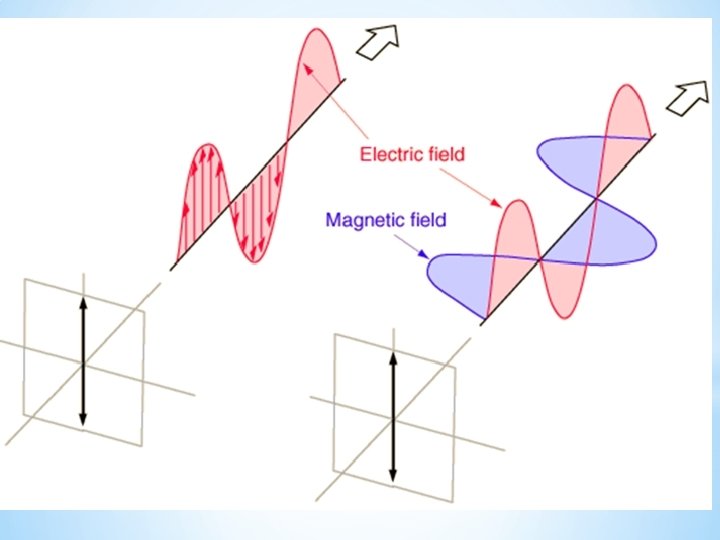
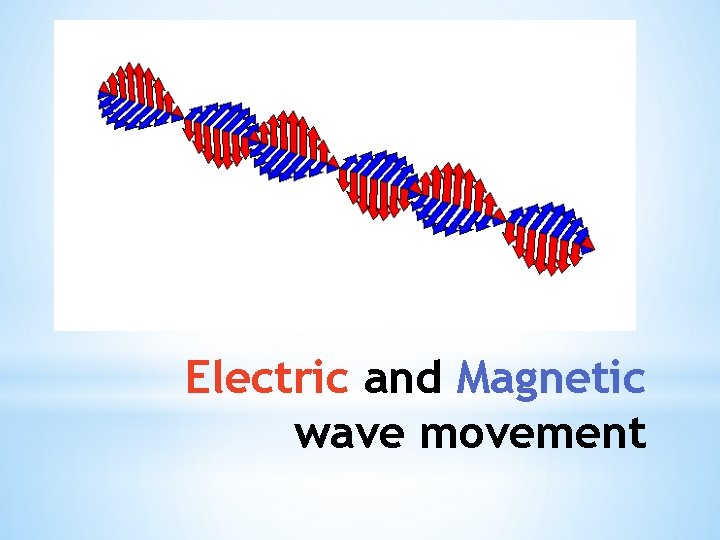
*Definition: a disturbance that involves the transfer of electric and magnetic energy *Vibrating electric and magnetic fields that move at the speed of light *Made up of two fields at right angles of each other
Electric and Magnetic wave movement
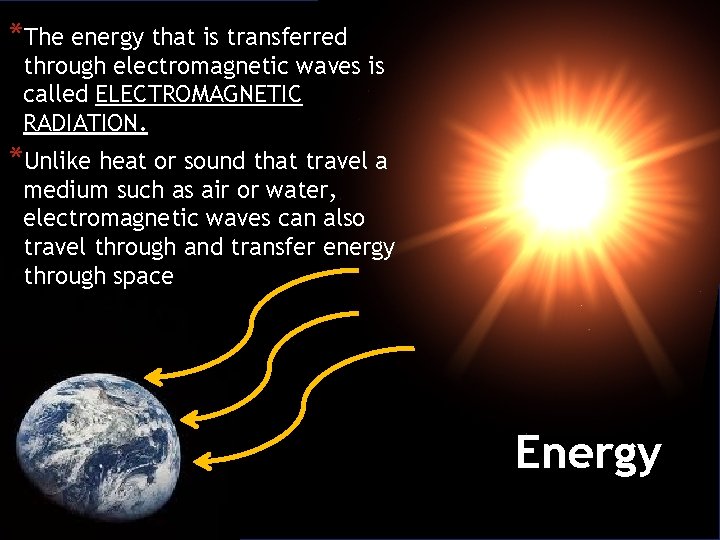
*The energy that is transferred through electromagnetic waves is called ELECTROMAGNETIC RADIATION. *Unlike heat or sound that travel a medium such as air or water, electromagnetic waves can also travel through and transfer energy through space Energy
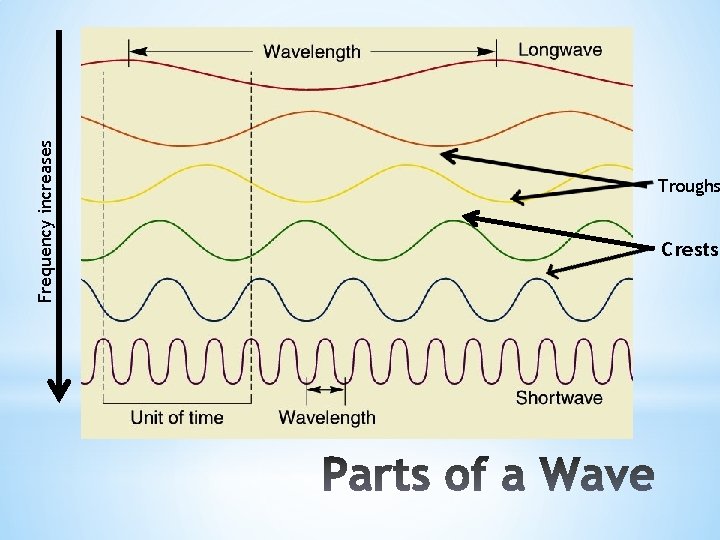
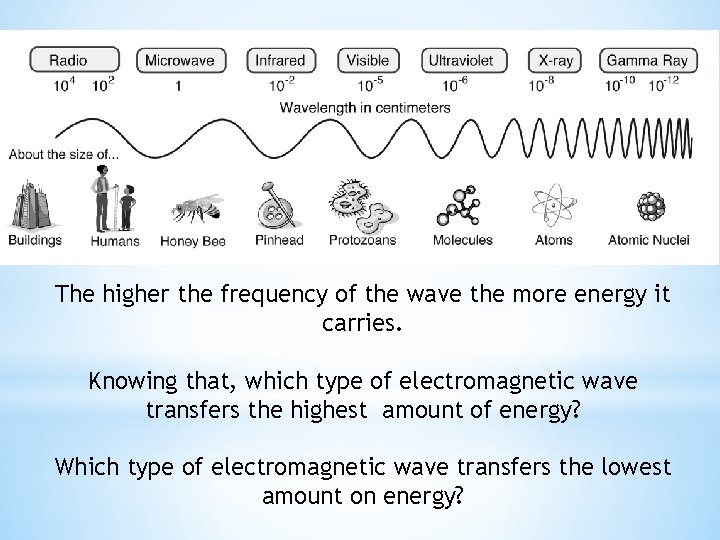
*The distance between the crest of one wave and the crest of the next wave is called the wavelength. *The frequency of a wave is the number of waves that pass a given point in a certain amount of time. *Electromagnetic waves travel at the same speed in a vacuum, but they have different wavelengths and different frequencies.
Frequency increases Troughs Crests
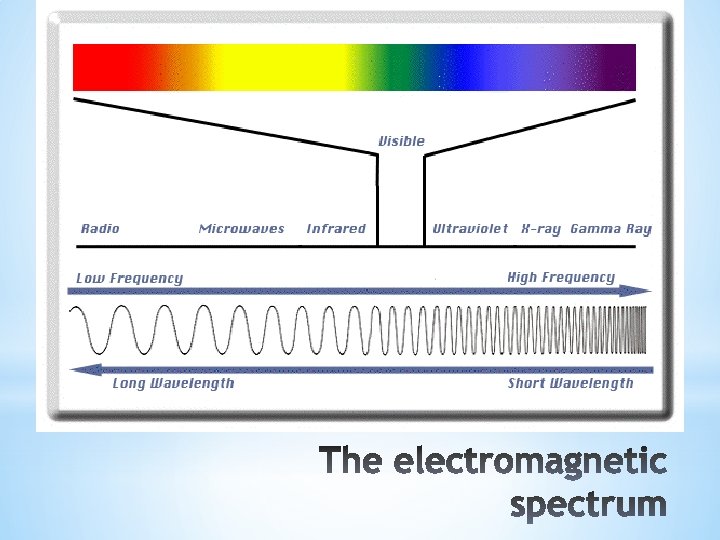
*The complete range of electromagnetic waves placed in order of increasing frequency is called the Electromagnetic spectrum. *Radio waves<microwaves< infrared rays< visible light< ultraviolet rays< x-rays< gamma rays
The higher the frequency of the wave the more energy it carries. Knowing that, which type of electromagnetic wave transfers the highest amount of energy? Which type of electromagnetic wave transfers the lowest amount on energy?
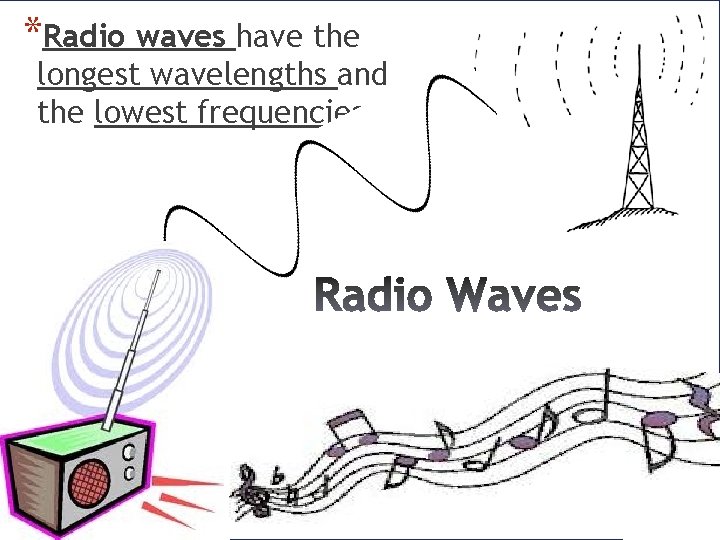
*Radio waves have the longest wavelengths and the lowest frequencies.
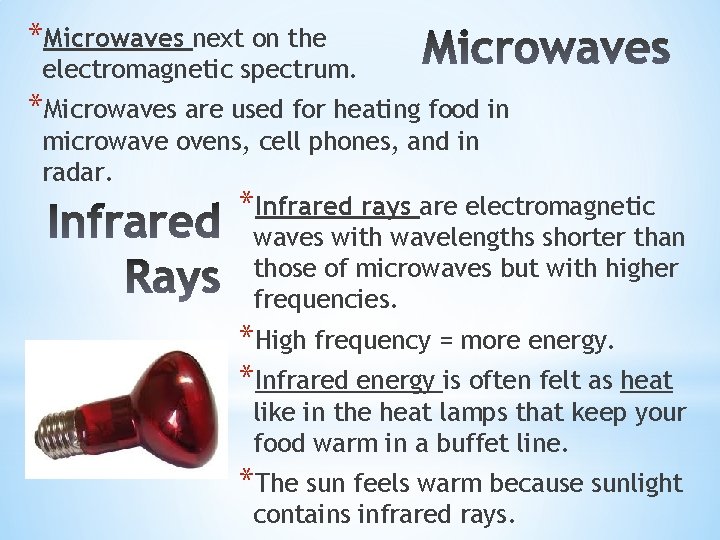
*Microwaves next on the electromagnetic spectrum. *Microwaves are used for heating food in microwave ovens, cell phones, and in radar. *Infrared rays are electromagnetic waves with wavelengths shorter than those of microwaves but with higher frequencies. *High frequency = more energy. *Infrared energy is often felt as heat like in the heat lamps that keep your food warm in a buffet line. *The sun feels warm because sunlight contains infrared rays.
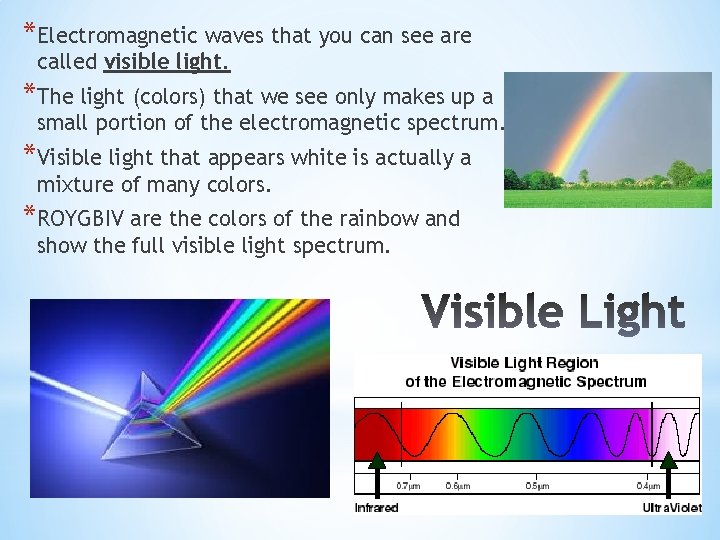
*Electromagnetic waves that you can see are called visible light. *The light (colors) that we see only makes up a small portion of the electromagnetic spectrum. *Visible light that appears white is actually a mixture of many colors. *ROYGBIV are the colors of the rainbow and show the full visible light spectrum.
*UV rays have shorter wavelengths but higher frequencies than visible light. *The frequency (energy) from UV rays is so high that long and frequent exposure can damage and kill living skin cells. Aka: skin cancer *However some UV ray exposure is healthy and helps produce vitamin D and healthy bones and teeth.
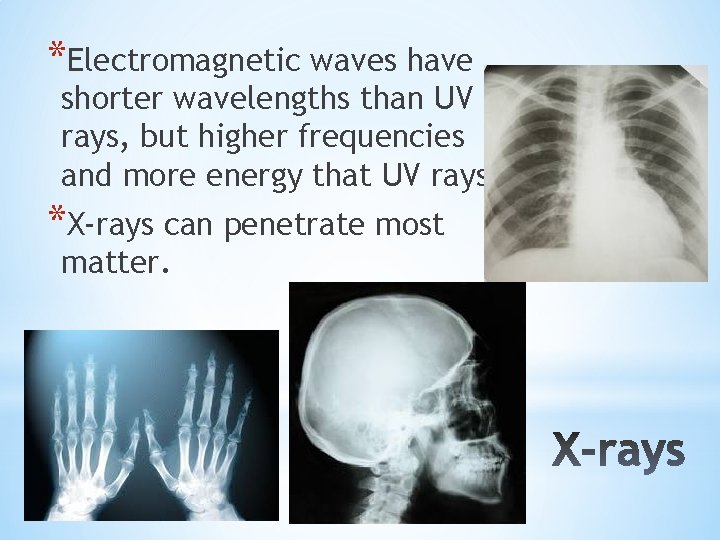
*Electromagnetic waves have shorter wavelengths than UV rays, but higher frequencies and more energy that UV rays. *X-rays can penetrate most matter.
*Gamma rays have the shortest wavelengths and the highest frequencies and transfer the most energy. *Gamma rays are often used in medicine to target and kill cancer cells in the human body. *
*Size of the spectrum * http: //player. discoveryeducation. com/index. cf m? guid. Asset. Id=B 7 E 9212 E-7 EEB-45 E 1 -AD 7182 C 5 B 386 C 007
*hinderthemnot. com *rovupay. comyr. com *homeandlearn. co. uk *profizabava. cz *sammyholmes. wikispaces. com *lbl. gov *sci. uidaho. edu *ledlighthydro. blogspot. com *buzzle. com *science. hq. nasa. gov *mesotheliomatreatmentcenters. org *