
Lesson 1 robertcrown org Which two regions of

Lesson 1 robertcrown. org
Which two regions of the brain are most involved in making decisions? A. ) Cerebral cortex and brain stem B. ) Occipital and parietal lobes C. ) Limbic system and prefrontal cortex D. ) Not sure
Why do teens tend to be more impulsive and make more risky decisions than adults? A. ) Their brain is smaller than an adult brain B. ) Their limbic system is more developed C. ) Their prefrontal cortex is more developed D. ) Not sure
Which of the following questions might an adult be more likely to ask when making a decision? A. ) What might my friends think? B. ) Will this affect my job? C. ) Is this going to make me happy? D. ) How can I make this happen now? E. ) Not sure
Goals • Understand the regions of the brain involved in decision-making • Recognize the differences between the teen and adult brains • Compare and contrast the decision-making process in teens versus adults

Instincts vs. Decisions Pink = Prefrontal Cortex Green = Limbic System
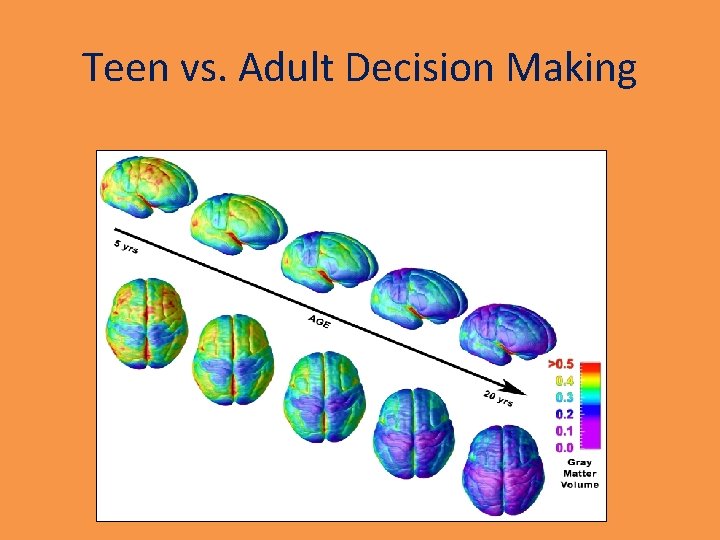
Teen vs. Adult Decision Making
Which two regions of the brain are most involved in making decisions? A. ) Cerebral cortex and brain stem B. ) Occipital and parietal lobes C. ) Limbic system and prefrontal cortex D. ) Not sure
Why do teens tend to be more impulsive and make more risky decisions than adults? A. ) Their brain is smaller than an adult brain B. ) Their limbic system is more developed C. ) Their prefrontal cortex is more developed D. ) Not sure
Which of the following questions might an adult be more likely to ask when making a decision? A. ) What might my friends think? B. ) Will this affect my job? C. ) Is this going to make me happy? D. ) How can I make this happen now? E. ) Not sure
What we learned! • Understand the regions of the brain involved in decision-making • Recognize the differences between the teen and adult brains • Compare and contrast the decision-making process in teens versus adults
- Slides: 11