
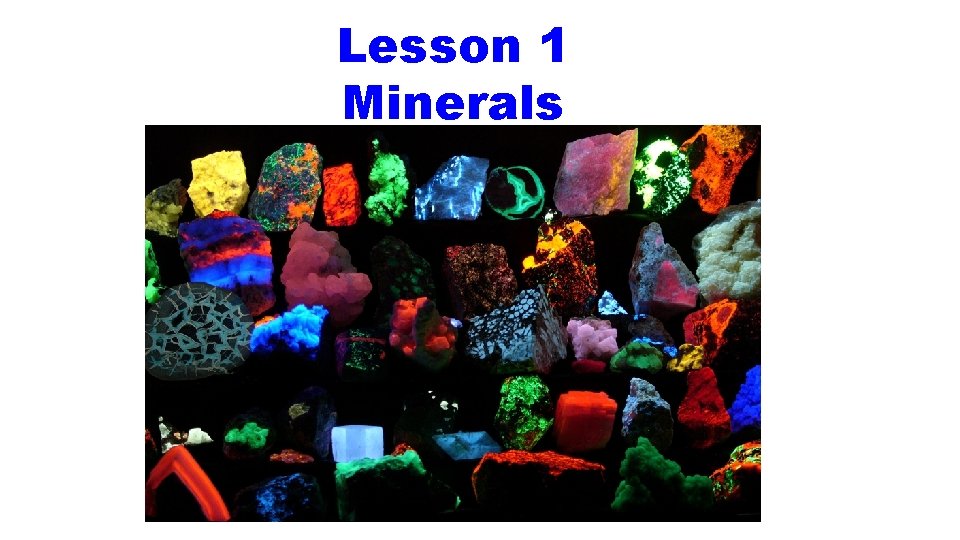
Lesson 1 Minerals WHAT IS A MINERAL Mineral
- Slides: 22
Lesson 1 Minerals
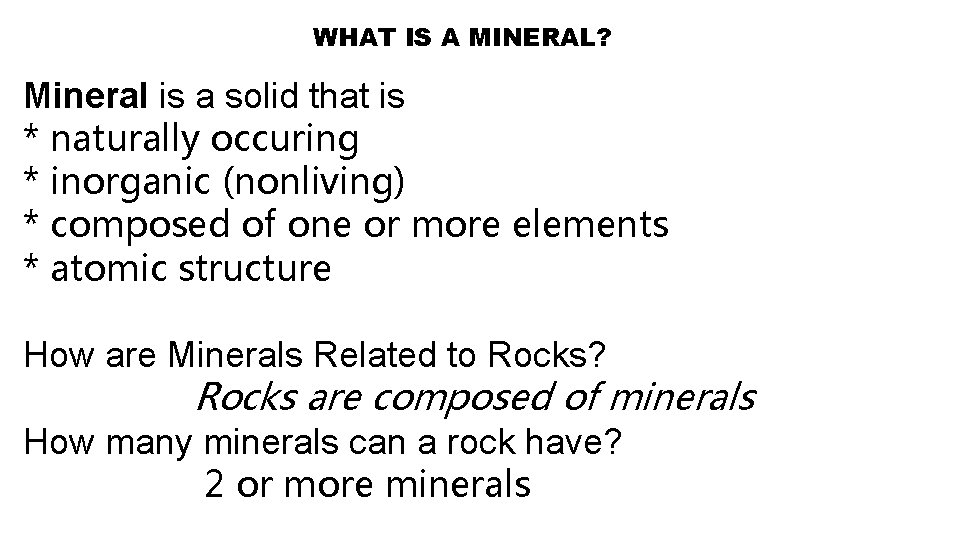
WHAT IS A MINERAL? Mineral is a solid that is * naturally occuring * inorganic (nonliving) * composed of one or more elements * atomic structure How are Minerals Related to Rocks? Rocks are composed of minerals How many minerals can a rock have? 2 or more minerals
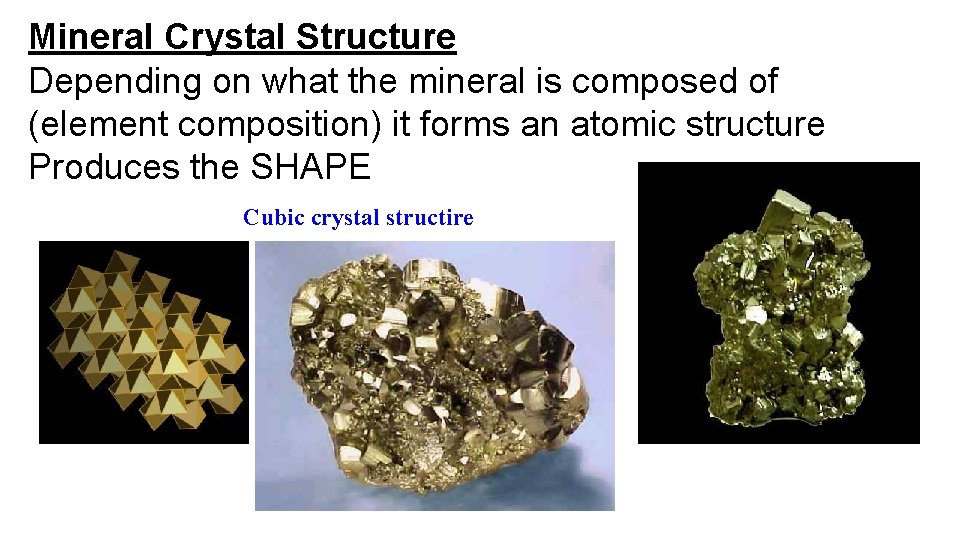
Mineral Crystal Structure Depending on what the mineral is composed of (element composition) it forms an atomic structure Produces the SHAPE Cubic crystal structire
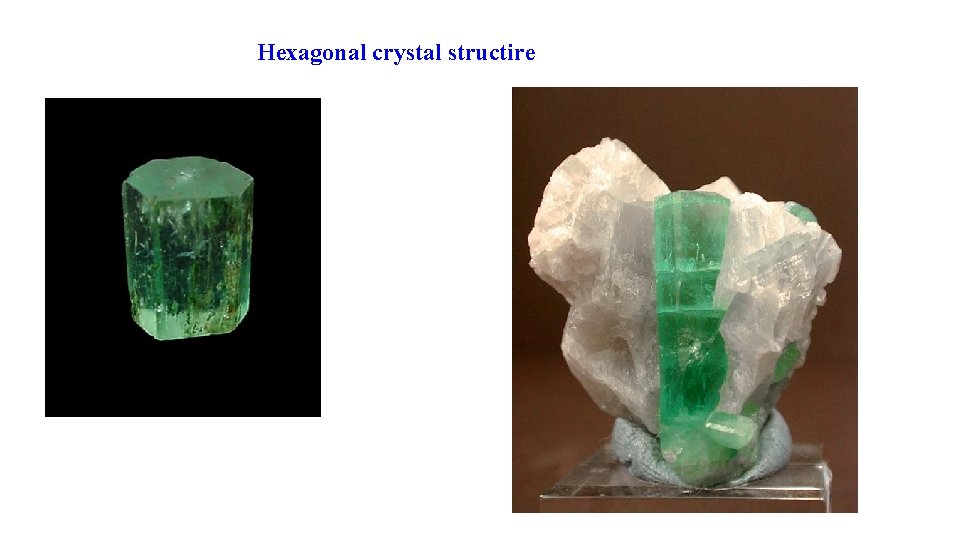
Hexagonal crystal structire
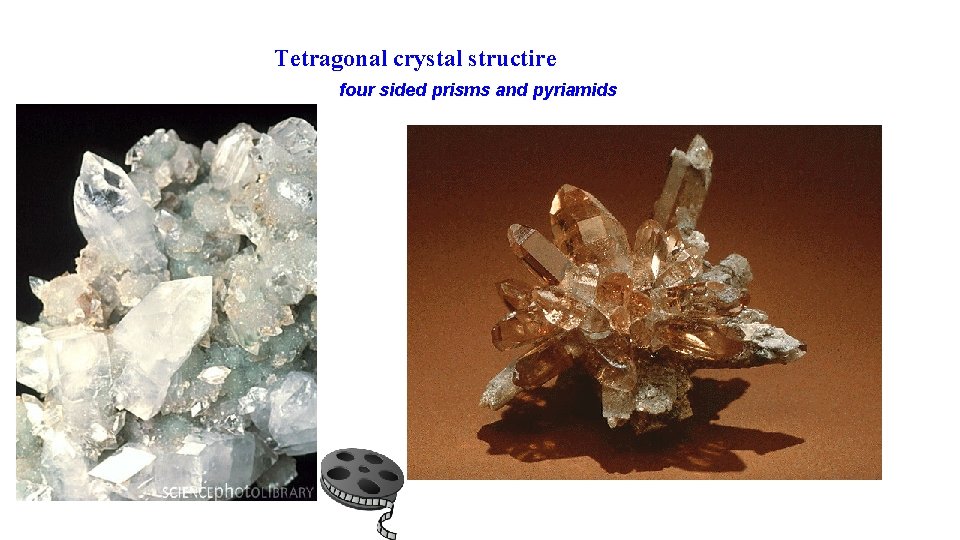
Tetragonal crystal structire four sided prisms and pyriamids
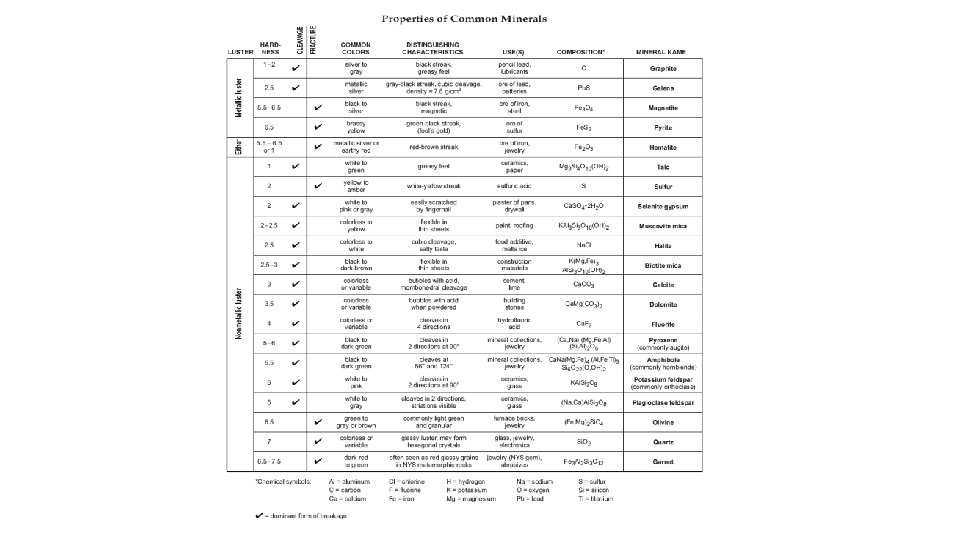
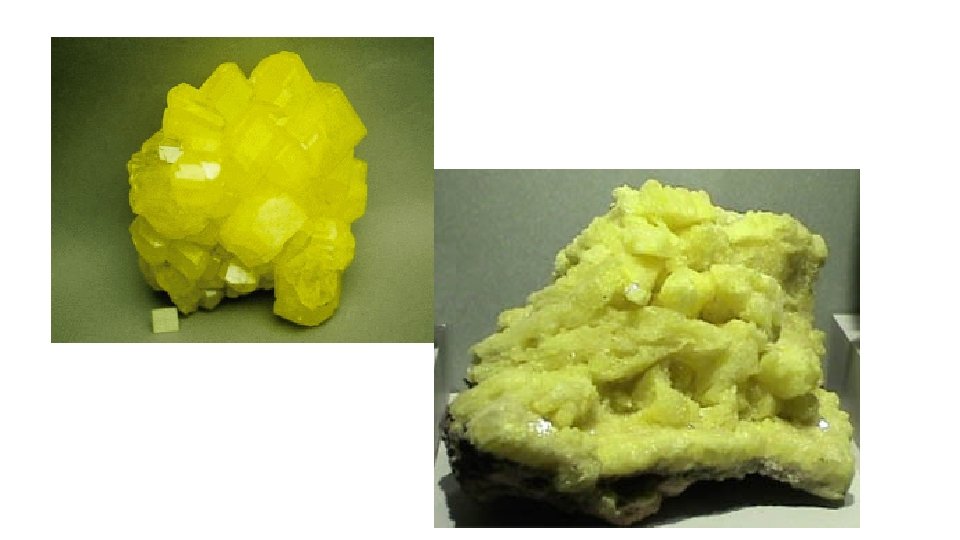
Mineral Properties and Identification 1. Color can not be used by itself to identify because minerals share common colors Are there exceptions to identifying by just "Color"? YES! Sulfur is the only BRIGHT YELLOW mineral
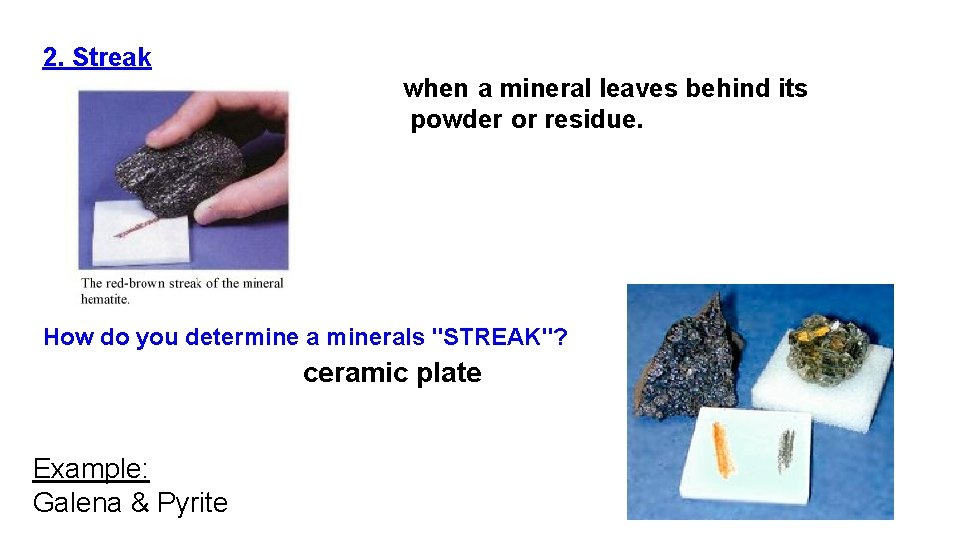
2. Streak when a mineral leaves behind its powder or residue. How do you determine a minerals "STREAK"? ceramic plate Example: Galena & Pyrite
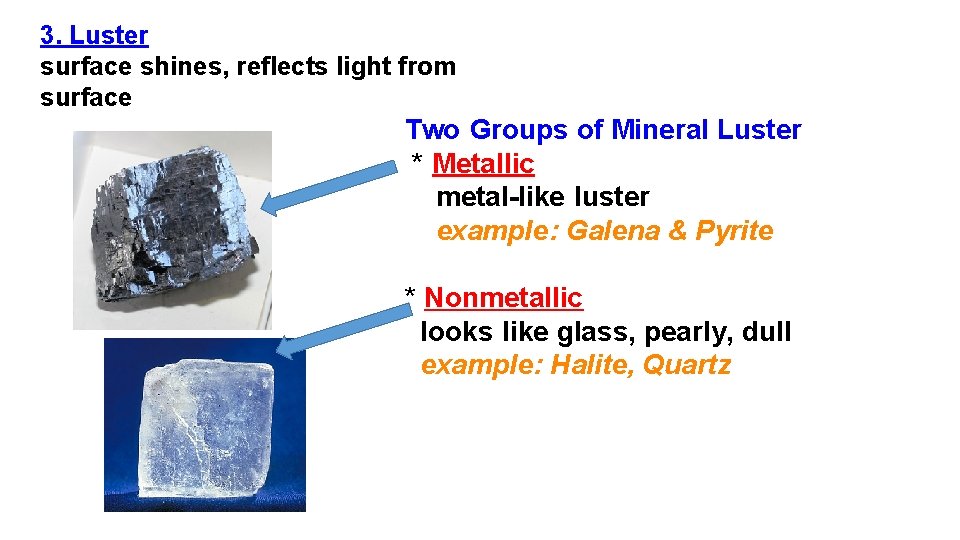
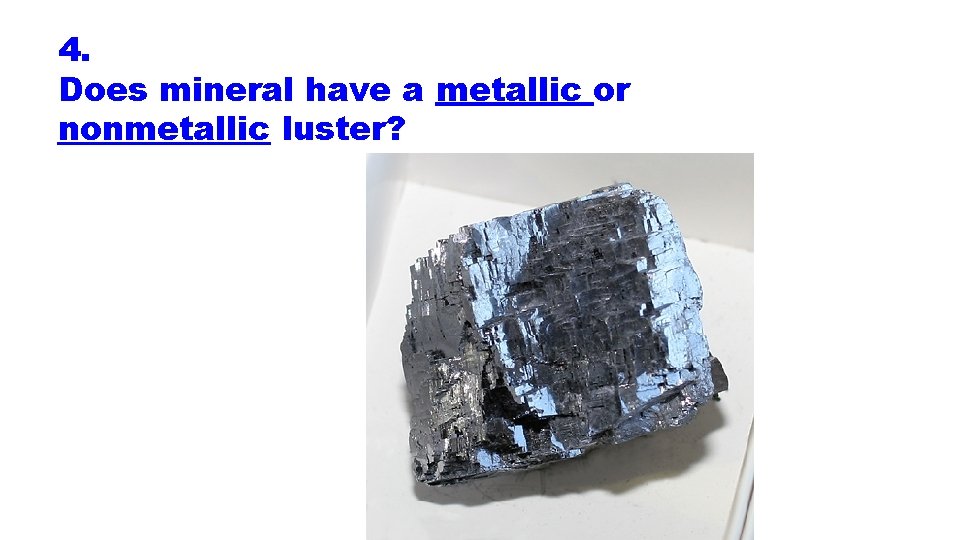
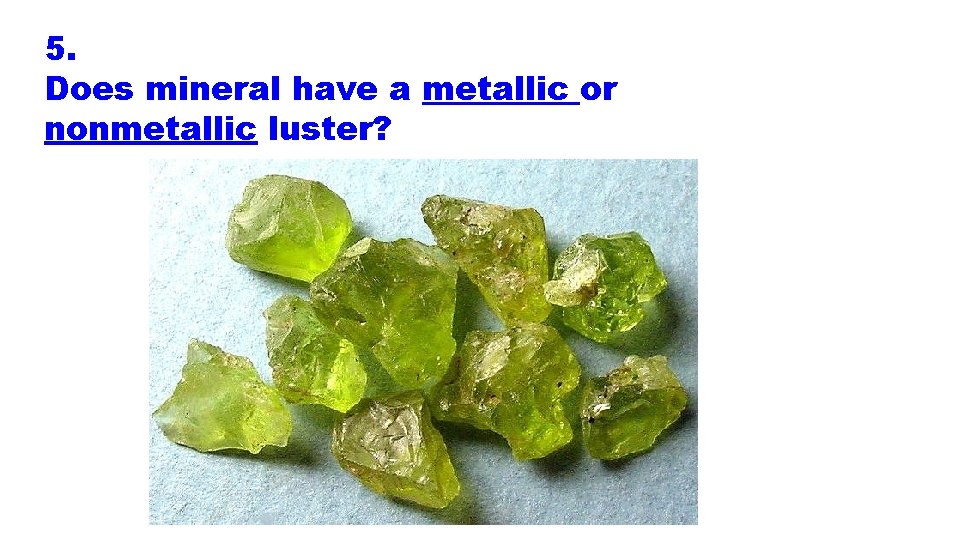
3. Luster surface shines, reflects light from surface Two Groups of Mineral Luster * Metallic metal-like luster example: Galena & Pyrite * Nonmetallic looks like glass, pearly, dull example: Halite, Quartz
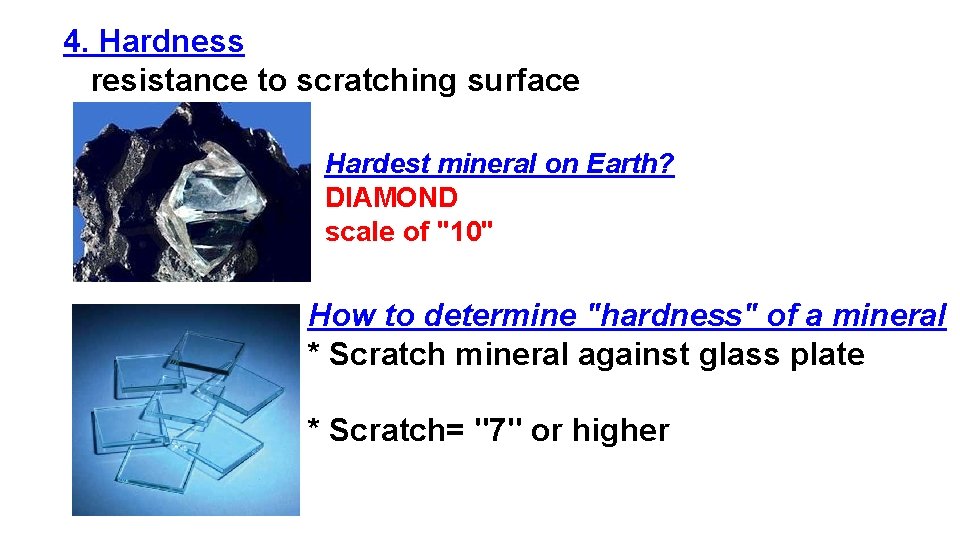
4. Hardness resistance to scratching surface Hardest mineral on Earth? DIAMOND scale of "10" How to determine "hardness" of a mineral * Scratch mineral against glass plate * Scratch= "7" or higher
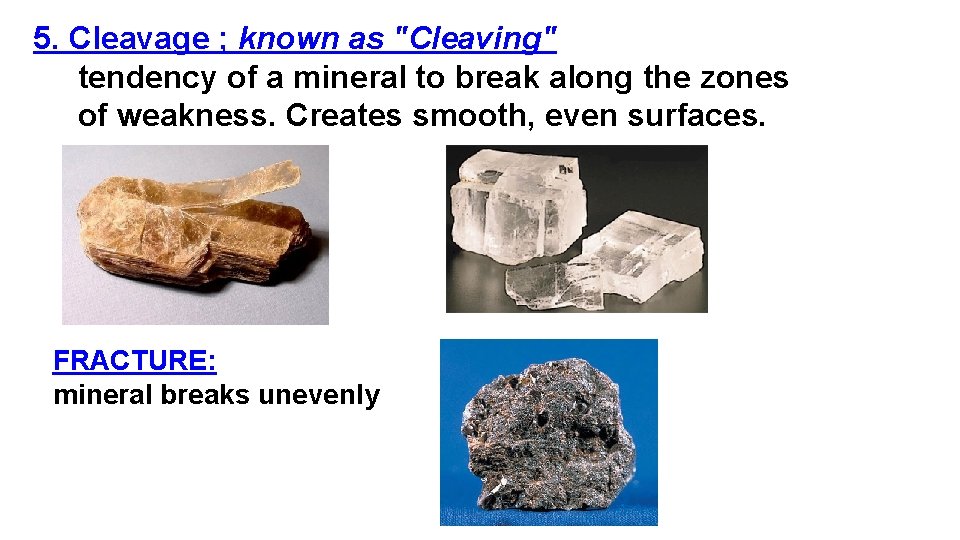
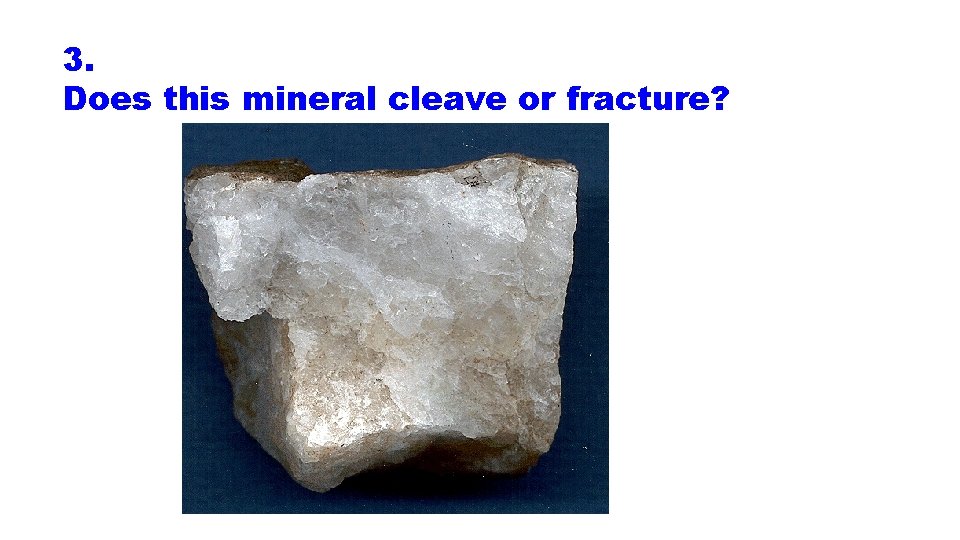
5. Cleavage ; known as "Cleaving" tendency of a mineral to break along the zones of weakness. Creates smooth, even surfaces. FRACTURE: mineral breaks unevenly
Let's see if you got this!
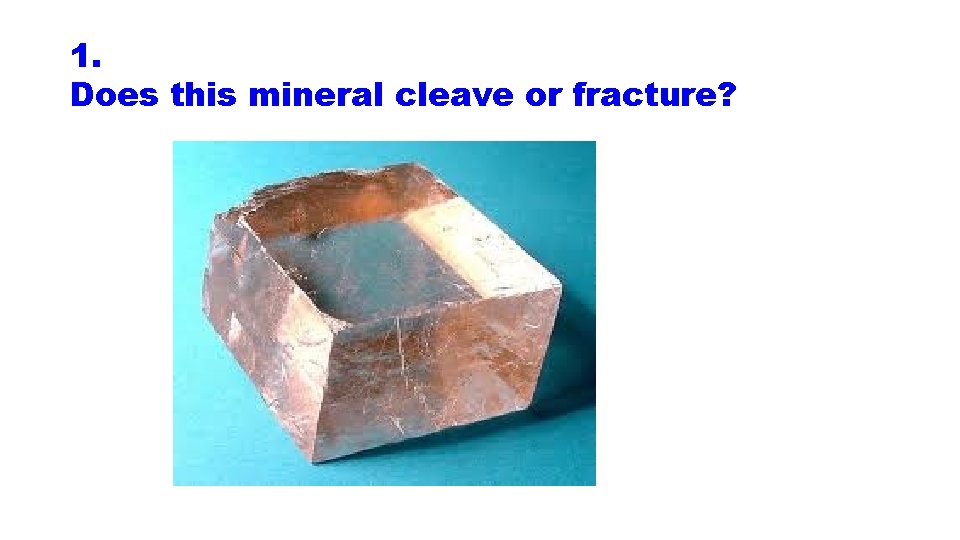
1. Does this mineral cleave or fracture?
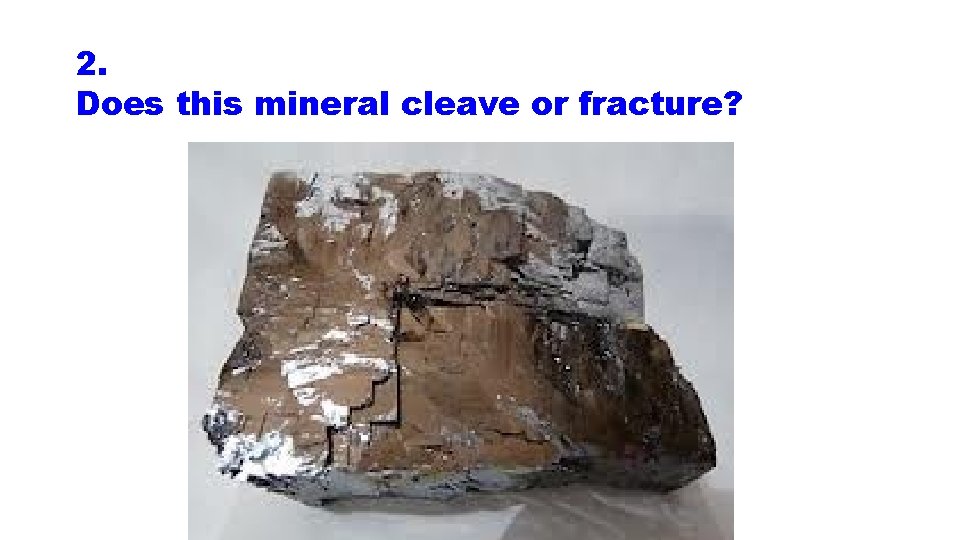
2. Does this mineral cleave or fracture?
3. Does this mineral cleave or fracture?
4. Does mineral have a metallic or nonmetallic luster?
5. Does mineral have a metallic or nonmetallic luster?
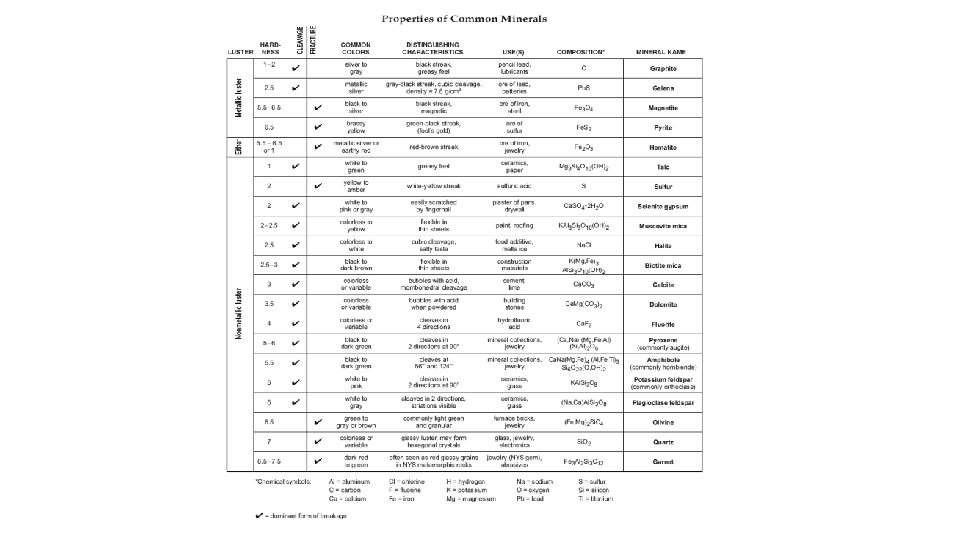
6. If you find a nonmetallic, white mineral that you can scratch with your fingernail, which of the following minerals are you most likely to be holding? A. Talc B. Pyrite C. Quartz D. Hematite
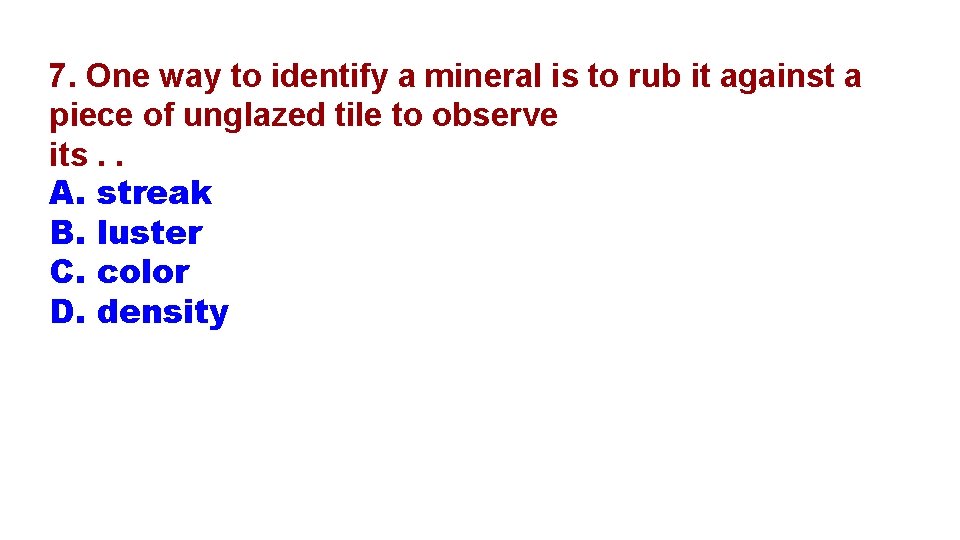
7. One way to identify a mineral is to rub it against a piece of unglazed tile to observe its. . A. streak B. luster C. color D. density
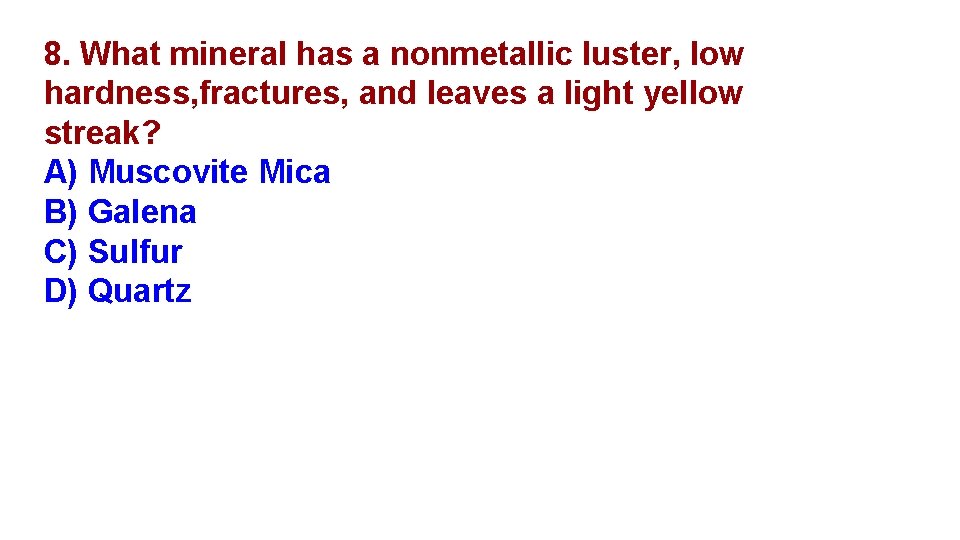
8. What mineral has a nonmetallic luster, low hardness, fractures, and leaves a light yellow streak? A) Muscovite Mica B) Galena C) Sulfur D) Quartz