
Lesson 1 I can explain what dialogue is
- Slides: 18
Lesson 1: • I can explain what dialogue is, • I can explain the difference between direct and indirect speech, • I can identify different and indirect speech. List all of the different clause structures you can use.
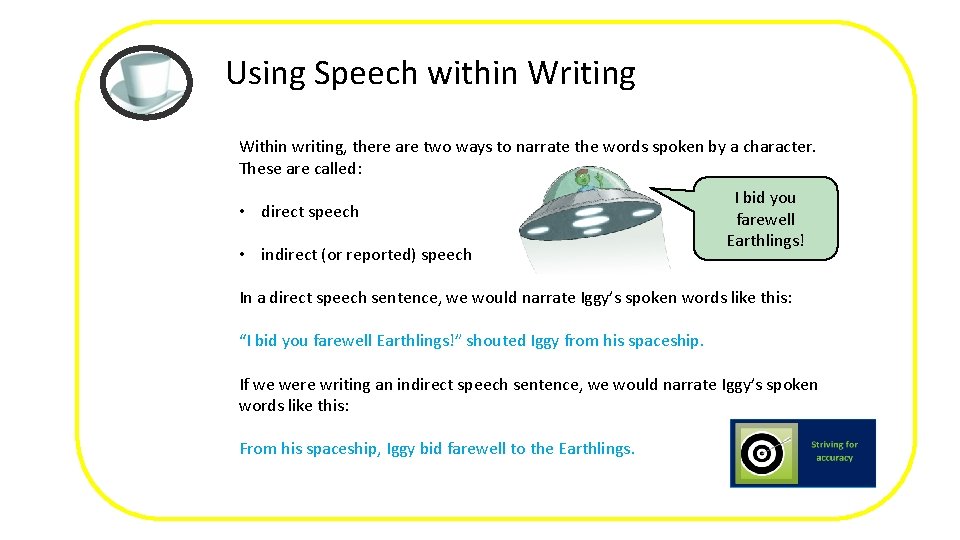
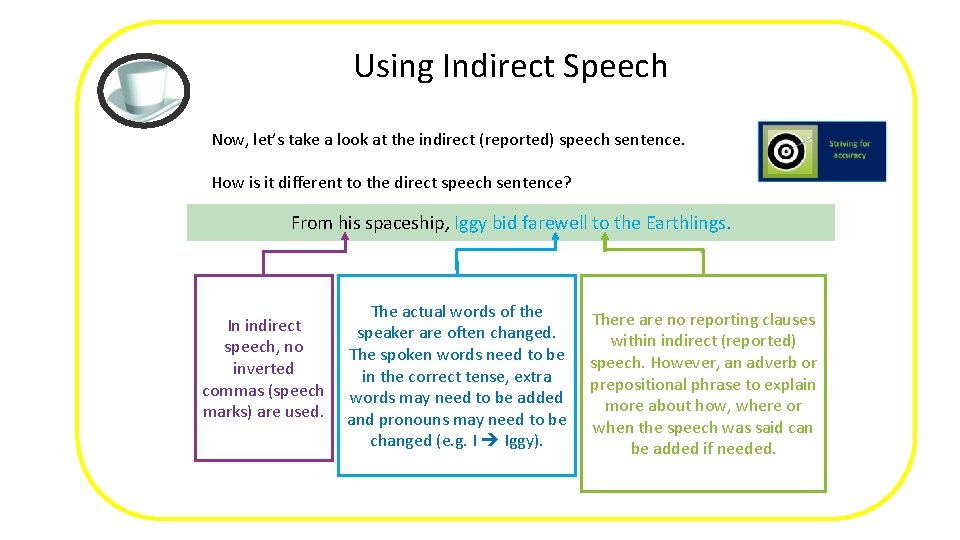
Using Speech within Writing Within writing, there are two ways to narrate the words spoken by a character. These are called: • direct speech • indirect (or reported) speech I bid you farewell Earthlings! In a direct speech sentence, we would narrate Iggy’s spoken words like this: “I bid you farewell Earthlings!” shouted Iggy from his spaceship. If we were writing an indirect speech sentence, we would narrate Iggy’s spoken words like this: From his spaceship, Iggy bid farewell to the Earthlings.
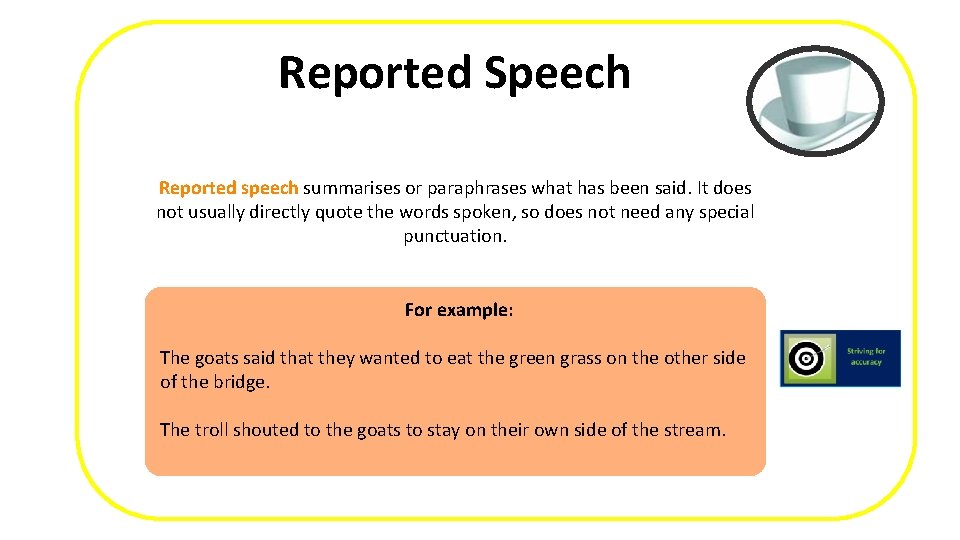
Reported Speech Reported speech summarises or paraphrases what has been said. It does not usually directly quote the words spoken, so does not need any special punctuation. For example: The goats said that they wanted to eat the green grass on the other side of the bridge. The troll shouted to the goats to stay on their own side of the stream.
Direct Speech When a text uses direct speech, some specific punctuation conventions are required to separate what is said from the rest of the text; this enables the reader to follow what is going on.
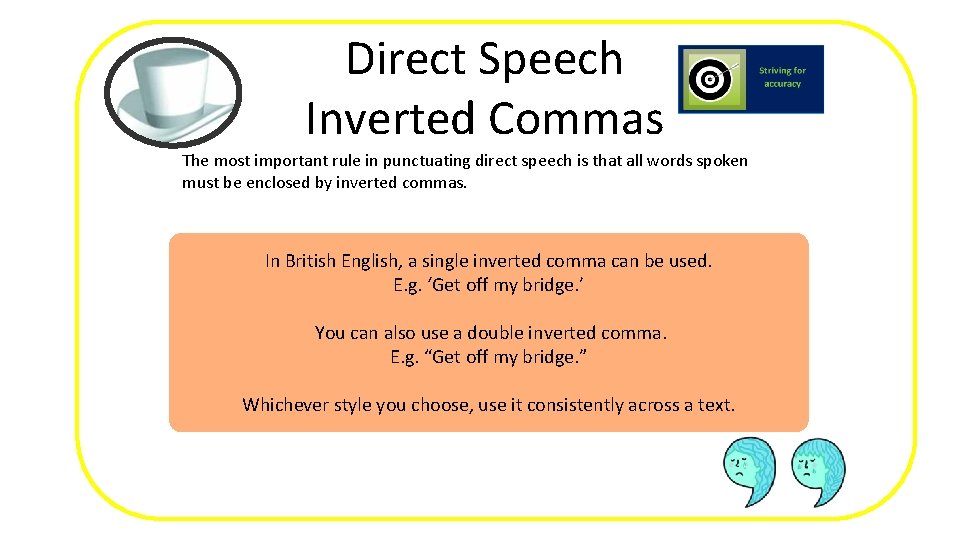
Direct Speech Inverted Commas The most important rule in punctuating direct speech is that all words spoken must be enclosed by inverted commas. In British English, a single inverted comma can be used. E. g. ‘Get off my bridge. ’ You can also use a double inverted comma. E. g. “Get off my bridge. ” Whichever style you choose, use it consistently across a text.
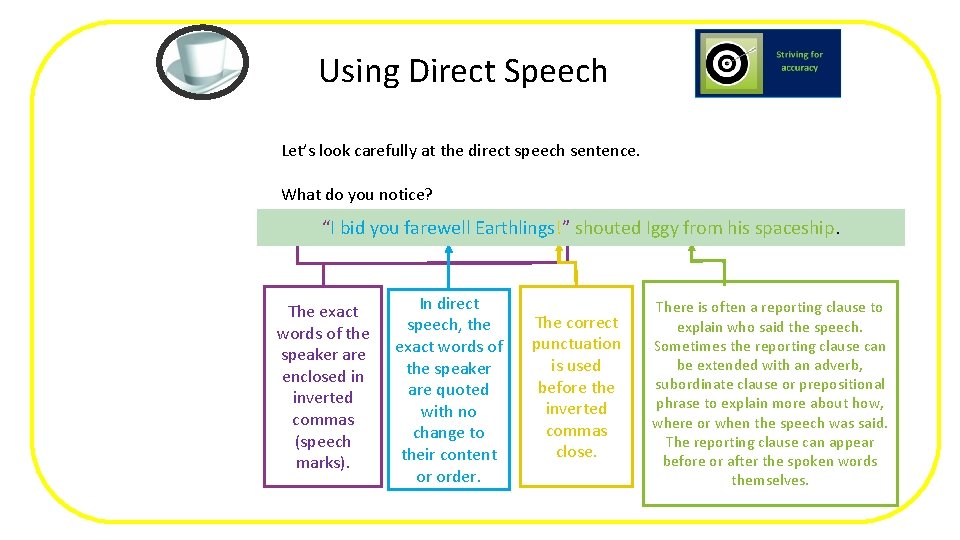
Using Direct Speech Let’s look carefully at the direct speech sentence. What do you notice? “I bid you farewell Earthlings!” shouted Iggy from his spaceship. The exact words of the speaker are enclosed in inverted commas (speech marks). In direct speech, the exact words of the speaker are quoted with no change to their content or order. The correct punctuation is used before the inverted commas close. There is often a reporting clause to explain who said the speech. Sometimes the reporting clause can be extended with an adverb, subordinate clause or prepositional phrase to explain more about how, where or when the speech was said. The reporting clause can appear before or after the spoken words themselves.
Using Indirect Speech Now, let’s take a look at the indirect (reported) speech sentence. How is it different to the direct speech sentence? From his spaceship, Iggy bid farewell to the Earthlings. In indirect speech, no inverted commas (speech marks) are used. The actual words of the speaker are often changed. The spoken words need to be in the correct tense, extra words may need to be added and pronouns may need to be changed (e. g. I Iggy). There are no reporting clauses within indirect (reported) speech. However, an adverb or prepositional phrase to explain more about how, where or when the speech was said can be added if needed.
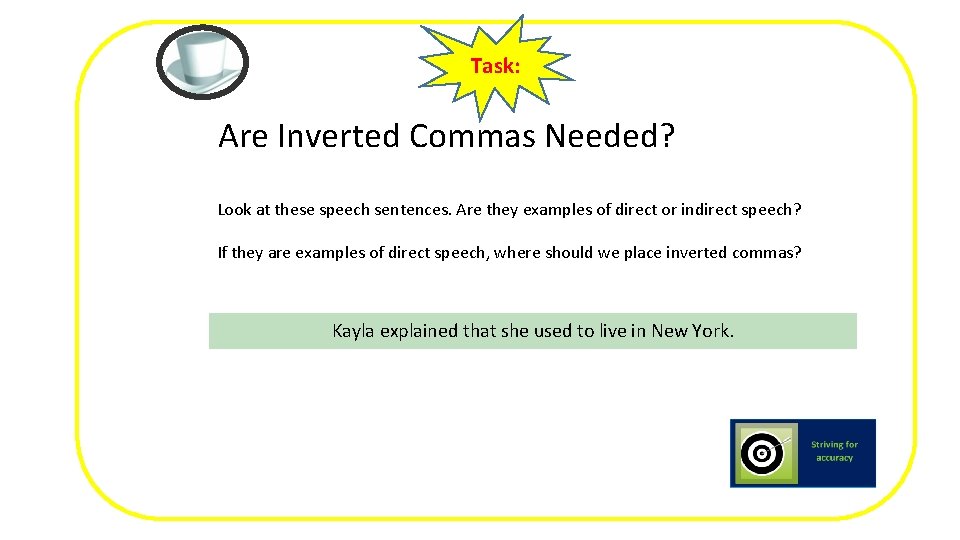
Task: Are Inverted Commas Needed? Look at these speech sentences. Are they examples of direct or indirect speech? If they are examples of direct speech, where should we place inverted commas? Kayla explained that she used to live in New York.
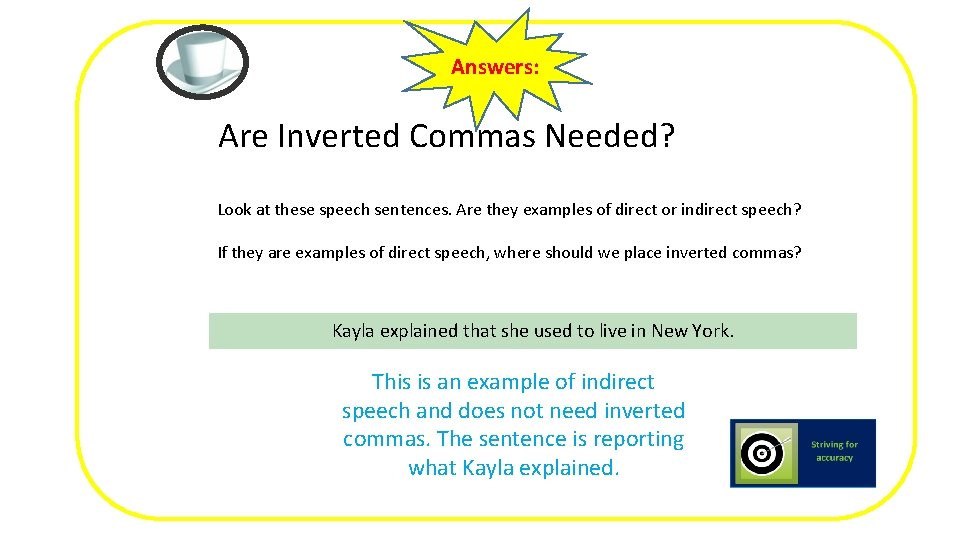
Answers: Are Inverted Commas Needed? Look at these speech sentences. Are they examples of direct or indirect speech? If they are examples of direct speech, where should we place inverted commas? Kayla explained that she used to live in New York. This is an example of indirect speech and does not need inverted commas. The sentence is reporting what Kayla explained.
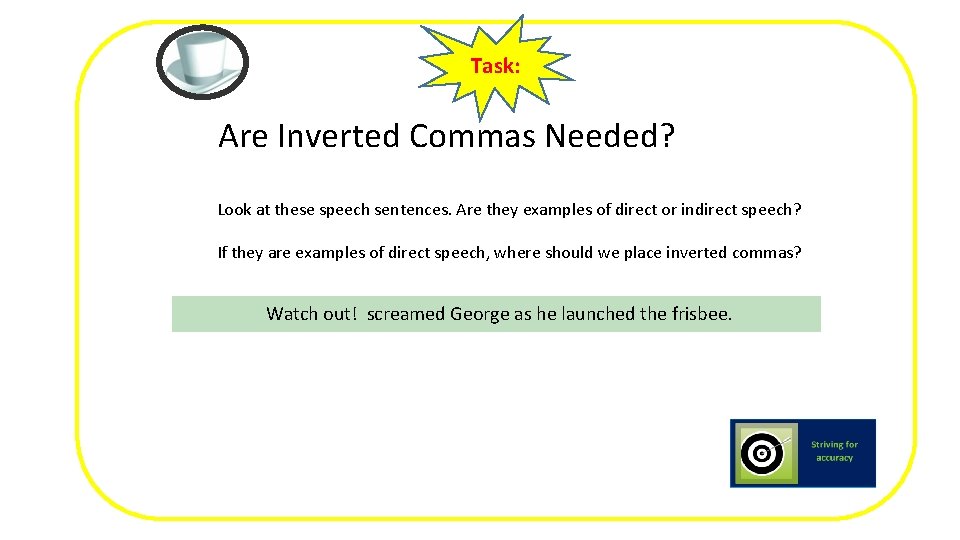
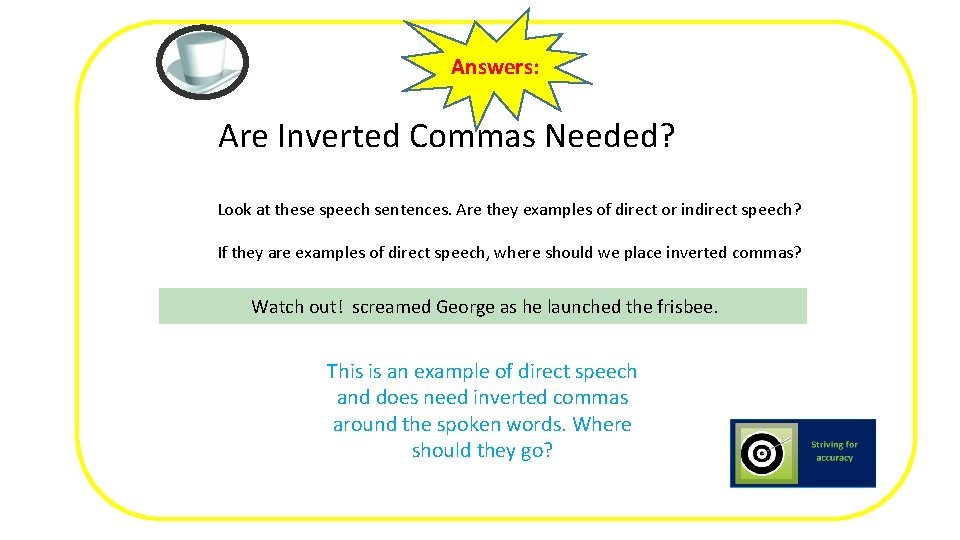
Task: Are Inverted Commas Needed? Look at these speech sentences. Are they examples of direct or indirect speech? If they are examples of direct speech, where should we place inverted commas? Watch out! screamed George as he launched the frisbee.
Answers: Are Inverted Commas Needed? Look at these speech sentences. Are they examples of direct or indirect speech? If they are examples of direct speech, where should we place inverted commas? Watch out! screamed George as he launched the frisbee. This is an example of direct speech and does need inverted commas around the spoken words. Where should they go?
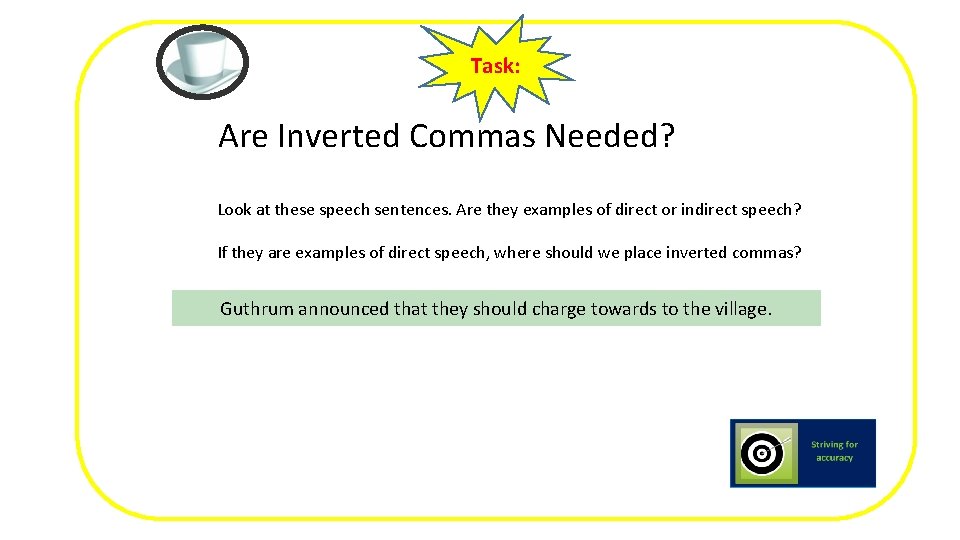
Task: Are Inverted Commas Needed? Look at these speech sentences. Are they examples of direct or indirect speech? If they are examples of direct speech, where should we place inverted commas? Guthrum announced that they should charge towards to the village.
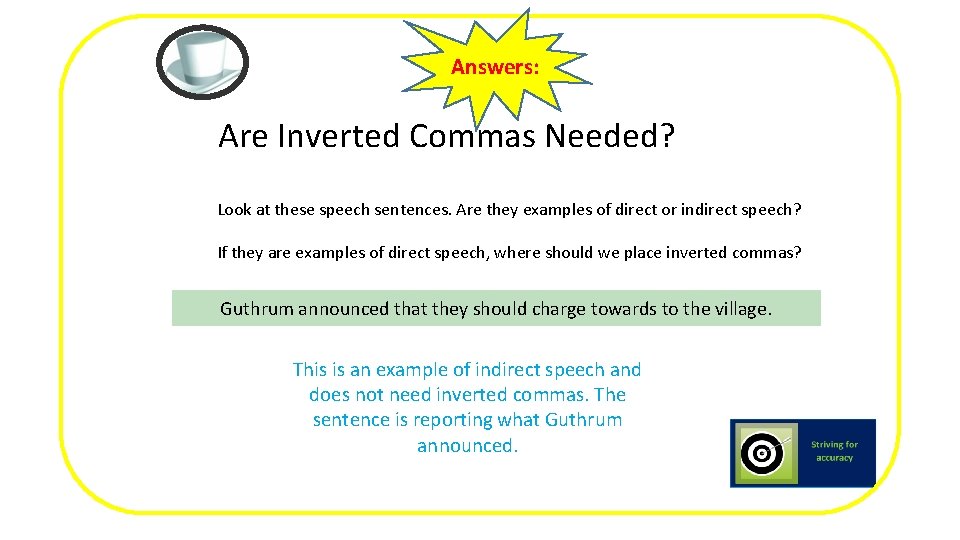
Answers: Are Inverted Commas Needed? Look at these speech sentences. Are they examples of direct or indirect speech? If they are examples of direct speech, where should we place inverted commas? Guthrum announced that they should charge towards to the village. This is an example of indirect speech and does not need inverted commas. The sentence is reporting what Guthrum announced.
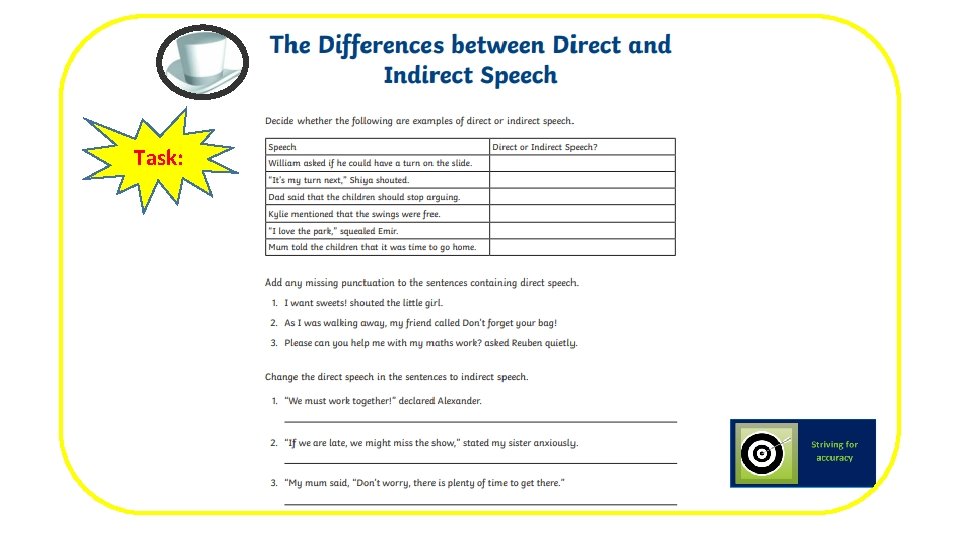
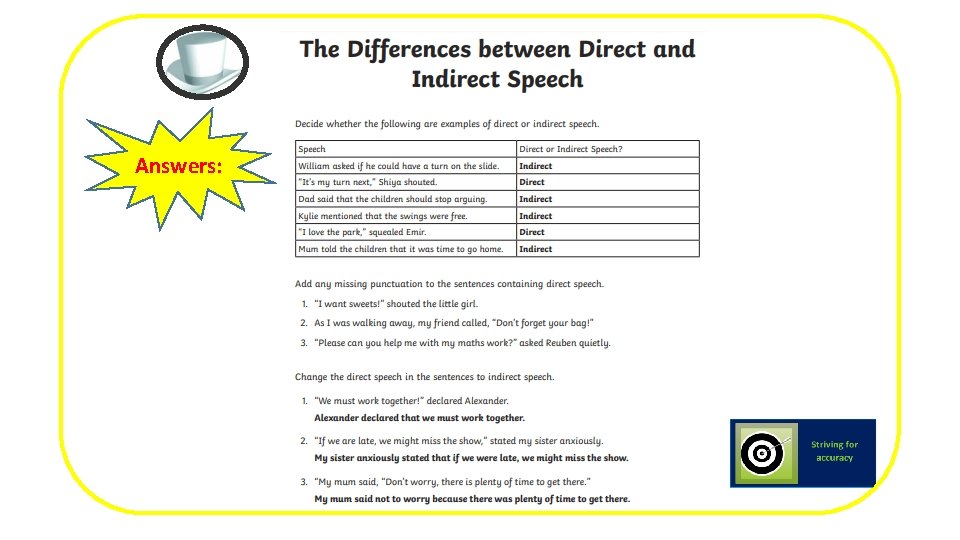
Task:
Answers:
Today I learnt: I am going to challenge myself by